Tag: gold mining

  • AltynGold Celebrates ‘Transformational’ 2025 as Production and Profits Soar

    AltynGold Celebrates ‘Transformational’ 2025 as Production and Profits Soar

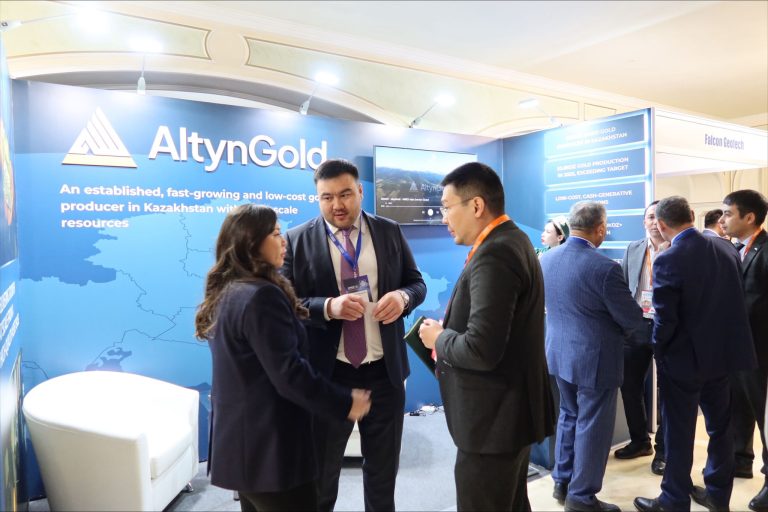
    AltynGold (ALTN), the Kazakhstan-based gold miner, has reported a “transformational” set of annual results for the year ending 31 December 2025. The company saw a massive surge in financial performance, driven by a 50% increase in processing capacity at its flagship Sekisovskoye mine and a significantly higher global gold price.

    The miner’s production figures exceeded expectations, with gold poured rising 44% to 53,852oz, comfortably beating the full-year target of 50,000oz. This operational success, coupled with a realised gold price of US$3,474/oz (up 42% year-on-year), saw AltynGold’s revenue jump by 82% to US$175.4m.

    Financial Highlights at a Glance

    • Net Profit: Increased by 135% to US$62.0m.

    • Adjusted EBITDA: Doubled to US$101.4m.

    • Net Debt: Reduced significantly by US$31.3m to US$18.5m.

    • Safety Record: Achieved its fifth consecutive year without a lost-time incident.

    Looking ahead, AltynGold is poised for further growth. Management is currently evaluating plans to at least double mining capacity at Sekisovskoye to 2.0–2.5Mte per annum, which would elevate the company to mid-tier producer status with an output exceeding 100,000oz in the medium term. Additionally, the company is progressing its application for a production licence at the adjacent Teren-Sai exploration project, with approval expected in 2026.

    With the company deleveraging rapidly and cash generation remainng strong, the Board is also keeping the introduction of a dividend policy under review. Analysts have noted that the company’s valuation remains “extremely attractive” compared to its peers, with the current share price of 1,140p nearly matching the net present value of cash flows from existing operations alone.

  • Kazakh Investor Shakhmurat Mutalip Emerges as Leading Bidder for Yuzhuralzoloto

    Kazakh Investor Shakhmurat Mutalip Emerges as Leading Bidder for Yuzhuralzoloto

    Kazakh businessman Shakhmurat Mutalip has emerged as a leading contender to acquire the nationalised Russian gold mining group Yuzhuralzoloto (YUGK), according to media reports, as Moscow prepares to auction the asset in the coming weeks.

    The company, previously controlled by businessman and former politician Konstantin Strukov, was transferred to state ownership in 2025 following a legal case related to anti-corruption violations. The Russian Ministry of Finance has indicated that the sale of a controlling stake of approximately 67% could take place as early as March 2026.

    Mutalip, 35, is considered one of the fastest-rising business figures in Kazakhstan. He began his career in industry in 2008 and later became the beneficiary of Integra Construction KZ, a major construction group that has grown into one of the country’s leading companies by assets and tax contributions.

    In recent years, Mutalip has expanded his interests into the mining sector and has been linked to several major deals involving strategic assets. These include a potential acquisition of a 70% stake in Kazzinc from Glencore, estimated at up to $4.5 billion, and a possible 40% stake in Eurasian Resources Group (ERG), valued at around $1.4 billion. He has also been associated with interest in other mining assets, including Altynalmas.

    If completed, these transactions could position Mutalip as a major player in Kazakhstan’s non-ferrous and precious metals sector. His business structures, including entities registered in the Astana International Financial Centre, reflect growing ambitions in metallurgy and critical minerals.

    Analysts note that Mutalip has built strong commercial ties between Kazakhstan and Russia, particularly in the context of sanctions, facilitating industrial cooperation and access to financing. His companies are reportedly supported by major Russian banks and maintain relationships with global commodity traders.

    His candidacy for Yuzhuralzoloto is viewed as strategically consistent, given his growing presence in the gold sector and ability to operate across jurisdictions. Market observers suggest that the sale could reflect a broader trend of asset redistribution toward investors capable of maintaining operational continuity amid geopolitical uncertainty.

    The outcome of the auction is expected to be closely watched as an indicator of shifting ownership patterns in the region’s mining industry.

  • Central Asia Resources Holding to Acquire 100% of Altynalmas Gold Producer

    Central Asia Resources Holding to Acquire 100% of Altynalmas Gold Producer

    Central Asia Resources Holding Ltd., owned by businessman Shakhmurat Mutalip, has signed a share purchase agreement to acquire 100% of Kazakhstan’s gold mining company Altynalmas, including all of its subsidiaries, according to the company.

    The transaction, the completion date of which has not yet been disclosed, will result in Central Asia Resources Holding obtaining full control over the group. The deal предусматривает the buyout of stakes held by all nine shareholders of Altynalmas. The largest shareholder, Dutch-registered Gouden Reserves B.V., currently holds more than 66% of the company.

    In a statement, representatives of Mutalip described the acquisition as a key step in the holding’s long-term investment strategy. They noted that Altynalmas represents a well-established asset with a strong production base, experienced management team, and significant growth potential. The new owner intends to maintain operational stability, ensure continuity in management, and uphold all social commitments in the regions where the company operates.

    The seller’s side also welcomed the transaction, stating that the transfer of ownership to a strategic investor focused on long-term development would support the company’s sustainable growth and strengthen its position within the industry.

    As of 1 January 2026, Altynalmas’ major shareholders included Gouden Reserves B.V. with approximately 66.8% and Vladimir Dzhumanbayev with around 22.8%. The company reported a profit of 260 billion tenge for the first nine months of 2025, generated from revenue of 618 billion tenge.

    Shakhmurat Mutalip is also the beneficiary of construction company Integra Construction KZ and has been linked to several potential крупные сделки in Kazakhstan’s mining sector. These include possible acquisitions of stakes in Kazzinc and Eurasian Resources Group (ERG). According to media reports, financing for such transactions could involve Glencore, which is seeking to secure access to metals from Kazakhstan. The combined value of potential deals involving ERG and Kazzinc has been estimated at $4.9 billion.

    The acquisition of Altynalmas underscores growing consolidation in Kazakhstan’s mining industry and highlights increasing investor interest in strategic mineral assets.

  • Altynalmas Plans 19-Year Development of Karierny Gold Deposit in Kazakhstan

    Altynalmas Plans 19-Year Development of Karierny Gold Deposit in Kazakhstan

    Kazakhstan’s gold mining company Altynalmas plans to develop the Karierny deposit in the Karaganda region over the next 19 years, according to an updated mine closure plan submitted for public review.

    Under the revised mining plan, operations at the Karierny site are scheduled to run from 2026 to 2044. The project is designed to process an average of about 3 million tonnes of gold-bearing ore per year. The deposit covers an area of approximately 4.3 square kilometres and will be mined to a depth of around 200 metres.

    The Karierny site is located in the Aktogay district of the Karaganda region, roughly 100 kilometres east of the city of Balkhash. Infrastructure near the project includes the Balkhash–Aktogay railway line, a 110 kV power transmission line and the Tokrau–Sayak water pipeline. Nearby deposits operated by Altynalmas include the Dolinnoye and Pustynnoye gold fields.

    According to the company’s documentation, all approved reserves at the Karierny deposit will be mined during the project’s lifetime. The mine is expected to produce approximately 43.7 million tonnes of ore with an average gold grade of about 0.9 grams per tonne.

    Based on these figures, the total gold output from the project is estimated at roughly 39.3 tonnes over the life of the mine. At current market prices, this volume would be valued at around $6.4 billion.

    Altynalmas originally received the licence to develop the Karierny deposit in 2011, with the initial contract set to expire in 2026. The revised closure plan likely reflects a renewal or extension of subsoil use rights.

    The project also outlines environmental and post-mining land management measures. Since backfilling the open pit with waste rock is considered economically unfeasible, the site will be fenced to prevent accidents, reduce dust dispersion and stop animals or waste from entering the pit.

    After mine closure, the area could potentially be converted into a recreational water reservoir. Land disturbed during operations will also be rehabilitated to support pasture use, with soil preparation and seeding of perennial grasses planned to restore grazing land for livestock.

    Closure activities are scheduled to begin in 2045, in accordance with Kazakhstan’s legislation requiring reclamation work to start within eight months after the expiration of a mining licence. The company estimates the cost of these activities at approximately $1.8 million.

    Altynalmas currently operates nine gold deposits across Kazakhstan and remains one of the country’s largest gold producers.

  • Kazzinc Loses Tajik Raw Material Supply Contract Amid Customs Controls

    Kazzinc Loses Tajik Raw Material Supply Contract Amid Customs Controls

    Kazakhstan’s largest gold producer Kazzinc, in which Swiss commodities group Glencore holds a 70.2 percent stake, has reportedly lost a key raw material import contract from Tajikistan following stricter customs controls imposed by Kazakhstan’s State Revenue Committee.

    According to Kazakhstan’s Ministry of Industry and Construction report for 2025, the contract was affected by the application of the “red corridor” customs inspection regime on imported raw materials. Kazzinc relies on imported feedstock for roughly 40 percent of its production needs, and the lost contract involved approximately 40,000 tonnes of raw materials — representing about 20 percent of the company’s imports.

    The material had been supplied from Tajikistan by a company linked to Chinese mining group Zijin Mining. The loss of the contract highlights supply chain challenges facing Kazakhstan’s mining and metallurgical sector.

    Industry data in the report indicate that production of metallic ores, excluding iron ore, declined by 0.7 percent in 2025. The drop was partly attributed to operational changes at the Vasilkovskoye deposit in Akmola region, the country’s largest gold mine operated by Kazzinc, which is transitioning from open-pit to underground mining.

    Resource depletion at several zinc and lead deposits in East Kazakhstan — including the Maleevsky, Tishinsky and Dolinny mines — has also contributed to declining output. As a result, forecasts for 2026 suggest growth in most major metals such as steel, pig iron, rolled products and copper, while production of refined gold and metallic zinc is expected to fall.

    Gold output is projected to decline from 29.45 tonnes to 21.27 tonnes due to depletion at the Vasilkovskoye mine. Zinc production is also expected to drop from 259,600 tonnes to 239,000 tonnes because of declining ore grades and uncertainty surrounding planned zinc concentrate supplies from Russia.

    Overall, production in 2025 declined across several refined metals. Output of metallic zinc fell by 6.6 percent, refined silver by 10.4 percent, refined gold by 1.1 percent and refined lead by 29.6 percent.

    These developments come as Glencore reportedly considers selling its majority stake in Kazzinc as part of a broader portfolio restructuring. Market analysts estimate the value of the asset at around $5 billion.

    Media reports have suggested that Kazakh businessman Shakhmurat Mutalip is in discussions to acquire the stake for approximately $4–4.5 billion. In early 2026, Mutalip registered two new mining companies at the Astana International Financial Centre — KazZinc Group Ltd. and Central Asia Resources Holding Ltd. — both focused on copper, lead and zinc mining and processing.

  • SSR Mining to Sell 80% Stake in Turkey’s Copler Gold Mine to Cengiz Holding for $1.5bn

    SSR Mining to Sell 80% Stake in Turkey’s Copler Gold Mine to Cengiz Holding for $1.5bn

    SSR Mining has agreed to sell its 80 percent interest in the Copler gold mine and related assets in Turkey to Cengiz Holding for $1.5 billion in cash, marking a major strategic shift toward focusing its operations in the Americas.

    The transaction covers all mining licences, infrastructure, rights and liabilities associated with SSR Mining’s operations at Copler in eastern Anatolia. The company announced that its shares rose approximately 15 percent in pre-market trading in New York following the announcement.

    SSR Mining suspended operations at the Copler mine in 2024 after a landslide at the heap leach facility left at least nine miners missing. An independent investigation later determined that a design flaw in third-party engineering work was the most likely cause of the failure, prompting a broader review of the asset and its operational risks.

    Executive chairman Rod Antal said the divestment forms part of a broader strategy to reposition the company’s portfolio geographically. The move follows SSR Mining’s acquisition of the Cripple Creek & Victor gold mine in the United States and reflects a renewed focus on assets in the Americas.

    The company added that it is also reviewing its remaining presence in Turkey, including its 20 percent stake in the Hod Maden development project.

    Completion of the Copler transaction with Cengiz Holding is expected in the third quarter of 2026, subject to customary approvals and closing conditions.

  • RG Gold to Launch Development of Sharyk and Novodneprovskoye Gold Deposits

    RG Gold to Launch Development of Sharyk and Novodneprovskoye Gold Deposits

    Kazakhstan-based gold producer RG Gold is set to begin development of two additional deposits — Sharyk and Novodneprovskoye — located in the Burabay district of Akmola region, according to a newly published project disclosure.

    The company plans to implement a mining plan for gold-bearing ores at both sites and construct a mining and hydrometallurgical complex with an annual processing capacity of 600,000 tonnes of ore.

    RG Gold already operates within the Novodneprovskoye contract area, which includes the Novodneprovskoye, North Raigorodok and South Raigorodok deposits. Active production is currently underway at the Raigorodok sites using a gold processing plant with a capacity of 5 million tonnes of ore per year. In 2025, gold output at the facility reached 6.5 tonnes. Until 2021, oxidised ores at Raigorodok were also processed via heap leaching.

    The new deposits — Sharyk and Novodneprovskoye — are expected to be developed through open-pit mining of oxidised ores. Annual production from the two pits is planned to supply at least 600,000 tonnes of ore for heap leaching processing.

    According to project documentation, the planned operational life of Novodneprovskoye is five years, from 2027 to 2031, while Sharyk is expected to operate for one year in 2030. The relatively short timelines reflect the size of reserves. As of the end of 2024, Novodneprovskoye contained 1,246 kg of gold at an average grade of 0.99%, while Sharyk held 142 kg at a grade of 0.43%.

    RG Gold has previously conducted exploration activities at Novodneprovskoye, Sharyk and Central Raigorodok. In 2017, approximately 1 billion tenge was allocated for geological exploration within the Novodneprovskoye contract area.

    In 2025, RG Gold was acquired by China’s Zijin Gold International for approximately $1 billion from businessman Bulat Utemuratov.

  • Why Artisanal Gold Mining Struggles to Go Legal in Kazakhstan Despite Record Prices

    Why Artisanal Gold Mining Struggles to Go Legal in Kazakhstan Despite Record Prices

    Reports of arrests of so-called illegal gold prospectors have become more frequent as gold prices hover near record highs. Despite legislative changes intended to legalize artisanal mining, many prospectors continue to operate outside the formal system. In an interview with inbusiness.kz, veteran geologist Bolat Kabaziev outlined why legalization has proven far more difficult in practice than on paper.

    According to Kabaziev, the 2018 Subsoil Code was expected to unlock large-scale legal artisanal mining on designated plots approved by regional authorities and the Ministry of Industry. In reality, progress has been slow. He said artisanal gold mining remains constrained by environmental and water protection rules, as well as technical limits on production volumes, mining depth and allowable equipment.

    While the law formally introduced artisanal mining licences, Kabaziev noted that bureaucracy remains a major barrier. Lengthy approvals at regional administrations have made the process complex and time-consuming. “On paper it was legalized, but in practice obtaining a licence has become difficult and slow,” he said.

    Kabaziev also addressed the blurred line between informal prospectors and outright illegal miners. While some prospectors argue that subsoil resources belong to the people, he stressed that unauthorized mining is still a criminal offense under existing laws on subsoil use and precious metals. A deeper issue, he said, is the lack of clear oversight mechanisms once licences are issued. For example, the law caps artisanal gold production at 50 kg per year, but there is no effective system to monitor actual output or the movement of mined gold.

    Additional obstacles include long approval timelines, multiple administrative clearances, technical constraints and, in some cases, resistance from local communities. Environmental and water permits are particularly hard to obtain, especially when gold-bearing placers are located in riverbeds, where approvals are often impossible.

    Kabaziev cautioned that artisanal placer gold mining is also a high-risk business. Even on officially designated plots, prospectors must study historical geological data and consult experts before investing. “Statistics show that only a few actually earn money, but this is rarely discussed,” he said.

    He also raised concerns about weak reporting requirements. Despite dozens of artisanal licences being issued in recent years, little gold is officially surrendered or recorded. Kabaziev believes most gold is sold through informal buyers, forming a shadow market, with uncertain downstream destinations. While estimates suggest illegal artisanal mining could amount to 10–15 tonnes of gold per year, he said much of this gold likely remains within Kazakhstan, entering jewellery production or, in some cases, refineries.

    With gold prices recently exceeding $5,000 per ounce, Kabaziev acknowledged a renewed “gold rush” mentality. However, he said the phenomenon remains poorly studied. He argued that true legalization would require open dialogue between authorities, law enforcement, industry experts and the prospectors themselves to address regulatory gaps, environmental concerns and market transparency.

  • Deccan Gold Begins Pre-Commissioning Trials at Altyn Tor Project in Kyrgyzstan

    Deccan Gold Begins Pre-Commissioning Trials at Altyn Tor Project in Kyrgyzstan

    Deccan Gold Mines Ltd. has launched pre-commissioning trials at its Altyn Tor Gold Project in Kyrgyzstan, moving the asset closer to full-scale production and marking a key milestone for India’s only listed gold and critical minerals exploration company.

    The company said the pre-commissioning programme will be rolled out in stages, starting with the crushing, grinding and gravity concentration circuits, before progressing to the leaching circuit, subject to weather conditions. During this phase, Deccan Gold plans to process between 20,000 and 30,000 tonnes of ore, with an average grade slightly above 1.0 grams of gold per tonne.

    Gold recovered during the trials will be produced as saleable concentrate or doré bars, allowing the company to validate processing performance ahead of full commissioning. Deccan Gold added that its mining team has already completed the planned mined volume for the year, while assay results from a recently completed resource drilling programme are expected in the coming weeks and could support further optimisation and planning.

    Managing Director Dr. Hanuma Prasad Modali described the start of pre-commissioning as both an operational and strategic milestone, highlighting the project as India’s first direct gold mining presence in Kyrgyzstan. He said Altyn Tor reflects a model of responsible mining and cross-border collaboration, with the goal of building a globally credible asset that strengthens India’s international footprint while delivering long-term benefits to local communities.

  • Agnico Eagle Exits Sweden’s Barsele Project, Strengthens Stake in Goldsky

    Agnico Eagle Exits Sweden’s Barsele Project, Strengthens Stake in Goldsky

    Agnico Eagle has agreed to sell its 55% interest in the Barsele gold project in northern Sweden, shifting from direct project ownership to a royalty-based exposure while significantly increasing its equity position in partner Goldsky Resources.

    Under the transaction, Agnico Eagle will receive $20 million in cash and 75.5 million Goldsky shares, valued at C$2.64 each, resulting in Goldsky becoming the sole owner and operator of the Barsele project. The deal also includes a 2% net smelter return royalty retained by Agnico Eagle.

    The sale will be executed through Agnico Sweden AB’s divestment of its stake in Gunnarn Mining AB. Completion is expected by June 30, subject to approvals from the TSX Venture Exchange and Goldsky shareholders.

    Following the transaction, Agnico Eagle’s ownership in Goldsky will increase to approximately 32.5% on a non-diluted basis, up from about 4.1%, with its shareholding rising from roughly 7.4 million to nearly 82.9 million shares. An amended investor rights agreement will allow Agnico Eagle to participate in future equity financings to maintain ownership of up to 19.99% and to nominate up to three directors to Goldsky’s board, though the company said it has no immediate plans to exercise those rights.

    Agnico Eagle said the move reflects ongoing portfolio optimization. While exploration over the past decade has expanded Barsele’s mineral resources, the company noted that additional work is required to move the project toward development.

    Located in Västerbottens Län, around 600 km north of Stockholm, the Barsele project remains one of Sweden’s more advanced gold exploration assets. Agnico Eagle continues to operate producing mines across Canada, Australia, Finland and Mexico.