Tag: gold mining

  • RG Gold enters new growth phase after Zijin Mining acquisition and outlines major expansion plans

    RG Gold enters new growth phase after Zijin Mining acquisition and outlines major expansion plans

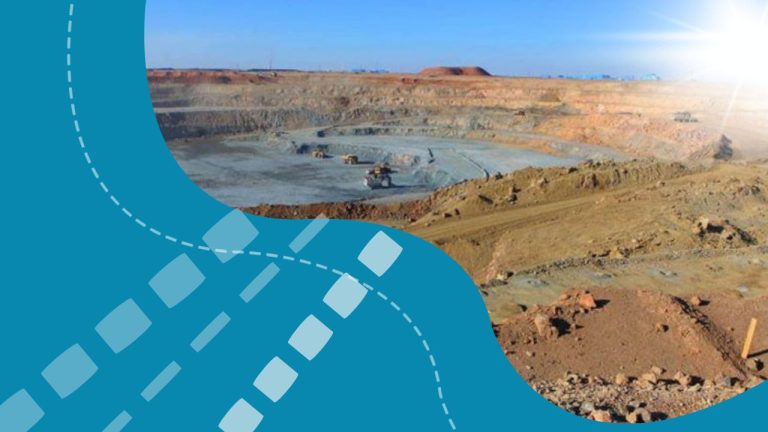
    Kazakhstan’s gold miner RG Gold has described 2025 as a turning point in its development following the acquisition of the Raygorodok deposit in Akmola region by global mining major Zijin Mining Group. The deal, valued at more than $1 billion, transferred 100% ownership of the asset to Zijin and marked one of the largest transactions in the country’s mining sector in recent years.

    According to the company, the entry of a new shareholder has provided access to international technologies, management standards and long-term strategic capital, while significantly raising the scale of future ambitions. RG Gold plans to invest around $500 million in the construction of a new processing plant, which would increase ore processing capacity by an additional 10 million tonnes per year. This would lift total annual throughput to more than 16 million tonnes.

    In 2025, RG Gold delivered record operating results, processing 6.5 million tonnes of ore and producing nearly 6.5 tonnes of gold. Metallurgical recovery at the processing plant exceeded 87%. The company emphasized that these results were achieved while maintaining high safety standards and protecting employee health.

    The Raygorodok deposit, first explored in the mid-1990s, remains one of Kazakhstan’s largest gold mining projects. Despite relatively low gold grades, the ore is considered easily recoverable, ensuring economic sustainability. Investments in exploration have significantly expanded reserves, while the launch of a CIP-based processing plant in 2022 boosted production efficiency. The mine’s operating life is currently projected to extend to at least 2040, even with higher processing volumes.

    Looking ahead, 2026 is expected to become a key investment year, with construction of the new processing facility forming the core project. RG Gold estimates that the expansion will create more than 1,000 new jobs and deliver broader socio-economic benefits for the region.

    Environmental management and workplace safety remain central to the company’s strategy. In 2025, RG Gold completed preparatory work for ISO 14001 certification, invested in environmental training, launched biodiversity research projects and carried out large-scale land restoration, including planting 100,000 pine seedlings. Safety initiatives introduced during the year contributed to a 38% reduction in workplace incidents.

    Company executives said that integration into Zijin Mining Group opens new opportunities for staff development, knowledge exchange and the adoption of global best practices. Over the next three to five years, RG Gold’s strategy will focus on efficiency improvements, production growth, resource base development and strengthened ESG performance, positioning the company as a benchmark for sustainable gold mining in Kazakhstan.

  • Kyrgyzstan reviews major mining projects launched over the past year

    Kyrgyzstan reviews major mining projects launched over the past year

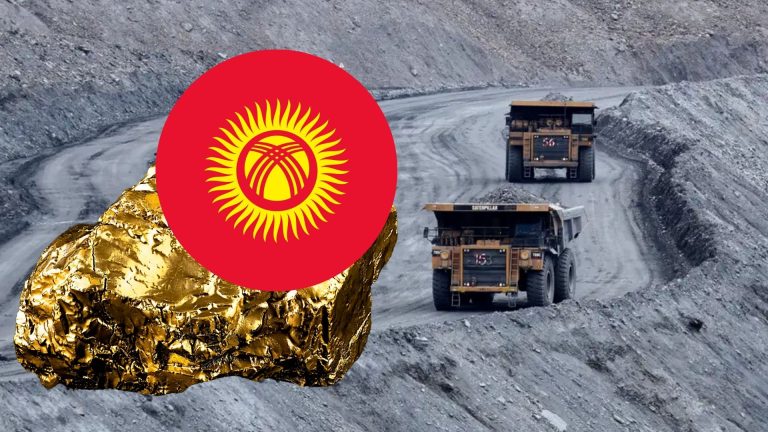
    At the start of the new year, Kyrgyzstan is taking stock of major mining projects implemented by domestic companies over the past period. One of the most significant developments came in August, when Kumtor Gold Company, one of the country’s largest subsoil users, launched underground gold mining at the Kumtor deposit in the Issyk-Kul region.

    At the same time, 147 tonnes of gold were added to the company’s balance sheet, providing enough reserves for 17 years of underground operations, which are being carried out alongside open-pit mining. Overall, the Kumtor mine is expected to remain in operation for at least another 40–50 years. The underground project is designed to minimize waste rock extraction and reduce environmental impact, including protecting local glaciers.

    Last year, Kumtor Gold Company also began processing tailings from the Kumtor tailings storage facility, expanding resource utilization. In August, several other mining enterprises were launched, including the Shah Tal gold mine in the Naryn region and the Kozho Kelen and Besh-Burkhan coal mines in the Osh region.

    In October, Kyrgyzgeology obtained a license to develop the Nasonovskoye polymetallic deposit in the Chui region, which is estimated to contain 751,000 tonnes of ore, 5.6 tonnes of gold and 4,600 tonnes of copper.

    Projects related to strategically important metals have received less public attention, though local media reported that a Kyrgyz-Chinese company for rare metals development was registered in April. At the INFOCM 2025 international forum on critical minerals in May, a representative of the Ministry of Natural Resources said Kyrgyzstan has 11 rare earth deposits, with Kutessay II among the largest, holding reserves of 63,300 tonnes.

  • Illegal Gold Mining Operation Uncovered in East Kazakhstan, Damage Estimated at 400 Million Tenge

    Illegal Gold Mining Operation Uncovered in East Kazakhstan, Damage Estimated at 400 Million Tenge

    Authorities in East Kazakhstan have uncovered two cases of illegal gold mining, including a major operation in the Shybынды River valley in Ulan district, where offenders extracted gold without a license for two years. According to Timur Mukanov, deputy head of the regional Department of Economic Investigations, the group altered the riverbed and caused significant environmental damage, with total losses estimated at 400 million tenge.

    During the investigation, officials confiscated 6.7 kilograms of gold, specialized equipment, machinery, and $56,000 in cash. The organizers of the illegal mining scheme have been detained, and the criminal case is being prepared for court.

    The department emphasized the importance of strict oversight to prevent unlawful extraction of precious metals. Regional environmental authorities noted that earlier violations in the mining sector had resulted in 9.7 million tenge in fines for companies and individuals in East Kazakhstan.

  • Zijin Mining Expands in Kazakhstan, Sees Over 200 Tonnes of Gold Potential at Raigorodok Deposit

    Zijin Mining Expands in Kazakhstan, Sees Over 200 Tonnes of Gold Potential at Raigorodok Deposit

    Chinese mining giant Zijin Gold International, a subsidiary of Zijin Mining Group, expects gold reserves at Kazakhstan’s Raigorodok deposit to exceed 200 tonnes, citing advanced recovery technology and favorable market conditions. The statement follows the company’s $1.008 billion acquisition of RG Gold, which owns the mining rights to Raigorodok — one of the largest active gold deposits in Kazakhstan’s Akmola region.

    The deal was finalized in mid-October, according to reports by inbusiness.kz. Initially valued at $1.2 billion, the final amount was adjusted due to existing liabilities. Zijin Mining, which raised $3.9 billion through a Hong Kong IPO in September, confirmed plans to invest an additional $500 million to build a new processing plant capable of treating 6–8 million tonnes of ore annually. The project is expected to create over 1,000 new jobs.

    Speaking at Kazakhstan Day, held during the China Mining 2025 exhibition in Tianjin, Liao Jiansheng, head of Zijin Eurasia Mining, said the company intends to make Raigorodok a model for green and high-tech gold mining. He emphasized that Zijin’s advanced extraction methods could increase gold recovery to more than 90%, significantly expanding proven resources.

    “The current plant and management are good, and local employees are highly skilled,” Liao said. “We’ll introduce our technologies carefully, ensuring a smooth transition. For us, this project is a shared success — both for Kazakhstan and Zijin.”

    Zijin plans to maintain compliance with Kazakh labor and investment laws, limiting the number of foreign specialists to the legal quota and prioritizing local employment. During the plant’s reconstruction phase, temporary Chinese technical experts will assist in modernization.

    The company holds a mining license valid until 2035, with the potential for renewal. The Raigorodok mine will continue to operate as an open-pit site, with Zijin exploring opportunities to expand its resource base through additional exploration and acquisitions in the Akmola region.

    Zijin also expressed interest in investing further in geological exploration in Kazakhstan, supported by Kazakh Invest and the Chinese Embassy, signaling its long-term commitment to the country’s mining sector.

    Founded in 1993, Zijin Mining Group is the world’s sixth-largest metal producer and China’s largest gold miner. As of 2024, the company controlled 4,000 tonnes of gold, 110 million tonnes of copper, 13 million tonnes of zinc and lead, and 17.9 million tonnes of lithium globally. In the first half of 2025, Zijin reported $23.4 billion in revenue and $3 billion in net profit, with operations in 17 countries and a workforce of 55,000.

  • China’s Zijin Mining Acquires Kazakhstan’s Gold Producer RG Gold

    China’s Zijin Mining Acquires Kazakhstan’s Gold Producer RG Gold

    Kazakhstan’s gold mining company RG Gold has officially been acquired by Zijin Gold International Co., Ltd., a subsidiary of Zijin Mining Group, one of the world’s leading mining corporations, Orda.kz reported.

    RG Gold operates the Raigorodok gold deposit in the Akmola region. The company had been managed by Kazakhstan’s Verny Capital Group since 2014, during which it underwent significant modernization — including new infrastructure, updated equipment, and expanded geological exploration.

    Since 2018, Verny Capital has developed RG Gold in partnership with the U.S.-based Resource Capital Funds (RCF). Under their management, the company’s resource base tripled over the past decade to reach 7.6 million ounces, in compliance with JORC standards.

    The partners also expanded the company’s production capacity. The Carbon-in-pulp (CIP) plant reached a throughput of 6.5 million tonnes per year by mid-2025, exceeding its design capacity of 5 million tonnes. The heap leaching facility has an additional capacity of 2 million tonnes per year.

    RG Gold currently employs around 1,200 people, making it one of the major employers in the Akmola region.

    The acquisition by Zijin Mining underscores the Chinese company’s growing footprint in Central Asia’s mining sector, following a series of strategic investments aimed at strengthening its global gold production portfolio.

  • RG Gold Reports Sharp Profit Increase for 2024 as Output and Revenues Surge

    RG Gold Reports Sharp Profit Increase for 2024 as Output and Revenues Surge

    RG Gold, controlled by Cantech S.a.r.l. on behalf of beneficiaries from Bulat Utemuratov’s family, announced a net profit of 80.5 billion tenge in 2024, up sharply from 46 billion tenge in 2023, according to the company’s published financial statements. Revenue rose to 221.8 billion tenge, compared to 167.7 billion tenge a year earlier. Despite higher profits, undistributed earnings fell to 103 billion tenge at the end of 2024, from 120 billion the prior year.

    The company’s performance was driven by strong operations at the North and South Raygorodok deposits in Akmola region, which form the backbone of RG Gold’s resource base. In 2024, almost all sales came from gold doré bars—with gold and silver content of at least 70%—delivered primarily to Kazakh refining companies like KazZinc (68% of sales) and Tau Ken (32%).

    In 2024, RG Gold declared 97.5 billion tenge in dividends, distributing 82.5 billion tenge net of 14.6 billion in taxes. Remuneration to key management personnel reached 739.7 million tenge, up from 660.7 million a year before.

    According to international reporting, the Raygorodok project generated USD 473 million in revenue and USD 202 million in net profit in 2024, underlining its profitability following recent technological upgrades and production expansions.

    RG Gold’s ownership structure links back to Swiss-based Timebrlay S.A. as trust manager and US-based Resource Capital Funds, alongside Utemuratov’s business interests. Bulat Utemuratov currently ranks sixth among Kazakhstan’s wealthiest, with a Forbes-estimated fortune of $3.7 billion.

    The company also continues to invest in exploration, particularly at Kovalevsky deposit, securing future resource growth. Robust market conditions and rising gold prices have underpinned this sharp improvement in financial results

  • Online Auction for Gold-Bearing Pirali Site in Navoi Region Closes with Record Bid

    Online Auction for Gold-Bearing Pirali Site in Navoi Region Closes with Record Bid

    Tashkent, Uzbekistan — An online auction for the right to conduct geological exploration at the gold-bearing Pirali site in Navoi region has concluded with a record-breaking bid, according to the official website of the E-auksion platform.

    The bidding process, which began on the morning of August 21, lasted 23 hours and 29 minutes, with a total of 461 bids placed. The winning bid was submitted by NBK 111, offering 99.09 billion soums—24 times higher than the starting price.

    Winner and Company Background

    According to the Unified State Register of Enterprises and Organizations (EGRPO), NBK 111 was registered in Tashkent in May 2024 and specializes in the mining of non-ferrous metal ores. The company’s charter capital stands at 1.005 billion soums. A 40% stake in NBK 111 is owned by Chinese citizen Zhang Qian, while the remaining 60% is controlled by Nurmahmad Pulatov. Pulatov also holds significant stakes in other enterprises, including a 90.7% share in Quwwatt Group (glass production in Jizzakh) and a 100% stake in BEEK Electro (electrical appliance manufacturing). All three companies share the same contact phone number, indicating potential business ties.

    Site Details and Gold Reserves

    The Pirali site covers an area of 484 hectares and is located in the Navbahor district, approximately 20.5 kilometers northwest of Zafarabad settlement and 38.5 kilometers north of the city of Navoi. Preliminary estimates suggest that the site contains gold reserves of around 2.4 tons.

    Recent Auction Activity

    This week has seen significant activity in the auctioning of major gold deposits in Uzbekistan. The Temirchi site in Navoi region was sold for 67.78 billion soums, while the Terekli site near Almalyk saw its price surge nearly 20-fold to 81.8 billion soums.

    The successful auction of the Pirali site underscores the growing interest in Uzbekistan’s mineral resources and the competitive nature of the country’s mining sector.

  • Strickland Metals Uncovers “Massive” Gold Find at Kotlovi Prospect in Serbia

    Strickland Metals Uncovers “Massive” Gold Find at Kotlovi Prospect in Serbia

    Australian mining company Strickland Metals has announced a major breakthrough at its Rogozna gold and base metals project in southern Serbia, reporting the discovery of a “massive” gold deposit at the newly identified Kotlovi prospect.

    In a statement released Wednesday, the company revealed that the first follow-up drill hole at Kotlovi delivered a 277.3-meter intercept grading 1.3 grams per tonne (g/t) gold equivalent, starting from a depth of 337.4 meters.

    “This first hole of our 2025 campaign at the new Kotlovi Prospect has been exceptional,” said Paul L’Herpiniere, Strickland’s Managing Director. “With several hundred metres of continuous mineralisation, including multiple higher-grade zones, Kotlovi is quickly becoming a key target for substantial resource growth.”

    Strickland has eight rigs currently active across the Rogozna project, with additional assay results expected in the coming weeks. The Kotlovi discovery sits just 350 metres west of the 1.28 Moz AuEq Medenovac deposit and joins three other major deposits already identified at Rogozna: the 5.30 Moz AuEq Shanac deposit, the 0.81 Moz AuEq Copper Canyon deposit, and the Gradina deposit—whose maiden resource estimate is expected by year-end.

    Covering 184 square kilometers and comprising four exploration licences, the Rogozna project holds an estimated 7.4 million ounces of gold equivalent to date, with potential to become one of the world’s largest undeveloped gold deposits. Strickland acquired full ownership of Rogozna in July 2024 through its $37 million acquisition of Betoota Holdings and its Serbian subsidiary, Zlatna Reka Resources.

    To accelerate exploration, Strickland also secured a AU$5 million investment from China’s state-owned Zijin Mining Group in April.

  • Navoi Mining and Metallurgical Combine Expands Capacity at Zarmitan Mine in Uzbekistan

    Navoi Mining and Metallurgical Combine Expands Capacity at Zarmitan Mine in Uzbekistan

    Navoi Mining and Metallurgical Combine (NMMC) has announced the expansion of its operations at the Zarmitan mine, part of its Southern Mining Department. Earlier this May, the company launched a new skip shaft at the site, as reported by the news agency Uza.

    NMMC has been implementing an investment project titled “Development of Lower Horizons of the Mining Complex Based on the Deposits of the Zarmitan Gold Ore Zone” for several years. Mine Construction Alliance s.r.o. was selected as the contractor for the construction of the vertical mine shaft. The same company is also responsible for deepening the “Main” shaft at Zarmitan.

    The shaft, with a diameter of 6.5 meters, has been extended to a depth of 1,000 meters. Ore extracted from various underground levels of the mine will now be lifted to the surface using the new shaft and then sent for processing at the fourth hydrometallurgical plant. Estimates indicate that up to 1.4 million tons of gold-bearing ore will pass through the facility annually.

    The annual economic impact of the skip shaft’s launch is projected at 19.2 billion UZS. Notably, the company expects to save on fuel costs for dump trucks, which would have otherwise spent more time transporting raw materials.

    The mine shaft is equipped with various automation systems, with all operations managed from a central control panel. NMMC claims that this project marks a significant breakthrough for Uzbekistan’s mining and metallurgical sector, highlighting advanced engineering and digital solutions.

  • Solidcore Reports Sharp Drop in Gold Output and Revenue Due to Sanctions and Delays

    Solidcore Reports Sharp Drop in Gold Output and Revenue Due to Sanctions and Delays

    Solidcore Resources reported a significant decline in gold-equivalent output for Q1 2025, producing 68,000 ounces — a 42% decrease compared to the same period last year. The company attributed the shortfall to delays in shipping concentrates from the Bakyrchik deposit (part of the Kyzyl project) to the Amur Hydrometallurgical Plant.
    In its statement, Solidcore highlighted ongoing “operational challenges” at the plant in Russia’s Khabarovsk region due to international sanctions. Last year, the company divested its Russian assets to Mangazeya Mining.
    As Solidcore prepares to launch the Irtysh Hydrometallurgical Complex in Kazakhstan’s Pavlodar region, it remains reliant on Russian facilities for processing its complex refractory and double-refractory ores. As a result, 41,000 ounces of gold in concentrate have accumulated over the quarter, with shipments to Amursk now expected to resume in May.
    The production drop was accompanied by a steep fall in sales: only 38,000 ounces of finished product were sold in Q1, down 67% year-on-year. Revenue shrank 2.7 times to $109 million.
    Despite these setbacks, ore extraction rose by 13% to 1.32 million tonnes, mainly due to the Kyzyl project. Total ore processing remained stable at 1.57 million tonnes. At the Varvarinskoye site, ore grades declined as expected, while Bakyrchik saw an improvement.