Tag: Gold Exploration

  • Digitisation of Historic Mineral Exploration Reports Boosts UK Mining Potential

    Digitisation of Historic Mineral Exploration Reports Boosts UK Mining Potential

    The Mineral Exploration and Investment Grants Act 1972 (MEIGA) has historically stimulated mineral exploration in the UK by providing grants for non-ferrous metals, fluorspar, barium minerals, and potash through the Government’s Department of Trade and Industry. Reports compiled during the 1970s and 1980s contain a wealth of information, including geological mapping, soil and stream sediment geochemistry, geophysical surveys, drillcore logs, and assay data. Until recently, these reports were only accessible in hard copy through the British Geological Survey’s (BGS) National Geoscience Data Centre (NGDC).

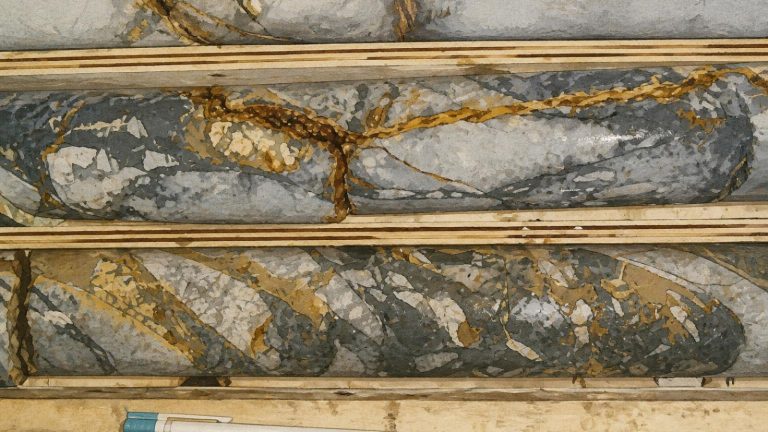
    In 2023, a digitisation programme, in collaboration with the UK Critical Minerals Intelligence Centre (CMIC), released an initial batch of over 200 mineral exploration reports. The ongoing digitisation efforts have now added an additional 660 reports to the accessible collection, making data collected over forty years ago relevant for identifying critical and precious metal resource potential within the UK. This initiative is particularly significant for the Ardlochan area in south-west Scotland, where Western Gold Exploration completed a shallow drilling programme at the end of 2025, discovering a large breccia pipe system rich in gold. The company utilised MEIGA materials generated by Noranda Mining Limited and Phelps Dodge in the 1970s to complement their own surveys and target other areas of interest.

    The MEIGA dataset is proving crucial in refining exploration targets, especially those associated with gold-rich porphyry-breccia systems. The historical reports provide insights into exploration concepts and decision-making processes used by major operators decades ago, allowing for a more confident reconstruction of Ardlochan’s geological story. By integrating these historic insights with modern techniques, companies can accelerate target development and reduce the uncertainty and costs associated with exploration.

    The digitisation of BGS archive documents represents a significant effort to valorise legacy datasets, which can greatly impact the exploration sector at minimal cost. The BGS, through CMIC and the NGDC, aims to enhance accessibility to these documents by employing machine learning methods for data extraction and developing large language models for personalised interactions with the archives. The renewed impact of the MEIGA archive underscores the importance of long-term stewardship of geoscience data, ensuring that historic materials can inform modern exploration efforts and unlock new scientific and economic opportunities. The success seen at Ardlochan exemplifies how well-curated archives can facilitate contemporary discoveries, proving that the past can indeed inform the future of mineral exploration in the UK.


  • Barys Resources Advances Gold Exploration in Kazakhstan with New Soil Samples

    Barys Resources Advances Gold Exploration in Kazakhstan with New Soil Samples

    Barys Resources (ASX:BRY) has initiated a significant step in its gold exploration efforts by sending 825 soil samples from its wholly owned Dalnee Gold Project and Karakul Gold Project in Kazakhstan for laboratory analysis. The samples, collected over an area of 14.6 square kilometres in the Balkhash region, are part of a comprehensive program aimed at generating targets for future drilling operations.

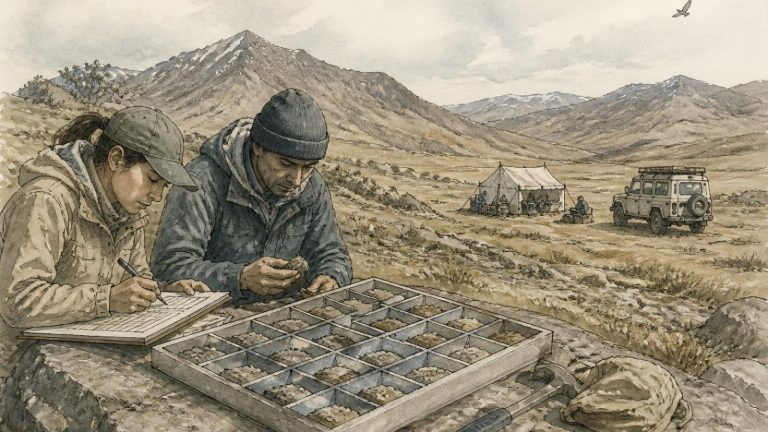
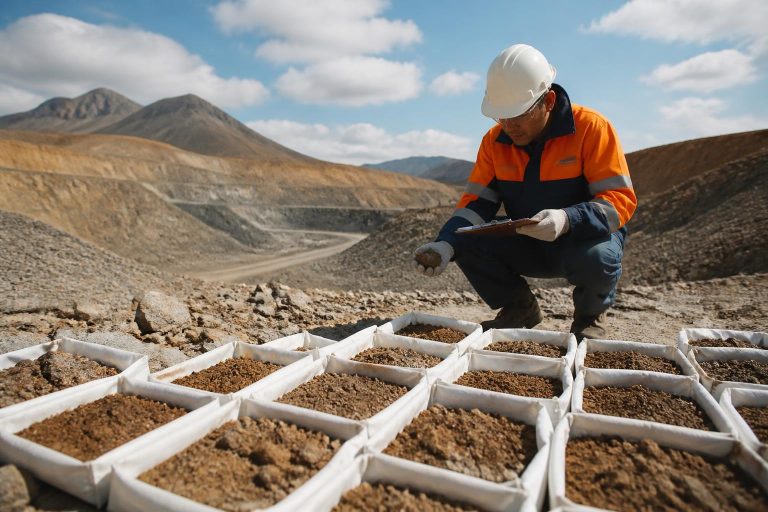
    Field crews employed a systematic approach to sample collection, gathering minus-80-mesh B-horizon samples at 100-metre intervals along north-south lines spaced 200 metres apart. This batch of samples, which includes quality assurance and quality control measures, has been dispatched to the ALS Laboratory in Karaganda for thorough gold and multi-element analysis. Barys anticipates that the assay results could take up to six weeks, as laboratories are currently managing increased workloads during Kazakhstan’s peak exploration season.

    The sampling campaign focused on seven distinct areas where Barys geologists have mapped alteration and mineralisation that overlap with anomalies previously identified through ASTER and Sentinel-2 satellite data. The observed alteration in these areas resembles the upper levels of porphyry copper systems, suggesting the potential presence of trace elements associated with epithermal gold mineralisation. The forthcoming assay results will be crucial in determining whether these areas exhibit significant geochemical anomalism.

    Managing Director Paul Ingram expressed satisfaction with the project’s progress, highlighting the collaboration with Aurora Minerals Group, a local geological services company. Ingram noted, “Barys has used the services of a Kazakhstan geological services company Aurora Minerals Group, whose professional work has been excellent. Barys geologists have just returned from visiting the site to monitor the work and will return to site to assist with additional sampling before week’s end.”

    This soil sampling initiative is part of a broader exploration program that includes ground magnetic surveys, geological mapping, rock chip sampling, and further soil collection. Barys plans to integrate the geochemical results with its geological and geophysical datasets to refine areas for potential drill testing.

    In addition to its two gold exploration licences in Kazakhstan’s North Balkhash region, Barys Resources also holds the wholly owned Agadez Uranium Project in Niger and minority interests in copper-silver projects within Botswana’s Kalahari Copper Belt. This diversified portfolio underscores Barys’ commitment to exploring and developing valuable mineral resources across various regions.


  • Goldsky Resources Initiates Metallurgical Testing at Barsele Project in Sweden

    Goldsky Resources Initiates Metallurgical Testing at Barsele Project in Sweden

    Goldsky Resources Corp, a publicly listed gold exploration company, has announced the commencement of metallurgical test work on composite samples from its Barsele Project in Sweden. The samples, weighing a total of 345 kg, have been sent to Alfred Knight in Truro, United Kingdom, for analysis. This test work is crucial for determining the power requirements and reagent dosage necessary for the project, which is expected to contribute significantly to the Preliminary Economic Assessment (PEA) scheduled for publication in 2027.

    The metallurgical testing will encompass a range of assessments, including crusher comminution tests, Bond rod mill and ball mill tests, gravity gold recovery tests, gold leach kinetic tests, and detoxification tests. These tests are designed to provide essential data that will inform the resource update at Barsele, which is currently host to an Indicated Mineral Resource of 7.88 million tonnes grading 1.27 g/t Au and an Inferred Mineral Resource of 28.75 million tonnes grading 1.98 g/t Au.

    Russell Bradford, CEO of Goldsky Resources, expressed enthusiasm about the initiation of this metallurgical test program, highlighting its importance for the company’s future operations and resource assessment. The entire program is expected to take approximately 16 weeks, with results to be released to the market as they become available.

    Goldsky Resources is consolidating assets in Sweden and Finland, with the Barsele Project being its flagship asset. The company holds a district-scale license position surrounding Barsele, covering around 80,000 hectares on Sweden’s Gold Line greenstone belt, which includes two additional projects, Paubäcken and Storjuktan. In Finland, Goldsky Resources owns the entire underexplored Oijärvi greenstone belt, including the Kylmäkangas deposit, the largest known gold occurrence in that region, as well as the Rajapalot gold-cobalt project in northern Finland.

    As the mining industry continues to evolve, the results from Goldsky’s metallurgical tests could play a pivotal role in shaping the future of the Barsele Project and the company’s strategic objectives in the region. Investors and stakeholders are keenly awaiting the outcomes of these tests, which are expected to provide valuable insights into the project’s economic viability and operational efficiency.


  • Bindi Metals Secures Approval for Maiden Drill Programme at Ravni Gold Project in Serbia

    Bindi Metals Secures Approval for Maiden Drill Programme at Ravni Gold Project in Serbia

    Australian explorer  has received approval from Serbia’s Ministry of Mining and Energy to commence its maiden drill programme at the Ravni high-grade gold project, located in the Raška mining district in southern . The approval remains subject to the completion of land access agreements.

    According to a filing with the Australian Securities Exchange, drilling activities will require agreements covering both privately owned land and government-managed forestry areas. Discussions with landholders and relevant authorities are ongoing and progressing in accordance with local regulatory requirements.

    Earlier this year, Bindi Metals reported high-grade gold and silver rock chip assay results from its mapping programme across multiple prospects at Ravni. Reported values included results of up to 48.7 grams per tonne gold, 22.8 grams per tonne gold, 181 grams per tonne silver, and 12.1 grams per tonne gold, highlighting the project’s exploration potential.

    Exploration at Ravni commenced in November following a binding agreement with Belgrade-based Red Creek, under which Bindi Metals can acquire up to an 80 percent interest in the project.

    The 30 square kilometre Ravni licence area lies within the Western Tethyan Magmatic Belt, a mineral-rich geological zone hosting several significant gold and copper deposits, including the Rogozna project in Serbia and the Vareš deposit in .

    Bindi Metals has already established a footprint in Serbia through the Lisa antimony-gold project and the Mutnica antimony-copper project, both acquired from  in 2024.

  • Tau-Ken Samruk Increases Gold Resources at Zhosabay Deposit in Akmola Region

    Tau-Ken Samruk Increases Gold Resources at Zhosabay Deposit in Akmola Region

    Tau-Ken Samruk has expanded gold resources at the Zhosabay site in Kazakhstan’s Akmola region following the results of its 2025 exploration campaign.

    According to updated geological data, total gold resources at the deposit have increased to 8.2 tonnes, representing a 68% rise compared with previous state balance figures. Of this, 787 kilograms were upgraded to the Measured category, Indicated resources rose by 1,338 kilograms, an increase of 30%, and Inferred resources expanded to 1,677 kilograms, marking a 248% increase.

    During 2025, the company completed 7.3 kilometres of drilling and updated the 3D geological model of the deposit.

    For 2026, Tau-Ken Samruk has planned 8.6 kilometres of additional drilling, of which 1.16 kilometres have already been completed. The exploration licence is held by Akmolit LLP, a subsidiary of Tau-Ken Samruk.

    The company intends to continue further exploration to improve the resource classification and submit updated resource and reserve data for inclusion in the state balance by the end of 2027.

  • Zhana Mys to Launch Six-Year Gold and Copper Exploration at Kara Kabyland Site in Abai Region

    Zhana Mys to Launch Six-Year Gold and Copper Exploration at Kara Kabyland Site in Abai Region

    Kazakhstan-based Zhana Mys LLP plans to begin geological exploration at the Kara Kabyland site in the Abai region, according to its statement of intended activity. The subsoil plot is located in the Ayagoz district, approximately 210 km east of the district centre of Ayagoz and 20 km south of the village of Emeltau.

    The exploration licence, issued by the Ministry of Industry in July 2025, covers 63 blocks with a total area of 145 square kilometres. The study programme is designed for a six-year period.

    Historical Soviet-era geophysical surveys in the area identified the promising Sharyk 1 gold prospect, along with other occurrences of copper, molybdenum, polymetals and gold. The Ayagoz district already hosts smaller gold deposits such as Taskora and Muzbel. Notably, aerial gamma-spectrometric methods were previously applied in the area, simultaneously measuring total radioactivity as well as uranium, thorium and potassium content.

    The exploration programme includes topographic and geodetic surveys, geochemical sampling, and geophysical work such as aeromagnetic surveys, induced polarization (IP-SG) electrical prospecting and profile electrical tomography. Mining and drilling operations will also be conducted to collect samples for laboratory analysis, alongside geological and hydrogeological assessments of potential development conditions.

    A light aircraft with a flight endurance of at least five hours will be used for комплекс aerogeophysical surveying at a scale of 1:20 000, according to the project documentation. Electrical prospecting is specifically aimed at identifying and delineating potential copper-porphyry mineralization zones and assessing their distribution within the licence area.

    Environmental documentation notes the presence of small rodents, lizards and venomous pit vipers in the area, as well as occasional sightings of saiga antelope, argali, hares, badgers, wolves and bustards. Migratory birds such as ducks and waders are observed during seasonal flights. The district is sparsely populated.

    No water bodies are located directly adjacent to the exploration site. The nearest major water body is Lake Balkhash, approximately 130 km away. The project area lies outside designated water protection zones.

    According to media reports, Zhana Mys previously held several licences in the Northern Balkhash region and in 2023 was among subsoil users that returned certain licences. Public records indicate that the company’s founder is Solidcore Eurasia, affiliated with gold mining holding Solidcore Resources, whose shares are listed on the Astana International Financial Centre exchange. Earlier licence registers published in 2023 listed Kanat Dosmukametov, head of Solidcore Eurasia, as the beneficial owner.

  • Strickland Metals Targets Major Growth with 70,000m Drill Campaign at Serbia’s Rogozna Gold Project

    Strickland Metals Targets Major Growth with 70,000m Drill Campaign at Serbia’s Rogozna Gold Project

    Strickland Metals has outlined an aggressive growth strategy for its Rogozna gold project in Serbia, positioning the asset as one of the largest undeveloped gold resources among ASX-listed explorers. The company plans to undertake a 70,000-metre drilling programme in 2026, the largest exploration campaign in the project’s history, ahead of delivering a Pre-Feasibility Study (PFS) in the first half of 2027.

    The Rogozna project currently hosts a total resource of 8.6 million ounces of gold equivalent (AuEq) across four defined deposits, representing a 58% increase from the 5.4 million ounces announced in 2024. The deposits include Gradina, Shanac, Medenovac and Copper Canyon, with Shanac accounting for the largest share at 5.3 million ounces AuEq. Gradina stands out for its higher grade, hosting 1.2 million ounces at 3.0g/t AuEq, offering strong underground mining potential with recoveries of around 90% through conventional flotation.

    Strategic validation has come from Zijin Mining, which holds a 4% stake in Strickland. Zijin is already the largest mining operator in Serbia, and its investment provides both technical endorsement and regional credibility.

    Serbia’s mining jurisdiction is considered favourable, located within the Western Tethyan Belt and home to multiple large porphyry systems. The country is Europe’s third-largest copper producer, with mining contributing approximately 2.7% of GDP. Major international operators including Rio Tinto and BHP are present in the country, reinforcing its status as an established mining destination.

    Recent drilling has delivered two new discoveries within 15 months. At Red Creek, located near Shanac, drilling returned intercepts including 53 metres at 2.3g/t AuEq. At Kotlovi, west of Medenovac, results included 277.3 metres at 1.3g/t AuEq. Both zones remain open in multiple directions, suggesting further resource growth potential.

    In February 2026, Strickland completed an oversubscribed A$55 million institutional placement, lifting its cash position to A$68.2 million and increasing institutional ownership to 38%. The company is fully funded through PFS completion in H1 2027, supporting both the large-scale drilling programme and ongoing technical studies.

    The 2026 programme will include resource expansion drilling, scoping studies, additional discovery testing across the 184km² licence area and porphyry exploration. Multiple resource updates are expected through late 2026, culminating in PFS delivery in early 2027.

    With a current market capitalisation of approximately A$592 million, the company trades at roughly US$49 per contained ounce of gold equivalent. The scale of the resource base, ongoing exploration success and strategic backing position Rogozna as one of the most significant gold development projects among ASX-listed companies.

  • Altyn Ken Group Plans Gold Exploration at Mazhera Site in East Kazakhstan

    Altyn Ken Group Plans Gold Exploration at Mazhera Site in East Kazakhstan

    Altyn Ken Group LLP has unveiled a geological exploration programme for hard minerals at the Mazhera site in the Ulan district of East Kazakhstan Region, where gold is expected to be identified across three blocks.

    The company plans to carry out topographic surveying and drill 20 exploration wells with depths ranging from 100 to 200 metres, totalling 3,000 linear metres. Additional geological exploration activities will also be undertaken.

    According to the company’s environmental notification, geochemical work will include lithogeochemical surveying across 80% of the site, with up to 1,000 samples taken at depths of 15–20 cm and analysed for gold using fire assay methods. The objective is to study geological conditions and rock composition, assess peat and sand thickness, determine gold grades in grams per cubic metre, and evaluate the material composition and processing properties of ores and sands in order to select appropriate beneficiation methods. Resource estimates will be calculated in accordance with KazRC standards.

    Altyn Ken Group received its exploration licence from the Ministry of Industry and Construction on 26 December 2025. The company notes that the Mazhera site lies outside the state forest fund, and, according to the National Geological Service, there are no groundwater deposits within the area. The nearest settlement, the village of Zhanuzak, is located 8.4 km east of the site boundary.

    Exploration operations will utilise diesel-powered equipment, including a front-end loader, drilling rig, diesel generator unit, fuel tanker, excavator, water truck, bulldozer, two shift minibuses and a Toyota Hilux SUV. The drilling rig is expected to achieve between 500 and 800 linear metres per month. A team of 16 specialists will work on a rotational basis, either 15/15 or 30/30 days.

    The total area of the Mazhera geological allotment covers 6.48 square kilometres. Exploration is scheduled to begin in the first quarter of 2026 and conclude in the first quarter of 2031.

    The final output of the project will consist of geological data, including core samples, primary documentation, geological maps and a final report with gold and polymetallic resource estimates under categories C2 and P1 for inclusion in the state balance.

    Altyn Ken Group is jointly owned by Xingwang Engineering Kazakhstan Co., Ltd and Inzhu Caspian Gold LLP. The company was registered on 13 November 2025, with Zeng Qi listed as its head. Xingwang Engineering Kazakhstan is fully owned by Guizhou Xingwang Engineering Co., Ltd, while Inzhu Caspian Gold is wholly owned by Aruzhan Sanaeva.

    Earlier, Qazba reported that Shakhtostroy-Gold LLP plans to begin gold exploration in 2026 in the Ulken Naryn district of East Kazakhstan Region.

  • Zijin to Lift Stake in Strickland Metals via A$55 Million Placement for Serbia Gold Project

    Zijin to Lift Stake in Strickland Metals via A$55 Million Placement for Serbia Gold Project

    China’s  is set to increase its shareholding in Australia’s  through a A$55 million institutional placement aimed at accelerating development of the Rogozna gold project in southern Serbia.

    Strickland said on Tuesday that Zijin will invest A$5 million in the placement, lifting its stake to 4.0% from 3.3%. The company plans to issue about 343.2 million fully paid ordinary shares at A$0.16 per share, according to a filing with the .

    Funds raised will support an expanded 70,000-metre drilling programme at Rogozna in 2026, with the aim of delivering updated resource estimates in late 2026 for the Shanac, Gradina and Copper Canyon deposits. Additional drilling is also planned at the Red Creek prospect following a recent discovery.

    The proceeds will further be used to advance a pre-feasibility study for Rogozna, targeted for completion in the first half of 2027. Earlier on Tuesday, Strickland reported a new high-grade gold and base metals discovery at Red Creek, its second since acquiring Rogozna in mid-2024.

    Last month, Strickland increased Rogozna’s inferred mineral resource estimate to 8.6 million ounces of gold equivalent from 7.4 million ounces, following a maiden estimate for the Gradina deposit. Rogozna comprises four exploration licences covering around 184 square kilometres and is considered a potential candidate to become one of the world’s largest undeveloped gold deposits.

    Zijin already has a significant presence in Serbia through its mining subsidiaries, operating copper and gold assets in the eastern part of the country, underscoring its growing interest in the region’s mineral potential.

  • Eldorado Gold Uncovers Multiple High-Grade Zones and Eyes Expansion at Key Assets

    Eldorado Gold Uncovers Multiple High-Grade Zones and Eyes Expansion at Key Assets

    Eldorado Gold Corporation has reported a series of significant high-grade discoveries across its exploration portfolio, reinforcing the potential for mine life extensions and future production growth in Canada and Greece. The company also confirmed it has launched studies to assess a possible expansion of processing capacity at its Lamaque Complex in Quebec.

    At Lamaque, recent drilling identified four new high-grade zones around the Ormaque deposit and the historic Lamaque Mine. These include the newly defined Ormaque South-East zone, extensions to the west of Ormaque, the Garnet Zone north of the deposit, and additional mineralization at Lamaque South. The results confirm the presence of multiple stacked and laterally continuous vein systems located close to existing infrastructure, strengthening the case for low-risk, capital-efficient growth. On the back of these results, Eldorado has begun studies to increase throughput at the Sigma mill from around 2,500 tonnes per day toward its fully permitted capacity of 5,000 tonnes per day.

    In Greece, exploration at the Olympias mine outlined a new North West zone with high gold, silver, lead and zinc grades located within 200 metres of current underground workings. Drilling at the West Flats area also intercepted thick massive sulphide mineralization beyond the existing resource, pointing to further expansion potential. In parallel, Eldorado confirmed the discovery of a gold-copper skarn system along the Stratoni Fault, near historic mining operations, adding a new target style to the Kassandra district.

    The company said these discoveries highlight strong upside across its portfolio and support continued investment in exploration. Eldorado plans a substantially expanded drilling programme in 2026 across Quebec, Greece and Turkiye, with total exploration spending expected to rise to between $75 million and $85 million as it targets both resource growth near existing mines and earlier-stage discovery opportunities.