Tag: Germany

  • Vulcan Energy to Begin Large-Scale Lithium Production in Germany by 2027

    Vulcan Energy to Begin Large-Scale Lithium Production in Germany by 2027

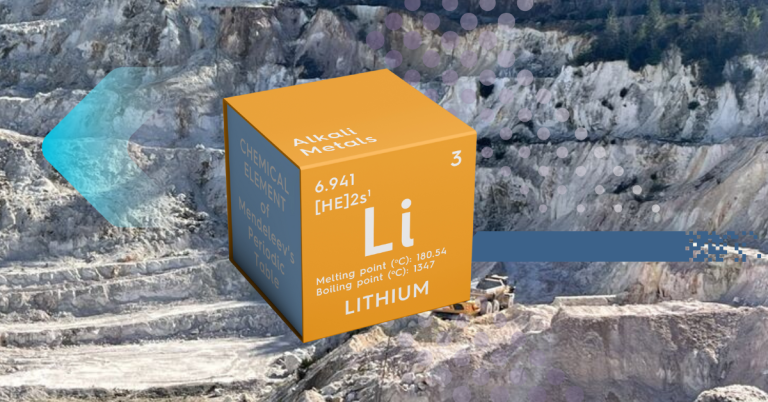
    Vulcan Energy Resources, a company focused on producing sustainable lithium, has announced its goal to begin large-scale lithium hydroxide production in Germany by 2027, after pushing back its timeline by two years. The company recently commenced operations at its lithium chloride demonstration plant in Landau and aims to produce 24,000 tons of lithium hydroxide annually—enough to support 500,000 electric vehicles. CEO Christian Freitag cited the extended financing process as a factor in the delay, with Vulcan now raising €1.9 billion. Funding will include over €600 million in equity and €1.3 billion in loans from multiple sources, including a €500 million commitment from the European Investment Bank.

    This production marks a significant step for Europe’s energy goals, helping reduce dependence on lithium imports from China and South America. Vulcan’s extraction method, powered by geothermal energy, aligns with Germany’s goal for a low-carbon lithium source to support the EV sector’s growing demand. Vulcan has already sold its first decade’s production through agreements with major automotive manufacturers like Volkswagen, Stellantis, and Renault, underscoring the anticipated demand surge in Europe for lithium-ion battery components.

  • Germany May Turn to Its Own Lithium Deposits Amid Growing Interest

    Germany May Turn to Its Own Lithium Deposits Amid Growing Interest

    A growing discussion is emerging in Germany regarding the exploitation of its lithium deposits, particularly among media professionals and government circles. The question raised is why Germany should rely on Serbian lithium when it possesses its own deposits, allowing for greater control and profit. Notably, the country has vast lithium reserves, primarily located along the Rhine River near Insheim and Altenberg. Research is already underway at these sites, which are considered some of the largest in Europe.

    The delay in tapping these resources stems from concerns about environmental and safety risks. In Insheim, fears of earthquakes triggered by geothermal drilling have been a major obstacle. However, new hydrothermal methods, which use existing water pathways underground, are seen as a safer alternative. Another challenge is the carbon footprintassociated with lithium extraction, but Vulcan Energy Ltd has pioneered a process that extracts lithium with zero carbon emissions by using geothermal energy, as reported by Rob Schmitz of NPR.

    On the political front, German Chancellor Olaf Scholz recently visited the Altenberg site following a memorandum signed with Serbia. The Zinnwald Lithium mine, set to open in 2030, could supply lithium for up to 600,000 electric vehicles, offering a more self-reliant source for Germany’s electric vehicle industry. This shift toward domestic lithium could reduce Germany’s reliance on foreign sources, including Serbia, and secure more of the profit chain for itself.

  • Kyrgyz President Calls for Enhanced Climate Cooperation at Central Asia-Germany Summit

    Kyrgyz President Calls for Enhanced Climate Cooperation at Central Asia-Germany Summit

    The President of Kyrgyzstan, Sadyr Japarov, urged his counterparts to increase cooperation on climate change during the Central Asia-Germany Summit, according to a statement from the President’s press office. In his speech, Japarov highlighted the growing global influence of Central Asia in recent years. He stressed that regional and interregional integration is essential for a shared future.

    Japarov also expressed optimism that sustained collaboration between Kyrgyzstan and Germany could lead to stronger investment and trade partnerships. He pointed out Kyrgyzstan’s vast potential in green energy and metal mining, particularly in rare-earth elements.

    Addressing the urgent need for climate cooperation, Japarov noted a worrying statistic: Kyrgyzstan’s glaciers have shrunk by 16% over the last 70 years. He also cited the lack of funding as a major obstacle to achieving the targets of the Paris Climate Agreement, with limited options for broad public financing of environmental initiatives. As a solution, he proposed a new mechanism of exchanging public debt for green projects to support climate action.

  • Germany Launches Raw Materials Fund to Bolster Supply Chains

    Germany Launches Raw Materials Fund to Bolster Supply Chains

    Germany has introduced a €1 billion ($1.1 billion) investment fund aimed at securing critical raw materials and strengthening its supply chains. This initiative seeks to reduce the country’s reliance on foreign suppliers, particularly from regions like China, which dominate the production of essential materials needed for technologies such as electric vehicles and renewable energy systems. By boosting investment in these critical sectors, Germany aims to ensure a stable, long-term supply of raw materials necessary for the green and digital transitions, while also enhancing its economic resilience. The fund forms part of broader European efforts to diversify supply chains and reduce vulnerability to geopolitical risks.

  • Uzbekistan and Germany Strengthen Cooperation on Critical Mineral Resources and Industrial Projects

    Uzbekistan and Germany Strengthen Cooperation on Critical Mineral Resources and Industrial Projects

    Uzbekistan and Germany have engaged in discussions to enhance collaboration on the development and deep processing of critical mineral resources, as well as the production and export of high value-added goods. This was a key topic during a meeting between Uzbek President Shavkat Mirziyoyev and German Chancellor Olaf Scholz, held in Samarkand with representatives from leading companies and banks from both nations.

    The discussions involved prominent figures such as Michael Kellner, Germany’s Parliamentary State Secretary for Economic Affairs and Climate Action, and Michael Harms, Managing Director of the Eastern Committee of German Industry. Major German companies like KNAUF, Siemens Energy, Linde Group, and Aurubis participated, along with financial institutions such as KfW Development Bank and AKA Bank.

    The meeting highlighted the successful outcomes of high-level negotiations, supporting Uzbekistan’s strategic priorities for economic transformation and sector modernization. Both sides agreed on measures to accelerate joint investment projects and trade agreements under a new Program for Industrial and Technological Partnership. Key sectors identified for collaboration include green energy, chemical industry, green hydrogen, machine engineering, textile industry, and pharmaceuticals.

    President Mirziyoyev and Chancellor Scholz emphasized the importance of continuing joint projects in sectors such as construction materials, metallurgy, energy, transportation infrastructure, and agriculture. Scholz’s official visit to Uzbekistan took place on September 15-16, further strengthening bilateral ties.

  • Serbian President Demands German Guarantee for Environmental Protection in Lithium Mining

    Serbian President Demands German Guarantee for Environmental Protection in Lithium Mining

    “We will not open a lithium mine until the Germans guarantee that we will have clean rivers and mountains,” said Serbian President Aleksandar Vučić, emphasizing the need for dialogue on utilizing this crucial strategic resource. The Serbian government suspended the regulation for the lithium mining area two years ago after massive protests against a mine in the Jadar Valley. At the time, Prime Minister Ana Brnabić stated, “We have ended the agreement with the Rio Tinto company in Serbia.”

    Four and a half years later, it appears that the agreement hasn’t completely ended. Brnabić now claims that “lithium opponents have slowed everything down,” adding that Serbia, by using lithium domestically for battery production instead of exporting it, could become a European leader for the next century. She criticized opponents, claiming their resistance aims to “destabilize Serbia.” Vučić argued that the ban on lithium mining was a “manipulative move by Western intelligence services to stop our development.”

    The Serbian lithium debate has become a geopolitical issue. The discussion reignited after the adoption of the European Critical Raw Materials Act (CRMA), which includes Serbian lithium. Vučić and European Commission Vice-President Maroš Šefčovič signed a pledge for strategic cooperation between Serbia and the EU regarding the CRMA act.

    Tilman Kuban, a German MP from the Christian Democratic Union Party (CDU/CSU), emphasized the importance of ensuring all project aspects are verified, viewing it as a significant opportunity for Serbia to support Europe. Vučić recently called on Germany to act as a judge in the case of lithium mining, despite numerous opinions from Serbian scientists and institutions like the Serbian Academy of Arts and Sciences (SANU) and the University of Belgrade.

    Germany’s role in the lithium issue in Serbia is not new. Petar Đurčić, a researcher at the Institute for European Studies, noted Germany’s interest in Serbian lithium since the topic first arose. During her farewell visit to Serbia in September 2021, former German Chancellor Angela Merkel acknowledged Germany’s interest in Serbian lithium, given its importance for battery development and future mobility, while also stressing the need for ecological standards.

    Despite the fluctuating relationship between the Serbian government and Germany, Kuban’s visit and statements could be significant, especially since the CDU has the highest approval ratings in Germany and may return to power in the next election. Đurčić explains that Kuban, supporting Bavarian Prime Minister Markus Söder as a chancellor candidate, represents a faction within the CDU.

  • Vestas and LEAG Collaborate on 105 MW Wind Energy Project in Germany

    Vestas and LEAG Collaborate on 105 MW Wind Energy Project in Germany

    In a significant step towards Germany’s renewable energy goals, Vestas and LEAG have announced a 105 MW order for the wind energy project “Forst-Briesnig II” in the Lausitz region. The project will feature 17 V162-6.2 MW wind turbines from Vestas, encompassing the supply, delivery, and commissioning of the turbines. Upon completion, Vestas will maintain the turbines under a 20-year Active Output Management 5000 (AOM 5000) service agreement, ensuring optimal performance and longevity.

    Located on a former brown coal mining site, this project marks a pivotal moment for LEAG, representing their first foray into wind energy through their subsidiary, LEAG Renewables GmbH. This initiative is part of a broader transformation of the Lausitz region into a renewable energy hub under the GigawattFactory project. “Securing the second-largest building permit for an onshore wind farm in Germany and finalizing this contract are key milestones for the successful realization of the Forst-Briesnig II wind farm,” said Dominique Guillou, CEO of LEAG Renewables GmbH.

    Jens Kück, Senior Vice President Sales Onshore of Vestas Northern and Central Europe, highlighted the project’s significance, describing it as a “lighthouse onshore wind project” that exemplifies the transition from fossil fuels to renewables. Thorsten Kramer, CEO of LEAG, emphasized the strategic importance of partnering with Vestas to advance the GigawattFactory, aiming to establish one of Germany’s largest onshore renewable energy networks.

    Tomáš David, senior executive at EP Corporate Group, the controlling shareholder of LEAG, remarked on the investment’s transformative nature, positioning it as a crucial component of their strategy to shift from conventional to sustainable power generation. Turbine delivery is expected to begin in the fourth quarter of 2025, with commissioning slated for completion by the third quarter of 2026.

  • EU Requests Profit-Based Backstop for Germany’s €1.75 Billion Coal Shutdown Payout

    EU Requests Profit-Based Backstop for Germany’s €1.75 Billion Coal Shutdown Payout

    The EU is urging Germany to include a profit-based backstop in its €1.75 billion ($1.9017 billion) payout for the early shutdown of the operations of its second-largest coal miner. A state payment of up to €1.2 billion to an entity of Czech billionaire Daniel Kretinsky’s EPH Group AG has been preliminarily approved by the European Commission, according to Germany’s economy ministry. The remainder of the payout will depend on the future profitability of the assets.

    The approved sum, as reported by Bloomberg on May 31, is intended to cover costs for mine rehabilitations, closures, and the impact on jobs. To prevent overcompensation, Lausitz Energie Bergbau AG (LEAG) will be required to provide proof of future costs and will be compensated from the remaining sum of €550 million, according to a letter from the EU’s Competition Commissioner Margrethe Vestager.

    Germany is working to accelerate the phaseout of coal in its power generation mix after failing to meet its emissions reduction targets. In 2020, the government agreed to pay billions of euros in compensation to LEAG and RWE AG to shut down coal-fired power plants by 2038. Now, to cut carbon emissions faster, the state is negotiating to advance the coal exit by eight years.

    In 2022, RWE agreed to a 2030 phaseout and will receive €2.6 billion in state payments. LEAG is still negotiating, aiming to continue burning coal beyond the end of the decade. Fossil fuel plants have to pay for carbon permits, and rising costs could squeeze coal profits. The backstop measure is designed to address this—if LEAG shuts down plants early due to unprofitability, the subsidy would be reduced. LEAG maintains that coal will remain profitable until 2038, the current legal exit date.

    “This is a bet on the future,” economy minister Robert Habeck said at a press conference in Berlin, noting the difficulty in calculating foregone profits for 2038. The European Commission still needs to give its final decision on the payment.

  • Vulcan Energy Resources Secures €40m for Zero Carbon Lithium Project

    Vulcan Energy Resources Secures €40m for Zero Carbon Lithium Project

    Vulcan Energy Resources has successfully secured a total of €40m ($43m) through a private placement to support the construction work for its phase one integrated Zero Carbon Lithium Project in Germany. Under the terms of the private placement, Vulcan issued ten million shares to CIMIC Group for €25m, five million shares to Hancock Prospecting for €12.5m, and one million shares to Victor Smorgon Group for €2.5m.

    The new shares, priced at €2.50 each, were offered at a 9% discount to Vulcan’s 30-day volume-weighted average price and will rank equally with existing ordinary shares.

    These strategic investments are crucial for funding pre-execution activities during the final stage of project financing and for maintaining the deterministic execution schedule of the project. CIMIC’s €25m investment will establish the company as a substantial shareholder in Vulcan, holding a 6% stake in the outstanding share capital.

  • Germany’s Climate Change Targets at Risk, Urgent Action Needed

    Germany’s Climate Change Targets at Risk, Urgent Action Needed

    Germany’s climate advisory body has issued a call for immediate policy measures to address the country’s escalating greenhouse gas emissions, cautioning that it is on track to miss its 2030 climate change targets. In a report released on Monday, the Council of Experts on Climate Change, an independent body appointed by the government, emphasized that Germany is unlikely to achieve its goal of reducing emissions by 65% by the end of the decade compared to 1990 levels.

    The council highlighted sectors such as transport and construction as particularly problematic in terms of decarbonization efforts. These sectors are facing significant challenges in transitioning to cleaner energy sources and reducing their carbon footprint. The findings directly contradict statements made by German Climate Protection Minister and Vice Chancellor Robert Habeck, who had previously claimed that emissions were decreasing and the country would meet its targets based on projections from the Federal Environment Agency (UBA).

    According to the Council of Experts on Climate Change, the UBA’s estimates were overly optimistic, and the emissions from the energy, building, and transport sectors had been underestimated. This indicates a pressing need for additional action and stronger measures to be taken to curb emissions effectively.

    Under the Climate Protection Act, if the council’s findings are confirmed in its next annual report in 2025, the government will be required to implement further measures to meet its 2030 targets. However, the council’s chairman, Hans-Martin Henning, advised against waiting for the targets to be missed again and instead recommended prompt examination and implementation of additional measures.

    The council also warned that Germany may face challenges in meeting future targets, including its aim to reduce emissions by 88% by 2040 compared to 1990 levels and achieve climate neutrality by 2045. The transition away from burning fossil fuels is considered crucial in addressing the global warming threat and reducing emissions.

    The release of the council’s report coincides with ongoing government negotiations in Bonn, Germany, where officials are laying the groundwork for the upcoming COP29 climate summit in Baku, Azerbaijan, scheduled for the end of the year. The discussions are expected to focus on the contentious issue of funding the escalating costs associated with climate change.