Tag: geopolitical competition

  • US Extends Critical Minerals Lead With $46B Push

    US Extends Critical Minerals Lead With $46B Push

    The United States is significantly outpacing Europe in securing critical minerals outside China, raising concerns about potential European dependence on Chinese supplies for years to come. According to analysis by the French Institute of International Relations cited by The Wall Street Journal, Washington has committed approximately $46 billion to critical raw materials projects over the past five years through a combination of grants, loans, and tax incentives – roughly eight times the amount allocated by the European Union during the same period. This substantial funding disparity underscores the strategic importance both superpowers place on securing reliable supplies of essential minerals needed for clean energy transition, defence applications, and advanced manufacturing.

    The aggressive US strategy extends beyond domestic investment, with Washington actively negotiating preferential access to mineral resources in key countries including the Democratic Republic of Congo and Ukraine, whilst simultaneously backing overseas projects through comprehensive financing programmes. This multi-faceted approach has already begun to disrupt European efforts to establish independent supply chains. London-based rare earth developer Pensana, which is developing the Longonjo project in Angola, has shifted its plans for a processing plant from Britain to the United States to pursue Export-Import Bank financing. Similarly, Brazilian rare earth producer Serra Verde, which operates a mine in Goiás state, secured US government-backed financing and subsequently agreed to sell its magnetic rare earth production under a long-term arrangement supported by Washington. These high-profile shifts demonstrate the competitive advantage the US financing ecosystem provides to critical minerals projects globally.

    European industry leaders have expressed significant concerns about the implications of this trend, with some warning that the US could come to dominate emerging non-Chinese supply chains. Pensana founder Paul Atherley characterised the situation as “friendly fire” to other Western countries, highlighting the tension between allied nations competing for the same resources. In response, the European Union is mobilising its own resources and diplomatic efforts. The bloc has announced plans for a €3-billion ($3.4 billion) financing hub, strategic stockpiles, and strategic partnerships with countries including Canada, Argentina, Norway, and South Africa. By 2030, the EU aims to ensure that no single country supplies more than 65 per cent of its strategic raw material needs, representing a comprehensive approach to reducing supply chain vulnerability and building resilience in critical minerals sourcing.


  • US–Central Asia Summit Triggers Wave of Strategic Metals Deals Across the Region

    US–Central Asia Summit Triggers Wave of Strategic Metals Deals Across the Region

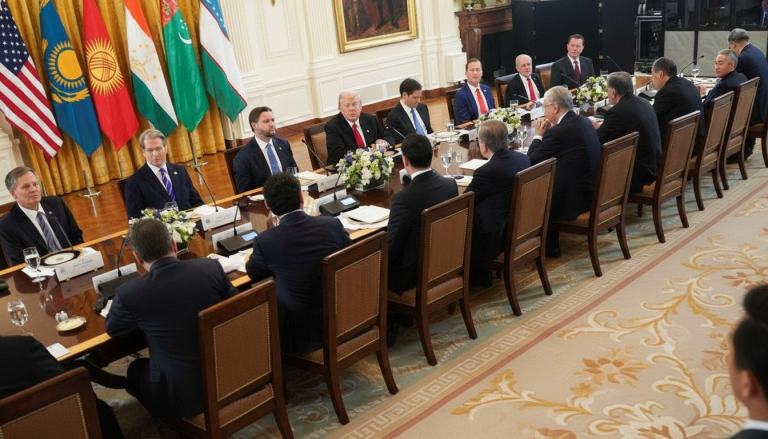
    A series of major announcements followed the recent US–Central Asia Summit in Washington, where American companies outlined plans to step up exploration and extraction of strategic minerals in Kazakhstan, Uzbekistan, and neighboring states. The push aligns with President Donald Trump’s call to secure critical materials for the United States amid efforts to reduce dependence on China, which currently dominates global supply chains.

    One of the largest initiatives involves a $1.1 billion joint venture between Kazakhstan’s Kazgeologia and US-based Cove Capital to develop the North Katpar and Verkhnee Kairakty tungsten deposits—assets holding roughly 1.3 million tonnes of tungsten oxide. This comes after reports that China attempted to outbid the US for the same project, highlighting growing strategic competition between the two powers. While American companies seek access to tungsten for defense applications, Chinese firms such as Jiaxin International Resources continue expanding their own footprint in Kazakhstan, including at the Boguty deposit.

    Uzbekistan also announced agreements with two US companies—Denali Exploration Group and ReElement Technologies—focused on rare earth elements. Earlier this year, Tashkent signed a separate memorandum with China National Gold Group, underscoring the region’s role as a battleground for critical mineral partnerships.

    Experts say the surge in US interest poses minimal risk to Russia, whose investment focus in Central Asia remains tied to oil, gas, and uranium via Rosatom and Kazatomprom. Analysts argue that Central Asian states are leveraging geopolitical competition to secure better investment conditions, diversify partners, and strengthen their bargaining power with Russia and China.

    At the same time, they caution that the new agreements carry risks for the region, particularly if they mirror the disadvantageous production-sharing contracts of the 1990s. Some deals involve large purchases of US-made goods, such as aircraft, rather than localised production, which could create long-term financial obligations.

    Still, specialists note that Donald Trump’s approach remains pragmatic: securing critical minerals for US industries while opening new export markets. For Central Asia, the challenge will be to balance relationships across the US, China, Russia, and the EU, extracting maximum benefit while avoiding overdependence on any single power.

  • Pipelines and Rare Elements: How Central Asia Became America’s New Geo-economic Frontier

    Pipelines and Rare Elements: How Central Asia Became America’s New Geo-economic Frontier

    The C5+1 summit held in Washington on November 6, 2025, marks a new chapter in U.S.–Central Asia relations, shifting the focus from energy pipelines to strategic mineral resources. Rare earth elements are now central to Washington’s strategy against China, which dominates mining and processing globally.

    Recent agreements—highlighted by substantial investments in Kazakhstan’s tungsten mines and commitments to Uzbekistan—illustrate a strategy that blends economic aims with national security, defense modernization, and leadership in green technologies. By partnering with Kazakhstan, Uzbekistan, and Turkmenistan, the U.S. seeks to counter China’s and Russia’s longstanding influence, establishing a “new resource-centered” framework for engagement. Rare earths are becoming tools of strategic power, supplanting traditional energy diplomacy and strengthening supply chains for renewable energy.

    This shift extends beyond resource access; mining investments are shaping political, economic, and diplomatic orientations across Central Asia, challenging China’s Belt and Road Initiative through economic means. The U.S. approach converts energy diplomacy into “mining diplomacy,” turning Central Asia into a global geo-economic crossroads.

    America’s renewed focus reflects a broader repositioning—building “strategic balancing” structures rather than pursuing mere economic or military dominance. The C5+1 format has become the central mechanism for promoting a model of regional integration that excludes Russia and China, offering a “third way” rooted in soft power, sustainable development, and technological partnerships.

    Strengthening transport routes like the Trans-Caspian corridor aims to liberate Central Asia from Russia’s logistical grip and curtail China’s influence over the Middle Corridor. Moscow and Beijing view these moves as containment strategies, intensifying geopolitical competition while granting Central Asian states greater autonomy through multilateral diplomacy.

    Ultimately, America’s strategy is about establishing a new Eurasian power architecture. Its success will depend on delivering sustainable investments and on Central Asian states maintaining independent balancing acts amid great-power competition.

  • Global Tensions Rise as Nations Compete for Critical Minerals and Rare Earth Elements

    Global Tensions Rise as Nations Compete for Critical Minerals and Rare Earth Elements

    The world is on the verge of a new geopolitical conflict centered around rare earth elements (REEs)and critical minerals, which are essential for high-tech industries, clean energy, space exploration, and military technologies. These resources have become the focal point of global competition, driven by their strategic importance and economic value.

    Countries like the United States, China, and emerging powers such as Türkiye are aggressively positioning themselves to secure access to these minerals. For instance, former U.S. President Donald Trump has pursued aggressive policies toward Ukraine, Greenland, and Canada, aiming to leverage their mineral-rich territories. Ukraine, which holds 5% of global rare earth reserves and the largest titanium reserves in Europe, is being courted by the U.S. for a $500 billion REE deal in exchange for security guarantees.

    China currently dominates the REE market, controlling one-third to half of global reserves and nearly 95% of production capacity. This monopoly has raised concerns among Western nations, who are increasingly dependent on Chinese supplies. The U.S. Department of Energy and the European Commission have classified these materials as strategic commodities, prompting efforts to reduce reliance on China and diversify supply chains.

    Meanwhile, Türkiye is emerging as a key player, with significant boron reserves and the discovery of the Eskişehir REE reserve, positioning it second only to China. The Turkish government is investing heavily in mapping and securing its mineral resources to achieve strategic commodity independence.

    As demand for REEs surges due to advancements in green technologies, artificial intelligence, and defense systems, nations are scrambling to secure their share of these vital resources. The competition is not just about economic gain but also about geopolitical influence and national security.