Tag: Geological Survey

  • Kazakhstan’s Tau-Ken Samruk Utilises Drones for Geological Surveying in Ulytau Region

    Kazakhstan’s Tau-Ken Samruk Utilises Drones for Geological Surveying in Ulytau Region

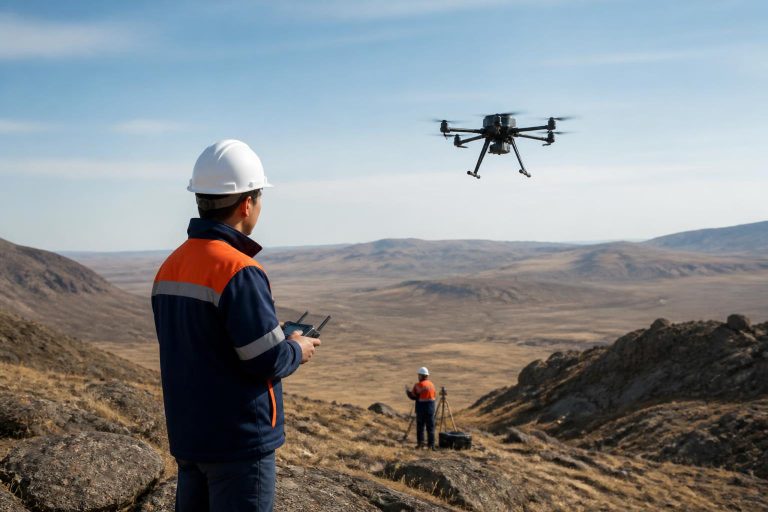
    The national mining company Tau-Ken Samruk has initiated the use of drone technology for state geological exploration in Kazakhstan’s Ulytau region. This project, which is part of a larger initiative by the Ministry of Industry and Infrastructure Development, aims to cover approximately 50,000 square kilometres with airborne geophysical studies. Currently, the company Kazgeologia is conducting these studies, as reported by the press service of the Samruk-Kazyna fund.

    The drones, equipped with geophysical sensors, are capable of conducting simultaneous magnetic, gamma-spectrometric, and gravimetric surveys. The measurement system includes devices from Medusa Radiometrics (Netherlands) for spectrometry, Geometrics (USA) for magnetometry, and iMAR Navigation (Germany) for inertial navigation. The positioning accuracy claimed is within a few centimetres, facilitated by RTK navigation technology combined with lidar systems that adjust flight trajectories, enabling the drones to operate effectively in complex terrain.

    Data processing at low altitudes provides sufficient resolution to detect small geological anomalies that might not be visible through traditional aerial surveys. This project aligns with a broader goal set by the Ministry of Industry and Infrastructure Development of Kazakhstan, which aims to conduct detailed geological mapping of the entire country at a scale of 1:50,000 by the end of 2026. To achieve this, modern technologies, including drone systems, will be integrated into the geological survey processes.

    In 2026, Kazakhstan allocated over 40.7 billion tenge from the government reserve to launch 20 geological survey projects at the 1:50,000 scale. The total area to be explored is around 100,000 square kilometres, with geological exploration expected to conclude by the end of 2028. This initiative is a significant step towards enhancing the country’s geological data and resource management, showcasing the integration of advanced technology in the mining sector.


  • Success Minerals Kazakhstan Plans Resource Evaluation in Aktogay District

    Success Minerals Kazakhstan Plans Resource Evaluation in Aktogay District

    Private company Success Minerals Kazakhstan Ltd plans to carry out a resource assessment of solid minerals at a 9.35 sq km site in Kazakhstan’s Aktogay district, according to a planned activity notice published on the country’s Unified Environmental Portal.

    The subsoil user intends to evaluate reserves and resources at the Akkuduk East and Akkuduk West deposits, as well as conduct geological exploration at known mineralisation points, geophysical anomalies, and ore occurrences identified within the licence area. The work is aimed at defining targets suitable for potential industrial development. Detailed prospecting across halo fields is also planned.

    Exploration activities are scheduled to begin in spring or early summer 2026 and continue through the end of 2030. The programme includes geophysical surveys, trenching over an area of 10,800 sq m, and the drilling of 140 exploration boreholes with a combined length of 35,000 metres. Collected samples will undergo laboratory testing, including chemical and geological analyses with a focus on copper content.

    As a result of the exploration campaign, the company plans to prepare geological maps of the deposits and ore occurrences, delineate ore zones and ore bodies, and calculate reserves and resources within the licensed area.

    The exploration licence was granted to Success Minerals Kazakhstan Ltd in January 2025. According to data from Kazakhstan’s eGov system cited by qazba.kz, the company is registered at the Astana International Financial Centre and is owned by Jinyu Sheng.

  • Ukrainian Mining Sector Receives Investment Boost from the the American-Ukrainian Investment Fund

    Ukrainian Mining Sector Receives Investment Boost from the the American-Ukrainian Investment Fund

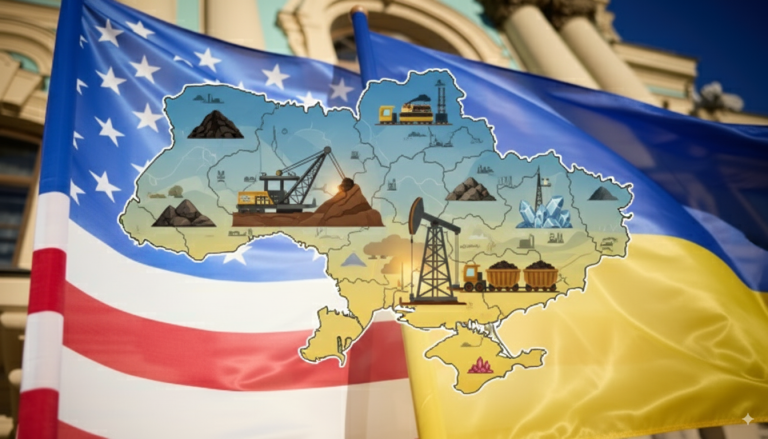
    The inaugural meeting of the American-Ukrainian Reconstruction Investment Fund Steering Committee took place in Kyiv on 3rd September, marking a significant step in attracting private investments into Ukraine’s key industries. The fund was established as a pivotal mechanism to enhance Ukraine’s economic recovery and growth by involving the private sector in rebuilding critical infrastructure and mining sectors.

    The meeting, which was attended by representatives from both the Ukrainian and American governments, was chaired by Prime Minister Yulia Sverdenko. The American delegation included Scott Besant, the US Treasury Secretary, Connor Holman, Chief Investment Officer at the US Development Finance Corporation (DFC), and Robert Stebbins, DFC’s Vice President.

    During the session, the committee finalised the operational regulations, established specialized subcommittees, and granted powers to open bank accounts, select fund administrators, and appoint investment advisors. The next step is identifying key pilot projects for investment, with discussions scheduled for later this month when DFC representatives visit Kyiv.

    Lithium and Gold Reserves in Kirovograd: A Major Mining Contest Launched

    One of the most pressing topics to emerge from the meeting was the Ukrainian government’s announcement of a competition to develop the Lithium Deposit of Dobro, located in the Kirovograd region. The project offers a lucrative opportunity for extracting nine strategically significant minerals, including lithium, gold, niobium, and beryllium. The competition is open to both Ukrainian and international firms with experience in natural resource exploitation and adequate financial and technical capabilities. However, companies from aggressor nations and those in sanctioned jurisdictions will not be allowed to participate.

    The government is looking to partner with firms willing to invest a minimum of $12 million in geological surveys and a further $160 million in industrial extraction and beneficiation activities. The agreement will be long-term, spanning 50 years, with the state retaining ownership of the resources until they are allocated through the contract.

    Ukraine’s Oil and Gas Transparency: The Launch of the National Well Registry

    In another landmark move, Ukraine’s State Geological Survey (Derzhgeonadra) has launched the National Oil and Gas Well Registry, a digital platform providing transparent access to over 12,500 well records. This new database will include active, suspended, and monitoring wells, and aims to streamline access to essential geological data for government bodies, natural resource users, and the public. This initiative strengthens Ukraine’s commitment to better resource management and international best practices in natural resource transparency.

    Ukraine’s Role in the Global Mineral Economy

    Ukraine’s mining sector is attracting attention not only for its rich mineral reserves but also for its growing role in the global economy. The upcoming Mineral Deal Forum, scheduled for 24th September in Kyiv, will bring together government officials, business leaders, and investors to discuss the future of Ukraine’s mining industry and its critical minerals. Key figures from the Ukrainian government, such as Deputy Prime Minister Taras Kachka and Minister of Economy Yegor Perelygin, will speak at the forum, alongside business leaders like Serhiy Pylypenko, the CEO of Kovalska Group, a leading construction firm that has successfully navigated the challenges of wartime operations.

    The forum promises to be a key event for understanding how Ukraine plans to integrate its vast natural resources into the global supply chain, particularly for critical minerals required in industries like renewable energy and electronics.

    Gold Hits Record Highs: What This Means for Mining Investments

    Meanwhile, the global price of gold has reached new heights, with the spot price of an ounce (31.1g) surging to $3,645 per ounce. This sharp increase in value, which has doubled over the last three years, comes amid rising global instability and the possibility of changes in US Federal Reserve policies. Investors are flocking to gold as a safe haven, which could signal further growth for mining industries worldwide, including in Ukraine.

  • ACG-Asia Capital Group Plans Gold Exploration Project in Kazakhstan’s Katon-Karagay District

    ACG-Asia Capital Group Plans Gold Exploration Project in Kazakhstan’s Katon-Karagay District

    TOO “ACG-Asia Capital Group” is gearing up to conduct exploration and assessment work for alluvial gold in the Mayemer area of the Katon-Karagay district in the East Kazakhstan Region. The project documentation from the license holder has been made available for public review on Kazakhstan’s Unified Environmental Portal.

    The commencement of geological exploration is scheduled for May 2024, with completion expected by the autumn of 2026. Specialists aim to evaluate the reserves of the promising area according to categories C1 and C2 and include them in the state balance sheet based on the results of the exploration.

    The licensed area covers 4.54 square kilometers. While targeted exploration for alluvial gold has not previously been conducted within Mayemer, the company notes that based on tailings sampling and general geological indicators, the territory holds promise for identifying deposits. Preliminary estimates suggest prospective resources of 68 kilograms of precious metal under category P2.

    The plan includes conducting mining operations, tailings sampling, collecting large-volume samples, and estimating reserves. A total of 950 samples are set to be collected from all excavations (mining and routes) in the Mayemer area.

  • Kazakhstan Ranks Sixth in Gold Production, Surpassing Previous Year’s Output

    Kazakhstan Ranks Sixth in Gold Production, Surpassing Previous Year’s Output

    Kazakhstan’s gold mining industry witnessed a notable surge last year, with the country extracting 130 tons of gold, propelling it to sixth place in the global ranking of gold-producing nations. This information comes from a report by “Kazinform,” citing data from the United States Geological Survey.

    The recorded gold output of 2023 surpassed the previous year’s production by 15 tons, which stood at around 115 tons. China claimed the top spot in 2023 with 370 tons of gold production, followed by Russia and Australia sharing second and third place, respectively, with 310 tons each.

    Overall, gold miners worldwide extracted 3,000 tons of the precious metal last year, with estimated reserves totaling 59,000 tons. When considering gold reserves, both explored and unexplored, Australia and Russia lead the pack, with reserves of 12,000 and 11,100 tons, respectively.

    The United States Geological Survey assesses Kazakhstan’s gold resources at 1,000 tons. It’s worth noting that earlier, Erlan Akbarov, the Chairman of the Committee of Geology under the Ministry of Ecology, Geology, and Natural Resources of Kazakhstan, stated that the country’s reserves amount to 20,000 tons.

  • First Quantum Minerals Launches Extensive Geological Survey Project in Kazakhstan

    First Quantum Minerals Launches Extensive Geological Survey Project in Kazakhstan

    First Quantum Minerals (FQM) has unveiled plans for extensive geological survey operations in Kazakhstan, aiming to identify promising copper deposits, as reported by inbusiness.kz. Last year saw the establishment of FQM’s Kazakhstan division in Astana, accompanied by the recruitment of local personnel, signaling the company’s commitment to local engagement and investment.

    According to geologist James Banyard, overseeing FQM’s activities in Kazakhstan, the company’s specialists will commence geological surveying activities in the summer of 2024. Initial efforts will focus on mapping and geophysical exploration of subsurface formations, laying the groundwork for potential mining endeavors.

    In collaboration with Pallas Resources, an existing partner in several projects, FQM aims to execute its strategic vision of a five-year presence in Kazakhstan, with aspirations to discover lucrative copper-rich sites worthy of future investment.

    Currently, the company is in the process of securing exploration licenses for multiple sites across various regions of the republic. Prospecting efforts will primarily target areas with known concentrations of copper ore, including the Balkhash-Ili territories, Bozshakol-Chingiz, and the Chu-Sarysu basin.

    FQM’s foray into the Kazakh market follows the enactment of the Subsoil Code in 2018, reflecting the company’s strategic assessment of risks and opportunities within the region. Despite the inherent challenges, FQM remains optimistic about the prospects of collaboration in Kazakhstan’s burgeoning mining sector.

  • Joint Venture “Kogodai” Plans to Resume Copper Exploration in Eastern Kazakhstan

    Joint Venture “Kogodai” Plans to Resume Copper Exploration in Eastern Kazakhstan

    The joint venture “Kogodai,” holding a license since 2013 for the exploration of copper and associated metals in the Kogodai area of the Kurchum district of the East Kazakhstan region, intends to resume copper exploration in the region. Between 2014 and 2023, the company conducted geological exploration, resulting in the estimation of mineral resources categorized as inferred. Now, “Kogodai” plans to conduct geological exploration in all previously established and assumed 10 mineralization zones of the Kogodai site, the Lotoshnoye site, two geophysical anomalies, and continue the exploration of the Kogodai deposit. This information was disclosed in materials for public hearings scheduled in the Maraldy village of the Kurchum district on April 12.

    The geological exploration area covers 52.2 square kilometers. Search routes on foot will be executed within the contractual territory. Drilling is planned to be carried out using mobile drilling rigs of the SKB-5/LF-90 type with the use of Boart Longyear drill bits, which will require 59.6 thousand liters of diesel fuel in 2024.

    For the power supply of the field camp, three gasoline generators FPG 9800E FORZA will be used. The fuel consumption of one generator will be 2.78 tons per year.

    Coring drilling of exploration wells is envisaged for exploring ore bodies at depth. Most of the planned wells will be drilled to a depth of 200-250 meters. The total volume of coring drilling will include 20 wells with a total volume of 3000 linear meters.

    Cores extracted from core barrels (samples in the form of cylindrical columns) will be washed and placed in core boxes. As the wells progress, a label indicating the depth will be attached after each run.

    The participants of the JV “Kogodai” are the social entrepreneurship corporation “Yertis” (belongs to the financial management of the akimat of the East Kazakhstan region) and the company “Orsu Metals Kazakhstan,” a subsidiary of Harrsin Management B.V., whose ultimate beneficiaries are not disclosed.

    In the 2010s, the copper projects Kogodai and Karchiga in the East Kazakhstan region were developed by the British company Orsu Metals, registered on AIM (one of the platforms of the London Stock Exchange). The company faced difficulties in financing projects and delisted its shares from AIM in 2016.

    Earlier this year, Citibank forecasted that an increase in green energy targets would increase copper demand by an additional 4.2 million tons by the end of the decade. In this case, copper prices could reach $15,000 per ton by 2025, which is 75% higher than the price of copper at the beginning of January. On April 9th, investment bank analysts noted that the price of copper on the London Metal Exchange approached $9,500 per ton, trading near 15-month highs.

    Last summer, the village of Maraldy was often mentioned in the headlines due to the dissatisfaction of the local population with the plans of the company “VSAM Production” to build a gold mining plant for 250 thousand tons of ore per year. Near the village, geological exploration companies Maralicha and Maralicha-Gold were searching for gold. Gold mining was planned to be conducted by open-pit mining – local residents feared the contamination of springs and the river by harmful substances, as well as other possible issues due to mining activities.

  • Ulytau Resources Secures Uranium Exploration License in Jambyl Region

    Ulytau Resources Secures Uranium Exploration License in Jambyl Region

    Ulytau Resources has obtained a license for uranium exploration at the Djusandali deposit in the Jambyl region. Covering an area of 29.43 square kilometers, the license allows the licensee to conduct exploration activities from 2024 to 2028. The search for the radioactive metal will be conducted near the uranium-molybdenum deposit of Botaburum in the southern Pribylkhazhye, as reported by inbusiness.kz. Apart from prospecting for new uranium sites, Ulytau Resources is tasked with evaluating previously discovered reserves. Additionally, specialists from the company will monitor the natural radiation background during the drilling phase. The company has announced that public discussions regarding the obtained uranium exploration license are scheduled for April 25. According to reports, uranium deposits in Djusandali were discovered back in 1982. In 1991, the republic’s experts estimated the reserves of this metal under categories C1 and C2 and transferred all data for analysis to “Yuzhpolymetall,” whose employees have been engaged in geological exploration at Botaburum since 1957.

  • Kazakhmys acquired 15 licenses for solid mineral exploration

    Kazakhmys acquired 15 licenses for solid mineral exploration

    In 2024, Kazakhmys Corporation LLP obtained 15 new licenses for exploration of solid minerals deposits in Kazakhstan. The mineral user aims to expand its own mineral resource base through these new areas, as reported by the company’s press service.

    In its statement, Kazakhmys also refutes the information that it violates contractual obligations regarding subsoil use. The enterprise notes that from 2020 to 2022, it fulfilled investment commitments under 10 contracts in full. Additionally, over the past two years, the company has invested around 45 billion tenge in the development of the Karaganda and Ulytau regions.

    Over the last five years, the corporation has invested over 31 billion tenge in 47 geological exploration projects. Kazakhmys conducts exploration activities in seven regions of the republic. The explored area during this period amounted to 20,000 square kilometers.

    The new areas where the mineral user will begin geological exploration work are likely located near the Sokyrka deposit (Balkhash ore district). The contract for the extraction of copper and polymetallic ores on this deposit was signed by Kazakhmys in 2019.

  • The volume of geological exploration work will increase in Kazakhstan

    The volume of geological exploration work will increase in Kazakhstan

    Over the past 6 years, geological exploration has been conducted on 9 sites in the Kostanay region, funded from the budget. The total area of the surveyed territory exceeds 38 thousand square kilometers. In the country, there are plans to increase the volume of work in this direction by at least 1.5 times, as reported by the correspondent of “Khabar 24,” Artem Grapov.

    Artem Grapov, correspondent: “Currently, in the Kostanay region, 35 types of valuable minerals are known and have been studied to varying degrees. About 400 deposits have been explored. The region is a unique iron ore and bauxite base of the republic. By the way, 4% of the world’s iron ore reserves are concentrated in the Kostanay region. Kostanay geologists conduct exploration work continuously. In addition to iron and bauxite, the region also has significant reserves of cobalt, nickel, titanium, and gold. This year, a geological hub was launched in the region. Its main area is a core storage facility – a complex where primary rock samples taken during drilling are analyzed.”

    Darkhan Makatov, Head of Field Research Department: “Materials are sent to the cutting workshop. After that, they undergo sampling. Then certified samples are sent to laboratories located both in Kazakhstan, in the city of Karaganda, and abroad, in Ireland. The analysis results are then entered into the database. The obtained data are then systematized and digitized in accordance with international geological survey standards.”

    Dastan Makat, Project Geologist, PhD: “We enter the field data we’ve obtained into the database. Then, using this data, we create a deposit model. After that, we develop ore body models. You could say this is the final task of our geological exploration. The materials are then handed over to miners, who, in turn, develop a mining plan for the deposit.”

    Continuous geological exploration allows for the identification of promising areas for further development. Maya Ospanova, Head of the Kostanay Regional Inspection of Geology and Subsoil Use: “As a result of the work carried out, estimated resources have been calculated for 12 types of valuable minerals. The main volume is accounted for by coal, which amounts to 14 billion tons. We have also discovered 31 kilograms of gold, as well as molybdenum, lead, zinc, nickel, tungsten, titanium, copper, and other valuable minerals. In 2023, geologists continue to develop 3 objects. The work is funded by the republican treasury. Two sites are for underground waters, and one is for the search for rare earth metals. Geologists will summarize the results of this work next year.”