Tag: gallium

  • China Eyes Coal Waste as New Source of Critical Minerals

    China Eyes Coal Waste as New Source of Critical Minerals

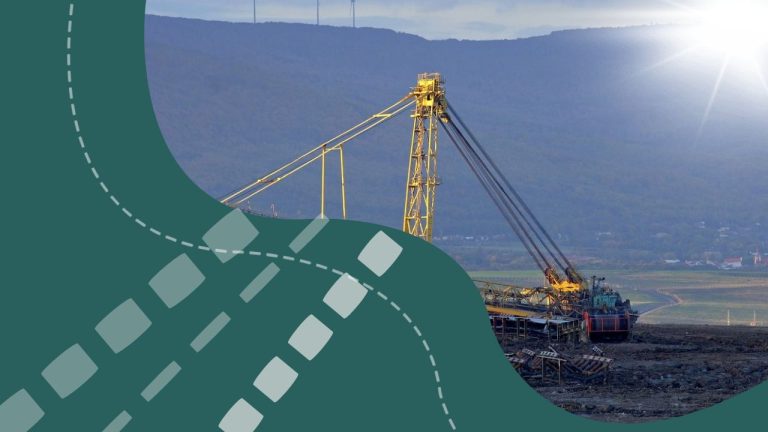
    China is exploring the recovery of critical minerals from coal waste, with researchers highlighting fly ash and coal gangue as potential sources of strategic metals including germanium, gallium, lithium and aluminum.

    According to a new report, China’s extensive coal mining and power generation infrastructure could be leveraged to recover valuable metals from by-products that have traditionally been treated as industrial waste.

    “The coal refuse contains a variety of metal elements and could become an important source of critical metal supply,” said Dai Shifeng, a member of the Chinese Academy of Sciences and professor at the China University of Mining and Technology-Beijing.

    Coal gangue refers to the rock separated from coal during mining, while fly ash is the fine mineral residue left after coal combustion. Although typically disposed of or used in construction materials such as cement, both materials can contain economically valuable concentrations of critical minerals and rare earth elements.

    Researchers argue that China’s integrated coal industry provides a strong foundation for resource recovery. Existing coal washing, chemical processing and power generation facilities could potentially be adapted to extract strategic metals from waste streams, reducing the need for additional mining.

    The approach could support China’s growing demand for critical minerals used in semiconductors, batteries, electric vehicles, renewable energy technologies and defence applications, while also improving resource efficiency and reducing industrial waste.

    However, the report notes that commercial recovery remains technically challenging. Metal concentrations vary significantly depending on the geological characteristics of individual coal deposits, and fly ash from different coal sources is often blended during power generation, resulting in inconsistent feedstock quality that can affect the economic viability of extraction.

    Researchers nevertheless believe rising demand for critical minerals will continue to improve the prospects for recovering metals from coal waste, building on China’s existing experience in extracting germanium from coal-related resources.

  • China’s Mineral Export Curbs Could Shave Over $1 Billion from US GDP — Macquarie

    China’s Mineral Export Curbs Could Shave Over $1 Billion from US GDP — Macquarie

    China’s export restrictions on a handful of critical minerals could cost the United States more than $1 billion annually in GDP losses, according to new research by Macquarie Group.

    The analysis, led by chief economist Ric Deverell, modeled the potential impact of Beijing’s export controls on four rare earth elements — samarium, lutetium, terbium, and dysprosium — along with gallium, all of which appear on the US government’s updated list of 60 critical minerals, which now also includes copper and silver.

    While the direct trade exposure may appear limited, Macquarie’s study highlights how supply disruptions to these small but indispensable materials could ripple through the defense, semiconductor, and clean-tech sectors, amplifying the economic impact far beyond their raw import value.


    The Numbers Behind the Risk

    In 2024, the US mined $17.5 billion worth of minerals domestically but imported $65 billion, Macquarie reported. Although China accounted for just $2 billion, or 3% of total US mineral imports, the concentration of value-added processing and material specialization in China means even a limited export ban could have disproportionate effects.

    Macquarie found that the US was:

    • 100% import reliant on 12 critical minerals, and

    • over 50% dependent on imports for another 33.

    For rare earths, the dependency is especially acute. The US relies on imports for around 80% of its rare earth compounds and metals, and about 70% of that supply originates from China.

    While the nominal import value of these materials is small — around $170 million in 2024, with $120 million sourced from China — the knock-on effects of an export halt could dent US GDP by over $1 billion in a single year, Macquarie estimated.

    The report also flagged gallium — a key input in semiconductors, LEDs, and defense electronics — as another potential choke point.


    Strategic, Not Just Economic, Damage

    Beyond direct losses, Macquarie warned that the strategic cost of supply disruption would be significant. Rare earths and gallium underpin advanced manufacturing, defense systems, and energy technologies, sectors that are difficult to substitute or reshore quickly.

    “Even a temporary interruption in these supply chains would carry lasting industrial and strategic repercussions,” the report noted.


    Australia’s Emerging Role

    Macquarie analysts also pointed to Australia as a potential replacement source for US critical mineral imports currently coming from China.

    Australia, which recently signed a Critical Minerals Framework agreement with the US, holds over 15% of the world’s critical mineral reserves and already produces nearly half of the minerals on Washington’s critical list.

    Although Australian exports currently account for just 2% of US critical mineral imports, investment in the sector is accelerating. As of October 2024, more than $50 billion in new projects were in the pipeline, positioning Australia to play a much larger role in diversifying Western supply chains.

    “Over time, Australia could feasibly replace all Chinese-origin critical minerals in the US import mix,” Macquarie said.

  • Critical Metals Reports Thick Rare Earth and Gallium Intercepts at Tanbreez in Greenland

    Critical Metals Reports Thick Rare Earth and Gallium Intercepts at Tanbreez in Greenland

    Critical Metals (Nasdaq: CRML) has reported strong drilling results from its Tanbreez project in southern Greenland, one of the world’s largest undeveloped heavy rare earth deposits outside China.

    The standout intercept came from hole DDH-C-24 at the Fjord deposit, returning 65 metres grading 0.55% total rare earth oxides (TREO) from surface, including 25.5% heavy rare earth oxides (HREO) and 90 parts per million (ppm) gallium oxide (Ga₂O₃). Gallium is a key energy transition material used in semiconductors, solar panels, and LED technologies.

    “These incredible results underscore the strategic value of Tanbreez as a rare earth elements and gallium project with scale, grade, and a high proportion of critical heavy rare earths,” said CEO and executive chair Tony Sage. “With China’s total control over the rare earth market globally, securing sources of these critical minerals has become paramount for US defence capabilities and national security.”

    Additional assays included 61.3 metres grading 0.5% TREO, 26% HREO, and 100 ppm Ga₂O₃ in hole DDH-B-24; 41 metres at 0.52% TREO, 26.9% HREO, and 95 ppm Ga₂O₃ in DDH-A2-24; and 40 metres at 0.48% TREO, 27.1% HREO, and 100 ppm Ga₂O₃ in DDH-A1-24. Mineralisation remains open at depth, with over 1,500 metres drilled this year and further results pending.

    While grades are lower than some high-grade global rare earth projects, the bulk tonnage and high proportion of heavy rare earths position Tanbreez alongside large-scale deposits such as Kvanefjeld in Greenland and Norra Kärr in Sweden.

    According to a March preliminary economic assessment, Tanbreez has a pre-tax net present value of $2.8–$3.6 billion (at 12.5–15% discount rates) and an internal rate of return of 180%. Current resources stand at 25.4 million tonnes indicated at 0.37% TREO and 19.5 million tonnes inferred at 0.39% TREO.

    The news comes shortly after the US Department of Defense deepened its support for domestic rare earth production through a partnership with MP Materials, highlighting growing geopolitical urgency around supply chain diversification.

    Critical Metals shares fell 6.9% on Monday to $5.43, giving the company a market cap of $534.4 million.

  • Greece Emerges as Europe’s Strategic Hub for Gallium Production

    Greece Emerges as Europe’s Strategic Hub for Gallium Production

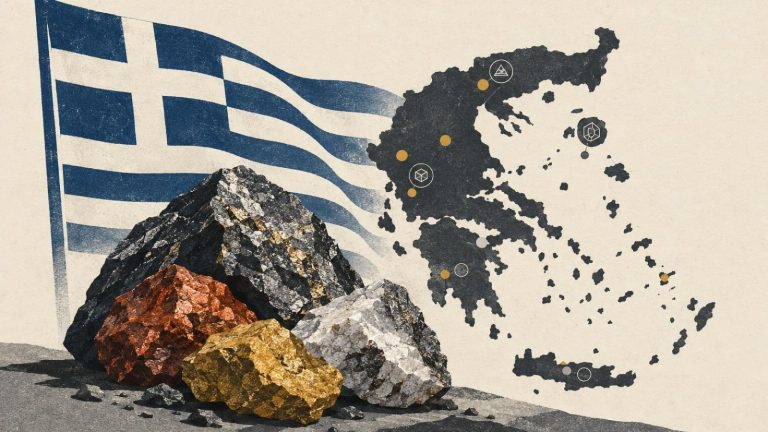
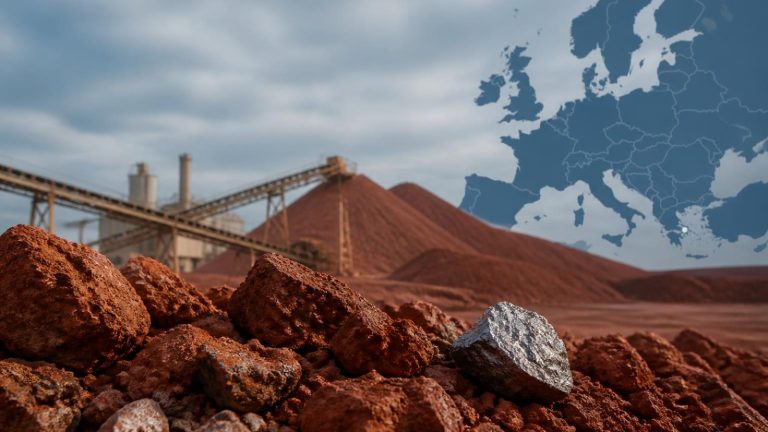
    A new ARTE documentary has spotlighted a bauxite mine in central Greece as the European Union’s only domestic source of gallium — a critical mineral essential to the production of solar panels, LED lights, and smartphones. The project aims to bolster Europe’s strategic autonomy by reducing reliance on Chinese imports, which currently dominate the global gallium market.

    The gallium extraction initiative, tied to the historic Aluminum of Greece plant operated by Metlen, has been officially designated as a Strategic Project under the EU’s Critical Raw Materials Regulation (CRMA). Gallium is primarily derived as a by-product of alumina production from bauxite, positioning Greece at the centre of the EU’s clean energy and digital transformation plans.

    Prime Minister Kyriakos Mitsotakis highlighted the investment’s national significance, noting it is part of a wider €2.4 billion wave of projects approved across Europe. In his weekly address, Mitsotakis emphasized the role of gallium in creating a domestic value chain for semiconductor manufacturing and Europe’s broader technological independence.

    “This investment lays the groundwork for a high-tech value chain that contributes to Europe’s productive autonomy,” he stated, citing a €3.6 million state-supported plan to launch Greece’s first Semiconductor Competence Center in partnership with HETiA.

    Currently, the majority of the world’s gallium is sourced from China, with additional production in Russia, Germany, Kazakhstan, and Japan. However, Europe’s efforts to scale its domestic production include both primary mining and secondary recycling of gallium-rich electronic waste.

    Gallium-based compounds like gallium arsenide and gallium nitride are used widely in semiconductors, laser diodes, and infrared applications. With 95% of global gallium supply allocated to the semiconductor sector, Greece’s emerging role could prove pivotal in supporting the EU’s climate and digital goals.

  • Kazakhstan Lifts Export Duty on Gallium to Boost Strategic Metal Production

    Kazakhstan Lifts Export Duty on Gallium to Boost Strategic Metal Production

    Kazakhstan’s government has officially lifted a 10% export duty on gallium, a strategic move aimed at boosting domestic production and strengthening the country’s role in the global supply chain for high-tech metals. The decision was confirmed by the Prime Minister’s press service following a meeting of the interdepartmental commission on foreign trade policy, chaired by Deputy Prime Minister Serik Zhumangarin.

    Officials highlighted that although Kazakhstan has not recently produced gallium, the global demand remains steady due to its essential role in electronics, semiconductors, and defense industries. Eurasian Resources Group (ERG) plans to capitalize on this opportunity, with exports to Europe expected to begin in 2026.

    ERG’s production will be sourced from red mud waste at the Pavlodar Aluminum Plant. The company initially targets 12 tons of gallium per year, with plans to scale up to 15 tons annually — positioning ERG as the world’s second-largest gallium producer behind China.

    In parallel, Kazakhstan has imposed a temporary export ban on non-ferrous metal blanks and ingots, including raw copper, aluminum billets, and lead ingots, effective until December 31, 2025. This measure is designed to support domestic processing and ensure strategic raw materials remain within the country.

    Gallium prices currently hover around $237 per kilogram, meaning 12 tons of exports could generate roughly $2.8 million. The government believes the policy shift will enhance Kazakhstan’s economic diversification and export revenues, while supporting critical minerals cooperation with partners such as the United States.

  • Kazakhstan to Become World’s Second-Largest Gallium Producer as ERG Commits $20M Investment

    Kazakhstan to Become World’s Second-Largest Gallium Producer as ERG Commits $20M Investment

    Eurasian Resources Group (ERG) announced plans to invest $20 million into facilities for producing gallium in Kazakhstan, marking the country’s entry into the global gallium supply chain. Starting in 2026, ERG will begin extracting the critical mineral from bauxite ore processed for alumina, with initial production targets set at up to 15 metric tons per year.

    Gallium, essential in the production of semiconductors, radar systems, and missile guidance technologies, is listed as a critical mineral by both the United States and the European Union. ERG’s initiative comes at a time of growing concern over China’s dominance in the gallium market, which currently accounts for the vast majority of the world’s 760-ton annual output, according to the US Geological Survey.

    “ERG plans to become a significant player in the global market for gallium, starting production in 2026 to supply OECD countries,” said ERG CEO Shukhrat Ibragimov. The move could make Kazakhstan the world’s second-largest gallium producer, directly challenging China’s supply monopoly.

    China imposed a ban on gallium exports to the U.S. in December 2024, following a broader crackdown by Washington on Beijing’s chip industry. This followed a series of tighter export controls and licensing regimes applied to gallium, germanium, and antimony over the prior 18 months, raising alarm bells among Western nations dependent on Chinese supply.

    ERG’s investment also reflects Kazakhstan’s rising profile as a key critical mineral supplier. With its bauxite-processing infrastructure already in place, the country is well positioned to enter strategic supply chains for electronics, defence, and advanced manufacturing across Europe and North America.

  • US Investor James Cameron Offers $5B to Acquire Eurasian Resources Group Amid Kazakhstan’s Rare Earth Push

    US Investor James Cameron Offers $5B to Acquire Eurasian Resources Group Amid Kazakhstan’s Rare Earth Push

    US businessman James Cameron has made a $5 billion offer to acquire Eurasian Resources Group (ERG), according to a letter sent to the company’s board, as the Kazakh mining giant prepares to play a central role in Kazakhstan’s rare earths expansion.

    ERG, headquartered in Luxembourg and 40% owned by the Kazakh government, is a key global producer of copper, cobalt, aluminum, and iron ore. Last year, the company launched a task force to explore Kazakhstan’s reserves of rare earth and rare metals—a strategic move gaining momentum amid geopolitical tensions and a global race to secure critical minerals.

    Talks between ERG and Cameron—not related to the film director of the same name—have reportedly been ongoing since late 2024, according to sources familiar with the matter. Cameron previously served as chairman of FTSE 250 mining firm Petropavlovsk.

    While ERG, the Kazakh government, and Cameron have not publicly commented, the letter seen by Reuters states that Goldman Sachs is in early discussions to advise on the potential acquisition. Financing would be secured through a mix of Cameron’s own capital and equity from investors in the US, Australia, and the Middle East.

    The move comes at a critical time, as Kazakhstan announced a rare earth discovery exceeding 20 million metric tons—a find that could position the country among the top three rare earth holders globally, behind China and Brazil. Prime Minister Olzhas Bektenov has confirmed that previously classified Soviet-era geological data is being declassified to support exploration and investment.

    ERG is poised to play a pivotal role in the country’s plan to increase rare earth production by 40% by 2028. The group once produced one-fifth of the world’s gallium, a strategic metal in semiconductor production, until Chinese output caused a price collapse in 2012. China has since banned gallium exports to the US, further driving American interest in alternative sources.

    The deal could mark a new chapter for ERG, following the death of board chairman and co-founder Alexander Mashkevich last month. With only Patokh Chodiev remaining from the original founding trio, Cameron’s bid could reshape the company’s leadership and strategic direction.

  • Ukraine: A Potential Key Player in the Global Critical Raw Materials Race?

    Ukraine: A Potential Key Player in the Global Critical Raw Materials Race?

    In a recent statement, U.S. Secretary of State Marco Rubio provided a clear outlook on the future of American policy regarding critical raw materials. As global supply chains for these materials continue to shift, Ukraine’s vast reserves of key minerals could play a pivotal role in reshaping the global balance of power, particularly in the ongoing confrontation between the U.S. and China.

    Rubio highlighted several critical materials essential for advanced technology, renewable energy, and national security, including neodymium, dysprosium, lithium, cobalt, nickel, and titanium. Remarkably, Ukraine is home to abundant reserves of these very materials—and more. With its substantial deposits of germanium and gallium, Ukraine is positioned to be a critical player in the global supply of strategic resources.

    A Treasure Trove of Critical Materials

    • Titanium Ore (Ilmenite): Ukraine ranks 11th in the world for ilmenite reserves, found in the Irshanske, Byrzulivske, and Malyshevske deposits across the Zhytomyr, Kirovohrad, and Dnipropetrovsk regions. Titanium is vital for aerospace, defense, and high-tech manufacturing.
    • Lithium: As a key component in batteries, particularly for electric vehicles and renewable energy storage, Ukraine holds 1% of the world’s lithium reserves—equivalent to 30% of Europe’s supply. Major deposits can be found in Polokhivske (Kirovohrad region) and Balka Kruta (Zaporizhzhia region). The strategic importance of lithium was recently highlighted by China’s attempts to use the resource as leverage in international relations.
    • Germanium and Gallium: Crucial for electronics and telecommunications, these materials are abundant in Ukraine’s coal and lignite deposits in the Donetsk and Lviv-Volyn basins. Before the full-scale war, Ukraine was the world’s third-largest exporter of germanium, although exports have been halted due to the ongoing conflict. Ukraine’s reserves of these rare metals remain a critical asset for global tech industries.
    • Rare Earth Elements (Neodymium and Dysprosium): Located in the Zhytomyr region, these elements are indispensable in the production of magnets for electric vehicles, wind turbines, and high-tech equipment.
    • Nickel and Cobalt: Essential for battery production, Ukraine’s nickel and cobalt reserves are also noteworthy, found in deposits like Devladivske (Dnipropetrovsk region), Lypovenkivske (Kirovohrad region), and Dereniukhivske (Mykolaiv region). While the reserves are smaller compared to other countries, they still contribute to Ukraine’s strategic importance.
    • Manganese and Iron: Ukraine is a major global player in manganese and iron ore production, with significant deposits in the Nikopol Manganese Basin and the Kryvyi Rih Iron Ore Deposit. These resources are fundamental to the global steel and metallurgy industries.

    Ukraine’s Growing Role in Global Supply Chains

    As the global supply chain for critical raw materials becomes increasingly volatile, especially with rising tensions between the U.S. and China, Ukraine has the potential to become a key partner for the U.S. in securing access to these vital resources. With its diverse array of minerals and metals, the country offers not only essential raw materials but also strategic geopolitical leverage in a rapidly changing world order.

    The country’s natural resources, coupled with its strategic location in Europe, make it a valuable partner for countries looking to diversify their supply chains and reduce reliance on China.

    By prioritising partnerships with the U.S. and other nations, Ukraine can play a pivotal role in shaping the future of critical materials and ensure its place as a key player in the global economy.

    The Road Ahead

    The ongoing geopolitical shifts present an opportunity for Ukraine to position itself as a leading supplier of critical materials. With strategic investments in its mining and extraction sectors, Ukraine can not only boost its economy but also secure its place in the new global order. Now more than ever, the world needs Ukraine’s resources, and Ukraine is ready to take center stage.

  • Belgium leads the way in rare earth metals recycling

    Belgium leads the way in rare earth metals recycling

    Belgium is a European leader in recycling, one of the few nations to meet recycling targets set out by the EU. Other than household and commercial waste, Belgian recycling plants are now helping to reduce Europe’s dependence on foreign minerals.

    Rare earth metals, commonly used in the production of high-tech goods, are desperately needed for the European economy. China has a monopoly on the supply of these metals, producing up to 97% of the world’s supply.

    In July, China placed export restrictions on gallium and germanium metals, which are indispensable for the production of advanced chips.

    China accounts for about 80% of the global production of gallium, which is used in integrated circuits, LEDs and solar panels, among others. The country also dominates the production of germanium, which is used in the production of fibre-optic cables and infrared applications.

    The European Commission is concerned that restrictions on exports of certain rare earth metals will impact EU supply chains, especially within the context of growing demand for these metals for the green transition. It wants to reduce dependence on third countries such as China to 65% for imports of 18 critical resources.


    Rare metals from scrap

    Belgian companies want to play a role in the transition away from reliance on rare earth metals imports. Even if Europe is not well-suited for the extraction of these precious metals, it can play a role in reducing imports, notably through recycling.

    One factory in Liège is one of the very few places in Europe to process metallurgy-related waste and recover the valuable rare earth metals. Hydrometal has been extracting gallium and germanium from waste for nearly 20 years. However, this is no simple process.

    “It’s very precise, difficult to make profitable, very competitive, and you can’t find a lot of raw materials on the market. It really requires specific knowledge and specific chemistry. Our factory is the only one in Wallonia. Today, there are two actors in Belgium who can do it, and only two actors in Europe too,” Phillipe Henry, administrator of Hydrometal, told RTL Info.

    Recent Chinese export restrictions have caused prices on the market to skyrocket. The current market price for gallium is $614 per kg, and $2,716 per kg for germanium. Faced with these rising prices, recycling has become a more profitable endeavour.

    “We are contacted almost every day to be able to respond to these challenges. They will not be easy, because we have to remain competitive, answer also have to see if it can be maintained in the long-term,” Henry noted.

    For now, Belgian companies are focused on the extraction of rare earth minerals from waste in the metallurgy industry. Granted, much of our tech and smartphones contain highly sought after rare earth metals, but these amounts are still too small to be profitable for major recycling companies.

    The amounts contained in phones amount to just a few grams per tonne, and it is not currently viable to extract gallium, germanium, or indium from them, at least in Belgium.

    While recycling plays an important role in reducing dependence on Chinese exports, Europe may soon switch to encouraging their extraction from European soil. Currently, no rare earth metals are mined in Europe.

    But new studies have revealed massive deposits of valuable rare earth metals, which could feasibly be extracted. In Sweden, mineral group LKAB discovered an untapped reserve of more than 10 million tonnes of oxides, the largest known deposit of its kind in Europe.

    The EU will reflect on the possibility of the opening of new rare earth metal mines in Europe, but will likely still face resistance from locals due to environmental concerns. The largest potential extraction site for Europe is at Kvanefjeld in Greenland, but extraction has been prevented by indigenous groups and local residents.

    The need to find new solutions is growing. Last year, European Commission President Ursula von der Leyen predicted that “Lithium and rare earth metals will soon be more important than oil and gas.”

  • Explained: The EU’s handicap in the global race for critical raw materials

    Explained: The EU’s handicap in the global race for critical raw materials

    The EU is highly dependent on third countries for the raw materials needed to engineer its energy transition and digital transformation.

    Russia’s war in Ukraine and the need to wean itself off fossil fuels in order to reach climate targets have prompted the EU to accelerate its green transition in recent months but also forced it to acknowledge its dependencies over access to critical raw materials.

    In the global race for raw materials, the EU faces multiple challenges.

    The first one is China, which recently started restricting exports of gallium and germanium, two metals essential for the production of semiconductors, in response to Western curbs on Beijing’s access to micro-processing technology.

    The EU considers both materials of high strategic importance. As well as semiconductors and other electronic devices, they are used for military applications such as missile defence and radar systems.

    Beijing’s restrictions come as a stark warning as the EU attempts to diversify and boost domestic supply of raw materials to reduce dependency on third countries.

    Reliance on ‘low-governance’ countries

    But diversifying supply chains could mean the EU has to source these materials from countries that don’t adhere to the same standards.

    Recent data suggests the EU’s supply is highly dependent on countries that have a low governance level, based on indicators including political stability, rule of law and corruption control.

    The EU’s Critical Raw Materials Act (CRMA), adopted in March this year, stipulates that EU strategic projects to scale up supply must be assessed taking into account all aspects of sustainability, including environmental protection, socially responsible practices and respect for human rights such as the rights of women.

    But many countries feeding EU supply are not aligned with European values. This raises concerns about the impact on the local communities where materials are mined, as well as the potential exploitation of natural resources.

    For example, the Democratic Republic of Congo, whose governance indicators are among the lowest in the world, supplies 63% of the EU’s cobalt, which is essential for manufacturing batteries for electrical vehicles.

    Diversifying supply a challenge

    The EU is also highly dependent on single countries for key materials such as Magnesium (China, 97%), Lithium (Chile, 97%), Iridium (South Africa, 93%) and Niobium (Brazil, 92%). These dependencies make supply chains vulnerable.

    The Critical Raw Materials Act aims to ensure no third country provides more than 65% of the Union’s annual consumption of any raw material.

    But diversifying supply is complex when refineries of many essential materials are monopolised by one or more global powers. China dominates the refining market for many critical raw materials.

    Russia’s invasion of Ukraine and the ensuing energy crisis has shown the acute dangers of over-reliance for supplies of raw materials. China’s increasingly antagonistic stance and the political instability in many African countries have also served as reminders of the fragility of the EU’s trading relationships.

    A spiralling global demand

    The demand for raw materials is growing steeply, as developed countries race to digitalise and decarbonise their economies. This can only happen with sufficient supply of raw materials, meaning countries must scale up extracting, refining and recycling operations.

    The global demand for lithium, for example, is set to increase a staggering 89-fold by 2050, according to the European Commission. Demand for gallium will multiply 17-fold during the same time.

    The Critical Raw Materials Act sets targets for the Union to extract 10%, process 40% and recycle 15% of its annual consumption of raw materials by 2030.

    To meet these targets and compete on the global stage, European Commission President Ursula von der Leyen has said the EU needs to speed up investments in research and development, recognising that the bloc’s global share of R&D expenditure has fallen 10% in the last 20 years.