The International Energy Agency’s (IEA) 2026 Global Critical Minerals Outlook, released today, paints a stark picture of mounting vulnerabilities in the supply chains for minerals essential to the global energy transition and high-tech industries. The report finds that despite a rebound in prices in 2025 and early 2026 due to tightening supply conditions, investment in critical mineral projects fell by 9% in 2025, ending several consecutive years of growth. This decline is attributed to price volatility and escalating geopolitical tensions, which have been exacerbated by a wave of new export restrictions from dominant suppliers. Geographic concentration has intensified, particularly in refining, with top refiners—Indonesia for nickel and China for other key energy minerals—accounting for over three-quarters of total growth in refined supply over the past two years. In markets for manganese, nickel, and graphite, virtually all supply growth came from the dominant supplier. The report highlights that rare earth export controls introduced by China in April 2025 forced some automakers to reduce production or temporarily suspend operations. Further controls announced in October 2025, though delayed for one year, could jeopardize an estimated $6.5 trillion in annual downstream production outside China if fully enacted. However, there are signs of progress. Public finance commitments for critical mineral supply expansion more than quadrupled between 2023 and 2025, reaching $65 billion. In rare earth refining, new projects in the United States and increased production in Malaysia reduced the top supplier’s share from over 90% in 2023 to 85% in 2025, with projections to fall to 70% by 2035. Gaps between projected demand and anticipated supply for copper and lithium have also narrowed. Despite these gains, the report identifies a structural imbalance: investment is concentrated in mining, while refining and downstream capacity expansion lag. For rare earths, planned refining capacity reaches only about two-thirds of expected mine output by 2035, and planned magnet production amounts to just one-third. The IEA urges policymakers to focus on strategic minor minerals, where small markets but outsized economic impacts from disruptions offer opportunities for cost-effective supply security improvements. IEA Executive Director Fatih Birol emphasized that while critical minerals account for a small share of final product prices—allowing diversification costs to be absorbed with limited consumer impact—addressing technology, equipment bottlenecks, and workforce skills is essential. The report recommends emergency preparedness, enabling investment, and closing gaps in technology and skills to build resilient supply chains.
Tag: Export Restrictions
-

Turkey Poised to Play Bigger Role in Critical Minerals Diversification as OECD Warns Export Restrictions at Historic Highs
Turkey is emerging as a significant potential contributor to global critical minerals supply chain diversification, backed by its resource endowment — including the world’s second-largest rare earth element reserve — and its strategic geographic position connecting Asia, Africa and Europe, a senior OECD official has said.
Marion Jansen, director at the OECD Directorate for Trade and Agriculture, made the assessment on the sidelines of the OECD Critical Minerals Forum in Istanbul. “Türkiye is already an important player in critical minerals,” she told Anadolu Agency, pointing to the country’s strength as a major global supplier of borates and its significant rare earth reserves, discovered in the central province of Eskişehir in 2022. “This is one of the countries where more investment could take place,” she said. Turkey’s location also gives it a natural advantage as a logistics and transit hub. “Türkiye is situated between Asia, Africa and Europe. This is a fantastic trading hub.”
As a participant in the OECD’s export credit arrangement, Turkey also has a voice in coordinated international financing efforts for critical minerals projects — a mechanism Jansen described as increasingly important as the world works to broaden the supplier base for minerals essential to the energy transition, digitalisation and defence industries.
Jansen used the forum to deliver a pointed warning about the structural conditions undermining the global critical minerals market. In some markets, a single country accounts for up to 90% of global supply at either the extraction or processing stage. “This is not good,” she said, noting that excessive concentration distorts markets and prevents normal price formation, while high entry barriers limit the emergence of new participants.
On export restrictions, the OECD data she cited painted a concerning picture. The use of export restrictions on critical materials has increased nearly fivefold between 2009 and 2024 and remains at historically elevated levels, with the most severe measures — including outright export prohibitions — being deployed with growing frequency. “It becomes nearly acceptable to use it and that’s not good news for the multilateral trading system at all,” she said.
Investment in the sector faces its own structural challenges, Jansen noted. Mining and processing projects require long-term capital commitments in markets where price volatility is a real risk precisely because competition is limited. “If market conditions are not competitive, the risk that prices will be volatile is real,” she said, adding that addressing these investment barriers will be essential to unlocking the supply diversification the global economy needs.
-

EU to Offer US Critical Minerals Partnership to Counter China’s Dominance
The European Union is set to offer the United States a critical minerals partnership designed to curb China’s influence over global supply chains, according to people familiar with the matter.
Brussels is preparing a memorandum of understanding to create a “Strategic Partnership Roadmap” within three months, which would guide joint efforts to source and refine essential materials for modern technologies—ranging from batteries to semiconductors—without heavy reliance on Beijing.
The proposal includes initiatives such as joint mineral projects, price support mechanisms, and safeguards against market manipulation. It also encourages building reciprocal supply chains between the two economies while maintaining mutual respect for territorial integrity—a pointed reference after tensions rose when U.S. President Donald Trump signaled interest in purchasing Greenland, an autonomous territory of Denmark.
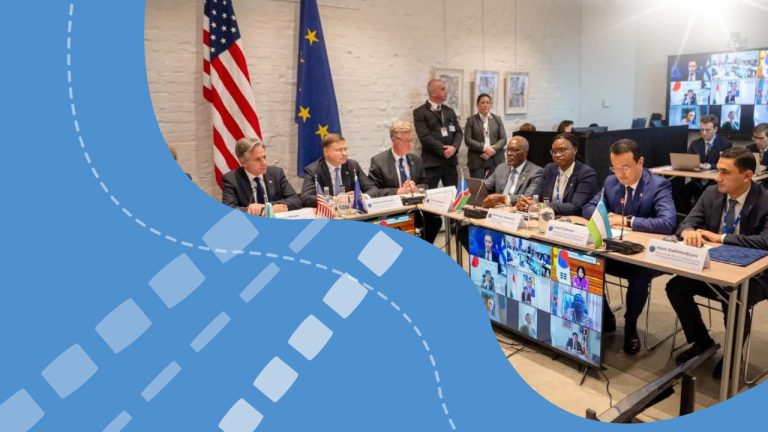
The renewed cooperation effort comes ahead of a major U.S.-led meeting of foreign ministers and senior officials this week aimed at forming global alliances to reduce Chinese mineral dominance. Washington’s sense of urgency follows Beijing’s export restrictions on rare earth elements last year, temporarily eased under a deal between Trump and Chinese President Xi Jinping.
Underlining its seriousness, the Trump administration this week launched a $12 billion national critical mineral stockpile. The EU’s draft mirrors this approach, suggesting both sides could coordinate stockpiling and rapid response measures to supply disruptions.
Key pillars of the EU proposal include cooperation on securing supply chains, developing international premium markets, and sharing information to boost market transparency. It also envisions exemptions from mutual export restrictions, collaboration on innovation and research, and the creation of a joint EU-U.S. response group to manage potential shortages.
Despite concerns over the pace of negotiations, EU officials called the talks “vital to diversify our supplies away from any single country,” indicating that the transatlantic allies are increasingly aligned in reshaping critical mineral dependencies.
-

China Says Rare Earths “Not a Problem” for Europe Amid Export Licensing Concerns
China’s Foreign Minister Wang Yi attempted to calm European fears over rare earth export restrictions during a visit to Berlin on Thursday, insisting that “rare earths have not been, are not, and will not be a problem” between China and Europe. His remarks come amid growing anxiety in the EU over Beijing’s tightening grip on critical mineral exports.
Speaking alongside German Foreign Minister Johann Wadephul, Wang emphasized that China’s new licensing regime, which began in April, is standard practice for controlling dual-use goods, not an attempt to disrupt supply. “If legal applications are submitted, Europe’s and Germany’s normal needs can be met,” he said.
The comments were made during Wang’s European tour, which is aimed at laying the groundwork for the upcoming EU-China summit later this month. The Chinese diplomat had previously met EU foreign policy chief Kaja Kallas in Brussels, who also pressed for an end to export curbs.
Germany, one of the EU’s leading industrial powers and heavily reliant on critical materials, expressed unease over the export rules. “The restrictions are causing great concern and damaging China’s image as a reliable trade partner,” Wadephul said, though he noted efforts were underway to find “sustainable joint solutions” and ease tensions.
Beijing controls over 90% of global rare earth processing capacity, making its policy decisions critical to industries ranging from electric vehicles to consumer electronics. In April, China imposed a requirement for exporters to obtain special licenses — a move seen by many as retaliation for escalating trade pressures, particularly with the United States.
When asked if a deal on the export restrictions could be reached before the EU-China summit, Wang reiterated that the issue should not be viewed as a bilateral dispute. He also pointed to the Chinese Ministry of Commerce’s fast-track procedure to expedite applications and ease concerns.
Beyond rare earths, the two ministers also discussed global flashpoints, including Russia’s invasion of Ukraine, tensions over Taiwan, and the Middle East crisis. Wadephul added, “We believe China can play a constructive role in relation to Iran.”
-

European Tungsten Prices Reach Highest Level Since 2013 Amid Chinese Export Curbs
European tungsten prices have surged to their highest point since 2013, driven by China’s tightening restrictions on critical mineral exports. The price of ammonium paratungstate (APT)—a vital intermediate in tungsten metal production—has reached $400 per metric ton unit (mtu) on the European spot market, marking an 18% increase since February, according to Reuters.
The spike follows China’s recent export curbs and quota reductions on key strategic metals, including tungsten, tellurium, molybdenum, bismuth, and indium. These measures, imposed in retaliation to US tariffs earlier this year, have intensified global supply concerns.
China dominates global tungsten production, accounting for over 80% of the 81,000 tons produced worldwide last year, according to the US Geological Survey (USGS). Tungsten’s exceptional properties—such as its highest melting point of any element, extreme hardness, and excellent electrical and thermal conductivity—make it indispensable across various industries. Initially popularized in incandescent light bulbs, tungsten now underpins sectors ranging from aerospace and semiconductors to defense and industrial drilling.
Tungsten carbide, second only to diamond in hardness, is crucial for metalworking tools and industrial drills, while tungsten crucibles facilitate the melting of other high-temperature materials. In the defense sector, tungsten is used for “penetrators,” armor-piercing projectiles currently in high demand amid the ongoing conflict in Ukraine.
China’s Tightening Grip on Exports
The global tungsten scarcity has been exacerbated by China’s export restrictions. The country’s first tungsten ore mining quota for 2024 was set at 58,000 tons—a 6.5% decrease from the previous year.“Since the Chinese export ban was announced, there has been an over-reliance on scrap supplies, but now those are running thin, and there’s growing panic over the inability to secure new primary tungsten material,” said Oliver Friesen, CEO of Guardian Metal Resources.
The stakes are especially high for the United States, which ceased commercial tungsten mining in 2015 and remains heavily reliant on imports. A looming 2027 deadline mandates the US military to eliminate purchases of tungsten mined or processed in China or Russia—the latter being the world’s third-largest producer.
North American Efforts to Secure Supply
In response, Canada’s Almonty Industries recently announced an offtake agreement to provide tungsten oxide exclusively for US defense applications. The company operates tungsten mines in Spain, Portugal, and South Korea.“Almonty can produce enough tungsten for US/EU/Korea defense demand but not enough for the entire US/EU/Korea market—defense and civilian combined,” Almonty’s CEO Lewis Black stated. Shares of Almonty rose 4.6% in Toronto following the announcement, giving the company a market capitalization of C$688 million ($492 million).
“Tungsten is a small market… But the industries that depend on it are exponentially bigger, which is why it is on everyone’s critical mineral list,” Reuters columnist Andy Home noted.