Tag: European Commission

  • EU Court Advisor Says Commission Wrongly Deducted €68M from Poland Over Turów Mine Dispute

    EU Court Advisor Says Commission Wrongly Deducted €68M from Poland Over Turów Mine Dispute

    The European Commission improperly withheld over €68 million from Poland’s EU funding in connection with the Turów coal mine dispute, according to a preliminary opinion issued Thursday by Advocate General Juliane Kokott of the EU Court of Justice.

    The legal dispute began in 2021 when Czechia filed a case against Poland, citing environmental and public health risks stemming from operations at the Turów coal mine, located near the Czech border. In response, the EU court ordered an immediate halt to mining. When Poland continued operations, the court imposed a daily fine of €500,000, which accumulated between 20 September 2021 and 3 February 2022.

    However, Thursday’s advisory opinion argues that a 2022 bilateral agreement between Poland and Czechia retroactively nullified the interim court measures and, by extension, the financial penalties. Under the agreement, Poland paid €45 million in compensation and agreed to implement environmental safeguards aimed at mitigating the mine’s cross-border impact.

    “The amicable agreement between the Czech Republic and Poland meant that the interim measures were cancelled retroactively,” Kokott wrote. “Therefore, the Commission wrongly offset the penalty payment against Poland’s claims against the EU budget.”

    While Kokott’s findings are non-binding, they are often followed by the Court of Justice in its final ruling.

  • EU Plans Emergency Stockpiles of Critical Minerals Amid Rising Geopolitical Risks

    EU Plans Emergency Stockpiles of Critical Minerals Amid Rising Geopolitical Risks

    The European Commission is preparing to launch a sweeping initiative to build emergency stockpiles of critical minerals, in a move to safeguard the bloc’s supply chains from mounting geopolitical and cyber threats, according to a draft document seen by the Financial Times.

    The proposal advises EU member states to accelerate stockpiling of rare earth minerals, permanent magnets, and other vital components used in energy, defence, and communications infrastructure. The draft highlights a “rapidly deteriorating risk landscape” marked by rising geopolitical tensions, cyberattacks, and climate-related disruptions.

    “Europe must boost its resilience,” the document reads, urging coordination on backup stocks of not just industrial materials, but also food, medicine, cable repair modules, and nuclear fuel. The Commission warns that underwater communication systems and gas pipelines remain particularly vulnerable to sabotage.

    This marks a notable policy shift in Brussels, which has historically focused on free market mechanisms to ensure supply. The war in Ukraine and ongoing tensions with Russia have exposed serious vulnerabilities in Europe’s strategic reserves. Last month, Germany’s chief of defence warned that Russia could potentially target an EU member within four years, intensifying calls for preparedness.

    The Commission is set to publish the finalized strategy next week. It follows March’s announcement of the EU Preparedness Union Strategy, which encouraged citizens to stock up on essentials and urged governments to build national reserves of critical goods.

    The urgency is also driven by what the document calls “limited common understanding” among member states about what essential goods are needed to respond to major crises.

  • Romania Revives Europe’s Largest Graphite Deposit with €200 Million Investment

    Romania Revives Europe’s Largest Graphite Deposit with €200 Million Investment

    Romania is set to breathe new life into Europe’s largest graphite deposit, located in Baia de Fier, 235 kilometers west of Bucharest, after 21 years of dormancy. Once a bustling site employing 500 workers, the area now stands as a landscape of decaying metal structures and rusted machinery. However, thanks to nearly €200 million ($227 million) in funding from the European Commission, the Romanian Salt Company is preparing to restart operations. This initiative is part of a broader strategy to reduce Europe’s reliance on critical materials from China, reflecting shifting global geopolitical dynamics.

    The European Commission has designated the Baia de Fier site as one of three strategic mining projects in Romania. The country will receive a total of €615 million ($698 million) from Brussels, with graphite extraction prioritized for its applications in electric vehicle batteries, energy storage systems, electronics, and machine manufacturing, according to Andreea Nestian, Financial Director at A3Build, a consulting firm specializing in mining.

    Two other projects highlighted by the EU include metallic magnesium extraction in Budureasa and copper mining in Rovina, both also located in western Romania. “Magnesium is crucial for producing lightweight alloys used in the automotive, aerospace, and defense industries,” Nestian said, underscoring Europe’s heavy dependency on imports. Meanwhile, the Rovina copper deposit is recognized as the second-largest in Europe, although its development has faced legal challenges from environmentalists.

    In a bid to attract further financial support, Romanian authorities have informed Brussels about additional mineral reserves, including titanium, boron, quartz, phosphorus, germanium, tungsten, gallium, and rare earth elements. Romanian Minister of Economy Bogdan Ivan highlighted their significance across diverse sectors, such as aerospace, medical equipment, solar technologies, and defense.

    Despite the optimism surrounding the revival of Baia de Fier, the project faces significant hurdles. Many of the former workers have retired or emigrated, and Romania’s sole faculty of mining is struggling to attract students due to waning interest in the industry. Experts stress that substantial external investment and a skilled workforce will be crucial for the mine’s successful reactivation.

    The Romanian government plans to submit the project proposal to the European Commission in the third quarter of this year, although a start date for mining operations remains undecided.

  • EU Unveils Strategic Metals Plan Amid Growing Trade and Energy Challenges

    EU Unveils Strategic Metals Plan Amid Growing Trade and Energy Challenges

    The European Commission has identified 47 strategic projects aimed at strengthening the region’s critical minerals sector and reducing its dependence on imports, particularly from China. These projects, spanning 13 member states, focus on materials essential for batteries and semiconductor production, with the goal of meeting the EU’s 2030 domestic production targets for key minerals like lithium and cobalt.

    However, the EU’s ambitions for the future come at a time of crisis in its traditional metals sector. European steel and aluminum production have suffered due to high energy costs and competition from Chinese overcapacity. Now, U.S. tariffs on aluminum imports pose an additional threat by potentially diverting excess metal into the European market.

    In response, the EU is considering tighter steel import quotas, new aluminum import restrictions, and a “melted and poured” rule to regulate metal origin tracking. Additionally, the Commission is preparing trade measures to curb the outflow of recyclable materials such as aluminum and copper scrap, which are increasingly being exported to the U.S. where they are exempt from tariffs.

    Despite the Commission’s efforts, industry leaders stress the need for immediate action. Paul Voss, Director General of European Aluminium, has called for swift and targeted interventions to stabilize the sector. While the EU is making strides in securing its future metal supply chains, urgent measures are required to prevent further contraction of its industrial base.

  • European Commission Enhances Raw Materials Knowledge Platform

    European Commission Enhances Raw Materials Knowledge Platform

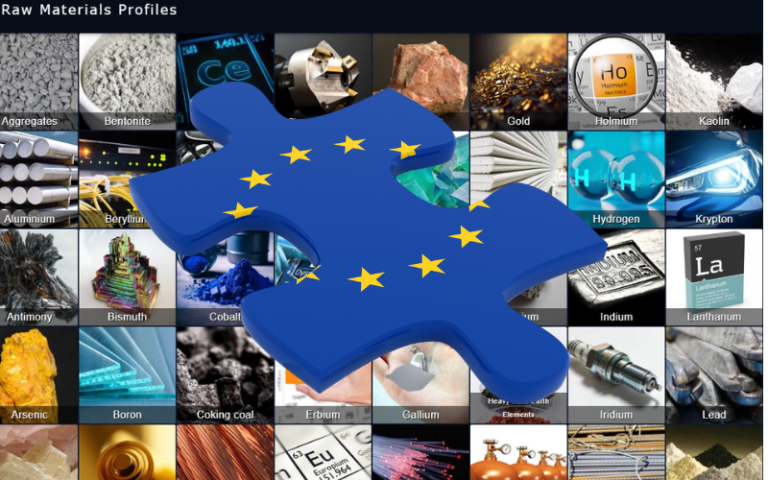
    The European Commission’s Joint Research Centre (JRC) has significantly upgraded the Raw Materials Information System (RMIS), reinforcing its commitment to providing comprehensive data on non-fuel, non-agriculture primary raw materials and secondary raw materials.RMIS – Raw Materials Information System+8RMIS – Raw Materials Information System+8RMIS – Raw Materials Information System+8

    RMIS serves as the Commission’s primary knowledge platform, offering in-depth profiles of various raw materials, including lithium, cobalt, and nickel. These profiles deliver critical insights into material properties, applications, supply chains, and sustainability considerations, supporting informed decision-making across industries and policy sectors.RMIS – Raw Materials Information System

    In a recent development, the JRC published a report focusing on enhancing the recycling and recovery of critical and strategic raw materials in vehicles. This report addresses the growing demand for raw materials driven by the expansion of electric vehicle production and renewable energy technologies, emphasizing the need for responsible sourcing and recycling practices to mitigate environmental and social impacts.OUP Academic+7RMIS – Raw Materials Information System+7RMIS – Raw Materials Information System+7RMIS – Raw Materials Information System

    The RMIS platform also features analyses of value chains and demand forecasts for critical raw materials in strategic sectors such as renewables, e-mobility, energy, ICT, and aerospace & defense. These analyses assist stakeholders in understanding material flows and anticipating future supply and demand dynamics.RMIS – Raw Materials Information System

    Furthermore, RMIS supports the European Union’s objectives for strategic autonomy by promoting circularity in critical raw materials. The platform provides data and indicators on material flows, recycling rates, and supply chain dependencies, aiding in the development of policies and strategies to reduce reliance on non-EU sources.JRC Publications+9OUP Academic+9RMIS – Raw Materials Information System+9

  • European Commission Throws the Door Wide Open to Mining

    European Commission Throws the Door Wide Open to Mining

    The European Commission has identified 47 strategic projects to help the EU become self-sufficient in critical raw materials. More than half of these involve mining plans, several of which are controversial.
    In its effort to reduce Europe’s reliance on external suppliers—particularly countries like China—the European Commission wants at least 10 percent of critical raw materials used within the EU to be sourced domestically by 2030. Additionally, it aims for 40 percent of these materials to be processed inside Europe, while no more than 15 percent should come from any single non-EU country. To support this goal, the Commission has selected 47 “strategic” projects that will benefit from funding and expedited permits. Over half focus on extracting raw materials from the ground, ranging from Norway to Sweden, Germany, and Spain.

    “It’s crucial for Europe’s independence to mine more of its own lithium, nickel, and other metals,” a European Commission Vice President explains. “We can’t keep relying on third parties for such vital resources.” Some of the proposed mines have already stirred controversy—for example, certain lithium mining projects—due to concerns over environmental impact, water usage, and potential harm to local communities. Nevertheless, the Commission views these initiatives as essential for the EU’s green transition and for manufacturing batteries, solar panels, and wind turbines.

    Two Billion Euros for Drilling and Digging

    Under the EU’s plan, two billion euros from the Recovery and Resilience Facility will be allocated to mining initiatives. This includes both developing new mines and expanding or modernizing existing sites. One example is the proposed development of Europe’s largest lithium deposit in the Czech Republic, along with expansions of nickel and cobalt mines in Finland. The Commission also wants to promote the recycling of batteries, electronics, and other products so that precious metals can be recovered and reused. Additionally, the plan involves building strategic stockpiles of critical raw materials, similar to how the EU manages its gas reserves.

    Despite these efforts, experts caution that the EU’s aspirations for raw materials may be overly ambitious. “We’re not going to be completely self-sufficient,” says one raw materials analyst. “Demand for these metals is skyrocketing because of the energy transition and digitalization, so we won’t be able to extract enough on our own.” According to the analyst, the best strategy is to diversify supply chains and forge stable partnerships with countries such as Australia, Canada, and Chile—though this will require making Europe a more appealing trade partner, especially since China has been heavily investing in those regions.

    The Commission acknowledges that the new raw materials plan is not a cure-all. “Still,” says a spokesperson, “it’s a critical step toward reducing our dependence on a single supplier.”

  • Talga Group’s Swedish Graphite Project Earns “Strategic Project” Status Under EU’s Raw Materials Act

    Talga Group’s Swedish Graphite Project Earns “Strategic Project” Status Under EU’s Raw Materials Act

    Stockholm, Sweden – Talga Group has announced a significant milestone: its Swedish graphite project has been designated a “Strategic Project” under the European Commission’s newly enacted Critical Raw Materials Act (CRMA). This designation underscores the project’s crucial role in securing Europe’s supply of essential materials for its green and digital transitions.

    Talga Group Ltd (ASX:TLG), a battery materials and technology company, has achieved a significant milestone with its natural graphite mine in northern Sweden receiving “Strategic Project” status under the European Commission’s Critical Raw Materials (CRM) Act.

    This designation is a major endorsement of the project’s strategic importance in securing Europe’s battery material supply chain, and is expected to significantly accelerate Talga’s efforts to finalize project financing and development.

    The CRM Act, designed to enhance the EU’s autonomy in critical raw materials vital for clean energy technologies, offers Strategic Projects a range of benefits. For Talga, this includes:

    • Improved Access to Financing: A dedicated subgroup within the CRM Board will coordinate EU, national, private, and public financial institutions to facilitate project financing.
    • Enhanced Appeal to Partners and Customers: The designation strengthens Talga’s position in ongoing discussions with debt providers, strategic investors, customers, and government-backed funding programs.
    • Expedited Permitting: Streamlined approvals will reduce project timelines and mitigate risks.

    “The Strategic Project status validates Talga’s natural graphite mine and our vital role in sustainable battery materials,” stated Martin Phillips, CEO of Talga Group. “Graphite is critical to the lithium-ion battery industry, and increased EU capacity to extract and produce battery-grade graphite is essential for Europe’s resilience and competitiveness. We look forward to engaging with new opportunities under the CRMA to deliver Europe’s first fully integrated active anode supply.”

    Talga’s Vittangi Anode Project aims to produce 19,500 tonnes per annum of Talnode®-C, a natural graphite battery anode material sourced from Talga’s wholly-owned graphite resources in Sweden. The project boasts a low emission footprint, vertical integration from mine to anode, and a resource base capable of supporting expansion to over 100,000 tonnes per annum.

    The Company is actively pursuing customer offtake agreements and project financing structures as it progresses towards a Final Investment Decision. This “Strategic Project” status significantly strengthens Talga’s position in the European battery materials market and underscores its crucial role in the region’s transition to sustainable energy.

    Mark Thompson, Founder & Managing Director of Talga Group Ltd commented, “This designation is a testament to the strategic importance of our Swedish project in securing a sustainable and reliable supply of graphite for Europe. We are committed to contributing to the EU’s ambitious green transition goals.”

    Adding to the excitement, he also revealed that they are embarking on a series of meetings focused on securing new funding opportunities, engaging with potential customers, and exploring the onshoring of EU battery materials. “I am on a plane tomorrow for a range of meets including new funding opportunities, new customers and onshoring of EU battery materials!”.

    This news comes at a crucial time as Europe intensifies its efforts to reduce reliance on foreign suppliers for critical raw materials and build a robust domestic battery supply chain. Talga’s “Strategic Project” status is expected to accelerate the development and implementation of their Swedish graphite operation, contributing significantly to the EU’s strategic autonomy and sustainability goals.

  • EU Selects 47 Projects to Bolster Raw Materials Security

    EU Selects 47 Projects to Bolster Raw Materials Security

    The European Commission has, for the first time, selected a list of 47 Strategic Projects aimed at enhancing domestic capacities for strategic raw materials. These initiatives are expected to fortify Europe’s raw materials value chain and diversify its supply sources. The Strategic Projects represent a key milestone in the implementation of the Critical Raw Materials Act (CRMA), which seeks to ensure that the EU achieves extraction, processing, and recycling targets of 10%, 40%, and 25%, respectively, by 2030. By meeting these benchmarks, the projects will play a pivotal role in supporting Europe’s green and digital transitions, alongside strengthening the defence and aerospace sectors.

    Key Details of the Strategic Projects

    The selected 47 Strategic Projects span across 13 EU Member States, including Belgium, France, Italy, Germany, Spain, Estonia, Czechia, Greece, Sweden, Finland, Portugal, Poland and Romania. Covering various stages of the raw material value chain, the projects include:

    • 25 focusing on extraction,
    • 24 on processing,
    • 10 on recycling, and
    • 2 on substitution.

    These initiatives encompass 14 out of the 17 strategic raw materials identified in the CRMA. Notable resources include lithium (22 projects), nickel (12 projects), cobalt (10 projects), manganese (7 projects), and graphite (11 projects), which are vital for the EU battery value chain. Moreover, magnesium and tungsten projects will reinforce the resilience of the EU’s defence sector.

    Benefits and Criteria

    To qualify, projects needed to demonstrate contributions to securing EU’s raw materials, compliance with environmental, social, and governance (ESG) standards, technical feasibility, and cross-border benefits. With an anticipated investment of €22.5 billion, these projects will benefit from coordinated support regarding funding, streamlined permitting procedures, and connections with off-takers. Extraction permits will be processed within a maximum of 27 months, while other projects will follow a 15-month timeline, significantly shortening current durations of 5 to 10 years.

    Background on the CRMA

    The Critical Raw Materials Act became effective on 23 May 2024, with the European Commission subsequently inviting proposals for recognition of Strategic Projects. Following assessments and consultations involving Member States and the European Parliament, the final list of projects was announced. The Commission is also evaluating applications from non-EU countries and plans to issue a new call for proposals by the end of summer.

    This represents a landmark achievement towards securing Europe’s supply of strategic raw materials and boosting sovereignty in industrial sectors.

  • European Commission Launches Critical Raw Materials Facility to Strengthen Supply Chains and Reduce Dependencies

    European Commission Launches Critical Raw Materials Facility to Strengthen Supply Chains and Reduce Dependencies

    The European Commission has awarded EIT RawMaterials and InnoEnergy a groundbreaking new project, the Critical Raw Materials (CRM) Facility, aimed at bolstering Europe’s supply chains, reducing dependencies, and mitigating disruption risks. Coordinated by EIT RawMaterials, the initiative seeks to build a resilient and sustainable supply of critical raw materials such as lithium, cobalt, nickel, and manganese by strengthening global partnerships and advancing international projects to diversify Europe’s raw materials sources.

    Bernd Schäfer, CEO and Managing Director of EIT RawMaterials, emphasized the importance of the project, stating, “Securing a stable supply of critical raw materials is not just vital for Europe’s industrial competitiveness—it is essential for European security. As we race toward 2030, we must turn ambition into action.” He highlighted that resilient supply chains require strong global partnerships and expressed pride in leading the initiative, leveraging EIT RawMaterials’ expertise in mining, recycling, and advanced materials.

    A dedicated team from EIT RawMaterials and InnoEnergy will identify and assess CRM projects in regions including Africa, Latin America, Central and Southeast Asia, Southeastern Europe, and Greenland. These projects will be evaluated for their strategic value to Europe and opportunities for mutually beneficial partnerships between host communities and European industries.

    Baptiste Buet, Director of the EU Business Unit at InnoEnergy, noted, “A value chain is only as strong as its weakest link. For batteries, securing sustainable raw materials is critical to the success and stability of a rapidly developing European industry.” He added that while domestic mining, refining, and recycling are essential, the CRM Facility underscores Europe’s commitment to securing global resources for battery cell manufacturers.

    The CRM Facility will also focus on developing mid-to-downstream mineral value chains in partner countries and delivering specialized training programs to equip professionals with expertise in CRM management, operations, and sustainable practices.

  • EU Announces Retaliatory Measures Against U.S. Steel and Aluminum Tariffs, Targeting $28 Billion in Goods

    EU Announces Retaliatory Measures Against U.S. Steel and Aluminum Tariffs, Targeting $28 Billion in Goods

    The European Union has unveiled plans to impose duties on over $28 billion worth of U.S. goods in response to new tariffs on steel and aluminum imports announced by the United States, according to an official statement released on March 12. This move comes after U.S. President Donald Trumpreinstated a 25% tariff on imported steel and aluminum, reigniting long-standing trade tensionsbetween Washington and Brussels.

    The European Commission described the U.S. tariffs as “unjustified” and emphasized that its countermeasures aim to protect EU businesses, workers, and consumers. The EU’s retaliatory steps will be implemented in two phases. The first phase, set to begin on April 1, will reinstate previously suspended countermeasures from 2018 and 2020, addressing U.S. tariffs that cost the EU 8 billion euros in exports.

    European Commission President Ursula von der Leyen criticized the U.S. tariffs, stating, “Tariffs are taxes. They are bad for business and even worse for consumers. These tariffs are disrupting supply chains and bringing uncertainty to the economy.” Despite the strong response, the EU signaled its willingness to negotiate a resolution, noting that the measures could be lifted if an agreement is reached.

    The dispute traces back to 2018, when the Trump administration imposed tariffs on nearly $7 billion of European exports, citing national security concerns. The EU retaliated with its own tariffs on American products. A temporary truce was reached in 2021 under the Biden administration, which replaced the tariffs with a quota system, prompting the EU to freeze its countermeasures.

    The renewed tariffs threaten to disrupt global supply chains and increase costs for businesses and consumers. Additionally, the U.S. tariffs could negatively impact Ukraine’s steel industry, a critical sector of its economy and the second-largest source of foreign currency after agriculture.