Tag: EU Critical Raw Materials Act

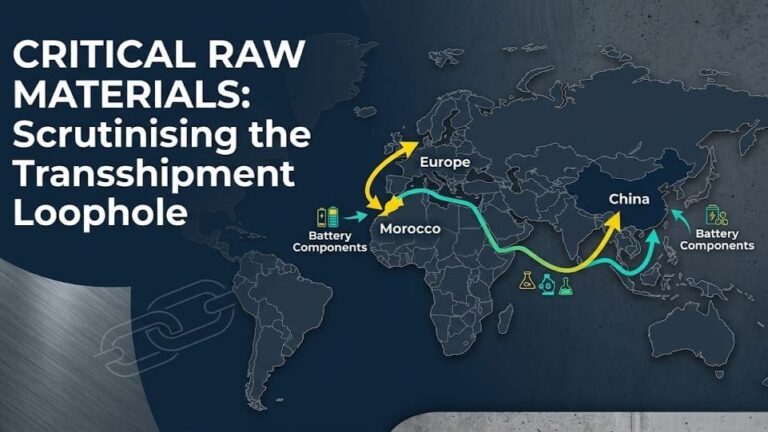
  • The Transshipment Loophole: Is China using Morocco as a backdoor to Europe?

    The Transshipment Loophole: Is China using Morocco as a backdoor to Europe?

    The European Union faces a multi-billion-dollar geopolitical dilemma that cuts to the very core of its economic security.

    EU Trade Commissioner Maroš Šefčovič recently issued a stark warning regarding a massive surge in Chinese industrial investment in Morocco. The fear? Beijing is utilising “transshipment” to offshore its domestic industrial overcapacity and bypass mounting Western tariffs.

    With over $6 billion in Chinese capital flooding into Morocco’s green energy and automotive sectors, the North African nation is rapidly morphing into Africa’s premier EV hub.

    🔍 The Scale of the Pivot

    Major projects are reshaping the supply chain:

    • Gotion High-Tech is constructing a $1.3 billion battery gigafactory in Kenitra.
    • Industrial giants like CNGR, Shinzoom, and BTR New Material Group are establishing massive cathode, anode, and copper processing facilities.

    ⛓️ From Raw Materials to Consumer Products: The Resilience Crisis

    This isn’t just about final vehicle assembly; it is an encroachment across the entire vertical supply chain. To build truly resilient European supply chains, the block needs secure access to everything from critical raw materials up to the final consumer product.

    However, China already possesses the capability to dominate key components of Morocco’s industrial ecosystem, including the processing facilities and logistics infrastructure right up to the shipping ports. By dominating these upstream segments, foreign entities effectively lock in dependencies long before a battery component ever reaches a European consumer showroom. Under frameworks like the EU’s Critical Raw Materials Act (CRMA), Brussels has set ambitious targets to reduce reliance on dominant single nations—yet this investment pattern actively challenges those resilience goals.

    🇺🇸 vs 🇪🇺 Market Protection: Carrots vs. Sticks

    The Morocco-China nexus highlights a profound asymmetry in how the US and the EU protect their domestic markets and enforce economic resilience:

    • The US “Carrot” Model (Inflation Reduction Act): The US takes a highly transactional, aggressive approach to friendshoring. The IRA relies on massive tax incentives and localised demand signals (like the $7,500 EV consumer credit). Crucially, it deploys strict Foreign Entity of Concern (FEOC) restrictions that explicitly bar subsidies if battery components or critical minerals are sourced from Chinese entities—even if they are processed in an FTA partner nation. It explicitly redirects the flow of capital via financial reward.
    • The EU “Stick” Model (Regulatory & Compliance): Conversely, the EU relies on complex legal enforcement, strict “Rules of Origin” audits, and retrospective anti-subsidy tariffs. Without an equivalent pool of centralised cash or explicit bans on foreign entities operating in neighbouring free-trade zones, the EU has a much less efficient mechanism for preventing circumvention. Brussels must rely on tedious bureaucratic investigations to prove a product wasn’t “significantly transformed” locally—a process that is slow, easily litigated, and reactive.

    ⚖️ Brussels’ Policy Gridlock

    Retaliation isn’t simple. The European Commission is caught between economic defence and its own climate targets:

    • Supply Chain Disruption: European automotive giants like Renault and Stellantis have massive, long-standing manufacturing operations in Morocco. Punishing Moroccan exports directly penalises European corporate bottom lines.
    • The 2035 EV Mandate: Roughly 85% of Morocco’s automotive output is bound for Europe. The EU fundamentally relies on these close, cost-effective supply routes to meet its legally mandated 2035 ban on new fossil-fuel vehicles.
    • The Local Content Battle: Moroccan trade officials strongly reject allegations of corporate camouflage, noting that Chinese firms must achieve strict, legal thresholds of “significant local transformation” to qualify for tariff-free EU access.

    The EU has previously penalised specific Moroccan exports (like aluminium wheels) after finding evidence of unfair state aid. But scaling up enforcement to cover the entire battery ecosystem could spark a massive trade dispute or tank Europe’s own EV transition.

    🌐 Join the Discussion Across Europe, the Middle East, and Central Asia!

    These complex cross-border value chains, regulatory shifts, and mineral security strategies will be at the very center of our upcoming regional forums. Connect with industry leaders, policymakers, and midstream operators to debate the future of critical raw materials:

    🗓️ 24–25 June | Ankara: https://2026.minexasia.com/

    🗓️ 28–29 Oct | Trim: https://2026.minexeurope.com/

    👇 To the supply chain, trade policy, and automotive experts in my network:

    Is the EU’s regulatory approach robust enough to prevent this kind of economic circumvention, or does Europe need to adopt a US-style, incentive-backed “FEOC” policy to truly protect its clean-tech sector?

  • EU Designates Spain’s Mina Doade Lithium Project as Strategic Under Critical Raw Materials Act

    EU Designates Spain’s Mina Doade Lithium Project as Strategic Under Critical Raw Materials Act

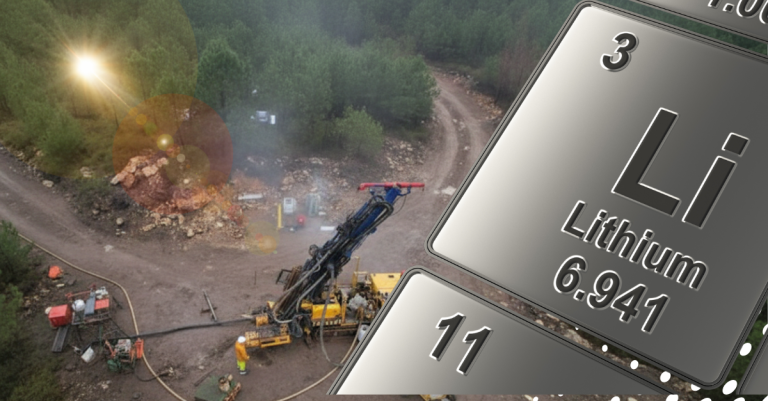
    The Mina Doade lithium project in Galicia, northwest Spain, has been designated a Strategic Project by the European Union under the Critical Raw Materials Act, placing it among 47 projects selected in the first strategic list as the bloc moves to build domestic supply chains for materials essential to the automotive, technology and industrial sectors.

    The designation, awarded to project developer Recursos Minerales de Galicia S.A., reflects both the strategic importance of lithium to European industry and the supply risk associated with the metal — a risk assessed as high given the concentration of global production in a limited number of countries and the material’s limited substitutability in applications such as EV batteries.

    Under the CRMA framework, which entered into force in May 2024, Strategic Project status unlocks significant practical advantages. Projects on the list gain access to accelerated permitting processes, with approvals available within a maximum of 27 months, and receive priority consideration for financing. These streamlined procedures are designed to close the gap between Europe’s geological potential and its current near-total dependence on imported lithium, almost entirely refined in China.

    Spain holds significant lithium resources across Galicia, Extremadura and Castilla y León, and sits alongside northern Portugal as one of the Iberian Peninsula’s most promising lithium jurisdictions. The Doade-Beariz area in Galicia has been identified as one of the most prospective sites, and the project’s inclusion on the EU’s first strategic list is seen as confirmation of its technical quality and alignment with European sustainability and supply security objectives.

  • Europe’s First Full-Cycle Lithium Project Completes Construction in Finland as €783 Million Keliber Facility Prepares for Production

    Europe’s First Full-Cycle Lithium Project Completes Construction in Finland as €783 Million Keliber Facility Prepares for Production

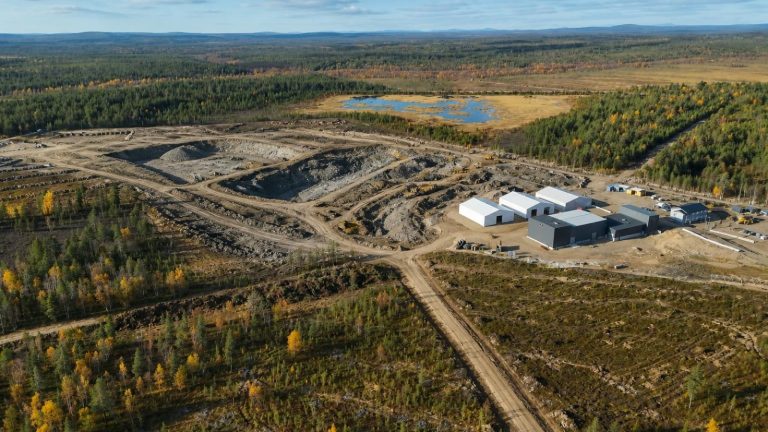
    Finland has become the first European country to complete construction of a full-cycle battery-grade lithium project, with Keliber Oy’s €783 million ($922 million) facility in Syväjärvi in western Finland ready to begin production in the second quarter of 2026 and ramp to full output by 2028 — a landmark moment for a continent that currently imports 100% of its refined lithium, almost entirely from China.

    The Keliber project will produce battery-grade lithium hydroxide from domestically mined ore, with the entire supply chain — from mine to concentrator to refinery — contained within a 43-kilometre radius. At full capacity, the Kokkola refinery will produce approximately 15,000 tonnes of lithium hydroxide annually for at least 18 years, equivalent to around 10% of Europe’s current demand. Keliber Oy is 80% owned by South African mining major Sibanye-Stillwater, with the remaining 20% held by the Finnish state through Finnish Minerals Group.

    An additional €200 million ($235 million) has been committed by the Finnish government and Sibanye-Stillwater to support project ramp-up, while the European Investment Bank has contributed €150 million ($177 million) in financing. The project has been designated a Strategic Project under the EU’s Critical Raw Materials Act.

    Finnish Minister of Economic Affairs Sakari Puisto described the project as a key component of Finland’s National Battery Strategy that increases the country’s and the EU’s self-sufficiency in critical raw materials. Keliber CEO Hannu Hautala said the facility would help Europe reduce dependence on imports from Asian countries and Australia, with lithium hydroxide output destined for the European battery industry.

    The project spans more than 500 square kilometres with six additional mining sites planned in the area. Europe currently relies on foreign sources for approximately 81% of extracted lithium and 100% of refined lithium, with EU demand projected to grow twelve-fold by 2030 and twenty-one-fold by 2050.

  • Rio Tinto Mothballs Controversial $2.95bn Jadar Lithium Project in Serbia

    Rio Tinto Mothballs Controversial $2.95bn Jadar Lithium Project in Serbia

    The Rio Tinto Group has placed its contested $2.95-billion Jadar lithium project in Serbia into “care and maintenance”, according to an internal memo this week. The move, confirmed by a company spokesperson, effectively halts active development on what was slated to be Europe’s largest lithium mine, capable of supplying an estimated 90% of the continent’s current lithium demand.


    Key Takeaways and Context

    The decision is a direct consequence of a “lack of progress in permitting” and sustained fierce local opposition and political volatility in Serbia. CEO Simon Trott’s focus on simplifying the company’s sprawling portfolio and cutting spending also played a role, especially given the project’s high capital allocation with no immediate production in sight.

    What does “Care and Maintenance” mean for Jadar?

    “Care and maintenance” is a mining industry term for a temporary suspension of operations. It means that while the site is not actively being developed, it is being managed to ensure it remains in a safe, stable, and environmentally compliant condition so that operations could be recommenced at a later date if regulatory, economic, or social conditions improve.

    Rio Tinto reiterated that it “remains in Serbia” and continues to view Jadar as an “exceptional quality” deposit with the potential to play a “significant role in the energy transition” of Serbia and Europe. Their immediate focus will be on supporting employees and fulfilling legal obligations as responsible landowners in the Jadar valley.


    🇪🇺 Critical Hit to EU’s Raw Materials Strategy

    The mothballing of Jadar is a significant setback for the European Union’s ambitions for self-sufficiency in key battery metals, as outlined in the Critical Raw Materials Act (CRMA).

    • Strategic Project Loss: Jadar was designated as one of the EU’s few Strategic Projects outside of its borders, specifically for lithium. At its estimated full capacity of 58,000 tonnes of lithium carbonate annually, it was considered a cornerstone for establishing a secure, diversified, and domestic European battery supply chain, reducing reliance on dominant suppliers like China.
    • A Warning on Governance: The project’s failure underscores a critical dilemma for the EU. As Peter Tom Jones highlights, attempts to increase self-sufficiency through projects in third countries must not lead to “uncritical support for autocratic regimes”. The sustained local opposition, environmental concerns, and political instability in Serbia—an EU candidate country—demonstrate that effective governance and a democratization process are as critical as the resource itself.
    • Alternative Lithium Projects: The focus will now intensify on accelerating other European lithium projects, such as those in Portugal, France, and Finland, to meet the CRMA’s targets.

    This situation calls for the EU to demand robust ecological and social standards—potentially through collaboration with third-party verification bodies like the Initiative for Responsible Mining Assurance (IRMA)—to rebuild confidence in such projects in the Western Balkans and beyond.

  • Portugal’s Lithium Debate Intensifies as EU Pushes for Faster Mining Projects

    Portugal’s Lithium Debate Intensifies as EU Pushes for Faster Mining Projects

    Portugal has once again become a focal point in Europe’s race to secure lithium for electric mobility, as the European Commission presses for the removal of barriers delaying mining projects. This comes just as Savannah Resources, a UK-based company, announced a major increase in estimated resources at its Barroso project in Boticas, northern Portugal.

    Savannah reported that confirmed resources at Barroso have risen by 40% to 39 million tonnes, with exploration targets potentially lifting that figure to 62 million tonnes. The company suggested that in time, deposits could exceed 100 million tonnes of lithium mineralisation — theoretically enough to supply batteries for 47 million electric vehicles. The project, flagged by Brussels as one of three “strategic” lithium developments in Portugal, benefits from simplified licensing procedures under the EU’s Critical Raw Materials Act.

    However, local opposition remains fierce. Communities in Covas do Barroso, environmental groups, and academics argue that the mine would devastate heritage landscapes, deplete scarce water resources, and offer limited returns given Portugal’s comparatively small reserves. Despite being described as Europe’s largest deposit, Portugal holds just 60,000 tonnes of lithium reserves — far less than global leaders such as Chile, Australia, and China, which hold millions of tonnes.

    Former PSD environment secretary Joaquim Poças Martins has warned that lithium cannot be a long-term solution for Europe’s energy transition. “You cannot destroy a mountain in order to extract a few kilos of lithium,” he said, pointing instead to hydrogen as a more viable energy storage alternative.

    The European Commission, led by President Ursula von der Leyen, maintains that lithium projects are vital for reducing dependence on China and other dominant suppliers. Von der Leyen this week called for urgent action to fast-track such initiatives, citing lithium processing in Portugal as a priority.

    Yet Portugal’s environment minister Maria da Graça Carvalho has acknowledged the difficulty of advancing projects “against the will of everyone around you.” Meanwhile, a UN committee recently ruled that Portuguese authorities failed to respect citizens’ rights to environmental information and participation in the case of the Barroso mine.

    For residents, the stakes remain high. Campaigner Aida Fernandes of United in the Defence of Covas do Barroso argues the mine represents “destruction in the name of climate protection,” while former mayor Fernando Queiroga has warned that water scarcity could make the project disastrous during drought years.

    With Brussels urging speed and locals vowing resistance, Portugal’s lithium question has become a defining test of how Europe balances strategic ambitions with environmental and social sustainability.

  • Europe’s Green Transition Paradox: Rare Earths vs. Sami Rights in Sweden’s Kiruna

    Europe’s Green Transition Paradox: Rare Earths vs. Sami Rights in Sweden’s Kiruna

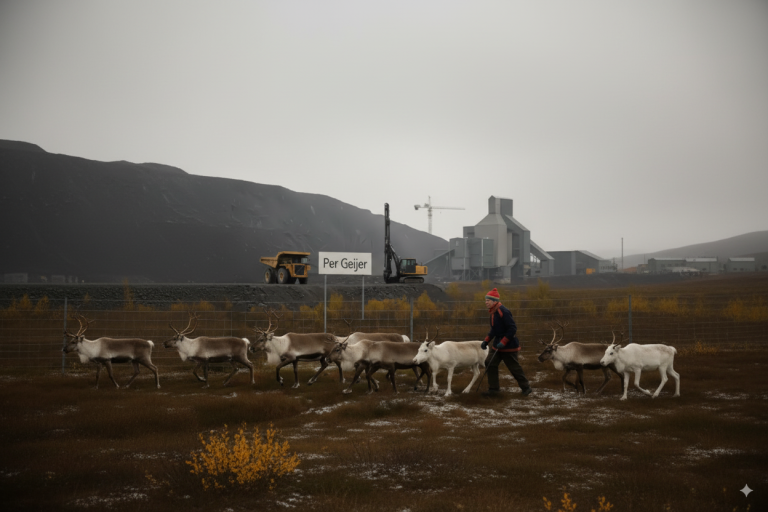
    Kiruna, Sweden — When LKAB confirmed earlier this year that its Per Geijer deposit contains approximately 1.2 billion tonnes of ore, including 2.2 million tonnes of rare-earth oxides (REO), the news sent shockwaves through European capitals. Designated as Europe’s largest known rare-earth deposit, the Per Geijer project was swiftly elevated to “strategic project” status under the EU’s Critical Raw Materials Act (CRMA). However, beneath the surface of this economic boon lies a complex paradox: the deposit directly intersects the Gábna Sami community’s centuries-old reindeer migration corridor, a vital lifeline now further threatened by climate change and a century of mining activity.

    The CRMA’s 2030 benchmarks are clear: at least 10% of strategic raw materials must be mined within the EU, 40% processed domestically, 25% recycled, and no more than 65% dependence on any single third country. Rare earths, however, remain a critical weak link. According to Eurostat and the European Commission, 95% of the EU’s rare-earth imports in 2024 originated from China, Malaysia, and Russia, with Europe’s dependency on China for heavy rare earth elements (REEs) being effectively absolute. Per Geijer is thus positioned as a linchpin in Europe’s clean-tech ambitions, supplying essential elements like neodymium, praseodymium, and dysprosium for electric-vehicle motors and offshore wind turbines. Yet, for the Sami people, the stakes are profoundly different. “The mine would cut our land in half,” says Lars-Marcus Kuhmunen, head of the Gábna sameby. “It would end reindeer herding as we know it.”

    Mining is not new to Kiruna. LKAB’s century-old Kiirunavaara iron-ore mine has already forced the relocation of the entire town, including Kiruna Church, which was moved 5 kilometers in August 2024 to avoid subsidence. For the Sami, the situation is exacerbated by the rapid warming of the Arctic, which is occurring nearly four times faster than the global average. Winter rain events now frequently ice over lichen, starving reindeer herds, while hotter summers erode their weight reserves. The loss of migration access is not merely a cultural loss but a threat to their survival.

    LKAB first unveiled Per Geijer in January 2023, estimating it could contain over 1 million tonnes of REO, but cautioned that permitting could take 10–15 years. Even with a smooth process, production is unlikely before the 2030s. This year, the company launched an 8-kilometer underground exploration drift to better define the orebody, signaling intent but not immediate production. While LKAB emphasizes its role in Europe’s green transition, it has yet to propose concrete solutions for preserving Sami migration routes.

    Even if the rare earths are mined, Europe lacks sufficient separation and alloying capacity. China currently dominates all midstream processing stages. Efforts are underway to address this, such as REEtec’s Herøya plant in Norway, backed by LKAB, which aims for commercial separation by 2025, and Solvay’s La Rochelle facility in France, upgrading to produce magnet-grade oxides. However, analysts, including Bernstein Research, warn that without accelerated funding and permitting, Europe risks falling short of CRMA targets.

    CRMA status does not override Swedish law, and projects must still pass national environmental reviews and address Indigenous rights substantively. Nordic precedent is clear: in 2021, Norway’s Supreme Court struck down the Fosen wind farm, ruling it violated Sami cultural rights by disrupting grazing. The case set a precedent that green-transition infrastructure can be unlawful if it severs reindeer husbandry.

    Industry observers suggest that any workable compromise at Per Geijer would require engineered migration corridors built before production, seasonal traffic windows to avoid peak herding periods, legally binding co-management with Sami herders backed by compensation tied to measurable herd health, and off-site processing via facilities like REEtec to minimize local disruption.

    Europe’s decarbonization targets and geopolitical autonomy are colliding head-on in Kiruna. The paradox is not unique to Sweden but symptomatic of global green-transition mining conflicts. For mining professionals, Per Geijer illustrates how permitting risk is now as much about cultural rights and climate resilience as ore grade and cut-off ratios. Investors should track Indigenous rights litigation closely, as a single ruling could reshape the economics of strategic minerals across the Nordics.

    With production realistically a decade away, Europe’s dependence on Chinese REEs will persist into the 2030s. In the meantime, Sami concerns are escalating, and Brussels faces a choice: fast-track raw material security or enforce the same environmental and cultural protections it champions abroad. The Per Geijer paradox will test whether Europe can mine its way to a green future without undermining the Arctic’s oldest cultural landscapes.

  • Ireland Strategic Investment Fund Backs Irish Minerals Fund with €30m Investment

    Ireland Strategic Investment Fund Backs Irish Minerals Fund with €30m Investment

    The Ireland Strategic Investment Fund (ISIF) has revealed a €30 million investment in an Irish fund dedicated to mining ventures. The recipient of ISIF’s investment is the Irish Minerals Fund, supported by Lionhead Resources, a private equity firm specializing in mining investments. The focus of the fund will be to pursue minority stakes in environmentally sustainable mining projects within the Republic of Ireland.

    The Irish Minerals Fund’s investment strategy will prioritize projects with established mineral deposits, particularly those centered around zinc extraction. Nick Ashmore, ISIF’s director, emphasized the significance of the investment in promoting responsible mineral extraction, highlighting its potential to bolster indigenous businesses and create skilled jobs, particularly in rural areas.

    Finance Minister Michael McGrath echoed these sentiments, noting the historical significance of the mining sector in Ireland and the potential for job creation in regional areas.

    Lionhead Resources, based in London and South Africa, specializes in investments that support the transition to a low-carbon economy and the needs of a rapidly urbanizing global population.

    The investment coincides with the European Union’s recent approval of the Critical Raw Materials Act (CRMA), aimed at reducing dependence on Chinese dominance in critical mineral supply chains, particularly for technologies essential to energy transition such as electric vehicles and renewable energy.