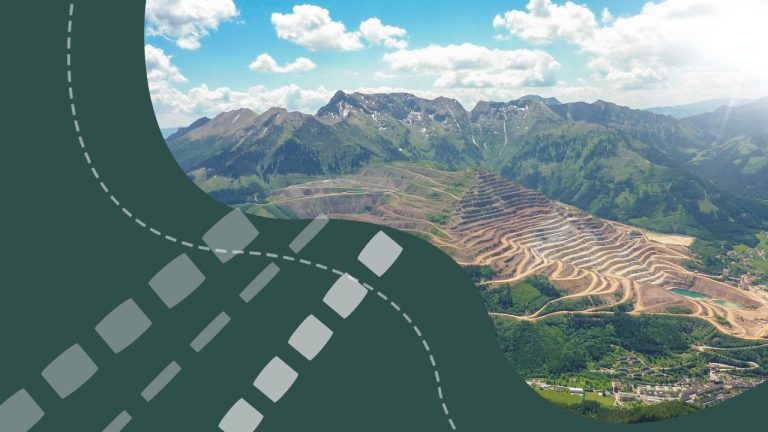
In response to a recent setback, Poland’s prominent utility company, PGE, pledged on Monday to undertake all necessary measures to sustain the operations of its Turow lignite mine and power plant situated near the Czech border. CEO Dariusz Marzec emphasized the company’s commitment to rectifying past shortcomings, prioritizing ecological considerations, and safeguarding the region’s safety. The announcement follows a local court’s decision on March 13, which annulled an environmental permit issued in 2022 for the Turow project but permitted the continuation of mining activities for the time being. Environmental advocacy groups have consistently raised concerns about the mine’s detrimental environmental impact, particularly on the adjacent power plant, prompting legal challenges against the operating license extending until 2044. PGE disclosed that it is presently awaiting a formal rationale for the court’s ruling and intends to pursue legal recourse accordingly to defend the continuity of the mine and power complex. Marzec expressed optimism regarding a favorable resolution of the matter.
Tag: Environmental Concerns
-

Court Decision Allows Polish Coal Mine to Continue Operations Amidst Environmental Concerns
In a recent development amidst a series of conflicting court verdicts, a Polish coal mine near the Czech border, the Turów mine, has been granted permission to continue its operations, albeit temporarily. This decision comes after a prolonged legal battle between the mine and environmentalists, highlighting the ongoing tensions between industrial interests and ecological concerns. The Voivodship Administrative Court’s ruling provides a reprieve for the mine, allowing it to operate under a temporary concession despite environmentalists’ objections.
Andra Apanasionek, the press officer for PGE GiEK S.A., emphasized that the court’s decision does not imply a halt to the energy supply from the Turow complex. Apanasionek pointed out that the mine is diligently adhering to its environmental obligations as stipulated by the General Director for Environmental Protection. Measures are being undertaken to implement various investments and environmental initiatives aimed at mitigating the mine’s impact on its surroundings.
Amidst these legal and environmental debates, miners at the Turów mine are contemplating their future job prospects. Some are proactively seeking training in alternative professions, particularly in the green energy sector and wind farms. Marcin Potempa, one such miner undergoing retraining, expressed his motivation to secure an alternative career path to ensure a smooth transition in case the mine shuts down. He highlighted the similarities between his current work in the mines and potential roles in the renewable energy industry, albeit acknowledging the challenges, particularly the dangers associated with working at heights in wind energy installations.
-

Gabriel Resources’ Legal Battle Casts Uncertainty on Future Amid Mining Ambitions
Gabriel Resources Ltd., based in Yukon, Canada, once envisioned establishing a significant gold and silver mine in Romania’s Carpathian Mountains, a region steeped in mining history spanning over 2,000 years. However, its aspirations have hit a roadblock as the proposed mining area finds itself listed on the UNESCO World Heritage register, following an eight-year legal dispute with Romania that has clouded the company’s prospects.
The company’s trajectory serves as a cautionary tale, shedding light on the evolving dynamics surrounding resource extraction and the complexities of the global financial landscape. Gabriel’s focus for over a decade had been its arbitration claim against Romania at the International Centre for Settlement of Investment Disputes, seeking $4.4 billion in damages for hindering its mine project.
Investors had eagerly anticipated a resolution to the legal impasse, driving Gabriel’s stock price to double in recent months. However, sentiments quickly soured after the arbitration panel’s decision on March 8, rejecting Gabriel’s claim and awarding Romania $10 million in legal fees and expenses. The aftermath was swift and severe, with Gabriel witnessing one of the most significant single-day market cap losses for a Canadian junior mining company in recent memory.
Richard Brown, Gabriel’s CFO, refrained from commenting on the ruling, although the company criticized the decision, denouncing it as unjust and flawed. Despite contemplating an annulment, Gabriel faces financial uncertainty, with dwindling cash reserves and impending financial obligations.
Regardless of the outcome, Gabriel’s prolonged legal battle underscores the profound impact of investor protection treaties, which have ramifications on the global economy. Over the past two decades, Canadian investors have initiated numerous arbitration claims, reflecting a broader trend shaping international commerce.
-

Montenegro’s largest zinc mine under review: Working group analyzes Brskovo project’s future
The Brskovo project will be one of the biggest zinc mines in Europe, according to its owner, Swiss-based Tara Resources. However, it has been facing severe criticism from non-governmental organisations and citizens in the northeastern town of Mojkovac, in close proximity to the mine, over environmental issues.
The working group was formed following a government decision adopted in January, requesting a thorough analysis of the concession contract, all annexes and other documentation, with the aim of taking a final decision on the future of the project, the ministry said in a statement earlier this week.
The working group’s first session took place on February 1, and a second meeting is scheduled for February 5.
In 2010, the Montenegrin government awarded Australian mining company Sultan Corporation a 25-year exploration and mining lease rights for the Brskovo lead and zinc complex. In 2011, Sultan said it found an initial inferred resource of 9.2 million tonnes at Brskovo, and strong upside potential.
In 2018, Tara Resources acquired the project and is now operating it via its local subsidiary Brskovo Mine.
Tara Resources says on its website that it completed a preliminary economic assessment in 2019 and a pre-feasibility study in 2021, proving the strong economics of the project. It notes that construction of the Brskovo mine will involve a capital investment of some 180 million euro ($195 million), and will consist of two open pit mines, a processing plant, and an integrated waste management facility.
The Brskovo mine will produce some 45,000 tonnes of zinc in concentrate, 13,000 tonnes of lead in concentrate, 3,000 tonnes of copper in concentrate and approximately 1 million ounces of payable silver in the copper and lead concentrates, according to Tara Resources. The project will employ 700 people in construction, and will create 550 direct jobs and 200 indirect jobs during operations.
Last week, local daily Vijesti reported that at the first session of the working group formed to examine the project, the state body in charge of protecting the property rights and interests in Montenegro declared that the government has a legal basis to cancel the concession contract with Brskovo Mine since it has missed many of the deadlines for receiving urban and technical permits.
The daily recalls that the concession holder has changed several times since 2010, while the original contract was amended six times via annexes that had extended the deadlines for meeting certain obligations.
The report also says that the working group has 30 days to send its final recommendations on the future of the project to the government.
-

Lopare municipality demands from Republic of Srpska to reject lithium project
Head of the Municipality of Lopare, Rado Savić, has taken action against the proposed opening of a lithium mine in Majevica mountain by submitting a petition signed by 3,711 citizens to the National Assembly of the Republic of Srpska. The petition, along with a local declaration, opposes the exploitation of lithium, boron, sodium, strontium, potassium, and associated elements within the municipality’s territory. Mayor Rado Savić emphasized the widespread opposition to the mine among the local population, citing concerns about its potential harm to the environment, rivers, and community well-being, as reported by Nezavisne novine.
Savić stressed the lack of similar mines in Europe, fueling significant fear among citizens. The petition’s submission follows a similar stance taken by officials in the Brčko District against lithium mining in their area. Investors have shown interest in exploration across various locations, including Bijeljina, Brčko, Lopare, Ugljevik, and Zvornik, all situated along the Drina river opposite Rio Tinto’s controversial Jadar project in Loznica, Serbia.
In particular, Swiss company Arcore has expressed interest in developing the mine, conducting several years of research with approval from local authorities. The company reported lithium deposits worth approximately USD 10 billion in the municipality of Lopare in October. Mayor Rado Savić is urging the National Assembly to compel the Government of the Republic of Srpska to reject the proposed lithium mine, reflecting the concerns and opposition voiced by the local community.