Tag: Environmental Concerns

  • Amulsar Gold Mine Project in Armenia Secures Over $750 Million Investment and Community Development Agreement

    Amulsar Gold Mine Project in Armenia Secures Over $750 Million Investment and Community Development Agreement

    The Amulsar gold mine project in Armenia has attracted significant investment, exceeding $750 million from both public and private sectors. This was announced by Armenian Minister of Economy Gevorg Papoyan during the signing ceremony of a Community Development Agreement, which will see Lydian Armenia CJSC invest over $100 million in the long-term development of local communities. The agreement was signed between the Armenian government, represented by the Ministry of Economy, Lydian Armenia, and the enlarged communities of Jermuk, Vayk, and Sisian.

    Minister Papoyan highlighted that the mine is set to commence operations in September, with the first gold bar expected to be produced shortly thereafter. The project is anticipated to generate annual tax revenues exceeding $100 million, with the state holding a 12.5% share in Lydian Armenia, thus benefiting from the profits. The funds allocated for community development will be used for essential infrastructure projects, including roads and water pipelines, and could be doubled through subsidised co-financing.

    Lydian Armenia has committed to allocating up to $9 million annually for community development, depending on gold prices. The company will establish a Community Development Fund, through which local communities can propose projects for funding. The distribution of funds will be based on a formula that considers the population and proximity of the communities to the mine.

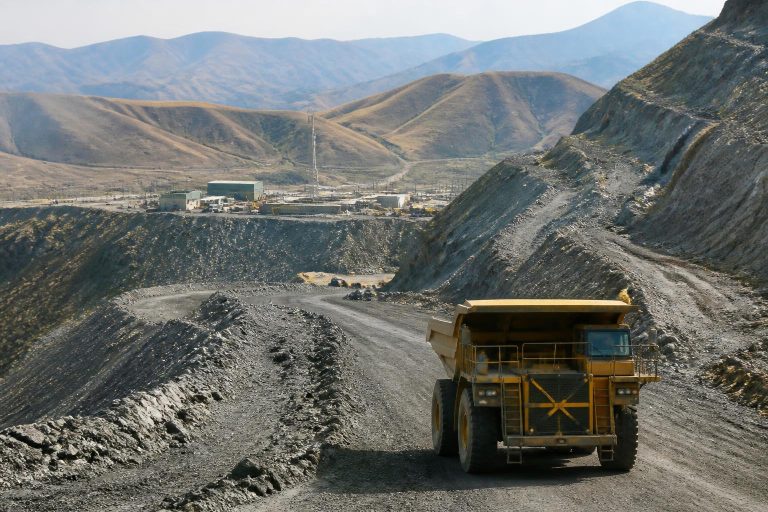
    The Amulsar gold mine, located near Jermuk, is the second-largest pure gold mine in Armenia, with confirmed reserves of 73 tons of gold and 294 tons of silver. Despite its potential, the project has faced opposition from environmental activists concerned about potential groundwater pollution. However, a recent expert opinion concluded that the environmental risks can be managed effectively.

    The signing ceremony was attended by various government officials and community leaders, marking a significant step towards the mine’s operational phase and the anticipated economic benefits for the region. The project is expected to run until 2039, providing a long-term economic boost to the surrounding communities.


  • Serbia’s Planned Lithium Mine Sparks Divisions and Protests

    Serbia’s Planned Lithium Mine Sparks Divisions and Protests

    A proposed lithium mine in Serbia’s Jadar Valley has become the center of a fierce debate, with deep divisions between local communities, government leaders, and environmental groups. The mine, which sits on valuable lithium reserves essential for Europe’s electric vehicle industry, is seen by many in Serbia as a potential economic boon. However, it also threatens the region’s rich agricultural land and pristine waters. After widespread protests in 2022 led to the revocation of the mine’s license, the Serbian government has revived the project, citing economic growth and job creation. However, opposition remains strong, with critics accusing both the Serbian government and EU partners of prioritizing foreign interests over local livelihoods. Activists fear the environmental risks associated with the mine, including potential water contamination and soil damage, as well as the broader impact on local communities. Tensions continue to rise as protests, some violent, persist across the country, with many Serbs opposing the exploitation of their natural resources for foreign benefit, especially when they see little return for their own well-being.

  • Kyrgyzstan Paves New Path in Mining Sector with Focus on Critical Raw Materials

    Kyrgyzstan Paves New Path in Mining Sector with Focus on Critical Raw Materials

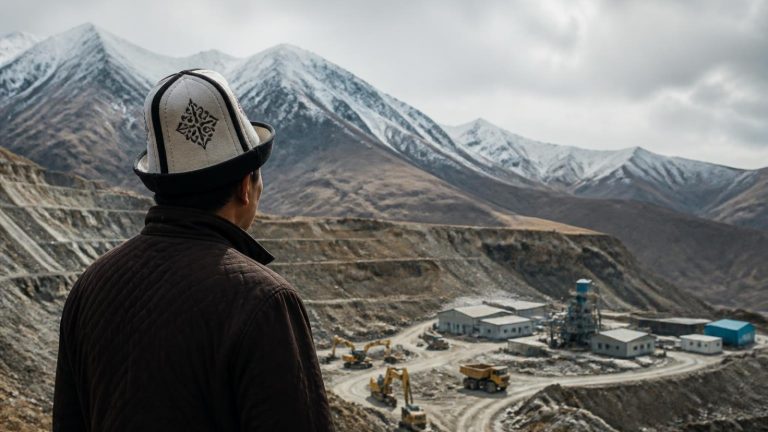
    Kyrgyzstan is on the verge of a transformative shift in its mining industry, announcing plans to issue licenses for the extraction of critical raw materials (CRMs)—a strategy that seemed improbable just five years ago. This evolution follows extensive political reforms under President Sady Japarov, who has been pursuing new revenue streams since his election in late 2020.

    Traditionally, Kyrgyzstan has depended on mining, especially the Kumtor gold mine, due to a lack of natural gas and oil reserves. The Kumtor mine, near Lake Issyk-Kul, was initially estimated to hold 514 tons of gold but has faced controversies over environmental issues and a cyanide spill in 1998, impacting local communities and tourism.

    Public disapproval of mining activities has intensified, particularly after the 2019 Kyzyl-Ompol uranium mining controversy where nearly 30,000 citizens protested, leading to a moratorium on uranium and thorium mining due to environmental and health concerns. However, as the demand for CRMs increases globally—driven by the European Commission’s call for energy transition and secure CRM supplies—Kyrgyzstan is revisiting its mining prospects.

    In June 2024, Kyrgyzstan’s parliament lifted the uranium mining moratorium, encouraging new exploration nationwide. Amendments in subsoil use and biosphere territories regulations aim to streamline CRM resource development.

    Kyrgyzstan, however, faces obstacles in attracting foreign investment due to a fraught history with international mining companies, notably the Centerra dispute over Kumtor. Yet the government is eager to attract both domestic and international partners, with recent talks involving the Zhicun Lithium Industry Group for lithium mining.

    While mining activities, such as the start of operations at Kyzyl-Ompol, underscore the government’s commitment, environmental concerns persist. Incidents like a glacier damaged by a Chinese coal mining company and a radioactive waste spill have renewed public apprehensions, evoking memories of past controversies. Kyrgyzstan’s shift toward CRM mining raises questions about sustainable development, with hopes to avoid previous missteps and create long-term economic benefits for the country.


  • Serbia to Restart Disputed Lithium Mining Project After Court Ruling

    Serbia to Restart Disputed Lithium Mining Project After Court Ruling

    In a significant turn of events, the Serbian government announced on Tuesday that operations at the controversial lithium mining project near Loznica can resume. This decision comes after the country’s top court overturned a 2022 cancellation of the mining permits. The vast mineral deposits, set to be mined by Rio Tinto, have been a contentious political issue, with billions of euros at stake. Rio Tinto claims the mine will create thousands of jobs and secure Serbia’s position in emerging energy markets.

    “The government… takes measures to restore the legal order to the state that existed before the adoption of the regulation that was declared unconstitutional,” a government statement declared. This follows a constitutional court ruling deeming the 2022 revocation of Rio Tinto’s permits unconstitutional.

    The project has sparked widespread protests in Serbia, reflecting public distrust in the government amid environmental and health concerns. However, President Aleksandar Vucic suggested that mining operations could commence by 2028, contingent on new guarantees from Rio Tinto. Vucic emphasized the need for assurances that the environment and public health would not be compromised.

    Rio Tinto has expressed approval of the decision, with project director Chad Blewitt stating, “The Jadar Project will be subject to stringent environmental requirements in compliance with Serbia and EU regulations.” He highlighted that the project would generate thousands of high-paid, high-skilled jobs.

    The Jadar mine could produce 58,000 tonnes of lithium annually, supporting the production of 1.1 million electric vehicles. Despite this, protest leaders like Savo Manojlovic have criticized the government’s decision, predicting social unrest. Activist Zlatko Kokanovic echoed these sentiments, accusing the government of political maneuvering.

  • Norway Launches First Seabed Mineral Licensing Round in the Arctic

    Norway Launches First Seabed Mineral Licensing Round in the Arctic

    Norway has announced the offering of large areas in the Arctic region for its inaugural seabed mineral licensing round, aiming to award exploration permits by the first half of 2025, according to the country’s energy ministry. This initiative could make Norway the first country in the world to commence commercial deep-sea mining, targeting the extraction of minerals essential for solar panels, wind turbines, and electric car batteries needed for the green transition away from fossil fuels.

    “The world needs minerals for the green transition, and the government wants to explore if it is possible to extract seabed minerals in a sustainable manner from the Norwegian continental shelf,” stated Energy Minister Terje Aasland.

    Preliminary official resource estimates indicate substantial accumulations of metals and minerals, including copper and rare earth elements. In January, the Norwegian parliament approved opening approximately 280,000 km² of ocean areas between Jan Mayen island and the Svalbard archipelago for seabed mineral exploration. The 386 blocks proposed on Wednesday cover about 38% of the total area opened by parliament, selected based on industry input, the energy ministry said.

    Despite the government’s ambitions, seabed mining has drawn criticism from environmentalists concerned about potential disruptions to one of the last relatively pristine natural environments. Organizations like WWF and Greenpeace have expressed significant concerns, challenging Norway’s plans in court and warning about the potential impact on fragile ecosystems. WWF condemned the proposal, calling it a substantial blow to Norway’s reputation as a responsible steward of the oceans. Greenpeace labeled the proposed area as “shockingly large,” citing previous scientific warnings.

    Internationally, Norway’s seabed mineral exploration plans face opposition from several countries, including France, which has advocated for a global moratorium to better understand the impact on deep-sea organisms. The Council of the European Union also voiced concerns, emphasizing the need for thorough impact assessments.

    The Norwegian government has assured that the initial exploration stage will have minimal impact on seabed organisms and stated that companies will need separate consents before any production can commence.

  • Serbia Set to Approve Rio Tinto’s Lithium Mine, Boosting Europe’s Electric Vehicle Industry

    Serbia Set to Approve Rio Tinto’s Lithium Mine, Boosting Europe’s Electric Vehicle Industry

    Serbia is on the verge of granting Rio Tinto permission to develop Europe’s largest lithium mine, signaling a significant advancement for the continent’s electric vehicle sector. President Aleksandar Vucic has expressed confidence in securing the necessary guarantees from both Rio Tinto and the European Union to address environmental concerns regarding the Jadar site in western Serbia. Vucic expects to make a formal announcement about the project next month, provided that the demands for the entire value chain and robust environmental protections are met. The mine, projected to open in 2028, aims to produce 58,000 tonnes of lithium per year, which would account for approximately 17% of European electric vehicle production, equivalent to around 1.1 million cars. Vucic believes this venture could be transformative for Serbia and the broader region.

    The Serbian government revoked Rio Tinto’s licenses in January 2022 due to protests led by environmental groups. Concerns over water pollution, displacement of residents, and post-mining area damage prompted the demonstrations, which resulted in blocked highways and bridges across the country. However, with President Vucic’s ruling SNS party winning most of the recent municipal polls, the government perceives an opportunity to revive the project. The potential revival of the deal with Rio Tinto, coupled with EU involvement, serves as a significant indication of Serbia’s geopolitical alignment as it attracts economic and political attention from China, Russia, and Gulf nations. Serbia has been an EU candidate country for over a decade, but its accession process has faced delays due to concerns about the rule of law and corruption.

    President Vucic confirmed that the intention was never to hand over the mine to Chinese interests, as some EU officials had feared. He emphasized Serbia’s commitment to working with the European Union. Vucic also claimed that certain European states initially tried to undermine the Jadar deal but eventually changed their stance. The absence of domestic lithium production in Europe makes the Jadar mine crucial, as it could meet 13% of the continent’s projected demand by 2030. The project would significantly contribute to Serbia’s economy, potentially adding between €10 billion and €12 billion ($19.4 billion) to the annual gross domestic product.

    Despite the potential resurrection of the deal, opponents of the mine, such as the environmental group Go Change, remain determined to continue their fight. They vow to defend ecological standards and constitutional rights, expressing their commitment to organizing further protests if necessary.

    Chad Blewitt, Rio Tinto’s managing director for the Jadar project, stressed the company’s efforts to gain public support through extensive community engagement sessions. Rio Tinto released a draft environmental assessment that outlines potential impacts on water, air, and soil, emphasizing their commitment to transparency and compliance with Serbian and EU environmental standards.

  • Kyrgyz Parliament Lifts Ban on Uranium and Thorium Mining, Focusing on Economic Benefits

    Kyrgyz Parliament Lifts Ban on Uranium and Thorium Mining, Focusing on Economic Benefits

    Deputies of the Kyrgyz Parliament have voted in favor of a bill to lift the ban on mining uranium and thorium, with 69 votes in favor and three against. The parliamentarians are confident that these legislative changes will bring substantial economic dividends to the country.

    The ban on uranium and thorium mining was initially imposed in 2019 when authorities sought to sell a development license for a deposit. However, local residents expressed concerns about potential environmental damage and harm to the water table, leading to a complete ban across the Republic.

    Over the past century, the Issyk-Kul region of Kyrgyzstan alone has accumulated 150,000 cubic meters of radioactive waste from uranium mining. The country currently has 92 burial sites containing 23 tailing dumps with uranium elements, resulting in a total volume of 2.9 million cubic meters of poisonous and hazardous substances.

    The new bill emphasizes the need for alternative sources of income due to severe economic impacts in recent years. However, it also highlights the importance of strict compliance with environmental norms and standards in uranium and thorium mining.

    Minister of Natural Resources, Environment, and Technical Supervision, Melis Turganbayev, assured the deputies that the passage of the bill would not harm the environment or the health of Kyrgyz citizens. Turganbayev explained that the focus is not solely on uranium but also on associated metals. The plan is to mine titanomagnetite, which contains uranium and thorium. The extracted uranium will be sold to other states, while thorium will be stored. Processing will take place at the Kara-Balta Combine in Chui Oblast.

    While three deputies voted against the bill, citing environmental concerns, Doctor of Geological and Mineral Sciences, academician Rozalia Jenchuraeva, described the 2019 ban as a “big folly.” She highlighted the need to address the harmful waste and contamination of soil and water caused by hazardous materials lying just 20 meters below the surface. Jenchuraeva believes that mining these elements will clean up the land and create opportunities for the Kara-Balta Combine.

    President Japarov, who met with residents near the Kyzyl-Ompol deposit, expressed optimism about the development. He stated that it would create over a thousand jobs and become a significant resource similar to the Kumtor gold deposit. The aim is to boost the local budget and improve the living standards of the people.

    Kyzyl-Ompol, a uranium-thorionite placer deposit discovered in 1951, is one of the five areas in Kyrgyzstan where these minerals are found. It has been extensively explored by the Kyrgyz Institute of Geology.

  • Norway to Launch Seabed Mineral Exploration Amid Environmental Concerns

    Norway to Launch Seabed Mineral Exploration Amid Environmental Concerns

    Two companies announced on Wednesday their intentions to acquire offshore seabed acreage on the Norwegian continental shelf for mineral exploration, marking the potential inception of a controversial new mining industry. Norway is poised to become the first nation to commence commercial production of metals like copper, cobalt, zinc, and rare earth elements (REE) from its continental shelf, which are crucial for transitioning away from oil and gas.

    Nominations for seabed acreage, submitted by the May 21 deadline, will set the stage for Norway’s inaugural seabed mineral exploration licensing round later this year, according to Norwegian authorities. The country’s energy ministry has yet to comment on the process.

    Loke, a startup backed by TechnipFMC, Wilhelmsen, and Kongsberg Gruppen, revealed that it had nominated numerous blocks rich in polymetallic crusts containing cobalt and rare earth elements. “We are encouraged by the significant resource potential and are looking forward to the first licensing round,” Loke’s CEO Walter Sognnes said in an email to Reuters.

    Oslo-listed Green Minerals has also nominated four areas, each consisting of multiple blocks, and anticipates beginning pilot production by 2028, as per a recent investor presentation.

    Environmental organizations, including Greenpeace, have urged a global moratorium on seabed mineral mining, citing the risk of irreversible harm to little-studied marine life. In response, the Norwegian government asserts that the exploration phase will help assess the environmental impact and enhance knowledge of seabed ecosystems.

    Norwegian oil firm Aker BP AKRBP has not disclosed whether it submitted nominations but has previously expressed interest in exploring the resource potential. The government plans to issue the first licenses in 2025, but companies will need additional approvals to start production. Furthermore, the Norwegian parliament, which decided in January to open extensive areas in the Norwegian and Greenland Seas for potential mining, must approve the initial projects.

  • Federal Government’s $11 Billion Investment Sparks Debate Over Rare Earth Mining in Australia

    Federal Government’s $11 Billion Investment Sparks Debate Over Rare Earth Mining in Australia

    The Federal Government’s bold investment of $11 billion to expand the Critical Minerals Facility, overseen by Export Finance Australia and the Northern Australia Infrastructure Facility, has reignited discussions surrounding rare earth mining in Australia. Despite scientific concerns, the government aims to bolster the nation’s position in the critical minerals market, tapping into the vast potential of rare earth elements crucial for various technologies including renewable energy, defense systems, and telecommunications.

    Australia, boasting approximately one-fifth of the world’s potential rare earth supply, has seen a surge in exploration endeavors supported by a $225 million fund allocated by Geoscience Australia. This initiative has spurred significant interest, leading to the establishment of 419 new exploration tenements by 49 companies. Proponents of mineral sand mining predict a prosperous future, with Professor Susan Park highlighting Australia’s advantageous position to capitalize on the impending mining boom.

    Federal Minister for Trade and Tourism Don Farrell underscored the government’s commitment to unlocking new critical minerals projects, envisioning Australia as a renewable energy powerhouse while emphasizing job creation in emerging industries. Collaborations with international partners such as the Republic of Korea and Germany are also sought to diversify global supply chains and enhance economic resilience.

    However, not all stakeholders share the government’s enthusiasm for a new mining era. Concerns voiced in the Harvard International Review highlight environmental risks associated with rare earth extraction, including the release of toxic chemicals and radioactive residues. The potential impact on agricultural land and water sources has drawn criticism, particularly regarding proposed mineral sand mines in Victoria’s Murray Basin and the Northern Territory.

    China’s recent ban on rare earth extraction and separation technologies has further underscored the global significance of Australia’s rare earth reserves. While aiming to mitigate environmental degradation and bolster national security, China’s dominance in the rare earth market has left a legacy of pollution and ecological damage, as evidenced by the devastating effects of mining activities in Bayan Obo.

    In Australia, the debate over rare earth mining continues to intensify, with proposed projects facing scrutiny over their potential impact on agricultural livelihoods and environmental sustainability. The government’s investment signals a strategic push towards economic growth and technological advancement, yet the ensuing environmental and social implications warrant careful consideration and public discourse.

  • Chinese Mining Company Plans to Elevate Copper and Gold Operations in Serbia

    Chinese Mining Company Plans to Elevate Copper and Gold Operations in Serbia

    Zijin Mining, a prominent Chinese mining company, announced its ambitious plans on Wednesday to enhance copper and gold operations in Serbia, aiming to position the Balkan nation as the primary copper producer in Europe. Chen Jinghe, the chairman of Zijin Mining, revealed the company’s strategy to achieve an annual production target of at least 250,000 tonnes of copper and 10 tonnes of gold from its Serbian operations, indicating a slight increase from the previous year. Emphasizing a shift towards underground mining development, Chen articulated the company’s future investment direction during a press briefing.

    Zijin Mining, renowned for its significant contributions to the gold and copper industry in China, solidified its partnership with Serbia’s RTB Bor mining operation in 2018. The move aligns with China’s broader economic engagement in Serbia and neighboring Balkan countries, reflecting Beijing’s concerted efforts to expand its economic influence across central and eastern Europe. The increasing significance of China to Serbia’s economy was underscored by the country’s Minister of Trade, who ranked China as Serbia’s second most vital economic partner after the EU. This sentiment anticipates a potential visit by Chinese President Xi Jinping later in the year.

    In terms of trade, Chinese-owned enterprises emerged as dominant exporters in Serbia, with Zijin Mining leading the pack, followed by Zijin Copper and the HBIS group. Together, these entities accounted for a notable share of Serbia’s total exports, contributing approximately 8.7 percent to the country’s export revenue in the previous year. Furthermore, Serbia witnessed a substantial influx of foreign investment in 2023, with China emerging as the foremost investor, injecting 1.37 billion euros into various sectors, consolidating its position as a key economic stakeholder in the nation.

    However, amidst governmental praise and economic advancements, communities residing near the expansive mining facilities in Bor have voiced persistent opposition to the projects, staging protests since January. Demonstrations frequently disrupt local transportation routes, reflecting ongoing tensions surrounding environmental concerns and community welfare.