Tag: Energy Transition

  • Spain Emerges as Europe’s Critical Minerals Frontier as EU Races to Break Free From Chinese Supply Dominance

    Spain Emerges as Europe’s Critical Minerals Frontier as EU Races to Break Free From Chinese Supply Dominance

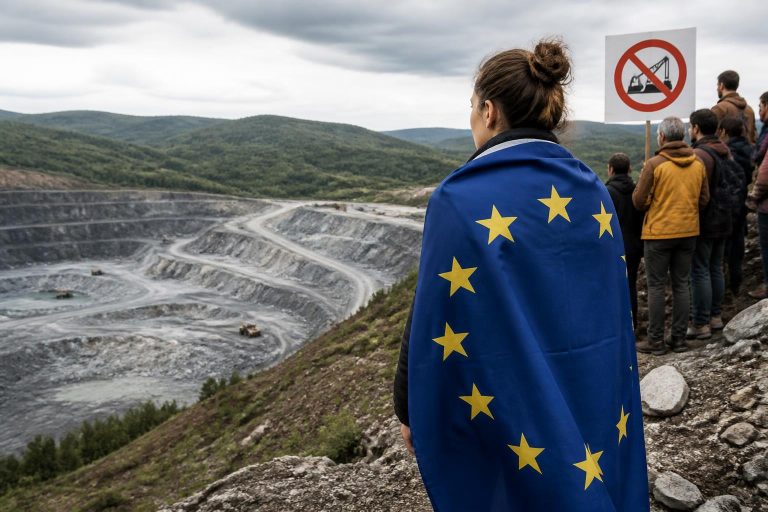
    As global demand for digital technologies and electric mobility accelerates, the competition for critical minerals has intensified, placing Spain at the forefront of Europe’s resource strategy. With growing geopolitical tensions over supply chains, the European Union is increasingly looking inward, identifying Spain as a key player due to its significant geological potential.

    Historically, Spain’s mining sector has contributed substantially to the national economy, generating nearly 3.5 billion euros annually. Today, attention has shifted to the Variscan Massif, a vast mineral-rich belt stretching from Galicia to Andalusia. This region holds promising deposits of rare earth elements and critical minerals, essential for modern technologies yet notoriously difficult to extract due to their low concentrations.

    Experts highlight the geopolitical weight of these resources. With China dominating the rare earth market and supplying the majority of key materials such as magnesium to the EU, Europe’s dependence has raised strategic concerns. Recent warnings from the European Court of Auditors underline that progress in reducing this reliance remains insufficient.

    Against this backdrop, Spain is positioning itself as a cornerstone of Europe’s mineral independence. The country holds 15% of global strontium reserves and is the sole producer of this mineral within the EU. It is also the continent’s second-largest copper producer. Notably, 20 of the 34 raw materials classified as critical by Brussels have been identified in Spain, including lithium, cobalt, and nickel.

    To capitalise on this potential, the Spanish government approved the National Mining Exploration Program (2026–2030), allocating 182 million euros to assess and expand extractable resources. Simultaneously, the European Commission has endorsed a portfolio of strategic projects, seven of which are located in Spain, aimed at boosting domestic extraction, processing, and recycling capacities by 2030.

    However, the development of these projects faces strict regulatory, technical, and environmental requirements. Authorities stress that operations must be sustainable, economically viable, and beneficial at a cross-border level. Public concern over environmental impacts remains significant, with local communities and watchdog organisations increasingly scrutinising mining activities.

    In response, attention is also turning to innovative approaches such as recycling mining waste. Spain hosts over 21,000 mining ponds and dumps, presenting opportunities to recover valuable materials while reducing environmental harm. Research initiatives, including projects in the Río Tinto basin, are exploring methods to extract rare earth elements from mine drainage, offering a potential pathway toward more sustainable resource management.

    While still in early stages, these efforts reflect a broader shift toward balancing economic opportunity with environmental responsibility. As Europe seeks to secure its supply of critical minerals, Spain’s role is set to become increasingly pivotal in shaping the continent’s industrial and geopolitical future.

  • Europe Accelerates Lithium Strategy to Reduce Dependence on China

    Europe Accelerates Lithium Strategy to Reduce Dependence on China

    Lithium is increasingly being treated as a strategic resource in Europe, prompting efforts to develop domestic mining and processing capacity and reduce reliance on China’s dominant position in global supply chains.

    China currently accounts for roughly two-thirds of global refined lithium production, a concentration that has raised geopolitical and industrial concerns within the European Union. With demand for lithium expected to grow significantly by 2030, driven by electric vehicles, energy storage and digital technologies, European policymakers are seeking to strengthen supply security.

    Mining companies are advancing lithium projects across several European countries, including Portugal, Germany and Serbia. Portugal’s Barroso project has been designated as “strategic” under the EU’s Critical Raw Materials Act (CRMA), with production potentially starting later this decade. However, the project has faced opposition from local communities and environmental groups.

    Serbia’s Jadar project, located outside the EU but of strategic interest to the bloc, is considered one of the most significant lithium developments in Europe. Industry estimates suggest it could supply a substantial share of regional demand, though progress has been delayed by political uncertainty and environmental concerns.

    Germany is also exploring lithium extraction from geothermal brine resources, which could offer a lower-impact alternative to conventional mining methods. Recent discoveries in Saxony-Anhalt have been described by analysts as potentially significant, though further validation is required.

    In parallel with mining development, European officials are considering broader policy measures, including the potential creation of strategic stockpiles of critical raw materials. The approach mirrors existing systems for oil and gas reserves.

    The Critical Raw Materials Act, adopted in 2024, is central to the EU’s strategy. The legislation aims to accelerate permitting and investment in projects deemed strategic, including mining, processing and recycling. A significant proportion of the projects identified under the framework involve lithium.

    Despite these efforts, industry experts note that Europe’s main challenge lies in building sufficient processing and refining capacity. Without this, domestically mined lithium may still need to be processed abroad, limiting the effectiveness of supply chain diversification.

    Recycling is expected to play an increasingly important role in meeting future demand, particularly as battery waste volumes grow.

    The push to secure lithium reflects broader concerns about supply chain resilience and industrial competitiveness. As global demand for battery materials continues to rise, Europe’s ability to develop a fully integrated lithium value chain will be a key factor in its energy transition and long-term economic strategy.

  • Vulcan Energy Secures First Lithium Production Licence for Lionheart Project in Germany

    Vulcan Energy Secures First Lithium Production Licence for Lionheart Project in Germany

    ASX-listed Vulcan Energy has secured a key regulatory milestone for its Lionheart project, receiving a lithium production licence in Germany’s Upper Rhine Valley Brine Field.

    The licence, granted in the state of Rhineland-Palatinate, is the first of its kind issued in the region. Known as LiThermEx, it covers Vulcan’s Insheim geothermal production area, where renewable heat and electricity are already being generated.

    The permit has been awarded for an initial six-year period, with the company planning to extend it in line with the project’s targeted 30-year operational life.

    Lithium meets geothermal power
    Lionheart is not a typical mining project. It blends lithium extraction with geothermal energy production, creating a hybrid model where hot underground brines are used both to generate renewable energy and extract lithium.

    The project is designed to produce around 24000 tonnes per year of lithium hydroxide monohydrate — a key battery material used in electric vehicles — while simultaneously supplying electricity and heat to local communities.

    CEO Cris Moreno described the licence as a major step forward.

    “Securing the first lithium production licence within the Lionheart project marks another important milestone,” he said, adding that the project supports Europe’s ambition to build a fully domestic lithium supply chain powered by renewable energy.

    💶 De-risked and funded
    The licence further de-risks the project, which is already fully financed and under construction following a €2.2 billion funding package completed in December.

    Vulcan expects additional production licences to be granted across the broader project area as development progresses.

    🧭 Strategic timing
    With Europe racing to secure battery raw materials and reduce dependence on external suppliers, projects like Lionheart sit at the crossroads of energy transition and resource security.

    Production is currently targeted to begin in 2028 — when lithium demand is expected to be even more electrified, quite literally.

  • Brazil Seeks European Partnerships to Develop Critical Minerals Sector

    Brazil Seeks European Partnerships to Develop Critical Minerals Sector

    Brazil is seeking closer cooperation with European countries to develop exploration and processing of critical minerals and rare earth elements, according to Brazil’s Ambassador to Germany, Rodrigo Baena Soares.

    Speaking at a press conference in Hanover ahead of the Hannover Messe industrial technology fair, the ambassador said Europe could become a key partner in building supply chains for minerals essential to the global energy transition. However, he emphasised that Brazil aims to move beyond its traditional role as a raw materials exporter.

    “It is very important that we do not have a traditional scheme of only exporting raw minerals,” Baena said. “We must think about adding value in Brazil and being part of the supply chain with technology transfer.”

    Brazil is particularly interested in cooperation that includes advanced technologies and industrial expertise from European partners, especially Germany, to strengthen domestic capabilities in extraction, processing and manufacturing.

    Although Brazil holds significant mineral reserves, the country has yet to establish itself as a global leader in the extraction and refining of many critical resources.

    According to the Geological Survey of Brazil, the country possesses 94% of the world’s known niobium reserves, about 26% of global graphite reserves, and the third-largest nickel reserves worldwide with roughly 12%. Brazil also holds around 23% of global rare earth reserves.

    Critical minerals such as lithium, cobalt, nickel, graphite, copper, manganese and rare earth elements play a crucial role in technologies linked to the energy transition and advanced manufacturing. They are widely used in wind turbines, electric vehicle motors, electronics, and aerospace systems including satellites and defence technologies.

    Brazil’s potential in the sector will be highlighted during Hannover Messe, which will take place from April 20 to 24 and will feature Brazil as the partner country for this year’s edition. Around 140 Brazilian exhibitors are expected to participate, presenting industrial technologies and innovations to international audiences.

    As part of the event, Brazil plans to organise a dedicated session focused on critical minerals to showcase the country’s geological potential and attract investment.

    The ambassador also pointed to the proposed free trade agreement between the European Union and Mercosur as a framework that could strengthen cooperation in industrial development and resource supply chains.

    Organisers of Hannover Messe say the evolving geopolitical environment and trade tensions globally create an opportunity for deeper economic cooperation between Europe and Latin America.

  • Coal Demand Rebounds in Europe as Energy Security Concerns Drive Temporary Shift

    Coal Demand Rebounds in Europe as Energy Security Concerns Drive Temporary Shift

    Rising uncertainty over Europe’s energy security is prompting several countries to temporarily increase coal use for electricity generation as global supply disruptions and higher gas prices reshape energy markets.

    Thermal coal prices for power generation have climbed roughly 20%, reaching around $135 per tonne. The increase follows escalating tensions in the Gulf and disruptions affecting energy flows through the Strait of Hormuz, as geopolitical tensions between the United States and Israel on one side and Iran on the other place pressure on global energy supply chains.

    With natural gas prices rising, coal-fired power plants have again become economically viable in parts of Europe. Although coal remains one of the most carbon-intensive fuels, the current market environment is forcing governments and utilities to prioritise energy security and cost stability in the short term.

    Despite the recent rise, coal prices remain far below the levels seen during the 2022 energy crisis following the Russia–Ukraine war. At that time, coal prices surged above $400 per tonne, prompting countries such as Germany to reopen coal-fired power plants and temporarily extend the life of existing mines.

    Global coal supply conditions are currently more stable than during the 2022 crisis. Major producers continue to maintain significant reserves, while China — the world’s largest coal producer and consumer — has expanded or reopened several mining operations. Higher prices may also encourage Indonesia, one of the world’s leading coal exporters, to reconsider earlier export restrictions.

    In the longer term, the International Energy Agency expects global coal demand to stabilise or gradually decline by 2030 as renewable energy, nuclear power and natural gas expand their share of the energy mix. However, geopolitical tensions and volatility in global gas markets could slow this transition.

    At the same time, Europe’s energy system is continuing to shift toward renewables. According to data from Ember Energy Research, electricity generated from wind and solar surpassed fossil fuel generation for the first time in 2025. Renewable sources accounted for 30% of EU electricity production, compared with 29% from coal, gas and oil combined.

    Analysts note that coal may still play a limited backup role in Europe’s energy mix, particularly during periods of high gas prices or supply disruptions.

  • Czech Cinovec Lithium Project Faces Local Opposition Despite EU Strategic Backing

    Czech Cinovec Lithium Project Faces Local Opposition Despite EU Strategic Backing

    A major lithium mining project in the Czech Republic’s north-west is drawing increasing local opposition even as it gains strategic support from the European Union as part of its efforts to secure critical mineral supplies for the green transition.

    The Cinovec deposit, located near the German border in the Ore Mountains, is considered one of the largest lithium resources in Europe. Developed by Geomet, a company jointly owned by Czech state-controlled energy group CEZ (51%) and European Metals Holdings (49%), the project could become a cornerstone of the EU’s emerging domestic lithium supply chain.

    The deposit is estimated to contain up to three percent of global lithium reserves. Current development plans envisage mining roughly 3.2 million tonnes of ore annually, producing about 37,000 tonnes of battery-grade lithium carbonate each year, enough to supply materials for around 1.3 million electric vehicles.

    The project has been designated a strategic initiative under the EU’s Critical Raw Materials Act, enabling accelerated permitting procedures and financial support. The development has also received a €36 million grant from the EU’s Just Transition Fund and a €360 million subsidy from the Czech government. Total project investment is estimated at around CZK 42 billion (€1.75 billion), with mining potentially beginning by 2030.

    However, residents and local officials in the Usti nad Labem region have raised concerns that the project could reverse years of environmental recovery following the decline of heavy industry and coal mining. The area, which transitioned from large-scale industrial extraction to tourism and spa services, now faces the prospect of renewed mining activity.

    Local leaders warn that lithium extraction could bring environmental and social impacts, including noise and air pollution, groundwater contamination and disruption to landscapes and biodiversity. Critics also point out that parts of the proposed mining area lie within protected Natura 2000 zones and the Ore Mountains UNESCO World Heritage site.

    Activists and environmental researchers argue that large-scale lithium extraction cannot be considered environmentally neutral, even if linked to renewable technologies and electric vehicle production. Concerns have also been raised about transparency, community consultation and the long-term economic benefits for local residents.

    Economic uncertainties further complicate the project’s outlook. Lithium prices have fallen sharply since their peak in 2022, raising questions about the financial viability of large-scale hard-rock lithium mining at Cinovec. Analysts note that the project’s costs may be relatively high due to the ore’s lower lithium concentration, while reliance on public subsidies and volatile global markets adds additional risk.

    Despite these challenges, Czech authorities continue to view the project as strategically important for maintaining the country’s role in the European automotive supply chain and supporting the EU’s broader goal of reducing dependence on imported battery materials.

  • India Set to Strengthen Critical Minerals Cooperation with Germany and Canad

    India Set to Strengthen Critical Minerals Cooperation with Germany and Canad

    India’s Cabinet is expected to approve new international cooperation agreements with Germany and Canada aimed at strengthening partnerships in the critical minerals sector, as New Delhi accelerates efforts to secure resources essential for clean energy technologies and advanced manufacturing.

    According to government sources, the Cabinet meeting chaired by Prime Minister Narendra Modi is likely to clear a Joint Declaration of Intent with Germany focused on joint mineral exploration, sustainable mining practices, supply chain resilience and technology transfer. A similar agreement with Canada is also expected to receive approval.

    The proposed partnerships come amid intensifying global competition for critical minerals such as lithium, cobalt, nickel and rare earth elements, which are key inputs for electric vehicles, renewable energy systems and high-tech industries.

    India has been expanding its international engagement to diversify supply sources and reduce import dependence as part of its broader Atmanirbhar Bharat strategy aimed at strengthening domestic industrial and energy security.

    The agreements are aligned with India’s Critical Minerals Mission launched in 2025, alongside ongoing reforms under the Mines and Minerals (Development and Regulation) Amendment Act, which has enabled new auctions of mineral blocks to attract investment and accelerate resource development.

    Officials view cooperation with resource-rich and technologically advanced partners as a strategic step toward building resilient supply chains and supporting India’s long-term energy transition objectives.

  • Sweden’s Per Geijer Deposit Emerges as One of Europe’s Largest Rare Earth Discoveries

    Sweden’s Per Geijer Deposit Emerges as One of Europe’s Largest Rare Earth Discoveries

    A major rare earth discovery linked to Sweden’s long-established Kiruna iron mining district is positioning northern Europe as a potential future supplier of critical minerals essential for electric vehicles, renewable energy and advanced technologies.

    State-owned miner LKAB has confirmed that the Per Geijer deposit, located near Kiruna above the Arctic Circle, contains an estimated 2.2 million tonnes of rare earth oxides alongside substantial volumes of iron ore and phosphorus. The updated resource estimate places the site among the largest known rare earth deposits in Europe.

    Rare earth elements are vital components in permanent magnets used in electric vehicle motors, wind turbines and consumer electronics. Europe currently relies heavily on imports, with China responsible for processing nearly 90 percent of global rare earth supply, creating strategic vulnerabilities across industrial and energy transition supply chains.

    LKAB estimates that once fully developed, Per Geijer could eventually meet up to 18 percent of Europe’s rare earth demand. The deposit also contains approximately 1.2 billion tonnes of iron ore and phosphorus, with rare earth minerals primarily hosted in apatite, allowing recovery alongside existing iron mining operations.

    The project forms part of a broader European effort to strengthen domestic raw material production under the EU Critical Raw Materials Act, which aims to reduce reliance on single external suppliers and expand regional mining and processing capacity by 2030. Per Geijer, together with LKAB’s related developments in Malmberget and Luleå, has received strategic project status, enabling accelerated permitting procedures and improved access to financing.

    Rather than developing a standalone rare earth mine, LKAB plans an integrated industrial chain linking iron ore extraction in Kiruna with downstream processing facilities. Concentrates produced at Malmberget would be transported to a new industrial hub in Luleå, where hydrometallurgical processing will separate rare earth oxides, phosphoric acid for fertiliser production and gypsum by-products.

    To support final separation of individual rare earth elements, LKAB has also invested in Norwegian technology company REEtec, which is developing alternative refining methods aimed at reducing dependence on Chinese processing technologies.

    Despite its strategic importance, the project faces social and environmental challenges. Mining activity has already forced the gradual relocation of Kiruna due to ground subsidence, while Indigenous Sámi communities have raised concerns that expanded mining could disrupt traditional reindeer herding routes and fragile Arctic ecosystems.

    LKAB emphasises that Per Geijer remains a mineral resource rather than an approved mining reserve, with further exploration, technical studies and permitting required. Industry analysts expect large-scale rare earth production to take between 10 and 15 years before material from the project reaches European manufacturing supply chains.

    Even at full capacity, experts note that the deposit will complement rather than replace global supply networks. However, the presence of a major domestic rare earth source marks a significant shift in Europe’s long-term strategy to secure materials underpinning the green and digital transition.

  • UK Launches First Commercial-Scale Lithium Plant in Cornwall to Strengthen Domestic Supply Chain

    UK Launches First Commercial-Scale Lithium Plant in Cornwall to Strengthen Domestic Supply Chain

    The United Kingdom has begun operations at its first commercial-scale lithium production facility, marking a significant step toward securing domestic supplies of critical minerals essential for electric vehicle batteries and energy storage.

    The plant, developed by Geothermal Engineering Ltd (GEL) in Redruth, Cornwall, will initially produce 100 tonnes of lithium annually, sufficient to supply approximately 2,000 electric vehicles. The company plans to expand production to 1,500 tonnes per year within the next few years and ultimately exceed 18,000 tonnes annually over the coming decade through an investment programme estimated at £640 million.

    Lithium extraction at the site relies on geothermal technology, with mineral-rich underground fluids used to recover the metal. GEL has also commissioned the UK’s first geothermal power plant to supply energy to the lithium operation, with surplus electricity to be sold to Octopus Energy.

    The project forms part of a broader push among Western countries to establish domestic critical mineral supply chains amid growing geopolitical concerns. China currently dominates lithium processing, accounting for around 60 percent of global production in 2025 and maintaining strong control over downstream battery supply chains.

    The UK government has set a target of producing 50,000 tonnes of lithium domestically by 2035, although market volatility following a sharp decline in lithium prices has delayed or reshaped several Western projects.

    GEL founder Ryan Law said geothermal integration enables the company to produce lithium competitively, adding that the operation could rival imports from China on cost.

    Other UK-based developers are progressing parallel initiatives. Cornish Lithium continues testing battery-grade lithium hydroxide samples from its demonstration plant and aims to commission a commercial facility by 2029, while Green Lithium has postponed its Teesside refinery start date to around 2029 under a phased development strategy.

    Industry analysts caution that European lithium projects must still prove cost competitiveness against established Asian supply chains. While lithium represents a relatively small share of total EV production costs, experts warn that building a fully Western-based battery supply chain could introduce higher costs at multiple stages.

    Additional challenges remain, including limited European cathode active material manufacturing capacity, which continues to link regional producers to Asian processing networks.

  • A Strategic Assessment of Promise vs. Reality in Central Asia’s Mineral Development

    A Strategic Assessment of Promise vs. Reality in Central Asia’s Mineral Development

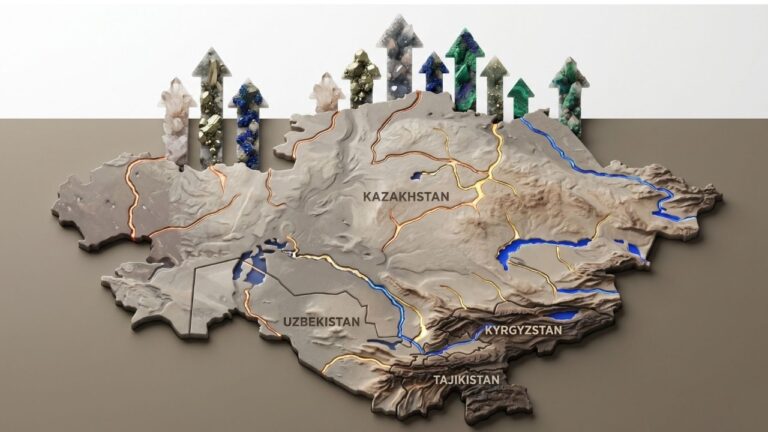
    Central Asia’s role in global critical minerals took a decisive turn at the 4 February 2026 Critical Minerals Ministerial in Washington, where officials from more than 50 countries acknowledged the region as a strategic hub rather than a geopolitical buffer.

    While Washington presented an ambitious framework to advance mineral sovereignty, analysts caution that the region—not the U.S.—must drive implementation to avoid becoming a passive arena for major‑power competition.

    U.S. Strategy: A Vertical Integration “New Order”

    The U.S. vision, centred on the FORGE initiative and the concept of “Pax Silica,” positions minerals and energy as shared strategic assets among trusted partners and offers an alternative to dependency on China.
    Washington differentiates its value proposition in three areas:

    1. Market Stability Through Price Floors
      Proposed tariff‑backed price floors aim to counter predatory market dumping and protect investments in assets such as Kazakhstan’s rare earth reserves.
    2. Vertical Value Integration
      The U.S. framework prioritises domestic processing and refining over raw‑ore exports, enabling Central Asian states to capture more value across the supply chain.
    3. Connectivity Autonomy
      By incorporating the Middle Corridor into initiatives like TRIPP, the West presents routes that bypass Russia and China, reducing geopolitical transit pressures.

    Kazakhstan and Uzbekistan have responded quickly—Kazakhstan has declared critical minerals the “new oil” and joined the Abraham Accords to strengthen supply‑chain integration, while Uzbekistan has pursued strategic MOUs to modernise mining and secure battery‑metal supply chains.

    Reality Check: Gaps Between Intent and Implementation

    Despite strong rhetoric, Western engagement has largely taken the form of frameworks and MoUs—not operational projects.

    Three challenges persist:

    • Operational Disparity – China continues to deliver turnkey, financed projects backed by contractors and long‑term offtake agreements, while Western partners emphasise declarations.
    • U.S. Inward Focus – Washington’s drive for techno‑economic sovereignty favours selective, de‑risked engagements rather than proactive industrial development in the region.
    • Execution Gaps – Uzbekistan’s $2.6bn program covering 76 projects illustrates regional ambition, but real progress requires partners capable of building at scale.

    Strategic Imperative: Central Asian Agency

    Experts argue that relying on future U.S. demand is a strategic mistake.
    To convert high‑level dialogue into economic gains, Central Asia must prioritise:

    1. Midstream Capabilities

    Refining and producing intermediary products offer higher margins and reduce reliance on long‑distance transport of low‑value raw ore.

    2. Direct Private‑Sector Engagement

    Regional firms should proactively present project‑ready opportunities to U.S. companies rather than depending on government‑to‑government frameworks.

    Conclusion

    The U.S. “New Order” provides Central Asia with a potential pathway to diversify away from Beijing and Moscow while improving price stability and long‑term sovereignty.
    But success hinges on regional execution. Astana and Tashkent must convert diplomatic signals into tangible midstream capacity—and do so quickly—to secure their strategic autonomy before the current window closes.