Tag: Energy Transition

  • Czech Republic Ends Hard Coal Mining After Nearly 250 Years

    Czech Republic Ends Hard Coal Mining After Nearly 250 Years

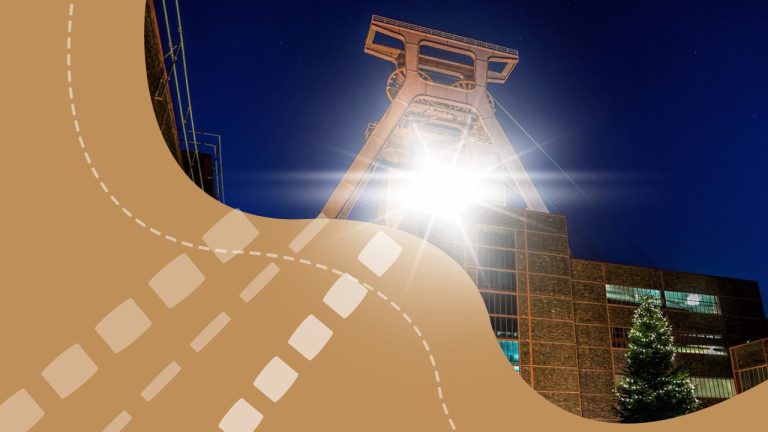
    The Czech Republic has formally brought nearly two and a half centuries of hard coal mining to a close, marking the moment with a symbolic final cart of black coal lifted from a depth of 1300 metres. The ceremony took place on Wednesday at the CSM mine in Stonava, close to the Polish border, and was attended by current and former miners, officials, and invited guests.

    State-owned mining company OKD confirmed that the CSM operation was the country’s last active hard coal mine and said production had become unsustainable due to rising costs. Speaking at the event, OKD general director Roman Sikora described the closure as a historic milestone and paid tribute to generations of miners who shaped the country’s industrial development.

    Over its long history, the CSM mine developed an underground network exceeding one million metres in length and became the setting for several notable moments, including a wedding held almost 900 metres below ground in 1992. The mine was also visited underground by playwright and former Czech president Václav Havel in the early 1990s.

    The shutdown marks the end of an era for the Moravian-Silesian region, long defined by heavy industry and coal production. While around 700 workers will remain involved in decommissioning and closure activities, others are expected to transition into retraining programmes.

    Hard coal, also known as black coal or anthracite, is valued for its high carbon content and energy density. Although underground hard coal mining has now ended in the Czech Republic, lignite extraction in open-cast mines is expected to continue until 2033. Comparable closures have already taken place elsewhere in Europe, including Germany, which shut its last hard coal mine in the Ruhr region in 2018.

  • EU Unlikely to Cut Critical Minerals Dependence on China by 2030, Auditors Warn

    EU Unlikely to Cut Critical Minerals Dependence on China by 2030, Auditors Warn

    The European Union is unlikely to diversify its supply of critical raw materials in time to meet its climate and industrial targets, leaving the bloc heavily dependent on China well into the next decade, according to a new report by the European Court of Auditors (ECA).

    Despite the signing of 14 major trade agreements and sustained diversification efforts led by the European Commission, EU auditors concluded that the EU27 is “unlikely to succeed in time” in securing alternative sources of minerals essential for clean technologies such as electric vehicle batteries, wind turbines and solar panels.

    China remains the dominant supplier. The ECA report shows that the EU sources 97% of its magnesium imports from China, alongside large shares of gallium (71%), germanium (45%), baryte (44%), arsenic (39%), graphite (40%) and tungsten (31%). Magnesium is a key input for hydrogen electrolysers, while gallium and germanium are vital for semiconductors and renewable technologies.

    “Without critical raw materials, there will be no energy transition, no competitiveness, and no strategic autonomy,” said Keit Pentus-Rosimannus, warning that the EU is “dangerously dependent” on a small group of external suppliers.

    While countries such as Chile (lithium) and Turkey (boron) are also important partners, China remains unrivalled in both mining output and refining capacity. According to EU data, China controls around 60% of global production of critical raw materials and about 90% of global refining capacity. The European Parliament estimates that the EU depends on China for roughly 90% of its raw materials and 98% of rare-earth magnets.

    The pending Mercosur trade agreement, covering Argentina, Brazil, Paraguay and Uruguay, could help diversify supply once approved by the European Parliament. EU lawmakers are also debating whether to revive a stalled trade and minerals agreement with the United States.

    Speaking in December, EU Executive Vice President Stéphane Séjourné acknowledged the bloc’s raw material dependence and said dialogue with China “remains essential,” even as Brussels rolls out new monitoring measures and prepares to launch a European raw materials centre to coordinate supply, stockpiling and market oversight.

    Auditors noted that Beijing has increasingly used its dominance as geopolitical leverage. Export restrictions on rare earths in recent years, including in 2025, disrupted EU industries. Data from the European Chamber of Commerce in China shows that Chinese authorities approved only 19 out of 141 licence applications submitted by European companies in mid-2025.

    The report also questions whether the EU’s Critical Raw Materials Act (CRMA), adopted in 2024, can realistically meet its targets. The law sets non-binding goals for 2030, including 10% domestic extraction, 40% local processing and 25% recycling, while limiting reliance on any single non-EU supplier to 65%. Auditors say these targets are difficult to achieve given China’s grip on processing for materials such as magnesium, gallium and all rare earth elements.

    The ECA highlights recycling as an underused lever. Ten critical materials needed for the energy transition are not recycled at all in the EU, and existing targets do little to incentivise recycling of specific materials. The auditors recommend binding recycling targets, improved waste collection rules and easier movement of critical-material waste within the bloc to improve the commercial viability of recycling.

    “China’s vertical integration, scale and low costs give it a structural advantage,” Pentus-Rosimannus said, adding that without stronger action on recycling, partnerships and strategic projects, the EU risks falling short of its green and industrial ambitions.

  • EU’s Push for Critical Minerals Raises Concerns Over Securitization and Democratic Backsliding

    EU’s Push for Critical Minerals Raises Concerns Over Securitization and Democratic Backsliding

    The European Union’s drive to secure access to critical raw materials is increasingly being framed as a matter of security, a shift that critics warn could undermine environmental protections, democratic processes, and the rights of local communities.

    Despite accounting for around 5% of the global population, the European Union consumes close to 20% of the world’s mineral resources, a gap that is widening as renewable energy, electric vehicles, digital technologies, and defence needs expand. This imbalance, analysts argue, has encouraged what they describe as a new form of “green imperialism,” aimed at maintaining mineral flows from the Global South and Europe’s periphery to major industrial centres.

    Over the past two decades, access to minerals has shifted from a trade and industrial policy issue to one increasingly treated as an existential security concern. The process accelerated after Russia’s invasion of Ukraine in 2022 and culminated in the EU’s Critical Raw Materials Regulation, adopted in 2024. The regulation designates “Strategic Projects” that benefit from faster permitting, privileged access to funding, and exemptions from certain environmental safeguards, with the stated goal of strengthening Europe’s strategic autonomy.

    Supporters argue the approach is necessary as demand for minerals such as copper, lithium, and rare earth elements is projected to multiply several times by 2030, while global production remains concentrated in a handful of countries. Critics counter that securitization has allowed industrial and political actors to push through projects by weakening environmental oversight, accelerating approvals, and marginalizing opposition.

    Concerns have grown following the European Commission’s designation of dozens of strategic projects through processes that critics describe as opaque and lacking public participation. Civil society organisations report that requests for environmental information have been denied on national security grounds, marking an unprecedented application of defence-related exemptions in environmental governance. In several member states, officials have also portrayed opposition from local communities and environmental groups as threats to public security or economic stability.

    Observers warn that this narrative risks fostering democratic erosion by restricting access to information, delegitimizing environmental activism, and prioritizing industrial interests over public participation. They argue that mining-related conflicts long associated with the “resource curse” in developing countries, such as social polarization, corruption, and weakened rule of law, are now emerging within Europe itself.

    While EU institutions maintain that strategic mineral development is essential for the green transition, defence, and industrial resilience, critics say the current approach reflects a structural contradiction. Efforts to accelerate extraction and processing are colliding with the EU’s own legal commitments to environmental protection, human rights, and transparency.

    As Europe moves to expand domestic mining and overseas supply chains, the outcome of this securitized approach to raw materials policy may determine whether the EU can reconcile strategic autonomy with its democratic and environmental foundations.

  • Critical Mineral Stockpiles Would Last Only Weeks in a Global Supply Shock

    Critical Mineral Stockpiles Would Last Only Weeks in a Global Supply Shock

    Most economies would struggle to keep industry running for more than a few weeks if global supplies of critical minerals were suddenly disrupted, highlighting a major vulnerability at the heart of the modern economy.

    Critical minerals underpin everything from electric vehicles and renewable energy systems to electronics and defence equipment. Yet their production and processing are highly concentrated in a small number of countries, leaving supply chains exposed to geopolitical tensions, trade restrictions and conflict, according to the International Energy Agency.

    In response, governments have begun building strategic stockpiles intended to buffer industries against shocks. However, a review of publicly disclosed reserves shows that most countries remain poorly prepared. Outside a small group of exceptions, stockpiles are generally insufficient to sustain even priority sectors for more than a few months during a major disruption. In several cases, governments do not publish data at all, citing national security concerns.

    China stands out as the most resilient player. It not only dominates mining and processing for many critical minerals but also holds the world’s largest known state reserves. Industry estimates suggest China could support domestic demand for months in minerals such as rare earths and battery metals. Recent export controls on materials including gallium, germanium and graphite demonstrated how quickly this leverage can be exercised.

    Among major importers, Japan and South Korea are the most advanced. Japan overhauled its approach after a rare earth supply crisis in 2010 and now maintains reserves covering several months of demand for minerals such as cobalt and nickel. South Korea has built stockpiles equivalent to roughly two months of consumption, with systems designed for rapid release during emergencies.

    By contrast, the United States and Europe appear more exposed than commonly assumed. US reserves are largely focused on defence needs and would likely cover only weeks of broader economic demand in a large-scale disruption, despite recent efforts to rebuild stocks of rare earths, cobalt and antimony. Europe is still debating coordinated stockpiling under the Critical Raw Materials Act, leaving its industrial base vulnerable in the near term.

    Australia is pursuing a producer-led strategy, developing reserves based on domestically mined materials such as rare earths, antimony and gallium, both to improve national resilience and support allied supply chains. India, meanwhile, has acknowledged the need for stockpiles in its critical minerals strategy but remains at an early stage of implementation.

    The reality is stark: if global production halted tomorrow, most economies would be counting their remaining buffer in weeks rather than years. Governments would be forced to prioritise defence, energy and essential manufacturing, while other sectors would face immediate shortages.

    Stockpile size alone, however, does not determine resilience. Effectiveness depends on how well reserves match real demand, how quickly they can be released, and whether alternative supplies or substitutes are available. Small but targeted stockpiles, combined with diversified sourcing, can sometimes offer more protection than large but poorly aligned reserves.

    For mining companies and investors, this shift underscores a broader change. Critical minerals are no longer viewed solely as commodities but as strategic assets, with their value increasingly shaped by geopolitics, security and resilience as much as by traditional supply and demand dynamics.

  • Czech Republic to close its last black coal mine, ending more than 250 years of deep mining

    Czech Republic to close its last black coal mine, ending more than 250 years of deep mining

    The Czech Republic will shut its final black coal shaft at the end of January, marking the end of more than 250 years of deep coal mining that once underpinned the rise of heavy industry in Central Europe. The last coal is now being extracted from kilometre-deep shafts at the CSM mine in Stonava near the Polish border, as low global coal prices and Europe’s industrial and environmental transition erode demand.

    State-owned miner OKD had planned to close the operation three years earlier, but Russia’s full-scale invasion of Ukraine in 2022 temporarily boosted energy markets and extended the mine’s life. According to OKD director Roman Sikora, increasing mining depth has driven costs higher, making the operation uncompetitive amid weak prices.

    Coal mining in the Ostrava region began in the late 18th century, transforming the area into an industrial hub supported by railways, steelworks and large-scale infrastructure. Employment peaked in the 1980s with more than 100,000 miners and annual output of up to 25 million tonnes. Following the collapse of communist-era heavy industry after 1989, mines closed gradually and employment fell sharply. By October last year, OKD’s output had dropped to 1.1 million tonnes, with its workforce reduced to 2,300 and a further 1,550 jobs set to be cut.

    The region has since diversified its economy, supported by retraining programmes, foreign investment and EU funding. It is set to receive 19 billion Czech crowns from the EU’s Just Transition Fund to support post-coal redevelopment. OKD plans to remain active above ground through coal trading and new projects, including a battery park, data centre and a small methane-powered plant using gas from former shafts.

  • EU steps up critical minerals policy but risks falling behind the US and China

    EU steps up critical minerals policy but risks falling behind the US and China

    The European Union has intensified efforts to strengthen critical mineral supply chains that underpin the energy transition, but analysts warn that Europe is moving more slowly and offering weaker support than the United States, leaving it exposed to China’s dominant position in global markets.

    China already controls much of the global supply of solar power components and dominates processing capacity for key battery and clean energy materials, including lithium, nickel, cobalt, manganese, graphite, rare earths and permanent magnets. According to Eurostat, 95% of EU rare earth imports in 2024 came from just three countries: China, Malaysia and Russia. Data from Wood Mackenzie shows China accounts for 32% of global lithium production and controls a further 18% through overseas projects, while holding 81% of global critical minerals processing capacity.

    This concentration creates significant risks for European clean energy developers, as over-reliance on a small group of suppliers increases exposure to licensing delays, export controls and sudden supply disruptions. Industry experts note that despite growing awareness among policymakers, Europe’s response remains fragmented and underpowered.

    To accelerate investment, the EU adopted the ResourceEU action plan in December 2025. Backed by €3 billion from the Critical Raw Materials Act, the plan aims to expand domestic extraction and refining, promote recycling, reduce dependence on dominant suppliers, speed up permitting and restrict scrap exports. The EU has set targets to extract 10% of its critical minerals needs domestically, host 40% of processing capacity within the bloc and reach a 15% recycling rate by 2030.

    However, analysts say the funding and policy tools fall short of a fully fledged industrial strategy. Investment momentum has weakened amid low commodity prices, and existing regulations have not yet made most European projects sufficiently bankable. Several high-profile projects, including the Chvaletice manganese project in the Czech Republic, have stalled due to permitting delays and grid access issues, despite being labelled strategic.

    By contrast, the United States has adopted a more aggressive, security-driven approach. Through measures such as the Inflation Reduction Act, the One Big Beautiful Bill and the use of the Defense Production Act, Washington offers tax credits, grants, loans, price guarantees and offtake support to accelerate mine-to-battery and mine-to-magnet supply chains. As a result, the US is advancing diversification faster than Europe.

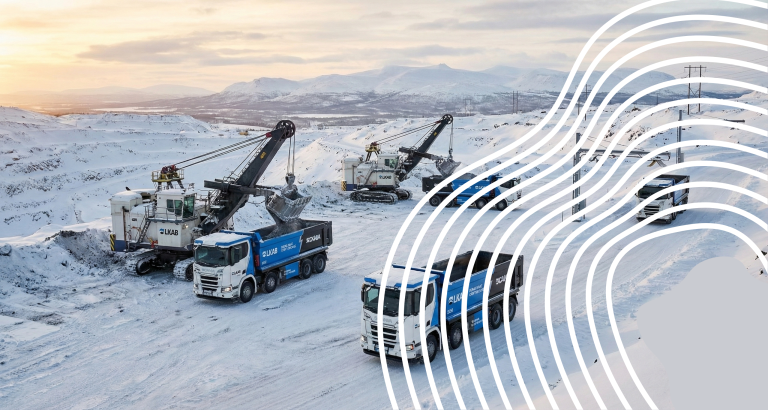
    While projects such as LKAB’s rare earth and phosphorus processing plant in Sweden signal progress, experts caution that Europe’s public tools for de-risking investments remain limited compared with those of the US and China. Without stronger financial instruments, streamlined permitting and a greater focus on processing and recycling, Europe risks remaining vulnerable in the global race for critical minerals.

  • Germany’s Altmark basin emerges as potential lithium powerhouse through direct extraction technology

    Germany’s Altmark basin emerges as potential lithium powerhouse through direct extraction technology

    Northern Saxony-Anhalt, a region historically associated with natural gas production, is drawing renewed attention as a potential cornerstone of Europe’s lithium supply. New assessments indicate that deep underground brines in the Altmark basin contain far larger volumes of lithium than previously believed, offering a possible breakthrough for the continent’s battery materials strategy.

    Neptune Energy, which operates in the area, announced in late 2025 that an independent resource estimate by Sproule ERCE placed the Altmark deposit at around 43 million tonnes of lithium carbonate equivalent. Verified under the CIM/NI 43-101 standard, the estimate would rank Altmark among the world’s largest known single-site lithium resources if confirmed through further development.

    The lithium is hosted in deep geothermal brines within Rotliegend sandstone and volcanic formations at depths of 3,200 to 4,000 meters. Average lithium concentrations of about 375 milligrams per litre have been recorded, largely attributed to long-term mineral leaching from mica-rich volcanic rocks under high-temperature conditions.

    Rather than conventional open-pit mining or evaporation ponds, Neptune is advancing direct lithium extraction technologies. Pilot projects completed in 2025 successfully produced battery-grade lithium carbonate using ion exchange and adsorption methods. These enclosed systems return processed brine underground, significantly reducing land use and water consumption compared with traditional approaches.

    The project aligns with the European Union’s Critical Raw Materials Act, which targets greater domestic sourcing of strategic minerals such as lithium by 2030. By reusing legacy gas infrastructure and combining lithium recovery with geothermal heat potential, Altmark could offer a lower-impact model for mineral production within Europe.

    Commercial output has yet to begin, and further permitting and demonstration-scale validation are required. German regulators are expected to closely review groundwater protection, waste handling and long-term environmental performance. If successful, Altmark may play a pivotal role in reshaping Europe’s position in the global lithium supply chain.

  • Battery storage boom lifts lithium demand outlook for 2026 despite lingering oversupply risks

    Battery storage boom lifts lithium demand outlook for 2026 despite lingering oversupply risks

    Rapid growth in battery energy storage is strengthening the outlook for lithium demand in 2026, raising expectations of a faster recovery for an industry that has struggled with oversupply since late 2022. Analysts say reforms in China’s power sector and surging global investment in data centres have driven stronger-than-expected demand for lithium used in stationary storage systems.

    China’s energy storage market expanded sharply in the second half of 2025, supported by policy changes and rising power system needs. According to analysts, demand growth from energy storage has already exceeded earlier forecasts, helping to offset weaker momentum in electric vehicle sales. Battery storage systems have become China’s most valuable clean-tech export, generating nearly $66 billion in sales in the first ten months of 2025, ahead of EV exports.

    Major banks now expect a tightening lithium market next year. Morgan Stanley forecasts a deficit of 80,000 tonnes of lithium carbonate equivalent (LCE) in 2026, while UBS projects a smaller shortfall of 22,000 tonnes, compared with a surplus of 61,000 tonnes expected in 2025. Global lithium demand is projected to grow by 17% to 30% in 2026, broadly in line with supply growth of 19% to 34%, according to analysts.

    Prices rebounded sharply in the second half of 2025 after hitting multi-year lows earlier in the year, aided by Beijing’s pledge to rein in overcapacity and a temporary production halt at a major Chinese mine operated by CATL. Lithium carbonate prices on the Guangzhou Futures Exchange rose to their highest level since November 2023 by the end of December. Analysts expect prices to range between 80,000 and 200,000 yuan per tonne in 2026.

    Energy storage is forecast to account for 31% of total lithium demand next year, up from 23% in 2025, gradually reducing the dominance of electric vehicle batteries. However, analysts caution that faster adoption of sodium-ion batteries for storage and a slowdown in EV sales could cap demand growth and limit further price increases.

  • Savannah Resources Highlights Barroso Community as Heart of Europe’s Energy Transition

    Savannah Resources Highlights Barroso Community as Heart of Europe’s Energy Transition

    Savannah Resources has launched a new public messaging initiative framing Portugal’s Barroso region as central to Europe’s clean-energy future, emphasising cultural heritage and community participation as the company advances its controversial lithium project.

    In the campaign titled “The EU’s Energy Independence Starts in Barroso,” the company positions the region not just as a mining location, but as a living cultural landscape shaped by generations of agricultural tradition and collective resilience. Savannah says it aims to integrate the Barroso Lithium Project into this heritage by developing it “responsibly” and ensuring local communities see tangible long-term benefits.

    The company argues that Barroso’s identity, communal strength and deep connection to the land form the foundation of what it calls “The Energy of Barroso.” This concept draws on shared values — mutual support, tradition, and the hope of retaining younger generations — which Savannah says align with Europe’s push toward a more sustainable and independent energy system.

    According to the company, lithium produced in Barroso will contribute to the EU’s ambition of reducing dependence on imported critical minerals and speeding up the green transition. Savannah stresses that the project, once operational, will supply material for millions of European electric vehicles and support regional development.

    The initiative invites the public to follow upcoming stories and updates that showcase community voices and outline how the project is intended to blend cultural preservation with modern industrial progress.

  • Poland’s Parliament Approves Bill Facilitating Coal Mine Closures and Compensation for Miners

    Poland’s Parliament Approves Bill Facilitating Coal Mine Closures and Compensation for Miners

    Poland’s parliament has approved a landmark government bill aimed at easing the country’s transition away from coal. The new legislation facilitates the closure of coal mines, introduces financial support for displaced miners, and promotes the redevelopment of former mining areas. The measure, which gained strong backing from Prime Minister Donald Tusk’s ruling coalition, is designed to support the country’s shift to cleaner energy sources while mitigating the impact on coal-mining communities.

    The bill, which will allow mining companies to close operations with state-backed financial support, is part of Poland’s broader energy transition plan. Under the legislation, coal mines can transfer their assets to local authorities or state entities for redevelopment projects, creating new opportunities for investment, revitalization, and infrastructure construction in former mining regions. In addition to mine closures, the bill provides protective benefits for workers, including severance payments of up to 170,000 zloty (€40,000) for those losing their jobs.

    The government aims to phase out thermal coal mining entirely by 2049, with an initial target of closing five mines within the next decade. The bill received broad support from MPs within the ruling coalition, with 241 votes in favor and just six against. However, the far-right opposition parties abstained from voting, with some critics arguing that the bill does not adequately provide alternatives to coal for affected communities.

    Poland remains Europe’s most coal-dependent nation, with coal accounting for 57% of its power generation in 2024. The transition away from coal has raised concerns, particularly in the Silesian-Dąbrowa region, home to many of the country’s coal mines. Despite this, the government has emphasised that the bill will help ensure a “just transition” for miners and stimulate new investment in coal regions.

    The legislation now heads to Poland’s Senate for approval before reaching President Karol Nawrocki’s desk for signing into law. While Nawrocki has previously voiced strong support for the coal industry, it remains to be seen whether he will sign the bill or veto it.