Tag: energy storage

  • CATL Signs 2 GWh Sodium-Ion Battery Storage Deal with Eastern European Renewable Energy Company Solarpro

    CATL Signs 2 GWh Sodium-Ion Battery Storage Deal with Eastern European Renewable Energy Company Solarpro

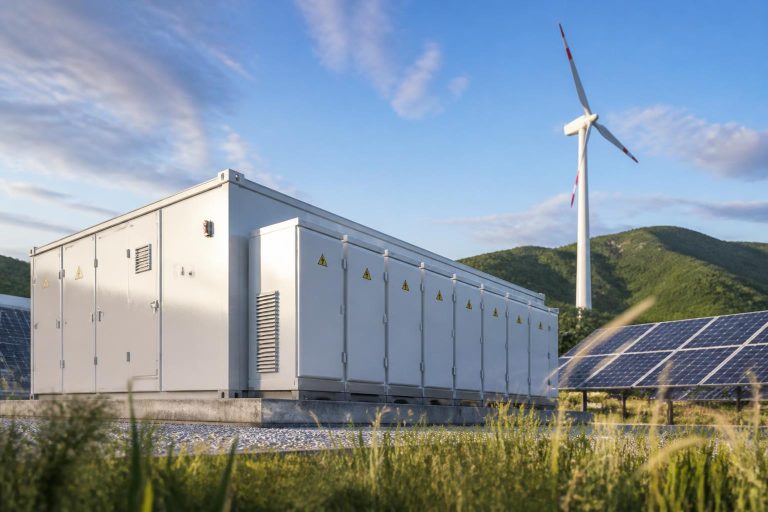
    CATL, the world’s largest battery manufacturer, has signed a significant cooperation agreement with Solarpro, an Eastern European renewable energy company, for 2 GWh of Tener Sodium energy storage systems. This deal represents CATL’s second major sodium-ion energy storage order in Europe within a single month, underscoring the accelerating adoption of next-generation energy storage technology across the continent. The companies plan to jointly deploy Central and Eastern Europe’s first large-scale sodium-ion energy storage project this year, marking a pivotal moment in the region’s transition towards advanced battery technologies.

    The Tener Sodium energy storage system demonstrates impressive technical specifications that make it particularly suitable for Eastern European climates. The system boasts a cycle life of up to 15,000 cycles and can operate reliably for 25 to 30 years, providing exceptional longevity for energy storage applications. Notably, the system retains 92% of its capacity at temperatures as low as minus 20 degrees Celsius, enabling it to withstand the harsh winter conditions experienced in Eastern European countries such as Lithuania. This cold-weather performance represents a significant advantage over traditional lithium-ion systems in regions with extreme seasonal temperature variations.

    CATL’s European expansion strategy reflects the company’s broader commitment to sodium-ion battery technology as a transformative force in the global energy storage market. Just one week prior to the Solarpro agreement, CATL signed a memorandum of understanding with European new-energy integrator Alfen NV to deploy 5 GWh of sodium-ion energy storage systems in Western Europe beginning in 2027. The partnership with Solarpro builds upon an existing relationship that commenced in 2024, when the companies deployed a 150 MWh EnerC+ liquid-cooled energy storage system in Bulgaria. Subsequently, in May 2026, a 602 MWh Tener lithium-ion energy storage system jointly developed by the companies was connected to Bulgaria’s power grid, increasing the country’s total energy storage capacity by 10%.

    CATL’s sodium-ion battery initiative represents a strategic response to growing global demand for cost-effective energy storage solutions. The company unveiled the Tener Sodium energy storage system on 22 June, positioning it as the world’s first field-validated sodium-ion battery energy storage solution. The system features a rated capacity exceeding 30 MWh and supports energy storage applications lasting between 1 and 8 hours, whilst maintaining compatibility with existing lithium-ion battery system dimensions, enabling seamless technology transitions. CATL plans to commence initial deliveries in China in September 2026, with shipments expected to reach 1 GWh by year-end, whilst global commercial deliveries are scheduled to begin in June 2027. Founder and chairman Robin Zeng has previously stated that low-cost sodium-ion batteries could eventually replace 30% to 40% of the existing battery market, reflecting the company’s confidence in this technology’s transformative potential.


  • Google Partners with Energy Dome to Scale Long-Duration CO₂ Battery Storage

    Google Partners with Energy Dome to Scale Long-Duration CO₂ Battery Storage

    Energy Dome has announced a global commercial partnership with Google to deploy its long-duration CO₂ Battery technology in support of Google’s goal of operating on 24/7 carbon-free energy by 2030. As part of the agreement, Google has also made a strategic investment in the Italian energy storage company.

    The partnership aims to accelerate the deployment of Energy Dome’s technology across Europe, the Americas and the Asia-Pacific region. A pipeline of projects has already been identified, with several sites currently in the development and contracting stages.

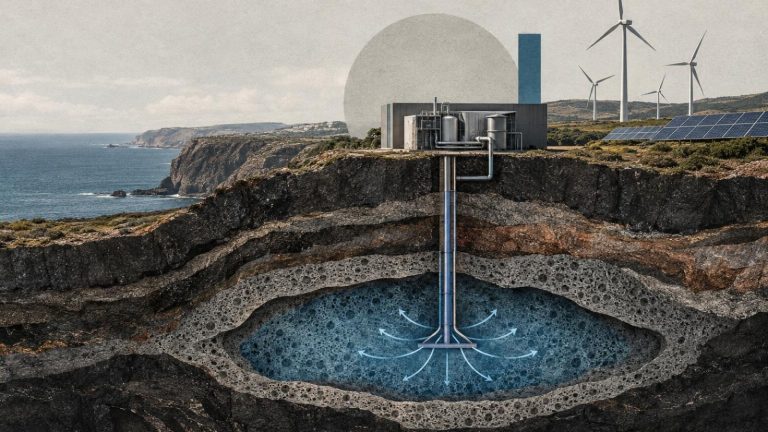
    Energy Dome’s CO₂ Battery is designed to store renewable electricity and deliver power continuously for 8 to 24 hours, helping overcome the intermittency of solar and wind generation. Unlike lithium-ion batteries, the system relies on a patented thermomechanical process using carbon dioxide and is built from commercially available components, avoiding supply chain constraints associated with critical minerals and rare earth elements.

    The technology also contributes to grid stability by providing mechanical inertia through rotating equipment, helping compensate for the decline in system inertia as conventional fossil-fuel power plants are retired.

    Google said the agreement marks its first commercial deployment of long-duration energy storage technology and forms part of a broader strategy to secure reliable, clean electricity for its growing operations, including data centres supporting artificial intelligence.

    “Energy Dome’s proven and scalable long-duration energy storage solution can help us unlock rapid progress,” said Maud Texier, Director of EMEA Energy at Google. She added that wider deployment of the technology could improve access to reliable and affordable electricity while supporting greater integration of renewable energy.

    Energy Dome founder and CEO Claudio Spadacini described the agreement as an important milestone in demonstrating that continuous carbon-free electricity can be achieved through commercially viable long-duration storage technologies.

    Google’s investment comes as Energy Dome enters a commercial growth phase. The company already has contracted projects with Alliant Energy in the United States, Engie in Italy and NTPC in India, reflecting increasing global interest in long-duration energy storage as power systems integrate larger shares of renewable generation.

  • China Lithium Prices Surge After Yichun Plans to Revoke Mining Licences

    China Lithium Prices Surge After Yichun Plans to Revoke Mining Licences

    Lithium prices in China jumped sharply after authorities in the country’s main lithium-producing hub announced plans to revoke dozens of mining licences, triggering investor concerns about future supply.

    The most actively traded lithium carbonate contract on the Guangzhou Futures Exchange rose to 109860 yuan per metric ton on Wednesday, its highest level since June 2024, before closing up 7.61% at 108620 yuan.

    The Bureau of Natural Resources of Yichun, a major lithium center in Jiangxi province, said it intends to cancel 27 mining permits following a public consultation period that will end on January 22. The announcement was published on the bureau’s official website on Friday.

    According to the published list, all of the licences have already expired, with some dating back more than a decade. Most were originally issued for ceramic clay or limestone mining. One permit related to a lithium-bearing ceramic stone mine was held by Jiangxi Special Electric Motor, which said it has filed an objection with local authorities. The permit expired on September 15 2024.

    Analysts at Galaxy Futures said the licence revocations are unlikely to have a direct impact on current lithium supply, as none of the affected permits cover operating mines. Nevertheless, the announcement heightened market anxiety about longer-term availability, pushing lithium carbonate prices higher.

    The move is part of a broader clean-up of mining licences in Yichun that began in September. The bureau previously revoked six permits on November 27. Lithium prices have been rising since August, after CATL suspended mining at its Jianxiawo site following the expiry of its mining licence, with strong demand from the energy storage sector providing additional support.

  • China Lithium Prices Jump After Yichun Moves to Revoke Mining Licences

    China Lithium Prices Jump After Yichun Moves to Revoke Mining Licences

    Lithium prices in China rose sharply after authorities in the country’s main lithium-producing hub announced plans to revoke dozens of mining licences, fuelling investor concerns over future supply.

    The most actively traded lithium carbonate contract on the Guangzhou Futures Exchange climbed as high as 109860 yuan per metric ton on Wednesday, its highest level since June 2024, before closing up 7.61% at 108620 yuan.

    The Bureau of Natural Resources of Yichun, a key lithium centre in Jiangxi province, said it intends to cancel 27 mining permits following a public consultation period ending on January 22. The notice was published on the bureau’s official website last week.

    According to the published list, all of the licences have already expired, in some cases more than ten years ago. Most were originally issued for ceramic clay or limestone mining. One permit linked to a lithium-bearing ceramic stone mine was held by Jiangxi Special Electric Motor, which said it has lodged an objection with local authorities. The permit in question expired on September 15 2024.

    Analysts at Galaxy Futures noted that the cancellations are unlikely to have a direct impact on current lithium supply, as none of the revoked licences relate to operating mines. Nevertheless, the announcement heightened market anxiety over longer-term availability, pushing lithium carbonate prices higher.

    The latest move follows a broader clean-up of mining permits in Yichun that began in September. The bureau previously revoked six licences on November 27.

    Lithium carbonate prices have been trending upward since August, after mining at CATL’s Jianxiawo mine was suspended due to the expiry of its mining licence. Strong demand from the energy storage sector has provided additional support to the market.

  • Uzbekistan’s Asaka Motors and Rosatom Sign Agreement on Lithium-Ion Battery Production

    Uzbekistan’s Asaka Motors and Rosatom Sign Agreement on Lithium-Ion Battery Production

    Asaka Motors International (Uzbekistan) and Rosatom’s Fuel Division (Russia) have signed a cooperation agreement to develop lithium-ion battery and energy storage system production, Rosatom announced. The deal was concluded on September 25 during World Nuclear Week in Moscow.

    The partnership will focus on launching localized production of traction batteries for electric vehicles and stationary energy storage systems in Uzbekistan. The companies plan to define assembly line capacities, design a localization program for components, identify potential customers, and explore export opportunities to Central Asia and other international markets.

    Founded in 2019, Asaka Motors International specializes in wholesale vehicle imports from the UAE, South Korea, and China, while also developing industrial and high-tech projects in Uzbekistan.

    Rosatom’s Fuel Division, managed by TVEL JSC, supplies nuclear fuel for over 70 power reactors in 15 countries, research reactors in nine states, and Russia’s nuclear fleet. Beyond nuclear fuel, the division is also expanding into new businesses in chemistry, metallurgy, energy storage technologies, 3D printing, digital solutions, and nuclear decommissioning.

  • Phenogy Launches Europe’s Largest Sodium-Ion Battery Installation in Germany

    Phenogy Launches Europe’s Largest Sodium-Ion Battery Installation in Germany

    Swiss energy storage company Phenogy has unveiled its first commercial-scale sodium-ion battery deployment, marking the largest installation of its kind in Europe. The single-container system, located near Bremen Airport in northern Germany, delivers 400 kW of power with nearly 1 MWh of storage capacity. Paired with a 50 kW solar array, the unit operates in island mode, powering electric vehicle chargers and optimizing on-site energy consumption.

    One of the challenges for sodium-ion batteries at scale has been inverter compatibility due to their broader voltage range. To address this, Phenogy integrated eight Sunny Island X 50 inverters from SMA into its 20-foot PHENOGY 1.0 container. These pre-production inverters, designed for flexibility beyond lithium iron phosphate (LFP) systems, enable efficient voltage matching with the sodium-ion chemistry.

    While sodium-ion is often seen as a cheaper and more sustainable alternative to lithium-ion due to sodium’s abundance and lower extraction costs, the technology has yet to achieve mass-market maturity. China currently leads global deployment, with 100 MW-scale projects by companies such as CATL, BYD, and Huawei.

    Phenogy CTO Max Kory emphasized the strategic value of sodium-ion technology for Europe and North America, noting that reliance on Chinese lithium-ion precursors could pose long-term risks. “Lithium prices will rise again – with mine closures in China, the market is nearing a breaking point. As prices climb, alternative chemistries become more attractive, and sodium-ion is the prime candidate for building localized supply chains,” he told ESS News.

    Key to scaling production will be local cathode and anode manufacturing, particularly hard carbon derived from agricultural waste. While production costs remain higher than LFP today, Phenogy believes strategic buyers seeking supply chain independence will drive early adoption.

    Founded in 2019, Phenogy employs about 60 people across Europe and the US, with operations in South Carolina and research collaborations with the University of South Carolina, Exentis Group, and Fraunhofer Institutes. The company is positioning itself as a vertically integrated manufacturer to strengthen local supply chains and support the global energy transition.

  • Lyten Secures $200M to Expand Lithium-Sulfur Battery Ambitions Through Northvolt Asset Acquisitions

    Lyten Secures $200M to Expand Lithium-Sulfur Battery Ambitions Through Northvolt Asset Acquisitions

    California-based battery startup Lyten has raised $200 million from existing investors to support the acquisition of strategic assets from the bankrupt Swedish battery manufacturer Northvolt AB, including intellectual property and a large energy storage factory in Poland.

    The new funding enables Lyten to advance its pivot from a U.S.-focused battery cell supplier into a broader, vertically integrated player in Europe’s fast-growing energy storage and defense sectors. The Gdansk-based facility, originally built by Northvolt for $200 million, is expected to restart operations using traditional nickel-based cells by Q4 2025, with a long-term plan to convert the site to produce Lyten’s proprietary lithium-sulfur batteries.

    “We’re moving downstream in the batteries to own more of the value chain,” said Keith Norman, Lyten’s Chief Marketing and Sustainability Officer. “We’re entering hyper-growth mode in very specific geographies and need to align resources accordingly.”

    The expansion follows a recent restructuring at Lyten, which included the departure of Tesla alum Celina Mikolajczak and about 45 other employees. Mikolajczak had played a key role in commercializing Lyten’s lithium-sulfur chemistry—an innovation long viewed as unviable until now.

    Lyten’s lithium-sulfur cells aim to offer a lower-cost, high-density alternative to China-dominated lithium iron phosphate (LFP) technologies. They also avoid critical materials tightly controlled by Chinese suppliers, aligning with Western supply chain goals. The company’s Polish plant will produce not only batteries but also key components such as housings, inverters, and safety systems for stationary energy storage systems.

    This move comes amid a global battery market realignment, with electric vehicle demand slowing in the U.S. and growing interest in stationary energy storage and military drone applications in Europe.

    Lyten’s recent investments also include a lithium-metal manufacturing facility near San Francisco, acquired from Cuberg—another former Northvolt subsidiary.

    The $200 million raise was backed by existing investors including Prime Movers Lab, Luxembourg Future Fund, Stellantis NV, and FedEx Corp. Norman noted the funding could support additional acquisitions beyond the Northvolt deal as the company accelerates its European expansion strategy.

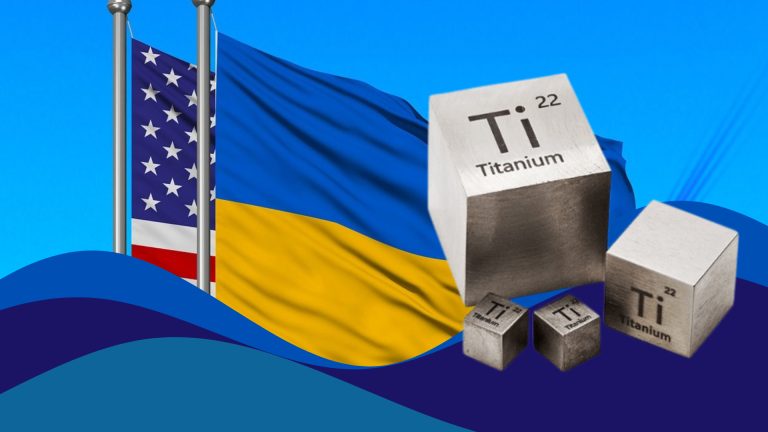
  • Ukraine’s Strategic Mineral Reserves Key to US-Ukraine Military and Economic Collaboration

    Ukraine’s Strategic Mineral Reserves Key to US-Ukraine Military and Economic Collaboration

    Ukraine’s vast reserves of critical minerals are becoming a cornerstone of its growing partnership with the United States. Recently, former US President Donald Trump initiated discussions to secure Ukraine’s access to these minerals in exchange for US military aid amid the ongoing conflict with Russia. The initiative aligns with Ukraine’s “Victory Plan,” spearheaded by President Volodymyr Zelensky, which aims to attract international investors to develop the nation’s mineral-rich deposits.

    Ukraine holds 23 of the 50 minerals identified as critical by the US and 26 out of 34 deemed vital by the European Union. Notable minerals include titanium, graphite, lithium, beryllium, and rare earth elements (REEs). Although partially developed, these resources remain largely untapped for high-value manufacturing purposes. The Ukrainian government has already issued 30 licenses for mineral exploration and holds numerous unlicensed deposits with vast potential.

    Titanium and beryllium, essential for the aerospace and defense industries, are especially critical. Ukraine boasts the largest titanium reserves in Europe, capable of meeting US and EU demand for more than 25 years. Developing these resources is vital to reducing Western dependence on China and Russia, which dominate the global titanium supply chain. Additionally, Ukraine has significant potential in beryllium mining, with one key deposit discovered and licensed for private development.

    In the energy storage sector, Ukraine is well-positioned to supply lithium and graphite for battery manufacturing. Despite its relatively small global lithium reserves, Ukraine has the potential to play a key role in Europe’s battery supply chain. Several graphite deposits are already in operation, with the necessary investment estimated at $650 million to modernize and expand production facilities.

    Ukraine’s rare earth metal reserves also hold promise for semiconductor manufacturing. However, many key deposits remain in Russian-occupied regions. Efforts are underway to revitalize germanium and gallium production, which previously flourished during Soviet times. Ukraine also aims to restart silicon production to supply global semiconductor markets.

    For Ukraine to fully harness its mineral wealth, significant foreign investment is needed. The government has been working to create a favorable regulatory environment to attract foreign partners. Several international firms, including Australian Volt Resources and Turkish Onur Group, have already secured mining rights. The strategic partnership between Ukraine and the US is poised to drive further investment and innovation in high-tech sectors, solidifying Ukraine’s role in global supply chains.

  • Gravitricity to Develop Underground Gravity Energy Storage Projects in Europe

    Gravitricity to Develop Underground Gravity Energy Storage Projects in Europe

    Edinburgh-based company Gravitricity has announced its plans to develop underground gravity energy storage projects for deep mine operators in Slovenia, Germany, the Czech Republic, and Finland. This innovative approach repurposes end-of-life mine shafts, which would otherwise face expensive infilling and decommissioning costs.

    Gravitricity’s energy storage system, known as GraviStore, utilizes heavy weights—up to 12,000 tonnes—suspended in deep shafts by cables attached to winches. During periods of excess electricity, such as on windy days, these weights are winched to the top of the shaft, ready to generate power when needed. The weights can be released in less than a second, with the winches acting as generators to produce electricity either in a quick burst or more gradually, depending on demand.

    The company highlighted that GraviStore offers many advantages similar to pumped storage hydro and lithium-ion batteries, but without the performance degradation that affects batteries over time. This system can operate for decades with consistent efficiency.

    Gravitricity’s current clients include the Velenje coal mine in Slovenia, owned by the government-run Premogovnik Velenje; First Quantum Minerals’ Pyhäsalmi mine in Finland, Europe’s deepest zinc and copper mine; the former Darkov mine in the Czech Republic, managed by the state enterprise DIAMO; and the Geiger Group’s Grube Teutschenthal mine in Germany.

    “Gravity energy storage presents a powerful green opportunity for mine operators, extending the life of mines beyond material extraction,” said Martin Wright, founder and executive chairman of Gravitricity. “This alternative to decommissioning provides economic and employment opportunities in communities facing the decline of traditional jobs. Our engagements with mine operators demonstrate significant interest in our technology, and we are working with both mine owners and public sector organizations to transform these plans into operational realities.”

    Gravitricity has already demonstrated its GraviStore technology with a 250kW above-ground prototype, successfully raising and lowering two 25-tonne weights to generate power and verify the system’s rapid response capabilities. The £1-million, 12-meter-high test rig proved the system can achieve full power in less than a second, making it highly valuable for frequency response and backup power markets, with the flexibility to adjust power output based on demand.

  • European Mine Owners Explore Green Future with Underground Energy Storage

    European Mine Owners Explore Green Future with Underground Energy Storage

    As mining operations wind down across Europe, mine owners are turning to innovative solutions for a sustainable future, eyeing underground energy storage as a pathway to a low-carbon economy.

    Active deep mine operators in Slovenia, Germany, The Czech Republic, and Finland are investigating the potential of underground gravity energy storage offered by Edinburgh-based firm Gravitricity, providing green opportunities to mining communities grappling with dwindling employment prospects.

    Gravitricity’s revolutionary energy storage system, dubbed GraviStore, utilizes heavy weights totaling up to 12,000 tons suspended in deep shafts by cables attached to winches. This presents a promising alternative for end-of-life mine shafts, mitigating the need for costly infilling and decommissioning processes.

    Teaming up with energy multinational ABB and lifting specialists Huisman, Gravitricity aims to commercialize the technology for mine operators, transforming recently decommissioned mines into potential sites for sustainable energy storage solutions.

    Projects are already underway, including installations at the Velenje mine in Slovenia, Pyhäsalmi Mine in Finland, Darkov Mine in the Czech Republic, and Grube Teutschenthal mine in Germany. At Velenje, feasibility assessments for installing systems in specific shafts are ongoing, with potential pilot projects on the horizon.

    Martin Wright, Founder, and Executive Chairman of Gravitricity, emphasized the transformative potential of gravity energy storage, presenting not only an alternative to decommissioning but also fostering economic and employment opportunities in declining mining communities.

    Gravitricity’s successful demonstration of the GraviStore technology with an above-ground 250 kW demonstrator underscores its viability, showcasing its ability to rapidly respond to demand fluctuations and its potential in frequency response and backup power markets.