Tag: Energy Security

  • Ann Mettler on Europe’s toxic complacency, cleantech challenge & energy security crisis (RM#12)

    Ann Mettler on Europe’s toxic complacency, cleantech challenge & energy security crisis (RM#12)


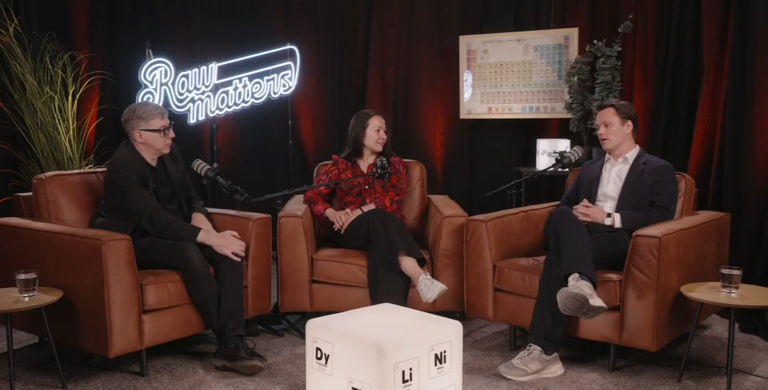
    Ann Mettler on Europe’s toxic complacency, cleantech failure & energy security crisis [RAW MATTERS GRANDE FINALE, RM#12 – Ann Mettler, Julia Poliscanova, Peter Tom Jones]

    We end Season 1 of the Raw Matters podcast with a big bang. We close with a conversation that goes straight to the heart of Europe’s competitiveness and energy‑security challenge.

    After a season of deep dives into critical minerals, geopolitics and industrial strategy, we end with someone who has shaped Europe’s thinking at the highest levels: Ann Mettler, President of Catalyse Europe, former VP at Breakthrough Energy (with Bill Gates), and one of Europe’s sharpest voices on industrial strategy and clean tech.

    Hosts Peter Tom Jones and Julia Poliscanova open with the uncomfortable question: How did Europe manage to deepen its fossil‑fuel dependencies while simultaneously creating new ones for the clean‑energy transition?

    This paradox sets the tone for a conversation about Europe’s “toxic complacency” – a theme Ann has highlighted repeatedly (cf. Quote by Sir Richard Shirreff), and one that now defines the continent’s strategic vulnerability.

    We explore Ann’s professional journey, then dive into the big issues:

    👉 The staggering cost of Europe’s fossil‑fuel exposure, from Ukraine to the Hormuz crisis.
    👉 Whether the Draghi report’s diagnosis of Europe’s competitiveness gap is being acted upon.
    👉 Why Europe’s energy security – in fuels, technologies and critical minerals – remains fragile.

    From there, we zoom into cleantech: the battleground where Europe’s future will be decided. Ann explains why Europe cannot rely on cheap imported batteries – the general‑purpose technology of the electrification age, essential not only for EVs but also for stationary storage and defence (drones, humanoid robots). “We cannot and should not rely on China for critical infrastructure.”

    We discuss which technologies Europe must fight to keep, which ones to onshore, and which ones to strategically let go. And which Asian partners Europe should work with and why technology alliances matter.

    We close with the policy angle. Ann deliberately avoids commenting on specific policy files (CRMA, IAA, Circular Economy Act…). Instead, she exposes the systemic problem: silo‑based policymaking in the EU and the lack of people in Brussels who genuinely understand how industry works, how technology functions or how investments are made. Echoing Salvatore Pinizzotto, she calls for real synchronisation in policymaking and genuine “ecosystem building”, overcoming the endemic “professional optimism” in the Brussels bubble.

    This GRANDE FINALE is a wake‑up call. Unless Europe confronts its toxic complacency, it will continue drifting into deeper dependency at the very moment it needs strategic autonomy the most.

  • The Mineral Security Trap: Why Europe’s Green Ambitions Are a Geopolitical Minefield

    The Mineral Security Trap: Why Europe’s Green Ambitions Are a Geopolitical Minefield

    In the early 1990s, while the West was celebrating the “End of History” and the triumph of globalized trade, Deng Xiaoping issued a quiet prophecy: “The Middle East has oil; China has rare earths.”

    For three decades, that statement was treated as an industrial footnote. Today, it has become the defining thesis of a new, colder era of geopolitics. In the latest episode of the Raw Matters podcast, hosts Peter Tom Jones and Julia Poliscanova sat down with Albéric Mongrenier, Executive Director of the European Initiative for Energy Security (EIES), to peel back the layers of Europe’s strategic “naivety.”

    The verdict? Europe’s transition to clean energy isn’t just an environmental project—it is a massive transfer of strategic dependency that could, if left unmanaged, leave the continent’s power grids and military hardware under the remote control of Beijing.


    The Cyber Trojan Horse in the Power Grid

    The conversation begins with a startling reality check regarding the hardware of the energy transition. We often talk about “critical minerals” as raw commodities—lithium, cobalt, copper. But Mongrenier points to a more immediate, digital threat: the inverter.

    Every solar panel, wind turbine, and EV charger requires an inverter to convert DC power to AC. Today, approximately 80% of new solar installations in Europe use Chinese inverters, with a massive share provided by a single company: Huawei.

    “These devices are connected to the internet,” Mongrenier warns. “They are entry doors for cyberattacks.” This creates two distinct levels of vulnerability:

    1. Intelligence Harvesting: By controlling the inverters, external actors can map Europe’s energy consumption and grid behavior with more granularity than European governments themselves.

    2. The “Kill Switch”: Mongrenier references reports from the US and UK regarding hidden “kill switches” discovered in Chinese-made components. In a conflict scenario, the theoretical ability to remotely disable Europe’s energy system—shutting down wind farms and solar arrays at the click of a button—is no longer science fiction.


    Dual-Use: The F-35 and the Wind Turbine

    One of the most persistent myths of the “Green Deal” is that critical minerals are purely “clean tech” materials. In reality, the minerals powering the energy transition are the exact same materials required for modern warfare.

    “NATO came up with its own list of 12 defense-critical minerals late in 2024,” Mongrenier notes. The overlap is nearly total:

    • Rare Earths: Essential for the permanent magnets in EV motors, but also for the guidance systems of missiles and the engines of F-35 fighter jets.

    • Graphite: Used in battery anodes, but also vital for the hulls of submarines.

    • Titanium & Cobalt: The bread and butter of both high-performance turbines and military superalloys.

    This dual-use nature has created a “Mineral Security Trap.” If Europe cannot secure its own supply of these minerals, it loses more than just its ability to hit climate targets—it loses the industrial base required to defend itself.


    A Tale of Two Strategies: The US Stick vs. The EU Paper

    The podcast highlights a widening gap between how Washington and Brussels are reacting to the Chinese monopoly.

    The American “All-of-Government” Blitz

    Under both the Biden and now the Trump administrations, the US has moved with aggressive speed. The US has set a hard deadline: January 2027. By then, defense contractors must purge Chinese rare earths, titanium, and tantalum from their supply chains.

    “The US uses a big stick,” says Mongrenier. They aren’t just asking for change; they are mandating it while simultaneously throwing tens of billions of dollars in subsidies and equity stakes at domestic projects like MP Materials.

    The European “Silo” Problem

    In contrast, Europe’s response remains “timid.” Poliscanova points out that Europe is still hampered by siloed decision-making. While the US treats mineral security as a singular mission across all departments, the EU is split between various Directorates-General (DGs) that often fail to communicate.

    Furthermore, Europe remains obsessed with the “business case.” “Strategic infrastructure does not always have a business case,” Poliscanova argues. “Sometimes you just invest because it’s a critical asset. We need to forget about the short-term profit and think about resilience.”


    The Axis of Minerals: Russia, Iran, and China

    The discussion takes a darker turn when addressing the current conflict in the Middle East. Mongrenier points out that the “axis” of Russia, Iran, and China is not a loose association—it is a functional industrial alliance.

    Take the drones currently saturating battlefields in Ukraine and the Middle East. Whether they are Iranian Shahed drones or Russian variants, their supply chains lead back to China. “90% of these drones are battery-powered,” Mongrenier says. “If we build a ‘European Drone Wall’ for our own defense, but the batteries and minerals come from China, have we actually improved our security?”


    The Path Forward: Ending the Naivety

    As the episode concludes, the hosts and guest outline a roadmap for a more resilient Europe:

    1. Aggregating Demand: Europe must connect the car industry and the defense sector to send a massive, unified “demand signal” to miners and refiners outside of China.

    2. The “Carrot and the Stick”: Europe needs to provide the financial “carrots” (subsidies and public procurement) while wielding the “stick” (vetting components for cyber risks and mandating non-Chinese supply chains for critical defense hardware).

    3. Industrial Sovereignty: 2026 and 2027 are viewed as the “midterm” years for European leadership to finally treat energy and mineral security as the same issue.

    The message is clear: Europe’s “naivety” has been a luxury of a more stable world. In 2026, as missiles fly and megawatts become the new currency of power, that luxury has officially run out. To save its climate, Europe must first secure its minerals—and to secure its minerals, it must finally learn to play the game of “Realpolitik.”

  • Unpacking Kazakhstan’s $25 Billion Mining and Critical Minerals Revolution

    Unpacking Kazakhstan’s $25 Billion Mining and Critical Minerals Revolution

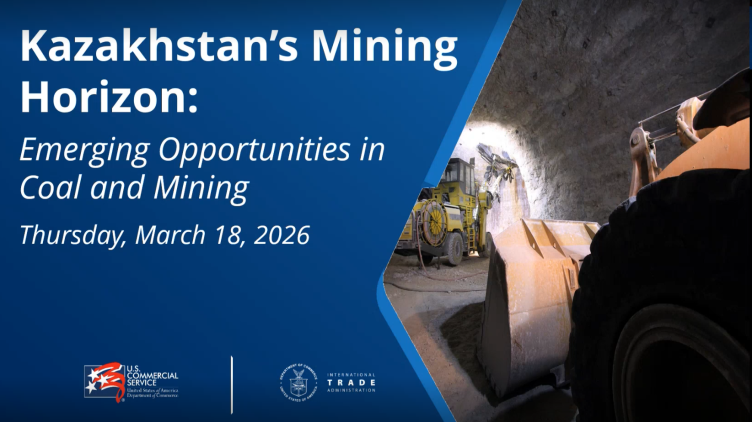
    On 18 March the US Commercial Service hosted a webinar featuring experts from the Kazakh government and industry. The central message was clear: Kazakhstan is no longer presenting itself simply as a resource-rich country. It is actively seeking to become a more significant destination for investment, processing, industrial partnerships and long-term supply chain co-operation.

    If you are tracking the global energy transition and supply chain security, this is a market that demands your attention. Here are my biggest takeaways from the session:

    A market defined by scale, ambition and strategic importance

    Kazakhstan’s resource base remains one of its greatest strengths. Speakers highlighted that mining and metallurgy continue to play a major role in the national economy, while reforms are being introduced to improve transparency, modernise infrastructure and create a more attractive environment for foreign investors.

    Particular attention was given to coal, mining and critical minerals as sectors with major growth potential. Kazakhstan is pursuing a pragmatic approach to energy development, combining its natural resource base with efforts to attract technology, financing and international partners. For U.S. companies, this is increasingly being framed not only as a commercial opportunity, but also as a chance to help build more resilient allied supply chains.

    The Sheer Scale of the Resource Opportunity

    Kazakhstan holds a formidable position on the global energy map, but it’s the untapped potential that is most striking:

    • Massive Reserves: The country sits on 33 billion tonnes of coal reserves, ranking 8th globally—enough to sustain production for over 300 years.
    • Cost Advantages: Kazakh coal prices hover around $25 to $50 per tonne—a fraction of the cost in other global markets. Furthermore, the cost of geological exploration is incredibly low at just $11 per square kilometre, compared to $167 in Australia and $203 in Canada.
    • The Coal Chemistry Boom: Currently, only 3% of Kazakhstan’s coal is processed. Shifting towards deep processing (synthetic fuels, ammonia, urea, methanol) represents a $25 billion untapped market.

    Modernising the Energy Grid

    As power demand surges—driven by industrialisation and the rise of AI—Kazakhstan is heavily focussed on modernising its infrastructure. The Ministry of Energy plans to introduce 26 gigawatts of new power capacity over the next decade. This includes a near-term plan to add 7.6 GW of new coal-fired capacity, requiring an estimated $16 billion in investment by 2030. The government is actively seeking technological partnerships for carbon capture and storage (CCS) and ultra-supercritical boiler technologies to ensure this growth aligns with clean energy standards.

    Critical minerals are becoming central to the conversation

    One of the most interesting aspects of the discussion was the growing focus on critical minerals and rare earth-related opportunities.

    Kazakhstan is developing a more comprehensive strategy for critical raw materials, with plans to define priority minerals, support processing and encourage higher-value production. The direction of travel is clear: the country wants to move further up the value chain and become more than simply an exporter of raw materials.

    This was particularly relevant in light of the tungsten discussion that followed.

    Resources:

    Looking ahead to 14-16 April: MINEX Kazakhstan Forum in Astana

    The next important date in the calendar is 15 April, when Julie M. Stufft , U.S. Ambassador to the Republic of Kazakhstan, will speak at the strategy session on Critical Minerals and Global Strategic Alliances at the 16th MINEX Kazakhstan Forum in Astana.

    Also speaking will be Dominic Heaton Dominic Heaton, CEO of Cove Kaz Capital Group, who will present the Severniy Katpar case study.

    This is especially significant because Severniy Katpar and Verkhnee Kairakty together hold 1.4 million tonnes of tungsten trioxide under JORC standards, representing around 70% of Kazakhstan’s total tungsten reserves. The project involves an estimated $1.1 billion joint venture investment, with potential support from U.S. EXIM and the U.S. International Development Finance Corporation totalling up to $1.6 billion.

    That level of financial and diplomatic backing underlines how strategically important this project could become, not only for Kazakhstan, but also for broader allied efforts to secure critical mineral supply chains.

    Why these matters

    What stood out most from the 18 March webinar was the alignment now emerging between Kazakhstan’s resource ambitions and international demand for secure, diversified supply chains.

    Kazakhstan offers scale, geological potential and a strategic location between major markets. The United States and other partners bring financing, technology and industrial expertise. If those elements come together effectively, the result could be a new phase of co-operation built around mining, processing, infrastructure and critical minerals development.

    For anyone following energy security, industrial policy or strategic resource investment, Kazakhstan is becoming increasingly difficult to ignore.

    The webinar made that case convincingly. The 15 April MINEX Forun sessions should offer an important next step in showing how these opportunities may translate into practical projects and partnerships.

  • US DOE Launches $500M Push to Strengthen Critical Minerals and Battery Supply Chains

    US DOE Launches $500M Push to Strengthen Critical Minerals and Battery Supply Chains

    The US Department of Energy (DOE) has announced plans to provide up to $500 million in funding to expand domestic processing, recycling and manufacturing capacity for critical minerals and battery materials.

    The funding initiative, led by the DOE’s Office of Critical Minerals and Energy Innovation (CMEI), is aimed at supporting both demonstration and commercial-scale facilities that process and recycle key materials used in batteries and energy technologies.

    The program targets strategic minerals including lithium, graphite, nickel, copper and aluminum, as well as materials recovered from used battery systems.

    US Energy Secretary Chris Wright said the move is intended to reduce reliance on foreign supply chains, particularly those controlled by geopolitical rivals.

    “For too long, the United States has relied on hostile foreign actors to supply and process the critical materials essential for battery manufacturing,” Wright said.

    The DOE emphasized that strengthening domestic supply chains is critical not only for energy security but also for meeting rising electricity demand linked to artificial intelligence, electrification and clean energy systems.

    ⚙️ Where the money goes
    The funding will support projects across three key areas:

    • Processing of critical minerals from raw feedstocks

    • Recycling of critical materials from end-of-life products

    • Manufacturing of battery materials and components

    This reflects a broader strategy to build resilience across both upstream and midstream segments of the supply chain.

    🌐 Global cooperation still in play
    The announcement comes as US officials engage with international partners at the Indo-Pacific Energy Security Ministerial in Japan.

    Assistant Secretary Audrey Robertson highlighted that while domestic capacity is expanding, collaboration with allies remains essential.

    “Boosting domestic production, including through recycling, will bolster national security and ensure the US and its partners are prepared for future energy challenges,” she said.

    🔋 Strategic context
    The initiative marks the third round of DOE funding focused on battery supply chains. It forms part of a wider effort by Washington to counterbalance global supply concentration, particularly in China, which dominates processing and refining of many critical minerals.

    By investing in processing and recycling infrastructure, the US aims to secure the materials needed for electric vehicles, grid storage systems and next-generation energy technologies — turning supply chains from fragile threads into reinforced cables.

  • Coal Demand Rebounds in Europe as Energy Security Concerns Drive Temporary Shift

    Coal Demand Rebounds in Europe as Energy Security Concerns Drive Temporary Shift

    Rising uncertainty over Europe’s energy security is prompting several countries to temporarily increase coal use for electricity generation as global supply disruptions and higher gas prices reshape energy markets.

    Thermal coal prices for power generation have climbed roughly 20%, reaching around $135 per tonne. The increase follows escalating tensions in the Gulf and disruptions affecting energy flows through the Strait of Hormuz, as geopolitical tensions between the United States and Israel on one side and Iran on the other place pressure on global energy supply chains.

    With natural gas prices rising, coal-fired power plants have again become economically viable in parts of Europe. Although coal remains one of the most carbon-intensive fuels, the current market environment is forcing governments and utilities to prioritise energy security and cost stability in the short term.

    Despite the recent rise, coal prices remain far below the levels seen during the 2022 energy crisis following the Russia–Ukraine war. At that time, coal prices surged above $400 per tonne, prompting countries such as Germany to reopen coal-fired power plants and temporarily extend the life of existing mines.

    Global coal supply conditions are currently more stable than during the 2022 crisis. Major producers continue to maintain significant reserves, while China — the world’s largest coal producer and consumer — has expanded or reopened several mining operations. Higher prices may also encourage Indonesia, one of the world’s leading coal exporters, to reconsider earlier export restrictions.

    In the longer term, the International Energy Agency expects global coal demand to stabilise or gradually decline by 2030 as renewable energy, nuclear power and natural gas expand their share of the energy mix. However, geopolitical tensions and volatility in global gas markets could slow this transition.

    At the same time, Europe’s energy system is continuing to shift toward renewables. According to data from Ember Energy Research, electricity generated from wind and solar surpassed fossil fuel generation for the first time in 2025. Renewable sources accounted for 30% of EU electricity production, compared with 29% from coal, gas and oil combined.

    Analysts note that coal may still play a limited backup role in Europe’s energy mix, particularly during periods of high gas prices or supply disruptions.

  • Poland Weighs New Mining Pact to Balance Coal Profitability and Energy Transition

    Poland Weighs New Mining Pact to Balance Coal Profitability and Energy Transition

    Poland’s government is preparing new policy measures for the coal mining sector as it seeks to balance economic viability with the country’s ongoing energy transition, according to Deputy Minister of State Assets Grzegorz Wrona.

    In an interview with PAP Biznes, Wrona said the Ministry of State Assets and the Ministry of Energy are working on a draft “social agreement” aimed at defining a broader pact between society and the mining industry, rather than a traditional agreement between employers and trade unions.

    The initiative is intended to ensure that coal mining operations remain profitable and sustainable while continuing to support Poland’s electricity generation and industrial development. Wrona emphasised that coal still plays a key role in the country’s energy mix, even as Poland faces growing pressure to meet European climate and regulatory requirements.

    Government officials are examining options that could improve the profitability of the sector, including initiatives focused on coal processing and value-added uses of the resource. According to Wrona, such approaches could allow the industry to remain economically viable without driving up electricity prices.

    The deputy minister acknowledged the complexity of managing the transition, noting that Poland must simultaneously address decarbonisation goals and maintain energy security.

    Industry representatives have also raised concerns about current support mechanisms. Bogdanka CEO Zbigniew Stopa recently stated that some domestically produced thermal coal is being sold below extraction cost due to subsidy programmes, placing companies that do not receive state support at a competitive disadvantage.

    Wrona echoed criticism of the subsidy system, arguing that policies should prioritise mining operations that are economically viable, safe and capable of meeting market demand. He highlighted Bogdanka, along with certain mines in Lesser Poland and Silesia, as examples of operations with strong long-term potential.

    Under Poland’s existing legislation governing hard coal mining, certain companies receive state subsidies to reduce production capacity as part of restructuring efforts. These include major mining groups PGG and PKW, as well as Weglokoks Kraj, whose last mine ceased production at the end of 2025.

    The government’s ongoing policy discussions aim to identify a sustainable framework for the sector while addressing concerns about economic competitiveness, employment and regional development in mining areas.

  • UK and US Sign Critical Minerals Partnership to Strengthen Supply Chains

    UK and US Sign Critical Minerals Partnership to Strengthen Supply Chains

    The United Kingdom and the United States have signed a new partnership aimed at securing critical mineral supply chains and boosting investment in domestic mining and processing projects.

    The Memorandum of Understanding was signed in Washington DC by UK Foreign Office Minister Seema Malhotra and US Under Secretary of State Jacob Helberg during a meeting attended by representatives from more than 50 countries. The agreement is designed to accelerate efforts to secure supplies of critical minerals essential for industries ranging from automotive and defence to clean energy and electronics.

    The partnership supports the UK’s Critical Minerals Strategy, published last November and backed by up to £50 million in new funding to strengthen domestic production and processing capacity. Under the strategy, the government aims to ensure that by 2035 no more than 60 percent of the UK’s supply of any single critical mineral comes from one country.

    The new UK-US framework seeks to encourage greater private investment in mining and processing projects, while enhancing cooperation between the two allies to build more resilient and diversified global supply chains.

    Minister Seema Malhotra said the agreement reflects a shared commitment to strengthening supply chain resilience and safeguarding long-term economic growth. Industry Minister Chris McDonald added that the partnership would help stimulate new investment into British mineral projects and support sectors reliant on secure access to raw materials.

    The agreement adds to the UK’s expanding network of bilateral critical minerals partnerships, which already includes Australia and Canada.

    The UK critical minerals sector contributes £1.79 billion to the economy and supports more than 50,000 jobs. There are currently over 50 domestic projects focused on extracting and refining critical materials.

  • Coal Sector Protests and Shortages Threaten Power Supply in Romania and Bosnia

    Coal Sector Protests and Shortages Threaten Power Supply in Romania and Bosnia

    Workers in the coal mining and thermal power sectors across Southeast Europe are facing mounting pressure from austerity measures and supply disruptions, raising concerns about electricity generation and energy security in the region.

    In Romania, employees of state-owned Complexul Energetic Oltenia (CE Oltenia) have staged protests, including hunger strikes, in response to proposed wage cuts and the possible cancellation of meal vouchers. Thirteen workers have reportedly gone on hunger strike, while demonstrations have taken place at several coal mines and one thermal power plant.

    During a meeting with union representatives, Prime Minister Ilie Bolojan stated that CE Oltenia could only be exempted from austerity measures if it improves efficiency and reduces reliance on state aid. A government memorandum clarifying the situation is expected to be discussed next week. Energy Minister Bogdan Ivan noted that Romania had previously renegotiated with the European Commission the closure deadline for certain coal-fired power plants, extending it beyond December 31, 2025.

    Union representatives warned that if their demands are not addressed, protests could escalate and further reduce already strained coal supplies feeding the Rovinari and Turceni thermal power plants, which are central to Romania’s power system.

    Similar challenges are emerging in Bosnia and Herzegovina. The Ugljevik thermal power plant is currently offline due to coal shortages and has recently reduced salaries for all employees. In late January, the Government of the Republic of Srpska agreed to transfer part of the Ugljevik coal concession from Comsar Energy RS, majority owned by Russian businessman Rashid Sardarov, to RiTE Ugljevik, the plant’s operator.

    The transferred deposit reportedly contains around 50 million tonnes of coal, enough to supply the plant for approximately 25 years. The reserves had originally been earmarked for the planned Ugljevik 3 project, which was never completed.

    Labor tensions have also surfaced at the Zenica coal mine, which is scheduled for closure. In September, miners staged a five-day hunger strike over unpaid wages.

    The combined impact of labor unrest and coal shortages has contributed to a sharp rise in electricity imports. In 2025, Bosnia and Herzegovina’s electricity imports reached a record €321.6 million, roughly double the previous year, partly due to production halts at coal-fired facilities.

  • Kazakhstan to Invest Over 8 Trillion Tenge in Expanding Coal Power Generation by 2030

    Kazakhstan to Invest Over 8 Trillion Tenge in Expanding Coal Power Generation by 2030

    Kazakhstan plans to invest more than 8 trillion tenge in expanding its coal-fired power generation capacity by 2030, the country’s Ministry of Energy of Kazakhstan said during a recent roundtable outlining the main areas of planned spending.

    Under a national project to develop coal-based power generation, Kazakhstan intends to construct five new thermal power plants in Kurchatov, Kokshetau, Semey, Ust-Kamenogorsk, and Zhezkazgan, as well as build Ekibastuz GRES-3. In parallel, the existing Ekibastuz GRES-2 and Aksu GRES power stations are set to undergo modernization.

    The national project focuses on introducing technologies that reduce atmospheric emissions from coal combustion. It предусматривает a gradual replacement of worn-out generation assets with modern, high-efficiency power units designed to minimize environmental impact. According to the ministry, the new coal-fired plants are expected to strengthen Kazakhstan’s energy security while meeting environmental standards.

    Investors for the construction of new power facilities will be selected through competitive tenders. For the modernization of existing plants, project operators will sign investment agreements directly with the Ministry of Energy. These mechanisms are intended to ensure transparency and provide investors with guaranteed returns, as electricity tariffs will be fixed under long-term contracts.

    To integrate the new generating capacity into the national energy system, the ministry also plans to increase coal production and further develop railway infrastructure. The proposals will be coordinated with other relevant government agencies before being incorporated into the final version of the national project.

  • Sweden Lifts Uranium Mining Ban to Boost Nuclear Energy Security

    Sweden Lifts Uranium Mining Ban to Boost Nuclear Energy Security

    Sweden will officially lift its uranium mining ban on January 1, 2026, marking a major policy reversal aimed at strengthening energy security and supporting its low-carbon transition strategy. The decision, driven by the center-right coalition government that came to power in 2022, is rooted in Sweden’s renewed commitment to nuclear power, which currently provides about 20% of the country’s electricity.

    Until now, uranium mined as a by-product was treated as waste, a policy the government said undermined energy independence at a time of rising global competition for nuclear fuel. With the ban lifted, companies will be able to apply for uranium exploration and mining permits under rules aligned with other mineral projects.

    Sweden’s uranium resources include the vast Viken deposit, considered one of the largest undeveloped uranium resources in the world, alongside other historically explored occurrences. The alum shale formations at Viken contain not only uranium but also vanadium, molybdenum, nickel, zinc, copper, potash, and phosphate, creating the potential for large-scale polymetallic mining.

    Open-pit and hybrid mining methods are being evaluated, with environmental safeguards such as dry-stack tailings and progressive reclamation central to future operations. Still, challenges remain, particularly the metallurgical complexity of processing fine-grained shale deposits. Advances in modern geophysics and processing, however, have improved prospects compared to earlier attempts.

    Officials and industry analysts say the move positions Sweden to play a key role in European energy security. Currently reliant on imports, Sweden’s uranium development could reduce dependence on suppliers such as Kazakhstan, Canada, and Australia while bolstering EU efforts under the Critical Raw Materials Act to secure strategic resources.

    The economic benefits could include regional job creation, skills development, and the establishment of value-added processing industries. Yet public acceptance, strict environmental oversight, and a lengthy regulatory process mean commercial production is still several years away.

    The policy shift reflects a broader global nuclear renaissance, with more than 60 new reactors under construction worldwide. Sweden’s uranium mining revival signals both a commitment to net-zero goals and a recognition of the strategic importance of critical minerals in today’s geopolitical landscape.