Tag: economic development

  • Chinese Mining Company Plans to Elevate Copper and Gold Operations in Serbia

    Chinese Mining Company Plans to Elevate Copper and Gold Operations in Serbia

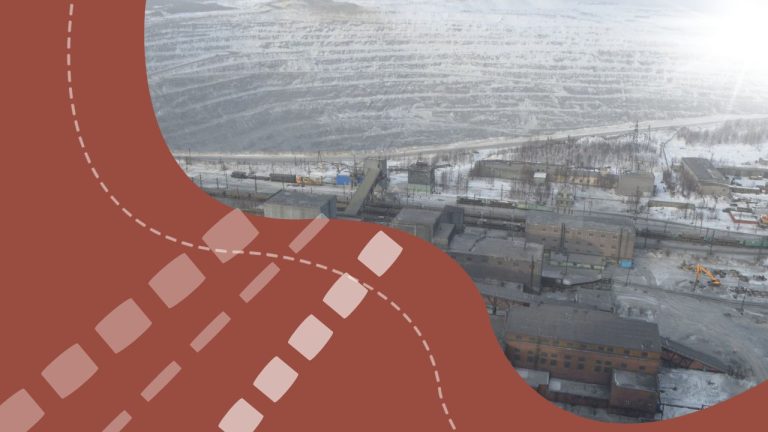
    Zijin Mining, a prominent Chinese mining company, announced its ambitious plans on Wednesday to enhance copper and gold operations in Serbia, aiming to position the Balkan nation as the primary copper producer in Europe. Chen Jinghe, the chairman of Zijin Mining, revealed the company’s strategy to achieve an annual production target of at least 250,000 tonnes of copper and 10 tonnes of gold from its Serbian operations, indicating a slight increase from the previous year. Emphasizing a shift towards underground mining development, Chen articulated the company’s future investment direction during a press briefing.

    Zijin Mining, renowned for its significant contributions to the gold and copper industry in China, solidified its partnership with Serbia’s RTB Bor mining operation in 2018. The move aligns with China’s broader economic engagement in Serbia and neighboring Balkan countries, reflecting Beijing’s concerted efforts to expand its economic influence across central and eastern Europe. The increasing significance of China to Serbia’s economy was underscored by the country’s Minister of Trade, who ranked China as Serbia’s second most vital economic partner after the EU. This sentiment anticipates a potential visit by Chinese President Xi Jinping later in the year.

    In terms of trade, Chinese-owned enterprises emerged as dominant exporters in Serbia, with Zijin Mining leading the pack, followed by Zijin Copper and the HBIS group. Together, these entities accounted for a notable share of Serbia’s total exports, contributing approximately 8.7 percent to the country’s export revenue in the previous year. Furthermore, Serbia witnessed a substantial influx of foreign investment in 2023, with China emerging as the foremost investor, injecting 1.37 billion euros into various sectors, consolidating its position as a key economic stakeholder in the nation.

    However, amidst governmental praise and economic advancements, communities residing near the expansive mining facilities in Bor have voiced persistent opposition to the projects, staging protests since January. Demonstrations frequently disrupt local transportation routes, reflecting ongoing tensions surrounding environmental concerns and community welfare.

  • Kazakhstan’s Colorful Metallurgical Industry Set for Expansion

    Kazakhstan’s Colorful Metallurgical Industry Set for Expansion

    Kazakhstan’s metallurgical sector anticipates the implementation of eight projects worth 169 billion tenge this year, involving the production of aluminum radiators, cathode copper, Dore alloys, and other products. These initiatives, upon full realization, are projected to create around 2000 job opportunities, as reported by the Project Implementation Monitoring and Analysis Directorate, QazIndustry.

    “When all eight projects reach their designed capacity, production volumes will amount to about 136 billion tenge, including plans to export products worth 71 billion tenge,” the statement reads.

    Currently, the metallurgical industry hosts 49 projects at various stages of implementation, including eight slated for 2024, with a total investment of 1.8 trillion tenge. The commencement of these productions is expected to provide employment to over 11,000 citizens, with approximately 7400 residing in rural areas and 377 in monotowns.

    Upon reaching full capacity, the projected production volume of all 49 projects will reach around 2.3 trillion tenge. Notably, over half of this amount, approximately 1.4 trillion tenge, is earmarked for export.

    In the previous year, the metallurgical sector saw the realization of five projects worth 26.8 billion tenge, resulting in the creation of 835 job opportunities. These projects encompassed the production of alloys of non-ferrous metals, Dore alloys, zinc products, among others.

    Kazakhstan’s metallurgical industry stands as one of the largest and leading sectors of the domestic economy, buoyed by a sufficient reserve of raw materials, including copper, zinc, nickel, lead, aluminum, gold, and silver ores.

    The majority of ongoing projects are concentrated in the Karaganda region and the city of Shymkent.

  • President of Uzbekistan Reviews Copper Mining and Processing Project in Collaboration with China

    President of Uzbekistan Reviews Copper Mining and Processing Project in Collaboration with China

    President Shavkat Mirziyoyev of Uzbekistan visited the site of a copper mining and processing project in cooperation with China, located in the Chust district of the Namangan region, on March 25. Geologic exploration is expected to commence as early as April. A representative of the company, Li Fang Yuan, stated that China Mining Energy Group, established in 2003 with assets totaling $32 billion and a workforce of 40,000 across 17 countries, engages in gold, copper, and aluminum mining.

  • Rio Tinto Affirms Commitment to Jadar Project Amid Environmental Concerns

    Rio Tinto Affirms Commitment to Jadar Project Amid Environmental Concerns

    Rio Tinto’s Country Head for Serbia, Marijanti Babic, expressed unwavering confidence in the Jadar project, emphasizing its potential to meet the highest environmental standards. In an interview with Novosti, she stressed the project’s significance, positioning it as one of Europe’s most promising lithium deposits, poised to elevate Serbia’s role in the global green transition. Babic underscored the necessity of adhering to Serbian laws and European Union regulations, particularly highlighting the introduction of a “battery passport” in Europe to ensure the sustainability of materials used in electric vehicle batteries. Addressing investment and job creation prospects, Babic revealed that the planned investment for the project amounts to 2.55 billion euros, with potential to create 3,500 jobs based on 2011 data. Moreover, she estimated that the state could earn approximately 180 million euros annually from taxes and mining rent, constituting about one percent of state budget revenues. While Babic clarified that no agreement on the project’s realization has been signed yet, only a memorandum of 2017 exists, outlining a framework for cooperation in its implementation.

  • Ulytau Region Plans to Open Precious Metals and Polymetallic Complex

    Ulytau Region Plans to Open Precious Metals and Polymetallic Complex

    Plans to establish a complex for precious metals and polymetals in the Ulytau region have been revealed by regional authorities. The project, expected to launch in 2026, aims to produce 0.72 tons of Dore alloy, 10.8 thousand tons of lead concentrate, and 4.3 thousand tons of zinc concentrate, according to information provided by the authorities. Projects defining water protection zones and strips along the river within the planned mining area, as well as mining work plans, have been developed, as stated by the government agency. The estimated cost of opening the complex is 3.57 billion tenge, with efforts underway to obtain a mining license. Once operational, the facility aims to employ 140 people.

  • Adriatic Metals BiH successfully produces first ore concentrate in Bosnia and Herzegovina’s Vares project

    Adriatic Metals BiH successfully produces first ore concentrate in Bosnia and Herzegovina’s Vares project

    Adriatic Metals BiH proudly announced on February 27th, 2024, the successful production of the inaugural ore concentrate within the Vares project in Bosnia and Herzegovina. The Vares ore processing facility is poised to incrementally enhance its capacity in the following months, with a target processing capacity of around 65,000 tons per month expected by the fourth quarter of 2024.

    Paul Cronin, the general manager of Adriatic Metals BiH, expressed his satisfaction with the achievement, stating, “I am delighted to announce another significant milestone in the production of the first concentrate within the Vares Project.” He emphasized the utilization of advanced technology in designing and constructing the ore processing plant, with a strong commitment to adhering to the highest health and safety standards. Cronin extended his appreciation to the dedicated team for their diligent efforts.

    This milestone signifies a notable success for Adriatic Metals BiH and holds significance for the local community in Vares and the wider state of Bosnia and Herzegovina. The Vares project emerges as one of the most substantial post-war investments in the country, offering considerable economic and social benefits.

    Throughout the project, Adriatic Metals BiH has prioritized local employment, collaboration with regional suppliers, engagement with authorities at all levels, and the adoption of state-of-the-art mining technology. This holistic approach not only drives economic growth but also ensures enduring advantages for the Vares community well beyond the mine’s operational lifespan.

    Looking to the future, the company aims to further optimize the processing plant and expand underground operations in the ensuing months to achieve the targeted nominal production capacity by the fourth quarter of 2024.

    Excerpt: Adriatic Metals BiH celebrates the successful production of the inaugural ore concentrate at the Vares project, marking a significant milestone in Bosnia and Herzegovina’s mining industry.


  • Navoi Gold Attracts Global Investors, Showcasing Uzbekistan’s Mining Potential  Main Body:

    Navoi Gold Attracts Global Investors, Showcasing Uzbekistan’s Mining Potential Main Body:

    Uzbekistan’s mining sector took center stage as Navoi Gold orchestrated a compelling international investor meeting at its Tashkent offices, drawing significant attention from prominent global investment firms. With JP Morgan Chase Bank in Uzbekistan lending support, the event saw participation from key entities such as Eaton Vance, Colchester Global, BlueCrest Capital, Pictet, and Actia.

    Emphasizing Navoi Gold’s commitment to excellence and innovation, Chief Transformation Officer E. Antonov and Chief Financial Officer J. Khasanov provided a deep dive into the company’s resilient performance, strategic transformation initiatives, and the integration of global best practices in its operations.

    Antonov stated, “Our vision aligns with global standards, aiming not only to enhance our operational efficiency but also to contribute significantly to Uzbekistan’s economy.”

    The discourse covered crucial topics, including technological advancements in mining, sustainability initiatives, and Navoi Gold’s strategic expansion plans. Investors expressed optimism about Uzbekistan’s mining sector and the broader economic landscape, acknowledging the positive dynamics and growth potential within the country.

    Navoi Gold actively seeks global partnerships, solidifying its position as a pivotal contributor to the economic development of the region.

  • Five Successful Mining Enterprises of Tajikistan

    Five Successful Mining Enterprises of Tajikistan

    Over the past 5 years, about 409 million somoni or $ 82.8 million of investments have been attracted to the mining industry: to whom do they go?

    The mining industry of Tajikistan, which in the Soviet years served as a raw material base for the processing industry of other regions, is today focused on meeting the needs of its own economy.

    The share of mining in the total production of the country is 26%.

    Zarafshon

    1/1

    Zarafshon LLC is owned by the Government of Tajikistan in conjunction with the “Zijin” Mining Company. Tajikistan has a share of 30%, China – 70%. One of the largest enterprises of the country’s gold mining industry, which has an almost completed technological cycle: mining, processing and metallurgy – refining gold to produce finished gold bars.

    Pakrut

    1/1

    The new gold mining company in Tajikistan, Pakrut LLC (Vahdat), which is 100% owned by a Chinese company in China Nonferrous Gold Limited, began the extraction of gold from concentrate in 2016.

    Aprelevka

    1/1

    A joint Tajik-Canadian enterprise Aprelevka is located in the north of Tajikistan in the village of Kansai, Sughd region.

    Until 1985, lead-zinc ore was mined here, then the Kairakkum gold mine was organized on the basis of gold deposits, and in 1995, the Aprelevka joint venture was established.

    Adrasman

    1/1

    It was created in 1970 on the basis of the Karamazar mine, later, in 1994 it was renamed the Adrasman mining and processing complex.

    The plant specializes in the mining and processing of silver lead ores to produce lead concentrate.

    Anzob

    1/1

    Anzob Mining Camp (now a joint Tajik-American limited liability company) is located in the Sughd region on the northern slope of the Gissar Range of Central Tajikistan. It specializes in underground mining and processing of ores with the release of mercury-antimony concentrate.

    The design capacity of the enterprise is 700 thousand tons of ore per year with the production of more than 30 thousand tons of mercury-antimony concentrate. Actual ore mining and processing capacity averages 350 thousand tons per year.

    Подробнее: https://asiaplustj.info/ru/node/271604

  • Armenian mining companies offer government some of their shares – minister

    Armenian mining companies offer government some of their shares – minister

    YEREVAN, April 20. /ARKA/. Some of Armenia-based mining companies started offering part of their shares to the government, Territorial Administration and Infrastructure Minister Gnel Sanosyan said Thursday.

    He said an example of mutually beneficial private-public sector cooperation is the Zangezur Copper-Molybdenum Combine, which manages the country’s largest deposit, the Kajaran Copper-Molybdenum Mine.

    Speaking at an extraordinary session of the National Assembly Sanosyan said the Russian GeoPromining company after acquiring 60 percent of its shares in the fall of 2021, donated a quarter of its stake to the Armenian government.

    He said the amount of taxes paid by mining companies rose from 48 billion drams in 2021 to 144 billion drams in 2022.

    ‘The rise was partly due to the rise in world metal prices. But on the other hand it was also due to the improvement of the management,” Sanosyan said.

    The minister said the Amulsar gold project followed suit. The Lydian International company, which develops the gold mine through its subsidiary Lydian Armenia, donated 12.5% of the latter’s shares to the Armenian government.

    “We already have cases when other companies offer the government some of their shares. They see that the government is ready to help them in a number of issues,” Sanosyan said.

    Zangezur combine

    The Zangezur Copper-Molybdenum Combine is one of the largest companies in Armenia, which has topped for years the list of Armenia’s 1000 largest corporate taxpayers. The combine is located in the town of Kajaran, developing the Kajaran copper-molybdenum deposit.

    According to experts, there is enough copper ore for the combine to develop the deposit for another 150 years. The shareholders of the plant are the Industrial Company, which is a 100% subsidiary of GeoPromining Armenia and the Armenian government with 21.9% stake.

    Amulsar project

    Earlier this year Armenian Economy Minister Vahan Kerobyan, Lydian Armenia company’s board member Jeffrey Coach, and a senior executive of the Kazakhstan-based Eurasian Development Bank (EDB signed a memorandum of understanding in Yerevan to restart the Amulsar project.

    The company will have to raise $250 million for finishing the construction of mining and smelting facilities at Amulsar. To that end Lydian Armenia will borrow $100 million from the EDB and another $50 million from an Armenian bank.

    The company plans to produce 7 tons of gold per year. Armenian government will receive 12.5% of the new company’s shares in return for its pledge to manage their risks. The Lydian Armenia is expected also to pay between 30 and 40 billion drams ($75-$100 million) in various taxes each year and create hundreds of jobs.