Tag: economic cooperation

  • Ministers of Azerbaijan and Hungary Discuss Strengthening Economic Partnership

    Ministers of Azerbaijan and Hungary Discuss Strengthening Economic Partnership

    Azerbaijan’s Minister of Economy Mikayil Jabbarov and President of SOCAR Rovshan Najaf met with Hungary’s Minister of Foreign Affairs and Trade Péter Szijjártó. According to the Ministry’s report to AZERTAC, it was emphasized that economic ties between the countries are continuously developing due to the special importance placed by the leadership of both countries on fostering relations and effectively utilizing existing potential.

    It was noted that the second strategic partnership document signed in January last year, along with more than 50 documents signed in the areas of investment promotion, economic cooperation, prevention of double taxation, and other fields, have created a solid foundation for expanding cooperation in various directions.

    The discussion included issues arising from the Cooperation Agreement between the Azerbaijan Investment Company OJSC and the Hungarian company Hell Energy, as well as the current situation. The parties exchanged views on joint projects that strengthen mutual economic ties, active cooperation in the fields of energy, transport, pharmaceuticals, activities of Hungarian companies in Azerbaijan, and the development of investment partnerships.

    During the meeting, a document was signed for the purchase of a stake in the Shah Deniz project by the Hungarian company MVM. It was noted that this document will further strengthen the economic and energy partnership between the two countries.

  • China’s Strategic Dance: Unveiling the Depths of Sino-Kazakh Economic Cooperation

    China’s Strategic Dance: Unveiling the Depths of Sino-Kazakh Economic Cooperation

    In a narrative often oversimplified by the Belt and Road Initiative, China’s economic entwinement with Kazakhstan goes beyond a mere node in a transregional strategy. While Kazakhstan undeniably serves as a linchpin in China’s westward connectivity ambitions, reducing its role solely to that obscures the nuanced interplay between Chinese adaptability and Kazakhstani agency.

    A prime example is the symbiotic relationship forged in uranium extraction and nuclear fuel supply. Contrary to assumptions, Chinese entities find themselves navigating Kazakhstan’s terms, illustrating a power dynamic that challenges clichéd perceptions.

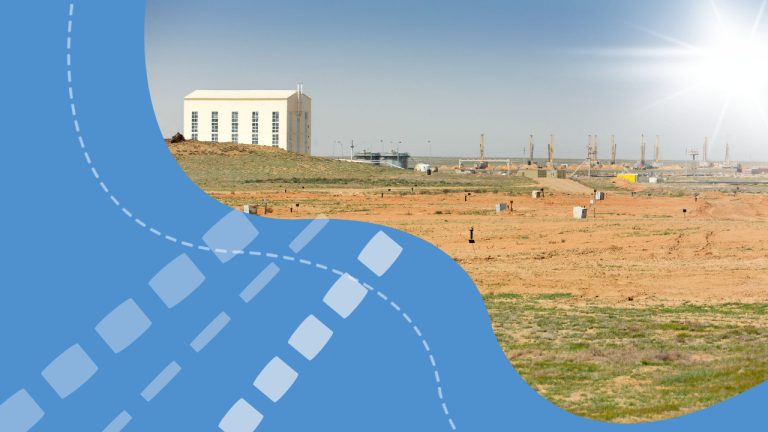
    Kazakhstan reigns as the globe’s leading natural uranium producer, commanding 43% of the market in 2022. Its prowess stems from abundant resources and cost-efficient extraction methods, notably in-situ leaching (ISL). Kazatomprom, the national nuclear company, wields formidable influence, leveraging its dominance to modernize the sector and attract foreign investment.

    Over two decades, Kazakhstan’s uranium output skyrocketed, facilitated by strategic alliances with China. Despite producing no nuclear energy domestically, Kazakhstan’s ambitions align with China’s voracious demand for uranium, driven by an ambitious nuclear energy expansion unmatched by the West.

    China, with its burgeoning civilian reactor fleet, employs a multifaceted strategy to secure uranium supply, encompassing domestic mining, overseas ventures, and strategic reserves. Recent investments in domestic exploration signal China’s intent to reduce reliance on foreign suppliers, with Kazakhstan playing a pivotal role in historical uranium imports.

    This intricate dance between China and Kazakhstan underscores a narrative far richer than the Belt and Road rhetoric suggests, revealing a strategic partnership shaped by mutual interests and strategic maneuvering.

  • Experts Assess Future of US Relations with Central Asian Countries

    Experts Assess Future of US Relations with Central Asian Countries

    American experts have shared their assessments on how the relationship between the United States and Central Asian countries, which already collaborate in various formats, will develop. The opinions of these experts are detailed in a report by a correspondent of the Kazinform agency.

    A new impetus to strengthen political ties between the US and Central Asian countries was gained in September 2023 at the inaugural “C5+1” summit during the UN General Assembly in New York. During this summit, President Joe Biden met with the leaders of Kazakhstan, Kyrgyzstan, Tajikistan, Turkmenistan, and Uzbekistan. Further development occurred in the economic sphere with the involvement of both public and private sectors at the first “B5+1” Forum held in Almaty from March 13 to 15, aiming to improve the business environment between the US and Central Asia. Key experts from influential American analytical centers provided assessments on this event and the future prospects of US relations with Central Asian countries.

    Given Helf, a Senior Expert on Central Asia at the US Institute of Peace, positively evaluated the “B5+1” Forum as a result of a successful meeting between US presidents and Central Asian leaders in New York the previous year. The expert believes that all Central Asian countries are keen on attracting American investments. However, the question remains as to how Central Asian countries will create the conditions for this, what laws will be enacted to provide guarantees and stimulate American business interest in the region. According to Helf, the next stage in the development of the political “C5+1” and economic “B5+1” formats will involve expanding US cooperation with the five Central Asian countries in the security sphere, which includes a wide variety of cooperation forms ranging from protecting the interests of participant countries and companies to logistics and climate change.

    The transit corridor holds significant importance not only for sustainable economic growth in Central Asia but also for the transit of goods between Europe and China.

    Ralph Winnie, Vice President of the Eurasia Center, believes that the US and Central Asian countries are moving in the right direction. Developed American business will contribute to the development of small and medium-sized enterprises, job creation, and become an engine for economic growth in the region. “B5+1” serves as a unique platform for establishing contacts in the business environment, seeking partnerships between companies in Central Asia and the United States. According to the expert, professional contacts will develop from personal relationships.

    In Central Asia, there must be a strong security component for any kind of business in the region. In this regard, the rule of law, tax incentives, and other stimuli will be a key factor in advancing economic ties and attracting foreign investments.

    In these directions, the US will focus its attention as part of the development of multi-format cooperation with Central Asian countries.

    Ariel Cohen, Managing Director of the Energy, Economic Growth, and Security Program at the International Tax and Investment Center, noted that it is important to fill the relationship between the United States and Central Asia with substantial content and value. While the development of the economic aspect is crucial, doing business with Western companies may face some challenges. The expert reminded that the Central Asian region lacks access to the sea and is far from international markets. Consequently, this affects the cost of imported or exported goods and resources, making them less competitive. However, rare earth elements, abundant in the region, remain in demand as they do not require large volumes. Kazakhstan’s Geological Survey is highly advanced in digitizing information and ensuring its availability to potential Western investors. According to the expert, for the successful development of the “B5+1” format, measures should be taken to improve container transportation speed, reduce bureaucracy for transporting goods across multiple borders, and increase logistics capacity.