Tag: economic cooperation

  • UK-Kazakhstan Strategic Partnership: A New Era of Economic Cooperation

    UK-Kazakhstan Strategic Partnership: A New Era of Economic Cooperation

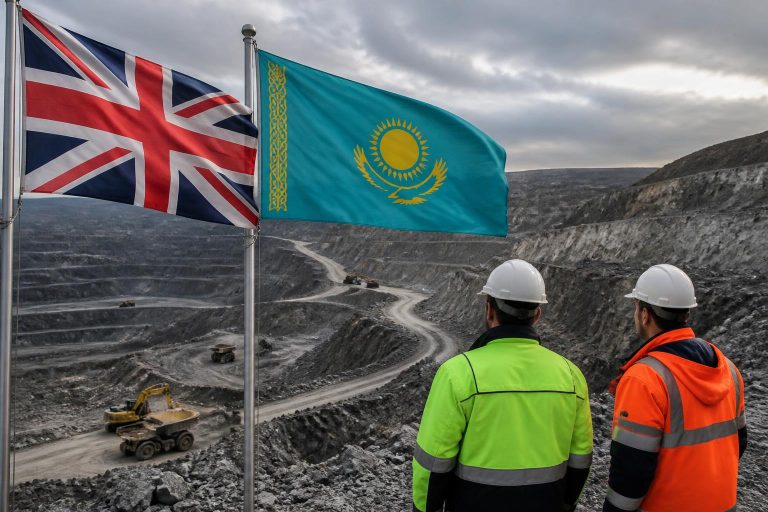
    The recent entry into force of the Strategic Partnership and Cooperation Agreement (SPCA) between the United Kingdom and Kazakhstan marks a significant milestone in the bilateral relationship, with implications that extend beyond mere diplomacy. British Ambassador to Kazakhstan, Sally Axworthy, emphasised that the SPCA is not just a ceremonial agreement but a ‘signal of intent’ that opens avenues for collaboration across various sectors, including critical minerals, energy, education, and technology. This agreement is poised to reshape how the two nations work together, fostering a more integrated economic partnership.

    As global competition for critical minerals intensifies, Kazakhstan’s mineral wealth positions it as a key player in the evolving landscape of resource management and supply chain resilience. The SPCA formalises a shift in focus from traditional sectors to a broader range of industries, reflecting the changing priorities of both countries. Notably, the agreement facilitates discussions around value creation and processing of resources, moving beyond mere extraction to encompass technological advancements and higher-value production. A prime example of this shift is the recent $107 million agreement between the UK’s Maritime House and Kazakhstan’s Zhezkazganredmet, aimed at expanding cooperation in rhenium recycling, a material crucial for aerospace manufacturing.

    Education plays a pivotal role in this evolving partnership, with the UK emerging as a leading partner in higher education for Kazakhstan. The Bolashak Scholarship programme has fostered strong ties, with many Kazakh professionals educated in the UK. The establishment of British university campuses in Kazakhstan signifies a commitment to long-term investment in human capital, aligning educational initiatives with industrial cooperation. As both nations navigate this new phase of their partnership, the SPCA serves as a foundational framework for future collaboration, with the potential to enhance economic ties and foster sustainable growth.


  • Trump Hails “Incredible $100 Billion Deal” Between the U.S. and Uzbekistan

    Trump Hails “Incredible $100 Billion Deal” Between the U.S. and Uzbekistan

    The United States and Uzbekistan have signed a series of major agreements covering critical minerals, agriculture, infrastructure, aviation, and technology, marking what U.S. President Donald Trump called an “incredible trade and economic deal worth $100 billion.”

    The signing ceremony took place on November 6 in Washington, D.C., following a business roundtable attended by Uzbek President Shavkat Mirziyoyev and U.S. Secretary of Commerce Howard Lutnick. The deals involve both government bodies and major American corporations, signaling a new phase of strategic economic cooperation between the two nations.


    Key Agreements Signed

    • Rare Earth Elements Cooperation:
      Agreement between the Uzbek Ministry of Geology and Denali Exploration Group on the exploration and production of rare earth elements.

    • Critical Minerals Projects:
      The Uzbek Reconstruction and Development Fund signed an accord with Re Element Technologies to develop rare earth and critical metals projects.

    • Pumping Station Modernization:
      Partnership between the Ministry of Investment, Industry, and Trade and Flowserve Corporation to modernize Uzbekistan’s water infrastructure.

    • Water-Saving Technologies:
      Agreement between the Ministry of Agriculture and Valmont Industries Inc. on implementing advanced irrigation and water-efficient technologies.

    • Artificial Intelligence Cooperation:
      Memorandum between the Ministry of Digital Technologies and Palo Alto Networks to expand collaboration in artificial intelligence and cybersecurity.

    • Aviation Contract:
      Uzbekistan Airways signed a major expansion deal with Boeing, increasing its firm order for 787-9 Dreamliner aircraft from 14 to 22 jets.

    • Agricultural Trade:

      • Contract between Datacrop (Uzbekistan) and Louis Dreyfus Company (U.S.) for the supply of soybeans and soybean meal.

      • Agreement between Uzsanatexport and Cargill for the supply of cotton.


    Trump’s Statement

    On his Truth Social page, President Donald Trump announced the deal, calling it “one of the most significant trade achievements” between the two countries:

    “I am pleased to announce an incredible trade and economic agreement between the United States and Uzbekistan. Over the next three years, Uzbekistan will purchase and invest nearly $35 billion, and over the following decade more than $100 billion, in key U.S. industries including critical minerals, aviation, automotive components, infrastructure, agriculture, energy, chemicals, and information technology,” Trump wrote.

    He also thanked President Shavkat Mirziyoyev for his leadership and partnership:

    “I want to thank the highly respected President of Uzbekistan, Shavkat Mirziyoyev. We look forward to a long and fruitful relationship between our nations.”


    Strategic Context

    The landmark agreements underline Uzbekistan’s expanding cooperation with U.S. industries as it pursues rapid modernization across its energy, mining, and technology sectors.

    For Washington, the deal strengthens access to critical raw materials such as rare earths and lithium, aligning with broader U.S. efforts to diversify supply chains away from China.

  • Uzbek President Mirziyoyev Meets U.S. Business Leaders in Washington to Deepen Economic Partnership

    Uzbek President Mirziyoyev Meets U.S. Business Leaders in Washington to Deepen Economic Partnership

    At the conclusion of his working visit to Washington, D.C., President of Uzbekistan Shavkat Mirziyoyev met with representatives of major U.S. corporations, investment funds, and financial institutions to discuss expanding economic cooperation between the two countries.

    The meeting was attended by U.S. Secretary of Commerce Howard Lutnick, Special Assistant to the President Ricky Gill, Special Envoy Paolo Zampolli, and Deputy Secretary of Agriculture Stephen Vaden. Senior executives from leading American companies — including Traxys, FLSmidth, McKinsey, Meta, Google, Amazon, Boeing, Air Products, Axiom Space, Cove Capital, Freeport-McMoRan, Orion CMC, Cargill Cotton, John Deere, Honeywell, Valmont Industries, and Flowserve Corporation — also took part in the discussions.

    President Mirziyoyev highlighted that trade turnover between Uzbekistan and the United States has quadrupled over the past eight years, with more than 300 American companies now operating in Uzbekistan. He emphasized that this growth marks only the beginning of a new stage in bilateral cooperation, and that specific projects would be further discussed during his upcoming meeting with U.S. President Donald Trump.

    The Uzbek leader outlined priority areas for strategic partnership, including renewable energy, critical minerals, and digital transformation. By 2030, Uzbekistan aims to build a next-generation energy system with 18–20 gigawatts of renewable capacity, generating more than half of its electricity from solar and wind sources.

    In partnership with the United States, Uzbekistan plans to develop extraction and advanced processing of uranium, copper, tungsten, molybdenum, and graphite, establishing secure supply chains and adopting U.S. technologies in resource processing.

    The President also highlighted Uzbekistan’s ambitious transport infrastructure modernization program, with $12 billion in planned investments by 2030 to upgrade roads, railways, terminals, and airports.

    Digital cooperation is also expanding through joint initiatives with Google, Meta, and NVIDIA, including the launch of Apple Pay and Google Pay, the creation of a Digital Academy, and a nationwide startup hub network.

    Financial support for these initiatives will involve the U.S. International Development Finance Corporation (DFC) and the U.S. Export-Import Bank (Exim Bank).

    Concluding the meeting, President Mirziyoyev reaffirmed Uzbekistan’s commitment to support American investors and maintain the country’s reputation as a reliable and stable partner.

    “Uzbekistan remains a dependable partner and a guarantor of success for foreign investors,” the President said.

  • Uzbekistan and Austria Deepen Ties with Focus on Energy, Digitalization, and Infrastructure

    Uzbekistan and Austria Deepen Ties with Focus on Energy, Digitalization, and Infrastructure

    On 20 May, the Ministry of Economy and Finance of Uzbekistan held high-level talks with an Austrian delegation led by Andreas Reichhardt, Deputy Minister of Finance and Director General for Telecommunications, Postal Services, and the Mining Industry of Austria. The meeting underscored a mutual commitment to expanding economic cooperation and advancing practical joint initiatives.

    Representatives from both nations discussed the implementation of priority bilateral projects, focusing on enhancing energy efficiency, modernizing heating systems, and applying innovative technologies across key sectors of Uzbekistan’s economy. The sides agreed to prepare and sign a memorandum of cooperation in the energy sector.

    The Austrian delegation proposed closer collaboration in the digitalization of small and medium-sized enterprises (SMEs), aiming to support sustainable business growth. Additionally, detailed discussions were held on the modernization of tax audit and administration systems, with a goal to boost transparency, oversight, and digital governance.

    Cybersecurity, legal reforms, and institutional strengthening in the area of information security were also on the agenda, reflecting a shared interest in digital resilience. The Uzbek side expressed keen interest in leveraging Austria’s experience with energy-saving technologies and smart urban infrastructure as part of the country’s broader development strategy.

    This dialogue marks a pivotal step toward deepening economic and technological ties between Uzbekistan and Austria, aligning both countries around shared goals of innovation, efficiency, and sustainable growth.

  • Ukraine Ratifies Agreement with the US for Access to Natural Resources

    Ukraine Ratifies Agreement with the US for Access to Natural Resources

    Ukraine’s parliament has ratified a landmark agreement with the United States, paving the way for enhanced American access to the country’s natural resources. This move is seen as part of President Volodymyr Zelenskiy’s broader strategy to improve diplomatic and economic ties with former US President Donald Trump.

    The agreement, reached after prolonged negotiations, saw Washington abandon its demand for the repayment of billions of dollars in aid provided to Kyiv since the onset of Russia’s invasion over three years ago. In a decisive vote on Thursday, 338 Ukrainian lawmakers endorsed the ratification, signaling strong political support for the initiative.

    The deal grants the US privileged access to investment opportunities in Ukraine’s resource sectors, including aluminum, graphite, oil, natural gas, and other strategic deposits. This is viewed as a critical step to secure US favor as Trump advocates for an end to the conflict that would potentially benefit Moscow.

    Additionally, the agreement outlines the possibility of the US using future military aid as contributions to a joint investment fund, further solidifying economic cooperation between the two nations. As Russia maintains pressure along a thousand-kilometer frontline, Ukraine appears determined to leverage its natural assets to bolster international alliances and economic resilience.

  • Uzbekistan and Slovakia Hold Inaugural Intergovernmental Meeting to Boost Economic Cooperation

    Uzbekistan and Slovakia Hold Inaugural Intergovernmental Meeting to Boost Economic Cooperation

    The first meeting of the Uzbek-Slovak Intergovernmental Commission on Economic Cooperation took place in Tashkent, according to Trend, citing Uzbekistan’s Ministry of Investment, Industry, and Trade. The session was co-chaired by Vladimir Simonek, Slovakia’s Deputy Minister of Economy, and Shokhrukh Gulamov, Uzbekistan’s Deputy Minister of Investment, Industry, and Trade.

    The discussions focused on deepening economic collaboration in key sectors, particularly renewable energy, agriculture, and critical raw materials. Special attention was given to geological exploration, development, and processing of rare and rare earth minerals, indicating both countries’ commitment to enhancing resource-based cooperation.

    At the conclusion of the meeting, both sides signed a final protocol that outlined the agreements reached and reaffirmed their commitment to furthering bilateral relations. They also agreed to hold the next session of the Commission in Bratislava, Slovakia.

    Additionally, during a separate meeting in March 2025, Uzbekistan and Slovakia reached an agreement to establish a Business Council aimed at strengthening trade and economic relations between the two nations. This initiative is expected to facilitate more effective business cooperation and open new opportunities for mutual investment.

  • Kyrgyz Prime Minister Calls for Greater US Investment During Washington Visit

    Kyrgyz Prime Minister Calls for Greater US Investment During Washington Visit

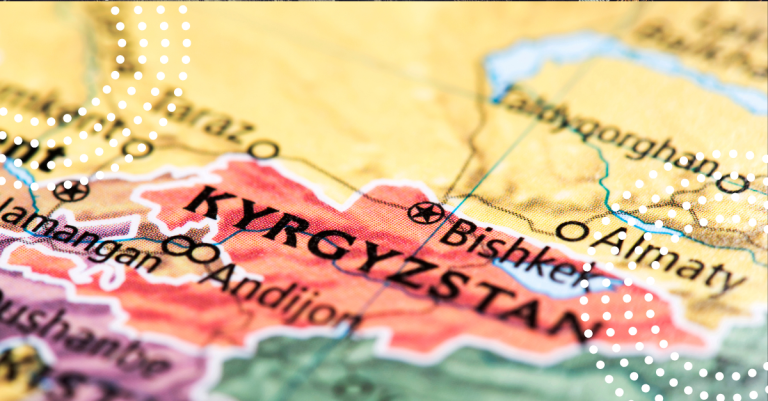
    During his working visit to Washington, Prime Minister Adylbek Kasymaliev participated in a roundtable with members of the Kyrgyz-American Business Council, where he urged American companies to increase their investments in Kyrgyzstan’s economy, the Kyrgyz government reported.

    Kasymaliev emphasized that direct foreign investments from the United States serve as a significant driver of economic growth for the country. He assured that Kyrgyzstan is ready to offer favorable conditions for investors, including liberal tax policies, access to free economic zones, and markets with a combined population of over 500 million people.

    “Kyrgyzstan today is a country of new opportunities and prospects, with a dynamically developing economy and open policies. We are prepared to provide comprehensive support for investment projects at all stages of implementation and offer the necessary state assistance,” Kasymaliev stated.

    He highlighted priority sectors for investment, including:

    • The launch of Kambar-Ata Hydroelectric Power Plant-1;

    • Tourism development, supported by a visa-free regime and the country’s unique natural landscapes.

    “Mining and mineral processing are also priority sectors. Kyrgyzstan is ready to offer reliable and environmentally responsible partnerships in the exploration and processing of critical resources,” Kasymaliev added.

    The Prime Minister expressed confidence in expanding Kyrgyz-American economic cooperation and invited US entrepreneurs to visit Kyrgyzstan to assess investment opportunities firsthand.

  • Ukraine and U.S. Seal Controversial Minerals Deal After Tense Talks

    Ukraine and U.S. Seal Controversial Minerals Deal After Tense Talks

    Ukraine and the United States signed a landmark minerals and profit-sharing agreement on April 30 in Washington, marking the end of months of turbulent negotiations and the beginning of a new phase of economic cooperation focused on reconstruction.

    The agreement gives the U.S. preferential access to future Ukrainian mineral deals and establishes a joint investment fund for rebuilding Ukraine’s war-torn infrastructure. It also secures Ukraine’s full sovereignty over its natural resources, following President Volodymyr Zelensky’s refusal to sign earlier versions that would have required Ukraine to repay past military aid or relinquish control of key assets.

    “This is a win for Ukraine,” said Prime Minister Denys Shmyhal. “We will attract major investments, secure growth, and remain in control of our critical minerals.”

    The U.S. had previously pushed for terms granting it up to 50% of Ukraine’s revenues from rare earths, oil, and gas, and even a stake in infrastructure like ports. President Donald Trump reportedly demanded repayment of $300 billion in aid and up to $500 billion in future mineral revenue — conditions Kyiv firmly rejected.

    Only after Zelensky sent Trump a letter expressing willingness to negotiate and praising U.S. support did tensions ease. “Nobody wants peace more than the Ukrainians,” Trump quoted Zelensky as writing, using the letter to bolster support for the deal during a speech to Congress.

    The final agreement establishes a joint fund where both nations will equally manage proceeds from newly issued licenses for critical minerals. For the first ten years, profits will be reinvested into Ukraine’s infrastructure and economic development. Past revenues and aid are excluded, and there are no debt obligations.

    Ukraine’s mineral wealth includes Europe’s largest lithium deposits, 20% of global graphite resources, and significant reserves of rare earth elements vital to defense and green technologies. But much of this wealth lies in or near Russian-occupied territories, making future exploitation a complex and risky endeavor.

    Despite securing equal partnership terms and full resource control, the deal offers no U.S. security guarantees. Critics say the agreement may remain symbolic if the war drags on.

    Still, U.S. Treasury Secretary Scott Bessent called the agreement a signal to Russia of Washington’s enduring support for a “free, sovereign, and prosperous Ukraine.”

  • Montenegro and Germany Discuss Green Transition and Sustainable Resource Management

    Montenegro and Germany Discuss Green Transition and Sustainable Resource Management

    Montenegro’s Minister of Mining, Oil, and Gas, Admir Šahmanović, and Germany’s Ambassador, Peter Felten, held a meeting to strengthen bilateral relations and focus on Montenegro’s green transition and resource sustainability. The two officials emphasized the importance of learning from Germany’s experience in environmental policies while addressing the challenges Montenegro faces on this path.

    Discussions revolved around the sustainable exploitation of mineral resources and the valorization of natural assetsin line with green economy principles. Šahmanović highlighted key development projects in the mining, oil, and gas sectors, stressing the urgency of creating strategic documents to guide these industries amid shifting geopolitical dynamics.

    The Minister also underscored the importance of ensuring a stable supply of oil derivatives, which he described as a critical priority for Montenegro. He further noted the country’s significant potential in mineral resources, emphasizing that development must adhere to European environmental standards and prioritize public health.

    Šahmanović identified job creation as a key benefit of advancing economic activities in the region, particularly in Montenegro’s north, which has long struggled with population outflow. He called for policies to retain young people through sustainable economic opportunities.

    The meeting concluded with a shared commitment to deeper cooperation and the exchange of experiences, aiming to create a sustainable and prosperous future for both countries.

  • Kazakhstan Secures $370 Million in Hungarian Investments

    Kazakhstan Secures $370 Million in Hungarian Investments

    Since 2005, Kazakhstan has attracted $370 million in Hungarian investments, President Kassym-Jomart Tokayevannounced during a joint press conference with Hungarian Prime Minister Viktor Orbán in Budapest, as reported by Trend.

    The president noted a growing interest among Hungarian companies in investment opportunities within Kazakhstan. Key discussions were held with leaders from major firms such as MOL, OTP Group, and Gedeon Richter. Highlighting this partnership, Kazakhstan signed an agreement with UBM Holding to construct three feed production plants worth $62 million.

    Tokayev emphasized the potential for collaboration in sectors like rare metals mining and processing, water resource management, and agriculture. He outlined priorities including trade diversification, adopting cutting-edge technologies, and enhancing partnerships in energy, digitalization, and transport. These initiatives, supported by the Kazakh-Hungarian Intergovernmental Commission and Strategic Council, aim to deepen economic and investment ties.