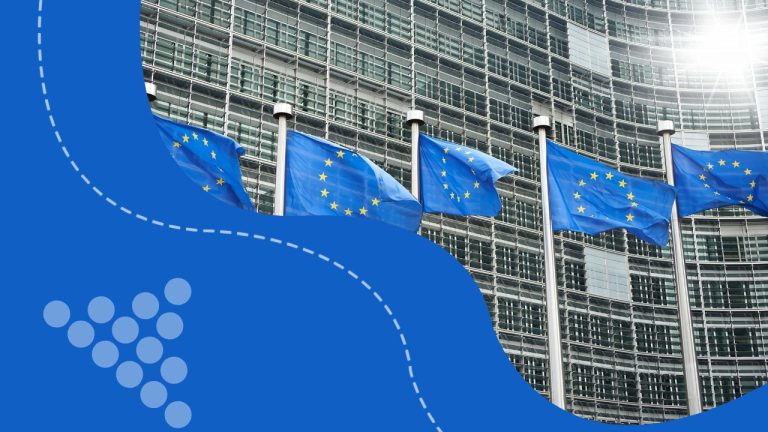
- In March 2020, the European Commission unveiled the Circular Economy Action Plan (CEAP), marking a significant milestone in Europe’s journey towards a sustainable and circular economy. Complemented by the proposed Ecodesign and Sustainable Product Regulation (ESPR) in March 2022, these initiatives underscore the EU’s commitment to addressing environmental challenges while promoting economic growth.
Main Body:
- Circular Economy Action Plan (CEAP)
- Aims to foster a sustainable and circular economy in Europe.
- Integrates decarbonization efforts with circular economy principles and digitalization.
- Focuses on innovative circular business models to drive economic growth.
- Seeks to reduce dependence on raw material imports and enhance industry competitiveness.
- Ecodesign and Sustainable Product Regulation (ESPR)
- Enhances environmental performance of products throughout their life cycle.
- Focuses on reducing carbon footprint, resource use, and promoting product durability and recyclability.
- Advocates for circular economy practices in addressing critical raw materials (CRMs).
- Emphasizes extended producer responsibility and product longevity.
- Digital Product Passport (DPP)
- Facilitates traceability of product information throughout its life cycle.
- Includes details relevant to CRM supply chains, promoting transparency and accountability.
- Sets the stage for potential mandatory requirements and product recyclability standards.
- Circular Economy Action Plan (CEAP)
Tag: decarbonization
-

Advancing Sustainability: The European Union’s Circular Economy Action Plan and Sustainable Product Regulation
-

EU Commission Approves €1.3 Billion State Aid for ArcelorMittal’s Green Steel Initiative
The European Commission announced on Friday its approval of €1.3 billion ($1.41 billion) in state aid from Germany to support steel producer ArcelorMittal in its efforts to decarbonize a portion of its production processes.
Stating that the aid was essential to promote the production of environmentally friendly steel, the commission deemed it necessary and fitting. It emphasized that the anticipated positive impacts, particularly in terms of reducing carbon emissions, outweighed any potential negative effects on competition and trade within the EU
-

ArcelorMittal and French Government Invest €1.8 Billion to Decarbonize Dunkirk Steel Plant
ArcelorMittal SA, the world’s leading steel and mining company, in partnership with the French government, has announced an ambitious €1.8 billion investment to decarbonize its steel plant in Dunkirk, France. The move is a significant stride in the global fight against climate change, poised to reduce France’s industrial carbon emissions by a substantial 6%.
Investment Details
The colossal investment will fund the construction of two electric furnaces and a direct reduction plant at the Dunkirk facility. The furnaces will replace existing blast furnaces, drastically reducing the carbon generated by the company’s steel production. The French state’s contribution to this transformative project could amount to as much as €850 million.
A Strategic Win
The project is not only a win for the environment but also a strategic triumph for France. The country has successfully secured this major investment in decarbonization from ArcelorMittal, outmaneuvering competing nations such as Belgium, Germany, and Spain. Bruno Le Maire, France’s Finance Minister, emphasized the economic and ecological significance of this investment for France.
Long-term Nuclear Power Supply Contract
As part of the initiative, ArcelorMittal also plans to sign a letter of intent with Electricite de France SA (EDF) for a long-term supply contract of nuclear power. This contract will further promote decarbonization efforts, underlining the commitment of both ArcelorMittal and France to create a sustainable future. Le Maire, recently reappointed to his ministerial role with an expanded portfolio that includes energy, is set to visit EDF’s nuclear plant in Gravelines and the Dunkirk steel factory to further champion this investment.
EDF, a key player in the nuclear energy sector, also has plans for expansion. The company intends to construct two additional reactors at the Gravelines nuclear site, signifying a growing trend towards cleaner, nuclear-powered industrial operations.
In summary, the substantial investment by ArcelorMittal and the French government in decarbonizing the Dunkirk steel plant is a significant step towards reducing France’s industrial carbon footprint. It reflects the broader efforts by both parties to curb CO2 emissions, demonstrating their commitment to a greener, more sustainable future.
-

EU carbon price to hit €400 mark with 90% climate goal: analysts
In a display of strong commitment to ambitious climate policies, the European Union’s new climate commissioner, Wopke Hoekstra, has affirmed his support for a 90% reduction in net greenhouse gas emissions by 2040. This declaration, made during a Parliament hearing earlier this week, has garnered backing from the Parliament’s environment committee and has led to Hoekstra’s formal confirmation in his new role.
The 2040 target for greenhouse gas reductions will have a significant impact on the supply of CO2 allowances in the EU’s emissions trading scheme, which imposes limits on carbon emissions from large industrial emitters. Financial analysts predict that a 90% reduction target for 2040 will push EU carbon prices above €400 by that time, according to researchers at the London Stock Exchange Group (LSGE).
Currently, carbon prices on the EU ETS stand at €81 per tonne, reaching a peak of €100/t in February of this year. LSGE’s analysis suggests that with the current 2030 decarbonisation target of -55%, the EU’s carbon price is expected to rise to €160/t by the end of the decade. However, if the 90% decarbonisation target is met, the carbon price could soar to €400/t by 2040.
Paula VanLaningham, the director of LSEG Carbon Research, emphasizes that the €400/t price is not the cost of decarbonisation itself, but rather the potential cost faced by businesses that fail to decarbonize under the 90% scenario. Achieving the 90% target would result in near full-decarbonization across various industries, such as power, manufacturing, transportation, and construction.
The European Commission is set to present its 2040 climate target plan in early 2024. This proposal will undergo scrutiny and approval by EU member states and the European Parliament. Hoekstra assures that the Commission’s 2040 plan will be informed by the recommendations of the European Scientific Advisory Board on Climate Change, which supports a 90-95% target range. Hoekstra pledges to act in line with the Board’s advice and utilize all available instruments to facilitate the EU’s achievement of the minimum recommended target of 90% net reductions.
Maroš Šefčovič, the Slovak EU commissioner overseeing the coordination of Europe’s green policies, also backs the 90% target, emphasizing that it will provide clarity and predictability to economic actors and citizens. While the responses from Hoekstra and Šefčovič are not binding decisions, they indicate a clear direction from the commissioners on this issue. The European Union’s carbon market underwent significant reforms this year to align with the EU’s decarbonization objectives for 2030.