Tag: decarbonization

  • The Mineral Security Trap: Why Europe’s Green Ambitions Are a Geopolitical Minefield

    The Mineral Security Trap: Why Europe’s Green Ambitions Are a Geopolitical Minefield

    In the early 1990s, while the West was celebrating the “End of History” and the triumph of globalized trade, Deng Xiaoping issued a quiet prophecy: “The Middle East has oil; China has rare earths.”

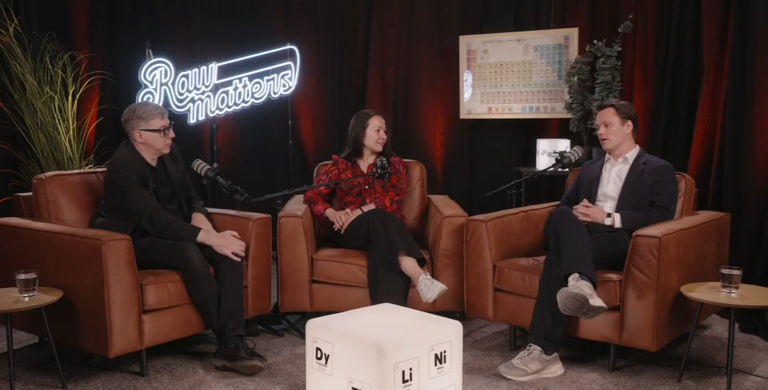
    For three decades, that statement was treated as an industrial footnote. Today, it has become the defining thesis of a new, colder era of geopolitics. In the latest episode of the Raw Matters podcast, hosts Peter Tom Jones and Julia Poliscanova sat down with Albéric Mongrenier, Executive Director of the European Initiative for Energy Security (EIES), to peel back the layers of Europe’s strategic “naivety.”

    The verdict? Europe’s transition to clean energy isn’t just an environmental project—it is a massive transfer of strategic dependency that could, if left unmanaged, leave the continent’s power grids and military hardware under the remote control of Beijing.


    The Cyber Trojan Horse in the Power Grid

    The conversation begins with a startling reality check regarding the hardware of the energy transition. We often talk about “critical minerals” as raw commodities—lithium, cobalt, copper. But Mongrenier points to a more immediate, digital threat: the inverter.

    Every solar panel, wind turbine, and EV charger requires an inverter to convert DC power to AC. Today, approximately 80% of new solar installations in Europe use Chinese inverters, with a massive share provided by a single company: Huawei.

    “These devices are connected to the internet,” Mongrenier warns. “They are entry doors for cyberattacks.” This creates two distinct levels of vulnerability:

    1. Intelligence Harvesting: By controlling the inverters, external actors can map Europe’s energy consumption and grid behavior with more granularity than European governments themselves.

    2. The “Kill Switch”: Mongrenier references reports from the US and UK regarding hidden “kill switches” discovered in Chinese-made components. In a conflict scenario, the theoretical ability to remotely disable Europe’s energy system—shutting down wind farms and solar arrays at the click of a button—is no longer science fiction.


    Dual-Use: The F-35 and the Wind Turbine

    One of the most persistent myths of the “Green Deal” is that critical minerals are purely “clean tech” materials. In reality, the minerals powering the energy transition are the exact same materials required for modern warfare.

    “NATO came up with its own list of 12 defense-critical minerals late in 2024,” Mongrenier notes. The overlap is nearly total:

    • Rare Earths: Essential for the permanent magnets in EV motors, but also for the guidance systems of missiles and the engines of F-35 fighter jets.

    • Graphite: Used in battery anodes, but also vital for the hulls of submarines.

    • Titanium & Cobalt: The bread and butter of both high-performance turbines and military superalloys.

    This dual-use nature has created a “Mineral Security Trap.” If Europe cannot secure its own supply of these minerals, it loses more than just its ability to hit climate targets—it loses the industrial base required to defend itself.


    A Tale of Two Strategies: The US Stick vs. The EU Paper

    The podcast highlights a widening gap between how Washington and Brussels are reacting to the Chinese monopoly.

    The American “All-of-Government” Blitz

    Under both the Biden and now the Trump administrations, the US has moved with aggressive speed. The US has set a hard deadline: January 2027. By then, defense contractors must purge Chinese rare earths, titanium, and tantalum from their supply chains.

    “The US uses a big stick,” says Mongrenier. They aren’t just asking for change; they are mandating it while simultaneously throwing tens of billions of dollars in subsidies and equity stakes at domestic projects like MP Materials.

    The European “Silo” Problem

    In contrast, Europe’s response remains “timid.” Poliscanova points out that Europe is still hampered by siloed decision-making. While the US treats mineral security as a singular mission across all departments, the EU is split between various Directorates-General (DGs) that often fail to communicate.

    Furthermore, Europe remains obsessed with the “business case.” “Strategic infrastructure does not always have a business case,” Poliscanova argues. “Sometimes you just invest because it’s a critical asset. We need to forget about the short-term profit and think about resilience.”


    The Axis of Minerals: Russia, Iran, and China

    The discussion takes a darker turn when addressing the current conflict in the Middle East. Mongrenier points out that the “axis” of Russia, Iran, and China is not a loose association—it is a functional industrial alliance.

    Take the drones currently saturating battlefields in Ukraine and the Middle East. Whether they are Iranian Shahed drones or Russian variants, their supply chains lead back to China. “90% of these drones are battery-powered,” Mongrenier says. “If we build a ‘European Drone Wall’ for our own defense, but the batteries and minerals come from China, have we actually improved our security?”


    The Path Forward: Ending the Naivety

    As the episode concludes, the hosts and guest outline a roadmap for a more resilient Europe:

    1. Aggregating Demand: Europe must connect the car industry and the defense sector to send a massive, unified “demand signal” to miners and refiners outside of China.

    2. The “Carrot and the Stick”: Europe needs to provide the financial “carrots” (subsidies and public procurement) while wielding the “stick” (vetting components for cyber risks and mandating non-Chinese supply chains for critical defense hardware).

    3. Industrial Sovereignty: 2026 and 2027 are viewed as the “midterm” years for European leadership to finally treat energy and mineral security as the same issue.

    The message is clear: Europe’s “naivety” has been a luxury of a more stable world. In 2026, as missiles fly and megawatts become the new currency of power, that luxury has officially run out. To save its climate, Europe must first secure its minerals—and to secure its minerals, it must finally learn to play the game of “Realpolitik.”

  • Kazakhstan’s mining majors step up decarbonization with renewables and waste recycling projects

    Kazakhstan’s mining majors step up decarbonization with renewables and waste recycling projects

    In 2025, Kazakhstan’s leading mining and metals companies continued to expand environmental programmes focused on emissions reduction, waste processing and biodiversity protection, while also completing several major renewable energy projects.

    In December, Solidcore Resources announced the completion of a solar power plant at its Varvarinskoye gold mine. The facility has an installed capacity of 22.6 MW and is expected to generate around 28.5 million kWh of electricity annually. The project, which includes more than 36,000 solar panels and a supplementary gas piston power plant to cover periods of low solar output, required investments of about 29 billion tenge. Solidcore estimates that switching Varvarinskoye to renewable energy will cut indirect greenhouse gas emissions by approximately 50%.

    Another major producer, Eurasian Resources Group (ERG), reported in September that all 24 wind turbines had been installed near its Donskoy Mining and Processing Plant. Once operating at full capacity, the wind farm is expected to generate more than 500 million kWh of electricity per year. The project will allow ERG to save over 300,000 tonnes of coal annually and reduce emissions by up to 440,000 tonnes.

    Alongside renewable energy investments, ERG also launched processing of accumulated tailings at the Donskoy plant. Chromium is now being recovered from technogenic mineral raw materials using flotation technology, supporting both waste reduction and resource efficiency.

    Another notable initiative is the gasification of the Qarmet metallurgical plant. In July, the company began pressure testing and commissioning a new gas pipeline. Partial replacement of fuel oil and coke with natural gas is expected to significantly reduce atmospheric emissions from steel production.

    Together, these projects highlight a broader shift by Kazakhstan’s mining and metals sector toward cleaner energy, circular resource use and lower environmental impact.

  • EU Moves Toward Restricting Aluminum Scrap Exports Amid Supply and Decarbonization Concerns

    EU Moves Toward Restricting Aluminum Scrap Exports Amid Supply and Decarbonization Concerns

    BRUSSELS — The European Commission is preparing new measures to curb exports of aluminum scrap from the European Union in an effort to prevent domestic shortages of a key material needed for industrial decarbonization, EU Trade Commissioner Maros Sefcovic announced on Tuesday.

    EU aluminum scrap exports reached a record 1.26 million metric tons in 2024, according to data from industry group European Aluminium—a nearly 50% increase over five years, with most shipments destined for Asian markets. European producers warn that rising exports risk depriving the bloc’s industry of essential recycled material at a time when aluminum recycling plays a critical role in reducing emissions.

    The situation has been exacerbated by U.S. trade policy. Under former President Donald Trump, the United States imposed a 50% tariff on aluminum imports but only a 15% tariff on aluminum scrap. This disparity boosted U.S. scrap imports and reduced its own exports, prompting Asian buyers to turn increasingly to European supply.

    The European Commission began monitoring scrap outflows in July and is now advancing “preparatory work” on a new export measure to address what Sefcovic described as “aluminum scrap leakage.” The proposal is expected to be finalized in spring 2026 and will aim to balance the interests of producers, recyclers, and downstream sectors.

    Recycled aluminum is central to Europe’s climate goals, requiring 95% less energy to produce compared with aluminum smelted from raw bauxite ore. However, recycling industry association EuRIC argues that export restrictions would not address the root cause of rising shipments, saying they stem from low domestic demand and limited EU capacity to process mixed scrap, including material from shredded vehicles.

  • Ferrexpo Named One of Europe’s Climate Leaders 2025 for Third Consecutive Year

    Ferrexpo Named One of Europe’s Climate Leaders 2025 for Third Consecutive Year

    Ukrainian iron ore pellet producer Ferrexpo has once again been recognized among Europe’s Climate Leaders, appearing on the 2025 list compiled by the Financial Times and Statista. This marks the third consecutive year that Ferrexpo has been included, underscoring its leadership not only in iron ore production but also in climate-conscious industrial practices.

    The Europe’s Climate Leaders ranking highlights companies that have achieved the most substantial reductions in greenhouse gas emissions intensity — measured by emissions per unit of revenue — between 2018 and 2023. Ferrexpo ranked in the top quartile of its sector, a notable achievement for one of Ukraine’s most resilient industrial players amid ongoing national challenges.

    A key driver of Ferrexpo’s success has been its Green Mine program, which includes initiatives such as electrifying mining equipment, introducing trolley-assist systems, and using battery-powered locomotives. These efforts have helped the company cut gas consumption by 30% since 2015 through biofuel adoption and launch a 5 MW solar power plant in 2021.

    Looking ahead, Ferrexpo plans to invest $3.3 billion in decarbonization efforts by 2050. Part of this strategy includes building an additional 10.8 MW solar facility to support the company’s energy needs. Ferrexpo’s commitment places it among the few Eastern European companies actively aligning with global climate and sustainability goals.

  • Tata Steel Invests £1.25bn in New Electric Arc Furnace at Port Talbot

    Tata Steel Invests £1.25bn in New Electric Arc Furnace at Port Talbot

    In a transformative £1.25bn investment, Tata Steel is constructing a cutting-edge electric arc furnace (EAF) facility at its Port Talbot site. Designed to produce three million tonnes of low-carbon steel annually, the project marks a significant step toward decarbonizing the steel industry.

    Managed by Sir Robert McAlpine, the project encompasses extensive civil, structural, and building work. Enabling activities will begin in early 2023, with main construction slated for autumn, pending planning approval. Completion is expected within three years.

    “This is a once-in-a-generation opportunity to advance sustainable steel production,” said Peter Jones, Tata Steel’s EAF Project Lead. The new furnace will rank among the world’s largest and most advanced, underscoring Tata Steel’s commitment to reducing CO2 emissions and supporting global climate goals.

    Sir Robert McAlpine, which has collaborated with Tata Steel on feasibility studies since 2022, expressed pride in contributing to the decarbonization of the Port Talbot facility. Craig Allen, Managing Director of Industrial at the company, highlighted the site’s potential to become a global leader in sustainable steel production.

    The ambitious project will solidify Port Talbot’s position as a hub for eco-friendly steel, while supporting the transition to cleaner industrial practices in the UK and beyond.

  • Vale and GreenIron Partner to Decarbonize Mining Supply Chains

    Vale and GreenIron Partner to Decarbonize Mining Supply Chains

    Vale has announced a memorandum of understanding with Swedish company GreenIron, focusing on decarbonizing mining industry supply chains in Brazil and Sweden. The collaboration includes feasibility studies for a direct reduction plant in Brazil, to be managed by GreenIron, and the provision of Vale’s iron ore for GreenIron’s commercial operations in Sandviken, Sweden. This partnership aligns with global sustainability goals, targeting innovative solutions to reduce emissions in iron and steel production while strengthening ties between Brazilian and Swedish industries.

  • North Macedonia Advances Solar Energy with EBRD Grant for Two Photovoltaic Plants

    North Macedonia Advances Solar Energy with EBRD Grant for Two Photovoltaic Plants

    The European Bank for Reconstruction and Development (EBRD) has allocated nearly €5 million to North Macedonia’s state energy company, ESM, to construct two photovoltaic power plants with a combined capacity of 30 MW on former coal mine sites. The projects, supported under the Western Balkans Investment Framework (WBIF), complement a €25 million loan for Bitola 1 (20 MW) and Oslomej 2 (10 MW). Set for completion by 2026, the plants will produce 46 GWh annually, serving 7,000 households and cutting CO₂ emissions by 40,000 tons.

    Energy Minister Sanja Božinovska highlighted the environmental benefits, including the reclamation of 45 hectares near Bitola and Oslomej, enhancing local conditions. The initiative aligns with broader decarbonization efforts, with EBRD’s Fatih Türkmenoğlu emphasizing its role as a model for sustainable energy transitions.

    Since 2009, North Macedonia has secured €500 million via WBIF for projects spanning energy, transport, and digitalization, further bolstered by new reform frameworks for a greener future.

  • Germany’s Climate Change Targets at Risk, Urgent Action Needed

    Germany’s Climate Change Targets at Risk, Urgent Action Needed

    Germany’s climate advisory body has issued a call for immediate policy measures to address the country’s escalating greenhouse gas emissions, cautioning that it is on track to miss its 2030 climate change targets. In a report released on Monday, the Council of Experts on Climate Change, an independent body appointed by the government, emphasized that Germany is unlikely to achieve its goal of reducing emissions by 65% by the end of the decade compared to 1990 levels.

    The council highlighted sectors such as transport and construction as particularly problematic in terms of decarbonization efforts. These sectors are facing significant challenges in transitioning to cleaner energy sources and reducing their carbon footprint. The findings directly contradict statements made by German Climate Protection Minister and Vice Chancellor Robert Habeck, who had previously claimed that emissions were decreasing and the country would meet its targets based on projections from the Federal Environment Agency (UBA).

    According to the Council of Experts on Climate Change, the UBA’s estimates were overly optimistic, and the emissions from the energy, building, and transport sectors had been underestimated. This indicates a pressing need for additional action and stronger measures to be taken to curb emissions effectively.

    Under the Climate Protection Act, if the council’s findings are confirmed in its next annual report in 2025, the government will be required to implement further measures to meet its 2030 targets. However, the council’s chairman, Hans-Martin Henning, advised against waiting for the targets to be missed again and instead recommended prompt examination and implementation of additional measures.

    The council also warned that Germany may face challenges in meeting future targets, including its aim to reduce emissions by 88% by 2040 compared to 1990 levels and achieve climate neutrality by 2045. The transition away from burning fossil fuels is considered crucial in addressing the global warming threat and reducing emissions.

    The release of the council’s report coincides with ongoing government negotiations in Bonn, Germany, where officials are laying the groundwork for the upcoming COP29 climate summit in Baku, Azerbaijan, scheduled for the end of the year. The discussions are expected to focus on the contentious issue of funding the escalating costs associated with climate change.

  • Decarbonizing Asia’s Steel Industry: A Long Road Ahead

    Decarbonizing Asia’s Steel Industry: A Long Road Ahead

    According to Reuters, it’s time to scrutinize the feasibility of decarbonizing Asia’s vast and expanding steel sector. Reducing carbon emissions is possible but requires a phased approach over a longer-than-ideal period and only if incentives are provided. The steel industry, the world’s largest industrial source of carbon dioxide emissions, accounts for about 8% of global emissions, making efforts to decarbonize this sector crucial for achieving net-zero carbon goals.

    This week, representatives from Asia’s iron ore and steel industries gathered in Singapore, revealing both encouraging and discouraging news about decarbonization efforts. The good news is that nearly every market player, from mining companies to steel mills, is taking the issue seriously, investing time, effort, and capital in finding solutions. The bad news is that achieving net-zero emissions by 2050 in Asia seems unattainable with current and foreseeable technologies.

    Another significant obstacle is the current steel pricing structure. There is no real premium for producing low-carbon steel in Asia, and little indication of this changing soon. As it stands, mining companies and steel mills are mainly undertaking decarbonization efforts under voluntary commitments to reduce carbon emissions, driven by shareholder pressure, some government directives, and public demand to mitigate the expected negative impact of climate change.

    While this is positive, it means that any costs incurred for decarbonization are effectively excluded from company profits since there is no financial reward for producing cleaner steel in Asia. The challenge is how to implement incentives for decarbonization, from relatively simple and low-cost initial steps to much more complex and capital-intensive ambitions for zero-emission steel production.

    One potential approach is a multi-tiered incentive system. For example, the base level of carbon emissions might be set at 2.1 metric tons per ton of steel produced using the current method of smelting iron ore fines in a blast furnace followed by a converter. If a steel plant could reduce emissions by one-third, it might be rewarded with a carbon credit or avoid paying a carbon tax of a set amount per ton of reduced emissions.

    Suppose this initial reduction costs $60 per ton, roughly the price of a carbon credit in the European Union. If a steel plant can cut emissions by another third through investments in new processes like using direct reduced iron (DRI) or its transportable equivalent, hot briquetted iron (HBI) in an electric arc furnace (EAF), this reduction could be rewarded with a higher carbon price, say $120 per ton.

    The final steps towards fully decarbonizing steel production using green hydrogen to produce HBI, clean electricity to run EAFs, and eco-friendly shipping fuels like methanol for transporting materials might attract even greater carbon credits to offset the substantial capital required to achieve this.

    STIMULI NECESSARY

    Presentations at this week’s Green Steel Forum in Singapore made it clear: without incentives, only the initial and relatively simple steps towards decarbonization will become a reality. These include maximizing the efficiency of basic oxygen furnaces, increasing the use of higher-quality iron ore and agglomerates like DRI and HBI, boosting the use of recycled steel in EAFs, and decarbonizing iron ore mining by limiting diesel power at remote mines and electrifying vehicles and trains.

    The problem is that these efforts are likely to reduce only about 20% of global steel emissions. Further steps include using natural gas to process low-grade iron ore into DRI and HBI for use in more advanced converters or even EAFs, then transitioning this process to green hydrogen. This is where costs become significant, and shareholders are likely to question the benefits.

    Ultimately, to push steel decarbonization beyond the low-hanging fruit, a pricing incentive is needed, and the market alone is unlikely to provide this, as costs will likely outweigh climate concerns for most consumers. This necessitates implementing policies like carbon taxes or carbon credits, ideally coordinated across many countries, particularly the largest iron ore exporters—Australia, Brazil, and South Africa—as well as China, which produces half of the world’s steel, and new major producers like India.

  • ArcelorMittal Poland Invests in Coke Plant Modernization for Environmental Impact Reduction

    ArcelorMittal Poland Invests in Coke Plant Modernization for Environmental Impact Reduction

    ArcelorMittal Poland, the Polish arm of the global steel giant ArcelorMittal, has disclosed plans to invest PLN 165 million ($40.9 million) in the modernization of its coke plant located in Zdzieszowice, as outlined in the company’s official statement. According to the press release, the ongoing modernization efforts at ArcelorMittal Poland’s Zdzieszowice coke plant have already reached the halfway mark. Notable upgrades include the construction of a 90-meter chimney, installation of new gas pipelines, and the initiation of a nitrogen oxide reduction unit for each of the Combined Heat and Power (CHP) boilers utilizing treated coke oven gas. The subsequent phase involves the modernization of three coke oven batteries and the decommissioning of an outdated chimney. All activities are slated for completion by 2026. Wojciech Koszuta, CEO of ArcelorMittal Poland, underscores the company’s commitment to reducing its environmental footprint amid the steel industry’s decarbonization challenges. While aiming for carbon neutrality by 2050, Koszuta emphasizes the interim importance of coke for blast furnaces, necessitating emission reduction measures at the Zdzieszowice plant. In a strategic move, ArcelorMittal Poland placed one of its coke oven batteries at the Kraków facility into hot mothballing by the end of 2023. This decision, driven by factors such as diminished coke demand and the pricing dynamics between coking coal and coke, aligns with the company’s optimization objectives. Previously, in 2023, ArcelorMittal Poland allocated PLN 1.5 billion ($363 million) towards modernization and expansion initiatives across three plants, aimed at enhancing product quality, energy efficiency, and overall operational efficacy. Notably, substantial investment was directed towards upgrading the blast furnace in Dąbrowa Górnicza.