Tag: CRMA

  • EU’s Lithium Gamble in Serbia Faces Political Turmoil and Public Backlash

    EU’s Lithium Gamble in Serbia Faces Political Turmoil and Public Backlash

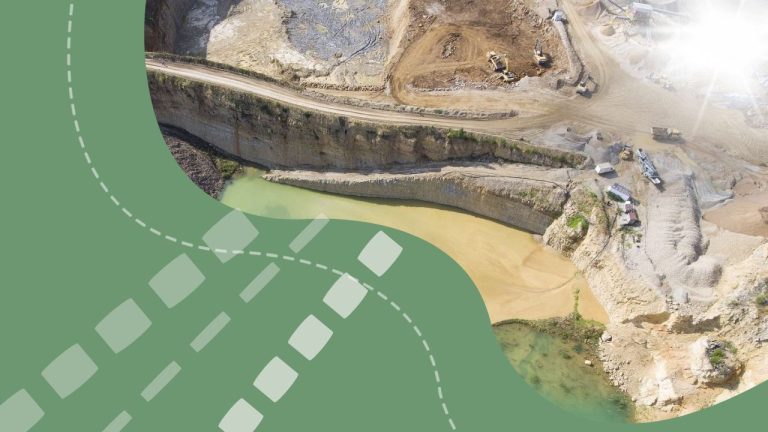
    The European Union’s ambitious transition to electric vehicles has hit a political and environmental wall in Serbia, as the Jadar lithium mining project—touted as a game-changer for Europe’s battery supply—becomes entangled in controversy, public protests, and fears of corruption, Politico reports.

    The Jadar deposit, considered one of the richest in Europe, could power up to a million electric vehicles annually and potentially meet a quarter of Europe’s lithium demand. Unsurprisingly, the EU had eyed the site as a cornerstone for its Critical Raw Materials Act (CRMA), aimed at reducing reliance on China for essential resources.

    Developed by mining giant Rio Tinto, the project initially appeared to align with Brussels’ green goals. However, it has triggered fierce resistance in Serbia over environmental concerns and deep mistrust in government transparency. Public sentiment has turned sharply against the mine, seeing it as a symbol of elite corruption and foreign exploitation.

    “If the EU backs Jadar, it sends the message that economic interests override its core values,” warned Aleksandar Matković, a Serbian researcher and protest organizer. The opposition movement, gaining traction as part of broader anti-government unrest, intensified after a state-friendly documentary branded activists as “foreign agents.”

    Even EU Commissioner for Industry, Thierry Breton, notably excluded any non-EU projects—including Jadar—from the March 2025 list of CRMA strategic ventures. Though the Commission reiterated its commitment to Serbia as a strategic partner, critics speculate that Jadar’s controversial status may have played a role.

    Tensions escalated further when Serbian President Aleksandar Vučić met with EU leaders, facing sharp criticism for democratic backsliding. While Vučić accused protesters of being Western-funded, EU officials insisted on reforms in media freedom, anti-corruption efforts, and election integrity.

    Despite the official suspension of the project in January 2022 following mass protests, Rio Tinto has remained active in Serbia—maintaining offices, acquiring over 500 properties, and claiming $500 million already invested. Critics see this as a sign the project is merely paused, not canceled.

    Environmental activist Marija Vuković voiced the growing fear in the region of Loznica, near the proposed site: “People don’t trust the government. They believe their land and water will be sacrificed for someone else’s gain.”

    While some locals welcome the promise of jobs, others are wary of irreversible environmental damage and the potential transformation of the region into a “sacrifice zone.”

    EU policymakers now face a dilemma: Can they back a project so vital to Europe’s green future without appearing complicit in environmental degradation and democratic decline?

    The stakes go beyond lithium. Serbia’s geopolitical balancing act—between the EU, Russia, and China—adds layers of complexity. A move by Brussels perceived as aligning with Vučić could backfire, undermining EU credibility in the Balkans.

    “The EU cannot afford to seem like it’s trading values for minerals,” Matković concluded. “That would betray the very essence of the European project.”

  • Vulcan Energy’s Lionheart Project Secures EU Strategic Status Under Critical Raw Materials Act

    Vulcan Energy’s Lionheart Project Secures EU Strategic Status Under Critical Raw Materials Act

    Vulcan Energy (Vulcan, ASX: VUL, FSE: VUL), a leading developer of renewable energy and lithium projects, announced it has been designated a “Strategic Project” under the European Union’s Critical Raw Materials Act (CRMA).

    This prestigious recognition from the European Commission underscores the crucial role Vulcan’s integrated lithium and renewable energy project plays in bolstering Europe’s sustainable energy future. The designation validates Vulcan’s innovative approach to developing a fully domestic and sustainable lithium value chain in Europe.

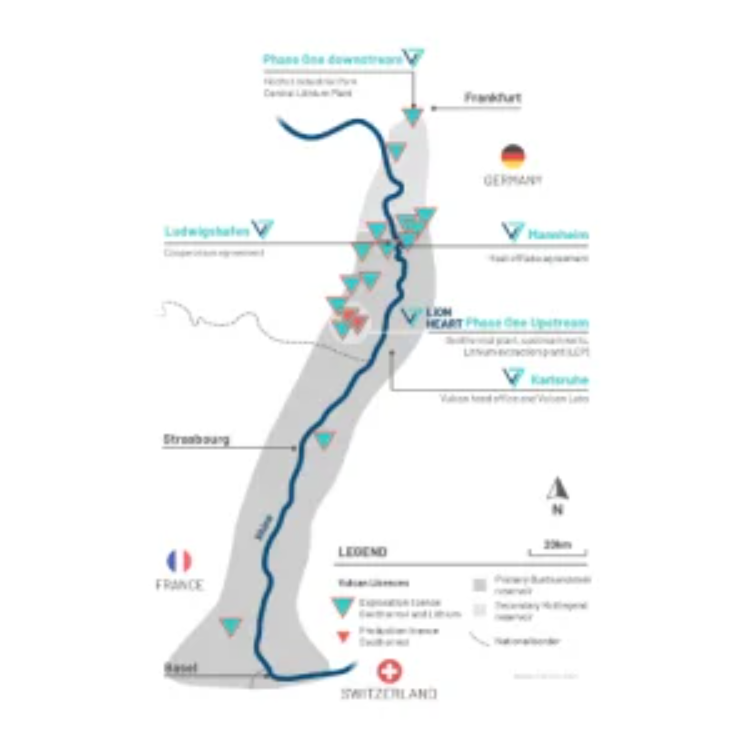
    Vulcan’s 130 km brine-to-battery project, touted as Europe’s most advanced, boasts a unique combination of lithium extraction from geothermal brines and a commitment to 100% renewable energy. This novel approach differentiates Vulcan from conventional lithium mining operations and positions it as a frontrunner in the global transition towards clean energy.

    The Strategic Project status under the CRMA will provide Vulcan with significant advantages, including improved access to funding and investment, streamlined permitting processes, and increased support from the European Commission. This momentum will enable the company to accelerate its expansion plans and solidify its position as a key player in Europe’s lithium supply chain.

    Cris Moreno, Managing Director of Vulcan Energy, expressed pride in the recognition, stating, “This validates the importance of our integrated lithium and renewable energy project to European industry. Our project is strategically positioned to support the CRMA benchmarks and diversify the EU’s lithium supply away from third countries”.

    Vulcan’s project is expected to have a transformative impact on Europe’s automotive industry and broader energy sector, providing a secure and sustainable source of lithium for the production of electric vehicles, batteries, and other critical technologies.

    About Vulcan Energy Resources Ltd

    Vulcan Energy Resources is an Australian and Germany listed company (Vulcan, ASX: VUL, FSE: VUL) is focused on developing a 100% renewable energy powered lithium-brine project in Germany. The company is pioneering a “brine-to-battery” production approach, aiming to establish Europe’s first fully domestic and sustainable lithium value chain.

  • EU already late for its 2030 raw materials targets, French experts warn

    EU already late for its 2030 raw materials targets, French experts warn

    Even if new mines were to be opened in the European Union today, experts in the French mining sector say it would be very difficult to achieve the EU objectives for extracting critical and strategic raw materials by 2030.

    Read the original French article here.

    To achieve its energy and climate goals, the European Union will need to electrify on a massive scale, which in turn, will require more raw materials for the manufacture of electricity-generating and storage equipment such as batteries, wind turbines and solar panels.

    To this end, the European Commission presented its proposal in mid-March for a Critical Raw Materials Act (CRMA), with a view to advancing the EU’s energy and ecological transition.

    Under it, EU countries must ensure that 10% of the extraction, 40% of the refining and 15% of the recycling of several dozen raw materials takes place on home turf by 2030.

    On top of that, the Commission proposes the EU should no longer be more than 65% dependent on a single non-EU country for a single raw material – a difficult task given to what extent the EU currently depends on imported minerals, notably from China, which accounts for up to 90% of the value chain for certain materials.

    Those targets have been at the centre of the debate ever since, with some lawmakers in the European Parliament opposed to their introduction and some EU countries like France and Germany prefering targets for individual minerals.

    “It would be absurd to set the same targets for cobalt, 80% of whose reserves are located in a single African country, as for lithium, for example, which can be mined in Europe,” explained French Industry Minister Roland Lescure.

    Unexplored subsoils

    The French mining industry also supports the idea of introducing sector-specific targets for individual raw materials, saying Europe “lacks sufficient production capacity and time to implement them” for certain metals listed in the CRMA, explained Christophe Poinssot, deputy director general of the French geological and mining research bureau.

    But beyond the difficulties of supplying certain minerals domestically, Poinssot also pointed to data gaps due to an unexplored geological potential in Europe.

    In France, “knowledge of subsoil resources is extremely patchy and covers only part of the country,” Poinssot said at a conference organised by the right-wing Les Républicains party in early July.

    “The inventory carried out 40 years ago was for a long time limited to the first 100 metres underground,” he explained.

    Resources in Europe’s subsoil could even be exported, the researcher also said.

    Norway, for example, recently discovered a phosphate deposit that could supply a considerable proportion of the EU’s needs. At the beginning of January, Sweden also announced the discovery a major deposit of rare earth oxides.

    Under these conditions, “we need to reinvest in learning more about our subsoil and reopening mines. To do this, we need to relaunch an inventory of the mineral resources present in all 27 EU member states,” Poinssot argues.

    Even if new mines were to be opened in the European Union today, experts in the French mining sector say it would be very difficult to achieve the EU objectives for extracting critical and strategic raw materials by 2030.

    Read the original French article here.

    To achieve its energy and climate goals, the European Union will need to electrify on a massive scale, which in turn, will require more raw materials for the manufacture of electricity-generating and storage equipment such as batteries, wind turbines and solar panels.

    To this end, the European Commission presented its proposal in mid-March for a Critical Raw Materials Act (CRMA), with a view to advancing the EU’s energy and ecological transition.

    Under it, EU countries must ensure that 10% of the extraction, 40% of the refining and 15% of the recycling of several dozen raw materials takes place on home turf by 2030.

    On top of that, the Commission proposes the EU should no longer be more than 65% dependent on a single non-EU country for a single raw material – a difficult task given to what extent the EU currently depends on imported minerals, notably from China, which accounts for up to 90% of the value chain for certain materials.

    Those targets have been at the centre of the debate ever since, with some lawmakers in the European Parliament opposed to their introduction and some EU countries like France and Germany prefering targets for individual minerals.

    “It would be absurd to set the same targets for cobalt, 80% of whose reserves are located in a single African country, as for lithium, for example, which can be mined in Europe,” explained French Industry Minister Roland Lescure.

    Unexplored subsoils

    The French mining industry also supports the idea of introducing sector-specific targets for individual raw materials, saying Europe “lacks sufficient production capacity and time to implement them” for certain metals listed in the CRMA, explained Christophe Poinssot, deputy director general of the French geological and mining research bureau.

    But beyond the difficulties of supplying certain minerals domestically, Poinssot also pointed to data gaps due to an unexplored geological potential in Europe.

    In France, “knowledge of subsoil resources is extremely patchy and covers only part of the country,” Poinssot said at a conference organised by the right-wing Les Républicains party in early July.

    “The inventory carried out 40 years ago was for a long time limited to the first 100 metres underground,” he explained.

    Resources in Europe’s subsoil could even be exported, the researcher also said.

    Norway, for example, recently discovered a phosphate deposit that could supply a considerable proportion of the EU’s needs. At the beginning of January, Sweden also announced the discovery a major deposit of rare earth oxides.

    Under these conditions, “we need to reinvest in learning more about our subsoil and reopening mines. To do this, we need to relaunch an inventory of the mineral resources present in all 27 EU member states,” Poinssot argues.