Tag: Critical raw materials

  • EU Deepens Ties with Central Asia

    EU Deepens Ties with Central Asia

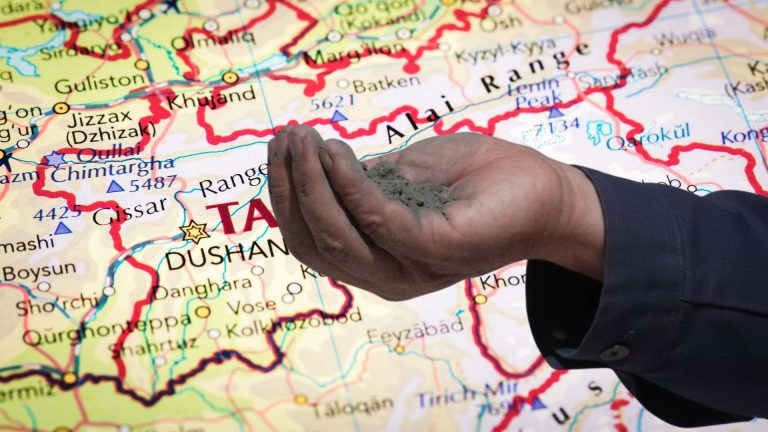
    Brussels, 22 March, 2025 – The European Union (EU) is making a significant push into Central Asia, aiming to strengthen its partnership with the five strategically important countries through the Global Gateway strategy. European Commissioner for International Partnerships Jozef Síkela concluded a week-long tour of the region, meeting with officials and business leaders in Turkmenistan, Kazakhstan, Tajikistan, Kyrgyzstan and Uzbekistan.

    The visit, which took place ahead of the first EU-Central Asia Summit on 3-4 April 2025, focused on boosting investment in key sectors like digital connectivity, transport infrastructure, critical raw materials, and renewable energy.

    Concrete Commitments:

    Commissioner Síkela announced several key agreements during his trip, including:

    • €422 million in investment: A significant portion of this funding will be channeled through the European Investment Bank (EIB) and other EU financial institutions, including grants and loans, for projects across various sectors.
    • Transport Corridor Development: The EU reiterated its commitment to the Trans-Caspian Transport Corridor, a globally important trade route connecting Central Asia to Europe. A €200 million framework loan agreement was signed between the EIB and the Development Bank of Kazakhstan to support sustainable transport and renewable energy development.
    • Support for Critical Raw Materials: Collaboration in critical raw materials (CRM) will receive a €3 million boost, focusing on sustainable and responsible supply chains, job creation, and economic resilience.
    • Energy Security & Climate Action: The EU announced grants totaling €51.6 million to modernize Tajikistan’s electricity grid, promote energy efficiency, and support water-efficient technologies and innovative solutions in Kyrgyzstan.
    • Digital Connectivity Expansion: Two key agreements worth an undisclosed amount were signed to improve digital infrastructure and expand high-speed internet access to underserved populations.

    Stronger Partnership:

    Commissioner Síkela emphasized the growing partnership between the EU and Central Asia, stating, “Central Asia and the European Union are strong partners. We can deliver long-term benefits for people and businesses on both sides.” He highlighted the need to address challenges like climate change, energy security, and digital divide, while unlocking new economic opportunities through the Global Gateway initiative.

    The visit underscores the EU’s commitment to its Global Gateway strategy, aiming to bridge the global investment gap and build sustainable and resilient connections with partner countries. The upcoming EU-Central Asia Summit further solidifies this commitment and paves the way for future collaborations.

  • European Commission Launches Critical Raw Materials Facility to Strengthen Supply Chains and Reduce Dependencies

    European Commission Launches Critical Raw Materials Facility to Strengthen Supply Chains and Reduce Dependencies

    The European Commission has awarded EIT RawMaterials and InnoEnergy a groundbreaking new project, the Critical Raw Materials (CRM) Facility, aimed at bolstering Europe’s supply chains, reducing dependencies, and mitigating disruption risks. Coordinated by EIT RawMaterials, the initiative seeks to build a resilient and sustainable supply of critical raw materials such as lithium, cobalt, nickel, and manganese by strengthening global partnerships and advancing international projects to diversify Europe’s raw materials sources.

    Bernd Schäfer, CEO and Managing Director of EIT RawMaterials, emphasized the importance of the project, stating, “Securing a stable supply of critical raw materials is not just vital for Europe’s industrial competitiveness—it is essential for European security. As we race toward 2030, we must turn ambition into action.” He highlighted that resilient supply chains require strong global partnerships and expressed pride in leading the initiative, leveraging EIT RawMaterials’ expertise in mining, recycling, and advanced materials.

    A dedicated team from EIT RawMaterials and InnoEnergy will identify and assess CRM projects in regions including Africa, Latin America, Central and Southeast Asia, Southeastern Europe, and Greenland. These projects will be evaluated for their strategic value to Europe and opportunities for mutually beneficial partnerships between host communities and European industries.

    Baptiste Buet, Director of the EU Business Unit at InnoEnergy, noted, “A value chain is only as strong as its weakest link. For batteries, securing sustainable raw materials is critical to the success and stability of a rapidly developing European industry.” He added that while domestic mining, refining, and recycling are essential, the CRM Facility underscores Europe’s commitment to securing global resources for battery cell manufacturers.

    The CRM Facility will also focus on developing mid-to-downstream mineral value chains in partner countries and delivering specialized training programs to equip professionals with expertise in CRM management, operations, and sustainable practices.

  • Kazakhstan to Supply EU with Critical Raw Materials Under New Agreements

    Kazakhstan to Supply EU with Critical Raw Materials Under New Agreements

    Kazakhstan has signed a landmark agreement to supply the European Union (EU) with critical raw materials, essential for modern industries and technologies. The deal was finalized during a visit by European Commissioner for International Partnerships Jutta Urpilainen to Kazakhstan, as reported by the EU Representation in the country.

    The agreement includes a €3 million contract aimed at fostering cooperation between the EU and Central Asia in the field of critical raw materials. Funding will be provided by the European Bank for Reconstruction and Development (EBRD), with a focus on joint projects to establish reliable supply chains for these resources. Critical raw materials, such as rare earth metals, copper, aluminum, uranium, phosphorus, and potassium, are vital for sectors like technology, energy, defense, and transportation.

    Urpilainen emphasized the importance of the partnership, stating, “Europe needs reliable access to critical raw materials to modernize its economy. We are committed to mutually beneficial cooperation with Kazakhstan in their extraction and development. This partnership supports all Central Asian countries, boosts Kazakhstan’s economy, strengthens its industrial potential, and creates new opportunities for businesses, innovation, and high-quality jobs.”

    In addition to the raw materials agreement, the EU and Kazakhstan signed a €200 million loan deal between the European Investment Bank (EIB) and the Kazakhstan Development Bank. The EU will provide an €18 million guarantee for the loan, which Kazakhstan plans to allocate toward developing transport infrastructure and renewable energy sources.

    During the visit, Kazakh President Kassym-Jomart Tokayev also met with Urpilainen at the Akorda Presidential Palace, underscoring the growing partnership between Kazakhstan and the EU.

  • BGV Group Management Forges International Partnerships in Critical Raw Materials Sector

    BGV Group Management Forges International Partnerships in Critical Raw Materials Sector

    In early 2025, BGV Group Management, led by Gennadii Butkevych, signed cooperation agreements with three international partners during Ukrainian Week 2025 in Washington, USA. These agreements lay the groundwork for future collaboration in the critical raw materials (CRM)sector, with a focus on advancing joint initiatives. The parties have committed to further refining the terms of cooperation and accelerating the implementation of these projects.

    For nearly a decade, BGV Group Management has been a key player in the extraction and processing of graphite and beryllium. Since 2015, the company has invested approximately $100 million in the mining sector, primarily targeting greenfield projects within the CRM industry.

    Gennadii Butkevych, founder and investor of BGV Group Management, emphasized the significance of these agreements, stating, “The signing of these documents marks a pivotal step in establishing international partnerships and expanding our global presence. With global attention on the CRM industry, our company has been building expertise and executing projects in this field for years.”

    The company’s flagship project, BGV Graphite, is being developed at the Balakhivske deposit in Ukraine’s Kirovohrad region. By early 2025, BGV completed the preliminary feasibility study (PFS)and pilot technological tests for the final product. In collaboration with Finland’s Metso, the company is working on basic engineering for an enrichment plant, with construction slated to begin in the first quarter of 2026.

    Additionally, BGV has made significant strides in producing battery-quality graphite. In 2024, the company, in partnership with Germany’s ANZAPLAN, successfully conducted tests to achieve 99.99% purity and produce spherical graphite (SPG), a key component in lithium-ion batteries. Design work for the SPG production plant is expected to commence in 2025.

    Another major initiative is the BGV Beryllium project, which includes verification drilling and extensive studies to explore the potential for extracting zinc and rare earth elements. The company aims to complete the PFS for this project by 2025, adhering to international standards.

  • Ukraine’s Critical Materials Sector: Challenges and Investment Potential

    Ukraine’s Critical Materials Sector: Challenges and Investment Potential

    Ukraine’s critical materials sector was the focus of the “Strategic Resources of Ukraine” Conference, held within the framework of the Economic Growth Strategy until 2040. The event, developed by Boston Consulting Group in partnership with the We Build Ukraine think tank, assessed investment prospects and key challenges in the industry.

    The metals and mining industry remains a cornerstone of Ukraine’s economy, contributing 6.1% to GDP and 30% of total exports (as of 2021). Despite the country’s vast reserves and historically low-cost structure, the industry faces asset losses, infrastructure damage, and labor shortages due to the ongoing war. Ferrous metals mining, concentrated in the Kryvyi Rih basin, remains largely under Ukrainian control, while non-ferrous materials, including precious metals and rare earth elements, are crucial for sectoral growth. However, the war has shifted export dynamics, increasing dependence on raw ore exports and leading to profitability declines and logistical challenges.

    Globally, the demand for critical raw materials is intensifying, driven by their essential role in industrial production, technological development, and renewable energy. However, supply chains face high geographic concentration, long project development timelines, declining resource quality, environmental concerns, and climate risks.

    Investment in Ukraine’s mining sector is hindered by multiple barriers:

    • State policy gaps, including the lack of an updated critical materials strategy and an outdated mineral classification system.
    • Institutional shortcomings, such as fragmented geological data, secrecy in resource information, and complex land acquisition procedures.
    • Limited state support, with no fiscal incentives, war risk insurance, or export assistance for mineral companies.

    Despite these obstacles, Ukraine has significant potential to attract international investment in critical raw materials extraction, processing, and exports. The country must develop a long-term strategy to leverage its mineral wealth, strengthen economic independence, and accelerate green energy transition.

  • Sixteen Finnish Projects Apply for EU Strategic Status Under Critical Raw Materials Act

    Sixteen Finnish Projects Apply for EU Strategic Status Under Critical Raw Materials Act

    Sixteen projects in Finland have applied for strategic project status under the European Union’s Critical Raw Materials Act, aiming to strengthen Europe’s raw material production and reduce external dependencies. The European Commission will review the applications and decide on the strategic designation by March 2025.

    On January 23, 2025, the Finnish Government confirmed that it would not exercise its national right to object to any of the applications. While the European Commission consults with Member States before making its final decision, the Finnish authorities have chosen to support all submitted projects.

    The Critical Raw Materials Act is a key component of the EU’s strategy to secure essential resources for industries such as renewable energy, battery production, and advanced technologies. Strategic project status grants selected projects regulatory advantages, faster permitting, and potential financial support to accelerate development.

    Due to confidentiality rules under the Act on the Openness of Government Activities, specific details about the applicants remain undisclosed during the evaluation process. However, the final list of approved strategic projects is expected to be published following the Commission’s decision in March.

  • Ukraine’s Critical Materials Sector: Challenges and Investment Opportunities

    Ukraine’s Critical Materials Sector: Challenges and Investment Opportunities

    Ukraine’s critical materials sector is at a crossroads as industry experts and policymakers seek solutions to investment barriers and economic growth challenges. The recent conference, Strategic Resources of Ukraine: Scenarios for the Development of the Subsoil Use Industry, held as part of the Economic Growth Strategy of Ukraine until 2040, outlined key issues and opportunities in the mining sector. The event was organized in collaboration with the Boston Consulting Group and the think tank We Build Ukraine.

    Ukraine’s mining industry, a major contributor to GDP and exports, is facing significant obstacles, including asset losses, supply disruptions, and infrastructure damage due to the ongoing conflict. While the Kryvyi Rih basin remains under Ukrainian control, non-ferrous metals, including rare earth elements and precious metals, present potential growth areas. However, challenges such as outdated geological data, a lack of strategic policies, and complex land acquisition processes hinder investment.

    On a global scale, access to critical raw materials is essential for industries, technological progress, and renewable energy development. However, risks such as high geographic concentration of production, lengthy project development times, and environmental concerns contribute to market volatility.

    To attract investors, Ukraine must address several barriers, including the absence of a clear state policy on critical materials, outdated classification systems, and limited support for businesses seeking mining rights. Additionally, the country lacks fiscal incentives, export support, and mechanisms to insure against war-related risks.

    Despite these challenges, Ukraine remains an attractive destination for investment in critical raw materials. By creating economic clusters and strengthening policies, the country can enhance its economic resilience, improve energy independence, and attract international investors. A strategic approach to resource development could unlock Ukraine’s vast raw material potential, contributing to long-term economic stability.

  • EU’s Pro-Business Roadmap Emphasises Mining Amid Economic Shift

    EU’s Pro-Business Roadmap Emphasises Mining Amid Economic Shift

    On Wednesday  29 January 2025, the European Union introduced a pivotal roadmap aimed at making Europe more business-friendly after years of prioritising green goals. With US President Trump’s aggressive trade policies and China’s technological advancements, the EU seeks to bolster growth by alleviating corporate burdens.

    “We need to reignite Europe’s innovation engine,” EU chief Ursula von der Leyen told a news conference to present the “competitiveness compass” — the first major initiative of her second mandate.

    Specific measures proposed:

      • Creating a new legal regime for innovative companies across the EU
      • Facilitating long-term energy agreements and grid investments
      • Providing targeted aid for industrial decarbonisation
      • Revising competition rules to allow creation of European tech giants
      • Promoting more mining in Europe for critical raw materials
      • Removing barriers in the EU single market for key sectors
      • Creating a “European savings and investments union” to boost startup funding

    The plan aims to streamline regulations, reduce energy costs for businesses, and support the development of green technologies. To achieve this, the EU will revise numerous laws, including those related to environmental standards and supply chains, to reduce the burden on companies.

    A key element of the strategy is to increase the EU’s self-sufficiency in critical raw materials, such as rare earths, which are essential for many advanced technologies. The EU currently relies heavily on imports from China and other countries for these materials.

    To address this dependency, the EU plans to encourage more mining within its borders. The European Commission has already received 170 mining projects and aims to facilitate the permitting process. The plan also includes provisions for joint purchases of critical raw materials and international partnerships to secure supply lines.

    This initiative has sparked concerns from environmental groups, who worry that it could lead to the weakening of environmental protections. However, the EU maintains that it remains committed to its climate goals, including achieving carbon neutrality by 2050.

    The EU’s new plan reflects the growing global competition for resources and technological dominance. By focusing on mining and streamlining regulations, the EU aims to strengthen its industrial base and secure its position in the global economy.

  • EU Collaborates with PwC and Sféra on €9 Million Critical Raw Materials Platform

    EU Collaborates with PwC and Sféra on €9 Million Critical Raw Materials Platform

    The European Union has appointed a consortium of PriceWaterhouseCoopers EU Services and Slovak software firm Sféra to develop a €9 million platform for joint purchasing of critical minerals and energy. The platform, set to launch in 2025, will include mechanisms for raw materials, hydrogen, and energy products like natural gas and biomethane.

    This initiative forms part of the Critical Raw Materials Act (CRMA), which aims to reduce reliance on China by bolstering domestic production of essential resources for technologies like electric vehicles and wind turbines.

    The CRMA follows the success of AggregateEU, a gas purchasing platform launched during the 2022 energy crisis. While the platform helped consolidate resources, critics argue its effectiveness in ensuring affordable prices and market influence remains limited.

    With eight proposals received, including bids from Deloitte and Metalshub, this latest project underscores the EU’s focus on securing resource supply chains and advancing its green energy goals.

  • EU Project Reveals Delicate Balance Between Mining and Environmental Protection

    EU Project Reveals Delicate Balance Between Mining and Environmental Protection

    In a groundbreaking study addressing the complex intersection of extractive activities and environmental conservation, the European Union’s CIRAN project has uncovered critical insights into how mining can coexist with protected natural areas.

    Key Findings Highlight Significant Overlap

    Researchers from the Geological Survey of Finland discovered that approximately 85% of Critical Raw Material (CRM) deposits are located within 5 kilometers of environmental protected areas. The project analyzed 23,779 CRM occurrences across EU member states, revealing the intricate spatial challenges facing resource extraction.

    Surprising Discoveries

    Roughly 69% of active mines with reported CRMs are located close to protected areas The study identified numerous examples of successful coexistence between mining operations and environmental preservation

    Good Practices Emerge

    The CIRAN project identified several key strategies for balancing industrial needs with environmental protection:

    1. **Governance Innovations**: Development of adaptable permitting processes that support circular economy principles

    2. **Corporate Responsibility**: Mining companies implementing extensive environmental impact assessments

    3. **Community Engagement**: Transparent communication and local community involvement

    4. **Technological Advancements**: Adoption of innovative, low-impact extraction techniques

    Looking Forward

    Project leaders emphasise that the research is not just about identifying challenges, but developing practical solutions. Upcoming publications will include comprehensive guidelines for mine closure and sustainable resource management.

    Get Involved

    Interested parties can follow the project’s progress through: Project Website: [CIRAN Project Results](https://ciranproject.eu/results) LinkedIn Discussion Forum: Sustainable Management in the Extractive Sector *The CIRAN project represents a crucial step in reconciling economic development with environmental conservation, offering hope for a more sustainable approach to resource extraction.*

    ### Project Writers Nike Luodes Nikolas Ovaskainen Hannu Panttila Toni Eerola Martina Bertelli