Tag: critical minerals

  • Greenland Resources Secures Expanded Exploration Rights Near Malmbjerg Molybdenum Project

    Greenland Resources Secures Expanded Exploration Rights Near Malmbjerg Molybdenum Project

    Greenland Resources has been granted exclusive exploration rights covering 1,147.76 square kilometres in Greenland’s Semersooq region, significantly expanding its mineral licence footprint surrounding the company’s flagship Malmbjerg molybdenum project.

    The Canadian-listed company said the newly awarded special exploration licence strengthens its position along Greenland’s east coast, giving it what it described as a dominant regional mineral holding adjacent to its existing exploitation licence for molybdenum and magnesium.

    The expansion comes amid growing global demand for molybdenum, a key material used in high-performance steel alloys essential for infrastructure, industrial manufacturing and energy transition technologies. Market forecasts cited by the company indicate global molybdenum demand could increase from approximately 398,000 tonnes in 2024 to around 500,000 tonnes annually by 2034.

    Greenland Resources has already secured downstream market access through a long-term offtake agreement signed last year with Finnish stainless steel producer Outokumpu, under which molybdenum oxide from the Malmbjerg project will be supplied to the European manufacturer.

    According to historical geological data published by the Geological Survey of Denmark and Greenland, rock sampling within the newly licensed area has identified multiple zones with highly anomalous molybdenum concentrations. The company believes these targets could potentially expand the resource base linked to the Malmbjerg development.

    An exploration programme is now being prepared for the concession area, including hyperspectral surveys aimed at refining mineral targeting and assessing resource potential.

    Investor sentiment reacted positively to the announcement, with Greenland Resources shares rising 2.94 percent by the close of trading in Toronto. The company currently holds a market capitalisation of approximately C$235 million.

  • UK Launches First Commercial-Scale Lithium Plant in Cornwall to Strengthen Domestic Supply Chain

    UK Launches First Commercial-Scale Lithium Plant in Cornwall to Strengthen Domestic Supply Chain

    The United Kingdom has begun operations at its first commercial-scale lithium production facility, marking a significant step toward securing domestic supplies of critical minerals essential for electric vehicle batteries and energy storage.

    The plant, developed by Geothermal Engineering Ltd (GEL) in Redruth, Cornwall, will initially produce 100 tonnes of lithium annually, sufficient to supply approximately 2,000 electric vehicles. The company plans to expand production to 1,500 tonnes per year within the next few years and ultimately exceed 18,000 tonnes annually over the coming decade through an investment programme estimated at £640 million.

    Lithium extraction at the site relies on geothermal technology, with mineral-rich underground fluids used to recover the metal. GEL has also commissioned the UK’s first geothermal power plant to supply energy to the lithium operation, with surplus electricity to be sold to Octopus Energy.

    The project forms part of a broader push among Western countries to establish domestic critical mineral supply chains amid growing geopolitical concerns. China currently dominates lithium processing, accounting for around 60 percent of global production in 2025 and maintaining strong control over downstream battery supply chains.

    The UK government has set a target of producing 50,000 tonnes of lithium domestically by 2035, although market volatility following a sharp decline in lithium prices has delayed or reshaped several Western projects.

    GEL founder Ryan Law said geothermal integration enables the company to produce lithium competitively, adding that the operation could rival imports from China on cost.

    Other UK-based developers are progressing parallel initiatives. Cornish Lithium continues testing battery-grade lithium hydroxide samples from its demonstration plant and aims to commission a commercial facility by 2029, while Green Lithium has postponed its Teesside refinery start date to around 2029 under a phased development strategy.

    Industry analysts caution that European lithium projects must still prove cost competitiveness against established Asian supply chains. While lithium represents a relatively small share of total EV production costs, experts warn that building a fully Western-based battery supply chain could introduce higher costs at multiple stages.

    Additional challenges remain, including limited European cathode active material manufacturing capacity, which continues to link regional producers to Asian processing networks.

  • White & Case Advises on $1.6 Billion-Backed Tungsten JV Between Cove Kaz and Tau-Ken Samruk

    White & Case Advises on $1.6 Billion-Backed Tungsten JV Between Cove Kaz and Tau-Ken Samruk

    Global law firm White & Case LLP has advised Cove Kaz Capital Group, a portfolio company of Cove Capital LLC, on the signing of definitive agreements with Tau-Ken Samruk National Mining Company to advance the Northern Katpar and Upper Kairakty tungsten projects in Kazakhstan.

    The transaction includes a share purchase agreement and shareholders’ agreement establishing a joint venture structure in which Cove Kaz will hold a 70 percent stake and Tau-Ken Samruk will retain 30 percent ownership in Severniy Katpar LLP.

    The two projects are described as the largest undeveloped tungsten resource globally, with a planned combined annual production target of 12,000 metric tons, equivalent to approximately 15 percent of current global output.

    Following execution of the agreements, Cove Kaz will proceed with a definitive feasibility study and downstream refining plans. The development is expected to create around 2,000 jobs and enhance Kazakhstan’s position in the global critical minerals supply chain.

    The project has received backing from both the US and Kazakh governments. Letters of interest have been issued for up to $1.6 billion in potential financing from the Export-Import Bank of the United States and the US International Development Finance Corporation.

    The White & Case advisory team was led by partners Carolyn Lamm in Washington, DC and Maxim Telemtayev in Astana, alongside partners Martin Menski, John Vetterli, Keith Hallam and Morgan Hollins.

  • UK and US Sign Critical Minerals Partnership to Strengthen Supply Chains

    UK and US Sign Critical Minerals Partnership to Strengthen Supply Chains

    The United Kingdom and the United States have signed a new partnership aimed at securing critical mineral supply chains and boosting investment in domestic mining and processing projects.

    The Memorandum of Understanding was signed in Washington DC by UK Foreign Office Minister Seema Malhotra and US Under Secretary of State Jacob Helberg during a meeting attended by representatives from more than 50 countries. The agreement is designed to accelerate efforts to secure supplies of critical minerals essential for industries ranging from automotive and defence to clean energy and electronics.

    The partnership supports the UK’s Critical Minerals Strategy, published last November and backed by up to £50 million in new funding to strengthen domestic production and processing capacity. Under the strategy, the government aims to ensure that by 2035 no more than 60 percent of the UK’s supply of any single critical mineral comes from one country.

    The new UK-US framework seeks to encourage greater private investment in mining and processing projects, while enhancing cooperation between the two allies to build more resilient and diversified global supply chains.

    Minister Seema Malhotra said the agreement reflects a shared commitment to strengthening supply chain resilience and safeguarding long-term economic growth. Industry Minister Chris McDonald added that the partnership would help stimulate new investment into British mineral projects and support sectors reliant on secure access to raw materials.

    The agreement adds to the UK’s expanding network of bilateral critical minerals partnerships, which already includes Australia and Canada.

    The UK critical minerals sector contributes £1.79 billion to the economy and supports more than 50,000 jobs. There are currently over 50 domestic projects focused on extracting and refining critical materials.

  • US Energy Secretary Says Greenland Interest Driven by Security, Not Mining

    US Energy Secretary Says Greenland Interest Driven by Security, Not Mining

    The Trump administration’s primary interest in Greenland is rooted in national security rather than the development of its rare earth or energy resources, US Energy Secretary Chris Wright said at a conference in Paris hosted by the French Institute of International Relations.

    President Donald Trump has repeatedly expressed interest in expanding US influence in Greenland and has explored potential mineral supply agreements as part of a broader strategy to reduce reliance on China for critical raw materials. However, Wright clarified that mineral development is secondary to security considerations, particularly in the context of expanding the US military presence on the Arctic island.

    “We’ve got all sorts of places to mine rare earth metals and produce oil and gas,” Wright said, adding that while resource development might benefit Greenland economically, the United States’ core objective is strategic security.

    Rare earth elements have been central to Washington’s geopolitical strategy, as the US seeks to challenge China’s dominance in the supply of critical minerals used in technologies ranging from smartphones and renewable energy systems to advanced defence applications.

    During the early months of his second term, Trump pursued mineral supply discussions with Greenland and Ukraine. More recently, however, the administration has shifted focus toward downstream processing, widely regarded as the key bottleneck in building alternative supply chains outside China.

    Wright also downplayed the scarcity narrative surrounding rare earth elements, noting that the materials are geographically widespread and that more commercially attractive mining jurisdictions exist elsewhere.

  • Lithuania Signals Willingness to Strike Bilateral Critical Minerals Deal With US

    Lithuania Signals Willingness to Strike Bilateral Critical Minerals Deal With US

    Lithuania may pursue a bilateral agreement with the United States on critical minerals if the European Union fails to move swiftly on a joint partnership, the country’s foreign minister has said.

    Speaking on the sidelines of the Munich Security Conference, Kestutis Budrys emphasized that while Vilnius prefers a coordinated European approach, time is becoming a decisive factor. “We have the intention to go forward at the European level,” he said, adding that if consensus within the EU proves too slow, “the way forward is bilaterally.”

    The EU has been working on a critical minerals partnership with the United States and other like-minded countries to reduce dependence on China, which dominates global supply chains for many rare earth elements and strategic materials essential for advanced technologies. Member states have granted the European Commission a mandate to negotiate on behalf of the bloc. However, some capitals, including Vilnius, have voiced concerns over the pace of negotiations.

    At the same time, the administration of Donald Trump has encouraged individual EU member states to consider direct bilateral agreements.

    The urgency of securing alternative supply chains has intensified amid ongoing trade tensions between Washington and Beijing. China’s export restrictions on rare earths last year heightened concerns among Western governments about supply-chain vulnerabilities and the risk of political leverage through mineral exports.

    Last week, the United States and 55 other countries agreed to introduce new policy tools, including price floors, aimed at stabilizing supply chains and countering market distortions.

    For Lithuania, the issue carries particular strategic weight. The country’s engineering sector and rapidly expanding defense industry rely on stable access to critical minerals. According to Budrys, Vilnius seeks to diversify imports and reduce exposure to what it considers unreliable suppliers, particularly China, which Lithuania accuses of using trade as a political instrument.

    As geopolitical competition over strategic resources deepens, Lithuania’s position highlights growing pressure within the EU to balance collective action with national urgency in securing critical mineral supply chains.

  • Germany Deepens Strategic Partnership With Kazakhstan on Energy and Critical Resources

    Germany Deepens Strategic Partnership With Kazakhstan on Energy and Critical Resources

    Germany considers Kazakhstan one of its key partners in Central Asia and a reliable supplier of energy resources, according to statements cited by the Kazakh Ministry of Foreign Affairs. German Foreign Minister Johann Wadephul described Kazakhstan as “an economically, politically, and strategically pivotal country in Central Asia.”

    For Astana, cooperation with Western partners is primarily aimed at attracting investment and implementing modern technologies, while for Berlin, the partnership ensures stable resource supplies and access to Central Asian markets. Kazakhstan’s mineral resource base includes more than 5,000 deposits, with an estimated value in the tens of trillions of dollars. The country ranks first globally in proven reserves of zinc, tungsten, and barite; second in silver, lead, and chromite; third in copper and fluorite; fourth in molybdenum; and sixth in gold. It also ranks ninth in proven oil reserves, eighth in coal, and second in uranium.

    Energy cooperation remains central to bilateral ties. Kazakh oil supplies to the Schwedt refinery in Germany reached approximately 1.5 million tons in the first nine months of 2025. In 2026, monthly shipments are expected to increase from 100,000 to 130,000 tons.

    Discussions are also under way on exporting green hydrogen from Kazakhstan to Germany and other EU countries. For Germany, this supports energy security and decarbonisation goals, while for Kazakhstan it represents an opportunity to build a new high value-added export sector and attract long-term investment.

    Trade turnover between the two countries reached $3.9 billion from January to November 2025, with Kazakh exports rising by 7.9 percent and imports of German goods increasing by 6.1 percent. By January 2026, 36 investment projects involving German capital had been implemented in Kazakhstan, with total investments amounting to approximately €49.7 billion. Many of these projects are already operational. Cooperation is expanding in mechanical engineering, chemicals, and the mining and metallurgical sector, alongside the introduction of German technologies and management practices.

    In February 2026, Kazakh Foreign Minister Yermek Kosherbayev took part in the “Central Asia – Germany” foreign ministers’ meeting in Berlin. During talks with Katherina Reiche, he emphasised Kazakhstan’s intention to expand economic cooperation both bilaterally and within broader EU–Central Asia frameworks.

    The development of the Trans-Caspian International Transport Route is further strengthening Kazakhstan’s role as a transit hub between Europe and Asia. Germany views the corridor as a reliable alternative supply route, while Kazakhstan benefits from infrastructure development and increased industrial cooperation.

    Overall, the partnership reflects mutual strategic interests: Germany seeks stable access to energy and raw materials, and Kazakhstan aims to diversify its economy through investment, technology transfer, green energy development, and expanded transport connectivity.

  • TMK Expands Industrial Cooperation with Kazakhstan’s Ulba Metallurgical Plant

    TMK Expands Industrial Cooperation with Kazakhstan’s Ulba Metallurgical Plant

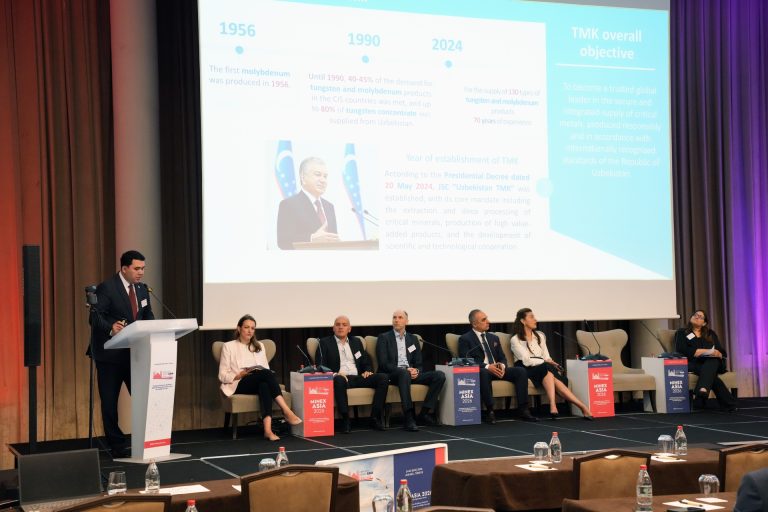
    TMK has held high-level talks with representatives of Ulba Metallurgical Plant to expand industrial and technological cooperation in Central Asia. The meeting, which took place at TMK’s head office, focused on strengthening bilateral partnerships and exploring opportunities for joint projects in both Uzbekistan and Kazakhstan.

    Discussions centred on advancing deeper processing of critical raw materials, increasing production of high value-added products, and enhancing the integration of regional industrial value chains. Both sides emphasized the strategic importance of developing downstream capabilities in critical minerals to improve competitiveness and reinforce regional supply chain resilience.

    Ulba Metallurgical Plant is a key industrial enterprise in Kazakhstan, specializing in the production of uranium, beryllium, tantalum and niobium, as well as finished products based on these metals. The potential collaboration is expected to contribute to broader industrial development across Central Asia.

  • Kazakhstan Advances Detailed Geological Mapping to Boost Investment Potential

    Kazakhstan Advances Detailed Geological Mapping to Boost Investment Potential

    On 13 February 2026, acting Chairman of the Committee of Geology Kanat Yerubayev presented progress on Kazakhstan’s state geological exploration program at a scale of 1:50,000, marking a strategic shift toward more precise subsurface mapping.

    According to Yerubayev, geology has become a key instrument for economic development amid growing global demand for copper, gold, rare earth elements and other critical minerals. Kazakhstan is moving from a 1:200,000 mapping scale to a more detailed 1:50,000 standard aligned with international practices to enhance data accuracy and attract investors.

    In 2025, detailed survey projects were prepared covering 100 thousand square kilometers. As a result, 29 prospective areas containing gold, copper, lead, zinc and other minerals were identified.

    Hydrocarbon basin exploration is also ongoing. In the Aral region, more than 20 promising blocks have been discovered and are expected to be offered at auction.

    Digital transformation remains a central component of the strategy. Through the Unified Subsoil Use Platform, 22 public services are now provided, and access has been granted to 66 thousand geological reports. Some 97.5% of primary geological data has already been digitized, with full completion expected in 2026.

    Over the next three years, approximately 240 billion tenge will be allocated to state geological exploration. The first newly identified promising sites are planned to be auctioned as early as 2027.

    “We are transitioning from the stage of data accumulation to deep analytics and investment implementation,” Yerubayev emphasized.

  • Finland Launches First Lithium Mine to Boost Europe’s Battery Supply Chain

    Finland Launches First Lithium Mine to Boost Europe’s Battery Supply Chain

    Finland has officially opened its first lithium mine, marking a milestone in Europe’s push to secure domestic battery raw materials and reduce reliance on imports.

    Mining company Keliber has begun lithium extraction in western Finland, initiating what is described as Europe’s first integrated battery-grade lithium production chain. According to Finnish broadcaster Yle, the project is designed not only to mine lithium ore but also to process it into battery-grade lithium chemicals within Europe.

    CEO Hannu Hautala said the operation gives Europe a strategic advantage by shortening supply routes compared to shipments from China. The company expects that local production will strengthen Europe’s battery manufacturing ecosystem, particularly as electric vehicle demand continues to grow.

    The project spans three municipalities — Kaustinen, Kokkola and Kronoby — forming a regional industrial cluster that links mining operations with processing facilities. The lithium concentrate will be refined into battery-grade material at a dedicated plant in Kokkola.

    The launch comes amid intensifying efforts across the European Union to develop domestic sources of critical minerals essential for electric vehicles and renewable energy technologies. By establishing a local lithium supply chain, Finland aims to position itself as a key contributor to Europe’s broader energy transition and industrial resilience strategy.