Tag: critical minerals

  • EU’s Push for Critical Minerals Raises Concerns Over Securitization and Democratic Backsliding

    EU’s Push for Critical Minerals Raises Concerns Over Securitization and Democratic Backsliding

    The European Union’s drive to secure access to critical raw materials is increasingly being framed as a matter of security, a shift that critics warn could undermine environmental protections, democratic processes, and the rights of local communities.

    Despite accounting for around 5% of the global population, the European Union consumes close to 20% of the world’s mineral resources, a gap that is widening as renewable energy, electric vehicles, digital technologies, and defence needs expand. This imbalance, analysts argue, has encouraged what they describe as a new form of “green imperialism,” aimed at maintaining mineral flows from the Global South and Europe’s periphery to major industrial centres.

    Over the past two decades, access to minerals has shifted from a trade and industrial policy issue to one increasingly treated as an existential security concern. The process accelerated after Russia’s invasion of Ukraine in 2022 and culminated in the EU’s Critical Raw Materials Regulation, adopted in 2024. The regulation designates “Strategic Projects” that benefit from faster permitting, privileged access to funding, and exemptions from certain environmental safeguards, with the stated goal of strengthening Europe’s strategic autonomy.

    Supporters argue the approach is necessary as demand for minerals such as copper, lithium, and rare earth elements is projected to multiply several times by 2030, while global production remains concentrated in a handful of countries. Critics counter that securitization has allowed industrial and political actors to push through projects by weakening environmental oversight, accelerating approvals, and marginalizing opposition.

    Concerns have grown following the European Commission’s designation of dozens of strategic projects through processes that critics describe as opaque and lacking public participation. Civil society organisations report that requests for environmental information have been denied on national security grounds, marking an unprecedented application of defence-related exemptions in environmental governance. In several member states, officials have also portrayed opposition from local communities and environmental groups as threats to public security or economic stability.

    Observers warn that this narrative risks fostering democratic erosion by restricting access to information, delegitimizing environmental activism, and prioritizing industrial interests over public participation. They argue that mining-related conflicts long associated with the “resource curse” in developing countries, such as social polarization, corruption, and weakened rule of law, are now emerging within Europe itself.

    While EU institutions maintain that strategic mineral development is essential for the green transition, defence, and industrial resilience, critics say the current approach reflects a structural contradiction. Efforts to accelerate extraction and processing are colliding with the EU’s own legal commitments to environmental protection, human rights, and transparency.

    As Europe moves to expand domestic mining and overseas supply chains, the outcome of this securitized approach to raw materials policy may determine whether the EU can reconcile strategic autonomy with its democratic and environmental foundations.

  • Ionic Rare Earths Secures UK Grant Offer for Belfast Magnet Recycling Plant

    Ionic Rare Earths Secures UK Grant Offer for Belfast Magnet Recycling Plant

    Australian-listed Ionic Rare Earths announced on Tuesday that its subsidiary has been offered a £12 million ($16.4 million) capital grant from the UK government to support the development of a rare earth magnet recycling facility in Belfast.

    The funding, offered under the UK’s DRIVE35 programme, would contribute to the capital costs of the plant operated by Ionic Technologies, the company’s recycling arm. The grant remains subject to due diligence and standard funding conditions.

    DRIVE35 is a government-backed initiative aimed at accelerating the industrialisation of zero-emission vehicle technologies and strengthening domestic supply chains for critical materials. The UK, in line with other major economies, is seeking to expand domestic production and recycling of critical minerals as part of its strategy to reduce dependence on overseas suppliers by 2035.

    Once operational, the Belfast facility is expected to produce around 400 tonnes per year of high-purity separated rare earth oxides recovered from end-of-life permanent magnets. The plant will use Ionic Technologies’ proprietary long-loop recycling process, designed to return recycled materials directly into high-value magnet applications.

    Ian Constance, chief executive of the Advanced Propulsion Centre UK, one of the bodies involved in administering DRIVE35 funding, said the project would support the UK’s automotive and advanced manufacturing sectors by strengthening access to strategically important materials.

    Ionic Rare Earths said it continues to engage with multiple potential partners and financiers as it works to secure the remaining funding required for the £85 million project.

  • Critical Mineral Stockpiles Would Last Only Weeks in a Global Supply Shock

    Critical Mineral Stockpiles Would Last Only Weeks in a Global Supply Shock

    Most economies would struggle to keep industry running for more than a few weeks if global supplies of critical minerals were suddenly disrupted, highlighting a major vulnerability at the heart of the modern economy.

    Critical minerals underpin everything from electric vehicles and renewable energy systems to electronics and defence equipment. Yet their production and processing are highly concentrated in a small number of countries, leaving supply chains exposed to geopolitical tensions, trade restrictions and conflict, according to the International Energy Agency.

    In response, governments have begun building strategic stockpiles intended to buffer industries against shocks. However, a review of publicly disclosed reserves shows that most countries remain poorly prepared. Outside a small group of exceptions, stockpiles are generally insufficient to sustain even priority sectors for more than a few months during a major disruption. In several cases, governments do not publish data at all, citing national security concerns.

    China stands out as the most resilient player. It not only dominates mining and processing for many critical minerals but also holds the world’s largest known state reserves. Industry estimates suggest China could support domestic demand for months in minerals such as rare earths and battery metals. Recent export controls on materials including gallium, germanium and graphite demonstrated how quickly this leverage can be exercised.

    Among major importers, Japan and South Korea are the most advanced. Japan overhauled its approach after a rare earth supply crisis in 2010 and now maintains reserves covering several months of demand for minerals such as cobalt and nickel. South Korea has built stockpiles equivalent to roughly two months of consumption, with systems designed for rapid release during emergencies.

    By contrast, the United States and Europe appear more exposed than commonly assumed. US reserves are largely focused on defence needs and would likely cover only weeks of broader economic demand in a large-scale disruption, despite recent efforts to rebuild stocks of rare earths, cobalt and antimony. Europe is still debating coordinated stockpiling under the Critical Raw Materials Act, leaving its industrial base vulnerable in the near term.

    Australia is pursuing a producer-led strategy, developing reserves based on domestically mined materials such as rare earths, antimony and gallium, both to improve national resilience and support allied supply chains. India, meanwhile, has acknowledged the need for stockpiles in its critical minerals strategy but remains at an early stage of implementation.

    The reality is stark: if global production halted tomorrow, most economies would be counting their remaining buffer in weeks rather than years. Governments would be forced to prioritise defence, energy and essential manufacturing, while other sectors would face immediate shortages.

    Stockpile size alone, however, does not determine resilience. Effectiveness depends on how well reserves match real demand, how quickly they can be released, and whether alternative supplies or substitutes are available. Small but targeted stockpiles, combined with diversified sourcing, can sometimes offer more protection than large but poorly aligned reserves.

    For mining companies and investors, this shift underscores a broader change. Critical minerals are no longer viewed solely as commodities but as strategic assets, with their value increasingly shaped by geopolitics, security and resilience as much as by traditional supply and demand dynamics.

  • Turkey’s Gokirmak Copper Mine Put Under Review as Owners Sound Out Buyers

    Turkey’s Gokirmak Copper Mine Put Under Review as Owners Sound Out Buyers

    The shareholders behind Turkey’s largest open-pit copper operation have begun exploring a potential sale, capitalising on a strong rally in copper prices, according to people familiar with the process.

    The owners — Akfen Holding AS, Ilbak Holding AS and Bacaci Yatirim Holding AS — have appointed Goldman Sachs Group Inc. to advise on a possible divestment of Acacia Mining Enterprises Inc., which operates the Gokirmak copper mine in Kastamonu province in northern Turkey. The mandate includes assessing interest in either a partial stake sale or a full exit, the sources said.

    Market participants indicate that the shareholders are seeking valuations of up to $1 billion for the entire asset, although pricing expectations could shift depending on demand and market conditions. The sale process remains confidential, and there is no certainty that a transaction will proceed.

    Copper has climbed sharply over the past year, supported by tightening global supply, disruptions at key mining operations, and accelerating demand linked to electrification, renewable energy and grid infrastructure. Prices recently pushed above $13,000 per tonne, reinforcing investor appetite for large-scale producing assets.

    Acacia Mining Enterprises holds an estimated 24 million tonnes of copper-ore reserves and produces roughly 120,000 tonnes of copper concentrate per year, according to disclosures by Ilbak Holding. Export revenues from the operation totaled $265 million in 2024, based on the latest figures from Turkey’s Chamber of Industry.

    Goldman Sachs declined to comment on its role, while the shareholder groups did not respond to requests for comment.

  • Sweden Approves Zoning Plan for Nunasvaara South Graphite Mine Near Kiruna

    Sweden Approves Zoning Plan for Nunasvaara South Graphite Mine Near Kiruna

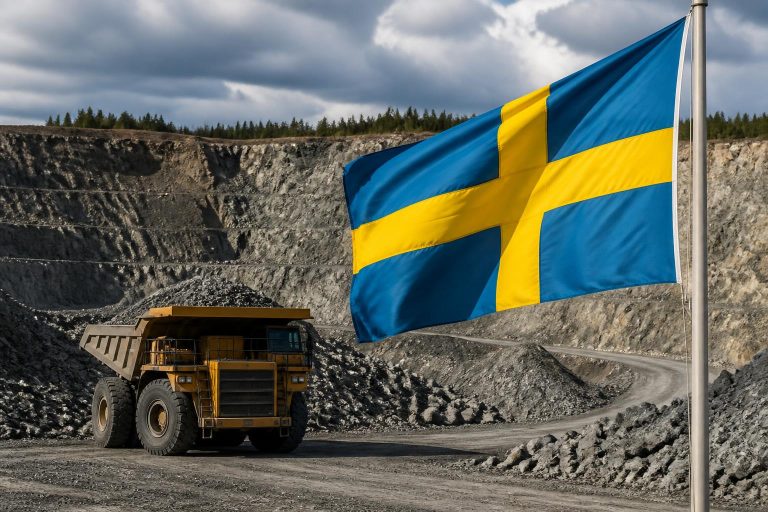
    Sweden has approved a zoning plan for the Nunasvaara South graphite mine near Kiruna, marking an important step in the country’s efforts to accelerate the development of domestic mining projects and strengthen Europe’s access to critical raw materials.

    The project is operated by Talga Group and is expected to produce about 100,000 metric tons of graphite ore annually. This output will be processed into roughly 20,000 tons of battery-grade anode material, primarily for use in electric vehicles and energy storage systems.

    Deputy Prime Minister Ebba Busch said the decision reflects Sweden’s strategic position within Europe’s critical minerals supply chain. She stressed that graphite plays a key role in steelmaking, battery production, and automotive manufacturing, adding that Swedish mining standards rank among the most sustainable globally.

    The decision aligns with the European Union’s broader strategy to expand domestic production of critical minerals and reduce dependence on imports from China and other suppliers, amid rising geopolitical tensions.

    Talga said it is currently focused on building its graphite processing facility in Luleå and expects mining operations at Vittangi to begin around 2029. According to company representatives, the zoning approval removes the most significant regulatory barrier, although several minor permits are still required before production can commence.

    Once operational, the Nunasvaara South mine is expected to supply around 2% of Europe’s projected graphite demand by 2030, with potential to scale up output in the future.

    Sweden is home to a wide range of mineral resources essential for green technologies, including batteries, magnets, telecommunications equipment, and defence applications. The country’s largest mining initiative is state-owned LKAB’s Per Geijer iron ore and rare earths project near Kiruna, which was designated a Strategic Project by the EU in 2025.

  • ERG to Invest Over $1 Billion in Mining and Metallurgical Projects in Kazakhstan

    ERG to Invest Over $1 Billion in Mining and Metallurgical Projects in Kazakhstan

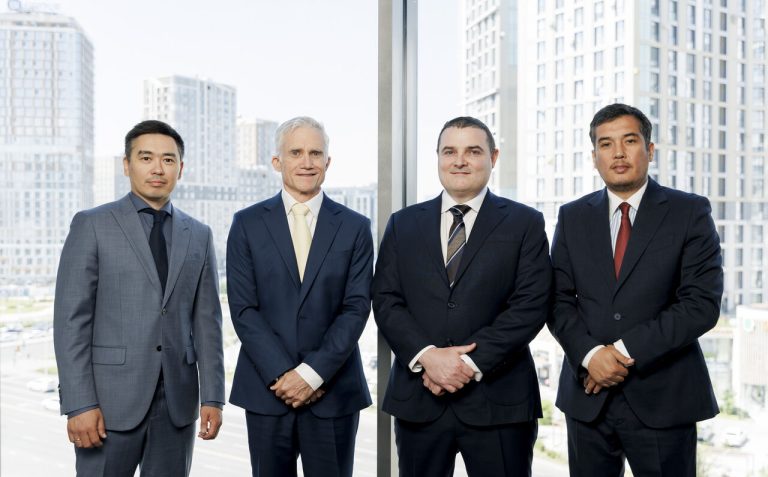
    Eurasian Resources Group (ERG) plans to invest more than $1 billion in its mining and metallurgical assets in Kazakhstan, marking the largest investment programme in the country in the company’s history.

    The funding will be directed primarily toward ERG’s existing operations, as well as the construction of new production facilities and projects focused on higher value-added products. The investment plans were announced by ERG CEO Shukhrat Ibragimov during a visit to one of the group’s Kazakh sites this week.

    Kazakhstan remains ERG’s core operating base, accounting for more than one-third of the country’s total metals and mining output. The company is also a major player in the Democratic Republic of Congo, where its Metalkol operation ranks among the world’s largest cobalt producers and is a significant source of copper. The government of Kazakhstan holds a 40% equity stake in ERG.

    Key projects scheduled for development this year include a hot briquetted iron (HBI) plant with a planned capacity of 2 million tonnes per year, an iron ore pelletising facility, and an 80-megawatt ferroalloy gas utilisation power station at the Aktobe ferroalloys plant in northwestern Kazakhstan.

    Additional investments will support the development of a new chromium mine with annual capacity of 7.5 million tonnes, as well as modernisation of the Aksu power station. At the Pavlodar alumina plant, ERG plans to build vertical calcination kilns, install new product filtration units, and add recovery facilities capable of producing up to 15 tonnes of gallium per year.

    Both gallium and HBI, which are used in semiconductors, advanced alloys and steelmaking, are not currently produced in Kazakhstan, making these projects strategically significant for the country’s industrial diversification.

    Separately, ERG signed a three-year cobalt supply agreement in 2024 with Electra Battery Materials to supply its refinery in Ontario, Canada. From 2026, ERG is expected to deliver around 3,000 tonnes of cobalt hydroxide annually. Once fully commissioned, the refinery could produce enough cobalt to support battery production for up to 1.5 million electric vehicles per year.

  • Why Junior Exploration Companies Remain the Weakest Link in Kazakhstan’s Mining Investment Cycle

    Why Junior Exploration Companies Remain the Weakest Link in Kazakhstan’s Mining Investment Cycle

    Kazakhstan’s Subsoil and Subsoil Use Code, introduced in 2018, significantly liberalised access to geological exploration and opened the market to junior mining companies. Since then, exploration investment has tripled to more than $1 billion, attracting international players such as Barrick Gold, Fortescue, Teck, Ivanhoe and First Quantum. However, despite this progress, junior explorers continue to face severe financing constraints that threaten the long-term sustainability of the country’s resource base.

    Junior companies typically operate at the highest-risk stage of the mining cycle, conducting early-stage exploration years before reserves can be confirmed under international standards such as JORC or KAZRC. This risk profile makes them unattractive to banks and cautious investors, while major mining companies usually only engage once resources are already proven. As a result, juniors struggle to raise capital despite being responsible for up to 80–90% of primary mineral discoveries globally.

    Industry experts note that Kazakhstan has the geological potential for world-class discoveries, similar to Mongolia’s Oyu Tolgoi deposit, which was initially discovered by a junior company before attracting a major multinational partner. In Kazakhstan, some successful partnerships have emerged, including foreign majors entering joint ventures with juniors, but these remain the exception rather than the norm.

    Analysts also warn that the rapid increase in exploration licences does not necessarily reflect genuine growth of the junior sector. A portion of licence holders conduct minimal fieldwork and focus on speculative resale of licences, undermining confidence in the junior market and creating unfair competition for companies carrying out real exploration.

    Another major challenge is regulatory uncertainty. Frequent changes in subsoil, environmental and tax legislation increase project risk, particularly at the transition from exploration to mining. Juniors preparing assets for sale or partnership with major companies can see project value eroded if regulatory conditions change materially at later stages.

    Experts argue that state involvement is essential to unlock junior financing. International practice shows that governments often share early-stage exploration risk through grants, co-investment funds, tax incentives or specialised venture exchanges. Canada, Australia, Saudi Arabia and Chile all provide structured public support for early exploration, recognising it as critical infrastructure for future mining development.

    Without targeted financial instruments such as exploration funds, risk-sharing mechanisms or state-backed venture vehicles, Kazakhstan risks underinvesting in early-stage geology. Industry specialists warn that without sustained junior exploration, the country’s mining sector could face a shrinking resource base in the decades ahead, undermining future production, processing and export potential.

  • USA Rare Earth plans French metal and alloy plant alongside Carester oxide facility

    USA Rare Earth plans French metal and alloy plant alongside Carester oxide facility

    USA Rare Earth (Nasdaq: USAR), through its Less Common Metals (LCM) subsidiary, plans to build a rare earth metal and alloy production facility in France next to an oxide processing plant being developed by Carester.

    Carester is currently constructing a 1,600-tonne-per-year oxide processing facility in Lacq, with commissioning scheduled for late 2026. USA Rare Earth’s proposed plant, with a capacity of 3,750 tonnes per annum, will be co-located at the Caremag site, creating an integrated European platform for rare earth processing, metal and alloy production.

    The French government has committed to partially funding the project, including credits covering up to 45% of eligible equipment costs and support of up to €130 million for real estate, according to the company.

    Shares of USA Rare Earth jumped by double digits following the announcement, amid broader gains across the rare earth sector driven by rising geopolitical tensions between the United States and Europe over Greenland. By midday trading in New York, the company’s shares were around $20, valuing it at more than $2.7 billion.

    USAR CEO Barbara Humpton said the French development would strengthen the company’s integrated rare earth value chain and benefit the United States and its allies. In parallel, USA Rare Earth is advancing a domestic mine-to-magnet strategy in the US anchored by its Round Top project in Texas, alongside a magnet manufacturing plant in Oklahoma and processing facilities in Colorado.

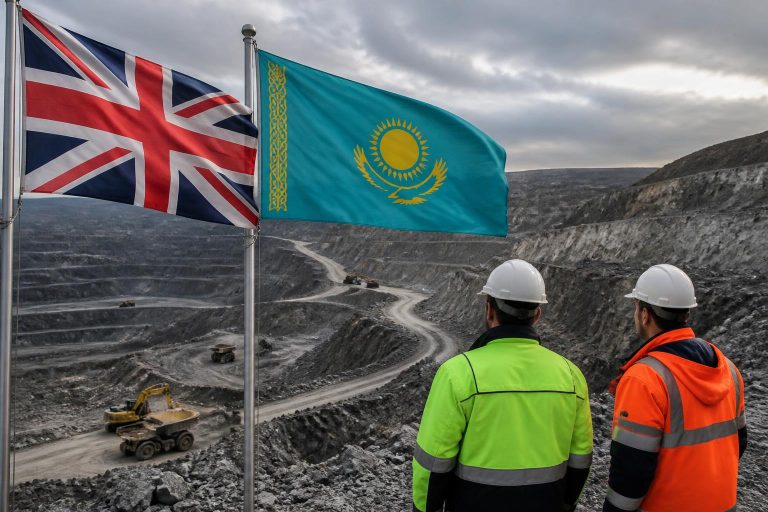
  • UK deepens engagement with Kazakhstan through green growth, critical minerals and people-to-people ties

    UK deepens engagement with Kazakhstan through green growth, critical minerals and people-to-people ties

    The United Kingdom is recalibrating its engagement with Kazakhstan, placing growing emphasis on green technology, critical minerals, education and cultural cooperation, according to UK Ambassador to Kazakhstan Sally Axworthy.

    In an interview with The Astana Times, Axworthy said London sees Kazakhstan as a key long-term partner as global supply chains shift and demand for sustainable growth increases. Rather than pressure or politics, the UK approach is built around practical cooperation, business links and human connections.

    She noted that the UK Embassy’s role extends well beyond traditional diplomacy, focusing on connecting Kazakh businesses with British expertise. This cooperation is already visible in Kazakhstan’s urban landscape, with major architectural landmarks designed by British firms. These include Khan Shatyr in Astana by Foster and Partners, the newly opened Almaty Museum of Arts by Chapman Taylor, and the Tselinny Center of Contemporary Culture by British architect Asif Khan.

    Beyond flagship projects, Axworthy stressed that small and medium-sized enterprises are a growing priority. Through the Green and Inclusive Growth Programme, the UK is supporting startups with financing and advisory services, particularly in green, digital and AI-driven sectors. She confirmed that a new venture capital fund is being set up to invest in startups, with a special focus on green technologies and women-led businesses.

    Digital innovation has also become a key area of cooperation. During the Digital Bridge forum, the UK Embassy supported an event where startups from across Central Asia pitched to investors, reflecting Kazakhstan’s ambitions in artificial intelligence and technology-led growth.

    On energy and climate policy, Axworthy said the UK’s own decarbonisation experience underpins its partnership offer. She noted that the UK now generates about half of its electricity from green sources and has cut emissions by nearly 50% since 1990 while expanding its economy by 80%. This, she said, aligns naturally with Kazakhstan’s net-zero target for 2060.

    Critical minerals are central to this cooperation. Axworthy outlined the UK’s updated Critical Minerals Strategy, which focuses on domestic production, financial infrastructure and resilient supply chains. While the UK is developing resources such as lithium and tin in Cornwall, she highlighted London’s role as a global financial hub and the importance of partnerships with resource-rich countries like Kazakhstan.

    She cited joint projects already under way, including rhenium recycling through a partnership between Maritime House and Zhezkazgan Redmet, with output expected to supply up to a quarter of global rhenium demand for uses such as aircraft turbines produced by Rolls-Royce. A vanadium project by Ferro-Alloy Resources could eventually meet up to 10% of global demand.

    Education and standards underpin these economic ties. Axworthy pointed to the opening of a branch campus of Cardiff University in Astana, offering courses in geological exploration, as well as cooperation on transparency standards through the Extractive Industries Transparency Initiative.

    Addressing geopolitics, Axworthy described Kazakhstan’s multivector foreign policy as logical given its geography and said the UK does not expect exclusive alignment. She recalled remarks by former UK foreign secretary David Cameron that partnership with Britain is about mutual security and prosperity, not choosing sides.

    Education and culture remain among the strongest pillars of bilateral relations. Nearly half of Kazakhstan’s Bolashak scholars have studied in the UK, and British universities such as De Montfort University, Coventry University and Cardiff now operate campuses in Kazakhstan. Axworthy also highlighted the role of the British Council and growing cultural links, from Kazakh language courses at Oxford University to increased interest from British creative industries.

    She added that Kazakhstan’s tourism and cultural potential is still under-represented in the UK, noting strong interest among British travellers and pointing to Almaty as a city with particular appeal.

  • Mkango opens UK’s first commercial rare earth magnet recycling plant in 25 years

    Mkango opens UK’s first commercial rare earth magnet recycling plant in 25 years

    Canadian rare earths company Mkango Resources has opened Britain’s first commercial facility in a quarter of a century to produce permanent magnets, marking a milestone in efforts to reduce Western dependence on China for critical minerals.

    The new plant, located in Birmingham and operated by Mkango’s subsidiary HyProMag, produces permanent magnets from recycled materials rather than newly mined ore. It uses a hydrogen-based recycling technology developed at the University of Birmingham, which enables rare earth magnets to be recovered from end-of-life products and converted into new magnetic material with significantly lower emissions than traditional mining and refining processes.

    The launch comes as Western governments seek to loosen China’s dominance in the rare earths supply chain. China currently accounts for around 70% of global rare earth mining and about 90% of refining, making alternative supply sources difficult to scale up quickly. Recycling has therefore emerged as one of the fastest ways to expand access to rare earth materials in the near term.

    Speaking to Reuters at the opening, UK Industry Minister Chris McDonald said breaking China’s grip on the supply chain was a strategic priority. The Birmingham plant supports Britain’s critical minerals strategy, which targets meeting 10% of domestic demand through local mining and 20% through recycling by 2035, supported by up to £50 million in government funding.

    The facility has an annual production capacity of 100 to 300 tonnes of permanent magnets, depending on shift patterns. According to Mkango, the plant is already attracting strong interest from automotive manufacturers. The company is also progressing plans to replicate the technology in the United States and Germany, expanding the recycling-based supply of rare earth magnets beyond the UK.

    Britain previously had magnet manufacturing capacity, but this disappeared roughly 25 years ago as production shifted overseas. The opening of the HyProMag plant represents a step toward rebuilding domestic capability in a sector seen as vital for electric vehicles, wind turbines and other clean energy technologies.