Tag: copper

  • Anglo American’s Sakatti Copper Project Gains EU Strategic Status

    Anglo American’s Sakatti Copper Project Gains EU Strategic Status

    Anglo American’s Sakatti copper and polymetallic project, situated in Finnish Lapland, has received the distinguished designation of a ‘Strategic Project’ by the European Commission under the European Union’s Critical Raw Materials Act (CRMA). This landmark recognition underscores Sakatti’s pivotal role in bolstering the EU’s security of supply for critical raw materials and ensures an expedited permitting process and streamlined development timelines for the project.

    Alison Atkinson, Anglo American’s Projects & Development Director, expressed pride in the achievement, remarking, “We are delighted to be awarded Strategic Project status for Sakatti – an important milestone for this exceptional mineral deposit with a high concentration of future-enabling metals, including a primary product of copper. This aligns seamlessly with Finland’s and the EU’s critical raw materials priorities.”

    The Sakatti project is poised to make a significant contribution to the EU’s ambitions of reducing reliance on external sources for critical minerals. Currently, the EU produces approximately 4% of its critical minerals but aims to increase this to 10%. Sakatti is projected to deliver an annual production of approximately 100,000 tonnes of copper equivalent metal starting in the early 2030s, addressing the growing demand for metals essential to decarbonisation, advanced technologies, and sustainable energy systems.

    The Sakatti deposit was discovered in 2009, a milestone in Anglo American’s two-decade presence in Finland. Located 15 kilometres north of Sodankylä, the project is set to become one of Anglo American’s innovative FutureSmart mines—underground operations characterised by cutting-edge automation, low carbon emissions, and minimal environmental impact.

    Finland’s rich natural resources, advanced processing capabilities, and robust investment in the critical minerals value chain position the country as a cornerstone in Europe’s sustainable raw materials strategy. With Sakatti’s development, Anglo American aims to further cement Finland’s role as a reliable supplier of responsibly sourced materials vital to the green energy transition and a low-carbon future.

  • Anglo Asian Mining PLC Mines First Ore from Gilar Underground Deposit at Gedabek

    Anglo Asian Mining PLC Mines First Ore from Gilar Underground Deposit at Gedabek

    Anglo Asian Mining PLC, an AIM-listed gold, copper, and silver producer focused on Azerbaijan, has successfully extracted the first ore from its new underground mine, Gilar, located at the Gedabeksite.

    A maiden JORC mineral resources estimate, released on 11 December 2023, revealed that the Gilar deposit holds 6.10 million tonnes of mineralisation, with average grades of 0.88% copper (totaling nearly 54,000 tonnes) and 1.30 g/t gold (containing over 255,000 ounces).

    Earlier this month, the company mined 1,267 tonnes of ore from Gilar, averaging 0.65% copper(peaking at 1.63%) and 1.36 g/t gold (reaching up to 3.27 g/t). While development tunnels are still under construction, the extracted ore will be stockpiled until processing begins.

    Anglo Asian aims to steadily increase production in the coming months, targeting 50,000 to 60,000 tonnes of ore per month.

    Reza Vaziri, CEO of Anglo Asian, stated:
    “We are thrilled to reach this key milestone at Gilar after years of exploration and development. Our team’s dedication has been instrumental in this achievement. With 54,000 tonnes of copper and 255,000 ounces of gold confirmed, Gilar is pivotal to our strategy of becoming a mid-tier, copper-focused producer. We are now focused on scaling production to meet our monthly target.”

  • Arras Minerals Announces Encouraging Drilling Results at Elemes Project in Kazakhstan

    Arras Minerals Announces Encouraging Drilling Results at Elemes Project in Kazakhstan

    Arras Minerals Corp. (TSX-V: ARK, OTCQB: ARRKF) has announced the results from the final five drill holes of its initial Phase 1 program at the Berezski target on its Elemes project in Northeast Kazakhstan. The results confirm the presence of significant copper-gold porphyry and epithermal-style mineralization, further bolstering the project’s potential.

    The Elemes project is strategically located in the Bozshakol-Chingiz Magmatic arc, near Kaz Minerals’ Bozshakol Copper Mine, a major operation producing substantial amounts of copper and gold. Arras’s Phase 1 drilling program targeted geophysical and geochemical anomalies identified through extensive exploration work, including airborne magnetic surveys, ground IP surveys, and soil sampling.

    Key Highlights from the Final Drill Holes:

    • EL24005: A remarkable 547m intercept grading 0.70% copper equivalent (CuEq), including higher-grade sections up to 1.15% CuEq, starting near surface. The hole ended in strong mineralization, suggesting further potential at depth.
    • EL24006: 56m grading 0.68% CuEq, including a 20m section at 1.02% CuEq, indicating another porphyry center approximately 1km west of EL24005.
    • EL24010 & EL24011: While these holes returned lower grades, they provided valuable geological information, indicating the periphery of a porphyry system and helping guide future exploration.

    CEO’s Perspective:

    Tim Barry, CEO of Arras Minerals, expressed enthusiasm about the Phase 1 results. He highlighted the strong indications of another porphyry center at Berezski, particularly the high-grade intercepts in EL24005 and the discovery of porphyry-style mineralization in EL24006. Barry emphasized the significant exploration potential remaining at Berezski, with approximately 90% of the target still untested.

    Phase 2 Exploration Plans:

    Arras is already planning a Phase 2 program, subject to financing, which will include:

    • Ground magnetic surveys at Berezski and Aimandai.
    • Detailed analysis of soil samples.
    • Approximately 20,000m of drilling at Berezski.
    • Initial IP surveys and approximately 5,000m of drilling at the Aimandai target.

    President’s Commentary:

    Darren Klinck, President of Arras Minerals, echoed Barry’s excitement and highlighted the team’s successful exploration efforts. He noted the two high-priority target areas at Berezski and the potential for new discoveries within the large, prospective land package. Klinck also mentioned the planned exploration at the Aimandai target, a 14km copper-in-soil anomaly. He added that Arras is well positioned to have multiple drill rigs operating across its license package in the coming year.

  • Poland May Extend Copper Output Tax Reduction Beyond 2027

    Poland May Extend Copper Output Tax Reduction Beyond 2027

    Poland’s Finance Minister, Andrzej Domański, announced on Monday that a planned reduction in the copper output tax could be extended beyond 2027. The government is considering prolonging tax relief measures to support the industry amid economic challenges.

    Earlier in the day, Domański confirmed that the tax cuts would lower government revenues by approximately 500 million zlotys ($123.4 million) in 2026 and 700 million zlotys in 2027. The move aims to provide financial relief to copper producers, ensuring competitiveness in the global market.

    The Polish government’s decision on whether to extend the tax reduction beyond 2027 will depend on economic conditions and industry performance in the coming years.

  • China Imports Up to 70% of Critical Metals from Central Asia

    China Imports Up to 70% of Critical Metals from Central Asia

    Despite the lack of official data on the export of rare earth metals by Central Asian countries, an analysis of ore, slag, and ash exports reveals interesting trends. These exports often include critical resources highly sought after by leading global powers, particularly metals such as molybdenum, titanium, and vanadium.

    According to Trademap.org data from 2019 to 2023, Central Asian countries exported a wide range of ores and concentrates, including copper, iron, precious metals, zinc, lead, molybdenum, chromium, and niche metals such as niobium and tantalum.

    In recent years, the market has also seen the introduction of products such as tin, tungsten, and titanium ores. For example, copper ore exports showed stable growth—from approximately $1.17 million in 2019 to around $3.15 million in 2023. Iron ore peaked at $1.6 million in 2021 before experiencing a decline in export volumes in subsequent years.

    One notable trend is the significant increase in molybdenum ore exports, which surged from about $4 million in 2019 to approximately $144 million in 2023. This is a clear reflection of increased global demand and investment.

    An analysis of trade with the European Union under the category “26 Ores, Slags, and Ash” shows that molybdenum stands out: its exports increased from around $11 million in 2021 to nearly $60 million in 2023. In this segment, Kazakhstan holds a dominant position, providing nearly the entire cumulative export value, while contributions from other Central Asian countries remain significantly lower.

    Central Asian countries’ export portfolios reveal a trend towards transitioning from traditional raw materials such as copper and iron to more valuable niche ores, especially molybdenum. This trend is evident both in the global market and in trade with the European Union, where Kazakhstan acts as a key supplier.

    Will the European Union be able to position itself as a key importer of critical metals from Central Asia? The future will tell.

  • KGHM Launches Cost Optimisation Plan to Boost Profitability

    KGHM Launches Cost Optimisation Plan to Boost Profitability

    KGHM Polska Miedź SA, Europe’s leading copper producer, is launching a comprehensive Cost Optimisation Plan aimed at strengthening its investment capabilities for future growth. The initiative focuses on enhancing operational efficiency across the company’s core business processes.

    “As the Management Board, we are obliged to constantly seek opportunities for both efficiency and cost optimization. Current macroeconomic conditions, copper price levels and ongoing talks on a possible change to the copper tax formula create favorable conditions for intensifying investment activities. Our goal is to increase the resource base of domestic assets, which are the future of KGHM, in the long term,” said Andrzej Szydło, President of the Management Board of KGHM Polska Miedź SA. “In terms of employment, we will focus primarily on increasing work efficiency, and not on cost issues that are currently resolved,” he added.

    The optimisation program will initially target several key areas including procurement, technological processes, waste management, and water systems, with additional focus areas to be identified during the review process.

    As Europe’s largest copper producer, KGHM plays a vital role in both Poland’s economy and the European Union’s strategic raw materials sector, contributing approximately half of the EU’s copper mining output.

  • Kazakhmys Corporation Explores New Ore Enrichment Technologies

    Kazakhmys Corporation Explores New Ore Enrichment Technologies

    In a bid to bolster its resource base, Kazakhmys Corporation is actively seeking new technologies in ore dressing. A recent hackathon held at the Karaganda Technical University named after S.D. Saginov focused on innovative solutions for flotation, a crucial process in the metallurgical industry.

    As many of Kazakhmys’ deposits are nearing depletion and current resource extraction methods are outdated, the corporation is looking to the future.

    “The challenge now is to find engineering solutions that are applicable to our specific cases – our ore, its chemical composition and properties,” explained Saken Shayakhmetov, Director of Sustainable Development at Kazakhmys JSC. “If we can significantly increase efficiency through these solutions, it will be a major breakthrough.”

    Three promising projects from the hackathon will be piloted on a smaller scale production. If proven successful, they will be implemented in larger-scale operations across the corporation.

    This initiative aligns with the government’s focus on sustainable development in the mining industry.

    “Today, we are tackling a specific problem – innovative copper leaching methods,” stated Sayasat Nurbek, Minister of Science and Higher Education of Kazakhstan. “This approach allows for the extraction of valuable minerals without disrupting the land, minimising mining damage, and promoting environmental protection.”

    Beyond technological advancements in ore dressing, Kazakhmys Progress, a subsidiary of Kazakhmys, has achieved a significant milestone.

    “Kazakhmys Progress” has launched the first production line of industrial selenium in Balhash. This marks the beginning of an environmentally friendly industrial-scale production process using a unique vacuum distillation method. The technology was developed by researchers at the Institute of Metallurgy and Enrichment, Satbayev University.

  • East Star Resources Discovers New Copper and Gold Deposits in Kazakhstan

    East Star Resources Discovers New Copper and Gold Deposits in Kazakhstan

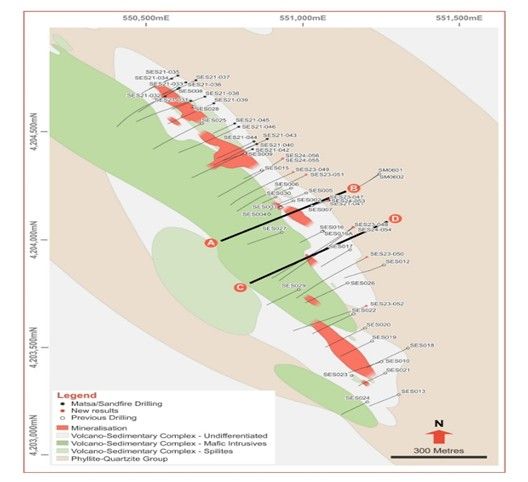
    British company East Star Resources Plc has released interim results from its geological exploration at three sites in Kazakhstan—Verkh-Uba, Talovskoye, and Snezhnoye. Having operated in the country for over three years, the investor is searching for copper and gold, with Verkh-Uba being considered the most promising site.

    In early February, the company completed drilling three exploratory wells at Verkh-Uba, discovering new copper deposits beyond previously explored areas. A total of 238 core samples have been sent to the ALS KazLab laboratory in Karaganda for analysis. According to a preliminary JORC estimate, the deposit contains 20.3 million tonnes of ore with an average copper content of 1.16%, zinc at 1.54%, and lead at 0.27%.

    East Star Resources plans to continue exploration in 2025 to assess the site’s development potential. The company aims to start open-pit mining of non-ferrous metals in the coming years.

    In addition to copper deposits, the Snezhnoye site has also shown potential, with initial studies identifying a significant gold anomaly in an area previously used for small-scale artisanal mining.

  • KGHM Polska Miedź SA, Ministry of Finance, and Ministry of State Assets Discuss Changes to Copper Tax Formula

    KGHM Polska Miedź SA, Ministry of Finance, and Ministry of State Assets Discuss Changes to Copper Tax Formula

    In a significant development for the Polish mining industry and the country’s economy, KGHM Polska Miedź SA, the Ministry of Finance, and the Ministry of State Assets held talks on January 27, 2025, in Warsaw to discuss proposed changes to the formula of the so-called copper tax and the long-term development of KGHM’s domestic assets through strategic investments in Poland.

    As a key entity for the Polish economy and the largest producer of copper in Europe, KGHM Polska Miedź SA is responsible for almost 50% of the production of mined copper in the European Union, making it a strategic raw material for the European Union. With a strong focus on sustainable growth and responsible mining practices, KGHM continues to strengthen its position as a leading global copper producer.

    The meeting was attended by KGHM Polska Miedź SA’s Management Board, Minister of Finance Andrzej Domański, Deputy Minister Jarosław Neneman, and Deputy Minister of State Assets Robert Kropiwnicki. The primary objective of the meeting was to address the proposed changes to the formula of the copper tax and the possibilities of enhancing KGHM’s long-term development in Poland with strategic investments.

    The copper tax, introduced in 2012, is a significant factor in the profitability of KGHM’s operations, and the proposed changes may impact the company’s financial health. The talks aim to strike a balance between the government’s fiscal objectives and KGHM’s need for a sustainable business environment to ensure the company’s continued growth and success.

    Further details regarding the outcomes of the meeting and the proposed changes to the copper tax have not been disclosed at this time. However, both KGHM and the respective governmental bodies remain committed to fostering a positive and mutually beneficial relationship that supports Poland’s economic growth and strengthens its strategic position within the European Union.

  • KAZ Minerals Bozshakol to Extract Over 6 Million Tons of Construction Materials by 2029

    KAZ Minerals Bozshakol to Extract Over 6 Million Tons of Construction Materials by 2029

    KAZ Minerals Bozshakol, controlled by Kazakh businessmen Vladimir Kim and Oleg Novachuk, plans to extract 6.076 million tons of crushed and gravelly soil, as well as gravelly sand, from the Northern deposit between 2025 and 2029. This volume represents the site’s entire balance reserves.

    The Northern deposit, located 60 km west of Ekibastuz in Pavlodar Region, covers 169.9 hectares. Excavation will be carried out using heavy machinery, with materials transported for constructing embankment dams at the Bozshakol copper mine. Workers will reside in a shift camp, and operations will require 2,280 cubic meters of diesel fuel.

    Bozshakol is one of KAZ Minerals’ key sites, producing 79,200 tons of copper in January–September 2024. In comparison, Aktogay contributed 172,200 tons, while operations in East Kazakhstan and Kyrgyzstan produced 35,600 tons.

    Vladimir Kim, who owns 63.5% of KAZ Minerals, ranks fourth among Kazakhstan’s richest individuals, with a net worth of $3.6 billion (Forbes) or $7.23 billion (Bloomberg). Oleg Novachuk, with a 36.5% stake, has an estimated wealth of $265 million.