Tag: copper

  • Tajikistan Targets Role in Global Rare Earth Supply Chain, Eyes Lithium and Antimony Production Expansion

    Tajikistan Targets Role in Global Rare Earth Supply Chain, Eyes Lithium and Antimony Production Expansion

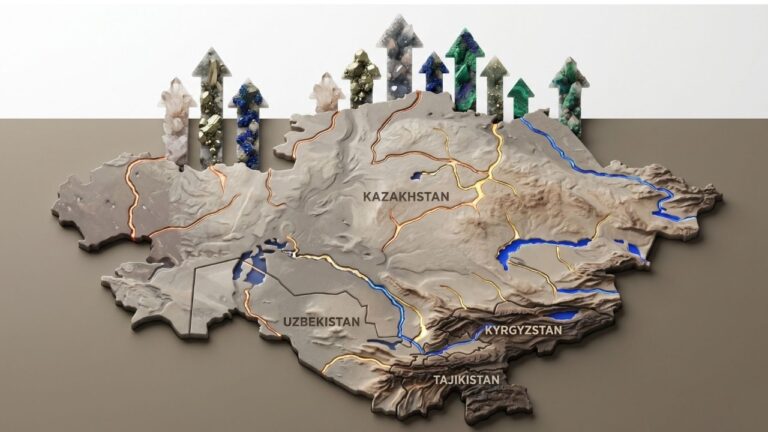
    Tajikistan holds deposits of 10 out of 12 metals critical for the global energy transition, with six already being mined, Minister of Industry and New Technologies Sherali Kabir said at the Dushanbe 2025 International Investment Forum, according to Asia-Plus.

    Kabir outlined the government’s vision for Tajikistan to become an active player in the global rare earth supply chain, emphasizing that the country was once a hub for rare earth production within the former Soviet Union. Of the three rare earth processing plants that existed in the USSR, two were located in Tajikistan and one in Russia.

    Authorities are now in talks with international partners to modernize these facilities, with Kabir noting that the government expects “very good results” from these negotiations in the near future.

    Tajikistan is also doubling down on antimony, one of its most abundant resources. The country ranks second globally in terms of antimony reserves. Four new processing plants are in the pipeline, at various stages ranging from feasibility studies to construction.

    The minister also highlighted the growing copper industry, confirming that domestic production has already begun and that the government plans to significantly expand output by attracting foreign investment.

    Kabir further revealed that Tajikistan has large deposits of nickel and lithium ores, adding that the country’s ambition is to become the first among CIS nations to launch lithium production — a crucial material for batteries and clean energy technologies.

  • Japan, Spain and South Korea Warn of Unsustainable Copper Market as Smelting Fees Collapse

    Japan, Spain and South Korea Warn of Unsustainable Copper Market as Smelting Fees Collapse

    Japan, Spain, and South Korea have issued a rare joint statement voicing alarm over the steep decline in copper treatment and refining charges (TC/RCs), warning that the current market conditions threaten the sustainability of both smelters and miners.

    The statement — released following an online meeting of the three countries’ industry ministries — comes amid mounting pressure on global copper smelters, who face shrinking profit margins due to tight concentrate supplies and growing smelting capacity in China.

    In June, several Chinese smelters agreed to process copper concentrate for Chilean miner Antofagasta at no charge, underscoring the severity of the downturn.

    “We are deeply concerned that this deterioration in TC/RCs is prompting a reassessment of copper smelting operations worldwide, with several companies already indicating intentions to scale down or withdraw from copper concentrate smelting,” the ministries said.

    TC/RCs — fees paid by miners to smelters for processing copper concentrate into refined metal — have traditionally been a key revenue stream for smelters. However, in some spot deals this year, TC/RCs have turned negative, forcing smelters to pay miners to secure feedstock.

    The ministries warned that this imbalance undermines the sustainable coexistence of smelting and mining industries and increases dependency on a narrow group of supplier countries, a scenario they described as “undesirable” for both producers and consumers.

    “We hope TC/RCs will return to sustainable levels for copper concentrate trading,” the statement said, adding that the three countries would continue engaging with stakeholders to establish a resilient and sustainable copper supply chain.

    Naoki Kobayashi, deputy director of Japan’s Ministry of Economy, Trade and Industry (METI), said the issue will be raised during LME Week in London, one of the global metals industry’s key gatherings.

    Japan’s leading copper smelters, including JX Advanced Metals and Mitsubishi Materials, have already announced plans to scale back concentrate processing due to eroding margins, reflecting a broader trend of contraction across the global smelting sector.

  • Rio Tinto Targets Strong Q4 Finish to Meet Iron Ore Shipment Goals Amid China Demand Surge

    Rio Tinto Targets Strong Q4 Finish to Meet Iron Ore Shipment Goals Amid China Demand Surge

    Rio Tinto said on Tuesday that it will need a robust fourth-quarter performance to hit its 2025 iron ore shipment target, as Chinese demand strengthens on the back of infrastructure-driven stimulus and front-loaded global investment ahead of potential new tariffs.

    The world’s largest iron ore miner reported 84.3 million tonnes of iron ore shipped from its Western Australia operations during the third quarter, slightly below the Visible Alpha consensus estimate of 85.5 million tonnes. Despite the shortfall, iron ore prices have climbed to their highest levels since February, fuelled by Beijing’s targeted infrastructure programs that have spurred steel production.

    China’s iron ore imports reached a record high in September, according to Rio, reflecting renewed industrial momentum despite ongoing economic challenges such as deflation, weak manufacturing, slow exports, and persistent property market struggles.

    Rio reaffirmed its annual shipment guidance of 323–338 million tonnes, but noted that four cyclones earlier this year disrupted output, meaning results are likely to fall near the lower end of the range.

    “A strong Q4 performance is required as the system remains tightly balanced and has limited ability to mitigate further losses,” the company said.

    Shares of Rio Tinto (ASX: RIO) jumped 3.6% in early trading to their highest since late September, tracking gains across major iron ore producers. BHP and Fortescue Metals Group also rose more than 2% each.

    Under its new CEO Simon Trott, who restructured Rio into three main divisions — iron ore, aluminium and lithium, and copper — the company continues to focus on safety and diversification. Rio confirmed that shipments from its Simandou project in Guinea remain on track to begin before year-end, despite a recent fatality at the site.

    Beyond iron ore, Rio reported record copper production at Oyu Tolgoi in Mongolia, forecasting a more than 50% increase in copper output this year as demand surges for energy transition metals. The miner also logged a second consecutive record quarter for bauxite production, prompting an upward revision of its full-year forecast to 59–61 million tonnes, supported by strong performance at the Amrun mine in northern Australia.

  • Mundoro Capital Grants BHP Option to Earn 100% Interest in Serbian Copper-Gold Licences

    Mundoro Capital Grants BHP Option to Earn 100% Interest in Serbian Copper-Gold Licences

    Canadian exploration and development company Mundoro Capital Inc. has granted an earn-in option to a subsidiary of BHP Group for seven copper and gold exploration licences within Serbia’s Timok Magmatic Complex, one of the most prolific mineral belts in the Tethyan region.

    Under the agreement, BHP can earn up to 100% ownership of the licences — which span 418 square kilometres — by funding US$35 million (€30 million) in exploration expenditures over ten years, the company announced on Monday.

    BHP will also make annual option payments beginning at $323,000, increasing by 2% annually, and milestone payments of $2 million each for specific resource declarations, up to a total of $10 million, or a single $10 million payment upon exercising the option if no resource is declared.

    Mundoro will initially operate the project, managing exploration activities and earning operating fees. Once BHP invests at least $20 million or completes 40,000 metres of drilling, it may assume operational control. Upon exercising the option, BHP will also start making annual advance royalty payments to Mundoro.

    To date, Mundoro and its partners have invested C$15.4 million ($11 million) into the project, which hosts multiple exploration targets. The most advanced prospects include:

    Skorusa copper-gold porphyry system, with an intercept of 201.2 metres grading 0.11% Cu and 0.11 g/t Au.

    Tilva Rosh prospect, where trenching returned 12 metres at 30.39 g/t Au and 171.27 g/t Ag.

    Other promising targets include Markov Kamen, Orlovo, D-vein, Prekostenski, Zlot 1–3, Bukova, Tilva Mare, Glavica, Bacevica North, Gorunov, Oblez SE, and Branik.

    The Timok Magmatic Complex is home to several major deposits and producing mines, including Cukaru Peki, Bor, Majdanpek, Veliki Krivelj, and Coka Rakita, positioning this partnership to further strengthen BHP’s exploration footprint in Europe’s key copper-gold corridor.

  • Aurubis Sets Record Copper Premium as Global Supply Tightens

    Aurubis Sets Record Copper Premium as Global Supply Tightens

    Europe’s largest copper producer, Aurubis, will charge a record $315 per metric ton premium for refined copper sales to European customers in 2026, according to three market sources cited on Tuesday.

    The surcharge — applied on top of the London Metal Exchange (LME) benchmark price — represents a 38% increase from the $228 per ton level maintained over the previous two years. The company declined to comment on the pricing decision.

    The sharp rise comes amid mounting fears of a global copper shortage that has driven prices to a 16-month high of $10,800 per ton on Monday. LME copper has climbed about 8% in the past month, trading at $10,698.50 as of Tuesday morning (1027 GMT).

    The market has been rattled by a series of production setbacks across major mining regions. Freeport-McMoRan declared force majeure at its Grasberg mine in Indonesia — the world’s second-largest copper operation — following a deadly mudslide, forcing the company to cut its 2025 and 2026 sales forecasts. Additional disruptions have hit the Kamoa-Kakula mine in the Democratic Republic of Congo and Chile’s El Teniente mine.

    According to Société Générale, the loss of roughly 273,000 tons of copper output from Grasberg between September and December will push the market into its largest supply deficit since 2004. Bank of America has similarly revised its outlook, more than doubling its projected 2026 deficit to 350,000 tons.

    Analysts note that while demand for copper continues to rise — driven by electrification, renewable energy, and grid expansion — supply growth remains constrained by operational challenges and long lead times for new projects.

  • Middle Island Resources Becomes Serbia’s Largest Mineral License Holder After Konstantin Acquisition

    Middle Island Resources Becomes Serbia’s Largest Mineral License Holder After Konstantin Acquisition

    Australian explorer Middle Island Resources has secured a dominant position in Serbia’s mining sector after acquiring fellow Australian firm Konstantin Resources, gaining ownership of 14 mineral exploration licenses covering 62,000 hectares — the largest portfolio held by any company in the country.

    The licenses are spread across three key project areas: Bobija, Priboj, and Timok. While primarily targeting gold and copper, the assets also show potential for silver, lead, and zinc, according to reports from Mining, cited by Ekapija.

    Middle Island has already commenced exploration at the Bobija project, which will be the company’s initial focus. Located roughly 100 kilometers southwest of Belgrade, the project spans 20,800 hectares and includes three granted exploration permits — Bobija, Bobija East, and Kamenita Kosa. In addition, Middle Island holds an application for the Orovica area and a ten-year option for two mining licenses owned by local operator Bobija doo Ljubovija.

    The acquisition underscores Serbia’s growing importance as a European hub for critical gold and copper exploration, with Middle Island positioning itself at the forefront of this activity.

  • Zijin Mining Surpasses $100B Valuation, Becomes World’s Third-Largest Miner

    Zijin Mining Surpasses $100B Valuation, Becomes World’s Third-Largest Miner

    China’s Zijin Mining Group has overtaken Glencore to become the world’s third-largest mining company by market capitalization after crossing the US$100 billion mark for the first time. On September 25, 2025, a record high in its Shanghai-listed shares lifted Zijin’s total market value to US$103 billion, placing it behind only BHP (US$140 billion) and Rio Tinto (US$111 billion), according to Mining.com.

    Glencore, by comparison, stood at about US$53 billion in market capitalization. Zijin’s rise cements its status as a global industry heavyweight and highlights the increasing role of Chinese mining companies in international markets.

    The valuation milestone follows strong financial results. In the first half of 2025, revenue rose 11.5% year-on-year to US$23.6 billion, driven by higher commodity prices and increased production. Gross profit margins for mineral products expanded by three percentage points to 60.23%. Mined gold contributed 38.6% of the gross profit, nearly equalling copper’s 38.5% share.

    Earlier this year, Zijin ranked 365th on the Fortune Global 500 list by revenue and 209th by profit, making it the fourth-largest metals and mining company worldwide and the largest among Chinese peers. It also recorded the highest return on assets (ROA) in the global sector.

    Founded in the 1980s from a single gold mine in Fujian Province, Zijin has grown through global acquisitions, including Serbia’s Bor copper mine and Ghana’s Akyem gold mine. The company acknowledges operating in a challenging environment shaped by geopolitical tensions, resource nationalism, and supply chain disruptions, alongside the mining sector’s structural issues of declining ore grades and rising costs.

    Zijin continues to benefit from robust gold demand—prices rose 27% in the first half of 2025—boosted by central bank purchases and investor interest. Copper demand, fueled by the energy transition, also strengthened, though zinc prices remained steady and lithium underperformed due to oversupply.

  • Middle Island Resources Begins Exploration at Bobija Polymetallic Project in Serbia

    Middle Island Resources Begins Exploration at Bobija Polymetallic Project in Serbia

    Australian copper and gold explorer Middle Island Resources announced on Wednesday that it has commenced exploration activities at the Bobija polymetallic project in western Serbia, which is prospective for gold, silver, copper, lead, and zinc.

    “The Bobija deposit and surrounding region remains inadequately explored and offers potential for the delineation of significant polymetallic mineralisation through a systematic exploration program. Furthermore, the full extent of the gold mineralisation is yet to be fully quantified, with gold potentially representing a major component,” the company stated.

    Earlier this month, Middle Island signed a binding share sale and purchase agreement to acquire local peer Konstantin Resources, whose Serbian portfolio includes the Bobija, Priboj, and Timok projects. Together, these projects cover 620 square kilometres and are prospective for gold and copper.

    The Bobija project itself comprises six mineral licences across 208 square kilometres. Historic work in the area included exploratory underground development and multiple drilling campaigns during the 1960s and 1980s by the former Yugoslav government, focused on barium, lead, zinc, and silver. Recent limited rock chip sampling by Konstantin Resources returned promising results, including assays of up to 5.24 grams per tonne of gold, 120 g/t of silver, 4.66% zinc, and 4.36% lead.

    Middle Island will seek shareholder approval for the acquisition of Konstantin Resources at a meeting scheduled for late October. The projects are located within the Western Tethyan Belt, a globally significant mineral province hosting major deposits such as Zijin Mining’s Čukaru Peki and Dundee Precious Metals’ Čoka Rakita in Serbia, as well as Rio Tinto’s Jadar project and Dundee’s Vareš project in Bosnia and Herzegovina.

  • Boliden Warns of Investment Impact from Finnish Mining Tax Proposal

    Boliden Warns of Investment Impact from Finnish Mining Tax Proposal

    Boliden, the Swedish mining giant, has issued a stark warning to the Finnish government over its proposed tax reforms, which it claims will have far-reaching consequences for the EU’s critical metal supplies. The company, which owns the Kevitsa copper and nickel mine in Finland, estimates that the proposed tax hike will result in a 20-30 million euro annual increase in costs, the bulk of which is due to a quadrupling of the recently introduced Finnish mining tax.

    In a strongly worded submission to the Finnish government, Boliden argues that the proposed tax reforms are “inadequately prepared” and lack proper impact assessments, which could lead to “serious consequences” for the investment climate in Finland. The company also notes that the current proposals should be withdrawn in their entirety.

    The proposed tax hike has sparked concerns among EU policymakers, as both copper and nickel, as well as cobalt and PGMs (platinum group metals), are designated as strategic and/or critical metals by the EU. The Kevitsa mine is one of the largest producers of these metals in the EU, and any disruption to its operations could have significant implications for the bloc’s raw material supplies.

    “We understand the need for a balanced tax system, but this proposal is unacceptable,” said a Boliden spokesperson. “The increased tax burden will not only harm our business but also threaten the EU’s critical metal supplies. We urge the Finnish government to reconsider its proposal and engage in a more inclusive and evidence-based decision-making process.”

    The Finnish government is expected to make a final decision on the tax reforms in the coming weeks.

  • Mongolia Unveils Oyut Copper Deposit with 357 Million Tons of Ore

    Mongolia Unveils Oyut Copper Deposit with 357 Million Tons of Ore

    A newly discovered mineral deposit named Oyut has been identified within the territories of Bayan-Undur and Jargalant districts in Mongolia’s Orkhon province, as reported by Montsame. Preliminary geological exploration indicates that the Oyut deposit contains approximately 357 million tons of ore reserves, positioning it as a potential asset of significant scale, comparable to Mongolia’s largest copper and molybdenum ore mining operation at Erdenet.

    On September 7, Mongolian Prime Minister Zandansahtar Gombojav attended the official opening and preparatory activities for the operational launch of the Oyut deposit. The Prime Minister has authorised a feasibility study for the construction of a concentrator designed to process between 5 to 10 million tons of ore annually. Early estimates suggest that the deposit could sustain operations for 30 to 35 years, marking it as a long-term strategic resource. The initial geological exploration was conducted independently by specialists from the Erdenet Mining Corporation, with senior engineers from the corporation overseeing the project’s design and construction.

    Prime Minister Gombojav emphasised Mongolia’s constitutional commitment to equitable resource distribution, stating that the benefits derived from subsoil resources will be consolidated into the National Sovereign Wealth Fund and fairly allocated to all citizens. The Oyut copper deposit is strategically located approximately 8 kilometres from the Erdenetyn-Ovoo deposit, the foundation of the Erdenet Mining Corporation, and just 3 kilometres from the infrastructure of the Industrial and Technology Park near Erdenet city.

    The launch of operations at the Oyut deposit is anticipated to make a substantial contribution to the Sovereign Wealth Fund. It is also expected to serve as a key driver of socio-economic development in Erdenet city, Orkhon aimag, the Northern region, and Mongolia as a whole. This discovery underscores Mongolia’s potential to leverage its mineral resources for long-term economic growth and development.