Tag: copper

  • Uzbekistan to Boost Copper Processing Capacity to 240000 Tonnes

    Uzbekistan to Boost Copper Processing Capacity to 240000 Tonnes

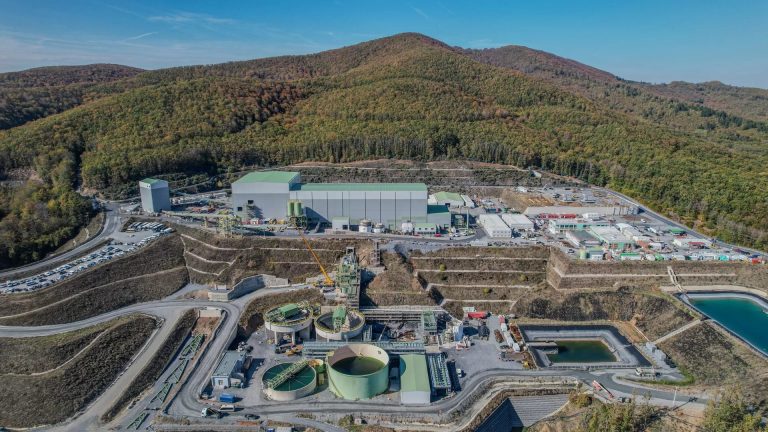
    Uzbekistan’s copper processing capacity is expected to reach 240000 tonnes this year, President Shavkat Mirziyoyev announced during the inauguration of Copper Processing Plant No. 3 at the Almalyk Mining and Metallurgical Complex (AGMK).

    According to the president, processing volumes are set to continue growing over the next two to three years as new investment projects in the mining and metallurgical sector are implemented.

    Mirziyoyev emphasised that global demand for copper is increasing rapidly as the metal becomes increasingly important for modern industry. Copper plays a critical role in sectors such as energy, electrical engineering, digital technologies, artificial intelligence and the development of green energy systems.

    “Those who create a high value-added chain in the copper industry will effectively create the industry of the future,” the president said.

    As an example of the country’s expanding mining potential, Mirziyoyev highlighted the Yoshlik-1 deposit. The project was previously considered technically complex and difficult to develop, but production is now rapidly ramping up.

    The president said the mine is expected to produce around 20 million tonnes of ore this year. Over the next two years, output from the deposit is planned to increase to approximately 60 million tonnes.

    The expansion of processing capacity at AGMK forms part of Uzbekistan’s broader strategy to strengthen its position as a major producer of copper and other strategic metals, while building higher value-added industrial supply chains.

    Earlier, Kursiv Uzbekistan reported that Mirziyoyev officially launched the new copper processing plant at AGMK as part of the country’s industrial development programme.

  • Uzbekistan Reports Major Copper and Gold Reserves at Yoshlik-1 and Qalmoqqir

    Uzbekistan Reports Major Copper and Gold Reserves at Yoshlik-1 and Qalmoqqir

    Uzbekistan has identified major mineral reserves at the Yoshlik-1 and Qalmoqqir deposits, including an estimated 45 million tonnes of copper and more than 5,000 tonnes of gold, President Shavkat Mirziyoyev announced during the launch ceremony of Copper Processing Plant No. 3 at the Almalyk Mining and Metallurgical Complex (AGMK).

    According to the president, the scale of these reserves is sufficient to supply Uzbekistan’s industrial sector with raw materials for at least the next 100 years.

    In addition to copper and gold, the deposits also contain rare metals such as molybdenum, selenium, tellurium and rhenium, which could support the development of new high-tech and innovative industrial projects.

    Mirziyoyev said the commissioning of the new processing facility significantly increases AGMK’s production capacity. Daily output of copper concentrate is expected to rise from 2,400 tonnes to approximately 5,000 tonnes.

    The plant incorporates modern technologies supplied by companies from the United States, Germany, Russia, China and Finland. Operations will be managed through an integrated digital control system using artificial intelligence.

    According to officials, the use of AI-driven monitoring and optimisation systems will reduce energy consumption by around 10%, lower production costs by 15% and increase labour productivity by roughly 10%.

    The expansion of AGMK’s processing capacity forms part of Uzbekistan’s broader strategy to strengthen its mining and metallurgical sector while increasing value-added production from its domestic mineral resources.

    Earlier, Kursiv Uzbekistan reported that the country’s gold and foreign exchange reserves recently exceeded $77 billion for the first time.

  • Success Minerals Kazakhstan Plans Resource Evaluation in Aktogay District

    Success Minerals Kazakhstan Plans Resource Evaluation in Aktogay District

    Private company Success Minerals Kazakhstan Ltd plans to carry out a resource assessment of solid minerals at a 9.35 sq km site in Kazakhstan’s Aktogay district, according to a planned activity notice published on the country’s Unified Environmental Portal.

    The subsoil user intends to evaluate reserves and resources at the Akkuduk East and Akkuduk West deposits, as well as conduct geological exploration at known mineralisation points, geophysical anomalies, and ore occurrences identified within the licence area. The work is aimed at defining targets suitable for potential industrial development. Detailed prospecting across halo fields is also planned.

    Exploration activities are scheduled to begin in spring or early summer 2026 and continue through the end of 2030. The programme includes geophysical surveys, trenching over an area of 10,800 sq m, and the drilling of 140 exploration boreholes with a combined length of 35,000 metres. Collected samples will undergo laboratory testing, including chemical and geological analyses with a focus on copper content.

    As a result of the exploration campaign, the company plans to prepare geological maps of the deposits and ore occurrences, delineate ore zones and ore bodies, and calculate reserves and resources within the licensed area.

    The exploration licence was granted to Success Minerals Kazakhstan Ltd in January 2025. According to data from Kazakhstan’s eGov system cited by qazba.kz, the company is registered at the Astana International Financial Centre and is owned by Jinyu Sheng.

  • Glencore Shifts Focus to Asset Sales After Failed Merger Talks With Rio Tinto

    Glencore Shifts Focus to Asset Sales After Failed Merger Talks With Rio Tinto

    Following another breakdown in merger talks with Rio Tinto, Swiss mining major Glencore is turning its attention to asset sales as part of a strategy to strengthen its copper portfolio, Reuters reported.

    Discussions aimed at creating a global mining giant valued at around $240 billion collapsed this week due to disagreements over valuation and ownership structure. The failed talks mark the third unsuccessful attempt to merge the two companies, following earlier efforts in 2014 and 2024.

    As part of its portfolio reshaping, Glencore is expected to announce the sale of a 70% stake in KazZinc in the coming weeks. Analysts estimate the value of the asset at around $5 billion. KazZinc is a major producer of zinc, lead, and gold in Kazakhstan.

    Glencore Chief Executive Gary Nagle has repeatedly spoken in favour of industry consolidation, arguing that combining assets can unlock value and make the mining sector more attractive to investors.

    The company has also set a long-term goal of increasing copper production to 1.6 million tonnes by 2035, up from 852,000 tonnes produced in 2025, through a combination of new mine development and the restart of existing operations.

    In the near term, investors expect Glencore to prioritise divestments to create a more focused copper mining and metals trading business. Talks are reportedly under way to sell a 40% stake in Glencore’s copper and cobalt operations in the Democratic Republic of Congo to a consortium led by Orion Critical Minerals, with backing from the United States.

    Separately, Glencore is exploring potential cooperation with Brazil’s Vale on the joint development of copper deposits in Canada.

    Since the collapse of the Rio Tinto talks, Glencore shares have fallen by more than 10%, although they remain up 19% year-to-date. The company is also reviewing its coal portfolio and has not ruled out a partial spin-off of coal assets to raise additional capital.

    In Kazakhstan, Glencore continues to invest in gold production. In December 2025, the company allocated nearly $500 million to extend the life of the Vasilkovskoye gold mine in the Akmola Region, operated by Altyntau Kokshetau, the main gold supplier for KazZinc.

    Industry expert Nurlan Zhumagulov noted that Altyntau Kokshetau ranked thirteenth among Kazakhstan’s largest taxpayers in 2025, contributing 142 billion tenge, a year-on-year increase of 47%.

    It was also reported that Kazakh businessman Shakhmurat Mutalip is in talks to acquire a 70% stake in KazZinc. In January 2026, he registered two new companies at the Astana International Financial Centre: KazZinc Group Ltd and Central Asia Resources Holding Ltd.

  • Turkey’s Gokirmak Copper Mine Put Under Review as Owners Sound Out Buyers

    Turkey’s Gokirmak Copper Mine Put Under Review as Owners Sound Out Buyers

    The shareholders behind Turkey’s largest open-pit copper operation have begun exploring a potential sale, capitalising on a strong rally in copper prices, according to people familiar with the process.

    The owners — Akfen Holding AS, Ilbak Holding AS and Bacaci Yatirim Holding AS — have appointed Goldman Sachs Group Inc. to advise on a possible divestment of Acacia Mining Enterprises Inc., which operates the Gokirmak copper mine in Kastamonu province in northern Turkey. The mandate includes assessing interest in either a partial stake sale or a full exit, the sources said.

    Market participants indicate that the shareholders are seeking valuations of up to $1 billion for the entire asset, although pricing expectations could shift depending on demand and market conditions. The sale process remains confidential, and there is no certainty that a transaction will proceed.

    Copper has climbed sharply over the past year, supported by tightening global supply, disruptions at key mining operations, and accelerating demand linked to electrification, renewable energy and grid infrastructure. Prices recently pushed above $13,000 per tonne, reinforcing investor appetite for large-scale producing assets.

    Acacia Mining Enterprises holds an estimated 24 million tonnes of copper-ore reserves and produces roughly 120,000 tonnes of copper concentrate per year, according to disclosures by Ilbak Holding. Export revenues from the operation totaled $265 million in 2024, based on the latest figures from Turkey’s Chamber of Industry.

    Goldman Sachs declined to comment on its role, while the shareholder groups did not respond to requests for comment.

  • Pallas Confirms Shallow Supergene Copper Discovery at Satpayev Project in Kazakhstan

    Pallas Confirms Shallow Supergene Copper Discovery at Satpayev Project in Kazakhstan

    Pallas Resources has confirmed a shallow, flat-lying supergene copper discovery following laboratory assay results from its maiden drill program at the 100%-owned Satpayev Sediment-Hosted Copper Project in central Kazakhstan.

    In 2025, the company completed 4,800 metres of KGK (aircore-equivalent) drilling across the Satpayev licence area, targeting shallow copper mineralisation beneath thin cover along the interpreted continuation of the Dzhezkazgan mineralised contact. Drilling intersected supergene copper oxides and native copper from depths starting at approximately 6 metres, with assays returning broad, near-surface mineralised intervals consistent with a supergene enrichment zone.

    Notable intercepts from the program include 29.5 m at 3.04% Cu, 31 m at 2.78% Cu, and 30.5 m at 2.73% Cu, highlighting the strength and continuity of mineralisation. The discovery has so far been outlined over an initial area of approximately 400 metres by 150 metres and remains open to the northwest, where powerline infrastructure limited further drilling.

    Drilling depth was also locally restricted by refusal using the selected drilling method, preventing penetration into the underlying bedrock in some areas and leaving any potential primary sulphide copper system untested at this stage. To address this, Pallas is conducting detailed mineralogical and geochemical studies to refine its geological model and develop vectors toward a possible primary copper source beneath the weathered horizon.

    The company is planning a 2026 exploration program that will include additional shallow drilling to expand the supergene footprint, as well as deeper reverse circulation and/or diamond drilling aimed at testing the underlying primary sulphide copper system at depth.

  • East Star and Xinhai Agree on Joint Development of Verkh-Uba Copper Project in Kazakhstan

    East Star and Xinhai Agree on Joint Development of Verkh-Uba Copper Project in Kazakhstan

    UK-listed East Star Resources Plc has announced that it has signed a preliminary agreement with China’s Xinhai Mining Services Limited to jointly develop the Verkh-Uba copper deposit in Kazakhstan.

    Under the terms of the agreement, Xinhai Mining Services will lead the phased development of the project, which is estimated to require investments of around 65 million US dollars. The parties expect to finalize and sign a binding agreement within the next six months.

    The Chinese partner will fully finance all stages of project development, including approximately 5000 meters of additional drilling to refine resource estimates and the construction and commissioning of a mining and processing facility with an annual capacity of 1 million tonnes. As investment volumes increase at each stage, Xinhai’s stake in the joint venture will rise from an initial 15 percent to as much as 70 percent.

    East Star noted that the involvement of a strategic partner will reduce project risks and accelerate development timelines. The joint venture will also allow the company to redirect its efforts toward the discovery and evaluation of additional deposits, as East Star holds several other promising gold and copper licenses. These include the Talovskoye and Rulikhinskoye sites, with the latter estimated under JORC standards to contain 23 million tonnes of copper ore at an average grade of 2.4 percent.

    In Kazakhstan, East Star focuses on the exploration of gold and base metals and has been conducting exploration activities for more than three years at three sites: Verkh-Uba, Talovskoye, and Snezhnoye. In February 2025, the company reported the identification of additional base metal resources, with JORC-compliant estimates for Verkh-Uba at that time placing resources at 20.3 million tonnes of ore containing 1.16 percent copper, 1.54 percent zinc, and 0.27 percent lead.

  • Kyrgyzstan Unveils Critical Minerals Strategy at MINEX Eurasia Conference in London

    Kyrgyzstan Unveils Critical Minerals Strategy at MINEX Eurasia Conference in London

    London, 1 December 2025 – The MINEX Eurasia conference in London hosted a keynote address by H.E. Meder Mashiev, Minister of Natural Resources, Ecology, and Technical Supervision of Kyrgyzstan, outlining the country’s strategic vision for its critical minerals sector.

    Kyrgyzstan’s Strategic Minerals Vision

    The Minister outlined Kyrgyzstan’s methodical approach to prioritising and developing its critical minerals sector, identifying 21 key minerals based on global demand, local deposits, and resource concentrations. Kyrgyzstan’s analysis resulted in the selection of 4 priority projects, 5 promising deposits, and 16 prospective areas for further study and development. These assets, spread across antimony, beryllium, rare earths, molybdenum, bismuth, zinc, silver, and others, offer significant commercial and strategic potential for investors and end-users in energy, electronics, and high-value manufacturing.

    Investment and Development Framework

    State companies, notably Kyrgyzgeology, are driving exploration and project development, supported by government incentives and openness to international partnership. Strategic sites are being actively promoted for joint ventures or direct investment. Major domestic and international firms manage several large sites, while more than 100 mining enterprises operate in the country—spanning gold, copper, and polymetallic ores.

    Tax and Licensing Regime

    The session detailed Kyrgyzstan’s tax policy, which includes a mix of one-time bonuses for mining rights, royalties, profit tax, and VAT. The overall effective tax burden stands between 25–30%, complemented by social and environmental levies such as waste disposal, emissions, and water usage fees. Procedures for subsoil use licensing are harmonized with those in neighbouring countries, with initiatives being considered to simplify the processes and make it more transparent.

    ESG, Transparency, and Sustainable Mining

    Kyrgyzstan’s evolving strategy strongly emphasizes environmental, social, and governance (ESG) standards, aiming to foster responsible mineral development, minimize ecological impact, ensure transparency, and maximize benefits for local communities. The new strategy promotes the deployment of advanced technologies, environmental sustainability, and transparent investment processes, aligning with best practices to attract reliable, long-term partners.

    Opportunities for International Partnership

    Kyrgyzstan welcomes active collaboration with global investors and mining enterprises, seeking to leverage modern mining technologies, improve environmental outcomes, and maximize economic benefits. The country’s critical mineral strategy is closely linked to green growth targets and broader Eurasian supply chain integration.

  • ACG Metals Weighs Potential Takeover Bid for Anglo Asian Mining

    ACG Metals Weighs Potential Takeover Bid for Anglo Asian Mining

    Copper-focused consolidator ACG Metals has confirmed it is in the early stages of assessing a possible offer for the full issued and to-be-issued share capital of London-listed Anglo Asian Mining. The Azerbaijani-focused producer, which operates gold, copper and silver assets, has not agreed to or endorsed the announcement.

    According to UK takeover rules, ACG now has until 17:00 on December 24 to either announce a firm intention to make an offer or formally withdraw its interest. The company emphasized that discussions remain preliminary, and there is no certainty that an offer will be made.

    Anglo Asian Mining, which operates the Gedabek and Gilar projects among others, has faced operational constraints in recent years but remains one of Azerbaijan’s key mining companies. Any potential bid would mark a significant move for ACG Metals as it continues to expand its portfolio within the copper sector.

  • Turkey’s Miryildiz Mining to Launch Gold and Copper Production in Kazakhstan by 2026

    Turkey’s Miryildiz Mining to Launch Gold and Copper Production in Kazakhstan by 2026

    Turkish mining company Miryildiz Mining plans to begin gold and copper production in Kazakhstan by late 2026, the company’s CEO Emrah Erdem announced at the Kazakhstan Global Investment Roundtable (KGIR).

    “We are engaged in gold and copper mining. Our plants in Turkey have been operating for nearly ten years. I hope that by the end of 2026, we will start gold production in Kazakhstan,” Erdem said.

    According to him, Miryildiz Mining is currently working in cooperation with the Development Bank of Kazakhstan (DBK), a subsidiary of the Baiterek Holding.

    The company operates in five countries, extracting gold, copper, chromium, and other metals, with Turkey remaining its primary market. It produces around 1 million tonnes of copper ore annually.

    “We have now set targets for copper mining in Kazakhstan,” Erdem said, adding that the company sees strong potential for copper extraction in East Kazakhstan, particularly in the Abai and Pavlodar regions.

    He also highlighted promising opportunities in the gold and rare earth metals sectors, noting Kazakhstan’s untapped mineral wealth.

    $482 Million Mining and Processing Project

    Earlier this year, Miryildiz Mining presented a $482 million project to construct a mining and processing complex (MPC) in the Zhanan-Boko-Zaisan gold ore zone to Abai Region Governor Berik Uali. The facility is expected to employ around 2,000 workers.

    The company has already completed geological exploration and purchased some of the necessary extraction and ore-processing equipment.

    Global Footprint

    Miryildiz Mining holds over 100 exploration and production licenses worldwide and is active in Central African Republic (CAR)Sierra Leone, and The Gambia, where it is also building a gold mining operation.

    In Kazakhstan, its subsidiary MIRYILDIZ KZ Ltd plans to conduct metal exploration at the Takyr site in the Zhetysu and Abai regions between 2025 and 2030.

    Market Context

    The company’s expansion comes amid record-high commodity prices — copper surpassed $11,000 per tonne, and gold exceeded $4,000 per ounce in 2025 — boosting investment in mining and geological exploration across the sector.