Tag: cobalt

  • Europe’s Raw Materials Strategy Under Pressure as China Tightens Supply Control

    Europe’s Raw Materials Strategy Under Pressure as China Tightens Supply Control

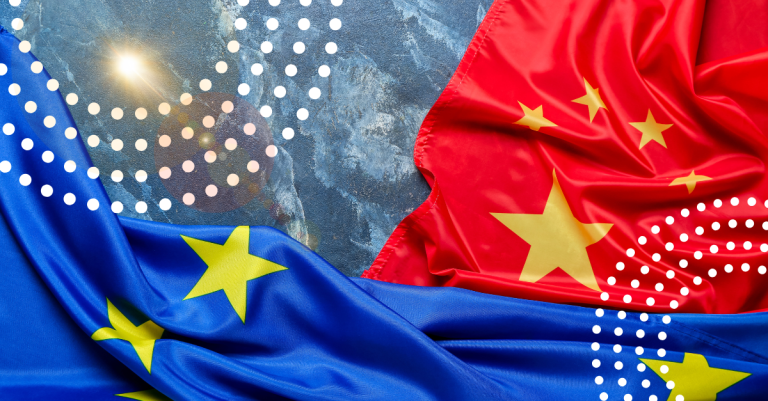
    Europe’s security of supply for critical raw materials is deteriorating, according to a new International Energy Agency report, raising serious questions about the effectiveness of the European Union’s Critical Raw Materials Act launched two years ago. The continent remains heavily dependent on a small number of countries, particularly China, which dominates the market for cobalt, lithium, manganese, and raw material processing, while Indonesia leads in nickel production. Together, these nations accounted for more than three-quarters of global refining growth between 2023 and 2025.

    The vulnerability became apparent when Chinese export restrictions on magnets forced some European car manufacturers to cut production last year, while the number of Chinese products requiring export licenses tripled. Compounding these challenges, global investments in critical minerals fell by 9 percent in 2025, further jeopardizing Europe’s raw materials security.

    Peter Tom Jones, Director of the Institute for Sustainable Metals and Minerals at KU Leuven, argues the strategy is fundamentally flawed. He contends that Europe’s approach of dividing the raw materials chain into separate components is inadequate in a world where China actively restricts exports and expands its monopoly. Jones advocates for comprehensive European investment across the entire value chain—from mining and processing to refining and manufacturing batteries and electric vehicles—requiring billions in state-backed funding.

    The bankruptcy of Swedish battery manufacturer Northvolt in 2025 has deterred private investment, underscoring the need for major government intervention. Jones also recommends implementing an export ban on metal and battery waste to keep high-quality materials within Europe for recycling rather than shipping them to China.

    Andor Lips, strategic advisor on critical raw materials at TNO, suggests Europe should pursue resilience through diversification and partnership rather than complete independence. He recommends building relationships with countries like Australia and Canada, which produce critical materials like rare earth ores for wind turbine magnets. While acknowledging that new European mines and recycling infrastructure require time to develop, Lips believes the Critical Raw Materials Act represents progress, though Europe must absorb supply shocks in coming years before the strategy fully materializes.


  • ERG Shareholders Consider Splitting Kazakhstan and International Mining Businesses

    ERG Shareholders Consider Splitting Kazakhstan and International Mining Businesses

    The owners of Eurasian Resources Group (ERG) are considering a major restructuring that would separate the company’s Kazakhstan operations from its international mining assets, according to people familiar with the discussions.

    The proposed split would divide the group between its two principal private shareholders, Shakhmurat Mutalip and Shukhrat Ibragimov. ERG currently generates most of its revenue from iron ore, ferrochrome and aluminium production in Kazakhstan, while also operating mining assets in the Democratic Republic of Congo and Brazil.

    Under the proposal, Shukhrat Ibragimov, ERG’s Chief Executive Officer and Chairman since 2024, would exchange his family’s 20% shareholding for ownership of the international business, which would be transferred into a newly created company. Shakhmurat Mutalip and the Government of Kazakhstan, which holds a 40% stake in ERG, would retain ownership of the group’s Kazakhstan mining and metallurgical operations.

    If completed, the restructuring would strengthen Mutalip’s influence over ERG’s domestic business, while allowing Ibragimov to focus on the company’s international portfolio, particularly its operations in the Democratic Republic of Congo. ERG owns several producing and development-stage assets in the country, including Metalkol, one of the world’s largest cobalt producers and a significant copper supplier.

    The discussions follow Mutalip’s acquisition of a 39.3% stake in ERG in May from the families of co-founders Patokh Chodiev and Alexander Mashkevich, reflecting a broader transition in Kazakhstan’s business landscape. Last month, the chairman of Mutalip’s construction company was appointed Chief Executive Officer of ERG’s Kazakhstan business.

    According to sources, approximately US$2 billion of ERG’s debt would be transferred to the new international company. The business would continue to face operational challenges in the Democratic Republic of Congo, including illegal mining activities affecting concessions operated by Metalkol and Boss Mining SAS.

    The potential restructuring comes amid growing international interest in critical mineral supply chains. The United States has increased its engagement in the Democratic Republic of Congo’s mining sector as part of efforts to diversify supplies of copper and cobalt away from China. In December, Washington signed a strategic partnership with the Congolese government aimed at supporting American investment in mining and infrastructure projects.

    Neither ERG nor representatives of the shareholders immediately commented on the reported plans.

  • ERG to Invest Over $1 Billion in Mining and Metallurgical Projects in Kazakhstan

    ERG to Invest Over $1 Billion in Mining and Metallurgical Projects in Kazakhstan

    Eurasian Resources Group (ERG) plans to invest more than $1 billion in its mining and metallurgical assets in Kazakhstan, marking the largest investment programme in the country in the company’s history.

    The funding will be directed primarily toward ERG’s existing operations, as well as the construction of new production facilities and projects focused on higher value-added products. The investment plans were announced by ERG CEO Shukhrat Ibragimov during a visit to one of the group’s Kazakh sites this week.

    Kazakhstan remains ERG’s core operating base, accounting for more than one-third of the country’s total metals and mining output. The company is also a major player in the Democratic Republic of Congo, where its Metalkol operation ranks among the world’s largest cobalt producers and is a significant source of copper. The government of Kazakhstan holds a 40% equity stake in ERG.

    Key projects scheduled for development this year include a hot briquetted iron (HBI) plant with a planned capacity of 2 million tonnes per year, an iron ore pelletising facility, and an 80-megawatt ferroalloy gas utilisation power station at the Aktobe ferroalloys plant in northwestern Kazakhstan.

    Additional investments will support the development of a new chromium mine with annual capacity of 7.5 million tonnes, as well as modernisation of the Aksu power station. At the Pavlodar alumina plant, ERG plans to build vertical calcination kilns, install new product filtration units, and add recovery facilities capable of producing up to 15 tonnes of gallium per year.

    Both gallium and HBI, which are used in semiconductors, advanced alloys and steelmaking, are not currently produced in Kazakhstan, making these projects strategically significant for the country’s industrial diversification.

    Separately, ERG signed a three-year cobalt supply agreement in 2024 with Electra Battery Materials to supply its refinery in Ontario, Canada. From 2026, ERG is expected to deliver around 3,000 tonnes of cobalt hydroxide annually. Once fully commissioned, the refinery could produce enough cobalt to support battery production for up to 1.5 million electric vehicles per year.

  • ERG Opens Pioneering Solar-Powered School in Kazakhstan as Part of KZT15 Billion Education Drive

    ERG Opens Pioneering Solar-Powered School in Kazakhstan as Part of KZT15 Billion Education Drive

    The KZT7.8 billion (£13.7 million) school, which can accommodate 1,200 students, is part of ERG’s “ERG mektep” (“ERG for Schools”) programme. This initiative has channelled over KZT15 billion into education in Kazakhstan in recent years.

    The new building, spanning over 19,590 square meters, is one of the largest constructed under the state-led Keleshek Mektepteri (“Schools of the Future”) initiative. It incorporates modern features focusing on ergonomics, inclusivity, and energy efficiency. The school also features advanced security systems integrated with artificial intelligence.

    Shukhrat Ibragimov, Chairman of the Board of Directors and CEO of ERG, expressed pride in the project’s inclusion in the national initiative. He quoted Kanysh Satbayev, a prominent Kazakh scientist, stating, “The future belongs to young people. But in order to be prepared for this future, they need to be equipped with knowledge.”

    The school boasts 60 classrooms, four computer labs, a STEM laboratory, a robotics room, and language labs. It also includes hydroponic systems for biology and ecology studies and a media centre with a podcast studio. Digital assistants will assist teachers, providing tailored learning tasks for students.

    A key feature of the design is its focus on inclusivity, with accessible classrooms and special elevators to accommodate students with special educational needs. The Akim of the Kostanay Region, Mr Kumar Aksakalov, praised the collaboration between government and business, stating the school “meets all modern requirements” and will “become a solid foundation for fostering honesty, hard work, patriotism and civic responsibility among the younger generation.”

    In a joint programme with the Teach for Qazaqstan foundation, four specialist STEM teachers will join the new school to strengthen technical education. ERG has a history of supporting educational infrastructure in the country, having previously funded similar projects in the Pavlodar Region and modernisations in Aksu and Khromtau.

  • EU Urged to Prioritise ESG in Central Asia’s Raw Materials Push

    EU Urged to Prioritise ESG in Central Asia’s Raw Materials Push

    The EU must prioritize Environmental, Social, and Governance (ESG) principles in its dealings with Central Asia to secure its access to crucial raw materials, commentators warn.

    The bloc arrived in Samarkand this April with a hefty €13.2 billion Global Gateway package, signaling a desire to move beyond merely buying raw materials from the region. A significant portion, €2.5 billion, is earmarked for new mining and processing projects in Kazakhstan, Uzbekistan, and beyond. This drive is born out of necessity: the EU still relies entirely on China for its heavy rare-earth imports and faces the growing risk of vulnerability.

    While geographically late to the game, Europe has a unique advantage: a reputation for robust ESG practices. Local executives cite European partners as “a sign of quality” due to their unwavering adherence to these standards, something often lacking in Chinese or Russian counterparts. However, this edge relies on Brussels consistently embedding ESG into every euro invested. This means robust monitoring and auditing of remediation plans, transparent royalty structures, and genuine upfront consultation with local communities.

    The EU’s Critical Raw Materials Act (CRMA) sets ambitious goals: attaining 10 percent mining, 40 percent processing, and 25 percent recycling of Europe’s annual CRM demand domestically or in trusted partner states by 2030.

    Realising these goals in Central Asia necessitates investment in sustainable technologies. This includes financing water-efficient processing plants, closed-loop waste systems, and solar-powered smelters, rather than simply opening more exploitative mines.

    The EU’s efforts are beginning to take shape, with the spotlight falling on graphite. Kazakhstan’s Sarytogan deposit has been placed on the EU Commission’s list of “strategic projects” eligible for expedited permits and loan guarantees under the CRMA. Meanwhile, the European Bank for Reconstruction and Development has taken a significant stake in the mine operator, marking a direct investment in the region’s CRM sector. The EU is now actively seeking downstream investors to refine indigenous graphite into anode-grade product, capturing added value that historically flowed to Chinese refiners.

    Lithium development is following a similar trajectory. A partnership between HMS Bergbau and Kazakhstan’s Creada Corporation aims to unlock the potential of Kazakh spodumene through extraction, processing, and refining into battery-ready lithium hydroxide. This would be a direct response to the EU’s new battery-passport regulations, which require materials of a certain purity.

    However, Europe faces a formidable competitor: China. The PRC Mineral Resources Law mandates environmental remediation planning before mining commences, setting a new baseline for responsible resource extraction. While welcomed, the application details remain vague, lacking guarantees on local community engagement and enforcement mechanisms, potentially creating loopholes for exploitation.

    Adding to the pressure, Chinese capital is expanding downstream. East Hope Group’s landmark $12 billion investment in Kazakh non-ferrous metals signifies a vertical integration approach—from mining and smelting to fabrication and renewable power generation. This $12 billion vertical integration project in Kazakhstan showcases China’s willingness to build a fully controllable supply chain.

    Europe must act strategically to counter these challenges.

    Firstly, financial aid should be contingent on stringent ESG benchmarks. EU financing must go hand-in-hand with clear, enforceable standards – ISO-compliant tailings dams, methane monitoring, gender-balanced workforce plans, and robust penalties for non-compliance.

    Secondly, the EU should focus on fostering value-adding industries beyond mining. This means investing in processing plants and recycling facilities, not just mines. By creating domestic processing hubs for cathode powders or rare-earth magnets, the CRMA’s 40 percent processing target can be achieved, generating jobs, technology transfer, and increased tax revenue for beneficiary countries.

    Finally, the EU must simplify visa requirements for Central Asian technical personnel. A targeted visa-facilitation agreement could allow them to train in Europe and return, strengthening the region’s skilled workforce.

    Securing a stable and sustainable supply of raw materials is a critical challenge for the EU. While China’s economic clout is undeniable, Europe has the opportunity to win this race by leveraging its commitment to ESG principles and building a truly sustainable, transparent, and trust-based partnership with Central Asia.

    Time is of the essence. The next 18 months, before China’s revised mining law takes full effect and East Hope’s megaproject begins construction, provide a crucial window for the EU to demonstrate its commitment to ESG beyond rhetoric. The stakes are high, as the fate of Europe’s essential raw materials supply hangs in the balance.

  • Kazakhstan Targets Nearly ₸12 Billion Investment in Rare Earth Metal Development

    Kazakhstan Targets Nearly ₸12 Billion Investment in Rare Earth Metal Development

    Kazakhstan is set to attract nearly ₸11.79 billion (approx. $26 million) in investments for the exploration and development of rare earth metal deposits over the next four years, according to the Ministry of Industry and Construction.

    Currently, Kazakhstan does not produce rare earth raw materials. However, it already extracts several critical metals recognized by the EU, UK, and US, including beryllium, tantalum, niobium, fluorspar, titanium, rhenium, vanadium, antimony, bismuth, scandium, phosphorus, coking coal, bauxite, barite, copper, magnesium, tellurium, and manganese.

    The government has identified cobalt, tungsten, lithium, and other metals used in batteries and magnet production as key priorities. The national mineral reserve includes 56 cobalt deposits, 21 tungsten deposits, and 7 lithium fields. Exploration and production initiatives for lithium are already underway, including partnerships with German investors, potentially totaling $500 million if reserves are confirmed.

    As part of its 2024–2028 strategic plan, Kazakhstan aims to:

    • Expand its resource base,

    • Implement advanced extraction technologies,

    • Modernize production,

    • Develop new standards for critical minerals.

    The state budget and alternative funding sources will support this effort. In addition, Kazakhstan seeks to become a key player in the battery material supply chain. In 2024, it began manganese sulfate processing, capturing 5% of the global market.

    Several mid-term projects are also in development, including:

    • Cobalt, lithium, tin, and tungsten processing facilities,

    • A UK-Kazakh project in Zhezkazgan processing imported heat-resistant nickel alloys to extract rhenium,

    • A Chinese investment in tungsten trioxide production.

    The Ministry of Industry believes these initiatives will significantly strengthen Kazakhstan’s position in rare and critical metal production within three years. Kazakhstan is already a leading global producer of titanium, beryllium, and tantalum, and aims to attract new partners through technology transfer agreements.

    These moves align with Kazakhstan’s broader strategic partnership with the United States, particularly in energy and critical minerals. President Kassym-Jomart Tokayev has emphasized the importance of developing what he called the country’s “new oil” — critical minerals vital for the global energy transition.

  • Uzbekistan Signs Critical Minerals Investment Deals with U.S. Companies

    Uzbekistan Signs Critical Minerals Investment Deals with U.S. Companies

    Uzbekistan announced on Wednesday, April 9, 2025, that it has signed a series of agreements with U.S. companies to boost investment in its critical minerals sector. The deals come as global demand for essential minerals like copper, lithium, and cobalt continues to soar due to their key role in electric vehicle batteries, solar panels, and other high-tech industries.

    According to a statement from Uzbekistan’s trade ministry, the agreements—signed during a government delegation’s visit to Washington—cover investments in both the exploration and extraction of mineral resources. They also include plans for building grinding machinery and training Uzbek specialists.

    The move aligns with broader efforts by the United States and the European Union to reduce their dependence on China, which currently dominates the global critical minerals market.

    Uzbekistan, a former Soviet republic, has drawn increasing interest from Western nations looking to diversify their supply chains amid ongoing geopolitical tensions. President Shavkat Mirziyoyev has made liberalizing the economy a central priority of his administration. In March, he unveiled a $2.6 billion investment plan aimed at modernizing and expanding the country’s mineral sector.

  • Eurasian Resources Group expects a neutral-to-bullish outlook for key metals in 2025

    Eurasian Resources Group expects a neutral-to-bullish outlook for key metals in 2025

    Eurasian Resources Group has shared its market expectations for 2025 and beyond, highlighting several key trends across various metals and industries:

    Copper market growth: The global copper market is expected to grow by 4% year-over-year in 2025, with a compound annual growth rate (CAGR) of 2.5% projected between 2024 and 2034.

    Stainless steel and ferrochrome demand: Development of renewable energy sources like wind turbines, along with record sales in home appliances and consumer goods, is expected to drive strong growth in stainless steel demand, reaching 4.8% in 2025. This growth will significantly benefit the ferrochrome industry.

    Aluminum demand: An average 3% year-over-year growth in aluminum demand is anticipated in 2025, primarily driven by the automotive and renewable energy sectors.

    Cobalt market outlook: While currently in surplus, the global electric vehicle (EV) sector is expected to continue growing and may represent over 60% of cobalt demand by 2030. This is projected to lead to market deficits as cobalt demand outpaces supply by the end of the decade.

    AI impact on metals demand: Artificial intelligence is expected to increasingly boost additional metals demand. Bank of America has estimated that demand directly from data centers for copper could be around 200,000 tonnes per year between 2025 and 2028.

    Overall outlook: Eurasian Resources Group expects a neutral-to-bullish outlook for key metals in 2025, subject to various macro trends and factors such as the economic situation in China, potential trade protectionist measures, and US monetary policy.

    The group notes that while the speed and consistency of economic recovery may be uneven, the long-term fundamentals for metals and minerals in ERG’s product portfolio appear promising.

  • Ukraine: A Potential Key Player in the Global Critical Raw Materials Race?

    Ukraine: A Potential Key Player in the Global Critical Raw Materials Race?

    In a recent statement, U.S. Secretary of State Marco Rubio provided a clear outlook on the future of American policy regarding critical raw materials. As global supply chains for these materials continue to shift, Ukraine’s vast reserves of key minerals could play a pivotal role in reshaping the global balance of power, particularly in the ongoing confrontation between the U.S. and China.

    Rubio highlighted several critical materials essential for advanced technology, renewable energy, and national security, including neodymium, dysprosium, lithium, cobalt, nickel, and titanium. Remarkably, Ukraine is home to abundant reserves of these very materials—and more. With its substantial deposits of germanium and gallium, Ukraine is positioned to be a critical player in the global supply of strategic resources.

    A Treasure Trove of Critical Materials

    • Titanium Ore (Ilmenite): Ukraine ranks 11th in the world for ilmenite reserves, found in the Irshanske, Byrzulivske, and Malyshevske deposits across the Zhytomyr, Kirovohrad, and Dnipropetrovsk regions. Titanium is vital for aerospace, defense, and high-tech manufacturing.
    • Lithium: As a key component in batteries, particularly for electric vehicles and renewable energy storage, Ukraine holds 1% of the world’s lithium reserves—equivalent to 30% of Europe’s supply. Major deposits can be found in Polokhivske (Kirovohrad region) and Balka Kruta (Zaporizhzhia region). The strategic importance of lithium was recently highlighted by China’s attempts to use the resource as leverage in international relations.
    • Germanium and Gallium: Crucial for electronics and telecommunications, these materials are abundant in Ukraine’s coal and lignite deposits in the Donetsk and Lviv-Volyn basins. Before the full-scale war, Ukraine was the world’s third-largest exporter of germanium, although exports have been halted due to the ongoing conflict. Ukraine’s reserves of these rare metals remain a critical asset for global tech industries.
    • Rare Earth Elements (Neodymium and Dysprosium): Located in the Zhytomyr region, these elements are indispensable in the production of magnets for electric vehicles, wind turbines, and high-tech equipment.
    • Nickel and Cobalt: Essential for battery production, Ukraine’s nickel and cobalt reserves are also noteworthy, found in deposits like Devladivske (Dnipropetrovsk region), Lypovenkivske (Kirovohrad region), and Dereniukhivske (Mykolaiv region). While the reserves are smaller compared to other countries, they still contribute to Ukraine’s strategic importance.
    • Manganese and Iron: Ukraine is a major global player in manganese and iron ore production, with significant deposits in the Nikopol Manganese Basin and the Kryvyi Rih Iron Ore Deposit. These resources are fundamental to the global steel and metallurgy industries.

    Ukraine’s Growing Role in Global Supply Chains

    As the global supply chain for critical raw materials becomes increasingly volatile, especially with rising tensions between the U.S. and China, Ukraine has the potential to become a key partner for the U.S. in securing access to these vital resources. With its diverse array of minerals and metals, the country offers not only essential raw materials but also strategic geopolitical leverage in a rapidly changing world order.

    The country’s natural resources, coupled with its strategic location in Europe, make it a valuable partner for countries looking to diversify their supply chains and reduce reliance on China.

    By prioritising partnerships with the U.S. and other nations, Ukraine can play a pivotal role in shaping the future of critical materials and ensure its place as a key player in the global economy.

    The Road Ahead

    The ongoing geopolitical shifts present an opportunity for Ukraine to position itself as a leading supplier of critical materials. With strategic investments in its mining and extraction sectors, Ukraine can not only boost its economy but also secure its place in the new global order. Now more than ever, the world needs Ukraine’s resources, and Ukraine is ready to take center stage.

  • Kazakhstan Prepares for the Launch of Gornostayevskoye Nickel-Cobalt Deposit

    Kazakhstan Prepares for the Launch of Gornostayevskoye Nickel-Cobalt Deposit

    The Gornostayevskoye nickel-cobalt deposit in the East Kazakhstan region is projected to begin operations within the next two years. According to Kaznickel LLP, public hearings on the project are scheduled for 23 January. The initial phase will focus on developing the Levoberezhny section using the innovative in-situ leaching (ISL) method.

    The ISL method, which extracts metals directly from underground deposits without raising ore to the surface, has been tested at the site since 2018. While commonly used for uranium extraction, its application for nickel mining is relatively rare. The Levoberezhny section contains an estimated 138.51 million tons of ore, including 793,600 tons of nickel (average content 0.57%) and 54,270 tons of cobalt (average content 0.039%).

    The Gornostayevskoye project has a maximum production capacity of 20,000 tons of nickel annually and is expected to be developed over 18 years. The project will involve the drilling of approximately 33,000 technological wells from 2026 to 2046. To support the leaching process, a sulfuric acid storage facility will be constructed directly at the site.

    This strategic initiative highlights Kazakhstan’s commitment to advancing sustainable mining technologies while leveraging its vast reserves of critical raw materials, such as nickel and cobalt, essential for the global transition to clean energy.