Tag: Coal Phase-Out

  • UK’s Last Opencast Coal Mine Application Rejected as Wales Closes Chapter on Surface Coal Mining

    UK’s Last Opencast Coal Mine Application Rejected as Wales Closes Chapter on Surface Coal Mining

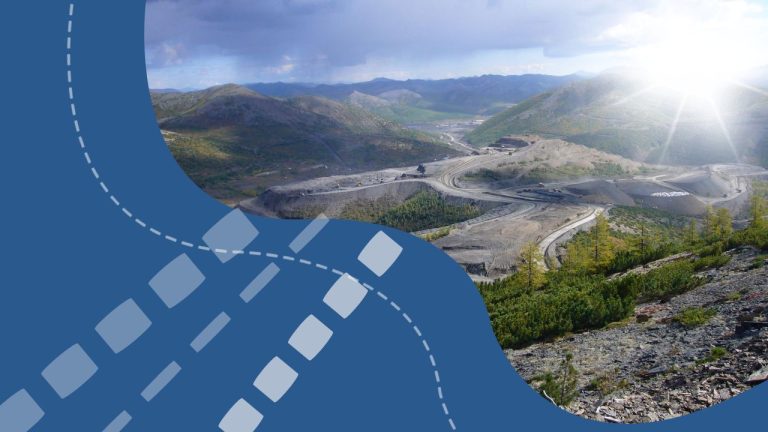
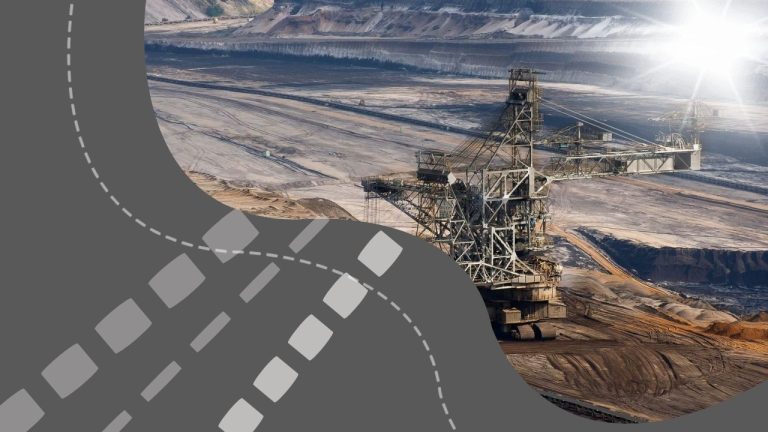
    The final outstanding proposal for opencast coal mining in the United Kingdom has been refused, after Carmarthenshire Council rejected plans by Bryn Bach Coal Ltd to extend the Glan Lash mine near Llandybie in south Wales, citing unacceptable impacts on protected woodland, peatland and an endangered butterfly population.

    The council’s head of place and sustainability, Rhodri Griffiths, said the proposals conflicted with multiple policies on biodiversity and the environment. The scheme would have adversely affected protected woodland and hedgerows and caused what he described as “the unacceptable disturbance, degradation and loss” of irreplaceable peatland. The application also raised concerns for a local population of marsh fritillary — one of the UK’s most threatened butterfly species.

    Bryn Bach Coal had sought to extend the site over 10.3 hectares, promising extraction of 85,000 tonnes of coal and 11 jobs. The company had revised its application after councillors rejected an earlier version in 2023, arguing it had developed a niche non-thermal market for premium anthracite with demand from water filtration, battery production and green steelmaking industries. It has six months to appeal the decision.

    The rejection means there are now no live applications for new coal mines anywhere in the UK. Coal Action Network described the decision as reflecting “a clear, strategic commitment to climate leadership, rare habitat protection, and safeguarding the health of surrounding communities,” while Friends of the Earth Cymru called it “great news” that brought to a close years of campaigning and ended Wales’ last opencast coal mine.

    The Glan Lash mine opened in 2012 under a licence permitting extraction of 92,500 tonnes of coal over four and a half years before closing in 2019. The UK’s largest opencast coalmine, Ffos-y-Fran above Merthyr Tydfil, closed in 2023 after its extension application was similarly refused. Wales retains one deep mine, at Aberpergwm in Neath Port Talbot.

  • Germany Expects EU Approval for €1.75 Billion Coal Exit Compensation to LEAG

    Germany Expects EU Approval for €1.75 Billion Coal Exit Compensation to LEAG

    The German government expects the European Commission to give the green light “within weeks” for €1.75 billion in compensation payments to LEAG, the lignite mining and power company operating in eastern Germany. The payments form part of Germany’s broader coal phase-out plan, which aims to end coal-fired power generation by 2038 at the latest, according to the Ministry for Economic Affairs and Climate Action (BMWK).

    The legislative changes needed to unlock the funds were recently approved by Germany’s coalition government. The compensation package, first agreed in 2020, had faced delays in Brussels due to differences over the timeline for the eastern German coal exit, which lags behind the 2030 phase-out already underway in western Germany.

    Under the revised plan, LEAG, owned by Czech energy group EPH, will receive €377 million to reimburse earlier payments into funds for recultivation of mining areas. From 2025 to 2029, the company is set to receive €91.5 million per year in additional payments from the federal budget to support environmental restoration and social transition measures.

    The compensation is part of Germany’s Coal Exit Law, which seeks to cushion the social and economic consequences of the energy transition for affected regions and workers. The government has said these payments will ensure “a fair and orderly exit from lignite power.”

    LEAG may also qualify for further compensation for so-called social costs — losses related to early plant closures or infrastructure decommissioning. These payments could extend until 2042, depending on determinations by the Federal Network Agency (BNetzA) regarding lost profits or system reliability needs.

    Critics have questioned the scale of the compensation, arguing that it may cover profits companies would not have earned under normal market conditions. Environmental groups have also expressed frustration that the eastern coal phase-out remains slower than in western Germany.

    LEAG, which operates in Lusatia, continues to be a key regional employer and economic anchor in eastern Germany, where the coal exit is closely linked to the rollout of new gas-fired capacity to maintain energy security. Germany plans to tender up to 20 gigawatts of gas plants to support grid stability — a process delayed nearly two years and still pending EU approval.

  • Czech Republic to Close Final Hard-Coal Mine by 2026, Ending an Era of Coal Mining

    Czech Republic to Close Final Hard-Coal Mine by 2026, Ending an Era of Coal Mining

    The Czech Republic has announced plans to shut down its last operating hard-coal mine by 2026, marking the country’s final step in its transition away from fossil fuels. The move will make Poland the only remaining EU member still producing hard coal, underlining the Czech government’s commitment to achieving climate neutrality and phasing out all coal by 2033.

    The ČSM mine, located in Moravia-Silesia near the Polish border, will be the last to close. Despite remaining profitable, mining company OKD and the Czech government agreed that the phase-out should occur while operations are still financially sustainable, ensuring a managed and economically stable closure.

    The closure, however, has sparked fierce public debate and regional backlash. The government’s plan to transform the area into a green industrial zone, including a proposed lithium battery gigafactory, has drawn criticism from local residents and civil society groups.

    Martin Bohoněk, of the environmental organization Zachovejme Poolší (“Let’s Save Poolší”), said the project risks displacing the community’s identity without adequately addressing social needs:

    “They are building on the last green space in the area, but they will not be building homes, hospitals, or schools for it.”

    The proposed industrial development would cover an area equivalent to 380 football fields, a scale that locals rejected in a 2024 referendum. Many fear the project will attract foreign labor while offering few direct benefits to the existing population.

    The closure also raises concerns about job losses in the region, historically known as the “boiler room of Europe.” Socioeconomic experts warn that young people are likely to migrate to Czech cities in search of better opportunities, deepening the region’s demographic challenges.

    Meanwhile, Poland now accounts for 98% of the EU’s hard-coal output, producing about 48 million tonnes annually and heavily relying on state subsidies estimated at €235,000 per hour to keep its mines running.

    Although controversial, the Czech government views the decision as a strategic and necessary transition. By ending coal mining while introducing new green industries, it hopes to reposition the region as a hub for clean-energy technologies, even as questions remain about social and environmental balance.

  • Slovenia Drafts Law to Close Velenje Coal Mine by 2033, Backed by €1.1 Billion Transition Plan

    Slovenia Drafts Law to Close Velenje Coal Mine by 2033, Backed by €1.1 Billion Transition Plan

    Slovenia’s government has begun consultations on a draft law to gradually close the Velenje coal mine and liquidate its operator, Premogovnik Velenje, marking a major step toward the country’s coal phase-out by 2033.

    The planned legislation is a cornerstone of Slovenia’s energy transition strategy, aligning with EU climate neutrality targets while ensuring a fair transition for affected workers and communities.

    Under the proposal, coal extraction and closure operations will run in parallel until 2033, allowing for a phased reduction of the workforce and continued heat supply for Saleska Valley residents. Post-closure, remediation and monitoring activities will continue until 2045.

    The bill includes provisions for employee retirement packages, severance pay, social programs, asset divestment, environmental rehabilitation, and long-term oversight of the mine’s shutdown.

    The government said the program will receive €1.1 billion ($1.3 billion) from the state budget through 2045 — roughly €50 million annually — supplemented by funds from company operations and asset sales.

    Premogovnik Velenje reported a net loss of €816,000 in 2024, narrowing from €5.7 million in 2023, with coal production dropping to 2.17 million tonnes from 2.44 million tonnes the previous year.

    The Velenje mine, Slovenia’s only active coal mine, supplies the nearby Šoštanj Thermal Power Plant, a key source of electricity and heating. Its gradual closure represents one of the country’s most significant industrial and environmental transitions to date.

  • Romania Seeks Five-Year Delay in Coal Phase-Out Amid Energy Transition Challenges

    Romania Seeks Five-Year Delay in Coal Phase-Out Amid Energy Transition Challenges

    Romania is negotiating with the European Commission to postpone its planned 2026 coal phase-out by at least five years, Energy Minister Bogdan Ivan said Tuesday, citing delays in replacement projects and risks to energy security.

    Under its EU-funded recovery aid package, Romania had pledged to retire 2.6 gigawatts of lignite and hard coal generation within the next year. However, Ivan told reporters that the timeline is “unrealistic,” as new gas-fired and renewable capacity will not be connected in time.

    State-owned lignite power producer CE Oltenia is working with OMV Petrom, Tinmar, and Alro Slatina to build solar parks and gas plants, but construction has lagged behind schedule. In central Romania, MAS Group Holding is also developing a 1.7 GW steam and gas power plant to replace older hard coal facilities.

    “Right now we are having fairly intense negotiations to postpone the deadline by at least five years, a realistic deadline for when we will connect new gas-fired energy units,” Ivan said. Romania has been requesting an extension since 2023 and plans to submit a study to Brussels outlining the negative economic and power market impacts of an early shutdown.

    Looking further ahead, Ivan said Romania expects to install 12.96 GW of new generation capacity by 2032 across gas, nuclear, wind, and solar projects, supported by EU funds and both public and private investment. This includes 2.25 GW of storage, which would transform the country from a net electricity importer to an exporter.

    A major offshore gas development, due online in 2027, is also set to make Romania a net gas exporter. The country already produces about 90% of its gas needs through Romgaz, OMV Petrom, and Black Sea Oil & Gas (BSOG).

  • Germany Surpasses 2028 Coal Reduction Target, No Forced Plant Closures Needed

    Germany Surpasses 2028 Coal Reduction Target, No Forced Plant Closures Needed

    Germany has already surpassed its 2028 interim goal for cutting coal-fired power capacity, eliminating the need to order additional plant shutdowns for a second consecutive year, the Federal Network Agency said Monday.

    The country had aimed to reduce coal generation by 8.7 gigawatts by 2028. As of September 1, capacity cuts had exceeded that figure by roughly 10%, according to the regulator’s update.

    Almost two-thirds of Germany’s electricity is now generated from renewable sources, with excess solar power often pushing wholesale prices below zero and eroding the profitability of coal plants. Despite this progress, Germany remains the European Union’s largest polluter and still relies heavily on fossil fuels for parts of its energy mix.

    The federal government plans to phase out coal entirely by 2038. However, large lignite-burning plants tied to mining operations have been granted more time to close in order to cushion job losses. Smaller lignite and hard-coal facilities, initially allowed to participate in voluntary shutdown auctions until 2026, can be closed earlier if deemed necessary by regulators.

    Coal operators must also buy emissions permits under the EU Emissions Trading System, where carbon prices have ranged between €60 and €84 per ton this year, settling near €74 at present.

  • Greece Shuts Last Peloponnese Coal Units, Unveils Renewable Energy and Tech Projects in Megalopolis

    Greece Shuts Last Peloponnese Coal Units, Unveils Renewable Energy and Tech Projects in Megalopolis

    For the first time in decades, no coal smoke is rising from the Peloponnese, as Greece has retired its last two coal-fired power units in the region. Public Power Corporation (PPC) confirmed that Megalopolis-3 and Megalopolis-4, with a combined capacity of 500 MW, have been permanently shut down. The closures mark a milestone in the country’s coal phase-out, which is set to be completed next year.

    Under PPC’s plan, all coal plants in Greece have now ceased operations except for Ptolemaida 5, a 660 MW unit in Western Macedonia that began operating in 2024. Two additional units in Western Macedonia remain on reserve to safeguard the national power supply.

    PPC is preparing to transform the former Megalopolis thermal power station into a hub for new industries, while rehabilitation work is already underway at the local lignite mine. The company’s €490 MW renewable cluster in the area includes two photovoltaic farms of 125 MW each, alongside a planned 181 MW pumped storage hydropower facility on the former mine site.

    Megalopolis is also set to host new industrial and technology projects under Greece’s Just Transition Development Program. Planned investments include a battery factory by Enercells and two 5 MW data centers by Eunice and Kiefer. These projects have been approved by the Ministry of Economy and Finance and will seek financing from the EU’s Just Transition Fund.

    PPC CEO George Stassis has stressed the importance of data centers for former coal regions, noting that existing land and grid infrastructure make them ideal sites for such ventures. While PPC is developing a 300 MW data center in Western Macedonia, no equivalent project has yet been announced for Megalopolis.

  • Czechia Commits to Phasing Out Coal by 2033 Amid Clean Energy Transition Debate

    Czechia Commits to Phasing Out Coal by 2033 Amid Clean Energy Transition Debate

    The Czech government has announced plans to phase out coal-fired power generation by 2033, aligning with the European Union’s broader push for cleaner energy. Some of the country’s oldest coal plants, including the Opatovice lignite power plant, are already transitioning, with Opatovice aiming to stop using coal by 2030. However, the shift to natural gas as an alternative has sparked controversy. While natural gas emits fewer greenhouse gases than coal, critics argue that it perpetuates reliance on fossil fuels, undermining efforts to achieve climate neutrality.

    The EU’s ambitious “Fit for 55” policy, which aims to cut emissions by at least 55% by 2030 compared to 1990 levels, is driving this transition. Through emissions trading, coal power is becoming increasingly unprofitable, with funds from the system directed into the EU’s Modernisation Fund. This fund supports lower-income member states in transitioning to cleaner energy. Since 2021, the fund has distributed €15.5 billion, with Czechia, Romania, and Poland receiving the largest shares. In December, Czechia was allocated an additional €130 million, primarily for natural gas projects and waste-to-energy infrastructure.

    Despite these investments, environmental groups have raised concerns. CEE Bankwatch reports that Czech plants near Vrato and Opatovice have received nearly €350 million in subsidies from the Modernisation Fund. Local environmental committee member Robert Hrdina from Pardubice acknowledges that gas is cleaner than lignite but warns of potential energy security risks. “Switching to gas will improve air quality, but it ties us to foreign energy imports,” he said. Hrdina also emphasized the need for greater focus on energy efficiency, noting that many apartment buildings lack proper insulation, which could reduce energy consumption by up to 50%.

    As Czechia moves toward its coal-free future, the debate continues over whether natural gas is a necessary short-term solution or a step in the wrong direction.

  • Czech Republic Sets Date for Complete Coal Phase-Out and Transition to Nuclear Power

    Czech Republic Sets Date for Complete Coal Phase-Out and Transition to Nuclear Power

    The Czech Republic has announced plans to completely phase out the use of coal by 2033, as part of its updated national energy plan submitted to the European Commission. By 2040, nuclear power is expected to account for 68% of the country’s electricity generation.

    According to the plan, nuclear power will constitute 44% of the electricity generation mix by 2030, with this figure set to increase to 68% following the commissioning of new reactors. Nuclear energy will form the cornerstone of the country’s energy balance.

    In addition to nuclear power, the Czech Republic will also actively develop renewable energy sources. Natural gas will serve as a transitional energy source to ensure stability in the energy system, complementing the more variable output from renewable sources due to its reliability and efficiency.

    This energy strategy aligns with global targets to reduce carbon emissions and decrease dependence on fossil fuels. Similarly, Ukraine is also pursuing a transition to carbon-free energy, with a focus on nuclear generation as part of its strategy up to 2050.

  • Poland’s PGE to Phase Out Coal-Fired Power Units by 2025

    Poland’s PGE to Phase Out Coal-Fired Power Units by 2025

    Poland’s largest power utility, PGE, plans to cease electricity production at its four remaining coal-fired units at the Rybnik power plant by the end of 2025, according to a report from the Polish Press Agency. The units, which collectively generate 900 megawatts (MW), have capacity market contracts running until this deadline. While coalcontinues to dominate Poland’s electricity generation, profitability is declining as state-controlled utilities like PGE shift towards renewable energy. Additionally, banks are increasingly reluctant to finance coal-based operations.

    PGE has already phased out four coal-fired units at the Rybnik plant and is preparing to replace them with an 882 MW gas-fired unit, scheduled for commissioning by the end of 2026. The company reiterated that the decision to end coal production was made in 2020. The timeline for ending heat production at the coal-fired units has been extended to August 31, 2026.