Tag: climate change

  • Europe’s Rivers Face Crisis as Extreme Heat Causes Record Low Water Levels

    Europe’s Rivers Face Crisis as Extreme Heat Causes Record Low Water Levels

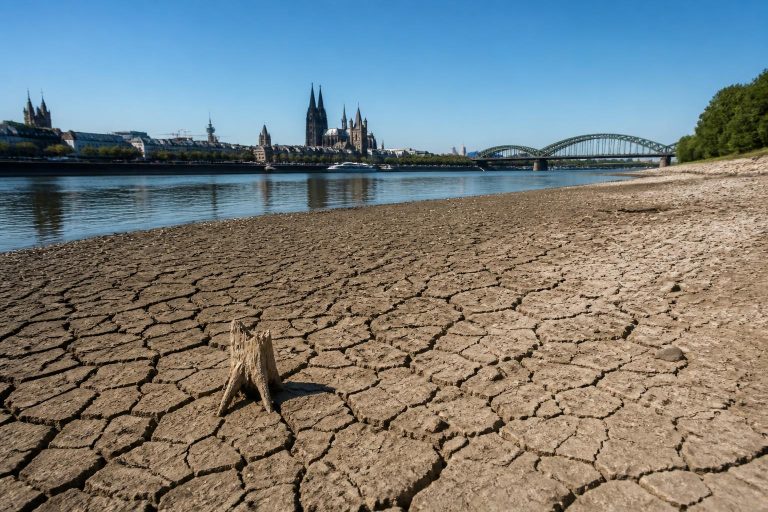
    Europe is grappling with a severe drought as its major rivers, including the Rhine and Danube, experience unprecedented low water levels due to a series of extreme heat waves. This situation poses significant challenges for the region’s heavy industries, which rely heavily on these waterways for the transportation of essential goods such as chemicals and oil products. As water levels drop, freight costs are rising, and power generation at riverside nuclear reactors is being curtailed, leading to increased energy prices and economic strain, particularly in Eastern Europe.

    The Rhine, a critical shipping route, has seen water levels at key chokepoints like Kaub plummet to 25 centimeters, matching the lows recorded during the drought of 2018. Experts predict that levels could fall even further, potentially reaching historic lows not seen since records began in 1880. Companies like BASF, which were forced to reduce production during past droughts, are now seeking alternative transport methods, albeit at higher costs. The situation has prompted discussions among industry leaders about the long-term implications for supply chains and the competitiveness of European industries against global rivals.

    As the drought continues, countries like Hungary and Romania are facing severe energy challenges, with Hungary shutting down its only nuclear plant for the first time in its history due to insufficient cooling water. The Hungarian government has called for more prudent energy and water consumption, while Romania remains on alert as it seeks support from neighbouring Ukraine during peak demand. The ongoing heat waves and drought conditions are not only impacting industrial operations but also threatening agricultural practices, as rivers like the Po in Italy dwindle below historic lows, raising concerns about irrigation and saltwater intrusion. With forecasts indicating continued high temperatures and limited rainfall, the outlook for Europe’s rivers remains bleak, underscoring the urgent need for adaptation to the realities of climate change.


  • Greenland Grants 30-Year Mining Permit for Climate-Friendly Aluminium Alternative

    Greenland Grants 30-Year Mining Permit for Climate-Friendly Aluminium Alternative

    Greenland has issued a 30-year mining license to Greenland Anorthosite Mining (GAM), a Danish-French mining group, to extract anorthosite—an unusual white rock that could play a key role in climate-friendly aluminium production. The permit covers a project site in western Greenland and marks a significant step toward the island’s ambitions to become a major player in the global green minerals market.

    GAM, backed by the French investment firm Jean Boulle Group and state investment funds from both Denmark and Greenland, aims to begin mining operations within five years. The company plans to export crushed anorthosite to the fiberglass industry, where it could serve as a more sustainable replacement for kaolin. Longer-term, it may replace bauxite in aluminium production, reducing the carbon footprint of a metal critical to the aerospace, automotive, and defense industries.

    Anorthosite is geologically similar to material brought back from the Moon by NASA’s Apollo missions, and its unique composition—aluminium, micro silica, and calcium—offers promising industrial applications.

    Despite the global spotlight on Greenland’s natural resources, Mineral Resources Minister Naaja Nathanielsen stated that heightened U.S. interest in the Arctic island—especially following former President Donald Trump’s 2019 proposal to purchase it—has not yet resulted in direct American investment.

    “Right now, all the fuss has not resulted in increased appetite for investment directly in Greenland,” Nathanielsen told Reuters. While U.S. business delegations have visited the island, formal talks with the U.S. government remain on hold.

    In contrast, Nathanielsen noted smoother progress with European Union and Danish partners, citing years of intensified cooperation.

    Although Greenland is rich in minerals, oil, and gas, its mining sector remains underdeveloped due to investor caution, regulatory hurdles, and environmental concerns. At present, only two small mines are operational on the island.

  • Harnessing Nature’s Elements: Magnesium’s Role in Planetary Restoration and Sustainable Investing

    Harnessing Nature’s Elements: Magnesium’s Role in Planetary Restoration and Sustainable Investing

    Amid the global climate crisis—marked by rising temperatures, ocean acidification, pollution, and land degradation—nature itself may hold solutions to address these challenges. Minerals like magnesium play a crucial role in planetary restoration efforts, offering potential benefits across ecosystems, agriculture, oceans, and human health.

    Magnesium, a cornerstone of photosynthesis, is vital for agriculture and forest health. It enhances plant nutrient uptake, bolsters soil fertility, and strengthens plant immunity. In oceans, magnesium hydroxide may help mitigate ocean acidification, preserving marine ecosystems like coral reefs. Magnesium is also essential for over 300 enzymatic processes in humans, supporting bone strength, nerve function, and cardiovascular health.

    Beyond magnesium, minerals such as olivine, lithium, cobalt, nickel, copper, and rare earth elements play pivotal roles in advancing sustainability. Olivine’s ability to sequester carbon when spread across beaches and exposed to ocean waves exemplifies nature’s potential to mitigate greenhouse gas emissions. Meanwhile, critical minerals fuel clean energy innovations like electric vehicles and renewable energy storage, which are essential for reducing carbon emissions.

    However, mineral extraction poses significant challenges, from environmental degradation to water contamination and CO2 emissions. Investors must consider not only a mineral’s quality and location but also environmental safeguards, geopolitical risks, regulatory frameworks, and local community relations. Collaboration across multiple sectors is key to responsible mining practices that prioritize both profits and planetary health.

    Strategic mineral investments represent an opportunity not only for financial returns but also for contributing to sustainable solutions for global challenges. With careful planning, investors can help shape a future where natural resources drive positive environmental change.

  • Kazakhstan Takes the Lead in Global Sustainability Efforts

    Kazakhstan Takes the Lead in Global Sustainability Efforts

    Kassym-Jomart Tokayev, President of Kazakhstan, participated in the inauguration of Abu Dhabi Sustainability Week, highlighting a bold new development paradigm during his speech on 14 January. The president emphasized Kazakhstan’s commitment to addressing global climate challenges, including desertification, biodiversity loss, water scarcity, and food insecurity.

    As 2025 unfolds, Kazakhstan is actively aligning with European climate standards, implementing both national and international policies to combat global warming. Tokayev underscored Kazakhstan’s strategic importance, with its critical raw materials essential for the global energy transition. These materials include chrome, lead, zinc, and uranium, vital for achieving net-zero greenhouse gas emissions.

    Kazakhstan is also advancing its renewable energy sector, with 148 active projects totaling 2.9 GW of capacity and ambitious plans for 26 GW by 2035. Notably, companies have committed to 43 GW of green energy projects, supporting Kazakhstan’s goal of carbon neutrality by 2060. The country is exploring nuclear energy, with plans for its first nuclear power plant, and boasts one of the largest wind farms near its capital.

    President Tokayev also addressed environmental priorities, such as biodiversity conservation and reviving the Aral Sea. Additionally, Kazakhstan is positioning itself as a critical transport hub, connecting Asia and Europe via the Trans-Caspian Middle Corridor.

    With growing vulnerability to climate change in Central Asia, Kazakhstan is advancing policies to protect ecosystems and promote international cooperation. Tokayev’s leadership signals a proactive approach to renewables, food security, and climate resilience.

  • Kyrgyz President Calls for Enhanced Climate Cooperation at Central Asia-Germany Summit

    Kyrgyz President Calls for Enhanced Climate Cooperation at Central Asia-Germany Summit

    The President of Kyrgyzstan, Sadyr Japarov, urged his counterparts to increase cooperation on climate change during the Central Asia-Germany Summit, according to a statement from the President’s press office. In his speech, Japarov highlighted the growing global influence of Central Asia in recent years. He stressed that regional and interregional integration is essential for a shared future.

    Japarov also expressed optimism that sustained collaboration between Kyrgyzstan and Germany could lead to stronger investment and trade partnerships. He pointed out Kyrgyzstan’s vast potential in green energy and metal mining, particularly in rare-earth elements.

    Addressing the urgent need for climate cooperation, Japarov noted a worrying statistic: Kyrgyzstan’s glaciers have shrunk by 16% over the last 70 years. He also cited the lack of funding as a major obstacle to achieving the targets of the Paris Climate Agreement, with limited options for broad public financing of environmental initiatives. As a solution, he proposed a new mechanism of exchanging public debt for green projects to support climate action.

  • UK Court Rules Approval of New Deep Coal Mine Unlawful

    UK Court Rules Approval of New Deep Coal Mine Unlawful

    The High Court of London has ruled that Britain’s approval of its first new deep coal mine in decades was unlawful. This decision comes after a legal challenge from Friends of the Earth and South Lakeland Action on Climate Change, who contested the 2022 approval by the previous Conservative government for a coking coal mine in northwest England. The ruling follows a Supreme Court decision earlier this year, which clarified that planning authorities must take into account the environmental impact of burning fossil fuels, not just their extraction, when approving projects.

    Despite the British government dropping its defense, West Cumbria Mining, the project’s developer, continued to argue that the mine, intended to extract coking coal for steel manufacturing rather than electricity generation, would be a “unique ‘net zero’ mine.” However, Judge David Holgate rejected this claim, stating that the assumption that the mine would not result in a net increase in greenhouse gas emissions was legally flawed.

  • Climate Groups Challenge UK’s First Deep Coal Mine in Three Decades

    Climate Groups Challenge UK’s First Deep Coal Mine in Three Decades

    In a significant legal battle, climate groups have branded the decision to open the UK’s first deep coal mine in over thirty years as unlawful, arguing that the approval overlooked the full extent of the harmful emissions it would generate. On Tuesday, lawyers representing Friends of the Earth and South Lakes Action on Climate Change contested the planning permission granted to the Woodhouse Colliery project in Whitehaven, northwest England, at the High Court.

    The UK government had greenlit the mine’s development in 2022, with West Cumbria Mining Ltd. planning to export coal primarily for steel production overseas. However, legal representatives claimed that the developer’s climate assessment failed to account for the emissions resulting from burning the coal, erroneously labeling the mine as net zero.

    “No reputable standard-setting or governance body involved in the voluntary carbon market endorsed West Cumbria Mining’s approach,” stated the lawyers for Friends of the Earth in their hearing documents, calling the net zero claim “pure greenwashing.”

    The case gained momentum last week when the UK’s new Labour government declared it would no longer defend the mine’s approval. This decision followed a Supreme Court ruling mandating that all emissions, whether produced on site or downstream, must be fully considered when approving new fossil fuel projects.

    In response, West Cumbria Mining‘s legal team vehemently denied the accusations, asserting that the development proposals, evidence, and official appraisals were all lawful and accurately represented.

  • Activists Demand Serbia Halt Rio Tinto’s Lithium Mining Project

    Activists Demand Serbia Halt Rio Tinto’s Lithium Mining Project

    In western Serbia, a strong movement against Rio Tinto’s jadarite mining project near Loznica is demanding a ban on the exploration and mining of lithium and boron. Activists warned that if the Government of Serbia does not comply, they will radicalize their resistance through railway blockades. The protests have attracted participants from Jadar, Loznica, and various cities in Serbia and Bosnia and Herzegovina, particularly those from areas with existing or planned mining projects. The event was organized by the local group Ne damo Jadar along with Marš sa Drine, Suvoborska greda, and other associations under the Association of Environmental Organizations of Serbia (SEOS).

    Marijana Petković, representing Ne damo Jadar, highlighted that activists found evidence of toxic exploration drilling fluid being disposed of at the city landfill. On July 1, the government will receive a formal demand to ban lithium and boron exploration and mining nationwide. The movement has vowed to start blockades on railroads and other key points if the demand is not met within 40 days. This follows a 2022 petition with over 38,000 signatures, which the National Assembly ignored despite being legally obliged to discuss it.

    Professor Ljiljana Tomović from the University of Belgrade emphasized that stopping the exploitation of jadarite is crucial to prevent damage to the flora, fauna, habitats, and ecosystems in the Jadar Valley. Similarly, Professor Slobodan Vukosavić from the Faculty of Electrical Engineering in Belgrade warned of the risk of wastewater contamination from the mine affecting the Mačva area. He stressed the importance of water amid climate change and suggested future conflicts would be over water, not lithium.

    Activists from Bosnia and Herzegovina, facing similar mining threats, joined the protest in Loznica. Adi Selman from Karton revolucija spoke passionately about protecting the Gornje Nedeljice, Loznica, the Drina and Sava rivers, and other threatened areas. Dragan Simović, a farmer from Srednja Dobrinja, highlighted the adverse effects of mining in other regions like Bor and Majdanpek and urged for intensified protests and a ban on mining.

  • Germany’s Climate Change Targets at Risk, Urgent Action Needed

    Germany’s Climate Change Targets at Risk, Urgent Action Needed

    Germany’s climate advisory body has issued a call for immediate policy measures to address the country’s escalating greenhouse gas emissions, cautioning that it is on track to miss its 2030 climate change targets. In a report released on Monday, the Council of Experts on Climate Change, an independent body appointed by the government, emphasized that Germany is unlikely to achieve its goal of reducing emissions by 65% by the end of the decade compared to 1990 levels.

    The council highlighted sectors such as transport and construction as particularly problematic in terms of decarbonization efforts. These sectors are facing significant challenges in transitioning to cleaner energy sources and reducing their carbon footprint. The findings directly contradict statements made by German Climate Protection Minister and Vice Chancellor Robert Habeck, who had previously claimed that emissions were decreasing and the country would meet its targets based on projections from the Federal Environment Agency (UBA).

    According to the Council of Experts on Climate Change, the UBA’s estimates were overly optimistic, and the emissions from the energy, building, and transport sectors had been underestimated. This indicates a pressing need for additional action and stronger measures to be taken to curb emissions effectively.

    Under the Climate Protection Act, if the council’s findings are confirmed in its next annual report in 2025, the government will be required to implement further measures to meet its 2030 targets. However, the council’s chairman, Hans-Martin Henning, advised against waiting for the targets to be missed again and instead recommended prompt examination and implementation of additional measures.

    The council also warned that Germany may face challenges in meeting future targets, including its aim to reduce emissions by 88% by 2040 compared to 1990 levels and achieve climate neutrality by 2045. The transition away from burning fossil fuels is considered crucial in addressing the global warming threat and reducing emissions.

    The release of the council’s report coincides with ongoing government negotiations in Bonn, Germany, where officials are laying the groundwork for the upcoming COP29 climate summit in Baku, Azerbaijan, scheduled for the end of the year. The discussions are expected to focus on the contentious issue of funding the escalating costs associated with climate change.

  • UN Launches Panel to Address Critical Energy Transition Minerals

    UN Launches Panel to Address Critical Energy Transition Minerals

    UN Secretary-General António Guterres has announced the formation of a Panel on Critical Energy Transition Minerals, recognizing the escalating demand for minerals vital to renewable energy technologies. Co-chaired by Ambassador Nozipho Joyce Mxakato-Diseko of South Africa and Director-General for Energy Ditte Juul Jørgensen of the European Commission, the panel aims to establish global principles to ensure environmental and social standards, equity, transparency, sustainability, and human rights in the minerals value chain.

    Speaking at the panel’s launch, Secretary-General Guterres emphasized the importance of managing critical minerals responsibly in the transition to renewable energy, particularly for developing countries. He stressed the need to ensure that the renewables revolution advances with justice, benefiting all stakeholders, especially marginalized communities.

    Ambassador Mxakato-Diseko commended the Secretary-General’s initiative, highlighting the panel’s alignment with sustainable development goals and climate agreements. She emphasized the objective of building trust and certainty to unlock the potential of critical minerals for shared prosperity while leaving no one behind.

    Director-General Jørgensen underscored the urgent need for a fair and transparent approach in the global minerals value chain to meet ambitious renewable energy goals. She expressed her commitment to developing principles that uphold sustainability and human development standards, both globally and locally.

    Critical energy transition minerals such as copper, lithium, nickel, cobalt, and rare earth elements are essential for achieving the targets set at COP28 and limiting global warming to 1.5°C. Without a significant increase in the supply of these minerals, the transition to renewable energy will face significant hurdles.

    While developing countries with abundant mineral reserves have the potential to drive green economic growth, proper management is crucial to avoid perpetuating commodity dependence and exacerbating environmental and social challenges. The panel aims to address these issues by providing globally agreed guidance for responsible and fair value chains.