Tag: BMW

  • BMW Transfers $15 Million to Critical Metals Corp. for Lithium Offtake

    BMW Transfers $15 Million to Critical Metals Corp. for Lithium Offtake

    Critical Metals Corp. (Nasdaq: CRML), a leading mining development company focused on critical metals and minerals for the green energy transition, announced today that Bayerische Motoren Werkte Aktiengesellschaft (BMW) has transferred US$15 million to ECM Lithium AT GmbH (ECM), a wholly-owned subsidiary of Critical Metals Corp. This payment is related to the offtake of battery grade lithium hydroxide (LiOH) from the Wolfsberg Lithium Project in Austria, which will be offset against lithium hydroxide delivered to BMW.

    “We are pleased to move our partnership with BMW forward and look forward to supporting the production of their electric vehicles in Europe in the years to come, contributing to a more sustainable and domestic battery supply chain,” said Tony Sage, CEO and Executive Chairman of Critical Metals Corp. “This pre-payment further strengthens our balance sheet and will allow us to further advance our development strategy.”

    About Critical Metals Corp. Critical Metals Corp (Nasdaq: CRML) is a leading mining development company focused on critical metals and minerals, producing strategic products essential to electrification and next-generation technologies for Europe and its partners. Its initial flagship asset is the Wolfsberg Lithium Project located in Carinthia, 270 km south of Vienna, Austria. The Wolfsberg Lithium Project is the first fully permitted mine in Europe and is strategically located with access to established road and rail infrastructure. It is expected to become the next major producer of key lithium products to support the European market. Wolfsberg is well-positioned with offtake and downstream partners to become a unique and valuable building block in an expanding geostrategic critical metals portfolio. The Company has a long-term offtake with a leading global automaker based in Europe and is expected to benefit from European Lithium’s JV with Obeikan Group. Additionally, Critical Metals Corp owns a 20% interest in prospective Austrian mineral projects previously held by European Lithium Ltd (ASX: EUR).

  • BMW Built Its Largest And Newest Test Site Inside An Old Mine

    BMW Built Its Largest And Newest Test Site Inside An Old Mine

    • BMW inaugurates Future Mobility Development Center (FMDC) in Sokolov, Czech Republic, aimed at testing its autonomous tech.
    • The 1482-acre site contains a variety of roads and traffic patterns, allowing the automaker to simulate a variety of real-world environments.
    • BMW is expected to offer a hands-off, eyes-off Level 3 system in its vehicles starting in 2025, joining other automakers that have also invested in such systems.

    The age of autonomous vehicles hasn’t yet dawned, but its impending arrival has already brought about significant changes to how automakers test cars.

    Even the development of advanced driver assistance systems (ADAS) has altered the way cars are tested, employing all types of digital environments to put hundreds of thousands of virtual miles on cars’ systems to validate them.

    The Real World

    Despite the growth of companies catering such simulation services, testing in physical environments is still crucial as more Level 3 and Level 4 systems approach market readiness.

    Just a few days ago BMW opened its largest test site in the world, and it’s aimed primarily at testing autonomous vehicles.

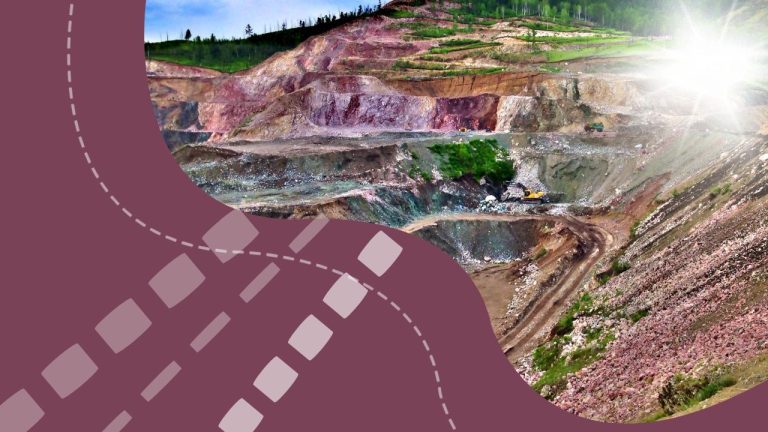
    The new site, dubbed Future Mobility Development Center (FMDC), is located in Sokolov, Czech Republic, and it’s been built in a former surface mine. The new center, covering some 1482 acres, contains a variety of simulated locations including city, freeway, country roads, and a variety of street and intersection types.

    “With our new Future Mobility Development Center, we have created a one-of-a-kind test site, designed exclusively for the highly demanding testing of automated driving and parking up to level 4,” said Frank Weber, BMW Board Member for Development.

    bmw future mobility development center fmdc

    The Future Mobility Development Center (FMDC) is designed to test autonomous vehicles up to SAE Level 4, which is how driverless but geofenced robotaxis are designated.

    UWE FISCHER

    Eco-Friendly

    The automaker did not neglect environmental aspects in developing a site this large, using 2.2 million cubic meters of soil that had already been excavated during mining operations to construct the site. The test track also features a water management system that collects rainwater to irrigate the track.

    “The special thing: We can run our test modules one after the other without stopping. This makes our testing as realistic, reliable, and customer-oriented as possible,” Weber added.

    When it comes to autonomous tech in the pipeline, BMW is known to be working on Level 3 tech along with autonomous developer Arriver, and chipmaker Qualcomm.

    The automaker is expected to offer a hands-off, eyes-off Level 3 system in at least some of its vehicles starting in 2025, following the lead of other automakers like Honda, Volvo, and Mercedes-Benz in developing Level 3 systems. Specifically, BMW is expected to use Qualcomm’s Snapdragon Ride Vision system-on-a-chip (SoC), as well as Arriver’s Computer Vision tech. And Sokolov is where these systems will be tested.

  • BMW Built Its Largest And Newest Test Site Inside An Old Mine

    BMW Built Its Largest And Newest Test Site Inside An Old Mine

    • BMW inaugurates Future Mobility Development Center (FMDC) in Sokolov, Czech Republic, aimed at testing its autonomous tech.
    • The 1482-acre site contains a variety of roads and traffic patterns, allowing the automaker to simulate a variety of real-world environments.
    • BMW is expected to offer a hands-off, eyes-off Level 3 system in its vehicles starting in 2025, joining other automakers that have also invested in such systems.

    The age of autonomous vehicles hasn’t yet dawned, but its impending arrival has already brought about significant changes to how automakers test cars.

    Even the development of advanced driver assistance systems (ADAS) has altered the way cars are tested, employing all types of digital environments to put hundreds of thousands of virtual miles on cars’ systems to validate them.

    The Real World

    Despite the growth of companies catering such simulation services, testing in physical environments is still crucial as more Level 3 and Level 4 systems approach market readiness.

    Just a few days ago BMW opened its largest test site in the world, and it’s aimed primarily at testing autonomous vehicles.

    The new site, dubbed Future Mobility Development Center (FMDC), is located in Sokolov, Czech Republic, and it’s been built in a former surface mine. The new center, covering some 1482 acres, contains a variety of simulated locations including city, freeway, country roads, and a variety of street and intersection types.

    “With our new Future Mobility Development Center, we have created a one-of-a-kind test site, designed exclusively for the highly demanding testing of automated driving and parking up to level 4,” said Frank Weber, BMW Board Member for Development.

    bmw future mobility development center fmdc

    The Future Mobility Development Center (FMDC) is designed to test autonomous vehicles up to SAE Level 4, which is how driverless but geofenced robotaxis are designated.

    UWE FISCHER

    Eco-Friendly

    The automaker did not neglect environmental aspects in developing a site this large, using 2.2 million cubic meters of soil that had already been excavated during mining operations to construct the site. The test track also features a water management system that collects rainwater to irrigate the track.

    “The special thing: We can run our test modules one after the other without stopping. This makes our testing as realistic, reliable, and customer-oriented as possible,” Weber added.

    When it comes to autonomous tech in the pipeline, BMW is known to be working on Level 3 tech along with autonomous developer Arriver, and chipmaker Qualcomm.

    The automaker is expected to offer a hands-off, eyes-off Level 3 system in at least some of its vehicles starting in 2025, following the lead of other automakers like Honda, Volvo, and Mercedes-Benz in developing Level 3 systems. Specifically, BMW is expected to use Qualcomm’s Snapdragon Ride Vision system-on-a-chip (SoC), as well as Arriver’s Computer Vision tech. And Sokolov is where these systems will be tested.

  • What to do with an old mine? Turn it into a self-driving test track

    What to do with an old mine? Turn it into a self-driving test track

    The German car maker says the 300-million euro Future Mobility Development Center (FMDC) will play a key role in the company’s development of automated driving.

    The former mine site has been transformed into an innovation hub employing more than 100 skilled workers.

    The terrain offers the necessary real-world conditions for the testing of highly and fully automated driving and parking, aimed at supplementing the current virtual simulation of driving situations.

    Through a combination of virtual simulation and real-world testing, BMW says it plans to “meet the highest safety requirements of its customers”.

    The FMDC in Sokolov rounds out BMW’s existing group of test sites in Aschheim, near Munich; Miramas, in France; and Arjeplog, in Sweden.

    “With our new FMDC, we have created a one-of-a-kind test site, designed exclusively for the highly demanding testing of automated driving and parking up to level 4,” says BMW development board member Frank Weber.

    “On 600 hectares of land, we test all possible driving conditions with maximum flexibility and tremendous efficiency – city, countryside, freeway, as well as automated parking.

    “The special thing? We can run our test modules one after the other without stopping.

    “This makes our testing as realistic, reliable and customer-oriented as possible.”

    “Together with our partners, we were able to develop a former surface mine site here in Sokolov into a modern and efficient test site and create new, attractive jobs,” says BMW people and real estate board member Ilka Horstmeier.

    The FMDC and its charging infrastructure are supplied with 100% green electricity from renewable energy sources.

    The site is also equipped with a water management system that collects rainwater and uses it for track irrigation.

    Around 2.2-million cubic metres of soil previously excavated by nearby mining were used to build the site.