Tag: molybdenum

  • Greenland Resources Secures Expanded Exploration Rights Near Malmbjerg Molybdenum Project

    Greenland Resources Secures Expanded Exploration Rights Near Malmbjerg Molybdenum Project

    Greenland Resources has been granted exclusive exploration rights covering 1,147.76 square kilometres in Greenland’s Semersooq region, significantly expanding its mineral licence footprint surrounding the company’s flagship Malmbjerg molybdenum project.

    The Canadian-listed company said the newly awarded special exploration licence strengthens its position along Greenland’s east coast, giving it what it described as a dominant regional mineral holding adjacent to its existing exploitation licence for molybdenum and magnesium.

    The expansion comes amid growing global demand for molybdenum, a key material used in high-performance steel alloys essential for infrastructure, industrial manufacturing and energy transition technologies. Market forecasts cited by the company indicate global molybdenum demand could increase from approximately 398,000 tonnes in 2024 to around 500,000 tonnes annually by 2034.

    Greenland Resources has already secured downstream market access through a long-term offtake agreement signed last year with Finnish stainless steel producer Outokumpu, under which molybdenum oxide from the Malmbjerg project will be supplied to the European manufacturer.

    According to historical geological data published by the Geological Survey of Denmark and Greenland, rock sampling within the newly licensed area has identified multiple zones with highly anomalous molybdenum concentrations. The company believes these targets could potentially expand the resource base linked to the Malmbjerg development.

    An exploration programme is now being prepared for the concession area, including hyperspectral surveys aimed at refining mineral targeting and assessing resource potential.

    Investor sentiment reacted positively to the announcement, with Greenland Resources shares rising 2.94 percent by the close of trading in Toronto. The company currently holds a market capitalisation of approximately C$235 million.

  • REsourceEU Puts Europe’s Critical Minerals Strategy Into Action With Early Molybdenum and Lithium Backing

    REsourceEU Puts Europe’s Critical Minerals Strategy Into Action With Early Molybdenum and Lithium Backing

    Europe’s newly launched €3-billion REsourceEU funding package marks a decisive shift in the continent’s approach to securing resilient, competitive supply chains for critical and strategic raw materials. The first wave of support targets a select group of molybdenum and lithium projects, signalling that Brussels is moving beyond policy blueprints toward tangible industrial capacity.

    As reported by euromining.news, these early selections demonstrate that the EU’s critical raw materials agenda is entering an execution phase, focused on easing bottlenecks in alloy production, battery manufacturing and clean-technology deployment.

    Molybdenum moves into the strategic spotlight
    While it attracts far less attention than battery metals, molybdenum is essential to Europe’s industrial backbone. As a key alloying element in high-performance steels, it underpins defence manufacturing, energy infrastructure, petrochemicals and advanced engineering.

    Europe’s heavy reliance on imported molybdenum leaves these sectors exposed to geopolitical risk and price volatility. By prioritising European molybdenum projects under REsourceEU, the Commission is acknowledging that strategic vulnerability extends well beyond lithium and rare earths. Industrial resilience depends on securing the full spectrum of critical alloying materials that modern manufacturing requires.

    Lithium funding reinforces battery-chain ambitions
    Lithium remains central to Europe’s push to build a competitive battery ecosystem. Conversion plants across Germany, France, Portugal and the Nordic region are racing to scale production of battery-grade lithium chemicals, aiming to establish domestic midstream hubs in a market still dominated by fragmented and geopolitically sensitive global supply chains.

    REsourceEU funding is expected to reduce financing risk, unlock delayed investments and accelerate project timelines. This support is arriving at a critical moment, as European gigafactory capacity expands rapidly and automakers seek stable, low-carbon lithium supply.

    From policy vision to industrial reality
    The broader ambition of REsourceEU is to translate Europe’s raw-materials strategy into operational infrastructure. As highlighted in recent euromining.news analysis, long-term industrial competitiveness now hinges on secure, diversified and environmentally responsible material flows.

    By backing early leaders in molybdenum and lithium development, the EU is sending a clear signal: Europe intends to anchor strategic materials production at home rather than rely on volatile external suppliers. The challenge now lies in delivery. Projects must still overcome permitting hurdles, secure long-term offtake agreements and reach commercial scale.

    As construction advances and policy support deepens, euromining.news will continue to track both progress and remaining gaps to assess whether Europe’s strategic-materials ambitions translate into lasting industrial strength.

  • Kyrgyzstan Unveils Critical Minerals Strategy at MINEX Eurasia Conference in London

    Kyrgyzstan Unveils Critical Minerals Strategy at MINEX Eurasia Conference in London

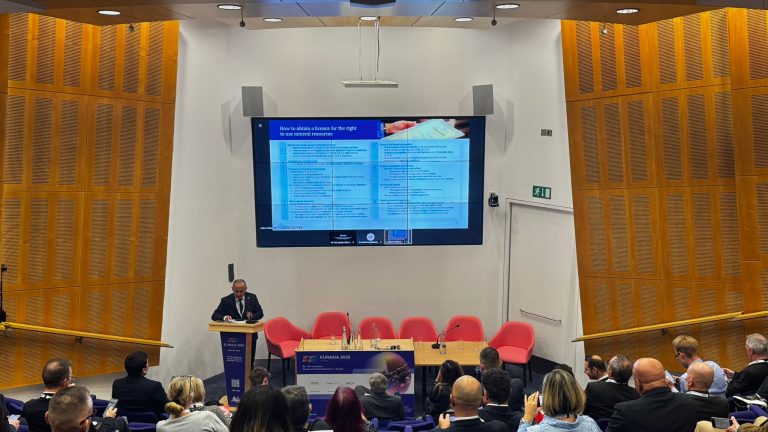
    London, 1 December 2025 – The MINEX Eurasia conference in London hosted a keynote address by H.E. Meder Mashiev, Minister of Natural Resources, Ecology, and Technical Supervision of Kyrgyzstan, outlining the country’s strategic vision for its critical minerals sector.

    Kyrgyzstan’s Strategic Minerals Vision

    The Minister outlined Kyrgyzstan’s methodical approach to prioritising and developing its critical minerals sector, identifying 21 key minerals based on global demand, local deposits, and resource concentrations. Kyrgyzstan’s analysis resulted in the selection of 4 priority projects, 5 promising deposits, and 16 prospective areas for further study and development. These assets, spread across antimony, beryllium, rare earths, molybdenum, bismuth, zinc, silver, and others, offer significant commercial and strategic potential for investors and end-users in energy, electronics, and high-value manufacturing.

    Investment and Development Framework

    State companies, notably Kyrgyzgeology, are driving exploration and project development, supported by government incentives and openness to international partnership. Strategic sites are being actively promoted for joint ventures or direct investment. Major domestic and international firms manage several large sites, while more than 100 mining enterprises operate in the country—spanning gold, copper, and polymetallic ores.

    Tax and Licensing Regime

    The session detailed Kyrgyzstan’s tax policy, which includes a mix of one-time bonuses for mining rights, royalties, profit tax, and VAT. The overall effective tax burden stands between 25–30%, complemented by social and environmental levies such as waste disposal, emissions, and water usage fees. Procedures for subsoil use licensing are harmonized with those in neighbouring countries, with initiatives being considered to simplify the processes and make it more transparent.

    ESG, Transparency, and Sustainable Mining

    Kyrgyzstan’s evolving strategy strongly emphasizes environmental, social, and governance (ESG) standards, aiming to foster responsible mineral development, minimize ecological impact, ensure transparency, and maximize benefits for local communities. The new strategy promotes the deployment of advanced technologies, environmental sustainability, and transparent investment processes, aligning with best practices to attract reliable, long-term partners.

    Opportunities for International Partnership

    Kyrgyzstan welcomes active collaboration with global investors and mining enterprises, seeking to leverage modern mining technologies, improve environmental outcomes, and maximize economic benefits. The country’s critical mineral strategy is closely linked to green growth targets and broader Eurasian supply chain integration.

  • Mongolia Unveils Oyut Copper Deposit with 357 Million Tons of Ore

    Mongolia Unveils Oyut Copper Deposit with 357 Million Tons of Ore

    A newly discovered mineral deposit named Oyut has been identified within the territories of Bayan-Undur and Jargalant districts in Mongolia’s Orkhon province, as reported by Montsame. Preliminary geological exploration indicates that the Oyut deposit contains approximately 357 million tons of ore reserves, positioning it as a potential asset of significant scale, comparable to Mongolia’s largest copper and molybdenum ore mining operation at Erdenet.

    On September 7, Mongolian Prime Minister Zandansahtar Gombojav attended the official opening and preparatory activities for the operational launch of the Oyut deposit. The Prime Minister has authorised a feasibility study for the construction of a concentrator designed to process between 5 to 10 million tons of ore annually. Early estimates suggest that the deposit could sustain operations for 30 to 35 years, marking it as a long-term strategic resource. The initial geological exploration was conducted independently by specialists from the Erdenet Mining Corporation, with senior engineers from the corporation overseeing the project’s design and construction.

    Prime Minister Gombojav emphasised Mongolia’s constitutional commitment to equitable resource distribution, stating that the benefits derived from subsoil resources will be consolidated into the National Sovereign Wealth Fund and fairly allocated to all citizens. The Oyut copper deposit is strategically located approximately 8 kilometres from the Erdenetyn-Ovoo deposit, the foundation of the Erdenet Mining Corporation, and just 3 kilometres from the infrastructure of the Industrial and Technology Park near Erdenet city.

    The launch of operations at the Oyut deposit is anticipated to make a substantial contribution to the Sovereign Wealth Fund. It is also expected to serve as a key driver of socio-economic development in Erdenet city, Orkhon aimag, the Northern region, and Mongolia as a whole. This discovery underscores Mongolia’s potential to leverage its mineral resources for long-term economic growth and development.

  • Greenland Approves 30-Year Molybdenum Mining Project to Supply 25% of EU Demand

    Greenland Approves 30-Year Molybdenum Mining Project to Supply 25% of EU Demand

    Greenland has granted a 30-year permit to Toronto-listed Greenland Resources for the development of the Malmbjerg molybdenum mine, marking a major step forward for EU-backed efforts to secure critical raw materials. The project, located in eastern Greenland, is expected to produce an average of 32.8 million pounds of concentrated molybdenum annually—enough to meet around a quarter of Europe’s demand for the metal.

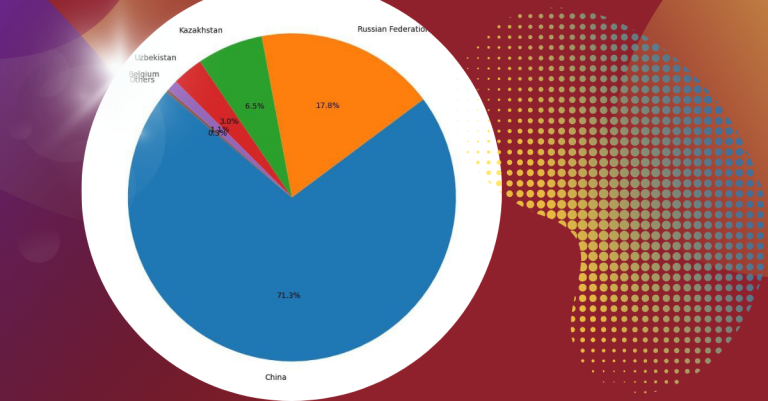
    Molybdenum is used in aerospace, clean energy, and defense due to its strength and resistance to heat and corrosion. With China controlling around 40% of global molybdenum production and recently tightening export controls in response to U.S. tariffs, the project carries geopolitical significance.

    The Malmbjerg mine is backed by the European Raw Materials Alliance and has already secured supply agreements with major European firms, including Finland’s Outokumpu and Italy’s Cogne Acciai Speciali.

    Greenland’s mining sector is seeing increased momentum. Just last month, the country issued another exploitation licence to a Danish-French consortium, and the EU included a graphite project in Greenland among 13 new strategic initiatives aimed at bolstering mineral supply.

    Though development in Greenland has historically been slowed by regulatory hurdles and limited financing, interest from both the U.S. and EU is accelerating. The U.S. Export-Import Bank recently confirmed that a Greenland-based rare earth mine met the initial criteria for a $120 million loan.

  • Greenland Grants 30-Year Permit to EU-Backed Malmbjerg Molybdenum Mine

    Greenland Grants 30-Year Permit to EU-Backed Malmbjerg Molybdenum Mine

    Greenland Resources (Cboe CA: MOLY) has received a 30-year exploitation licence for its Malmbjerg molybdenum project, a significant step in securing the European Union’s critical mineral supply. Backed by the EU and the European Raw Materials Alliance (ERMA), the open-pit mine is expected to meet up to 25% of the EU’s molybdenum needs during its first decade of production.

    The Malmbjerg site will produce an average of 32.8 million pounds of molybdenum annually—an essential element for steel reinforcement and vital applications in aerospace, energy, and defence. The strategic importance of this development has only intensified as China, the global leader in molybdenum supply, tightened export controls following new U.S. tariffs.

    Greenland Resources has already signed off-take agreements with major European steelmakers, including Finland’s Outokumpu and Italy’s Cogne Acciai Speciali. The government of Greenland sees the project as a milestone in its push toward economic self-sufficiency. Minister Naaja H. Nathanielsen emphasized that Malmbjerg will bring jobs, local business opportunities, and potentially $1 billion in tax revenues over its operational lifetime.

    The project’s approval adds momentum to Greenland’s expanding mining sector. In recent weeks, the government has approved a range of new ventures, including a graphite initiative added to the EU’s list of 13 new critical raw materials projects and progress by Critical Metals Corp. on the Tanbreez rare earth mine with prospective U.S. EXIM Bank backing.

    As global competition for critical minerals intensifies, Greenland is emerging as a strategic hub for raw materials vital to Western supply chains.

  • China Imports Up to 70% of Critical Metals from Central Asia

    China Imports Up to 70% of Critical Metals from Central Asia

    Despite the lack of official data on the export of rare earth metals by Central Asian countries, an analysis of ore, slag, and ash exports reveals interesting trends. These exports often include critical resources highly sought after by leading global powers, particularly metals such as molybdenum, titanium, and vanadium.

    According to Trademap.org data from 2019 to 2023, Central Asian countries exported a wide range of ores and concentrates, including copper, iron, precious metals, zinc, lead, molybdenum, chromium, and niche metals such as niobium and tantalum.

    In recent years, the market has also seen the introduction of products such as tin, tungsten, and titanium ores. For example, copper ore exports showed stable growth—from approximately $1.17 million in 2019 to around $3.15 million in 2023. Iron ore peaked at $1.6 million in 2021 before experiencing a decline in export volumes in subsequent years.

    One notable trend is the significant increase in molybdenum ore exports, which surged from about $4 million in 2019 to approximately $144 million in 2023. This is a clear reflection of increased global demand and investment.

    An analysis of trade with the European Union under the category “26 Ores, Slags, and Ash” shows that molybdenum stands out: its exports increased from around $11 million in 2021 to nearly $60 million in 2023. In this segment, Kazakhstan holds a dominant position, providing nearly the entire cumulative export value, while contributions from other Central Asian countries remain significantly lower.

    Central Asian countries’ export portfolios reveal a trend towards transitioning from traditional raw materials such as copper and iron to more valuable niche ores, especially molybdenum. This trend is evident both in the global market and in trade with the European Union, where Kazakhstan acts as a key supplier.
    Will the European Union be able to position itself as a key importer of critical metals from Central Asia? The future will tell.

  • Armenia Develops Strategic Molybdenum Export Plan with USAID Support

    Armenia Develops Strategic Molybdenum Export Plan with USAID Support

    A comprehensive export strategy for molybdenum has been meticulously crafted through collaborative efforts between USAID, Ameria Management Advisory, and Modex Consulting, with notable contributions from international expert Andreas Klassen.

    The strategic plan positions molybdenum as a pivotal export product for Armenia, with targeted initiatives aimed at bolstering the country’s global standing in molybdenum production. As reported by Modex, the strategy outlines specific actions designed to enhance Armenia’s competitive position in the international market.

    Molybdenum’s significance in modern industrial applications cannot be overstated. The metal’s exceptional physicochemical properties make it crucial in developing high-performance alloys that ensure equipment strength and corrosion resistance. These specialised alloys find critical applications in diverse sectors, including aerospace, chemical and pharmaceutical manufacturing, and complex architectural engineering.

    Armenia has already established itself as a formidable player in global molybdenum production. In 2023, the country secured the sixth position worldwide, producing 10,900 tonnes—representing approximately 4% of global production. The nation trails only behind industrial powerhouses such as China, Chile, the United States, Peru, and Mexico.

    The export strategy’s robustness is underscored by Armenia’s impressive comparative competitive advantage. Using the Balassa index—a metric developed by Hungarian economist Béla Ballasa—Armenia’s molybdenum export competitiveness reached a remarkable 171 in 2023. This index compares a product’s export share within a country’s total exports against its global export proportion.

    Interestingly, despite its significant production capabilities, Armenia remains unaffiliated with the International Molybdenum Association (IMOA), presenting potential future opportunities for international engagement and market expansion.

    The strategic plan draws inspiration from the economic principles of comparative advantage, originally conceptualised by renowned English economist David Ricardo. By leveraging its inherent production strengths, Armenia aims to carve a distinctive niche in the global molybdenum market.

    As the strategy unfolds, stakeholders anticipate strengthened international trade relationships and enhanced economic opportunities for Armenia’s mining and export sectors.

  • UzKTK Aims to Boost Tungsten Production by 50 Times by 2030

    UzKTK Aims to Boost Tungsten Production by 50 Times by 2030

    Uzbekistan Technological Metals Combinat (UzKTK) has ambitious plans to significantly increase its production of tungsten and molybdenum by 2030. The company aims to boost tungsten production by a staggering 50 times and molybdenum production by 3.4 times in value terms.

    This announcement was made by Ulugbek Ruziyev, Deputy Head of UzKTK. He highlighted the company’s commitment to developing Uzbekistan’s rare metals sector, with 34 projects focused on exploration, extraction, and processing.

    UzKTK’s diverse project portfolio includes:

    • Exploration: 17 projects dedicated to identifying and assessing new deposits of lithium, tungsten, tantalum, niobium, graphite, and other rare earth metals.
    • Technology development: 8 projects focused on developing specialized technologies for processing rare metals.
    • Geological data analysis: 6 projects aimed at consolidating geological mapping, biochemical, and geophysical data.
    • Resource utilization: 3 projects focused on utilizing additional metals and rare elements.

    Established in July 2024 on the foundation of the “Rare Metals and Hard Alloys” scientific and production association, UzKTK is poised to become a key player in Uzbekistan’s burgeoning rare metals industry.

    This ambitious growth strategy aligns with the government’s focus on developing the rare metals sector. President Shavkat Mirziyoyev has called for $500 million in projects for the extraction and processing of rare earth metals, recognizing their growing importance in the global market.

    Uzbekistan has also strengthened international collaborations in this area, signing memorandums of understanding with the European Union and the United States on cooperation in critical raw materials. These partnerships will facilitate the development, financing, and infrastructure needed to support the sustainable supply of these valuable resources.

  • ERMA and Greenland Resources mark a successful partnership advancing responsible mining in Europe.

    ERMA and Greenland Resources mark a successful partnership advancing responsible mining in Europe.

    Outstanding collaboration supporting ESG standards and EU circularity. 

    The Malmbjerg molybdenum project, exemplifying responsible mining practices with top-tier Environmental, Social, and Governance (ESG) standards, will supply high-quality molybdenum to meet a substantial portion of Europe’s demand. Notably, among the world’s largest molybdenum producers—China, USA, Chile, Peru, Mexico— Greenland leads in education and health spending as a percentage of GDP and boasts the lowest poverty rates.


    The outstanding collaboration with ERMA has allowed Greenland Resources to sign documentation on offtake agreements directly with six major EU metallurgical steel and chemical companies as well as secure letters of intent to finance the Malmbjerg molybdenum project capex from AAA credit-rated financial institutions like the Export and Investment Fund of Denmark (EIFO) among other development banks, and commercial banks like Deutsche Bank AG. ERMA has also played an important role in securing documentation with major European and Canadian mining equipment suppliers like Danish FLSmidth A/S and Austrian Doppelmayr Transport Technology GmbH.

     Malmbjerg molybdenum project will answer 25% of Europe’s total molybdenum demand.

    Molybdenum is a fundamental element in the manufacturing of all clean renewable energy technologies such as wind, geothermal, solar, and hydro, as well as in the manufacturing of most mining equipment, making it vital for Europes Green Transition. Currently, China produces around 45% of world’s molybdenum while the EU is the second largest molybdenum user worldwide and has no production of its own. Greenland Resources will be able to supply some 25% of Europe’s total molybdenum demand for over 20 years from a responsible EU source with one of the highest-grade and clean molybdenum deposits in the world.

     As global demand for molybdenum continues to soar, its prices have surged, making it one of 2023’s top-performing metals. The London Metal Exchange reported a closing price of US$23.95/lb Mo on Sept.22, nearly 33% higher than the base case price used in the Company’s NI 43-101 Feasibility Study.

    Naaja H Nathanielsen, Greenlands Minister of Finance, Minerals, Justice and Gender Equality, underscores Greenlands unique advantage in providing a high-quality, easily accessible Molybdenum supply chain to Europe, while prioritising responsible mining: 

     “Greenland is committed to fostering responsible mining ventures that not only tap into our abundant natural resources but also prioritise the well-being and empowerment of our local communities. It’s crucial that we set a benchmark for Environmental, Social, and Governance (ESG) standards while maintaining our competitive advantage. Projects such as the Malmbjerg project with proximity to Europe and high-quality ore serve as a model of responsible mining practices, and they hold immense importance for our region in terms of growth and job creation.”

     Strengthening cooperation and training between Canadian and Greenlandic Inuit communities.

    In June, Greenland Resources expanded its support to Ittoqqortoormiit, the nearest community to the Malmbjerg project. This included a boost in financial support and mining training, enhancing internet infrastructure, and allocating funding to strengthen culture and education initiatives. In addition, Greenland Resources recently signed an MOU with Nuna Group of Companies, a world class Canadian majority Inuit-owned civil construction company that specializes in Arctic construction and contract mining operations. This will add to the cooperation and training between Canadian and Greenlandic Inuit communities.

     Bernd Schäfer, CEO and Managing Director of EIT RawMaterials, expresses his enthusiasm for this impactful collaboration: “The partnership between ERMA and Greenland Resources is a great example of a win-win scenario. We are excited about the development of multi-country value chains for this indispensable raw material, and our commitment in seeking global partners goes far beyond this project. EIT RawMaterials and ERMA, together with the European Commission, are actively engaging in dialogue with partners including the upcoming Strategic Partnership on responsible raw materials value chains between the European Union and Greenland.” 

     Dr. Ruben Shiffman, Executive Chairman of Greenland Resources, highlights the collaborations achievements, including capex finance support from financial institutions, successful off-take documentation with prominent European steel and chemical companies, and with leading mining equipment suppliers.

     “ERMA’s support has been instrumental in our success. Recently, in the presence of the Prime Minister of Belgium, we signed terms with Molymet, the world largest molybdenum roaster, to convert our molybdenite concentrate in Belgium to ferromolybdenum, molybdenum oxide, and ammonium dimolybdate and sell them directly to the EU steel and chemical industry. We expect a significant percentage of our 2022 Feasibility Study US$820 million capex to come from EU and Canadian financial institutions. Also, over US$300 million on mining equipment will be sourced from the EU and a similar amount from Canada.”