Region: Europe

  • Greenland Formally Rejects ETM’s Kvanefjeld Rare Earth Licence Renewal Citing Uranium Law as Company Condemns “Compressed Timeframe”

    Greenland Formally Rejects ETM’s Kvanefjeld Rare Earth Licence Renewal Citing Uranium Law as Company Condemns “Compressed Timeframe”

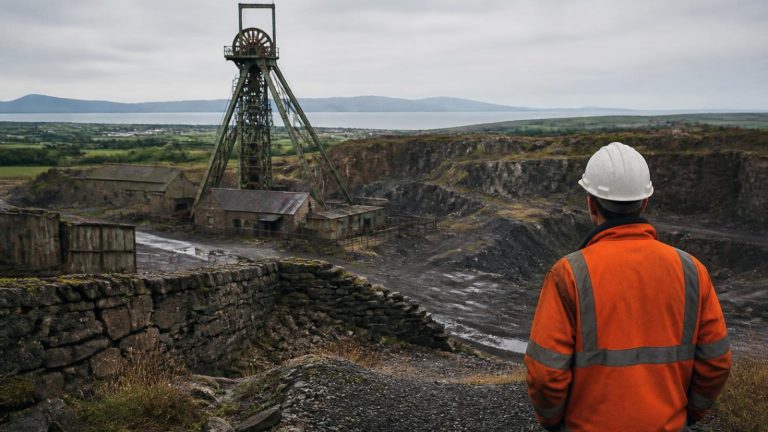
    Greenland’s government has formally rejected Energy Transition Minerals’ application to renew its exploration licence for the Kvanefjeld rare earth project, also known as Kuannersuit, dealing a potentially decisive blow to one of the world’s largest undeveloped rare earth deposits after a five-year regulatory impasse triggered by the island’s 2021 uranium mining ban.

    “Further exploration in the area is not deemed likely to lead to the discovery of deposits that can be exploited in accordance with the Uranium Act,” the government said in a statement. The decision follows a 2021 ban on uranium mining enacted by the then-ruling Inuit Ataqatigiit party — which effectively halted Kvanefjeld’s development because uranium occurs as a byproduct of the rare earth deposit — and a draft decision signalled to ETM in April indicating the government intended to recommend rejection.

    ETM, a unit of Australia’s Energy Transition Minerals, criticised both the decision and the process leading to it. The company said Greenland’s Ministry of Mineral Resources held its application for nine months before giving it 48 hours to respond to technical geological assessments and refusing a requested one-week extension. “The compressed timeframe meant the decision did not take account of ETM’s recent exploration results, which identified new mineralised zones across the wider licence area,” the company said. ETM also noted the contradiction between the rejection and Greenland’s stated positioning as open for mining investment. “Greenland has positioned itself as open for business. This decision creates a different impression,” it said.

    Greenland’s Minister of Mineral Resources and Foreign Affairs Mute Egede, who was prime minister when the uranium ban was enacted in 2021, said the decision was based on legislation passed by parliament and reflected the long-standing position of communities in South Greenland. “We remain committed to the course Greenland has chosen,” he said.

    The rejection ends ETM’s current licence path at Kvanefjeld, though the company has indicated it will continue pursuing legal options and dialogue. ETM is separately in dispute with Chinese shareholder Shenghe Resources after terminating a 2018 joint development agreement for the project in April.

  • Savannah Resources Resumes Barroso Lithium Work After Portugal Government Overrides Court Injunction on National Interest Grounds

    Savannah Resources Resumes Barroso Lithium Work After Portugal Government Overrides Court Injunction on National Interest Grounds

    Savannah Resources has resumed work at its Barroso lithium project in northern Portugal after the government declared the project of national and European significance and succeeded in lifting a court-ordered suspension that had halted operations for three weeks.

    Work was suspended on 9 June after the Mirandela Administrative and Fiscal Court granted a precautionary injunction filed by the Barroso Assembly of Common Land Holders, following a second administrative easement that gave Savannah access to community and private land for geotechnical work. In its response to the court, the Portuguese government argued that the suspension could cause serious harm to the public interest, delay a project of recognised national and European strategic importance, and jeopardise the energy transition. The suspension was lifted on Monday and Savannah said it will reinitiate fieldwork and complete the planned work programme.

    There is no legal right of appeal against the lifting of the injunction, though opponents may attempt further legal action.

    The Barroso deposit in northern Portugal hosts resources exceeding 39 million tonnes of spodumene, making it Europe’s largest lithium deposit. Potential extensions of 35 million to 62 million tonnes could push total resources above 100 million tonnes and more than double the projected mine lifespan to over 50 years. The project is one of 47 designated as strategic under the EU’s Critical Raw Materials Act.

    The project has faced nearly a decade of sustained community opposition and numerous legal challenges. A final investment decision is expected by the end of 2026, with construction planned for 2027 and first production targeted for 2028.

  • Savannah Resources Eyes Euronext or ASX Secondary Listing to Broaden Investor Base as Barroso Lithium Targets 2028 Production

    Savannah Resources Eyes Euronext or ASX Secondary Listing to Broaden Investor Base as Barroso Lithium Targets 2028 Production

    Savannah Resources is pursuing a secondary listing on either Euronext in Lisbon or the Australian Securities Exchange to tap growing investor appetite for battery materials outside the UK market, as the London-listed company advances its Barroso lithium project in northern Portugal toward a feasibility study completion this summer and construction start in 2027.

    CEO Emanuel Proença said the company has seen growing interest from investors who typically access markets through Euronext, where no major lithium spodumene plays are currently listed. “There are no big lithium spodumene plays on Euronext, so that is kind of a new offering,” he said. The ASX remains an established venue for lithium stocks and is also under consideration. The secondary listing would support Savannah’s broader financing strategy, which also includes offtake-related finance alongside the existing offtake agreement with AMG Lithium BV — the company’s largest shareholder.

    Barroso, which received EU strategic project status in 2025, has the potential to become one of Europe’s largest lithium operations, with planned annual output sufficient to supply battery packs for approximately half a million electric vehicles. Production is targeted to begin in late 2028 following a construction phase starting in 2027.

    Savannah is currently negotiating additional offtake agreements beyond the AMG Lithium deal, including with parties in China. Proença noted that initial production volumes would exceed what European markets can absorb in the near term, making broader offtake arrangements necessary. The company has a market capitalisation of approximately £160 million ($210 million).

    Lithium prices have rebounded more than 150% over the past year, supported by the emergence of large-scale battery storage as a demand driver alongside electric vehicles, prompting mine restarts in Australia and renewed financing interest across the sector.

  • Goldsky Resources Completes Barsele Consolidation From Agnico Eagle and Plans One of Sweden’s Largest-Ever Drilling Campaigns

    Goldsky Resources Completes Barsele Consolidation From Agnico Eagle and Plans One of Sweden’s Largest-Ever Drilling Campaigns

    Goldsky Resources has closed its acquisition of Agnico Eagle’s 55% interest in the Barsele gold project in northern Sweden, becoming the sole owner of a 2.15 million ounce resource and immediately planning what the company describes as one of the largest drilling campaigns ever undertaken across the licence.

    As agreed when the transaction was announced in January, Agnico received $20 million in cash, approximately 75.51 million Goldsky shares valued at C$2.64 each, and a 2% net smelter return royalty. Royalty obligations to Orex Minerals were also transferred to Goldsky as part of the deal. Agnico has emerged as an approximately 32% shareholder in Goldsky, holding nearly 83 million shares and holding an investor rights agreement for top-up participation.

    Goldsky CEO Russell Bradford described the closing as marking “an exciting new chapter” for the company. The Barsele project, located in Västerbottens Län approximately 600 kilometres north of Stockholm, has been explored by Agnico for a decade, with the majority of the existing 2.15 million ounce resource sitting in the inferred category — leaving significant potential for resource growth through systematic drilling. The company has budgeted $25 million for a 2026 drilling programme at the property.

    Goldsky shares were 2.5% higher by midday Thursday at C$3.25, giving the company a market capitalisation of approximately C$598 million ($421.7 million). In addition to Barsele, the Toronto-based junior holds the Paubäcken and Storjuktan projects in Sweden’s historically defined Gold Line belt, as well as three projects in Finland including the Rajapalot property in Lapland.

  • Supply Chains Don’t Build Themselves — What the Middle Corridor Still Needs to Move at Speed

    Supply Chains Don’t Build Themselves — What the Middle Corridor Still Needs to Move at Speed

    If Day 1 asked “why does geological wealth not automatically translate into investment?” then Day 2 answered with brutal clarity: because you cannot move critical minerals to global markets without the infrastructure to process them. And that infrastructure — refining, separation, conversion — is the question that defined every session on 25 June.

    The day opened with a deliberate strategic reframing. Nevzat Başlar from MAPEG (Ministry of Energy and Natural Resources) did not call his presentation “Türkiye’s Mining Vision” or “Turkey’s Mineral Wealth.” He titled it: “Bridging Between Reserves and Refining: Türkiye’s Strategic Role in the Global Critical Minerals Race.”

    The phrasing was intentional. Türkiye is not positioning itself as a reserve. It positions itself as a bridge. Not a source country, but an industrial anchor — capable of converting Central Asian ore into finished products for Western supply chains. The argument was structural: Türkiye sits at the point where Central Asian geology meets European demand. But proximity is worthless without processing. The strategic imperative is to develop midstream processing capacity — that transformative layer where raw material from Uzbekistan and Kazakhstan becomes inputs for EV motors, wind turbines, and defence electronics before they reach Western manufacturers.

    This was not background framing. It was the foundation for everything that followed.

    The morning: supply chain positioning and financial instruments

    Sebnem Alp from UKEF followed with a presentation on trade financing. Her argument moved beyond the project-finance logic that had dominated Day 1’s financing panel. Trade finance operates on a different timeline and risk profile: shorter tenors (12–24 months versus 5–7 years), repeatable commodity flows, and off-balance-sheet structures that allow regional banks and development institutions to recycle capital efficiently. The subtext was clear: if the Middle Corridor is going to move tonnes of processed materials, you don’t finance it with mega-loans to mega-projects. You finance it with working capital lines and commodity flows between nodes.

    Article content
    Timur Khikmatullaev – Uzbekistan’s Technological Metals Complex

    Timur Khikmatullaev from Uzbekistan’s Technological Metals Complex presented “Unlocking Uzbekistan’s Critical Raw Materials” — but the word “unlocking” carried weight. Uzbekistan is moving from bilateral Chinese partnerships toward Western supply chain integration. The Complex’s presence as a forum partner signalled that Tashkent now sees Western offtake arrangements and technology partnerships as genuinely competitive with Chinese state finance. Speed, he argued, is no longer China’s monopoly if Western institutions and private capital move with coordinated intent.

    Article content
    Dr Tomas Hrstka

    Dr Tomas Hrstka from SGS brought the assurance layer. His presentation — “Unlocking the Tethyan Belt: The Strategic Role of Advanced Mineralogy and New Technologies in Accelerating Projects, Reducing Development Risks and Optimising Performance” — positioned testing and certification not as compliance overhead but as a competitive accelerator. Advanced mineralogy data at the front end of a project reduces capex uncertainty, speeds permitting, and attracts first-loss capital from Western investors who demand CRIRSCO/JORC compliance. The technical infrastructure arrives before the mining infrastructure.

    Artyom Geghamyan from Armenia presented the regional closure to the morning’s supply chain vision: “Armenia at the Intersection of Critical Minerals, Connectivity and Peace.” The title embedded a geopolitical argument: Armenia’s post-conflict position, its mineral endowment, and its location along the Middle Corridor create a window. Armenia could become a processing node or remain a source of raw exports. The choice is Armenia’s, but the structural logic is the same as Türkiye’s — geography plus processing capacity equals supply chain criticality.

    The morning’s closing speaker was Veda Duman Kantarcıoğlu from the Nuclear Engineers Society — and her presentation reframed what “mining” actually means in a rare earth element context. “Developing National Competencies for Nuclear-Industrial Partnerships for Mining Applications” made explicit what was implicit in Beylikova: rare earth processing generates radioactive byproducts. Processing REE is not standard industrial mining — it is quasi-nuclear operation. It requires workforce training aligned with nuclear safety protocols, regulatory partnerships with nuclear authorities, and infrastructure designed to international IAEA standards. Veda’s presence in the session signalled that Türkiye’s Akkuyu nuclear facility and its nuclear regulatory ecosystem are not separate from the mining story. They are central to it.

    Midday: ESG as competitive advantage, not compliance burden

    Session 6, moderated by Zhanar Faizuldayeva of SLR Consulting, was titled “Responsible Mining: Driving Sustainability, Trust, and Global Standards in Eurasia.” The framing was not defensive. The session positioned ESG as a competitive filter, not a compliance burden. Projects with robust environmental and social governance attract Western capital faster, command better offtake terms, retain social licence, and move through permitting more quickly.

    Tunç Berkman from TBS Investment made the opening case: “Mining’s Greatest Resource is No Longer Underground — It is Public Trust.” The line was powerful. Geological wealth is abundant; public confidence is finite. Companies that build it win capital and speed. Companies that destroy it lose both.

    The session acknowledged that standardisation creates competitive advantage. A zone of ESG compliance across Eurasian projects, certified and transparent, becomes immediately bankable to Western development finance institutions without additional diligence. Standards reduce friction in capital flows.

    The technical constraints no one can sidestep

    Session 7, “Tailings Management, Structural Resilience and Resource Stewardship,” moderated again by Zhanar Faizuldayeva, brought the conversation to the engineering reality that has stopped more mining projects than geology ever has: what happens to the waste?

    The panel assembled the specialists: Sam Safavian (SLR) on risk-based safety reviews; Alistair White (Knight Piesold) on resilience-based design; Iain Pickard (Strategia Worldwide) presenting Tailings Protect — an integrated real-time monitoring and risk management solution; and Azamat Abdulayev (SRK Kazakhstan) closing with water management as competitive advantage in a region facing acute water stress.

    The core argument was unambiguous: modern tailings management is not bolt-on infrastructure. It is central design. Dry stacking, filtered tailings, managed impoundments with real-time monitoring add 10–15% to capex and require operational discipline across the project lifecycle. For the Middle Corridor, the implication was sharp: you cannot replicate the Chinese model of rapid development with lower environmental standards and hope to export to Western markets. Your tailings will be audited. Your water management will be certified. The cost is structural and non-negotiable.

    The afternoon: value chain integration and processing momentum

    Session 8, “From Ore to Application: Operational Technology and Value-Chain Integration,” moderated by Ivan Livinskiy of SRK Kazakhstan, moved to the point where most Central Asian minerals still stop: processing.

    Umid Salokhutdinov from Future Metals Technopark presented the technopark model as Uzbekistan’s answer to a specific problem: you can mine tungsten, but unless you process it into tungsten carbide or high-temperature alloys, you compete with Chinese raw material exports on price and lose. The Technopark is infrastructure for midstream processing — company A mines ore in deposit X, company B processes it at the park, company C manufactures final products, company D integrates them into systems. Profit margins compound at each step.

    Emre Ahmet Kantarci from ExxonMobil brought the multinational perspective. ExxonMobil’s interest in the Middle Corridor is not primarily mining. It is securing feedstock for advanced materials manufacturing — batteries, wind turbine components, defence electronics. The multinational majors are thinking vertically integrated supply chains, not purchasing tonnes of raw ore at commodity prices.

    Burak Köse from ARGETEST closed the session with the data infrastructure argument: none of this works without laboratory certification at every step. ARGETEST’s expansion into Tashkent and three additional Central Asian countries reflects the reality that processing hubs cannot operate without local laboratory capacity.

    The closing: tensions clarified but not resolved

    Session 9’s closing panel — “Bridging the Supply Gap: Türkiye and the Middle Corridor as New Frontier for Critical Mineral Security” — brought together Céleste Laporte (OECD), Zhanar Faizuldayeva (SLR), and Ivan Livinskiy (SRK Kazakhstan) under Han İlhan’s moderation.

    The panellists did not paper over the central unresolved tension. Supply chain positioning along the Middle Corridor: agreed. Industrial anchor capacity: conceptually clear. But the speed remains fundamentally mismatched. Western capital moves at 3–5 years for permitting, 2–3 for financing, 4–5 for construction. Chinese capital moves in 18–24 months. The region has choice — geology is real and governance is improving — but on a timeline that doesn’t match the energy transition’s hunger for supply.

    The other unresolved tension: processing. Every speaker on Day 2 acknowledged that value creation happens downstream, not in extraction. But processing requires different capital intensity, different workforce training, different infrastructure. Mining companies extract ore. Manufacturing companies process it. The Middle Corridor does not yet have enough of the latter to absorb the former’s output at rates that would shift global supply chains.

    The day’s through-line

    By evening, when delegates moved to the Göksu Restaurant for the Day 2 networking dinner, the conversation had shifted but not concluded.

    Day 1 asked “why isn’t geological wealth flowing into investment?” Day 2 answered: because the supply chains do not yet exist — not because they cannot, but because they require simultaneous moves across geology, governance, processing infrastructure, workforce development, ESG certification, water management, and political will at sovereign scale.

    Başlar’s frame — “Bridging Reserves and Refining” — was the day’s synthesis. The Middle Corridor has reserves. It has refining capacity in development. It has governance improving. What it doesn’t yet have is the decision — at sovereign scale, backed by capital commitment — that processing capacity is the strategic priority, not extraction speed alone.

    Kazakhstan is partly there. Uzbekistan is accelerating. The region — with combined geological endowments that dwarf most of the world — remains at the inflection point. The institutions are assembling. The case is being made. The question is whether speed matches opportunity, and whether political will can keep pace with geological advantage.

    Day 2 sharpened the question. It did not answer it.
  • Visegrad Four Pursue Different Paths to Critical Minerals Security as Europe’s CRMA Ambitions Meet Central European Realities

    Visegrad Four Pursue Different Paths to Critical Minerals Security as Europe’s CRMA Ambitions Meet Central European Realities

    Poland, the Czech Republic, Slovakia and Hungary are each developing distinct approaches to Europe’s critical minerals challenge, but all four face the same structural limitation: the real competition for strategic value lies in processing, refining and advanced manufacturing — stages where China maintains decisive advantages and where none of the Visegrad countries has yet established a compelling position.

    The urgency has sharpened since China tightened export controls on critical materials and permanent magnets in 2025, exposing Europe’s continued vulnerability across automotive manufacturing, wind energy and defence production. For the Visegrad Group, the question is whether Central Europe can move beyond its traditional role as a manufacturing base into the higher-value segments of emerging supply chains — a transition that will require more than attracting foreign factories.

    Hungary has pursued investment attraction most aggressively, becoming one of Europe’s largest battery manufacturing hubs by drawing major Asian producers including CATL, Samsung, LG and SK On through subsidies and state support. The strategy has delivered factories and jobs, but critics argue that much of the value creation remains outside the Hungarian economy: foreign manufacturers operate within their own supply networks, limiting domestic integration into strategic parts of the battery value chain. Environmental controversies surrounding major projects have also fuelled local opposition.

    The Czech Republic is centred on the Cínovec lithium deposit — designated as strategic under the EU’s Critical Raw Materials Act and planned to eventually support battery production for more than one million electric vehicles annually. But mining is not expected to begin until around 2030, and analysts warn that extraction alone will generate limited strategic benefit if downstream processing and recycling take place elsewhere. With one of Europe’s most important automotive sectors, Prague’s real challenge is building the industries that come after the mine.

    Slovakia faces similar downstream concerns. Geological surveys suggest lithium and antimony resources exist, but Bratislava remains focused on deposit mapping and assessing potential secondary sources from historical mining sites. Slovak experts identify the absence of active cathode material producers as a critical gap. The country’s exclusion from the first wave of CRMA strategic projects has raised concerns about its ability to benefit from emerging European investment mechanisms without a more assertive industrial strategy.

    Poland is taking an unconventional approach, treating mining waste as a critical minerals resource. Coal-bearing formations, spoil heaps and historical mining residues contain germanium, gallium, cobalt and certain rare earth elements that were long discarded. Warsaw has launched a national programme to identify and develop such secondary resources, and plans for a rare earth processing facility in Puławy could strengthen Poland’s position in European supply chains — an approach that reflects the EU’s growing emphasis on recycling and secondary materials alongside primary mining.

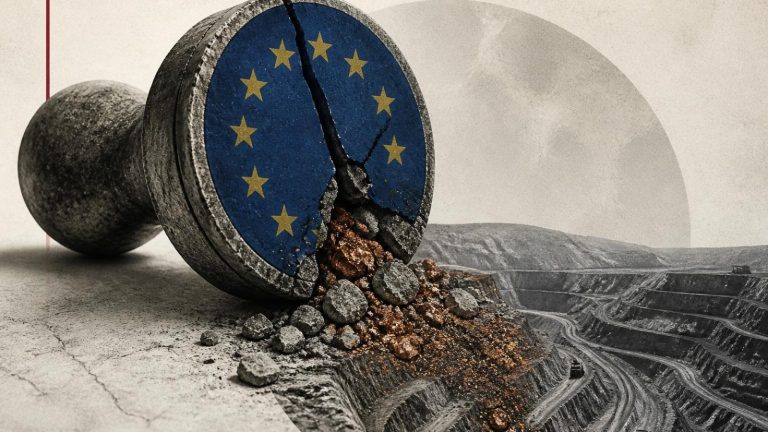
    Despite differentiated strategies, a common structural weakness runs through all four countries. The European Court of Auditors recently warned that many CRMA objectives lack binding force and could be delayed by permitting procedures that routinely stretch for years — a gap between Brussels’ legislative ambition and on-the-ground implementation that affects Central Europe as much as any other region.

  • Serbia Launches Public Consultation on Renewable Energy Law Overhaul to Align With EU Directives and Unlock Growth Plan Funding

    Serbia Launches Public Consultation on Renewable Energy Law Overhaul to Align With EU Directives and Unlock Growth Plan Funding

    Serbia has opened a public consultation process for amendments to its Law on the Use of Renewable Energy Sources, seeking to align the legislation with European Union directives while meeting reform obligations necessary to access EU grants under the Growth Plan for the Western Balkans.

    The Ministry of Mining and Energy is inviting written proposals and suggestions from interested parties until 7 July at oie@mre.gov.rs. The amendments aim to align Serbian legislation fully with the EU’s Renewable Energy Directive RED2 and partially with RED3, while also incorporating Serbia’s Integrated National Energy and Climate Plan and the country’s obligations under the EU Reform and Growth Facility’s reform agenda.

    The proposed changes cover several key areas. On permitting, the amendments envision establishing contact points to guide applicants through approval procedures and streamlining permitting deadlines — addressing one of the most persistent barriers to renewable energy project development in the Western Balkans. A new framework for renewable acceleration areas would enable spatial and energy mapping to designate priority zones for renewable development through planning documents, with environmental protection rules maintained.

    The guarantees of origin system would be expanded beyond electricity to cover renewable gases including biomethane and hydrogen, as well as energy for heating and cooling including waste heat. The incentive system for renewable electricity generation is to be strengthened around principles of transparency, competitiveness, non-discrimination and cost-effectiveness, with auctions aligned to power system stability needs and market price signals.

    The legislation would also improve the regulatory framework for prosumers — formally termed buyers-producers in Serbian law — clarifying rights to generate for self-consumption, store electricity, use net billing for surpluses and sell excess output on the market. The amendments would address jointly acting prosumers in shared buildings and the role of third parties in ownership, management and maintenance of generation and storage facilities. The framework for renewable energy communities, including participation by households and local authorities, would also be upgraded.

  • District Metals Begins First Alum Shale Drilling at Österkälen in Sweden Targeting 8km Conductive Anomaly Never Previously Tested

    District Metals Begins First Alum Shale Drilling at Österkälen in Sweden Targeting 8km Conductive Anomaly Never Previously Tested

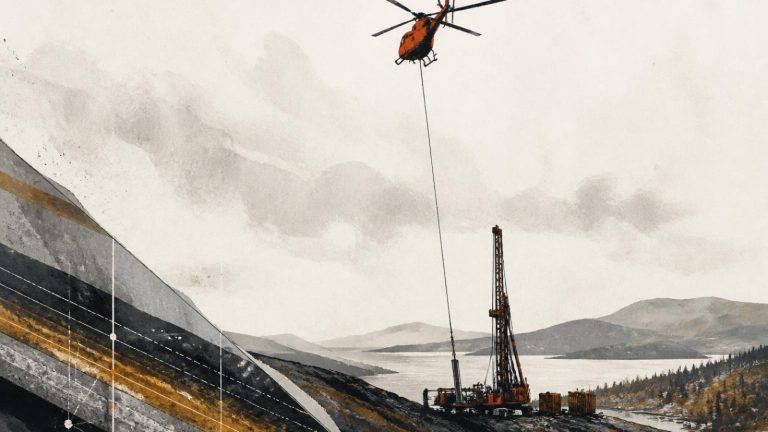
    District Metals has commenced diamond drilling at the Österkälen mineral licence in central Sweden, marking the company’s first drill programme specifically targeting Alum Shale mineralisation across its Swedish exploration portfolio.

    The programme will test a MobileMT conductive anomaly identified in 2025 that extends approximately 8 kilometres in length and up to 3.5 kilometres in width. The geophysical feature coincides with geochemical soil anomalies interpreted as indicating favourable Alum Shale stratigraphy. The target area has not previously been tested by drilling.

    District Metals CEO Garrett Ainsworth said the large dimensions of the anomaly are consistent with a district-scale target. “By integrating geophysical, geochemical and geological datasets, we have identified a high-priority target that has never been previously drill tested. This programme is designed to determine whether the Österkälen target hosts the characteristics of a Viken-style mineralised system while continuing to demonstrate the significant exploration upside across our Alum Shale properties,” he said.

    The number of holes and total metres drilled will be guided by geological observations and uraniferous radiometric measurements collected during drilling. The Österkälen programme forms part of District Metals’ approved 2026 exploration budget, under which the company plans to drill approximately 5,000 to 7,000 metres across its Viken and Alum Shale properties during the year.

    District Metals’ primary asset is the Viken property, which hosts what the company describes as the world’s largest undeveloped uranium mineral resource estimate.

  • China Controls 90% of REE Processing. Ankara Is Where the Alternative Is Being Built — Hopefully.

    China Controls 90% of REE Processing. Ankara Is Where the Alternative Is Being Built — Hopefully.

    Over 140 delegates from 18 countries gathered at the MINEX Asia Forum in Ankara on Wednesday. The room was senior, the agenda substantive, and the conversation rarely left the strategic layer.

    Why this moment matters: the demand imperative

    Ibrahim Halil Kirsan TOBB Turkey Mining Council President, ÇIFTAY Board Member Mining Council, TOBB, ÇİFTAY

    İbrahim Halil Kırşan, President of the TOBB Türkiye Mining Assembly, opened with the global frame and did not soften it. Drawing on IEA data, he put the stakes plainly: by 2040, mineral utilisation in renewable energy will increase four-fold under the Sustainable Development Scenario and six-fold under Net Zero. On a commodity-specific basis, lithium demand alone is projected to surge 42-fold under the SDS. Electric vehicles, wind turbines, defence systems, smartphones, fibre optic networks: the slide mapping how much metal goes into each clean energy technology was not background material. It was the case for why everyone in the room was in Ankara on a Wednesday morning. Ayhan Yüksel of the Chamber of Mining Engineers picked up the regulatory thread, tracing Türkiye’s mining legislation from the 1954 Mining Law through seven amendments to the 2025 revisions — a progression from state-dominated extraction toward an investment-oriented framework that nonetheless preserves strategic sovereign control over mineral assets.

    Türkiye’s REE ambition: the numbers behind the claim

    The most forensically detailed presentation of the morning came from Dr Hüseyin Çaldırak of TENMAK’s Rare Earth Elements Research Institute, and it moved the Beylikova story from political ambition to technical specificity.

    Ayhan Yüksel of the Chamber of Mining Engineers

    The deposit: 694 million tonnes of resource at approximately 2% NTE grade, containing an estimated 12.5 million tonnes of potential rare earth reserves — widely described as the world’s second-largest REE reserve after China’s Bayan Obo, with a planned full-scale facility targeting 570,000 tonnes of ore per year and projected annual revenues of approximately $220 million. China currently controls approximately 70% of world NTE production and over 90% of processing and magnet manufacturing capacity. Demand will grow more than 60% by 2030, with EV motors as the primary driver — REE demand from electric vehicle motors has risen from less than 1% of total magnet NTE demand in 2015 to 9% today, projected to reach approximately 18% by 2030. minexasia

    The domestic arithmetic is striking. With a 2035 national energy target of 48GW of wind capacity from 15GW today, Türkiye will need approximately 3,461 tonnes of NTE just for its own wind turbine fleet. At 10,000 tonnes per year, Beylikova covers that domestic requirement entirely — and still exports. The Western response to Chinese dominance is correspondingly large: a $12 billion US DoD partnership with MP Materials, NdPr offtake agreements at a $110/kg floor price, and a US National Defense Industrial Strategy that from January 2027 will prohibit SmCo and NdFeB production involving China, Russia, Iran or North Korea at any stage. The technology gap for Türkiye remains real: China controls export licences for all products containing Chinese-origin REEs, and Beylikova’s separation technology is still under development. But the strategic window has rarely been wider.


    The $13.5 trillion question: four countries, four trajectories


    The invisible foundation: data, laboratories and bankability

    Abdullah Buhur of ARGETEST made what might have seemed like a narrower technical argument — but it ran directly to the financing panel that followed. In modern mining, he argued, you must extract the data from the ore before you extract the ore itself. Incomplete or inaccurate geochemical and metallurgical data leads to wrong process designs and facilities that cannot operate. Reliable end-to-end data generation is what makes CRIRSCO, JORC and UMREK-compliant reporting possible — and compliant reporting is what makes a project financeable. ARGETEST, founded in Ankara in 2012 and now holding ISO/IEC 17025 ILAC accreditation, has already opened its first international laboratory in Tashkent, with three further countries in active planning. The message to Central Asian and Caucasus projects represented in the room: the laboratory infrastructure that underpins bankable feasibility studies is arriving regionally, not just in London or Perth.

    The Tethyan Belt — geology mapped, execution pending

    Article content
    EBRD’s Deputy Head of Türkiye, Mehmet Uvez

    EBRD’s Deputy Head of Türkiye, Mehmet Uvez, reframed the Middle Corridor precisely: not a transport route, but a platform for trade resilience and industrial value chains. The numbers behind the commitment: €24.4 billion in cumulative EBRD investment in Türkiye, a record €2.7 billion across 54 projects in 2025 alone, and up to €500 million in sovereign lending for the INRAIL Istanbul North Rail Crossing — a missing link for the Trans-Caspian route. The OECD presented EU-funded research on connectivity and CRM export potential across Central Asia. The USGS gave a frank country-by-country assessment: the region holds 39% of global manganese ore reserves, 31% of chromium, 20% of lead, and significant shares of zinc, titanium, copper and cobalt — the endowment is not in question; investability is. Discovery Alert

    Simon Glancy of Strategic Solutions brought the most granular data of the session. Uzbekistan possesses over 29 types of rare and rare earth metals, but only copper and tungsten are being developed at scale, with UzTMK’s exports forecast to reach $80 million by 2030 — just 3% of total industry output. For nearly every strategic mineral in the region, Chinese investors are already the dominant or sole significant foreign presence. His core proposal — a Central Asian CRM alliance structured around hub processing facilities in Kazakhstan and Uzbekistan, with Kyrgyzstan, Tajikistan and Turkmenistan feeding in semi-processed material — was the most concrete regional architecture offered on the day.

    Key takeaways:

    • The demand case is irrefutable: a 42-fold lithium surge and a 6-fold increase in total mineral use for renewables by 2040 under Net Zero are the operational context for every investment decision in this room
    • Beylikova’s significance rests not on reserve size alone but on arithmetic: at 10,000t/yr NTE, Türkiye covers its domestic wind energy mineral needs and becomes a net exporter to allies seeking diversification from China
    • Laboratory infrastructure — accredited, internationally recognised — is a prerequisite for bankability; its regional arrival is an enabling condition, not a detail
    • Turkish companies have a specific and underexploited opportunity as providers of engineering, processing technology, lab services and advisory capacity across the Central Asian CRM ecosystem

    Who is funding the future — and how fast?

    The financing session assembled the most concentrated group of development finance institutions seen at a MINEX event: EIB, EBRD, IFC, ADB, UKEF, KfW IPEX-Bank, the Türkiye Wealth Fund and BORG Capital Insights, moderated by Han Ilhan of Catalis Strategies. Hogan Lovells opened with the political risk framing: investment treaties, investor-state arbitration and export credit insurance are not bureaucratic formalities — they are the mechanism that makes Western private capital competitive with Chinese state finance. The ADB’s CMM Value Chains Initiative presented a holistic approach: diversified and resilient supply chains, domestic value addition, ESG standards as competitive advantage rather than compliance burden.

    Han Ilhan, Co-Founder and Managing Director Catalis Strategies

    Then came the baseline that set the terms for the panel’s candour. In 2023 alone, Chinese firms invested more than $120 billion in overseas mining and processing; China now controls approximately 60% of lithium processing, more than 70% of cobalt refining, and over 90% of battery material manufacturing. Against that, Western institutional capital’s pace and structural flexibility were scrutinised without diplomatic cover. The headline conclusion: the institutions are present, the mandates are real, the appetite exists — but speed, flexibility and first-loss willingness on frontier projects remain the decisive variables. Kazakhstan’s tungsten makes the point exactly: the country’s entire 2025 export volume — roughly 3,700 tonnes — went to a single destination: China. The mineral wealth is there. The offtake relationships are not. ENERPO JOURNALEast Asia Forum

    Key takeaways:

    • Five multilateral development banks in one session signals intent; coordinated deployment, not just parallel presence, is the next requirement
    • Political risk instruments are the mechanism that makes Western private capital competitive with Chinese state finance on frontier projects
    • The US DoD’s $12bn MP Materials partnership and the 2027 prohibition on Chinese-stage REE production in defence supply chains mark the clearest shift yet from policy to procurement
    • Türkiye imported over 170 tonnes of gold in 2024 while producing just 32 tonnes domestically — a country with $3.5 trillion in reserves running a gold trade deficit is a measure of the distance between geological wealth and industrial policy China Population Density Map

    The Turkish industrial offer

    DAMA Engineering traced four decades of Turkish mining advancement — from Atatürk’s 1935 founding of MTA and Etibank on the same day, pairing geological discovery with production capacity, through the arrival of global majors following the 1985 Mining Law, to the UMREK reporting code and modern integrated processing plants. The arc: Türkiye absorbed international best practice and is now in a position to export that capability eastward along the Middle Corridor.

    Devrim Aksu closed with the challenge that cuts across every projection of regional growth. Global talent shortages in geologists and mining engineers, scarce digital mining skills, the absence of remote operations workforce models at scale: her presentation put the question plainly — “Who Will Build the Workforce Behind the Critical Minerals Boom?” — and left it unanswered, because it is genuinely unanswered. Women remain a structurally underutilised reserve in mining talent pipelines across the region; the business case is now as compelling as the equity case.

    The day’s through-line

    If one argument ran through every session on Day 1, it was this: the strategic case for the Middle Corridor as a global critical minerals supply line is no longer being made — it is being assumed. The debate has moved to execution. Who finances, who processes, who certifies the data, who builds the workforce, and who captures the value — these are the questions that will define the next decade.

    A jurisdiction that ranked 104th in global mining investment attractiveness a decade ago now sits in the global top ten — not because its geology changed, but because its framework did. Türkiye has more mineral wealth, a better geographic position, four decades of engineering capability, and direct access to European markets. Kazakhstan produces 38% of the world’s uranium and has the majors already in country. Uzbekistan has the momentum of a country that has been closed and is now opening fast. The room in Ankara on Wednesday contained many of the institutions that could unlock all three. Whether the urgency matches the opportunity is the question Day 2 will not answer either — but it will sharpen it.

    The evening closed at the British Embassy, hosted by the Department for Business and Trade. Day 2 continues tomorrow.

  • Tokayev Offers EU Access to Kazakhstan’s Rare Earths in Exchange for Investment and Technology at Brussels Round Table

    Tokayev Offers EU Access to Kazakhstan’s Rare Earths in Exchange for Investment and Technology at Brussels Round Table

    President Kassym-Jomart Tokayev has proposed a new model of cooperation with the European Union in the mining and metallurgical sector, offering access to Kazakhstan’s rare and rare earth metals in exchange for European investment and technology transfer, at the Kazakhstan–EU Round Table in Brussels.

    Tokayev highlighted that Kazakhstan’s subsoil users are already capable of supplying 21 of the 34 minerals on the European Union’s critical raw materials list, while significant untapped reserves of lithium, nickel, vanadium and cobalt remain undeveloped. He said the most effective mechanism for unlocking this resource potential would be offtake-based cooperation — arrangements under which buyers guarantee the purchase of a defined volume of future production — as this model would stimulate the development of rare metal ore processing and the production of higher value-added products.

    Kazakhstan also renewed its proposal to establish a Regional Research Centre on Rare Earth Metals in Astana. The centre would provide prospective investors with current information about available deposits across Central Asia and the technologies available for their development.

    The round table underscored Kazakhstan’s role as one of the EU’s key energy partners, with Kazakhstani crude oil’s share of the EU market growing to 13% in 2025. The event concluded with the signing of new commercial agreements with a combined value of nearly $1 billion.