Region: Europe

  • EU Commissioner Visits Brazil’s Viridis Rare Earth Plant as Brussels Positions Value-Added Processing Partnership as Alternative to Chinese Model

    EU Commissioner Visits Brazil’s Viridis Rare Earth Plant as Brussels Positions Value-Added Processing Partnership as Alternative to Chinese Model

    European Union Commissioner for International Partnerships Jozef Sikela has visited Viridis Mining and Minerals’ rare earth research and processing centre in Poços de Caldas, Minas Gerais, underscoring Brussels’ push to turn Brazil into a strategic partner for critical mineral supply diversification — with an approach explicitly built around helping Brazil capture processing value rather than simply extracting raw materials.

    Sikela said the EU’s offer to Brazil differentiates itself from competing models by emphasising local value creation, sustainable production standards, job creation, technology transfer and education. “What is extremely important is that Brazil moves from a low-margin business — basically that the value is created here in the country,” he said during the visit. He described Brazil as currently the EU’s most strategic partner in Latin America and argued the partnership would allow Europe to secure supplies through purchase agreements while helping Brazil build refining capacity and move up the supply chain into higher-margin production.

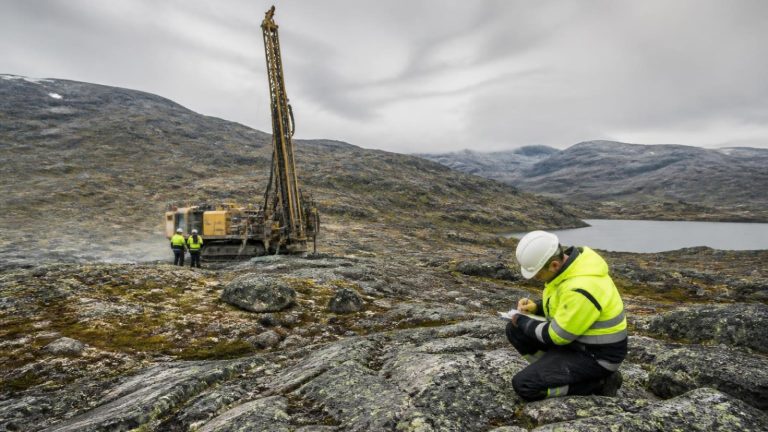
    Viridis inaugurated its pilot mining project in Minas Gerais in May. The facility can process 100 kilograms of ore per hour and produce up to 2.92 kilograms of mixed rare earth carbonate annually. The company plans to invest $360 million in a commercial plant targeting 15,000 tonnes of mixed rare earth carbonate per year from 2028, across 228.62 square kilometres of licences in Minas Gerais. Viridis CEO Rafael Moreno told Reuters that talks with the EU are at an advanced stage, with a non-binding letter of intent signed this month between Viridis and Belgian chemicals company Solvay for MREC supply — a deal that could be finalised by the end of July and potentially evolve into a broader partnership including technology and processing support.

    Sikela acknowledged the EU is entering a competitive race for Brazilian mineral assets but argued the European value proposition is more beneficial than alternatives. “Our value proposition is more beneficial than what these others want,” he said, citing sustainability, job creation and knowledge transfer aligned with the highest environmental, social and technical standards.

    The commissioner indicated the EU is also considering projects involving nickel and lithium in Brazil as priorities, and plans to advance a memorandum of understanding with the Brazilian government, though details remain under negotiation. Viridis is currently in advanced negotiations with potential buyers in both Europe and the United States, with Moreno having confirmed the company favours a multi-region approach aligned with supply chain diversification objectives rather than concentration in any single market.

  • UK Commits £50 Million to Critical Minerals Extraction, Processing and Recycling as Government Targets Supply Chain Resilience

    UK Commits £50 Million to Critical Minerals Extraction, Processing and Recycling as Government Targets Supply Chain Resilience

    The British government has announced £50 million in new funding to boost domestic critical minerals production across extraction, processing and recycling, as part of an accelerating effort to reduce dependence on concentrated global supply chains dominated by China.

    The funding is structured across three pillars: £20 million for a rare earth magnet hub, £25 million for an accelerator programme to help scale projects, and up to £5 million for a platform to aggregate industry demand and unlock private investment. Industry Minister Chris McDonald launched the programme during a visit to a northeast England industrial research hub where companies are developing technologies for metal recovery and processing.

    “Critical minerals are vital for our national security,” McDonald said. The announcement builds on more than £200 million already committed to the sector and is intended to secure materials used across a range of products from smartphones and electric vehicle batteries to domestic appliances.

    The initiative comes as China retains dominant positions across global critical mineral supply chains, accounting for approximately 70% of rare earth mining and 90% of refining. Britain has been seeking to develop domestic capabilities while simultaneously diversifying supply through partnerships with allies including the United States and South Korea, focused on supply chain collaboration, processing capacity and investment flows.

    Recent domestic progress includes the opening of Britain’s first commercial rare earth magnet plant in 25 years, operated by Mkango Resources’ HyProMag unit in Birmingham, which produces magnets for electric motors and other technologies using recycled materials — demonstrating the viability of circular economy approaches to critical mineral security.

  • Saudi Arabia Courts French and European Mining Partners at Paris Forum as Kingdom Targets $2.5 Trillion Mineral Resource Base

    Saudi Arabia Courts French and European Mining Partners at Paris Forum as Kingdom Targets $2.5 Trillion Mineral Resource Base

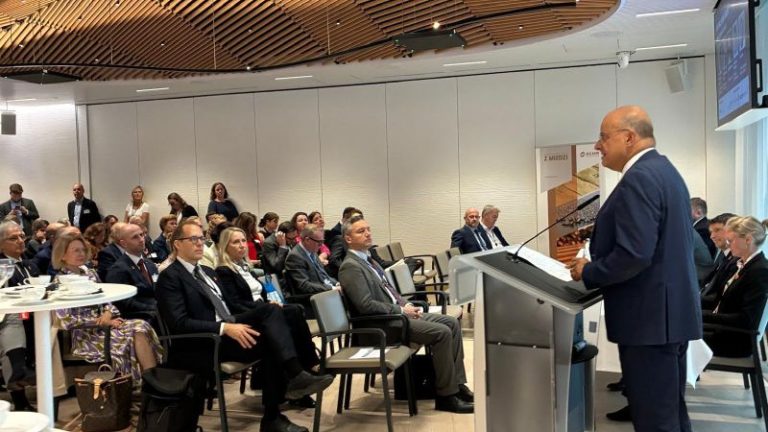
    Saudi Arabia has used the Gulf Vision 2026 Forum in Paris to showcase investment opportunities across its $2.5 trillion mineral resource base to French and European partners, as the Kingdom accelerates its push to establish mining as the third pillar of the national economy under Vision 2030.

    Khalid Al-Mudaifer, Saudi Arabia’s vice minister of industry and mineral resources for mining affairs, presented the Kingdom’s economic transformation agenda and held bilateral meetings with French officials and representatives of major French mining and industrial companies. Discussions focused on strengthening cooperation in mining investment, technology transfer and joint ventures, with particular emphasis on mineral exploration, sustainable mining practices and expanding domestic mineral value chains.

    Vision 2030 aims to unlock more than $2.5 trillion in mineral resources including gold, copper, zinc, phosphates, aluminium and rare earth elements, diversifying revenue sources while strengthening Saudi Arabia’s position in global supply chains. The pace of licensing is accelerating: the Kingdom issued 80 new mining licences in March 2026, more than double the 38 issued in February, reflecting the government’s intensified effort to open the sector to international investment.

    Al-Mudaifer highlighted Saudi Arabia’s commitment to providing a favourable investment environment backed by modern legislation and financial incentives. He also pointed to the National Industrial Development and Logistics Programme, which integrates industry, mining, energy and logistics under a unified national strategy, as a vehicle for expanding industrial capabilities, strengthening local value chains and improving the global competitiveness of Saudi products.

    The vice minister emphasised that Saudi ambitions extend beyond resource extraction toward integrated industrial value chains — a positioning consistent with the broader shift among mineral-rich nations seeking to capture processing and manufacturing value rather than exporting raw materials.

  • Uzbekistan Mining Ministry Meets Turkey’s ESAN Eczacıbaşı to Advance Investment and Strengthen Strategic Mining Partnership

    Uzbekistan Mining Ministry Meets Turkey’s ESAN Eczacıbaşı to Advance Investment and Strengthen Strategic Mining Partnership

    Uzbekistan’s Ministry of Mining Industry and Geology has held talks with Turkish industrial minerals company ESAN Eczacıbaşı to review ongoing cooperation and identify new investment opportunities, as Tashkent continues its drive to attract foreign capital and modernise its mining sector through regulatory reform and expanded geological exploration.

    The meeting between Minister Bobir Islamov and ESAN Eczacıbaşı executives followed the fifth Tashkent International Investment Forum, where Uzbekistan showcased investment opportunities across mining, energy and infrastructure to international participants. The discussions covered Uzbekistan’s ongoing mining sector reforms, investor-friendly legislative measures introduced in recent years, and outcomes of the forum.

    The parties reviewed the status of projects currently being implemented in Uzbekistan with ESAN Eczacıbaşı, discussed future development plans, and explored opportunities to deepen their strategic partnership. Both sides reaffirmed interest in expanding cooperation and advancing joint initiatives.

    “Uzbekistan’s ongoing mining reforms, improved investment climate and the success of the 5th Tashkent International Investment Forum are creating new opportunities for international partnerships and long-term investment in the sector,” the ministry said.

    ESAN Eczacıbaşı is one of Turkey’s leading industrial minerals and mining companies, active in the extraction, processing and international trade of minerals used in ceramics, glass, chemicals and related industries. The company has been expanding its international footprint through mining investments and strategic partnerships in recent years.

  • Canada and Germany Deepen Critical Minerals Partnership With Stockpiling Focus and Capital Investment Target by End of 2026

    Canada and Germany Deepen Critical Minerals Partnership With Stockpiling Focus and Capital Investment Target by End of 2026

    Canada and Germany have agreed to advance their critical minerals supply chain partnership with a specific focus on stockpiling cooperation and capital investment commitments, Prime Ministers Mark Carney and Chancellor Friedrich Merz confirmed at the G7 summit in Évian.

    The two leaders took stock of shared vulnerabilities in raw materials supply chains and agreed to cooperate closely both bilaterally and within the G7 framework, stressing the need for industry to actively diversify away from concentrated sources of supply.

    The commitment builds on a Joint Declaration of Intent announced in August 2025, under which Germany and Canada have already deepened integration through a Canadian business mission to Munich, a high-level German critical minerals delegation to the Prospectors and Developers Association of Canada annual convention in Toronto, and the launch of a joint supply chain mapping initiative to identify priority battery value chain opportunities.

    The two countries now agree to work together on enhancing a partnership specifically on critical minerals stockpiling, with the aim of leading to concrete capital investments by the end of 2026 — a measurable near-term deliverable that distinguishes the commitment from broader diplomatic declarations.

    The agreement reflects the alignment between Canada’s positioning as a strategic critical minerals supplier and Germany’s acute industrial need to secure raw materials for its automotive, electronics and defence manufacturing base, both of which have been exposed by China’s progressive tightening of export controls on strategic materials.

  • US Customs Detains Serbia Zijin Copper Shipments Over Forced Labour Allegations Covering Six ILO Indicators

    US Customs Detains Serbia Zijin Copper Shipments Over Forced Labour Allegations Covering Six ILO Indicators

    US Customs and Border Protection has issued a Withhold Release Order against copper and copper products manufactured by Serbia Zijin Copper, directing all US ports of entry to detain shipments from the Chinese-controlled Serbian copper producer following an investigation that found evidence of six International Labour Organization indicators of forced labour.

    CBP said its investigation drew on worker statements, photographs, focus group field notes, text message screenshots, NGO reports, news media and academic research. The evidence collectively demonstrated that workers at Serbia Zijin Copper are subject to abuse of vulnerability, withholding of wages, intimidation and threats, restriction of movement, retention of identity documents and excessive overtime.

    Importers of detained shipments may either destroy or export their goods, or seek to demonstrate to CBP that the merchandise was not produced using forced labour. Serbia Zijin Copper had not responded to a request for comment at time of publication.

    “US manufacturers face unfair competition when foreign companies cut costs by using forced labour. By enforcing our laws against forced labour, CBP safeguards human rights as well as our nation’s economic security,” said Susan S. Thomas, CBP Office of Trade executive assistant commissioner.

    Serbia Zijin Copper was created in 2018 when China’s Zijin Mining injected $350 million into Serbian copper mining and smelting company RTB Bor, acquiring a 63% stake. In 2025, the company produced 123,286 tonnes of mine copper and 43,852 tonnes of refined copper. Zijin is also present in Serbia through wholly-owned Serbia Zijin Mining, which operates the Čukaru Peki copper-gold mine. Combined, the two Zijin operations in Serbia produced 296,000 tonnes of mine copper in 2025, making them Europe’s second-largest mined copper producer. A 2025 UN Special Rapporteur report noted that most of this copper is exported to China.

    Tuesday’s order is the fourth forced labour Withhold Release Order issued by CBP in fiscal year 2026, following a December 2025 order against tyres produced by Chinese company Linglong’s Serbian factory on the same grounds.

  • Canada Grants Italy Priority Access to Critical Mineral Reserves as Carney and Meloni Deepen G7 Supply Chain Partnership

    Canada Grants Italy Priority Access to Critical Mineral Reserves as Carney and Meloni Deepen G7 Supply Chain Partnership

    Canadian Prime Minister Mark Carney has offered Italy priority access to Canada’s critical mineral reserves, with the two leaders using the G7 summit in Évian to expand bilateral cooperation spanning supply chains, defence procurement and energy at a moment when Western allies are accelerating efforts to secure strategic resource access.

    The meeting between Carney and Italian Prime Minister Giorgia Meloni builds on a year of growing bilateral engagement. Recent milestones include Italian energy company Eni’s nearly C$100 million investment to secure graphite from Nouveau Monde Graphite’s Matawinie project in Quebec, Italy’s entry into the Critical Minerals Production Alliance, and a series of trade and investment initiatives between the two countries.

    “Italy’s intention to collaborate with Canada to stockpile critical minerals will catalyze further partnerships between our countries in energy and industry,” the Canadian government said in a statement. Meloni thanked Carney for granting priority access, with the Italian government’s statement describing the move as helping to safeguard supply chains.

    The agreement reflects Canada’s broader strategy of positioning itself as a core strategic supplier of minerals essential to battery manufacturing, defence technologies and industrial production, as G7 nations work to reduce dependence on concentrated global supply chains dominated by China.

    Beyond minerals, the two leaders launched negotiations for Canada’s purchase of Leonardo M-346 advanced jet trainer aircraft from Italy, framing the proposed acquisition as advancing Canada’s Defence Industrial Strategy through partnerships with trusted allies. Carney also highlighted plans for a new Defence, Security and Resilience Bank to finance long-term defence and security projects.

    Carney and Meloni also reaffirmed support for Ukraine, agreed on maintaining pressure on Russia and discussed Middle East developments.

  • Portugal Unveils €400 Million Aljustrel Mine Expansion as Prime Minister Backs Mining as Pillar of Economic Sovereignty

    Portugal Unveils €400 Million Aljustrel Mine Expansion as Prime Minister Backs Mining as Pillar of Economic Sovereignty

    Portugal has inaugurated a €400 million expansion at the Aljustrel copper and zinc mine in the Beja district, with Prime Minister Luís Montenegro framing the investment as essential to building a “modern, productive and sovereign Portugal” as the country positions itself as a strategic supplier of critical raw materials for Europe’s energy transition.

    The project, developed by ALMINA – Minas de Portugal over five years and branded Feeding the Global Energy Transition, has received approximately €128 million in funding from Portugal’s Plan for Recovery and Resilience. The expansion significantly increases the mine’s processing capacity to six million tonnes of copper and zinc ore annually and includes a new solar photovoltaic facility capable of generating more than 40,000 megawatt-hours of electricity per year for the mine’s own consumption. The upgraded processing plant enables copper and zinc ores to be treated simultaneously, improving metal recovery rates and creating additional value while helping offset commodity price and currency volatility.

    ALMINA chairman Humberto Costa Leite described the investment as placing the company at the forefront of modern mining, invoking the mine’s deep strategic significance. “There is no energy transition without a digital revolution, and there is no digital revolution without mining. Mining is kilometre zero of modern life, and that kilometre zero has a historic address: Aljustrel,” he said.

    Looking ahead, ALMINA is awaiting environmental approval for a further €150 million investment over four years to develop the Gavião copper deposit, and has invested €10.8 million in exploring the Albernoa zinc and copper deposit, where experimental exploitation is planned. Costa Leite criticised regulatory delays, warning the company has already lost more than a year awaiting approval to advance Albernoa. “We need the state to be a facilitator, not an obstacle to wealth creation,” he said, calling for faster licensing procedures and stronger support for mineral exploration.

    The chairman also highlighted the financial burden of energy costs, noting ALMINA faces monthly electricity bills exceeding €2 million, and urged the government to adopt long-term energy policies to support the mining industry’s competitiveness.

  • G7 Leaders Agree 60% Import Concentration Cap on Rare Earths by 2030 and Pledge Binding Quotas for Defence Sector

    G7 Leaders Agree 60% Import Concentration Cap on Rare Earths by 2030 and Pledge Binding Quotas for Defence Sector

    Group of Seven leaders meeting at their Evian summit in France have agreed that no single country should supply more than 60% of their imports of rare earth elements by 2030, in the most concrete collective commitment yet to reduce dependence on China’s near-monopoly over critical minerals supply chains.

    Leaders also discussed introducing binding import quotas for companies in specific industrial sectors — with defence manufacturers identified as a priority given their acute exposure to Chinese supply disruptions — and pledged to establish a platform to combine recycling efforts and new mining project development. For other critical minerals beyond rare earths, G7 members committed to establishing specific diversification targets by the end of 2025.

    German Chancellor Friedrich Merz confirmed the alignment at the summit. “We agreed in various formats to work even more closely together on critical raw materials. We had very in-depth discussions with our guests about how we can diversify,” he told reporters.

    One G7 official described critical minerals as one of the few issues on which leaders reached full agreement at a summit otherwise dominated by questions surrounding the US-Iran peace deal. Another official noted that all members were aligned on the need to reduce vulnerability to supply interruptions.

    The 60% concentration cap will be challenging to meet. China imposed sweeping export controls on most critical minerals and rare earths last year, threatening manufacturing lines globally and demonstrating the leverage Beijing has accumulated through decades of investment in supply chain dominance. A 2025 IEA report found China controlled roughly 70% of refining capacity across the majority of critical minerals, rising to 85% for processed cobalt and 99% for primary gallium. Japan, despite years of diversification efforts following a 2010 export ban during a maritime border dispute, still sources approximately 75% of its rare earth imports from China. China also imposed a wide-ranging ban on dual-use products affecting Japan following a spat over Taiwan this year.

    Officials acknowledged the 2030 deadline is ambitious given that many prospective mining and processing projects face funding constraints, regulatory hurdles, social opposition and technical setbacks. One official said binding quotas — at least for sectors like defence — may prove necessary to drive real change rather than voluntary commitments.

  • Indonesia Invites Germany to Join Critical Minerals Supply Chain Including Rare Earths During Steinmeier State Visit

    Indonesia Invites Germany to Join Critical Minerals Supply Chain Including Rare Earths During Steinmeier State Visit

    Indonesian President Prabowo Subianto has invited Germany to participate in Indonesia’s critical minerals supply chain, including rare earth elements, as the two countries sought to deepen economic cooperation during a state visit by German President Frank-Walter Steinmeier to Jakarta.

    Speaking at a joint press conference, Prabowo said Indonesia was opening its doors to Germany across a broad range of strategic sectors including energy transition, energy security, education and employment. He extended invitations for expanded German investment in downstream industries, electric vehicles, the semiconductor industry and the energy sector more broadly.

    The invitation reflects Indonesia’s ongoing strategy of leveraging its substantial critical minerals endowment — including the world’s largest nickel reserves and significant deposits of bauxite, copper, cobalt and rare earths — to attract investment from major industrial economies seeking to diversify supply chains away from Chinese dominance. Jakarta has pursued an aggressive downstream processing mandate since 2014, requiring minerals to be processed domestically before export, a policy that has attracted significant Chinese investment in nickel processing and which Jakarta is now seeking to broaden toward Western partners.

    Germany, as Europe’s largest industrial economy and a major manufacturer of electric vehicles and high-technology equipment, has a strong strategic interest in securing access to the battery metals and rare earths Indonesia holds, particularly as Berlin expands its raw materials fund and intensifies its critical minerals diplomacy globally.