Region: Europe

  • ACG Raises Gold Recovery at Turkey’s Gediktepe Mine to 85% With Patented Heap Leach Process While Cutting Cyanide Use by 45%

    ACG Raises Gold Recovery at Turkey’s Gediktepe Mine to 85% With Patented Heap Leach Process While Cutting Cyanide Use by 45%

    ACG has achieved a sustained improvement in gold recovery at its Gediktepe Mine in Turkey, raising commercial recovery from approximately 75% to 85% through a proprietary technical approach developed internally by the company, for which patent protection has been secured in Turkey and is progressing in 35 other countries.

    The improvement, delivered under commercial operating conditions between April 2025 and June 2026, is accompanied by a 45% reduction in cyanide consumption, reduced leach cycle times and lower overall operating costs — a combination that is contributing to stronger cash flow and improved margins on oxide ore processing.

    ACG Chairman and CEO Artem Volynets described the results as demonstrating the strength of the company’s technical team. “As we move into the sulphide ramp-up phase and copper production, disciplined process control and recovery efficiency will be key to delivering performance and optimising cash flow,” he said.

    The company expects the improvements to continue through the remaining oxide phase and intends to apply the patented process approach to sulphide and transitional ore as Gediktepe advances toward copper production. The broader applicability of the proprietary process beyond Gediktepe is also highlighted as a potential asset for the company.

  • Poland’s Coal Waste Heaps Could Become a Strategic Rare Earth Source — If the Country Moves Fast Enough

    Poland’s Coal Waste Heaps Could Become a Strategic Rare Earth Source — If the Country Moves Fast Enough

    Poland has no proven primary deposits of rare earth elements, yet researchers at the Polish Academy of Sciences argue the country may be sitting on millions of tonnes of material that could prove just as valuable: the vast coal mine waste heaps scattered across its industrial landscape, which contain germanium, gallium, cobalt, dysprosium and other critical elements essential for semiconductors, wind turbines and defence electronics.

    Dr Łukasz Kruszewski of the Institute of Geological Sciences makes a striking claim: Poland’s greatest potential for rare earths and associated critical elements lies not in new mines but in existing coal seams and the waste left behind by decades of extraction. Lublin coal co-occurs with germanium and gallium — both critical for semiconductors — alongside cobalt. Other promising sites include the Tajno massif, copper-polymetallic deposits near Legnica in Lower Silesia, and historic uranium fields around Kowary enriched in rare earths, particularly yttrium.

    The most significant opportunity may be the hałdy — the iconic black spoil heaps of Upper Silesia. More than 200 exist, some containing tens of millions of tonnes of material. Small concentrations do not necessarily preclude economic extraction at that scale, Kruszewski argues. Methods adapted from gold leaching — using carbonate solutions that rare earths readily bind to — could extract materials with minimal disturbance. Biological extraction using bacteria is also under study at the University of Warsaw. A US example from Virginia, where researchers developed a viable recovery process for rare earths and cobalt from coal waste within two years, demonstrates how quickly innovation can close the viability gap.

    Poland is transposing the EU’s Critical Raw Materials Act through draft national legislation and operates a National Critical Raw Materials Exploration Programme funded at 180 million zloty through 2032 — though rare earths sit in the programme’s third-tier priority group. By comparison, Spain’s equivalent programme is funded at over €180 million. A planned rare earth processing facility in Puławy, developed by Grupo Mkango with Grupa Azoty and designated as an EU strategic project, has operations targeted for 2027 to 2028.

    Systemic obstacles remain. Mining companies have shown limited interest in cooperation with researchers. Regional coordination within the Visegrad Group — essential given shared geological realities across borders — remains aspirational. And the window is narrowing as Western governments race to secure critical mineral supply chains and China maintains dominance across production and processing.

  • Middle Island Resources Expands Bobija Gold-Silver Discovery to 80,000m² as Phase Two Drilling Links Three Separate Zones in Serbia

    Middle Island Resources Expands Bobija Gold-Silver Discovery to 80,000m² as Phase Two Drilling Links Three Separate Zones in Serbia

    Middle Island Resources has received final assay results from phase two reverse circulation drilling at its Bobija project in Serbia, with results expanding the discovery significantly and linking three previously separate mineralised zones into a single large system covering approximately 80,000 square metres.

    The standout intersection from the programme came in hole BMLRC022, which returned 41 metres at 1.03 grams per tonne gold, 52.9 grams per tonne silver, 0.17% copper, 0.94% lead and 1.26% zinc from one metre depth. Other significant Central Zone results include BMLRC023, which returned 40 metres at 1.23 grams per tonne gold, 64.0 grams per tonne silver, 0.15% copper, 0.99% lead and 0.92% zinc from one metre, and BMLRC028, which intersected 28 metres at 1.18 grams per tonne gold, 66.6 grams per tonne silver, 0.19% copper, 1.22% lead and 1.62% zinc from 20 metres. Step-out drilling north of the historic Central Zone extended the mineralised footprint beyond previously interpreted boundaries, with BMLRC024 returning 13 metres at 1.87 grams per tonne gold, 93.2 grams per tonne silver, 0.30% copper, 1.46% lead and 0.68% zinc from three metres.

    Phase two comprised 17 holes for 1,363 metres. Mineralisation remains open to both the east and west on each cross section, with several high-grade intersections at the limits of current drilling. CEO Peter Spiers described Bobija as rapidly emerging as a major shallow gold-silver discovery. “Historic work targeted lead, zinc, and barite and largely overlooked gold, but our drilling is consistently demonstrating that gold and silver comprise a dominant part of the Bobija system,” he said.

    Phase three drilling is planned to test multiple open extensions, focusing on the northern and southern limits of the current target area and assessing continuity within and between the Central, West and North zones. The Bobija project covers 182 square kilometres across five mineral licences, with Middle Island holding a ten-year option to acquire two granted mining licences from local company Bobija doo Ljubovija.

  • Zelenskiy Presses Ireland to Speed Up Aughinish Alumina Investigation During Dublin Visit

    Zelenskiy Presses Ireland to Speed Up Aughinish Alumina Investigation During Dublin Visit

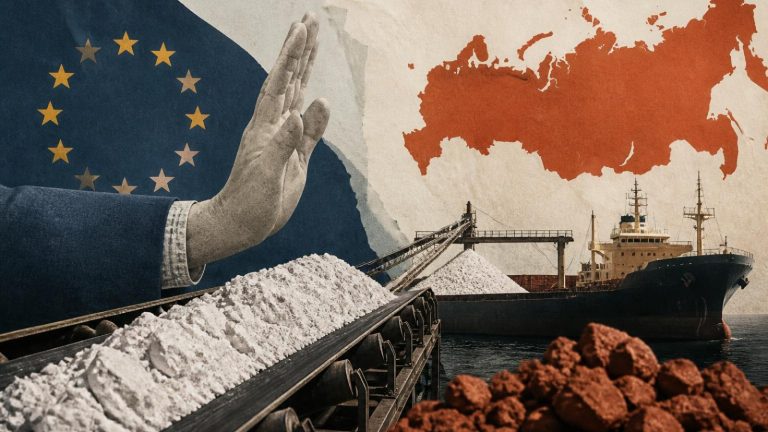
    Ukrainian President Volodymyr Zelenskiy has urged Ireland to complete its investigation into whether alumina exports from the Aughinish plant are contributing to Russian weapons production, pressing for a swift result during a visit to Dublin as part of the country’s rotating EU presidency.

    “We are grateful to the government that Ireland is conducting the relevant investigation. We definitely hope for a positive result for us and we really hope we won’t have to wait months for this result,” Zelenskiy said at a joint news conference with Irish Prime Minister Micheal Martin. “Every tonne of raw material that ends up in Russia is used against us,” he added.

    The Aughinish Alumina plant in southwest Ireland is Europe’s largest alumina refinery and continues to export the material to Russia despite mounting political pressure. The plant is owned by Rusal, the Russian aluminium giant. Alumina is a feedstock for aluminium production, which is used in a wide range of Russian military systems.

    The EU did not include alumina exports to Russia or reference the Irish plant in its 21st sanctions package last month. However, EU foreign policy chief Kaja Kallas indicated that limits on Irish alumina exports to Russia could be included in future sanctions packages if unanimity among member states can be secured.

    Martin, who invited Zelenskiy to Dublin for the start of Ireland’s six-month EU Council presidency, said the investigation was nearing completion and that Dublin would discuss its findings with the European Commission once finalised. “We do not want to be in a position where material emanating from a plant in Ireland goes to support the Russian war machine,” he said, while also defending the EU’s decision to leave the plant off current sanctions packages by citing its importance to EU supply chains.

  • Reveille Resources Plans London’s Aquis Float to Revive Dormant Italian Uranium Deposits Abandoned After Chernoby

    Reveille Resources Plans London’s Aquis Float to Revive Dormant Italian Uranium Deposits Abandoned After Chernoby

    A company planning to mine uranium at two historical deposits in northern Italy is seeking to list on London’s small-cap Aquis exchange as soon as this week, aiming to capitalise on Europe’s renewed interest in nuclear energy and domestic critical mineral security.

    Reveille Resources, which will be operated by Ippolito Ingo Cattaneo alongside his father Andrea Cattaneo, is targeting two uranium deposits in Lombardy known as Novazza and Val Vedello, for which licence applications were submitted last year. Evidence of uranium at both locations was first identified as far back as 1912, with formal exploration beginning in the 1950s as part of Italy’s first nuclear energy programme. That exploration was suspended in the 1980s following the Chernobyl disaster, which triggered widespread public concern over nuclear energy across Europe.

    The company is now seeking to revive interest in the sites against a backdrop of European energy security concerns and growing government investment in small modular reactor technology. “Against a backdrop of increasing concerns regarding energy security and access to natural gas supplies from Russia and the Middle East, together with the growing recognition of nuclear energy as a source of low-carbon baseload electricity, European governments, including Italy, are demonstrating renewed interest in nuclear energy,” Reveille said, adding that there is increasing strategic focus on securing domestic and Western-aligned sources of critical and strategic minerals including uranium.

    The Cattaneo family is set to own approximately one-fifth of the company following its float, with other mining companies they are involved in also holding shares. New Jersey-based Yorkville Advisors Global, which has financed other energy-related companies including London-listed Fermi, is also participating. The company expects to be admitted to Aquis on Thursday.

  • Canadian Private Equity Firm Kinterra Capital Rescues Poland’s €1.63 Billion Battery Materials Plant After Ascend Elements Bankruptcy

    Canadian Private Equity Firm Kinterra Capital Rescues Poland’s €1.63 Billion Battery Materials Plant After Ascend Elements Bankruptcy

    Canadian private equity firm Kinterra Capital has acquired the rights to a planned €1.63 billion precursor cathode active material plant near Opole in Poland, rescuing a project that had been thrown into doubt after its previous developer, US firm Ascend Elements, filed for bankruptcy in April 2026.

    The planned facility, scheduled for completion in 2031, will produce pCAM — a key component in the lithium-ion batteries used in electric vehicles, smartphones and other consumer electronics. The deal, finalised in May, includes intellectual property rights for lithium-ion battery processing, lithium recovery and pCAM production, as well as rights to a Polish government subsidy of 1.22 billion zloty (€285 million) — one of the largest state grants ever awarded in Poland, backed by an EU programme supporting the transition to a net-zero economy. Kinterra also signed a conditional agreement to purchase the land plot for the factory.

    Ascend Elements had announced the project in May 2025, citing Poland’s strategic position as Europe’s largest lithium-ion battery producer and its importance in reducing European dependence on Asian suppliers. The company subsequently cited “insurmountable” financial challenges in launching US bankruptcy proceedings, casting doubt over the future of the grant and the facility.

    Kinterra Capital, which manages approximately $1.5 billion in assets focused on critical minerals and infrastructure, said the project offered the strategic location, infrastructure access, public administration support and industrial base it requires. “This project has the key advantages we are looking for,” said Graeme Weeks, Kinterra’s global head of project execution. Laura Fernandez, a Kinterra partner, said the investment “addresses the most important challenges facing European industry today,” citing supply chain security and European independence from Asian suppliers.

    Poland is home to Europe’s largest EV battery plant, operated by LG Energy Solution in Wrocław, which accounted for approximately half of Europe’s EV battery production capacity in 2024. However, Poland’s position faces a potential challenge from forthcoming EU regulations incorporating battery carbon footprint requirements — measures that could penalise Poland given that coal still accounts for around half of its electricity production.

  • European Aluminium Calls for Indirect Ban on Russian Metal After Turkey Loophole Allows Sanctioned Aluminium Into EU Market

    European Aluminium Calls for Indirect Ban on Russian Metal After Turkey Loophole Allows Sanctioned Aluminium Into EU Market

    Industry association European Aluminium has called on the European Union to introduce a targeted indirect ban on Russian aluminium in the bloc’s next sanctions package, warning that a significant loophole allows Russian primary metal to enter the EU market via third-country processing — undermining existing direct import sanctions and sustaining Russian export revenues.

    The association’s #NoSecondPassport campaign argues that Russian primary aluminium can be sold to producers in third countries, processed into semi-finished or finished products, and then exported to the EU as goods originating from the processing country rather than Russia. European Aluminium says this circumvention places unfair competitive pressure on European producers that have already moved away from Russian supply, while generating almost $10 billion in export revenue for Russia last year.

    Turkey is highlighted as the clearest example of the loophole in practice. Russia supplied approximately 20% of Turkey’s primary aluminium imports in 2025, making it Turkey’s second-largest supplier. The association also flags the Gulf supply crisis as a compounding risk: Turkey relied on Gulf countries for around 42% of its aluminium ingot imports in 2025, and the association warns that regional instability or further upward price pressure could push Turkey and other third countries to increase their reliance on discounted Russian supply.

    European Aluminium is calling for the indirect ban to be backed by stronger enforcement mechanisms, including mandatory reporting of the first and second largest country of smelt and the last country of cast, enabling customs authorities to trace the upstream origin of aluminium entering the EU. The package would also include targeted customs checks on high-risk third-country imports, ongoing monitoring of import flows from countries known to import large volumes of Russian aluminium, and specific scrutiny of billets, extrusions and other semi-finished products.

    The association frames the issue as a strategic autonomy concern, arguing that weakening Europe’s aluminium industrial base at a moment when the sector is increasingly tied to defence, clean energy and broader industrial resilience carries risks that extend well beyond commercial competition.

  • Energy Transition Minerals Secures Final Approval to Revive Penouta Mine as EU’s Only Domestic Tantalum and Niobium Source

    Energy Transition Minerals Secures Final Approval to Revive Penouta Mine as EU’s Only Domestic Tantalum and Niobium Source

    Energy Transition Minerals has secured the final regional approval needed to take over the Penouta tin, tantalum and niobium mine in Galicia, Spain, moving a step closer to making it the European Union’s only domestic primary source of two critical raw materials that Europe currently imports almost entirely from overseas.

    The Xunta de Galicia has authorised the transfer of the Section C mining concession at the Penouta mine in Viana do Bolo, Ourense, to ETM’s Spanish subsidiary, formally recognising the company as the incoming holder of mining rights. The approval is the final regional step in ETM’s rescue of the project from the insolvency of previous operator Strategic Minerals Spain, which collapsed in 2024 and halted production.

    The strategic significance is considerable. Europe mines almost none of the metals Penouta produces. Over 80% of the world’s niobium comes from Brazil, most tantalum is mined in the DRC and Rwanda, and critical minerals processing is dominated by China. Tantalum prices have reached multi-decade highs this year following supply disruption in central Africa. Both tantalum and niobium are designated critical raw materials by the EU, the US and Australia, with applications across semiconductors, capacitors, high-performance aerospace and defence alloys, and energy transition technologies.

    Penouta retains its open-pit mine, a processing plant tailored to its ore type and supporting infrastructure representing a historical investment of approximately €28 million. The site covers 282 hectares and holds certified measured and indicated resources of more than 76 million tonnes under NI 43-101 standards. Mineral resources in the area were exploited from the early 20th century through the 1980s, with exploration reactivated in 2011 by Strategic Minerals Spain.

    ETM has signed a memorandum of understanding with commodity trader Traxys for offtake of concentrate from the mine. Managing director Daniel Mamadou said the company intends to reactivate Penouta responsibly, retaining experienced local staff, prioritising local hiring and working closely with the Viana do Bolo municipal council. “Europe has spent years talking about reducing its dependence on a handful of distant suppliers for the metals its industries cannot do without. Penouta is one of the few places on the continent where that ambition can actually be met — and met soon,” he said.

    The Penouta news comes the same week that Greenland formally rejected ETM’s application to renew the exploration licence for its Kvanefjeld rare earth project, after the Greenland government gave the company 48 hours to respond to technical assessments and refused a one-week extension.

  • EU and China Open Three-Month Trade Talks to Avert Trade War Over €360 Billion Import-Export Imbalance

    EU and China Open Three-Month Trade Talks to Avert Trade War Over €360 Billion Import-Export Imbalance

    The European Union and China have agreed to enter three months of formal trade consultations aimed at averting a trade war over the bloc’s annual €360 billion import-export imbalance, in their first joint statement on the relationship in seven years.

    EU Trade Commissioner Maroš Šefčovič met Chinese Commerce Minister Wang Wentao in Brussels on Monday, with both sides agreeing to open the consultations after weeks of threats and recriminations from Beijing over the prospect of EU measures to curb the flow of Chinese goods and components into Europe. “The EU and China as key trade partners, agree that the main objective of the TIC is to strengthen dialogue at ministerial level on trade and investment policies with the view to stabilise and make our bilateral relationship more balanced,” the two sides said in a joint statement, with the next meeting scheduled for October in Beijing.

    The talks come amid growing alarm in Brussels over what is now widely described as China Shock 2.0 — a threat to European industry and jobs extending well beyond electric vehicles and green technology. Eurostat reported on 15 June that Chinese exports to the EU now exceed imports from the bloc by approximately €1 billion per day. “We simply cannot afford to continue in the unsustainable growth of the trade deficit from the European perspective,” Šefčovič said. “We just didn’t want to wait too long. What is very important for us is engagement, it’s dialogue. But it has to bring tangible results, and we believe that we can achieve them by October.”

    Industry groups including the European Chambers of Commerce in China have warned that the scale of exports flowing into Europe risks “cannibalising” EU factories that remain heavily dependent on Chinese components.

    The consultations will cover four areas: rebalancing of trade and investment, export controls including those on rare earths, intellectual property rights, and World Trade Organization reforms. The two sides have also agreed to a joint monitoring mechanism extending beyond headline Eurostat and Chinese customs (GACC) figures, designed to identify sudden surges in exports or imports and trigger political discussions should either side move into an “amber or red” danger zone, according to Šefčovič.

    The European Commission has reportedly been mapping import and export data in fine detail over the past year, suggesting the three-month window will focus primarily on political dialogue rather than technical groundwork. The EU has adopted a cautious approach following the failure of its 2024 tariffs to meaningfully curb EV imports, with sources indicating quotas on hybrids and chemicals could be considered in the autumn.

  • Leading Edge Materials Secures 25-Year Mining Lease for Norra Kärr as Sweden Designates It Europe’s First Heavy Rare Earth Mine

    Leading Edge Materials Secures 25-Year Mining Lease for Norra Kärr as Sweden Designates It Europe’s First Heavy Rare Earth Mine

    The Swedish government has granted Leading Edge Materials a 25-year mining lease for its Norra Kärr project in southern Sweden, clearing the way for what the company describes as Europe’s first heavy rare earth mine and sending its shares up nearly 28% on the announcement.

    The exploitation concession followed a formal recommendation from Sweden’s mining inspectorate endorsing development, with the government citing the project’s strategic importance to both Sweden and the EU. A prior study by the Geological Survey of Sweden confirmed Norra Kärr as one of Europe’s richest rare earth deposits, with a particularly high proportion of heavy rare earths — terbium, dysprosium and yttrium — all essential inputs for permanent magnets used in electric vehicles, wind turbines and defence applications. With no rare earth production currently occurring anywhere in the EU, the government concluded that supplying these critical materials clearly outweighs competing land-use considerations.

    CEO Kurt Budge said the decision affirms Norra Kärr as a strategically important heavy rare earth deposit in a Tier 1 jurisdiction, adding that the project has “the capacity to supply all of Europe’s annual dysprosium requirements alongside meaningful terbium and yttrium production” — offering what he called a realistic solution as Europe seeks to reduce dependence on Chinese imports.

    A 2021 preliminary economic assessment outlined a potential 26-year mine life producing an average of 5,340 tonnes per year of mixed rare earth oxides, based on material representing approximately 30% of the project’s inferred resource of 110 million tonnes grading 0.5% total rare earth oxides. The project’s key differentiator is its unusually high ratio of heavy to light rare earths — 2.5 to 1, compared with an average of 38.5 to 1 among peer projects — meaning for every kilogram of neodymium-praseodymium produced, Norra Kärr is expected to yield 0.4 kilograms of dysprosium-terbium. Based on the older, lower rare earth price assumptions used in the 2021 study, the project carried a post-tax net present value of $762 million, an internal rate of return of 26.3% and average annual EBITDA of $206 million — figures likely to improve substantially given current heavy rare earth pricing.

    With the mining lease secured, Leading Edge will advance an updated pre-feasibility study and begin discussions with potential offtake partners and financiers. The company will simultaneously pursue environmental permitting, pledging development to the highest environmental standards in close dialogue with the local community, including those who remain sceptical of the project. Norra Kärr previously had its mining concession revoked in 2016 over environmental concerns three years after initial issuance; Leading Edge has since reduced the project’s footprint by 65% to address those concerns.