Region: Europe

  • Ann Mettler on Europe’s toxic complacency, cleantech challenge & energy security crisis (RM#12)

    Ann Mettler on Europe’s toxic complacency, cleantech challenge & energy security crisis (RM#12)


    Ann Mettler on Europe’s toxic complacency, cleantech failure & energy security crisis [RAW MATTERS GRANDE FINALE, RM#12 – Ann Mettler, Julia Poliscanova, Peter Tom Jones]

    We end Season 1 of the Raw Matters podcast with a big bang. We close with a conversation that goes straight to the heart of Europe’s competitiveness and energy‑security challenge.

    After a season of deep dives into critical minerals, geopolitics and industrial strategy, we end with someone who has shaped Europe’s thinking at the highest levels: Ann Mettler, President of Catalyse Europe, former VP at Breakthrough Energy (with Bill Gates), and one of Europe’s sharpest voices on industrial strategy and clean tech.

    Hosts Peter Tom Jones and Julia Poliscanova open with the uncomfortable question: How did Europe manage to deepen its fossil‑fuel dependencies while simultaneously creating new ones for the clean‑energy transition?

    This paradox sets the tone for a conversation about Europe’s “toxic complacency” – a theme Ann has highlighted repeatedly (cf. Quote by Sir Richard Shirreff), and one that now defines the continent’s strategic vulnerability.

    We explore Ann’s professional journey, then dive into the big issues:

    👉 The staggering cost of Europe’s fossil‑fuel exposure, from Ukraine to the Hormuz crisis.
    👉 Whether the Draghi report’s diagnosis of Europe’s competitiveness gap is being acted upon.
    👉 Why Europe’s energy security – in fuels, technologies and critical minerals – remains fragile.

    From there, we zoom into cleantech: the battleground where Europe’s future will be decided. Ann explains why Europe cannot rely on cheap imported batteries – the general‑purpose technology of the electrification age, essential not only for EVs but also for stationary storage and defence (drones, humanoid robots). “We cannot and should not rely on China for critical infrastructure.”

    We discuss which technologies Europe must fight to keep, which ones to onshore, and which ones to strategically let go. And which Asian partners Europe should work with and why technology alliances matter.

    We close with the policy angle. Ann deliberately avoids commenting on specific policy files (CRMA, IAA, Circular Economy Act…). Instead, she exposes the systemic problem: silo‑based policymaking in the EU and the lack of people in Brussels who genuinely understand how industry works, how technology functions or how investments are made. Echoing Salvatore Pinizzotto, she calls for real synchronisation in policymaking and genuine “ecosystem building”, overcoming the endemic “professional optimism” in the Brussels bubble.

    This GRANDE FINALE is a wake‑up call. Unless Europe confronts its toxic complacency, it will continue drifting into deeper dependency at the very moment it needs strategic autonomy the most.

  • “Stop dawdling: Central Asia’s critical minerals revolution is here” (Amir Abidov, RM#11)

    “Stop dawdling: Central Asia’s critical minerals revolution is here” (Amir Abidov, RM#11)

    🎙️ “Stop dawdling: Central Asia’s critical minerals revolution is here” (Raw Matters podcast Episode #11, with Amir Abidov)

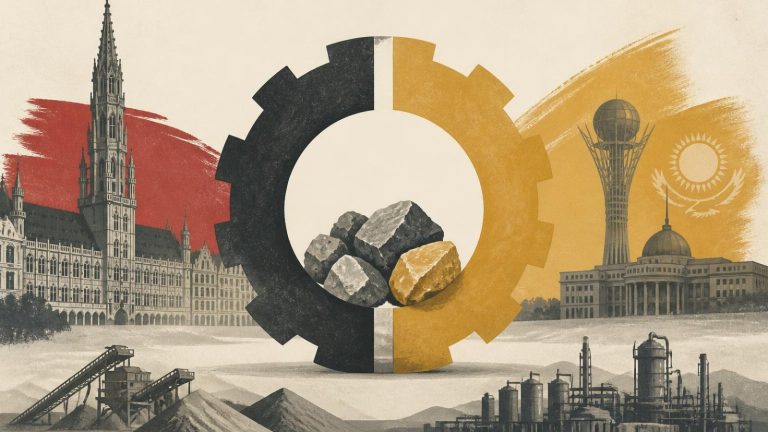
    Uzbekistan and Kazakhstan are ready to do CRM business with the EU but will not wait forever. Europe must decide quickly. Get on the bus or get left behind.

    Some hard talk by Amir Abidov (UzTMK) in the Raw Matters podcast (Episode #11), hosted by Peter Tom Jones and Julia Poliscanova.

    After months of posts, debates, MoU’s and Julia’s jokes about my “Central Asia obsession”, we finally bring Uzbekistan and Kazakhstan into the centre of Europe’s critical minerals narrative – where they belong.

    For this episode we welcomed Amir Abidov, Deputy Chairman of TMK (Uzbekistan Technological Metals Complex), the massive state-led CRM company in Uzbekistan (population: 39 million). Getting Amir into the studio was a journey in itself, involving last-minute travel across Europe, a stop at Neo Performance Materials Silmet in Estonia, excessive heat, and a shared determination to make sure Central Asia speaks for itself in the EU CRM debate.

    We open with the big picture: both Uzbekistan and #Kazakhstan have signed Strategic Partnerships with the EU. Both are rich in critical minerals. Both are moving fast. And both are ready to do business with Europe – now. The question is whether Europe can keep up.

    With Amir, we explore Uzbekistan’s resource potential. We compare UZ and KZ – two neighbours with different strategies, different industrial legacies, and a different energy basis.

    A key theme is the Green Resource Curse and how Uzbekistan can overcome it. Or better: how it is already taking massive strides in overcoming it. Amir explains how Uzbekistan is building real midstream and downstream cleantech capacity rather than just exporting raw materials.

    We then confront the geopolitical reality: Can Europe offer a credible, respectful, win‑win collaboration model – or will it miss the bus? We compare the Chinese, US and EU approaches, discuss the CRMA, and outline what Uzbekistan actually expects from Europe: technology transfer, expertise and offtake. We also touch on the role of bottom‑up collaboration with research centres (such as SOLVOMET R&T Centre (KU Leuven)’s collaboration on rare-earth SX with UzTMK) as a complement to top‑down EU policy. In the ideal world both strategies support each other.

    This episode is a wake‑up call for all Europeans. We need to recalibrate our position in the world, be more humble and react faster. Europe must decide whether it wants to be on the bus, or watch it drive away.

  • Cornwall Is the Engine Room of Britain’s Critical Minerals Future — But Only If Westminster Commits the Capital to Match the Ambition

    Cornwall Is the Engine Room of Britain’s Critical Minerals Future — But Only If Westminster Commits the Capital to Match the Ambition

    The United Kingdom has set an aggressive benchmark: secure at least 10% of its critical mineral needs through domestic production by 2035. Achieving that target is a mathematical impossibility without unlocking the geological wealth of the South West. Cornwall is no longer simply a landscape of industrial heritage — it is the strategic engine room of the nation’s technological and economic future.

    The region holds world-class concentrations of tech-critical metals that map directly onto the materials the modern clean energy economy requires. Cornish Lithium and Imerys British Lithium are actively targeting the production of tens of thousands of tonnes of battery-grade lithium carbonate annually from hard-rock deposits and geothermal brines. The UK’s own strategy includes a standalone goal of producing 50,000 tonnes of domestic lithium per year by 2035 — sufficient to sustain a meaningful electric vehicle manufacturing ecosystem. The planned reopening of South Crofty by Cornish Metals, backed by $210 million in bond financing and a letter of interest from the US Export-Import Bank, positions the region as a primary domestic supplier of tin, the metal that binds virtually all modern electronics and green infrastructure.

    The geopolitical driver behind this Cornish renaissance is what strategists have taken to calling securonomics. China controls the dominant share of the global critical mineral supply chain, giving it leverage over Western manufacturing that has been demonstrated repeatedly through export controls and pricing policy. The UK’s updated Critical Minerals Strategy mandates that no more than 60% of any single critical mineral come from a single foreign partner by 2035. A domestically anchored Cornish supply chain directly insulates British automotive, aerospace and advanced manufacturing sectors from weaponised supply shocks, and aligns with the US-UK Critical Minerals Memorandum of Understanding which emphasises collaborative, secure supply chains among allied nations.

    Cornwall’s environmental credentials add a further competitive advantage. Unlike virgin mining projects in ecologically sensitive regions elsewhere, Cornwall’s ancient mining heritage provides pre-existing, adaptable infrastructure. Modern operators are pioneering a low-carbon co-located model, combining lithium extraction with geothermal power generation to achieve an ultra-low carbon footprint. This makes Cornish minerals particularly attractive to ESG-conscious automakers seeking verifiable sustainability credentials for their battery supply chains. The Camborne School of Mines at the University of Exeter provides the academic and technical depth to support next-generation sustainable extraction technologies at the regional level.

    The barriers are substantial. Scaling up requires capital that competes with the vast subsidy programmes deployed under the US Inflation Reduction Act and the EU’s Critical Raw Materials Act. While initial backing from the National Wealth Fund has helped de-risk midstream processing projects, the funding environment remains insufficient to match the pace of investment mobilised by international competitors. Without more aggressive public capital deployment and sustained regulatory support, the geological potential of Cornwall risks remaining precisely that — potential.

    Britain’s road to industrial independence and technological sovereignty does not bypass the South West. It begins there.

  • Critical Metals Launches Strategic Review to Sell or Spin Off Non-Core Assets and Focus Capital on Greenland’s Tanbreez Rare Earth Project

    Critical Metals Launches Strategic Review to Sell or Spin Off Non-Core Assets and Focus Capital on Greenland’s Tanbreez Rare Earth Project

    Critical Metals Corp has launched a strategic review of its portfolio with the intention of selling, spinning off or partnering non-core assets, directing capital and resources toward its flagship Tanbreez rare earth project in southern Greenland — one of the largest undeveloped heavy rare earth deposits outside China.

    The company has hired Clear Street as financial adviser and White & Case LLP as legal adviser to evaluate options including asset sales, joint ventures, strategic partnerships, alliances and business separations. Critical Metals cautioned there is no assurance the process will result in a transaction.

    Chairman Tony Sage said the review is designed to position Critical Metals as “a premier pure-play Western source of heavy rare earths and other critical minerals essential to defence, energy, and advanced technology supply chains.”

    Critical Metals became the sole owner of Tanbreez in April following an $835 million deal to absorb European Lithium. The project at Killavaat Alannguat in southern Greenland carries a preliminary economic assessment valuing it at approximately $3 billion based on a 4.7 billion-tonne resource across two deposits. The company has secured offtake agreements covering approximately 75% of future production and has lined up up to $120 million in financing from the US Export-Import Bank. First ore production is targeted for the fourth quarter of 2028 or the first quarter of 2029.

  • KGHM Eyes Morocco, Argentina, Canada and US Acquisitions as Overseas Assets Already Generating Half of Core Profit

    KGHM Eyes Morocco, Argentina, Canada and US Acquisitions as Overseas Assets Already Generating Half of Core Profit

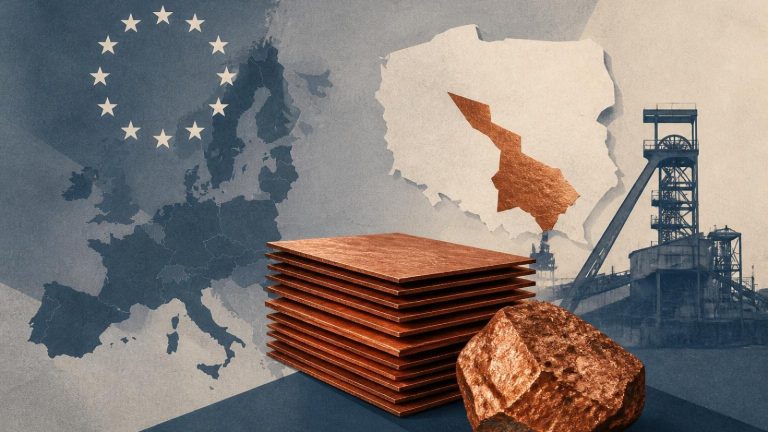
    Polish state-controlled copper and silver producer KGHM is actively exploring acquisition opportunities across Morocco, Argentina, Canada and the United States as part of its new Strategy 2055+ plan, CEO Remigiusz Paszkiewicz confirmed, with the company’s existing overseas operations already accounting for approximately 48% of core profit in 2025.

    “Over the next five to ten years we are focusing on raw material diversification, seeking access to critical metals, developing and building new revenue sources that strengthen our resilience to copper and silver market fluctuations,” Paszkiewicz said.

    The international profit contribution is driven by KGHM’s 55%-owned Sierra Gorda copper mine in Chile and the Robinson mine in Nevada. The company’s development pipeline includes the Victoria and Ajax projects in Canada and the Sierra Gorda Oxides project in Chile, providing a foundation for further Americas expansion.

    KGHM also plans to expand the global reach of its contracting subsidiary DMC Mining Services to secure new mining contracts internationally, adding a services revenue stream alongside its producing and development asset base.

    The international push complements KGHM’s domestic ambitions, which include building a new “KGHM 2.0” mine in Poland and committing more than 32 billion zlotys in investment through 2030 targeting 730,000 tonnes of annual copper output.

  • More Than Half of EU’s Strategic Mining Projects Located in Water-Stressed Regions as Brussels Prepares to Weaken Water Protection Law

    More Than Half of EU’s Strategic Mining Projects Located in Water-Stressed Regions as Brussels Prepares to Weaken Water Protection Law

    More than half of the 33 planned new or expanded mines designated as strategic projects under the EU’s Critical Raw Materials Act are located in areas that have been drying over the past two decades, according to analysis by Watershed Investigations using NASA satellite data — a finding that has alarmed environmental groups as the European Commission prepares to revise the bloc’s flagship water protection law to speed up mining permitting.

    Nearly half of the strategic mines are in zones that experienced drought conditions in the past three months according to EU data, and a quarter are in regions deemed water-stressed. Six of the strategic mines are planned for highly water-stressed areas in Spain, with others in Portugal and Greece — countries that rank among the top ten EU nations with the worst water scarcity according to the European Environment Agency. In 2024, Catalonia declared a state of emergency over its worst-ever drought and water-use restrictions were imposed in Andalucía. In 2022, 96% of Portugal was experiencing extreme or severe drought conditions.

    The European Commission is preparing to revise the Water Framework Directive — the EU’s key law protecting rivers, groundwater and wetlands — with the stated aim of removing permitting bottlenecks and improving access to strategic minerals. Mining industry trade association Euromines has been pushing for these changes, including longer deadlines for countries to meet water quality targets, amendments to how the WFD’s no-deterioration rule is applied, and greater legal certainty for industrial projects. The association insisted the proposed changes are “not a licence to pollute” and maintained that its priority remains strong environmental safeguards alongside legal clarity.

    Environmental groups dispute that framing. Sara Johansson of the European Environmental Bureau said the mining industry had “not presented a shred of evidence” that the WFD was creating bottlenecks for mining projects, and described the planned revision as reckless. Professor Kaveh Madani, director of the UN University Institute for Water, Environment and Health, warned that weakening water protections in drought-prone regions was “a form of Russian roulette” that could produce long-lasting or irreversible damage to rivers, aquifers and ecosystems. “Fast-tracking mining in water-stressed regions by weakening safeguards is a form of Russian roulette,” he said. “History may judge it as recklessness tomorrow.”

    The European Commission defended the strategic project selection, saying mines were assessed by independent experts and must comply with EU environmental law, with environmental and water impact assessments carried out by national authorities. Several mining companies contacted by the Guardian disputed suggestions their projects would place undue pressure on water resources, pointing to closed-loop recycling systems, monitoring programmes and regulatory oversight.

    The tension reflects a broader structural conflict within EU critical minerals policy: the same regions with the richest mineral endowments for the energy transition — Spain, Portugal, Greece — are among the most acutely water-stressed, and the mining processes needed to extract those minerals are among the most water-intensive in industry.

  • Europe’s Aluminium Supply Chain Is Quietly Fracturing as Primary Output Collapses and Scrap Exports Surge

    Europe’s Aluminium Supply Chain Is Quietly Fracturing as Primary Output Collapses and Scrap Exports Surge

    Europe recycles more of its available aluminium scrap than any other major industrial region on earth, and yet it still runs a structural supply deficit of an estimated 2 million tonnes annually. That paradox sits at the centre of one of the most consequential and least-discussed industrial supply chain failures facing the European economy — one with direct implications for electric vehicle production, renewable energy infrastructure and defence manufacturing.

    A two-decade collapse in primary output

    The structural retreat of European primary aluminium production is stark. In 2002, Europe produced 4.9 million tonnes of primary aluminium and imported 2.6 million tonnes to supplement domestic demand. By 2025, the equation had inverted entirely: domestic output had fallen to 3.4 million tonnes while imports climbed to 4.4 million tonnes. Within the EU specifically, primary production contracted from 2.9 million tonnes in 2005 to approximately 1.2 million tonnes by 2025 — a decline of close to 60% over two decades.

    The cause is energy. Primary aluminium production through the Hall-Héroult electrolysis process requires 13 to 16 megawatt-hours of electricity per tonne produced, with electricity representing roughly 40% of total operating costs. When European wholesale electricity prices surged after 2021, the financial arithmetic of domestic smelting collapsed rapidly. Nearly 50% of EU primary smelting capacity was curtailed or permanently closed between 2021 and 2023.

    The scrap leakage paradox

    Europe achieves an 81% recycling rate on its potentially available aluminium scrap — yet ships approximately 1.4 million tonnes offshore each year, primarily to Asian buyers who account for roughly 75% of EU scrap export destinations. EU aluminium scrap exports surged 74.7% year-on-year in March 2026 and have risen 66% since 2014. The trajectory is moving in precisely the wrong direction as downstream manufacturers face intensifying feedstock pressure.

    The mechanics are straightforward: Asian buyers consistently offer prices that European recyclers, facing elevated energy and operating costs, cannot match. This is not a market failure in the conventional sense — it reflects genuine cost differentials. But the consequence is that high-grade scrap exits the domestic system, leaving lower-quality material for European processors, increasing costs and reducing alloy yields.

    Secondary production carries compelling economics where feedstock is available. It requires approximately 600 to 800 kilowatt-hours per tonne versus 13,000 to 16,000 for primary production — a 95% energy reduction. Yet even at world-leading recycling rates, the 2-million-tonne structural deficit persists, because the export channel means the effective feedstock pool available to European recyclers is significantly smaller than aggregate scrap generation figures imply. There is also a metallurgical ceiling: repeated recycling cycles introduce trace element contamination that prevents secondary metal from substituting for primary aluminium in high-specification aerospace, electrical and structural applications.

    Demand is accelerating while supply retreats

    This structural supply deterioration is colliding with a demand surge. Global aluminium consumption is projected to rise approximately 40% between 2020 and 2030, requiring an additional 33.3 million tonnes across all sectors. For Europe specifically, the energy transition alone could add approximately 5 million tonnes of annual demand by 2040 — roughly 30% growth above current consumption levels. Electric vehicles use substantially more aluminium than internal combustion vehicles; solar and transmission infrastructure, construction and packaging are all growing additional demand drivers.

    What policy can and cannot do

    The EU has assembled a meaningful regulatory framework: the Waste Shipment Regulation holds potential to restrict scrap exports to non-OECD countries, the Packaging and Packaging Waste Regulation will boost beverage can collection through deposit return schemes, the Critical Raw Materials Act encourages recycling infrastructure investment, and end-of-life vehicle rules will improve automotive scrap recovery. European industry has committed approximately €700 million to new recycling plants and processing capacity.

    But regulatory measures cannot override the price differential that makes exporting scrap to Asian buyers economically rational for collectors and traders. Deposit return schemes do not extend to industrial and post-production scrap streams where volume is largest. And without targeted energy cost relief for energy-intensive recycling operations, the structural incentive to export rather than process domestically remains intact regardless of the regulatory framework.

    A realistic pathway forward requires three simultaneous interventions: enforced trade measures that retain more scrap within the EU, targeted industrial energy policy that allows European recyclers to operate on a viable cost basis, and design-for-recyclability requirements embedded across automotive, construction and packaging sectors. No single intervention closes the gap. Recycling is not a replacement for primary aluminium production — it is the foundation of a more resilient, lower-carbon supply architecture, and the strategic objective is integration rather than substitution.

  • Norra Kärr’s 25-Year Mining Lease Marks Europe’s Best Shot at Heavy Rare Earth Sovereignty — But the Window Is Closing

    Norra Kärr’s 25-Year Mining Lease Marks Europe’s Best Shot at Heavy Rare Earth Sovereignty — But the Window Is Closing

    The grant of a 25-year exploitation concession to Leading Edge Materials for the Norra Kärr heavy rare earth project in southern Sweden represents one of the most significant developments in European critical minerals in years — not because it completes the supply chain, but because it creates the legally secured upstream anchor without which no European mine-to-magnet chain is possible.

    Why heavy rare earths are different from every other critical mineral

    Dysprosium, terbium and yttrium are not simply scarce — they are structurally irreplaceable in the applications that define the energy transition and modern defence. Dysprosium maintains the coercivity of neodymium-iron-boron permanent magnets at elevated operating temperatures; without it, EV motor performance degrades in real-world conditions. Terbium performs a similar function at even smaller addition volumes, making it among the most cost-sensitive elements in the entire battery supply chain on a per-kilogram basis. China controls approximately 85 to 90% of global rare earth processing capacity, and its dominance in the heavy rare earth segment specifically is even more pronounced, because ionic clay deposits that supply much of the world’s heavy rare earth production are geologically specific to southern China’s weathering conditions.

    What makes Norra Kärr exceptional

    Most operating rare earth mines produce predominantly light rare earth elements, with heavy rare earths as a byproduct. Norra Kärr inverts that ratio. The deposit’s eudialyte-group mineralogy concentrates dysprosium, terbium and yttrium as the primary economic drivers. At projected annual output of approximately 248 tonnes of dysprosium oxide and 36 tonnes of terbium oxide from a 5,340-tonne mixed rare earth oxide operation, independent research by the Edison Group estimates Norra Kärr’s dysprosium output alone would exceed total current European annual demand of approximately 200 tonnes — making it potentially the first European project capable of satisfying the continent’s entire requirement for this critical element.

    Technical work on the deposit spans 15 years, including a pre-feasibility study from 2015. That foundation means the company is advancing from an accumulated knowledge base rather than a greenfield position.

    What the mining lease actually changes

    Before the exploitation concession, every conversation with investors, financiers and potential offtake partners was framed by the residual risk of the concession not being awarded. That risk no longer exists. The project has moved from contingent to confirmed: 25 years of legally secured development rights transform the investment conversation from whether the project can proceed to when and on what terms.

    For the European Investment Bank and Nordic Investment Bank — both of which require completed feasibility studies and de-risked development assets before entering formal due diligence — the mining lease is a prerequisite. Binding offtake discussions with European refiners and separators seeking dysprosium and terbium supply are now transactional conversations rather than planning exercises.

    How the 2016 setback was overcome

    The original exploitation concession granted in 2013 was revoked in 2016 on environmental grounds relating to the project’s proximity to Lake Vättern, one of Sweden’s largest freshwater bodies. The redesigned project incorporates two fundamental changes: the mine footprint has been reduced by 65%, and all chemical processing has been fully decoupled from the mine site, with downstream hydrometallurgical work to be conducted at a separate pre-permitted industrial facility. The mine site sequence is now limited to quarrying, crushing, grinding, magnetic separation and concentrate transport — removing the most complex chemical activities from the ecologically sensitive location without materially altering project economics.

    The race between European policy and non-European capital

    The Norra Kärr concession arrives at a moment when US capital is already moving faster than European policy. Energy Fuels has acquired Vacuumschmelze, Europe’s largest permanent magnet manufacturer. USA Rare Earths has taken stakes in French refiner Carester and UK metallisation company Lescoma Metals. The pattern mirrors the US approach of deploying public capital as a catalyst for private investment — a mechanism that has mobilised significant private sector activity in the United States while European critical minerals policy has generated frameworks without equivalent capital deployment.

    The next steps for Norra Kärr are an updated pre-feasibility study, environmental permit application under Sweden’s Environmental Code — benefiting from 15 years of baseline data and the project’s reduced footprint — and engagement with CRMA strategic project designation. Sweden is implementing a single-authority environmental permitting framework that should be operational when the Norra Kärr application is submitted, potentially reducing timeline and procedural complexity. The company targets first production within four years.

    A genuinely sovereign European heavy rare earth supply chain requires not just Norra Kärr but separation capacity, alloying capability and magnet manufacturing infrastructure built by European entities with European capital. The mining lease provides the upstream anchor. Whether European policy can move quickly enough to build the remaining links before non-European capital occupies those positions is the defining industrial sovereignty question of this decade.

  • Barroso Deep Dive: Why Portugal’s Savannah Resources Project Is Europe’s Most Strategically Significant — and Most Contested — Lithium Development

    Barroso Deep Dive: Why Portugal’s Savannah Resources Project Is Europe’s Most Strategically Significant — and Most Contested — Lithium Development

    Europe’s lithium supply problem is structural, not cyclical. Battery-grade lithium cannot be sourced from a spot market and delivered in weeks — it requires years of upstream development, precise mineral processing and tightly controlled chemical conversion before it reaches a cathode plant. Europe currently produces almost none of this input domestically, leaving EV manufacturers and battery gigafactories exposed to supply chains running through Australia, Chile and Chinese processing infrastructure.

    Portugal’s Barroso deposit, developed by London-listed Savannah Resources, represents the most advanced and largest-scale attempt to change that reality within European borders.

    The geological foundation

    Barroso sits within the Iberian Massif, a Variscan-age geological formation that hosts one of the world’s densest concentrations of lithium-bearing pegmatite bodies. The primary mineral at the deposit is spodumene — the commercially preferred hard-rock lithium source for battery manufacturers, whose chemical structure enables efficient conversion to lithium hydroxide monohydrate, the form most compatible with the nickel-rich NMC cathode chemistries used in high-energy-density EV batteries.

    The confirmed mineral resource stands at 39 million tonnes at an average grade of 1.05% Li₂O — Europe’s largest confirmed spodumene deposit by a substantial margin. Potential extensions of 35 to 62 million tonnes could push the total above 100 million tonnes and extend the mine life beyond 50 years. Portugal’s Atlantic coastline position adds a logistics advantage: Barroso sits within 300 kilometres of five deep-water ports, enabling concentrate delivery to processing facilities in northern Europe or North America at substantially lower cost than landlocked Central European competitors.

    The processing chain

    Run-of-mine ore passes through crushing, dense media separation and froth flotation to produce spodumene concentrate grading approximately 6% Li₂O — the product sold to downstream converters. Those converters roast the concentrate to convert alpha-spodumene to the more reactive beta form, then leach with acid to produce lithium hydroxide or carbonate. The deposit also contains recoverable feldspar and quartz for the ceramics and glass industries, providing co-product revenues that improve economic resilience during periods of price softness.

    At the DFS target of 191,000 tonnes per year of spodumene concentrate, Barroso would produce enough lithium to supply battery packs for approximately 500,000 electric vehicles annually — meaningful but not sufficient to close Europe’s structural deficit, underlining the scale of the continent’s supply challenge.

    State commitment and project milestones

    In January 2026 Portugal awarded Savannah a €110 million non-reimbursable grant — one of the largest direct fiscal contributions to a single European mining project in recent history. Non-reimbursable grants reduce capital expenditure without creating debt obligations, directly improving the project’s internal rate of return and signalling that the Portuguese state has moved from rhetorical support to material financial commitment. The project was classified as a strategic project under the EU’s Critical Raw Materials Act in March 2025. A final investment decision is targeted for end of 2026, with construction in 2027 and first production in late 2028.

    A decade of opposition and the June 2026 injunction

    Barroso has faced persistent community and legal opposition for close to a decade, with intensity unusual even by global mining standards. A precautionary injunction granted by the Mirandela Administrative and Fiscal Court on 9 June 2026 halted geotechnical fieldwork for three weeks, filed by the Barroso Assembly of Common Land Holders following the granting of a second administrative easement. The Portuguese government intervened by formally declaring the project of national and European strategic importance, arguing the suspension endangered the energy transition framework. The injunction was lifted on 30 June 2026, with no right of appeal available to opponents against the lifting order.

    The Barroso region holds GIAHS designation from the UN Food and Agriculture Organisation, recognising its Globally Important Agricultural Heritage status linked to centuries-old communal land management and agropastoral farming. This designation carries no legal veto over mining, but exposes the project to international environmental advocacy that regulatory opposition alone cannot generate. Environmental concerns centre on projected annual water consumption of up to 600,000 cubic metres and potential groundwater impacts on surrounding agricultural communities.

    The strategic supply chain case

    A significant portion of global lithium processing capacity sits within Chinese industrial infrastructure, meaning that even when raw lithium is sourced from Australia or Chile, the chemical conversion step frequently passes through Chinese facilities before reaching European battery makers. A domestic European spodumene producer at Barroso’s scale would allow European converters to establish processing relationships entirely within EU and friendly-nation supply chains — directly addressing the bloc’s stated objective of repatriating critical mineral value chains and reducing strategic exposure to third-country processing dependencies.

  • KGHM Sets 32 Billion Zloty Investment Strategy Through 2030 Targeting 730,000 Tonnes Copper and New “KGHM 2.0” Polish Mine

    KGHM Sets 32 Billion Zloty Investment Strategy Through 2030 Targeting 730,000 Tonnes Copper and New “KGHM 2.0” Polish Mine

    Polish state-controlled copper and silver producer KGHM has unveiled its Strategy 2055+ plan committing more than 32 billion zlotys ($8.55 billion) in investment through the end of the decade, with targets for copper output of 730,000 tonnes, silver production of 1,290 tonnes and average annual adjusted EBITDA of 12 billion zlotys between 2026 and 2030.

    The strategy centres on securing ore supplies closer to KGHM’s Polish smelters to reduce logistics costs, with approximately 80% of planned copper output expected to come from domestic assets. Chief Executive Remigiusz Paszkiewicz said the company plans to build a new mine in Poland dubbed “KGHM 2.0,” with an ambition to transform the group into “a modern, multi-raw material industrial group” after 2035.

    Nearly 80% of planned investment will go to the core Polish business, with the remainder allocated to overseas assets in Chile, the US and Canada. Despite the domestic focus, KGHM’s foreign operations — led by the Sierra Gorda mine in Chile, in which the company holds a 55% stake, and the Robinson mine in Nevada — generated approximately 48% of group EBITDA in 2025. Deputy Chief Executive for foreign assets Anna Sobieraj-Kozakiewicz said the company intends to grow the contribution of overseas assets over time. “We want the position of our foreign assets to grow, because this builds the company’s global credibility and resilience to structural changes,” she said.

    KGHM’s strategy coincides with its recent letter of intent with Canada’s Lumina Metals for copper concentrate supply from the Nowa Sól project in Poland, which the company views as a processing opportunity for its Glogow smelter rather than a competitive threat.