Region: Europe

  • Ferrexpo Suspends Ukrainian Operations Again After Renewed Power Disruptions

    Ferrexpo Suspends Ukrainian Operations Again After Renewed Power Disruptions

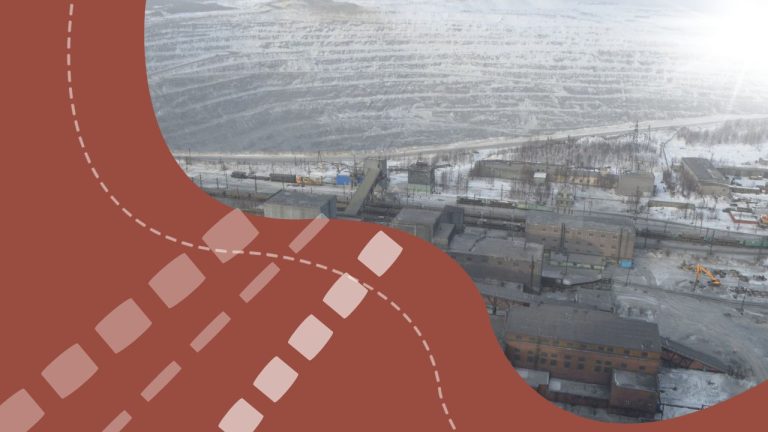
    Ukrainian operations of Ferrexpo have been temporarily suspended after fresh disruptions to electricity supplies caused by renewed attacks on the country’s energy infrastructure.

    According to a statement cited by Ukrinform, further damage to power generation and transmission facilities has once again limited electricity availability at the company’s sites. Management has therefore decided to halt production and place part of the workforce on temporary leave until a stable and sufficient power supply can be secured.

    The suspension follows an earlier production stoppage announced on 8 November 2025, when Ferrexpo paused operations at the Yeristove and Poltava mining and processing plants in the Poltava region after similar power outages.

    The company confirmed that no employees were injured during the attacks and that its production assets were not physically damaged.

    Ferrexpo previously reported that iron ore output in 2025 declined by 9% year-on-year to 6.14 million tonnes.

  • Kazakhstan Embassy in Czech Republic deepens industrial cooperation with leading Czech companies

    Kazakhstan Embassy in Czech Republic deepens industrial cooperation with leading Czech companies

    Kazakhstan is stepping up efforts to strengthen industrial cooperation with the Czech Republic as part of its broader economic diplomacy agenda aimed at attracting foreign investment and advanced technologies.

    According to DKNews.kz, Kazakhstan’s Ambassador to the Czech Republic, Kairat Abdrakhmanov, has held a series of meetings with representatives of leading Czech industrial companies during his first official engagements with the country’s business community. The discussions involved major manufacturers including vehicle and machinery producers TATRA and ZETOR, mining equipment supplier FERRIT, industrial engineering firm ZVVZ Engineering, and glass industry equipment producer SKLOSTROJ.

    Czech business leaders expressed satisfaction with their existing partnerships in Kazakhstan and confirmed their interest in expanding cooperation. They were briefed on recent reforms aimed at improving Kazakhstan’s investment climate, introduced under the country’s ongoing modernization program led by President Kassym-Jomart Tokayev.

    The Czech side highlighted Kazakhstan’s continued attractiveness as a long-term industrial market, particularly for projects involving manufacturing, engineering, and technology transfer.

    Talks also focused on opportunities to localize production and establish joint manufacturing facilities in various regions of Kazakhstan. Kazakh diplomats were presented with updates on current projects and potential areas for deeper collaboration, with particular emphasis on advanced industrial and mining technologies designed to improve efficiency, operational reliability, and workplace safety.

    Following the meetings, the parties agreed to organize site visits to Czech production facilities, begin preparations for joint business forums, and maintain regular information exchanges on prospective investment and cooperation opportunities.

    Observers note that these engagements reinforce Kazakhstan–Czech industrial relations and lay the groundwork for new joint initiatives across manufacturing, technology, and investment sectors.

  • Poland’s central bank plans to boost gold reserves by 150 tonnes amid geopolitical risks

    Poland’s central bank plans to boost gold reserves by 150 tonnes amid geopolitical risks

    National Bank of Poland (NBP), the world’s largest reported buyer of gold, plans to increase its bullion holdings by a further 150 tonnes, lifting total reserves to 700 tonnes as it prepares for prolonged geopolitical instability.

    Management board member Artur Sobon told Bloomberg that the central bank recently approved the higher target, stressing that record-high gold prices would not deter purchases. Gold has surged to historic highs as investors seek safe havens amid rising tensions between the United States and Europe, including disputes over Greenland.

    “Our primary goal is to build an appropriate portfolio for these unstable geopolitical times, one that will guarantee Poland stability, security, and credibility,” Sobon said, adding that price considerations are secondary.

    At current market prices, acquiring 150 tonnes of gold would cost more than $23 billion. Central bank demand has been a major driver of gold’s rally, with prices doubling over the past 18 months. Buying accelerated globally after Russia’s reserves were frozen following its invasion of Ukraine, highlighting gold’s appeal as an asset that cannot be easily sanctioned.

    NBP purchased 100 tonnes of gold last year, the largest amount officially reported by any central bank. Analysts note that some countries, particularly China, may also be buying gold without fully disclosing their activity.

    Poland’s push to expand gold holdings has been led by central bank governor Adam Glapinski, with reserves standing at about 550 tonnes at the end of 2025. Until now, gold allocations were capped at 30% of total reserves, a threshold that soaring prices have brought close to being reached.

    Sobon said the timing and pace of future purchases would be determined by NBP traders and could vary month to month. Poland’s growing foreign-exchange reserves, bolstered by inflows of EU funds, give the country room to finance the expanded gold strategy. Total official reserves now stand at roughly $271 billion, compared with $36 billion when Poland joined the EU in 2004.

  • USA Rare Earth plans French metal and alloy plant alongside Carester oxide facility

    USA Rare Earth plans French metal and alloy plant alongside Carester oxide facility

    USA Rare Earth (Nasdaq: USAR), through its Less Common Metals (LCM) subsidiary, plans to build a rare earth metal and alloy production facility in France next to an oxide processing plant being developed by Carester.

    Carester is currently constructing a 1,600-tonne-per-year oxide processing facility in Lacq, with commissioning scheduled for late 2026. USA Rare Earth’s proposed plant, with a capacity of 3,750 tonnes per annum, will be co-located at the Caremag site, creating an integrated European platform for rare earth processing, metal and alloy production.

    The French government has committed to partially funding the project, including credits covering up to 45% of eligible equipment costs and support of up to €130 million for real estate, according to the company.

    Shares of USA Rare Earth jumped by double digits following the announcement, amid broader gains across the rare earth sector driven by rising geopolitical tensions between the United States and Europe over Greenland. By midday trading in New York, the company’s shares were around $20, valuing it at more than $2.7 billion.

    USAR CEO Barbara Humpton said the French development would strengthen the company’s integrated rare earth value chain and benefit the United States and its allies. In parallel, USA Rare Earth is advancing a domestic mine-to-magnet strategy in the US anchored by its Round Top project in Texas, alongside a magnet manufacturing plant in Oklahoma and processing facilities in Colorado.

  • Portugal awards €180m grant to Lifthium Energy for northern lithium refinery

    Portugal awards €180m grant to Lifthium Energy for northern lithium refinery

    Portuguese company Lifthium Energy has secured a €180 million ($210 million) non-refundable government grant to build a lithium refinery in northern Portugal, strengthening Europe’s push to localise electric vehicle battery supply chains.

    The funding was awarded under the European Union’s Temporary Crisis and Transition Framework, which allows member states to provide state aid to accelerate green and industrial transformation. Portugal, which holds around 60,000 metric tonnes of lithium reserves, is currently Europe’s largest lithium producer, though output has historically been directed mainly to the ceramics industry rather than battery applications.

    Lifthium, which is 85% owned by Portuguese conglomerate Jose de Mello with the remainder held by its subsidiary Bondalti, plans to construct the refinery in Estarreja, about 50 km south of Porto. Bondalti already operates chemical facilities in the area, providing existing industrial infrastructure for the project.

    The refinery is expected to begin operations by 2030 and is designed to produce up to 50,000 tonnes of lithium hydroxide per year, enough to supply batteries for around two million electric vehicles. Lifthium said the plant will use proprietary technology aligned with European environmental and industrial standards.

    Lifthium CEO Duarte Braga said the project was advancing cautiously amid a more challenging lithium market and tougher industrial conditions in Europe. He noted that while the public grant is significant, the company’s next priorities are securing a strategic partner and finalising market and financing arrangements before making a final investment decision.

    In addition to the Estarreja facility, Lifthium is also considering the construction of a second lithium refinery in Spain.

    The announcement comes as Portugal’s government prepares to launch a long-delayed tender for lithium prospecting licences, a move seen as critical to developing a domestic lithium value chain and reducing Europe’s reliance on imports, particularly from China.

  • Beyond Resources: How the UK–Kazakhstan Partnership Is Being Recalibrated

    Beyond Resources: How the UK–Kazakhstan Partnership Is Being Recalibrated

    Reflections from the FCDO Mining Roundtable and recent insights from Astana

    “Beyond Resources.” That was the unspoken theme defining today’s discussions at the Foreign, Commonwealth & Development Office (FCDO) in London on 20 Jan. The question on the table was a trillion-dollar one: How does the UK secure the building blocks of its energy transition in an increasingly fractured world?

    The answer lies in the Central Asia’s steppes. But as the discussions revealed, the “frontier” days are over. Kazakhstan is no longer just a source of raw ore; it is rapidly becoming the strategic linchpin of the UK’s industrial future. From the race for rare earths to the rise of the “Middle Corridor,” here is an inside look at how the partnership is being recalibrated—and why 2026 marks the shift from potential to execution.

    Recalibrating the UK-Kazakhstan relationships in the critical raw materials race

    The UK-Kazakhstan relationship has undergone significant transformations since independence, with bilateral cooperation growing stronger every year. Critical minerals are a crucial aspect of this relationship, with the UK seeking to establish a reliable supply chain for technology and investment.

    The Mining reinforced a message that is becoming increasingly clear: the UK–Kazakhstan relationship is no longer defined solely by extraction, but by systems, standards, and shared strategic ambition.  it is evident that Kazakhstan has shifted from a “frontier market” to a strategic necessity for the UK’s energy transition. With 99 of the 118 periodic elements available in-country, Kazakhstan is the linchpin of the UK’s Critical Minerals Strategy. However, the UK faces an “execution gap” as China and the US deploy more aggressive, state-backed capital to secure off-take agreements.

    This broader recalibration was also powerfully articulated in a recent interview by The Astana Times with UK Ambassador to Kazakhstan, HMA Sally Axworthy, whose remarks provided important context for today’s discussion on mining and critical minerals.

    Taken together, the roundtable and the interview point to a partnership that is evolving well beyond resources.

    Current Market Landscape

    Kazakhstan’s “winning combination” of resource wealth and a modernizing regulatory framework (2018 Mining Code) is attracting unprecedented global interest.

    • Key Assets: 11% of global Titanium (Boeing/Airbus supply), 40% of global Uranium, and significant deposits of Rhenium, Beryllium, and Rare Earth Elements (REEs).
    • Legal Security: The Astana International Financial Centre (AIFC), operating under English Law, remains the primary vehicle for de-risking UK investment.

    Risks and Mitigations

    • Nationalisation Concerns: There is a trend toward increasing state control and preferential treatment for local investors.
      • Mitigation: Utilise AIFC protections and UK Export Finance (UKEF) to wrap projects in sovereign-level guarantees.
    • Supply Chain Diversification: Dependence on Chinese-controlled logistics remains a threat.
      • Mitigation: Invest in the “Middle Corridor” logistics nodes to ensure independent market access.

    From raw materials to value creation

    Kazakhstan’s extraordinary endowment of critical minerals — from uranium and chromium to vanadium, rhenium and rare earths — is well understood. What is changing is how Kazakhstan wants to participate in global value chains.

    As Ambassador Axworthy emphasised, Kazakhstan is seeking not only to supply raw materials, but to process, refine and add value domestically. This aligns closely with UK priorities under its Critical Minerals Strategy, which focuses on:

    • supply-chain resilience,
    • diversification away from single-country dependencies, and
    • embedding high environmental, social and governance standards.

    Concrete examples already exist. Joint ventures such as Maritime House with Zhezkazgan Redmet on rhenium recycling, supplying Rolls-Royce turbines, and Ferro-Alloy Resources’ vanadium project, expected to meet up to 10% of global demand, show how UK technology, finance and standards can combine with Kazakhstan’s resource base.

    These are not abstract ambitions — they are working models.

    The Competitive Challenge: Speed vs. Standards

    The UK is currently being outpaced in “time-to-market” by global rivals who offer more lucrative, less regulated entry paths.

    Competitor Strategy Competitive Advantage
    China “Infrastructure-for-Minerals” swaps. Speed: Immediate state-backed financing and dominant control of 70% of current exports.
    USA Geopolitical “Friend-shoring” via the Defence Production Act. Access: Massive capital injections to secure REEs and bypass Chinese processing hubs.
    United Kingdom Technical consultancy and ESG-led investment. Quality: High technical standards and legal transparency, but perceived as “slow” and “risk-averse.”


    Navigating Geopolitical Realities: Multivector Diplomacy

    Ambassador Axworthy reaffirmed that the UK views Kazakhstan as a strategic partner, not a zero-sum competitor:

    • Multivector Approach: Kazakhstan’s diplomatic flexibility (balancing ties with EU, China, and the US) ensures no single power dominates.
    • Alignment on Sovereignty & Multilateralism: Kazakhstan’s support for the UN, SDGs, and conflict resolution aligns with UK priorities.
    • Strategic Partnership Agreement (SPA): The UK’s SPA with Kazakhstan (currently being ratified) provides a legal framework for joint projects in energy, defence, and critical minerals.

    Key Challenges & Solutions:

    Challenge UK’s Strategic Response
    China’s Dominance in Critical Minerals UKEF’s guarantees and London’s financial hub position the UK as a competitive alternative.
    Talent Shortages UK universities (Durham, Birmingham) train Kazakh engineers for AI and automation.
    Regulatory Complexity EITI alignment and joint processing projects reduce risks.
    Competition from the US/EU First-mover advantage in SME funding and digital innovation.


    Finance, technology and standards as strategic enablers

    A key takeaway from today’s roundtable was that finance is as strategic as geology.

    UK Export Finance demonstrated how long-tenor, sovereign-backed guarantees can unlock projects across mining, processing and infrastructure, particularly where capital intensity and risk have historically slowed investment. This complements the UK’s strength as a global financial hub — including the role of the London Metals Exchange — highlighted by Ambassador Axworthy in Astana.

    Equally important is the role of technology and data. Several participants pointed to the need for:

    • digitalisation of legacy geological data,
    • AI-ready datasets,
    • Improved mine safety systems, and
    • Smarter, more sustainable operations.

    These are precisely the areas where UK firms — from engineering and digital mining to ESG advisory and geoscience — can play a decisive role.

    Skills, education and people-to-people ties

    One of the most candid discussions today centred on skills shortages, particularly engineers and geoscientists. This challenge is not unique to Kazakhstan — it is global — but it reinforces why education is such a critical pillar of the bilateral relationship.

    As outlined in The Astana Times, the UK’s educational footprint in Kazakhstan is expanding:

    • British universities including Cardiff, Coventry and De Montfort now operate campuses in-country.
    • Geological exploration and mining-related disciplines are part of this offer.
    • Nearly half of Bolashak scholars have studied in the UK, creating a deep reservoir of shared professional culture.

    Education, transparency initiatives such as the Extractive Industries Transparency Initiative, and English-law institutions like the Astana International Financial Centre are not peripheral — they are central to investor confidence.

    Partnership, not pressure, in a competitive landscape

    Kazakhstan sits at the crossroads of Europe and Asia, and competition for its critical minerals is intense. China, the EU, the US, Japan and Korea are all active.

    Yet a recurring theme — both today and in Ambassador Axworthy’s interview — was that this is not a zero-sum game.

    The UK’s approach is deliberately pragmatic:

    • partnership over pressure,
    • long-term engagement over transactional deals,
    • respect for Kazakhstan’s multivector foreign policy.

    As former UK Foreign Secretary David Cameron put it during his 2024 visit: the UK is not asking Kazakhstan to choose — but to partner for mutual security and prosperity.

    Beyond mining: a multidimensional relationship

    What makes the recalibration particularly compelling is that mining and critical minerals sit within a much wider ecosystem of cooperation:

    • Green startups and venture capital,
    • AI and digital innovation,
    • Architecture and urban development,
    • Culture, education and tourism.

    From British-designed landmarks in Astana and Almaty, to venture capital funds backing green and women-led startups, to growing cultural and academic exchanges, the relationship is increasingly people-driven.

    2026 Outlook: The Transition from “Quarry” to “Hub”

    Based on the strategic pillars discussed today, here is what the mining landscape in Kazakhstan will look like by 2026:

    1. The Value-Add Mandate

    By 2026, the era of simply exporting raw ore will be ending. The Kazakh government is pivoting toward in-country processing. We expect to see a surge in “Midstream” projects—refineries and metallurgical plants—where UK technology in chemical engineering and automation will be the primary currency of trade.

    1. Digitalisation and the “Green” Mine

    The 2026 mining code will likely reward “Smart Mines.” As Kazakhstan moves toward its 2060 Net Zero goals, British expertise in AI-driven geological mapping and carbon-neutral extraction will shift from “nice-to-have” to “license-to-operate.”

    1. The Middle Corridor Reality

    By 2026, the Trans-Caspian International Transport Route (TITR) will be the primary artery for critical minerals moving to Europe. UK firms in logistics, insurance, and port infrastructure will play a silent but vital role in ensuring these minerals reach the West without geopolitical interference.

    Final reflection

    Critical minerals may be the catalyst, but trust, standards, skills and shared ambition are the real foundations of the UK–Kazakhstan partnership.

    The “winning combination” mentioned by HMA Sally Axworthy—UK expertise and Kazakh resources—is powerful, but it is not guaranteed. To win in 2026, UK firms must match their technical excellence with a more aggressive commercial posture and faster capital deployment.

    Today’s FCDO roundtable made clear that the opportunity ahead is not simply about securing supply — it is about co-creating resilient, sustainable and technologically advanced value chains that serve both countries’ long-term interests.

    The minerals are there. The roadmap is signed. The challenge now is execution — and the momentum is clearly there.

    Continuing the conversation: MINEX Kazakhstan 2026

    The themes discussed at today’s roundtable—regulatory reform, multi‑vector foreign policy, critical mineral security, green transition, and technological modernisation—will continue at the MINEX Kazakhstan 2026: 16th Mining & Exploration Forum, taking place on 15–16 April 2026 in Astana.

    For those who are interested in the future of Kazakhstan’s mining and critical minerals sector—and in the broader UK–Kazakhstan partnership—this Forum will be an ideal platform to continue today’s discussion, share expertise, and shape the next wave of projects and collaborations.

    MINEX has long provided a platform where government, industry, investors, financiers and technology providers can engage in open, practical dialogue on the future of Kazakhstan’s mineral sector. For those involved in critical minerals, mining reform, processing, finance and downstream integration, it will be a timely opportunity to deepen discussions that are already well underway.

    🔗 https://2026.minexkazakhstan.com/


  • Sibanye-Stillwater completes assessment of Keliber lithium project, confirms staged start-up plan

    Sibanye-Stillwater completes assessment of Keliber lithium project, confirms staged start-up plan

    Sibanye-Stillwater has completed a multidisciplinary assessment of its Keliber lithium project in Finland, confirming the project’s technical readiness and outlining a staged approach to commissioning amid current market conditions.

    The Keliber project is regarded as the European Union’s most advanced fully integrated lithium development, with planned production of around 15,000 tonnes per year of battery-grade lithium hydroxide monohydrate over a mine life exceeding 18 years. It is also one of the few lithium hydroxide refineries outside China and has been designated a strategic project under the EU’s Critical Raw Materials Act, reflecting its importance to the bloc’s battery supply chain.

    According to Sibanye-Stillwater, construction of the fully integrated mine, concentrator and refinery remains on track, with completion of the construction phase and cold commissioning expected in the first quarter of 2026. The total capital investment required to complete construction is estimated at approximately €783 million.

    Following the assessment, Sibanye-Stillwater and its strategic partner, Finnish Minerals Group, have agreed that a staged start-up represents the most prudent path forward. Under this approach, initial commissioning will focus on achieving operational readiness at the mining and concentrating stages before determining the timing for commissioning the refinery.

    The company said this phased strategy is intended to reduce ramp-up risks while preserving financial flexibility, allowing certain capital expenditures and refining ramp-up costs to be deferred depending on lithium market conditions. Finnish Minerals Group is preparing to contribute additional funding on a pro rata basis in line with its 20% equity stake to support the project through the ramp-up period.

    Sibanye-Stillwater CEO Richard Stewart said the agreed approach balances technical readiness with market realities, ensuring the project advances in a responsible and commercially disciplined manner while remaining positioned to supply locally produced lithium into the EU battery value chain.

  • UK deepens engagement with Kazakhstan through green growth, critical minerals and people-to-people ties

    UK deepens engagement with Kazakhstan through green growth, critical minerals and people-to-people ties

    The United Kingdom is recalibrating its engagement with Kazakhstan, placing growing emphasis on green technology, critical minerals, education and cultural cooperation, according to UK Ambassador to Kazakhstan Sally Axworthy.

    In an interview with The Astana Times, Axworthy said London sees Kazakhstan as a key long-term partner as global supply chains shift and demand for sustainable growth increases. Rather than pressure or politics, the UK approach is built around practical cooperation, business links and human connections.

    She noted that the UK Embassy’s role extends well beyond traditional diplomacy, focusing on connecting Kazakh businesses with British expertise. This cooperation is already visible in Kazakhstan’s urban landscape, with major architectural landmarks designed by British firms. These include Khan Shatyr in Astana by Foster and Partners, the newly opened Almaty Museum of Arts by Chapman Taylor, and the Tselinny Center of Contemporary Culture by British architect Asif Khan.

    Beyond flagship projects, Axworthy stressed that small and medium-sized enterprises are a growing priority. Through the Green and Inclusive Growth Programme, the UK is supporting startups with financing and advisory services, particularly in green, digital and AI-driven sectors. She confirmed that a new venture capital fund is being set up to invest in startups, with a special focus on green technologies and women-led businesses.

    Digital innovation has also become a key area of cooperation. During the Digital Bridge forum, the UK Embassy supported an event where startups from across Central Asia pitched to investors, reflecting Kazakhstan’s ambitions in artificial intelligence and technology-led growth.

    On energy and climate policy, Axworthy said the UK’s own decarbonisation experience underpins its partnership offer. She noted that the UK now generates about half of its electricity from green sources and has cut emissions by nearly 50% since 1990 while expanding its economy by 80%. This, she said, aligns naturally with Kazakhstan’s net-zero target for 2060.

    Critical minerals are central to this cooperation. Axworthy outlined the UK’s updated Critical Minerals Strategy, which focuses on domestic production, financial infrastructure and resilient supply chains. While the UK is developing resources such as lithium and tin in Cornwall, she highlighted London’s role as a global financial hub and the importance of partnerships with resource-rich countries like Kazakhstan.

    She cited joint projects already under way, including rhenium recycling through a partnership between Maritime House and Zhezkazgan Redmet, with output expected to supply up to a quarter of global rhenium demand for uses such as aircraft turbines produced by Rolls-Royce. A vanadium project by Ferro-Alloy Resources could eventually meet up to 10% of global demand.

    Education and standards underpin these economic ties. Axworthy pointed to the opening of a branch campus of Cardiff University in Astana, offering courses in geological exploration, as well as cooperation on transparency standards through the Extractive Industries Transparency Initiative.

    Addressing geopolitics, Axworthy described Kazakhstan’s multivector foreign policy as logical given its geography and said the UK does not expect exclusive alignment. She recalled remarks by former UK foreign secretary David Cameron that partnership with Britain is about mutual security and prosperity, not choosing sides.

    Education and culture remain among the strongest pillars of bilateral relations. Nearly half of Kazakhstan’s Bolashak scholars have studied in the UK, and British universities such as De Montfort University, Coventry University and Cardiff now operate campuses in Kazakhstan. Axworthy also highlighted the role of the British Council and growing cultural links, from Kazakh language courses at Oxford University to increased interest from British creative industries.

    She added that Kazakhstan’s tourism and cultural potential is still under-represented in the UK, noting strong interest among British travellers and pointing to Almaty as a city with particular appeal.

  • European Commission seeks industry backing for ‘Made in Europe’ push ahead of Industrial Accelerator Act

    The European Commission is urging business leaders to support and sign a French-led initiative aimed at increasing the share of industrial production based in Europe, as the EU prepares to unveil its Industrial Accelerator Act (IAA).

    According to a letter seen by Euronews, the Commission is calling on representatives from energy-intensive sectors such as steel and aluminium to back a stronger “Made in Europe” component in forthcoming legislation. The move is intended to revive Europe’s struggling industrial base amid mounting competition from China and the United States.

    The appeal comes days before the planned presentation of the Industrial Accelerator Act, which seeks to accelerate the decarbonisation of heavy industry while preserving the competitiveness of European production. The initiative builds on earlier EU legislation adopted in 2024 that prioritised domestic clean-technology manufacturing as part of the bloc’s goal to achieve climate neutrality by 2050.

    In the letter, European Commission Executive Vice-President Stéphane Séjourné warned that Europe faces a stark choice as global trade becomes increasingly shaped by tariffs, subsidies and export restrictions. Without an ambitious and pragmatic industrial policy, he argued, the EU risks a gradual erosion of its industrial capacity, technological know-how and economic sovereignty.

    Supporters say the IAA could significantly strengthen European competitiveness at a time when traditional sectors such as cement and steel, as well as emerging net-zero technologies, are grappling with weak demand and aggressive international competition. However, critics caution that the proposal could undermine competition within the EU’s single market, particularly disadvantaging member states with less developed industrial frameworks compared with countries like France and Germany.

    Several member states, including Czechia, Estonia, Finland, Ireland, Latvia, Malta, Portugal, Sweden and Slovakia, warned in December that the planned law could distort competition and affect prices, quality and business conditions across the bloc.

    Key elements of the proposal, including quotas for European-made products, financing mechanisms and state-aid rules, remain under discussion. EU officials have floated potential targets requiring 60% to 80% of certain products to be produced in Europe, with provisions to count output from non-European firms operating within the EU as “Made in Europe”.

    The Commission is also exploring ways to align supply and demand by creating so-called “lead markets” for low-carbon industrial products such as green steel and hydrogen, supported by demand-side measures. In parallel, state-aid rules may be loosened, potentially allowing member states to fund decarbonisation projects without prior notification to the Commission.

    European industry leaders have reacted positively, citing a record €350 billion trade deficit with China in 2025. In a separate letter, business representatives described the IAA as an act of economic independence, echoing warnings from former European Central Bank president Mario Draghi that Europe risks long-term decline if it fails to close the gap with global competitors.

    The Industrial Accelerator Act, initially delayed in December, is currently scheduled for presentation on 29 January, although further postponements remain possible.

  • Mkango opens UK’s first commercial rare earth magnet recycling plant in 25 years

    Mkango opens UK’s first commercial rare earth magnet recycling plant in 25 years

    Canadian rare earths company Mkango Resources has opened Britain’s first commercial facility in a quarter of a century to produce permanent magnets, marking a milestone in efforts to reduce Western dependence on China for critical minerals.

    The new plant, located in Birmingham and operated by Mkango’s subsidiary HyProMag, produces permanent magnets from recycled materials rather than newly mined ore. It uses a hydrogen-based recycling technology developed at the University of Birmingham, which enables rare earth magnets to be recovered from end-of-life products and converted into new magnetic material with significantly lower emissions than traditional mining and refining processes.

    The launch comes as Western governments seek to loosen China’s dominance in the rare earths supply chain. China currently accounts for around 70% of global rare earth mining and about 90% of refining, making alternative supply sources difficult to scale up quickly. Recycling has therefore emerged as one of the fastest ways to expand access to rare earth materials in the near term.

    Speaking to Reuters at the opening, UK Industry Minister Chris McDonald said breaking China’s grip on the supply chain was a strategic priority. The Birmingham plant supports Britain’s critical minerals strategy, which targets meeting 10% of domestic demand through local mining and 20% through recycling by 2035, supported by up to £50 million in government funding.

    The facility has an annual production capacity of 100 to 300 tonnes of permanent magnets, depending on shift patterns. According to Mkango, the plant is already attracting strong interest from automotive manufacturers. The company is also progressing plans to replicate the technology in the United States and Germany, expanding the recycling-based supply of rare earth magnets beyond the UK.

    Britain previously had magnet manufacturing capacity, but this disappeared roughly 25 years ago as production shifted overseas. The opening of the HyProMag plant represents a step toward rebuilding domestic capability in a sector seen as vital for electric vehicles, wind turbines and other clean energy technologies.