Region: Europe

  • Ukraine Creates Working Group to Address Challenges at Ferrexpo’s Poltava Mining

    Ukraine Creates Working Group to Address Challenges at Ferrexpo’s Poltava Mining

    Ukraine’s Verkhovna Rada Committee on Economic Development has established a working group to address key operational challenges facing mining companies, with the situation at the Poltava Mining and Processing Plant — part of the Ferrexpo group — becoming the first issue under review.

    According to Member of Parliament Oleksiy Movchan, the group held its initial meeting online with participation from representatives of the Ministry of Economy, the National Bank of Ukraine, the Ministry of Justice, the State Tax Service, industry associations, and management of the Poltava and Yeristovo mining and processing plants.

    Several major issues affecting the Poltava operation were discussed, including electricity shortages and high power costs, blocked VAT refunds, and outstanding foreign currency payments owed by the parent company.

    One of the most pressing challenges is the non-refund of value-added tax due to sanctions imposed on the company’s ultimate beneficiary, businessman Kostyantyn Zhevago.

    Dmytro Mospan, manager of legal support for financial activities at Poltava Mining and Processing Plant, said more than UAH 3 billion in VAT refunds remains blocked for the company.

    According to Mospan, the lack of access to these funds has forced the company to reduce the working week, cut social programmes, lower maintenance spending and scale back mining operations.

    The State Tax Service said the situation is governed strictly by the Tax Code of Ukraine. Under Article 200.4, VAT refunds cannot be issued to taxpayers whose ownership structure includes individuals under sanctions.

    Even in cases where courts have ruled in favour of the company, payments remain blocked. Funds are currently held by the State Treasury pending enforcement of court decisions but cannot be transferred due to provisions under Article 200.12 of the tax code.

    One court ruling alone has frozen approximately UAH 230 million related to the plant.

    The working group plans to further examine the company’s ownership structure at future meetings following additional reports from tax authorities.

    Energy supply is another major challenge for the enterprise. Company representatives said limited availability of electricity and high power prices are making operations increasingly unprofitable. However, officials noted that electricity costs are a broader issue affecting Ukraine’s entire mining and metallurgical sector.

    The matter is expected to be discussed further with the Ministry of Energy during upcoming sessions of the working group.

    Movchan also said Ferrexpo AG owes the Poltava operation more than $500 million in unpaid foreign currency proceeds.

    “This debt has been confirmed by international arbitration decisions and the figures have been verified by representatives of the National Bank,” he said.

    The issue will also be examined in subsequent meetings.

    Earlier this month, Ferrexpo announced it had restarted pellet production at the Poltava Mining and Processing Plant after suspending operations in January 2026. The restart was made possible by improvements in electricity supply and lower energy costs.

    According to GMK Center, Ukraine’s iron ore exports fell by 8% in 2025 compared with the previous year, totaling 30.99 million tonnes. In January–February 2026 exports declined even further, dropping 40.9% year-on-year to 3.31 million tonnes, the lowest level recorded since 2023.

  • US, EU and Japan Prepare Critical Minerals Trade Pact to Counter China

    US, EU and Japan Prepare Critical Minerals Trade Pact to Counter China

    The United States, Japan and the European Union are preparing to announce plans for a new trade framework aimed at strengthening supply chains for critical minerals and reducing dependence on China, according to people familiar with the discussions.

    The initiative is expected to lay the groundwork for a broader plurilateral trade agreement covering key minerals used in electric vehicles, clean energy technologies and advanced manufacturing. Negotiations are being led by the Office of the US Trade Representative (USTR) in coordination with officials in Brussels and Tokyo.

    Officials involved in the talks say the framework may include coordinated trade policies such as price floors, tariffs and other market mechanisms designed to counter price distortions linked to Chinese supply. A price floor would establish a minimum market price for selected minerals, encouraging investment in mining and processing projects while preventing cheaper imports from undercutting producers participating in the agreement.

    The Defense Advanced Research Projects Agency (DARPA) is reportedly assisting US trade officials in developing pricing models for the mechanism.

    Global efforts to diversify critical mineral supply chains intensified after China introduced export controls on several rare earth elements and strategic minerals last year. The restrictions were widely seen as a response to sweeping tariffs imposed by the United States on imported goods.

    Although supply pressures have eased since their peak last year, manufacturers in Europe, the United States and Japan continue to report shortages and delays in receiving critical mineral shipments from Chinese suppliers.

    USTR is expected to begin formal negotiations with the European Union and Japan in April, shortly after the close of a public consultation period for industry stakeholders on March 19.

    The announcement may coincide with Japanese Prime Minister Sanae Takaichi’s visit to the White House scheduled for March 19. European officials are also coordinating closely with Washington and Tokyo on the initiative, although the timing of Brussels’ announcement has not yet been finalized.

    The concept is also expected to feature prominently at the upcoming Group of Seven summit.

    Earlier this year, the United States signed a similar action plan with Mexico aimed at coordinating policies on critical mineral supply chains. The agreement includes provisions to examine border-adjusted price floors for mineral imports and to explore joint trade policies supporting secure supply.

    Officials say the proposed framework between the US, EU and Japan will likely mirror many elements of the US–Mexico agreement. Potential areas of cooperation include investment screening, research and development in mineral processing technologies, coordinated stockpiling strategies and support for downstream supply chains.

    While the exact list of minerals covered has not yet been finalized, officials are considering starting with a limited group of strategic materials before expanding the agreement to include a broader range of critical minerals.

    The initiative reflects growing concern among Western economies about supply concentration in global mineral markets. China currently dominates the processing and refining of many critical materials, including rare earth elements, graphite and several battery metals.

  • Finland Rare Earth Discovery Highlights Europe’s Processing Gap

    Finland Rare Earth Discovery Highlights Europe’s Processing Gap

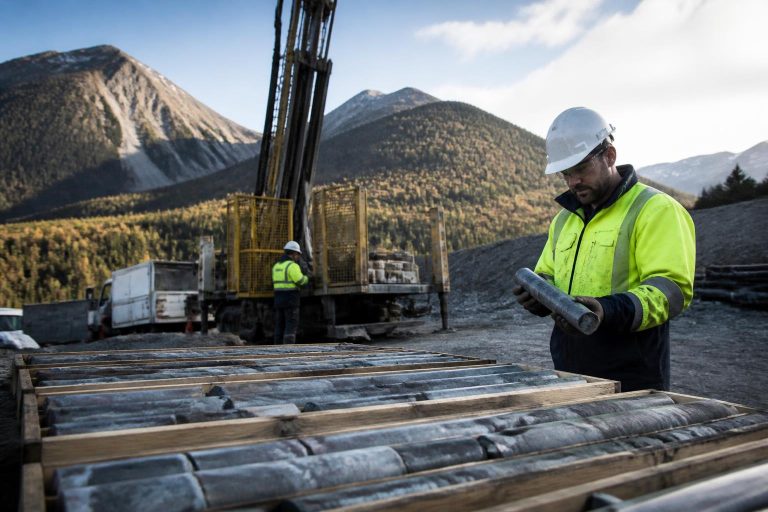
    Recent drilling results from the Korsnäs rare earth project in Finland are drawing attention to Europe’s geological potential in critical minerals, but they also highlight a deeper challenge for the continent: the lack of domestic processing capacity.

    Exploration company European Resources reported its strongest rare earth intercept to date at the project, including a 31.5-metre interval averaging 4,902 parts per million total rare earth oxides (TREO). The mineralisation also contains a relatively high proportion of neodymium and praseodymium (NdPr), accounting for roughly 28–30% of the rare earth mix.

    While encouraging, the results represent only an early stage of resource development. The next phase will require additional drilling and modelling to confirm the continuity and scale of the deposit.

    NdPr is particularly important because it forms the foundation of permanent magnets used in electric vehicles, wind turbines, defence systems and other advanced technologies. These magnet rare earth elements are considered among the most strategically important minerals for Europe’s industrial and energy transition.

    However, experts note that discovering deposits alone does not guarantee supply security. In the rare earth sector, the most complex and capital-intensive stage of development typically occurs after mining, during chemical processing, separation and waste management.

    The Korsnäs project benefits from its location in Finland, a country with strong mining institutions, established infrastructure and relatively stable regulatory systems. This reduces certain development risks compared with projects in more uncertain jurisdictions.

    Early mineralogical studies suggest the deposit contains monazite and apatite minerals, which can support certain processing routes. However, monazite often contains trace amounts of thorium or uranium, which can introduce stricter regulatory requirements related to residue handling and environmental protection.

    Industry analysts say processing plants typically account for the largest share of capital expenditure in rare earth projects, often exceeding the cost of the mining operation itself. Complex processing flowsheets and environmental permitting requirements can significantly affect project economics and timelines.

    European Resources has already begun metallurgical testing and downstream processing studies with the Australian Nuclear Science and Technology Organisation (ANSTO) to evaluate potential separation technologies and processing pathways.

    Another notable feature of the Korsnäs results is the relatively high proportion of NdPr within the deposit. While TREO measures total rare earth content, economic value is usually concentrated in magnet elements such as neodymium and praseodymium, with smaller contributions from dysprosium and terbium. Deposits dominated by cerium and lanthanum, which are more abundant but less valuable, often face weaker economics.

    The development of projects such as Korsnäs also intersects with broader European industrial policy. Under the EU’s Critical Raw Materials Act, the bloc aims by 2030 to extract at least 10% of its annual demand for strategic minerals domestically, process 40% within the EU and source 25% from recycling.

    Achieving those targets will require major investment not only in mining but also in separation facilities, refining plants and downstream manufacturing. At present, China dominates the global rare earth processing sector, giving it significant influence over supply chains.

    Analysts say that even if Europe develops new mines, the continent will remain vulnerable to supply disruptions unless it builds domestic separation and refining capacity.

    The Korsnäs discovery therefore represents more than a geological milestone. It highlights Europe’s growing recognition that securing critical mineral supply will depend not only on discovering deposits, but also on developing the industrial infrastructure needed to process them.

  • Macron Calls for Reducing Europe’s Dependence on Russian Uranium

    Macron Calls for Reducing Europe’s Dependence on Russian Uranium

    French President Emmanuel Macron has called for Europe to reduce its reliance on Russian uranium supplies and diversify sources of nuclear fuel, pointing to several alternative producers including Uzbekistan.

    Speaking at an international nuclear energy summit in Paris, Macron said Europe remains significantly dependent on Russian uranium and must accelerate efforts to diversify supply chains. Among potential alternative suppliers, he mentioned Uzbekistan, Kazakhstan, Mongolia, Canada and Australia.

    Macron stressed that nuclear energy remains central to Europe’s long-term strategy for energy independence, economic decarbonisation and sustainable development.

    The French president also announced that France will soon hold a meeting of its Nuclear Policy Council in Paris, where new decisions regarding the development of the country’s nuclear energy sector are expected to be adopted.

    Uzbekistan has been increasing its uranium production in recent years. According to available data, the country produced about 7 000 tonnes of uranium last year, compared with around 4 000 tonnes in 2024.

    The country’s total identified uranium reserves are estimated at approximately 139 000 tonnes. Uzbekistan is also planning to expand production through the development of four additional uranium deposits.

    The renewed focus on alternative uranium suppliers comes amid growing concerns in Europe about the security of nuclear fuel supply as geopolitical tensions reshape global energy markets.

  • First Quantum to Sell Çayeli Copper-Zinc Mine in Türkiye for $340 Million

    First Quantum to Sell Çayeli Copper-Zinc Mine in Türkiye for $340 Million

    First Quantum Minerals has agreed to sell its Çayeli copper-zinc mine in Türkiye to a company controlled by Cengiz Holding as part of the Canadian miner’s strategy to focus on core assets.

    Under a binding agreement, Cengiz Insaat will acquire the underground mine for $340 million in cash, including an upfront payment of $50 million. The transaction is expected to strengthen First Quantum’s balance sheet as the company allocates capital toward key projects.

    Chief executive Tristan Pascall said the divestment reflects the company’s disciplined portfolio management approach as it prioritizes strategic assets, including efforts to restart the Cobre Panama operation.

    “For more than a decade, the performance of Çayeli within First Quantum has been underpinned by the dedication of its employees and a strong safety and operating culture,” Pascall said.

    Cengiz Holding, one of Türkiye’s largest industrial conglomerates, has been rapidly expanding its mining portfolio. The group recently announced a $1.5 billion acquisition of the Copler gold mine from SSR Mining, marking its largest mining deal to date.

    Located on the Black Sea coast in northeastern Türkiye, the Çayeli mine has been operating since 1994. The underground operation produces copper and zinc concentrates from a volcanic-hosted massive sulphide deposit and is expected to remain in production until around 2036.

    The sale represents the second recent asset divestment by First Quantum. In December, the company sold the past-producing Cobre Las Cruces copper mine in Spain for $190 million.

    Shares of First Quantum initially rose after the announcement but later reversed gains. By midday trading, the stock was down about 1.7%, giving the company a market capitalization of approximately C$27.5 billion ($20.2 billion).

    Despite the decline, UBS analyst Myles Allsop upgraded the stock rating to “Buy” from “Neutral” and raised the price target to C$50 from C$38, citing improved financial flexibility and portfolio focus.

  • Six Arrested in Kosovo Crackdown on Illegal Coal Mining

    Six Arrested in Kosovo Crackdown on Illegal Coal Mining

    Authorities in Kosovo have arrested six individuals during an operation targeting illegal coal mining activities in the Mitrovica region.

    The action was carried out by the Basic Prosecution Office in Mitrovica in coordination with Kosovo Police across three locations in the municipality of Vushtrri. The operation focused on suspected illegal mining activities in the villages of Bivolak, Zhilivodë and Stroc.

    According to prosecutors, the six suspects were detained on suspicion of committing criminal offenses including “Pollution, degradation or destruction of the environment” and “Causing general danger.” The individuals will be interviewed by police as part of the ongoing investigation.

    During the operation, authorities also seized equipment believed to have been used in illegal coal extraction. Confiscated machinery included three excavators, six trucks and a tractor.

    The Basic Prosecution Office in Mitrovica said the action reflects ongoing efforts by law enforcement to combat environmental crimes and protect natural resources.

    Officials emphasised that institutions remain committed to prosecuting activities that damage the environment or threaten public safety.

  • Greenland’s Critical Minerals Potential Faces Decade-Long Development Timeline

    Greenland’s Critical Minerals Potential Faces Decade-Long Development Timeline

    Greenland holds vast reserves of rare earth elements and other critical minerals, but major infrastructure and logistical challenges mean large-scale production is likely at least a decade away.

    The Arctic island, an autonomous territory within the Kingdom of Denmark since 2009, covers a vast area but has a population of just about 56 000 people, making it the least densely populated country in the world. Around 80% of the island is covered by permanent ice, with most residents living along the southwestern coast.

    Greenland’s strategic importance extends beyond its resources. Located between North America, Europe and the Arctic Ocean, the island sits near the GIUK Gap — the Greenland-Iceland-United Kingdom maritime corridor — a key NATO chokepoint used to monitor naval movements between the Arctic and Atlantic. The United States also operates the Pituffik Space Base, formerly Thule Air Base, which supports missile warning systems and satellite surveillance.

    Beneath Greenland’s ice lies substantial mineral wealth. The U.S. Geological Survey estimates the island holds about 1.5 million tonnes of proven rare earth reserves, ranking it among the world’s top resource holders. Several deposits are considered globally significant.

    The Kvanefjeld deposit alone contains more than 11 million tonnes of rare earth resources, including around 370 000 tonnes of heavy rare earth elements. Another project, Tanbreez, may represent the world’s largest rare earth resource at approximately 28.2 million tonnes, with an unusually high proportion of heavy rare earths.

    These minerals — including dysprosium, neodymium, terbium and gadolinium — are critical for manufacturing permanent magnets used in electric vehicles, wind turbines, advanced electronics and defence technologies.

    Greenland also hosts 25 of the 34 critical minerals identified by the European Union and 43 of the 50 minerals classified as strategically important for U.S. national security. In addition to rare earths, the island has deposits of graphite, lithium, copper, zinc, gold and uranium, as well as an estimated 31 billion barrels of oil-equivalent hydrocarbon resources.

    Despite this geological potential, Greenland currently has no commercial rare earth production. The main obstacles include extreme Arctic conditions, widespread ice cover, limited infrastructure, absence of power grids and ports, and very high logistics costs.

    Projects have also faced regulatory and environmental challenges. The Kvanefjeld project, explored extensively since the late 2000s, was halted in 2021 after Greenland introduced a ban on uranium mining. Meanwhile, the Tanbreez project completed a preliminary economic assessment only in 2025 and remains years away from development.

    Even under favourable conditions, mining projects typically require seven to fifteen years from discovery to production. Greenland’s lack of existing infrastructure means development timelines could be even longer.

    Analysts note that while Greenland represents a significant long-term opportunity to diversify global supply chains for critical minerals, it cannot address immediate supply vulnerabilities. China currently dominates global processing capacity for many key materials, controlling roughly 95% of manganese processing, 65% of cobalt processing and about 35% of nickel processing.

    As a result, governments are increasingly focusing on accelerating domestic or allied mining projects that could reach production sooner, while simultaneously investing in long-term strategic opportunities such as Greenland.

    Experts say both approaches are necessary: developing Greenland’s resources will require sustained infrastructure investment and international cooperation, while near-term supply security will depend on faster development of projects in established mining jurisdictions.

  • Allied Critical Metals Highlights Strong Cash Flow and Rapid Payback at Borralha Tungsten Project

    Allied Critical Metals Highlights Strong Cash Flow and Rapid Payback at Borralha Tungsten Project

    Allied Critical Metals has released additional economic and technical details from the Preliminary Economic Assessment (PEA) of its Borralha tungsten project in northern Portugal, highlighting strong cash flow potential, rapid capital recovery and capital-efficient development.

    The company confirmed that the previously announced project economics remain unchanged, including an after-tax net present value (NPV) of $473.4 million and an internal rate of return (IRR) of 48.8% based on a tungsten price of $1,000 per metric tonne unit (mtu) of WO₃.

    Under this scenario, the project is expected to achieve payback in approximately 2.2 years from the start of commercial production, equivalent to about 4.2 years from the beginning of construction.

    The underground tungsten project requires initial capital investment of about $124.2 million (US$91 million). The development plan incorporates a compact infrastructure layout designed to support efficient underground mining and processing operations.

    According to the PEA, the project could generate average annual revenue of approximately $184.9 million and average annual EBITDA of about $104.1 million over the initial mine plan at the $1,000/mtu WO₃ price assumption. Average annual free cash flow is estimated at roughly $70.5 million.

    The economic outlook strengthens significantly at higher tungsten prices. At $1,500/mtu WO₃, the project’s after-tax IRR increases to 78.4% and NPV rises to $963.8 million.

    The current mine plan is based on an initial production period of 11 years with average annual output of about 1,708 tonnes of WO₃ concentrate. Processing capacity is expected to reach approximately 1.4 million tonnes of ore per year with an average grade of about 0.20% WO₃.

    Tungsten accounts for around 96% of the project’s economic value, with minor contributions from copper and tin.

    Infrastructure for the project includes a planned connection to Portugal’s national power grid through a 60 kV line, water supply and recycling systems, road access, and a paste backfill facility designed to support underground operations while minimizing environmental impact.

    The project will produce tungsten concentrate grading about 65% WO₃ using a gravity-dominant processing flowsheet, which reduces metallurgical complexity and operating costs.

    The current resource estimate for the Santa Helena Breccia deposit includes 13.0 million tonnes of measured and indicated resources at 0.21% WO₃, along with 7.7 million tonnes of inferred resources at 0.18% WO₃.

    Allied Critical Metals is currently conducting a fully funded 20,000-metre drilling program aimed at expanding the mineral resource, upgrading inferred resources to higher confidence categories and potentially extending the mine life beyond the initial 11-year production plan.

  • Ferrexpo Restarts Pellet Production at Poltava Plant After Energy Supply Improves

    Ferrexpo Restarts Pellet Production at Poltava Plant After Energy Supply Improves

    Ferrexpo, the London-listed iron ore producer with mining operations in Ukraine, has resumed pellet production at its Poltava Mining and Processing Plant following a temporary suspension earlier in 2026.

    The company confirmed that one pelletizing line has been restarted after improvements in electricity availability and costs from both domestic and imported energy sources. The facility had halted operations in January due to disruptions linked to damage to Ukraine’s energy infrastructure.

    Production and shipments of premium iron ore pellets have already resumed, with deliveries being made to customers across Eastern and Central Europe. Ferrexpo continues to rely on its own fleet of railcars to manage logistics and export operations.

    Acting chairman of the board Lucio Genovese said the restart coincided with improved conditions as winter ended in Ukraine and the power system stabilised.

    “We are pleased that with the arrival of spring in Ukraine, we were able to resume work and once again produce and export our premium iron ore products,” Genovese said, adding that the restart reflects the resilience and adaptability of the company’s workforce.

    Ferrexpo’s operations had previously been disrupted by Russian missile attacks on energy infrastructure in the Poltava region, which forced the company to temporarily halt production and exports in November 2025.

    The company also disclosed an update regarding its Swiss subsidiary, Ferrexpo AG. One of the group’s partner banks, MBaer Merchant Bank AG, recently lost its licence after a decision by the Swiss financial regulator FINMA and is now undergoing liquidation.

    Ferrexpo AG holds approximately $3 million in accounts at the bank, part of the group’s total cash reserves of about $30 million as of the end of February 2026. According to the liquidators, the bank’s assets are sufficient to fully cover customer claims, and Ferrexpo expects to recover the funds, although the timeline remains uncertain.

    The company said the issue has not disrupted its relationships with other financial institutions but confirmed it is exploring alternative banking arrangements to support international transactions.

    Operational disruptions over the past year have weighed on Ferrexpo’s production performance. In 2025, total iron ore output fell 9% year-on-year to 6.14 million tonnes. Pellet production declined sharply by 47% to 3.22 million tonnes, including 3.14 million tonnes of premium pellets and 81,790 tonnes of direct reduction pellets.

    Meanwhile, commercial concentrate production increased more than fourfold year-on-year to 2.92 million tonnes.

  • Brazil Seeks European Partnerships to Develop Critical Minerals Sector

    Brazil Seeks European Partnerships to Develop Critical Minerals Sector

    Brazil is seeking closer cooperation with European countries to develop exploration and processing of critical minerals and rare earth elements, according to Brazil’s Ambassador to Germany, Rodrigo Baena Soares.

    Speaking at a press conference in Hanover ahead of the Hannover Messe industrial technology fair, the ambassador said Europe could become a key partner in building supply chains for minerals essential to the global energy transition. However, he emphasised that Brazil aims to move beyond its traditional role as a raw materials exporter.

    “It is very important that we do not have a traditional scheme of only exporting raw minerals,” Baena said. “We must think about adding value in Brazil and being part of the supply chain with technology transfer.”

    Brazil is particularly interested in cooperation that includes advanced technologies and industrial expertise from European partners, especially Germany, to strengthen domestic capabilities in extraction, processing and manufacturing.

    Although Brazil holds significant mineral reserves, the country has yet to establish itself as a global leader in the extraction and refining of many critical resources.

    According to the Geological Survey of Brazil, the country possesses 94% of the world’s known niobium reserves, about 26% of global graphite reserves, and the third-largest nickel reserves worldwide with roughly 12%. Brazil also holds around 23% of global rare earth reserves.

    Critical minerals such as lithium, cobalt, nickel, graphite, copper, manganese and rare earth elements play a crucial role in technologies linked to the energy transition and advanced manufacturing. They are widely used in wind turbines, electric vehicle motors, electronics, and aerospace systems including satellites and defence technologies.

    Brazil’s potential in the sector will be highlighted during Hannover Messe, which will take place from April 20 to 24 and will feature Brazil as the partner country for this year’s edition. Around 140 Brazilian exhibitors are expected to participate, presenting industrial technologies and innovations to international audiences.

    As part of the event, Brazil plans to organise a dedicated session focused on critical minerals to showcase the country’s geological potential and attract investment.

    The ambassador also pointed to the proposed free trade agreement between the European Union and Mercosur as a framework that could strengthen cooperation in industrial development and resource supply chains.

    Organisers of Hannover Messe say the evolving geopolitical environment and trade tensions globally create an opportunity for deeper economic cooperation between Europe and Latin America.