Region: Europe

  • Czech Cinovec Lithium Project Nears Critical EIA Verdict as European Metals Holdings Targets Mid-2026 Milestone

    Czech Cinovec Lithium Project Nears Critical EIA Verdict as European Metals Holdings Targets Mid-2026 Milestone

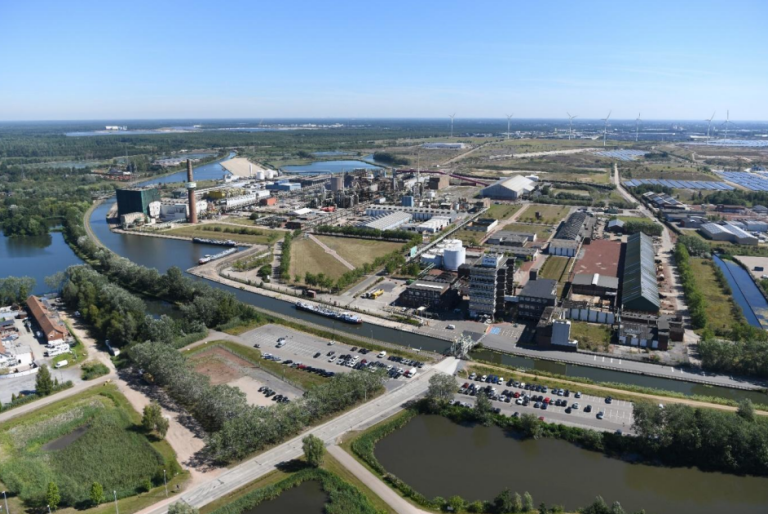
    European Metals Holdings is approaching a defining moment for the Cinovec lithium project in the Czech Republic, with a pivotal environmental ruling expected by the end of June that will determine whether the development — increasingly regarded as central to Europe’s battery supply chain ambitions — can unlock its EU funding and advance toward construction.

    The Czech Ministry of Environment is anticipated to deliver its verdict on the project’s Environmental Impact Assessment by 30 June 2026, a decision that carries significant financial consequences. A positive outcome is a mandatory prerequisite for European Metals Holdings to access grants allocated from the EU Just Transition Fund, making the ruling one of the most consequential regulatory moments in the project’s history. The formal review procedure is currently underway and will be followed by a public consultation phase before a final decision is issued.

    Ahead of that deadline, the company’s Annual General Meeting on 19 May 2026 will provide shareholders with an opportunity to hear updates on project progress, vote on the reappointment of board directors and receive further detail on planned lithium carbonate production targets. The project’s feasibility study envisages output of battery-grade lithium material sufficient to meet a substantial share of Europe’s projected demand by 2030, positioning Cinovec as a key node in the regional electric vehicle supply chain.

    The project has already secured meaningful regulatory momentum in recent months. In February 2026, official approval was granted for the regional rezoning of the project area, legally designating zones for mining operations, processing facilities and utility infrastructure corridors — a significant permitting milestone that builds on the formal submission of the comprehensive EIA documentation in December 2025.

    Cinovec’s strategic significance has been formally acknowledged by both the European Union and the Czech government, with the project classified as a priority resource in the context of the continent’s energy transition. Located in the Erzgebirge mountain region on the Czech-German border, it is considered one of the largest hard-rock lithium deposits in Europe and has drawn growing attention as the bloc seeks to reduce dependence on imported battery raw materials, particularly from China.

  • Bosnia’s “Green Transition” Dilemma: International Mining Companies Move In as Communities Fight to Protect Land, Water and Livelihoods

    Bosnia’s “Green Transition” Dilemma: International Mining Companies Move In as Communities Fight to Protect Land, Water and Livelihoods

    In the gentle hills of Majevica, a low mountain range in northeastern Bosnia and Herzegovina where farmers grow strawberries, keep bees and distil rakija, a battle is unfolding that mirrors conflicts playing out across much of the developing world: the collision between the European Union’s hunger for critical minerals and the communities whose land sits above them.

    Since September 2023, when residents learned by chance that Swiss prospecting company Arcore was preparing to drill for lithium on the mountain, a grassroots anti-mining movement has taken root across the region. Local activist Andrijana Pekić and her neighbours in Lopare founded an informal organisation to educate their community about the dangers of lithium extraction, collaborating with established environmental groups including Bijeljina-based Eko Put and Tuzla’s Karton Revolucija. Their core argument is unambiguous: “There is no such thing as clean lithium mining.” Tailings from extraction processes containing sulphuric acid and hazardous chemicals contaminate streams, groundwater and soil; rock dust pollutes the air for miles. Majevica’s waterways feed the Drina and Sava rivers, meaning environmental damage would ripple across a vast surrounding region encompassing Tuzla, Bijeljina, Brčko and Zvornik.

    Activists have conducted two petition drives, in 2024 and 2025, calling for a ban on lithium mining and the establishment of a nature reserve across most of the mountain. Both were dismissed by the Republika Srpska parliament. Arcore, meanwhile, has already conducted drill tests on private land — in some cases without the knowledge of landowners — with documented consequences. After the company drilled on the property of Jovan Krsmanović in the village of Vukosavci, both his well and a neighbour’s dried up entirely.

    Majevica is far from an isolated case. Lithium, magnesium, copper, nickel, cobalt and other minerals featured on the EU’s 2024 critical raw materials list have been identified across Bosnia and Herzegovina, and international mining companies have been awarded concessions across the country in circumstances activists and legal experts describe as opaque and frequently unlawful. A central grievance concerns a long-standing legal prohibition on the sale or change of use of state-owned property — a restriction rooted in unresolved property succession disputes following Yugoslavia’s dissolution — which both entities have repeatedly violated when doing so serves favoured investors.

    The most prominent example is the Vareš municipality in central Bosnia, where a concession was granted to Eastern Mining in 2018 and later acquired and expanded by Adriatic Metals, covering silver, zinc, lead and barite deposits. A significant portion of the land falls on state property. The company has been found guilty of clear-cutting forested land, while mining at the Rupice mine has contaminated drinking water supplies for the downstream town of Kakanj. In July 2024, Bosnia’s Constitutional Court ruled that the Federation’s granting of state-owned land use was unconstitutional — yet excavation was permitted to continue regardless.

    Federation Prime Minister Nermin Nikšić has shown little sympathy for conservationists. He dismissed those seeking to protect land around Vareš, suggesting it was irrational to allow “scrubland they call state property to lie useless rather than become a valuable investment.”

    The contradiction at the heart of the crisis is captured bluntly by Snežana Jagodić-Vujić of Eko Put: “Our entire country is being attacked. The green transition is clean there, but dirty here.” Campaigners point out that significant lithium deposits exist within the EU itself — in Portugal and Spain — where stricter environmental laws and stronger rule of law have at least slowed the pace of extraction following mass public protests. Bosnia and Herzegovina, riven with corruption and institutional dysfunction dating to the Dayton constitutional settlement, has so far offered mining companies a far more permissive environment.

  • Citigroup to Enter London Gold Market With Heathrow Vault Partnership as Bullion Boom Drives Clearing Expansion

    Citigroup to Enter London Gold Market With Heathrow Vault Partnership as Bullion Boom Drives Clearing Expansion

    Citigroup is preparing to join the exclusive club of banks at the centre of the world’s largest gold-trading hub, partnering with secure logistics firm Malca-Amit to use its vault near London’s Heathrow Airport as the bank moves toward becoming a clearing member of the London bullion market.

    The move would see Citigroup become only the fifth clearing member of the London market, joining JPMorgan Chase, ICBC Standard Bank, HSBC and UBS Group — a group whose numbers have dwindled in recent years even as the market’s importance has grown. Clearing members occupy a pivotal role in the London market, settling tens of billions of dollars in transactions every day in a city where more than $1 trillion in gold is held in storage. Vaulting capacity is central to that function, allowing precious metals to physically change hands to settle contracts.

    Malca-Amit’s facility near Heathrow — bullion vaults are typically located close to airports to facilitate the swift movement of metal by air — was described in a 2012 profile as capable of holding more than 300 tonnes of gold and 1,000 tonnes of silver. At current prices, 300 tonnes of gold would be worth approximately $43 billion.

    Citigroup’s approach of contracting with an external custodian mirrors the model used by UBS, which also relies on a third-party vaulting arrangement rather than operating its own facility. By contrast, JPMorgan and HSBC both maintain their own London vaults, while ICBC Standard Bank acquired Barclays’ London facility in 2016. JPMorgan’s vault in the City of London is among the largest gold stores in the world, holding close to 1,000 tonnes on behalf of a single bullion-backed exchange traded fund — a holding worth roughly $136 billion.

    The timing of Citigroup’s expansion into the market reflects a broader surge in investor appetite for gold. Bullion prices have risen approximately 45% over the past year, significantly boosting revenues from vaulting services, which are typically calculated as a percentage of the value of gold stored. Citigroup and JPMorgan declined to comment on the matter. Malca-Amit did not respond to a request for comment.

  • Northern Ireland Awards Seven Mining Licences Despite 99.5% of Public Respondents Opposing Them

    Northern Ireland Awards Seven Mining Licences Despite 99.5% of Public Respondents Opposing Them

    Seven mineral prospecting licences have been granted across Northern Ireland to four mining companies, the Department for the Economy has confirmed, in a decision that has drawn fierce criticism from local communities, environmental groups and elected representatives after more than 2,100 public objections were effectively overridden.

    The licences, which cover exploration for minerals excluding gold and silver across parts of Counties Armagh, Tyrone and Fermanagh, were awarded following a 12-week public consultation that concluded in April. Of the responses received, 99.5% were opposed to the licences being granted. Every affected local council also objected to the proposals.

    Under the terms of the awards, Conroy Gold will be permitted to explore south Armagh in areas near Keady and Newtownhamilton. Dalradian Gold will be able to prospect across portions of County Tyrone including land near Strabane and Plumbridge in the Sperrin Mountains. Karelian Diamond Resources has been granted rights to explore in Colebrook, County Fermanagh, while Flintridge Resources will focus on land near Killeter in County Tyrone. The licences cover prospecting only, though there remains the possibility that exploration could ultimately lead to full-scale mining operations.

    Environmental campaigners condemned the decision as a democratic failure. Save Our Sperrins, which has led opposition to the licences, said communities were “shocked and deeply disappointed,” adding that the decision came despite a recent successful judicial review that had identified failures in the very licensing process now being used. “Once again, the democratic voice of local communities has been sidelined in favour of private mining interests,” the group said, describing the decision as “anti-democratic, environmentally reckless, legally questionable, and socially divisive.”

    Martin Tracey of the Campaign Against Mining highlighted what he described as a significant shift in position by Economy Minister Caoimhe Archibald, who he said had previously called for a moratorium on mining licences and a rigorous review of the system governing their award — a stance apparently at odds with the department’s decision to proceed.

    A Department for the Economy spokesperson defended the process, noting that existing legislation must be complied with and that a comprehensive review of mineral licensing is currently underway. The department also clarified that it holds no role in licensing gold and silver exploration, which falls under the remit of the Crown Estate.

    Local campaigners argue the exploration activities pose risks to the environment, water supplies and tourism-dependent rural communities across the affected areas.

  • First Quantum Sells Turkish Copper-Zinc Mine to Cengiz Holding for $340 Million in Latest Portfolio Restructuring Move

    First Quantum Sells Turkish Copper-Zinc Mine to Cengiz Holding for $340 Million in Latest Portfolio Restructuring Move

    Canadian mining company First Quantum Minerals has agreed to sell its Çayeli copper-zinc mine in Türkiye to Cengiz Insaat, a subsidiary of one of Turkey’s largest industrial conglomerates, for $340 million in cash as the miner continues to streamline its asset portfolio and redirect capital toward its highest-priority operations.

    Under the binding agreement, the sale includes an advance payment of $50 million, with the full transaction expected to close during the second or third quarter of this year. Chief Executive Tristan Pascall described the deal as consistent with the company’s “disciplined approach to portfolio management,” with proceeds intended to support strategic priorities including a potential restart of the Cobre Panama copper operation — one of the world’s largest copper mines, which was shut down in late 2023 following civil unrest in the Central American country.

    Located on the Black Sea coast of northeastern Türkiye, the Çayeli mine has been in continuous operation since 1994, producing copper and zinc concentrates from a volcanic hosted massive sulphide deposit. Its reserve base is currently projected to support operations through to 2036.

    The transaction marks the second asset disposal First Quantum has executed in three months, following the $190 million sale of the past-producing Cobre Las Cruces copper mine in Spain in December.

    For the buyer, the acquisition represents a further aggressive expansion of its mining portfolio. Cengiz Holding last week completed its largest mining deal to date — the $1.5 billion purchase of the Copler gold mine in Türkiye from SSR Mining — making the Çayeli transaction the conglomerate’s second major mining acquisition within days.

    Despite the strategic rationale for the sale, First Quantum’s shares initially rose on the news before reversing course, closing down 1.7% by midday at a market capitalisation of approximately C$27.5 billion ($20.2 billion). UBS analyst Myles Allsop nonetheless upgraded the stock to a Buy rating from Neutral, raising his price target to C$50 from C$38, signalling confidence in the company’s refocused strategy.

  • Race to Lock Up Rare Earths Supply Leaves Germany and South Korea Exposed, Warns Arafura CEO

    Race to Lock Up Rare Earths Supply Leaves Germany and South Korea Exposed, Warns Arafura CEO

    Germany and South Korea face a critical vulnerability in their rare earths supply chains as the United States and Japan move rapidly to secure long-term agreements with the world’s limited pool of non-Chinese producers, the chief executive of Australian rare earths developer Arafura has warned.

    The alert comes as China’s export restrictions on key rare earth minerals — imposed last year — continue to reverberate through the automotive and defence industries globally, accelerating a scramble among Western nations to lock up alternative supply. With only two Western producers currently operating at scale — Australia’s Lynas Rare Earths and US-based MP Materials at its Mountain Pass deposit — available supply outside China is extremely constrained.

    The US has already secured Mountain Pass output through a government deal with MP Materials, covering a significant portion of American demand. Lynas this month concluded a long-term supply agreement with Japan Australia Rare Earths running through 2038, alongside a shorter-term deal with the Pentagon. With Lynas’ supply now effectively committed, Arafura CEO Darryl Cuzzubbo said his company had observed a marked increase in urgency from prospective buyers. “The EU and in particular Germany, and Korea are quite exposed — where are they going to get their supply from?” he said.

    Arafura is positioning its Nolans project in Australia’s Northern Territory as one of the few remaining sources of meaningful non-Chinese supply. The project is planned to produce 4,440 metric tons per year of neodymium-praseodymium (NdPr) oxide — a key material used in rare earth permanent magnets for electric vehicles and wind turbines — from the second half of 2029, representing roughly 4% of projected global supply. The company already holds supply agreements with Hyundai Motor, Kia, Siemens Gamesa Renewable Energy and commodity trader Traxys.

    Arafura is now seeking to place a further 1,200 tons of NdPr oxide to bring secured supply to 80% of planned output — a threshold required by project lenders before a final investment decision can be made and construction begins. Cuzzubbo said negotiations were underway with multiple parties, with pricing the determining factor. “We haven’t put all of our eggs into one basket — the one that gets there first on the right sort of pricing regime is the one we’re going to go with,” he said. Arafura is seeking terms in line with those achieved by Lynas, which locked in a price of $110 per kilogram of NdPr oxide in both its recent deals. China-based spot prices currently sit at around $103 per kilogram.

    Beyond direct supply agreements, Arafura expects to participate in Australia’s A$1.2 billion ($836 million) strategic critical minerals reserve, which is due to begin operating in the second half of this year. Cuzzubbo called for the reserve’s floor price mechanism to be anchored to an independent international benchmark — such as that published by Benchmark Minerals Intelligence — rather than to Chinese market prices, which he argued have distorted the global market. “The market is broken — you need to create a functioning market,” he said. “A floor price will take uncertainty out of pricing, which has been very uncertain given China’s control, and that will help bring in investors.”

    He also framed the reserve as a strategic tool for Australian diplomacy. “It is a bit of a bargaining chip that the Australian government can use with its allies,” he said, adding that it could help accelerate project development across the sector.

  • France Eyes Australian Critical Minerals as US Framework Deal Spurs Global Rush for Supply Access

    France Eyes Australian Critical Minerals as US Framework Deal Spurs Global Rush for Supply Access

    France is emerging as a prospective investor in Australian critical minerals projects, Australia’s resources minister has said, as the country’s landmark framework agreement with the United States last October continues to galvanise interest from advanced manufacturing nations seeking to lock in supply chains independent of China.

    Speaking to Reuters during the Minerals Week summit in Canberra on Thursday, Australian Resources Minister Madeleine King said that since the US deal — which anchored an $8.5 billion pipeline of investments — other partners had accelerated their engagement with urgency. “France is more and more keen,” King said, noting that Paris has engaged at a policy and financing framework level, including through export credit agency Bpifrance Assurance Export, though it has yet to announce large-scale project funding of the kind committed by the United States and Japan.

    The remarks come days after Australia and the European Union signed a free trade agreement on Tuesday, which is expected to ease EU access to Australian critical minerals but stopped short of the detailed investment project commitments that accompanied the US deal. Australia has now inked sector cooperation agreements with Japan, South Korea, India, France, Germany and Britain, and this month joined the G7 Critical Minerals Production Alliance.

    Australia is seeking billions of dollars in additional investment across 49 mining projects and 29 midstream processing projects, with the sector forecast to generate A$18 billion ($12.52 billion) in export earnings in the financial year beginning July 1. The government has already committed A$28 billion in financial support for the sector since coming to power in May 2022.

    King cautioned that building a competitive critical minerals industry would require sustained, long-term commitment — potentially spanning decades. “If you want to compare timelines, it took China 40 years,” she said, adding that the government would need to think of its support “as a long-term proposition.” She drew a parallel with Australia’s own history of backing its iron ore and liquefied natural gas sectors, suggesting critical minerals may prove an even more complex undertaking.

    Central to Australia’s near-term strategy is an A$1.2 billion strategic reserve focused on antimony, gallium and rare earths, expected to become operational in the second half of this year. The reserve will incorporate a floor price mechanism to provide market stability, while agreements will be structured to ensure the government can capture upside if prices rise — and exit that arrangement when appropriate.

    King also confirmed that Australia sees its reserve as a potential feeder into the United States’ own $12 billion minerals stockpile, known as Project Vault, though she noted that the details of that arrangement remain under discussion.

    On the broader challenge of attracting investment partners less experienced in mining finance, King was direct: “Many other countries just aren’t used to getting involved in mining and mining-style financing, but they’re going to have to, if they want to have that secure supply.”

  • The First Mining-Site Digital Product Passport in Turkey

    The First Mining-Site Digital Product Passport in Turkey

    Minespider, a leading traceability and Digital Product Passport (DPP) platform, and TETHYS Trans-Eurasian Gateway, a company specializing in bridging European technologies to mining projects in Turkey and Central Asia, announce the first Digital Product Passport (DPP) implemented at the Çataltepe Mining Project, marking a significant milestone in the digital transformation of the critical minerals sector.

    This is one of the first implementations of the Digital Product Passport in mining sites in Central Asia and Turkiye, which now positions Çataltepe as a pioneering project in the region’s transition toward transparent and traceable critical minerals supply chains.

    Following a collaboration that began in May 2025, the two companies launched a Digital Product Passport (DPP) pilot at the Çataltepe Polymetallic mine located in the Dardanelles (Çanakkale) in Turkey. The traceability project, including capturing and linking data of origin, processing, and ESG indicators, is planned to be introduced across the entire supply chain – from the Çataltepe Mine based in Lapseki, Çanakkale to the Yenice Flotation Plant, and finally to export.

    A New Standard for Critical Minerals Transparency

    The Digital Product Passport is a dynamic digital record that captures verified data across the full lifecycle of a product—from raw material extraction to end-of-life. The system will provide a transparent chain of custody for each shipment of lead concentrate, zinc concentrate and copper concentrate from the Çataltepe polymetallic mine, with the expected volumes of ~15,000 tonnes of ore processed monthly, yielding 1,000–1,200 tonnes of concentrate output. The introduction of Digital Product Passports will consolidate reporting, improve efficiency, and enhance trust with downstream customers and will help to ensure compliance with international regulations such as the EU Carbon Border Adjustment Mechanism (CBAM) and the Critical Raw Materials Act (CRMA).

    Driving Accountability Across the Critical Minerals Value Chain

    Digital Product Passports are rapidly becoming a cornerstone of the global transition toward sustainable and accountable supply chains. They enable the collection and sharing of product data across the entire value chain, closing information gaps and enhancing decision-making.

    Leyla Keser, Chairperson of TETHYS, stated:

    “At TETHYS, we define accountability not as an abstract principle, but as a measurable and traceable reality across the entire value chain. With the Çataltepe Digital Product Passport, we are embedding transparency at the very origin of critical minerals—where trust must begin. This is not only a technological milestone, but a strategic step toward aligning our region with global standards, strengthening responsible sourcing, and positioning Greater Central Asia, Türkiye, and the Balkans as reliable and future-ready partners in the global critical minerals supply chain.”

    Nathan Williams, Founder & CEO of Minespider, said:

    “We are entering a new phase where mineral supply chains must be not only efficient, but also transparent and verifiable by design. Each shipment can be traced back to its origin, with verified data on production and ESG parameters. This is a critical step toward enabling trusted, data-driven mineral supply chains that meet emerging regulatory requirements and industry expectations. We are proud that the Çataltepe project creates a new benchmark for sustainable mining projects in the region.”

    About Tethys

    Tethys operates across Greater Central Asia, Türkiye, and the Balkans, focusing on critical minerals, infrastructure, and sustainable value chains. Through its integrated approach, Tethys combines investment, technology, and ESG principles to deliver accountable, scalable, and future-oriented projects across strategic regions.

    https://www.tethysgateway.com/

    About Minespider

    Minespider is a leading European mineral traceability platform, trusted by global companies including Microvast, Renault, Minsur, TEMSA, PTL, Ford Otosan, and Tata Elxsi. Its blockchain-based system provides secure, transparent data sharing across supply chains in Digital Product Passports (DPPs) and Digital Battery Passports (DBPs) to support compliance and sustainability from mine to manufacturer.

    For more information about Minespider, please email marketing@minespider.com or visit our website at www.minespider.com.

  • Turkey Eyes $135 Billion Gold Reserves as Lira Comes Under Pressure From Iran War Fallout

    Turkey Eyes $135 Billion Gold Reserves as Lira Comes Under Pressure From Iran War Fallout

    Turkey’s central bank is weighing emergency measures to defend the lira against mounting volatility triggered by the war with Iran, including tapping into its vast gold reserves through swap transactions in the London market, according to people familiar with the deliberations.

    The bank has held internal discussions about conducting gold-for-foreign currency swaps, a move that would allow it to mobilise hard currency without directly selling its gold holdings. Turkey is estimated to hold around $30 billion of its reserves at the Bank of England — assets that a JPMorgan economist said the central bank “may decide to use for FX intervention purposes without logistical constraints.” The central bank declined to comment. Gold prices slipped 0.7% following reports of the potential step.

    Turkey’s total gold reserves stood at approximately $135 billion as of early March, the product of an aggressive decade-long accumulation strategy driven by a policy of reducing exposure to US dollar-denominated assets. The scale of those holdings now makes gold a natural first line of defence as pressure on the lira intensifies.

    The country is acutely exposed to the Iran conflict’s economic aftershocks. As a near-total importer of oil and gas, Turkey faces severe inflation and balance-of-payments risks the longer the war continues — factors already straining a disinflation strategy built around preventing the lira from depreciating faster than monthly inflation. Oil prices have surged from around $70 to above $100 a barrel since hostilities began, compounding the challenge for policymakers who are already contending with an inflation rate of 31.5% — one of the highest in the world.

    The central bank’s crisis response so far has included tightening liquidity conditions, raising the cost of lira funding, and directing state-run lenders to intervene directly in currency markets. It has also been offloading foreign-currency bond holdings, including an estimated $16 billion in US Treasury sales in recent weeks, reducing Turkey’s Treasury holdings to below $17 billion — down sharply from a peak of $82 billion in 2015. Foreign investors, meanwhile, have been exiting Turkish government bonds at the fastest pace on record, according to central bank data covering the week through 13 March.

    Street-level signs of stress are also emerging. Traders at Istanbul’s Grand Bazaar were this week selling dollars at a premium to the interbank rate, a visible indicator of rising local demand for hard currency.

    Interest-rate expectations have shifted significantly. Traders are now pricing in a 100 basis point rate increase at next month’s meeting. Turkey’s benchmark rate currently stands at 37%, though the central bank suspended lending from that rate at the start of March in favour of a costlier 40% funding window. The lira was trading at 44.35 per dollar on Tuesday afternoon in Istanbul, continuing a steady decline that has averaged approximately 0.05% per day this year.

  • Australia and EU Seal Free Trade Deal After Eight Years, With Critical Minerals and Agricultural Quotas at Its Heart

    Australia and EU Seal Free Trade Deal After Eight Years, With Critical Minerals and Agricultural Quotas at Its Heart

    Australia and the European Union have signed a landmark free trade agreement, ending eight years of on-and-off negotiations in a deal shaped as much by geopolitical urgency as by economics — with China’s dominance of critical mineral supply chains and the shadow of US tariffs under the Trump administration providing the final impetus to close talks.

    The agreement, signed on Tuesday, will eliminate more than 99% of tariffs on EU goods exports to Australia, saving European companies an estimated €1 billion ($1.2 billion) annually, while Australian Prime Minister Anthony Albanese said the deal would add approximately A$10 billion ($7 billion) per year to the Australian economy. EU exports to Australia are projected to grow by up to 33% over the next decade.

    At the strategic core of the agreement is a critical minerals partnership. The scrapping of almost all import tariffs on Australian critical minerals entering the EU was hailed by both sides as a vital step toward diversifying Western supply chains away from China, which currently dominates global rare earth production and processing. European Commission President Ursula von der Leyen, addressing Australia’s parliament, said the two parties “cannot be over-dependent on any supplier for such crucial ingredients,” framing the partnership as a strategic imperative for both Europe and Australia.

    The two sides also signed a separate agreement deepening security and defence cooperation, underscoring the deal’s broader geopolitical character. The accord adds to Europe’s expanding footprint in the Indo-Pacific, following trade agreements concluded with Indonesia in September and India in January.

    Agriculture, however, proved the deal’s most contentious terrain. While Australian tariffs on European wine, sparkling wine, fruit, vegetables, chocolates and — over three years — cheeses will fall to zero from day one, the EU has maintained quotas on key Australian agricultural exports. For beef, a sticking point significant enough to derail talks in 2023, the EU has agreed to open two tariff-rate quotas totalling 30,600 metric tons, with around 55% of that volume entering duty-free. Sheep meat will also face restrictions.

    The outcome satisfied neither side of the farming divide. Australian agricultural groups, led by National Farmers Federation president Hamish McIntyre, said they were “extremely disappointed” that the deal had concluded without commercially meaningful market access gains. Meanwhile, French farmers — already mobilised against beef import provisions in the EU-Mercosur agreement — argued that even the agreed quotas were too generous, with France’s National Bovine Federation accusing Von der Leyen of continuing to undermine the domestic beef industry.

    On other terms, Australia agreed to raise its luxury car tax threshold for EU-made electric vehicles to A$120,000 ($83,600), effectively exempting around 75% of European EVs from the tax. Some EU geographical indication names, including Pecorino Romano and Ouzo, will receive full protection after a short transition period, though producers of goods such as feta may continue using the name provided the product’s origin is clearly labelled.

    EU industry groups including BusinessEurope, SpiritsEurope and the European Services Forum welcomed the agreement. EU firms exported €37 billion of goods to Australia in 2025 and €28 billion in services in 2023. The EU is Australia’s third-largest two-way trading partner and its second-largest source of foreign investment.