The €1.8 Billion Annual Requirement: Financing Europe’s Next Generation of Mines
Europe has written the rulebook for critical raw materials sovereignty. A new European Investment Bank study, produced with Dublin based Aurum Global Exploration, puts a number on what actually closing the gap will cost, and asks an uncomfortable question: who is going to pay for it, and are Europe's own financial institutions even built to do so?
5 Aug 2026
Source: linkedin.comRegion: Europe562 views
Europe has written the rulebook for critical raw materials sovereignty. A new European Investment Bank study, produced with Dublin based Aurum Global Exploration, puts a number on what actually closing the gap will cost, and asks an uncomfortable question: who is going to pay for it, and are Europe’s own financial institutions even built to do so?
A target with no cheque attached
Legislation is the easy part. The Critical Raw Materials Act, in force since May 2024, tells the European Union exactly what sovereignty over its raw materials is supposed to look like by 2030: at least a tenth of annual consumption of strategic raw materials mined domestically, forty per cent processed within the Union, a quarter met through recycling, and no single third country supplying more than sixty five per cent of any one material at any stage of the chain. It is precise, ambitious and, on the evidence of a new technical report from the European Investment Bank, roughly an order of magnitude short of being funded.
The report, Challenges and Solutions for Mineral Exploration in Europe, was prepared by the EIB working with Aurum Global Exploration, an Irish exploration and geoscience consultancy that has spent decades an Irish geoscience consultancy with decades of experience advising on global mine developments across multiple continents. Its headline finding is blunt. Meeting the Critical Raw Materials Act’s domestic extraction targets requires roughly two billion euros a year in mineral exploration spending across the Union over the next five years. Actual exploration spending across the EU’s twenty-seven member states has averaged around two hundred million euros a year over the past decade.
That is not a shortfall. It is a tenfold gap, and it sits at the very first stage of a value chain that European industrial policy is now betting its energy transition, its digital economy and a good part of its defence manufacturing on.
Put the number in a wider frame and it gets starker still. In 2024 Canada alone spent an estimated two and a half billion euros on mineral exploration, and Australia around one point nine billion. The European Union, twenty-seven countries with a combined economy larger than either, managed roughly three hundred and sixty million, about three per cent of the global exploration budget. On a per square kilometre basis, the Union lags Canada and Australia by a factor of six to seven. Only two per cent of global junior mining company spending and three per cent of major company budgets currently find their way into European ground. A continent that likes to think of itself as thoroughly mapped and mined out is, on the numbers, chronically under explored relative to its geological potential, and almost entirely absent from the capital markets that fund discovery everywhere else.
Why exploration is the hardest money to raise
It helps to understand why this particular stage of the mining life cycle is so difficult to finance, because the difficulty is structural rather than a failure of will.
The industry’s own model for this, the Lassonde Curve, tracks value and risk through roughly ten stages between the first geological survey and a producing mine, and the odds at the start are brutal: about one in ten thousand grassroots projects becomes a discovery worth defining, and one in a thousand discoveries becomes a mine. Grassroots and early-stage exploration typically run for three to nine years before a company even knows whether it has found anything, let alone whether that something can be built profitably.
Then comes what the industry calls the orphan period, the stretch after a discovery is confirmed but before a bankable feasibility study exists to de-risk it for conventional lenders. Valuations stagnate, economics remain uncertain, and traditional finance, built for cash flowing assets with predictable returns, has little appetite for the wait. It is precisely the stage where public capital is meant to crowd in private capital, and precisely the stage at which, on the EIB’s own admission, its standard instruments do not reach.
“The EIB Group has not financed upstream exploration at large scale, as the risk profile of exploration does not match the EIB Group’s standard loan products,” the report states, about as candid an acknowledgement as a development bank is likely to publish about its own institutional limits. Europe’s development finance architecture, in other words, was not built for the riskiest and most catalytic part of the very supply chain it is now trying to secure.
What the leaders do differently
The report benchmarks the Union against Canada, Australia, the United States, Chile, Japan and Namibia, and the contrast is instructive less for its detail than for its pattern.
https://2026.minexeurope.com/
Canada’s flow through share system, under which exploration companies can pass eligible expenses directly to investors as tax deductions, has consistently financed sixty-five to seventy per cent of all capital raised on Canadian exchanges for exploration companies. It is not a subsidy so much as a mechanism for shifting risk to investors who are compensated for taking it, and it sits alongside the Toronto Stock Exchange’s deep pool of specialist mining capital, over twelve hundred listed mining companies, and provincial grant programmes that co fund the earliest, highest risk field work. Australia pairs its own Junior Mineral Exploration Incentive with some of the best publicly funded precompetitive geoscience anywhere, reducing the guesswork explorers face before they commit capital at all.
The European Union has neither mechanism at meaningful scale. It has, instead, twenty-seven separate permitting regimes, patchy and inconsistently funded national geological surveys, and a junior mining sector that scarcely exists compared with Canada’s or Australia’s. Investor familiarity compounds the problem: institutional capital that has never operated in European mining defaults to treating the jurisdiction as unfamiliar and therefore risky, whatever the underlying geology actually shows.
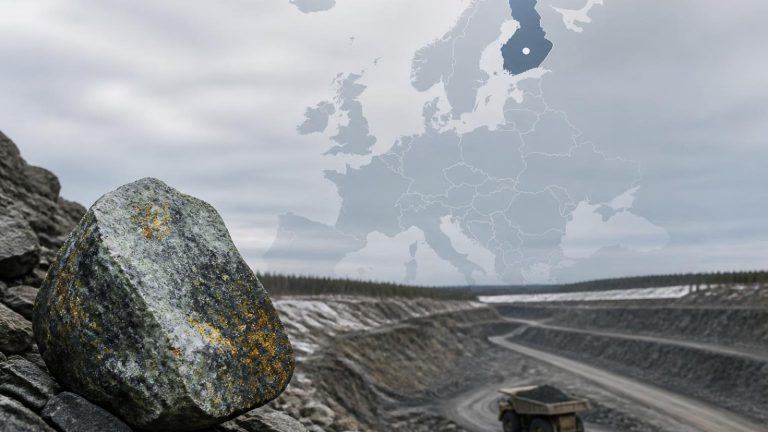
Ireland and Finland are among the report's few genuine bright spots, both showing exploration intensity per square kilometre that rivals Canada and Australia, which only underlines how much untapped potential sits in the rest of the Union.
Financing the next generation of mines
So, what would it actually take to close a tenfold gap? The EIB report is candid that no single instrument will do it and lays out what already exists alongside what still needs to be built. On the existing side, the Bank provides corporate loans to raw materials companies across the value chain, public sector loans to national bodies running exploration incentive schemes and pre competitive geoscience programmes such as Ireland’s Tellus survey, intermediated lending through national investment funds, and project finance for mines that have already reached bankability, work the EIB describes as creating “a vacuum effect” that pulls projects through the pipeline by signalling that finance and construction are achievable once a project is proven. Advisory support through the InvestEU Advisory Hub could potentially help early-stage companies structure projects and assess risk before they ever approach a lender.
What is missing is capital that behaves like equity at the point where projects need it most. The Bank’s TechEU programme, seventy billion euros committed for 2025 to 2027 to fund innovative and high-risk ventures, is explicitly framed as the kind of instrument exploration needs, quasi equity, patient, tolerant of a long road to revenue, but it has not yet been extended to exploration specifically. The clearest working template currently available is JUMP, the European Bank for Reconstruction and Development’s Junior Mining Programme, a hundred-and-fifty-million-euro facility offering equity and quasi equity investment in early stage mining companies. Its limitation is coverage: JUMP currently reaches only twelve EU countries, representing twenty-seven per cent of the Union’s land area. Extending an equivalent facility across the remaining fifteen countries, the other seventy-three per cent, would require an estimated three hundred to five hundred million euros a year, using a public to private capital mobilisation ratio of one to between three and five.
That is a fraction of the two-billion-euro annual gap, but it is the kind of catalytic, first loss capital that the report argues could unlock the rest from private markets that currently will not go near European exploration alone.
Brussels has, in fact, already run one live experiment in what strategic status can and cannot buy, and two independent studies published since the EIB report itself have now put hard numbers on what that experiment actually taught. The Commission’s first call, opened in August 2024, led to sixty Strategic Projects being designated by March 2025, forty-seven of them inside the Union and thirteen in partner countries, each carrying priority permitting, a single national point of contact, and access to the EIB’s two billion euros a year, a further two billion through InvestEU for 2026 and 2027, and a billion from the Innovation Fund.
The European Court of Auditors’ special report on critical raw materials, published in February 2026, found that the Act itself provides no dedicated EU funding for strategic projects at all, that only two of the four annual selection calls it envisaged had actually been launched by November 2025, and that seven of nineteen projects examined in detail still lacked secured offtake agreements with EU customers. Most of the sixty are now aiming for production after 2030, the very year the status was meant to help them hit, and at least one designated project promoter has already filed for bankruptcy since selection. The think tank ODI reached a similar conclusion from a different angle in an analysis published in June 2026: it found no public evidence of financial commitment for around forty per cent of the sixty projects, identified public commitments totalling only about six billion euros and concentrated heavily in batteries and energy storage, and calculated that three out of four projects due to reach production between 2025 and 2027 are either behind schedule or simply unverifiable from public records. None of this means nothing has moved. Plants now opening in Estonia, Sweden and France prove that designation can convert into construction. But on the evidence gathered by the EU’s own auditors and by independent analysts since, that looks like the exception running close to schedule, not the rule. Strategic designation has proved necessary but nowhere close to sufficient. It opens a door to priority treatment; it has not reliably opened a door to finance.
The Commission does not appear to entirely disagree with that reading. In December 2025, after the EIB’s own report had gone to print, it adopted RESourceEU, an action plan built explicitly around getting money moving faster: three billion euros to be mobilised within twelve months for permanent magnets, batteries and defence critical inputs, alongside the EIB’s existing two billion euros a year, seven hundred million from the 2026 Innovation Fund and just under six hundred million for recycling through Horizon Europe. The Commission’s own assessment put the sum needed simply to push already mature projects to a final investment decision at around two billion euros; independent analysis from the Jacques Delors Centre think tank put the total needed to meet the Critical Raw Materials Act’s targets closer to ten billion euros, and noted that much of the headline three billion euro RESourceEU figure largely repackages funding that already existed rather than adding genuinely new capital. Whichever estimate proves closer to right, the direction of travel matters: eighteen months after the Act entered into force, Brussels has effectively conceded that legislation and designation were never going to be enough on their own.
https://2026.minexeurope.com/
There is a newer thread still. As part of delivering on RESourceEU, the Commission opened a public consultation on a proposed European Critical Raw Materials Centre, running from 19 May to 29 July 2026, closing only as this piece went to press. The Centre is being tested against four possible roles: joint purchasing, strategic stockpiling, raw materials market intelligence, and, most relevant here, facilitating access to public and private funding for critical raw materials projects. Nothing is decided yet, and a legislative proposal is expected later this year. But the fact that Brussels is now weighing whether a dedicated institution should exist specifically to widen access to project finance says as much as anything else in this report: that financing, not designation or legislation, remains the unresolved variable.
That record matters enormously right now, because a second call, launched in September 2025, drew more than a hundred and sixty applicants for assessment, a cohort that would roughly double the size of the portfolio overnight. Reporting on the sector since has suggested the underlying obstacles have not moved much. Officials quoted by specialist trade press this spring pointed to the same triad repeatedly: financing gaps that keep projects from becoming investment ready, price volatility that complicates long term planning, and a continuing scarcity of the long-term offtake agreements lenders want to see before they commit. Separate industry analysis of project capital structures suggests public institutions, the EIB and national promotional banks among them, rarely supply more than twenty to thirty per cent of what a European critical raw materials project actually costs to build, leaving the remaining seventy to eighty per cent to exactly the private debt and equity markets that have so far shown limited appetite for European mining risk. The honest questions for anyone financing mining deals follow directly from what the first wave actually taught. Which of the financing structures behind the projects that have moved can genuinely be repeated at twice the scale, and which were closer to one off deals unlikely to template onto a further hundred and sixty new applicants with their own geology, geography and risk profiles? Will the same quasi equity gap that appears to have stalled financing for parts of the first wave simply repeat itself, at double the size, unless RESourceEU’s own instruments prove to be more than repackaged commitments? And do the Commission and the EIB have the institutional capacity, four planned selection calls a year, only two delivered so far, to assess and fund this volume at the pace the Act’s own permitting deadlines demand?
These are not rhetorical questions. They are exactly the kind that belong in front of the people who will be asked to write the cheques.
The other half of the bill: modernising what Europe already has
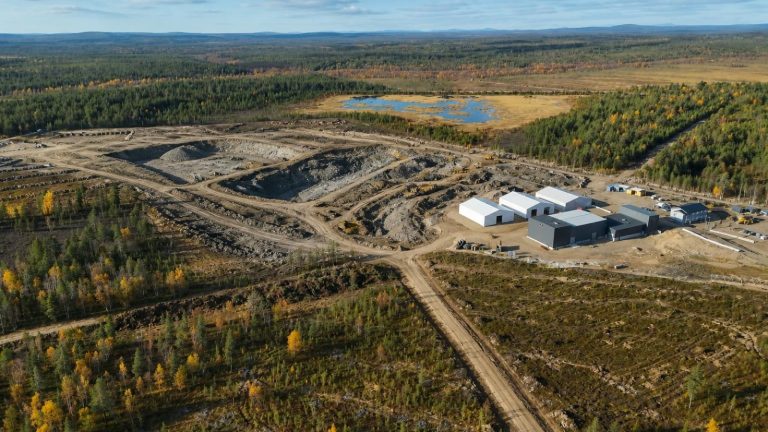
Financing has tended to mean financing discovery, but Europe’s existing mines and their legacy waste represent a second, underappreciated capital call, and arguably a faster route to production than any greenfield discovery. The report’s own figures on where global exploration budgets actually go are telling: at the active mine stage, majors account for the overwhelming share of spending worldwide, because brownfield exploration around existing operations is cheaper, faster and dramatically less risky than starting from nothing. Every tonne of new reserve defined at an operating mine such as Boliden’s Tara, one of Europe’s largest zinc mines and in continuous production since 1977, extends mine life without the multi year lead time a new discovery requires.
There is a further, largely untapped resource sitting in Europe’s mining districts already: historic waste and tailings. Many of the continent’s older mines, worked before modern processing technology existed, left behind dumps and tailings that were never fully stripped of value, and that may now contain multiple critical raw materials recoverable using techniques that simply did not exist when the material was first mined. The EIB report is careful not to oversell this. Reprocessing economics are often marginal, sometimes loss making, and funding the research needed to establish which sites are viable is itself a call on capital. But it is precisely the kind of redevelopment opportunity that sits between exploration and full-scale mining, needs its own tailored financing, and could shorten the Union’s path to its 2030 targets far more than waiting on discoveries that are, on the report’s own numbers, ten years or more away from production even if capital arrived tomorrow.
Modernisation cuts a second way too. The EIB’s corporate loan facility already backs companies developing the equipment, sensor technology, software and artificial intelligence tools that make both new discovery and old-site reprocessing commercially viable, a signal that Europe’s development finance is beginning, cautiously, to treat exploration and processing technology as infrastructure worth funding in its own right rather than a private sector afterthought. And nowhere is the modernisation case more urgent than in processing. Europe’s battery gigafactory build out alone represents an estimated three hundred billion euros of investment demanding lithium, cobalt, nickel and graphite, yet the continent controls less than eight per cent of the refining capacity required to supply it. For a wide range of battery minerals, in other words, the binding constraint on European sovereignty is not what comes out of the ground at all. It is what happens to it afterwards, and that is a redevelopment and processing financing question as much as an exploration one.
A question worth putting to the room
Here is the uncomfortable thought this report leaves hanging, and it is worth stating plainly rather than leaving implied. The EIB’s own analysis argues, in its conclusions, that financial incentives deployed before the fundamentals are fixed will not work: streamlined permitting, credible geological data, and public legitimacy have to come first, or, in the report’s words, “the private sector will not crowd in” and money spent trying to force the issue will be wasted.
That is a genuinely awkward message for an investor audience to hear, because it implies that the immediate constraint on European mining is not, primarily, a shortage of capital at all. It is a shortage of investable projects, caused by permitting that still runs two to seven years against one to two elsewhere, by patchy geoscience, and by a public conversation about mining that has barely begun in most member states.
The more interesting question, then, is not simply how much capital Europe needs, though the tenfold number is real and worth sitting with. It is whether financiers, industrial offtakers and policymakers are willing to fund the unglamorous fundamentals, permitting reform, public geoscience, community engagement, alongside the exploration budgets themselves, or whether capital will keep waiting on the sidelines for projects that regulatory and social readiness alone can actually produce.
Aurum Global Exploration’s own work, built on decades spent taking Irish exploration expertise into jurisdictions across Europe, Africa, Australia and the Americas, is itself evidence that the skills to close this gap already exist within the Union. What has been missing is a financing architecture, and arguably a shared sense of urgency, equal to the geology.
Where this conversation happens next
https://2026.minexeurope.com/MINEX Europe 2026 runs from 28 to 30 October at the Knightsbrook Hotel Spa and Golf Resort in Trim, Co. Meath, under the theme Europe’s Mining: Investable, Sustainable, Essential, with a site visit to Boliden’s Tara Mines closing the Forum. The programme has been built to argue through exactly the questions raised above, not around them.
One strand of the discussion puts equity, private capital, strategic investors, debt, public support instruments and blended finance models directly in front of the people who deploy them, asking whether Europe’s policy frameworks are bankable enough to reduce risk, and what combination of capital genuinely moves a project from designation to construction, including the sixty Strategic Projects already under way and the hundred and sixty one now waiting their turn.
A second strand takes on modernisation and redevelopment: how European developers can capture the mid-stream opportunity in refining and processing, and secure the long-term offtake agreements that gigafactory planners are actively looking to sign, which is really the financing question sitting behind Europe’s eight per cent refining capacity problem. Both threads sit alongside sessions on what makes a European project permittable and financeable in the first place, and on why social legitimacy is itself an industrial and financial variable rather than a communications afterthought.
These conversations need voices that rarely sit in the same room: investors weighing European mining against every other jurisdiction they could deploy capital into, financiers structuring the debt and quasi equity instruments this report says are still missing, and industrial companies, battery manufacturers, defence contractors, processors, whose offtake commitments are themselves a form of project finance. If that is your seat at the table, MINEX Europe 2026 is where the case for European mining finance gets made or gets tested, and the Forum needs your voice in the room rather than in the audience. The call for speakers is open now.
Full details and the speaker application process are at 2026.minexeurope.com, or contact the Forum Secretariat at eu@minexforum.com.