Region: Europe

  • Greenland Rejects Kvanefjeld Licence Renewal, Dealing Blow to Rare Earths Project

    Greenland Rejects Kvanefjeld Licence Renewal, Dealing Blow to Rare Earths Project

    Energy Transition Minerals (ASX: ETM) said on Tuesday that Greenland does not intend to renew the exploration licence for its Kvanefjeld rare earths project.

    The draft decision represents another setback for one of the territory’s largest undeveloped critical minerals projects, which would include a mine, concentrator and refinery.

    The move stems from Greenland’s 2021 Uranium Act, which effectively prohibits uranium prospecting, exploration and extraction, and is currently the subject of ongoing legal proceedings over its application to Kvanefjeld.

    ETM said similar licences have been renewed since the Act was introduced, raising concerns about regulatory consistency.

    “This draft position appears inconsistent with the historical treatment of the project,” the company said in an emailed statement, noting that Greenland had previously extended the licence even after the uranium legislation came into force and while legal disputes were ongoing.

    ETM said the decision risks sending a broader signal to investors at a sensitive time for Greenland, which is at the centre of increasing geopolitical competition over critical minerals supply. Western governments, including the US and Europe, are seeking to reduce their dependence on China.

    Mining is widely seen as a way for Greenland to diversify its economy, so policy changes that appear to alter the rules may increase concerns about regulatory stability and the long-term commitment to the sector, ETM said.

    The draft outcome also follows Greenland’s efforts to engage with industry at January’s PDAC convention in Canada earlier this year, adding to questions over the direction of policy.

    Shares in ETM fell 7.4 per cent to A$0.050 in Sydney during the first trading session after a halt last week, giving the company a market value of about A$118.7 million. The broader S&P/ASX 200 rose 1.5 per cent. Since the start of the year, the stock has lost half its value.

    Spain support


    The share price decline came despite ETM also securing foreign direct investment approval from the Spanish government for its proposed acquisition of the Penouta tin-tantalum mine.

    The approval removes a key regulatory obstacle, confirms that the investment meets national security requirements, and endorses the company’s financial strength and suitability to operate strategic assets in Spain, marking progress towards completing the deal.

  • Allied Critical Metals Intersects Significant Tungsten Mineralization at Borralha Project

    Allied Critical Metals Intersects Significant Tungsten Mineralization at Borralha Project

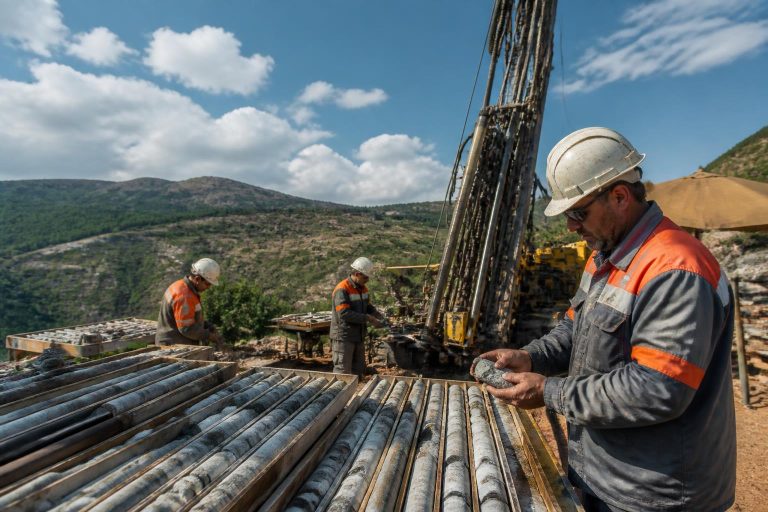
    Allied Critical Metals has reported a major drilling intersection at its Borralha Tungsten Project in northern Portugal, confirming over 200 metres of breccia-hosted tungsten mineralization at the newly defined Venise Breccia target.

    The discovery highlights a potentially extensive mineralized system, with visible wolframite identified alongside molybdenite and chalcopyrite within quartz-sulphide veining. These results are consistent with the company’s geological model and support the continuity of a historically recognised but previously underexplored breccia system.

    The Venise target is located approximately 400 metres from the Santa Helena Breccia deposit, which underpins the project’s current preliminary economic assessment. This proximity reinforces the potential for near-mine resource expansion and longer-term growth of the operation.

    The drilling forms part of a fully funded 20000 metre programme aimed at increasing the resource base, extending mine life, and scaling up the overall project. While the presence of visible mineralization is considered encouraging, the company emphasises that laboratory assay results will be required to confirm grade and economic viability.

    The findings also point to polymetallic potential, with associated molybdenum and copper mineralization suggesting similarities to other breccia-hosted systems in the district. This could further enhance the project’s strategic relevance as Europe seeks to strengthen its supply of critical minerals.

    The Venise Breccia is not yet included in the current resource estimate or mine plan, and further drilling is ongoing to determine the scale and continuity of mineralization. Nonetheless, early results support the company’s strategy of applying modern exploration techniques to historically identified targets.

    As exploration progresses, the Borralha Project is increasingly viewed as a potential district-scale tungsten system, with strategic importance for European and NATO-aligned supply chains amid rising global demand and strong tungsten pricing.

  • Medaro Mining Shifts Strategic Focus to Sweden to Tap EU Critical Minerals Demand

    Medaro Mining Shifts Strategic Focus to Sweden to Tap EU Critical Minerals Demand

    Medaro Mining is repositioning its operations toward Europe, with a strategic focus on Sweden as it seeks to capitalise on growing demand for critical minerals within the European Union.

    The move follows a comprehensive review of the company’s asset portfolio and aligns with the EU’s , which aims to strengthen domestic supply chains for key raw materials. Sweden has emerged as a favourable destination due to its established mining infrastructure and stable regulatory framework, making it an attractive hub for resource development.

    The company’s current exploration efforts are concentrated on the Bastnäs project, located in the Riddarhyttan-Bastnäs district. Ongoing fieldwork includes detailed surface mapping and systematic sampling campaigns designed to assess the mineral potential of the site. The results of these activities will play a decisive role in determining whether the project advances to the next phase of exploration, including test drilling.

    In parallel with its technical activities, Medaro is also increasing its engagement with investors through a targeted digital marketing initiative aimed at enhancing visibility across European and North American markets.

    Key project milestones include the conclusion of its investor communications programme in July 2026 and the expiration of exploration licences for Bastnäs 100 and 200 in February 2029, as granted by Swedish authorities. These deadlines establish a clear timeline for evaluating the project’s viability and securing further development.

    Market attention is currently focused on assay results from collected rock samples, which are expected to determine whether the project can support a larger-scale exploration programme. As Europe accelerates efforts to secure critical mineral supply chains, Medaro’s Swedish pivot reflects a broader industry shift toward resource development within stable and strategically aligned jurisdictions.

  • Spain Emerges as Europe’s Critical Minerals Frontier as EU Races to Break Free From Chinese Supply Dominance

    Spain Emerges as Europe’s Critical Minerals Frontier as EU Races to Break Free From Chinese Supply Dominance

    As global demand for digital technologies and electric mobility accelerates, the competition for critical minerals has intensified, placing Spain at the forefront of Europe’s resource strategy. With growing geopolitical tensions over supply chains, the European Union is increasingly looking inward, identifying Spain as a key player due to its significant geological potential.

    Historically, Spain’s mining sector has contributed substantially to the national economy, generating nearly 3.5 billion euros annually. Today, attention has shifted to the Variscan Massif, a vast mineral-rich belt stretching from Galicia to Andalusia. This region holds promising deposits of rare earth elements and critical minerals, essential for modern technologies yet notoriously difficult to extract due to their low concentrations.

    Experts highlight the geopolitical weight of these resources. With China dominating the rare earth market and supplying the majority of key materials such as magnesium to the EU, Europe’s dependence has raised strategic concerns. Recent warnings from the European Court of Auditors underline that progress in reducing this reliance remains insufficient.

    Against this backdrop, Spain is positioning itself as a cornerstone of Europe’s mineral independence. The country holds 15% of global strontium reserves and is the sole producer of this mineral within the EU. It is also the continent’s second-largest copper producer. Notably, 20 of the 34 raw materials classified as critical by Brussels have been identified in Spain, including lithium, cobalt, and nickel.

    To capitalise on this potential, the Spanish government approved the National Mining Exploration Program (2026–2030), allocating 182 million euros to assess and expand extractable resources. Simultaneously, the European Commission has endorsed a portfolio of strategic projects, seven of which are located in Spain, aimed at boosting domestic extraction, processing, and recycling capacities by 2030.

    However, the development of these projects faces strict regulatory, technical, and environmental requirements. Authorities stress that operations must be sustainable, economically viable, and beneficial at a cross-border level. Public concern over environmental impacts remains significant, with local communities and watchdog organisations increasingly scrutinising mining activities.

    In response, attention is also turning to innovative approaches such as recycling mining waste. Spain hosts over 21,000 mining ponds and dumps, presenting opportunities to recover valuable materials while reducing environmental harm. Research initiatives, including projects in the Río Tinto basin, are exploring methods to extract rare earth elements from mine drainage, offering a potential pathway toward more sustainable resource management.

    While still in early stages, these efforts reflect a broader shift toward balancing economic opportunity with environmental responsibility. As Europe seeks to secure its supply of critical minerals, Spain’s role is set to become increasingly pivotal in shaping the continent’s industrial and geopolitical future.

  • MinRex-Electrum Merger Clears Final Court Hurdle With April Completion on Track

    MinRex-Electrum Merger Clears Final Court Hurdle With April Completion on Track

    Canada-based, Serbia-focused explorer Electrum Discovery has received final court approval for its merger with Australian peer MinRex Resources, clearing the last major legal obstacle ahead of an expected closing date of around 9 April.

    The court order follows shareholder approval secured on 24 March, when 99.99% of Electrum’s shareholders voted in favour of the transaction. Under the terms of the deal, MinRex will acquire all issued and outstanding common shares in Electrum, with Electrum security holders receiving ordinary shares in the merged entity in exchange. Upon completion, Electrum’s security holders will hold 49% of the combined group, with MinRex shareholders controlling the remaining 51%.

    First announced in January, the merger is expected to create a gold-copper exploration group with a combined market capitalisation of approximately A$28 million ($19 million), bringing together Electrum’s Serbian asset portfolio with MinRex’s gold and base metals projects across approximately 438 square kilometres of tenements in Australia’s Lachlan Fold Belt.

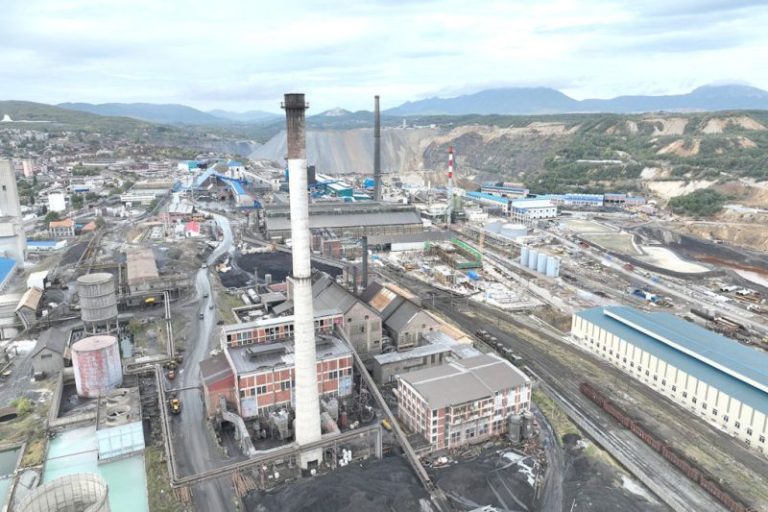
    Electrum’s two Serbian projects add meaningful exploration upside to the combined entity. The Novo Tlamino gold-silver project in southern Serbia, situated on the border with North Macedonia, spans 521.8 square kilometres across seven mineral permits and carries an inferred mineral resource estimate of 670,000 ounces of gold equivalent, with a net present value of $101 million at an 8% discount rate. The copper-gold Timok East project in eastern Serbia covers 123 square kilometres across three exploration permits and is located in close proximity to Zijin Mining’s cluster of operating mines at Bor, Veliki Krivelj, Cukari Peki and Majdanpek — a neighbourhood that adds strategic context to the asset’s longer-term potential.

    MinRex is listed on the Australian Securities Exchange, while Electrum trades on the Toronto Stock Exchange.

  • Poland’s KGHM Sits at the Heart of Europe’s Copper and Silver Supply as Global Demand Surges Toward a Critical Shortfall

    Poland’s KGHM Sits at the Heart of Europe’s Copper and Silver Supply as Global Demand Surges Toward a Critical Shortfall

    Thousands of metres below the flat plains of western Poland, in tunnels stretching for hundreds of kilometres under suffocating heat, workers at KGHM’s Polkowice-Sieroszowice mine are extracting what geologists increasingly describe as the metals of the future — copper and silver whose strategic importance to the global economy has never been greater.

    Poland supplies between 40% and 50% of Europe’s copper, making it the continent’s dominant producer. KGHM, the state-backed metals giant that operates three underground mines alongside local smelters and operations in the Americas, ranked eighth globally in copper extraction volume last year, behind BHP, Glencore and Rio Tinto. It is also the world’s second-largest silver producer. In 2025, the group generated more than 36 billion zlotys ($9.7 billion) in revenue, producing 710,000 tonnes of copper and 1,347 tonnes of silver.

    The timing of that output matters enormously. Global copper demand is forecast to rise by more than 40% by 2040, according to a 2025 UN report, driven by the accelerating electrification of transport, the buildout of renewable energy infrastructure and surging demand from artificial intelligence data centres and defence industries. An electric vehicle contains around 80 kilograms of copper compared with 20 kilograms in a conventional car, while a single wind turbine requires between four and ten tonnes per megawatt of installed capacity. The International Energy Agency projects that supply will lag 30% behind demand as early as 2035, a gap that could require 80 new mines and $250 billion in investment by 2030.

    At KGHM’s Glogow smelter, ore is melted in furnaces at 1,200 degrees Celsius before emerging as 99.99% pure copper plates, each weighing more than 100 kilograms, which are then shipped to buyers around the world. The process underscores the vertically integrated nature of Poland’s copper industry — from extraction through refining to export — a model that gives KGHM and Poland unusual strategic weight within the European supply chain.

    That weight is being felt at the geopolitical level. Copper now appears on the strategic critical metals lists of the European Union, the United States and China simultaneously. In July, US President Donald Trump announced a 50% tariff on copper, citing national security grounds and the metal’s centrality to Pentagon procurement. Prices surged 41.7% in 2025, hitting a record $14,527.50 per tonne in January of this year, and remain elevated at around $12,000 per tonne despite the Middle East conflict and global economic headwinds.

    KGHM vice president for finance Piotr Krzyzewski framed Poland’s position in explicitly continental terms: “It’s no longer about the security of our country alone, but the security of all of Europe.” The group’s known resources are estimated to sustain operations for at least 40 years, independent of new exploration and concession activity. Water consumption at the scale required for deep mining remains a vulnerability as climate change intensifies drought risk across Central Europe.

  • Japan and France Sign Critical Minerals Roadmap as Both Nations Race to Break Free From Chinese Rare Earths Dominance

    Japan and France Sign Critical Minerals Roadmap as Both Nations Race to Break Free From Chinese Rare Earths Dominance

    Japan and France have agreed to deepen cooperation on rare earths supply chains, signing a roadmap during French President Emmanuel Macron’s three-day visit to Tokyo for talks with Prime Minister Sanae Takaichi — the latest in a series of moves by both countries to reduce their exposure to China’s commanding grip on global rare earths production.

    At the heart of the agreement is joint support for Caremag, a rare earths refining project in southern France due to begin operations in late 2026. The plant is backed by Japan’s state-owned Japan Organization for Metals and Energy Security, gas company Iwatani and the French government. Japan is targeting approximately 20% of its future demand for dysprosium and terbium — heavy rare earth oxides used in EV motors, offshore wind turbines and electronic components — from the facility, providing a concrete near-term alternative to Chinese supply.

    The two sides also committed to securing raw material supply chains feeding into Caremag, and a joint statement from Takaichi and Macron is expected to call for broader diversification of rare earth and critical mineral supply away from China. French Finance Minister Roland Lescure was unambiguous on the rationale: “We cannot rely solely on specific countries, especially China.”

    The deal comes at a particularly tense moment in Japan-China relations. In February, Beijing prohibited exports of dual-use items — covering seven rare earths including dysprosium and yttrium — to 20 Japanese entities it said supply Japan’s military, following comments by Takaichi about Taiwan that angered Beijing. The restrictions have reinforced longstanding Japanese concerns about supply chain vulnerability, though analysts note that China’s leverage may be limited. “China is pursuing a strategy of using rare earths as a diplomatic card, and if US-China and Japan-China relations improve, exports could recover quickly,” said Kotaro Shimizu, principal analyst at Mitsubishi UFJ Research and Consulting.

    Japan has been diversifying its rare earths supply since a 2010 diplomatic incident in which China restricted exports to Tokyo, reducing its dependence on Chinese supply from 90% to around 60%. That effort is now accelerating across multiple fronts. Sojitz has a long-standing tie-up with Australia’s Lynas Rare Earths, one of the few Western-scale rare earths producers. Mitsubishi Materials this week agreed to acquire a stake in US-based ReElement, a rare earth recycling company, as Tokyo and Washington formalise an action plan for China alternatives. Japan and the US are also weighing joint development of rare-earth-rich seabed mud deposits near the remote Minamitori Island, and Japan is in talks with India to explore rare earths in the desert state of Rajasthan.

    The two countries also agreed to pursue cooperation in space, with companies from both nations expected to sign memorandums of understanding on twelve joint projects including space debris removal and rocket launches.

  • Savannah Resources Targets 50-Year Mine Life at Europe’s Largest Lithium Deposit as Portugal Project Accelerates Toward 2028 Production

    Savannah Resources Targets 50-Year Mine Life at Europe’s Largest Lithium Deposit as Portugal Project Accelerates Toward 2028 Production

    London-listed Savannah Resources is pressing ahead with its Barroso lithium project in northern Portugal with growing confidence that the deposit — already Europe’s largest — can compete globally and become a meaningful contributor to reducing the continent’s dependence on Chinese lithium supply.

    Speaking to Reuters on Tuesday, Chief Executive Emanuel Proença said work had “accelerated in recent months on all fronts,” pointing to advances in engineering studies, progress on environmental requirements and preparations for project financing ahead of a final investment decision expected by the end of this year. Construction is planned for 2027, with first production targeted in 2028.

    Confirmed resources at the Barroso spodumene deposit were upgraded in September to over 39 million metric tonnes, up from 28 million metric tonnes. Proença said potential resource extensions of between 35 million and 62 million metric tonnes could push the total above 100 million metric tonnes, more than doubling the mine’s projected operational lifespan to over 50 years. The company has also received a €110 million grant from the Portuguese government, which Proença described as “a positive step” in the project’s financial development.

    On competitiveness, Proença said Barroso could break even at $600 per tonne of spodumene concentrate — a level he said would allow it “to compete with the majors” — at a time when spodumene shipped to China is trading above $2,000 per tonne. The project’s proximity to European refineries was cited as a further structural advantage, reducing logistical costs and supply chain exposure to China.

    Europe’s push to build domestic lithium extraction and refining capacity remains constrained, and Barroso is widely regarded as one of the continent’s best near-term prospects for closing that gap. However, the project has faced local community opposition since Barroso was designated a World Heritage agricultural site in 2018. Proença acknowledged the tension but said resistance was “gradually decreasing” as the company increases local hiring and intensifies engagement with surrounding communities.

  • Cornish Tin Raises £2.2 Million to Advance World-Class Tin and Lithium Projects in Southwest England

    Cornish Tin Raises £2.2 Million to Advance World-Class Tin and Lithium Projects in Southwest England

    Cornish Tin has closed a funding round of over £2.2 million ($3 million), exceeding its target and valuing the privately held minerals explorer at £29 million ($38 million) pre-money, as the company presses ahead with exploration at two critical mineral projects in Cornwall that it believes could play a meaningful role in securing domestic UK supply.

    The raise was supported by a combination of existing shareholders and new investors. Proceeds will be directed toward the company’s flagship Great Wheal Vor tin project and the Tregonning South lithium project, funding priority target advancement and further resource definition across both sites.

    Great Wheal Vor, located in the Breage mining district, encompasses 26 former producing sites with a history of exceptionally high-grade tin output. Historic records cited by the company indicate average production grades of 3% tin, with peak grades exceeding 5.5% — figures that Cornish Tin says would rank the project among the top three tin mines in the world by grade if it were in production today.

    At Tregonning South, initial exploration in 2022 identified a potential new lithium field underlain by what the company describes as G5 granite, also known as topaz granite — a rare geological formation accounting for approximately 1.4% of all outcropping granites across Cornwall. The region has historically been one of England’s most significant mining areas, and its geology is increasingly attracting attention in the context of European critical mineral supply chain diversification.

    Chief Executive Sally Norcross Webb said the funding marked an important milestone for the company. “We believe Cornwall has the potential to play a significant role in securing domestic supply of critical minerals, and this capital enables us to accelerate our progress towards that goal,” she said.

  • MinRex and Electrum Shareholders Approve Merger to Create Gold-Copper Explorer Spanning Australia and Serbia

    MinRex and Electrum Shareholders Approve Merger to Create Gold-Copper Explorer Spanning Australia and Serbia

    Australian mining company MinRex Resources has confirmed that shareholders of its Canadian peer Electrum Discovery have overwhelmingly approved a planned merger of the two companies, paving the way for the creation of a combined gold-copper exploration group with assets across Serbia and New South Wales.

    An extraordinary shareholder vote held on 24 March returned 99.99% in favour of the transaction, with completion of the merger anticipated on or around 9 April. Under the agreed terms, Electrum’s security holders will hold a 49% stake in the merged entity, with MinRex shareholders retaining the remaining 51% controlling interest.

    First announced in January, the deal is expected to create a combined group with a market capitalisation of approximately A$28 million ($19.3 million). The merged company will bring together Electrum’s Serbian exploration portfolio with MinRex’s gold and base metals projects in Australia’s Lachlan Fold Belt, which spans approximately 438 square kilometres of tenements.

    Electrum, listed on the Toronto Stock Exchange, holds two projects in Serbia — the gold-silver Novo Tlamino and the copper-gold Timok East — both situated within the Western Tethyan Belt, a well-established and mineralised corridor known for significant gold and copper endowments. MinRex, listed on the Australian Securities Exchange, contributes its Lachlan Fold Belt holdings, a region with a strong track record of gold and base metal discoveries in New South Wales.