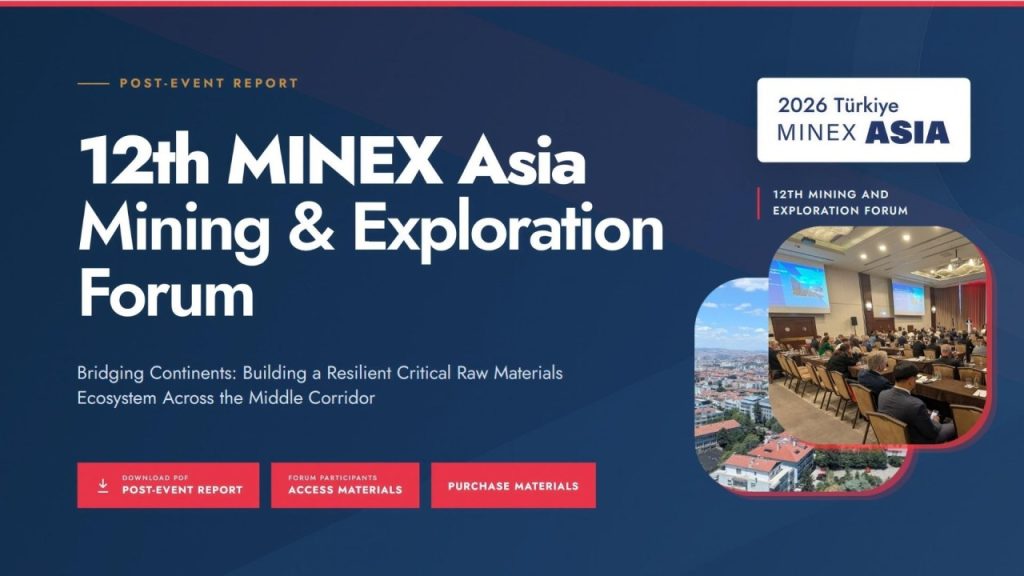
What MINEX Asia in Ankara told us about the next chapter of the Middle Corridor — and why the conversation now belongs in London.
In mid April in Astana, and again in Ankara in late June, I watched the same shift happen in real time. The debate about critical raw materials — who has them, who needs them, who should be worried about China — quietly stopped being interesting to the people in the room. Reserves, corridor geography, geopolitical alignment: those questions have answers now. Everyone in senior mining, development finance and government policy already knows them. What they came to Ankara to argue about was something narrower and much harder.
Not whether the Middle Corridor matters. But who finances it, who processes on it, who certifies its output, and who staffs it.
The assumption era is over
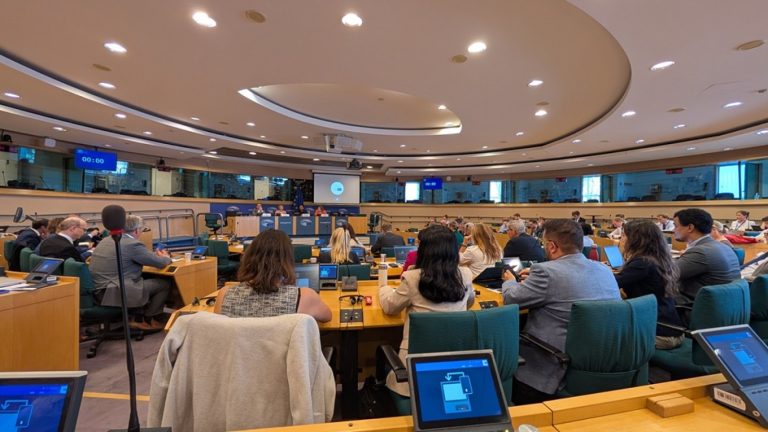
The 12th MINEX Asia Forum in Ankara brought together 140 delegates from 16 countries — engineers, ministry officials, multilateral bankers, laboratory operators, tailings specialists — and I noticed something I had not seen with quite the same force at earlier editions. Nobody was still making the strategic case. It was being assumed. Türkiye’s General Directorate of Mining and Petroleum Affairs speaker put it plainly: the country is no longer positioning itself as a reserve holder. It is positioning itself as an industrial bridge — the refinery, the workforce, the standards regime — between Central Asian ore and European demand.
That is a shift with consequences. If reserves are the starting point rather than the argument, then the real contest is over the intermediate layer: processing capacity, laboratory infrastructure, project bankability, tailings engineering, ESG certification, the availability of trade finance instruments that actually move tonnes of processed material rather than fund single mega-projects. This is where the room disagreed, and where the disagreements were worth having.
Two forums, one diagnosis
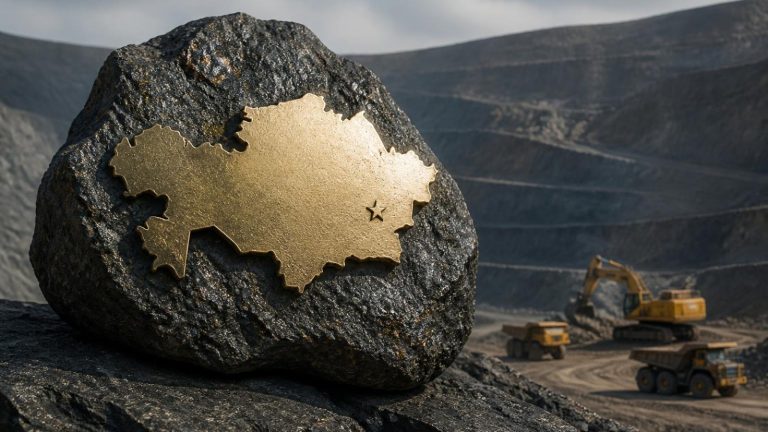
Put MINEX Kazakhstan in April alongside MINEX Asia in June and a consistent diagnosis emerges. In Astana, the surprise takeaway from Day 1 was not geological. It was that Kazakhstan has, in the phrase used by Nightingale International, a narrative deficit. The country appears in Western media coverage of critical minerals mainly as a footnote to Chinese dominance rather than as an author of its own story — despite 9,500 mineral deposits, a $1 billion DBK financing programme for rare-earth processing, and reforms that have pushed the country into the global top ten for mining investment attractiveness from 104th a decade ago.
Ankara made a parallel point in a different vocabulary. Geological wealth does not automatically translate into investment. It never has. The missing ingredient is not more MoUs between capitals. It is the workaday infrastructure — accredited laboratories, JORC- and UMREK-compliant reporting, GISTM-aligned tailings design, sovereign-scale processing capacity, and the kind of trade finance that treats critical minerals as a flow rather than a project. Kazakhstan and Türkiye are, from opposite ends of the corridor, converging on the same answer: extraction is not enough, and speaking louder about extraction will not fix it.
Speed is the variable nobody has solved
Ankara convened the largest single gathering of international financial institutions ever assembled at a MINEX Asia Forum — EBRD, EIB, KfW IPEX-Bank, IFC, UK Export Finance, ADB and BORG Capital Insights, all on the same panels, actively banking and investing in raw materials projects across the Middle Corridor. That, in itself, is a datapoint: the multilateral and export-credit community now treats Central Asian and Türkiye-adjacent critical minerals not as a policy interest but as a live pipeline.
Which is what made the most uncomfortable moment of the forum, for me, so telling. It was not on any panel. It was in the corridor conversation that followed the financing session. The mandates are there. The appetite is there. What is not there is speed. Western permitting and financing cycles routinely take three to five years. Chinese state capital deploys in eighteen to twenty-four months. That gap is not a policy problem for Brussels or Washington to solve on Central Asia’s behalf. It is a structural feature of how Western DFIs are governed, and it is the single variable that will determine whether the Middle Corridor becomes a supply line or a slogan.
The corollary is that first-loss capital, blended finance, and offtake-backed instruments — the least glamorous parts of the toolkit — matter more than another declaration of strategic alignment. The bankers I spoke with knew this. The question is whether their institutions are governed to act on it.
The quieter takeaways
Two threads deserve more attention than they will get. The first is workforce. Devrim Aksu closed Day 1 with the observation that every projection of regional CRM growth quietly assumes a workforce that does not yet exist — digitally trained, remote-operations capable, and drawing meaningfully on women, who remain a structurally underused reserve in mining talent pipelines across the region. No amount of financing solves this. It has a decade-long horizon and needs to start now.
The second is ESG, and specifically the reframing that Tunç Berkman offered in one line: mining’s greatest resource is no longer underground — it is public trust. That is not a slogan. It is a description of the mechanism by which projects with credible environmental and social governance move faster through Western permitting, attract patient capital sooner, and reach production ahead of peers who treated ESG as a compliance overhead. In a speed-constrained system, this is a decisive edge.
Why London is the logical next stop
The MINEX Forum series was built to move the same conversation through the geographies that actually have to reach agreement with each other. MINEX Kazakhstan showed a producer country working out how to move up the value chain. MINEX Asia showed a midstream candidate — Türkiye — arguing for its role as the refinery and the workforce between the ore and the market. What is missing from that arc is the room where the deal actually gets papered, financed and listed. That room is London.

On 30 November, as part of London Mining Week, we convene the 14th edition of the MINEX Eurasia Conference. It has long been the cross-border forum for mining and mineral exploration across Central Asia, the Caucasus and Mongolia. Last year’s edition drew 135 senior delegates, more than three-quarters of them decision-makers, with a ministerial keynote from Central Asia. This year we are expecting 150 to 200 participants, with the programme built around the five questions Ankara pushed to the front of the queue: critical minerals, financing, the Middle Corridor, AI, and ESG.
We are co-organising with the Eurasian Critical Minerals Organisation and working closely with the UK Department for Business & Trade’s regional representatives across Central Asia and Türkiye. Overseas delegations are expected to include senior officials and mining company representatives from Kazakhstan, Uzbekistan, Mongolia, Tajikistan, Kyrgyzstan, Turkmenistan, Armenia, Azerbaijan, Ukraine and Türkiye. If Ankara made the case that processing is the strategic question, London on 30 November is where that case meets the capital and the counsel that decide whether it moves.
Read the record. Join us in London.
If you were not in Ankara, the post-event report is the closest thing to being in the room — statistics, speaker roster, and the argument as it unfolded across the two days: MINEX Asia 2026 post-event report. And the companion record from Astana in April, tracing where the value-added agenda started this cycle, is here: MINEX Kazakhstan 2026 media release.
Then join us in London on 30 November: MINEX Eurasia 2026 — the preliminary agenda is here and the background on the conference is here. The corridor question does not resolve itself in Central Asia. It resolves — or fails to — in the room where the buyers, the regulators and the capital actually meet the suppliers. That room is London Mining Week. I hope to see you there.
#CriticalMinerals #MiddleCorridor #MINEXForum #Mining #CentralAsia #LondonMiningWeek