Region: Europe

  • Bucim Mine, North Macedonia

    Bucim Mine, North Macedonia

    On 14 June 2018, the MINEX Europe’18 Forum delegates visited Buchim Mine operated by Solway Group.

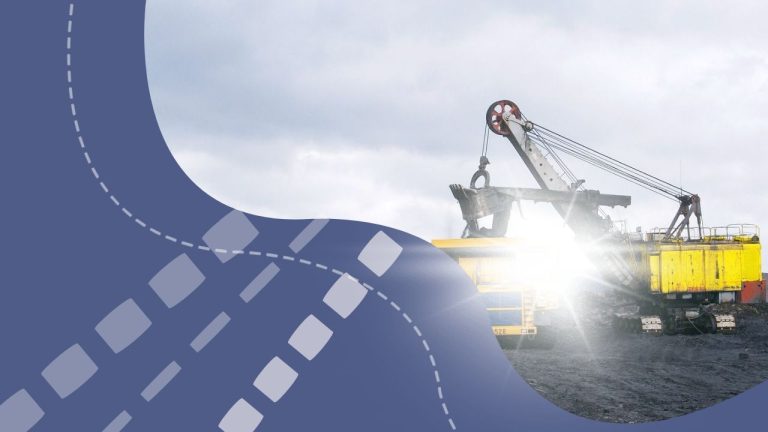
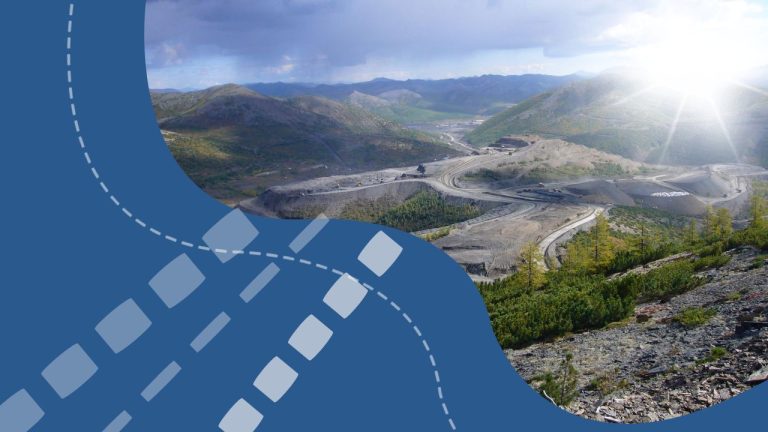
    The Bucim mine, located in Radovish, North Macedonia, is a significant copper and gold mining operation. Bucim is an open pit mine which produces a concentrate containing copper and gold. It processes over 4.5 million tonnes of ore annually. Buchim operations in Macedonia have been granted complex, integrated environmental permits, as well as international certificates of environmental management systems ISO 14001 and production system management ISO 9001.

    Photos>>>

    Date: 14 June 2018

    Location: Radovish Municipality in southeastern North Macedonia

    Highlights:

    Mineralization: It is an actively mined porphyry copper-gold deposit associated with Tertiary subvolcanic intrusions.

    History: Operational since 1978, it employs both open-pit and underground mining methods.

    Ownership: Managed by Bucim DOO Radovish, a part of the Solway Group, it is the only operating copper and gold mine in North Macedonia.

    Significance: Bucim mine plays a crucial role in the local economy and has been pivotal in the mining sector of North Macedonia for several decades.

    History: The construction of the Buchim mine, located in Southeastern Macedonia, began in 1976 and the plant became operational in 1979 as a conventional open-pit copper and gold mine and flotation mill. The mine went bankrupt around the year 2000, due to depletion of the high-grade portion of the mine during the Yugoslavian era, combined with inefficient management, rendering the facility ill-equipped to deal with prolonged periods of low metal prices.  Solway acquired Buchim in 2005, winning the Macedonian government’s international tender.  Within a short period, Solway had repaired or replaced the mining fleet and implemented upgrades to the flotation circuit.

    Production: Buchim is an open pit mine that produces clean flotation concentrate containing copper, gold, and silver. It processes over 4.5 million tons of ore per year. Over 40,000 tons of copper concentrate containing gold and silver are produced per year. In 2012, Solway built a small SXEW plant to process the oxidized portions of that mineralization and extract the copper from waste dumps that remained from previous decades of Buchim’s history. Today, the SXEW plant has a capacity of over 2,000 tons of 99.99% cathode copper per year. The new operation makes a significant contribution to the profitability of the mine. It also reduces the mine’s impact on the environment.

    Buchim’s ore contains 0.2–0.3% of copper and 0.2–0.3 grams per ton (g/t) of gold. The copper concentrate does not contain any significant impurities and, due to its quality, is highly sought after by European smelters; the end product was transported to the copper smelters in Bulgaria.

    Since 2005, the Solway Investment Group has invested over €32.6 million into the Buchim mine. This investment has supported the modernization and development of the mine, including the instalment of automated processing operations, flotation circle upgrades, the construction of a new tailings dump and reagents workshop, the recultivation of an old tailing dump, and the introduction of a closed water consumption cycle. In 2011, the Group invested €12 million and launched a new SXEW (copper leaching) plant and started producing cathode copper. When in full capacity, the new SXEW facility is able to produce up to 2,000 metric tons of copper per year (t/yr). The €12 million investment into the copper leaching plant construction not only increased Buchim’s economic efficiency but also decreased the plant’s impact on the environment.

    With 600 employees, the mine is the biggest local employer in the region and is fully committed to its social and environmental responsibilities.

    Since 2005, Solway has invested over US $2.5 million in the development of civic infrastructure and environmental protection in the towns neighbouring the Macedonian mine of Buchim. This includes, but is not limited to the maintenance of local athletic, cultural, and educational facilities; the purchase of medical equipment for local hospitals; the construction of local roads and other infrastructure; the implementation of a closed loop and environmental management control systems.

  • Čukaru Peki deposit, Serbia

    Čukaru Peki deposit, Serbia

    On 16 June 2017, MINEX Europe Forum visited the Čukaru Peki deposit managed by Rakita Exploration in Serbia. Zijin Mining secured a 100% interest in the Čukaru Peki Copper-Gold Mine through two transactions in 2018 and 2019.

    Photos>>>

    Date: 16 June 2017

    Location: Eastern Serbia, central Timok Magmatic Complex

    Highlights:

    • Čukaru Peki is a world-class copper-gold mine in Bor, Serbia.
    • Cukaru Peki site was discovered in July 2012 by Rakita, a local company through which the project was managed, headed by the geologist Dejan Kozelj.
      The Čukaru Peki deposit, located in Serbia’s Bor District, is a significant copper-gold deposit within the Timok Magmatic Complex. Discovered in 2012, it consists of the Upper Zone and Lower Zone, with the Upper Zone containing high-grade copper-gold ore. This deposit is considered world-class due to its substantial mineral resources and economic potential.
      The geological setting of Čukaru Peki is characterized by porphyry-type mineralization. Ongoing exploration and development efforts indicate its importance in Serbia’s mining sector, with trials underway to assess its operational viability. This deposit plays a crucial role in Serbia’s mineral resource strategy, contributing significantly to its economic growth and mining industry development. The Cukaru Peki deposit is subdivided into an Upper Zone (“UZ”) of high-sulphidation epithermal mineralization and the underlying Lower Zone (“LZ”) of porphyry type mineralization.
    • The Cukaru Peki UZ Mineral Resource comprises an Indicated Mineral Resource of some 1.7 Mt above a cut-off grade of 0.75% copper, with average grades of 13.5% copper, 10.4 g/t gold and 0.23% arsenic and an Inferred Mineral Resource of some 35.0 Mt above a cut-off grade of 0.75% copper, with average grades of 2.9% copper, 1.7 g/t gold and 0.17% arsenic.
    • Zijin Mining secured a 100% interest in the Čukaru Peki Copper-Gold Mine through two transactions in 2018 and 2019.
    • In addition to Čukaru Peki, Zijin Mining operates another world-class copper asset in Serbia, the Bor Copper Mine. Their combined output was 240,000 tonnes of copper in 2023, making Zijin the second-largest copper miner in Europe.  The two mines in Serbia are undergoing de-bottlenecking and expansion, scheduled for completion by 2025. Once complete, their combined production capacity is expected to reach 300,000 tonnes per annum.
  • RTB Bor mine, Serbia

    RTB Bor mine, Serbia

    On 16th June 2017, the MINEX Europe’17 Forum delegates visited RTB Bor –  Serbia’s largest local copper mine in Bor region.

    Photos>>> 

    Media coverage>>>


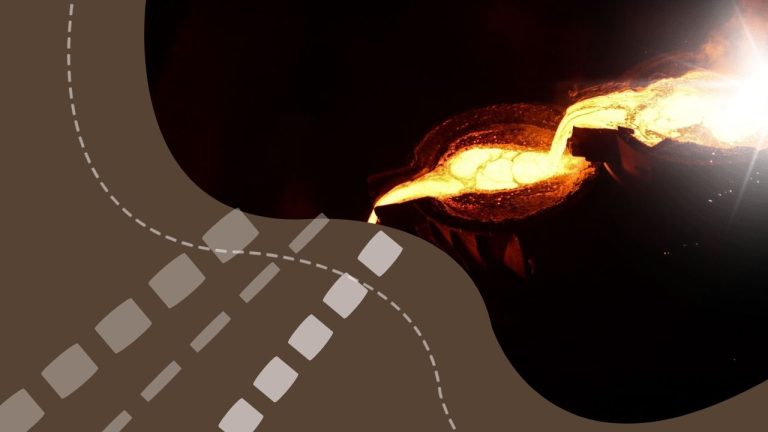
    Guests from 12 countries of the world, accompanied by the general director of RTB “Bor” Blagoj Spaskovski, toured the new smelter and sulfuric acid factory, the company announced. General Director of RTB, Blagoje Spaskovski, said that the company, apart from ore whose safe reserves are currently estimated at one billion and 355 million tons, has also secured its future in the new, best available technology.

    The visit was widely covered by the local media

    He added that the new metallurgical plants today work excellently and achieve the designed parameters.

    – We got clean skies and improved environmental protection, improvement of work organization and higher quality of all business segments, especially safety at work – he said.
    Spaskovski explained to the guests in detail how and for how long the new metallurgical plants in Bor were built.
    In the control room of the new smelter, from where all inputs are regulated – concentrate, electricity, water, oxygen and nitrogen, RTB General Director Bor said:
    “The new smelter was built two years ago. It is about “flash-smelting” melting technology, and today only “Mitsubishi” technology, which is twice as expensive, as well as “double flash-smelting” is better than it.

    According to him, RTB Bor today has the most modern technology in the smelting part, but not in the converting part.
    – We produce 65 per cent of our concentrate, and we import the remaining amount and process it as a service. We have a good profit on the domestic concentrate, and with service processing, we cover the processing costs and the profit is significantly lower there. That is why, among other things, I said at the conference in Belgrade that RTB Bor must find a strategic partner – Spaskovski said.

    He also explained how the new smelter was built.
    He added that the entire work would not have been completed without the Government of Serbia and its financial and logistical assistance.
    – How big this project is also shown by the fact that the building we are in has dimensions of 62 by 90 meters, which are the dimensions of a stadium. The new sulfuric acid factory and wastewater treatment plant are located in an area larger than two stadiums. Next to the smelter is a power plant that converts excess heat into electricity and produces 20 to 30 megawatt-hours of electricity per day – said Spaskovski.