Region: Europe

  • Cornish Metals Secures $210 Million Bond Financing to Restart Historic South Crofty Tin Mine as AI-Driven Demand Sends Prices Soaring

    Cornish Metals Secures $210 Million Bond Financing to Restart Historic South Crofty Tin Mine as AI-Driven Demand Sends Prices Soaring

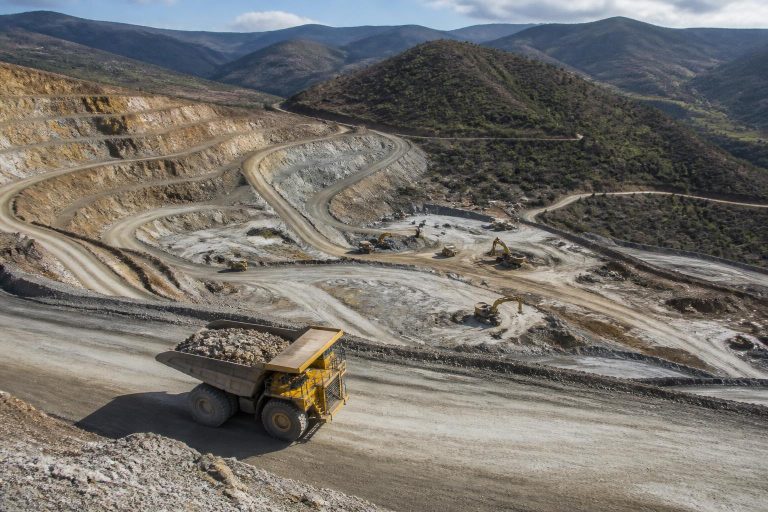
    Cornish Metals has secured $210 million in bond financing to fund the restart of the South Crofty tin mine in Cornwall, moving the project closer to a final investment decision this summer after more than a quarter of a century of failed revival attempts at one of Britain’s most historically significant mining sites.

    The six-year bonds carry a fixed annual coupon of 13.5% and attracted strong demand from investors across Europe, North America and international markets. Chief executive Don Turvey said the financing means Cornish “expects to be fully funded” ahead of a final investment decision targeted for this summer. The company also received a non-binding letter of interest from the US Export-Import Bank for up to $225 million tied to future tin concentrate exports to the United States, announced in February.

    The timing is favourable. Tin prices have surged nearly 40% in 2025 and have gained a further 34% so far this year, approaching $54,000 per tonne, driven by rising demand from artificial intelligence infrastructure buildout and electronics manufacturing — sectors that rely heavily on tin for soldering and circuit board production.

    South Crofty operated for more than 400 years before low metal prices forced its closure in 1998. Several subsequent attempts to revive the mine failed before Cornish Metals acquired the project in 2016. The deposit is described by the company as the highest-grade tin project not currently in production, hosting 2.9 million indicated tonnes grading 1.5% tin and 2.63 million inferred tonnes grading 1.42% tin, alongside a near-mine exploration target of between 6 million and 13 million tonnes. A preliminary economic assessment released last year outlined a 14-year mine life with average annual production of 4,700 tonnes of tin and peak output of 5,000 tonnes in year four.

  • North Macedonia’s Antimony Project Divides Communities as US-Backed Critical Minerals Deal Puts Kriva Palanka on the Geopolitical Map

    North Macedonia’s Antimony Project Divides Communities as US-Backed Critical Minerals Deal Puts Kriva Palanka on the Geopolitical Map

    A planned antimony mining project in the Kriva Palanka region of eastern North Macedonia has rapidly evolved from a local planning dispute into a matter of national and geopolitical significance, after a €5 million US-backed financing agreement thrust the country’s critical minerals potential into the international spotlight.

    The funding deal, signed at the headquarters of the US International Development Finance Corporation, involves Pela Global Limited, a company already active in North Macedonia focused on gold, silver and antimony exploration near the Krstov Dol sites and the village of Luke. For the Macedonian government, the agreement represents an opportunity to position the country within the emerging global critical minerals supply chain and deepen integration with European and transatlantic structures. Antimony — used in flame retardants, batteries and a range of high-technology applications — has attracted growing strategic interest as Western governments seek to diversify supply away from China.

    But on the ground in Kriva Palanka, the picture is more complex. Community reactions are divided along familiar lines. Some residents are demanding clarity on what will be mined, how extraction will proceed and what environmental safeguards will apply, with concerns about water contamination, air quality and long-term land degradation prominent in local debate. In the village of Luke itself, however, support for reopening the mines is more pronounced — years of outmigration have hollowed out the local population, and for those who remain, the prospect of stable employment is a practical necessity rather than an abstract promise.

    The Macedonian energy ministry has been careful to frame its role. Officials stressed that North Macedonia is not a direct contracting party to the financing deal but “participates as a witness and partner supporting the process,” and that any mining would be subject to strict environmental standards. The current concession at the Luke site, granted in 2016 to RI Energetika Pela for 30 years, covers lead, zinc, gold, silver and copper but does not currently extend to antimony — meaning a separate permit would be required before any antimony extraction could begin. An adviser at the ministry told local media the project remains in an early exploration phase, with feasibility and profitability assessments still to follow.

    Kriva Palanka mayor Sasko Mitovski has set out a series of conditions he considers non-negotiable: a fully closed production process, no release of harmful substances, and no measurable impact on water, soil or air. He has also called for bank-backed financial guarantees to cover potential environmental damage and emphasised that decisions of this magnitude require broad input from experts, academics, civil society and local communities — not a simple binary vote. A local referendum remains a legal possibility under Macedonian law, though the mayor cautioned it must be grounded in factual and expert evidence rather than political narratives.

    Politics has nonetheless entered the picture. The opposition Social Democratic Union of Macedonia has alleged that companies linked to the project have ties to figures close to the ruling VMRO-DPMNE government led by Prime Minister Hristijan Mickoski — claims that, while unverified, have added to public scepticism in an already polarised environment.

    For many observers, Kriva Palanka has become a test case for whether North Macedonia can manage critical minerals development in a way that is transparent, environmentally responsible and democratically legitimate — or whether it will repeat cycles of industrial promises that generate lasting environmental and social costs.

  • Poland and US Sign Critical Raw Materials Agreement Covering Rare Earth Processing, Geological Mapping and Deep-Sea Mining Research

    Poland and US Sign Critical Raw Materials Agreement Covering Rare Earth Processing, Geological Mapping and Deep-Sea Mining Research

    Poland and the United States have signed a strategic memorandum of understanding on critical raw materials, committing both countries to deeper cooperation across the full mineral supply chain from extraction and processing through to recycling, as Washington continues to build out its allied network of mineral partnerships.

    The agreement was signed by Poland’s Chief National Geologist Krzysztof Galos and US Under Secretary of State Allison Hooker, according to the Polish Ministry of Climate and Environment. It covers rare earth metal processing, geological mapping of resources in both countries, investment mobilisation, permitting streamlining and technological innovation — including research into advanced separation techniques and environmentally friendly deep-sea mining methods.

    A central objective of the partnership is supply chain diversification, with both governments explicitly framing the agreement as a tool to prevent mineral access from being weaponised as a form of political pressure. The pact aims to build what the two sides describe as a transparent market and to reduce dependence on single-source suppliers — language that reflects shared concern over China’s dominant position across multiple critical mineral supply chains.

    The agreement also addresses the financial and regulatory barriers that have historically slowed mineral project development, with both governments pledging to mobilise investment support and streamline permitting processes. Beyond primary extraction, the two countries will invest in recycling technologies designed to recover valuable metals from scrap and waste streams, reflecting growing recognition that circular economy approaches must complement new mining in meeting long-term mineral demand.

    Poland’s government described strengthening cooperation with strategic partners as a key national priority, noting that the deal aligns with its national raw materials policy.

  • Turkey Plans $600 Million Investment to Turn Beylikova Into World Top-Five Rare Earth Producer With 1,500 Jobs

    Turkey Plans $600 Million Investment to Turn Beylikova Into World Top-Five Rare Earth Producer With 1,500 Jobs

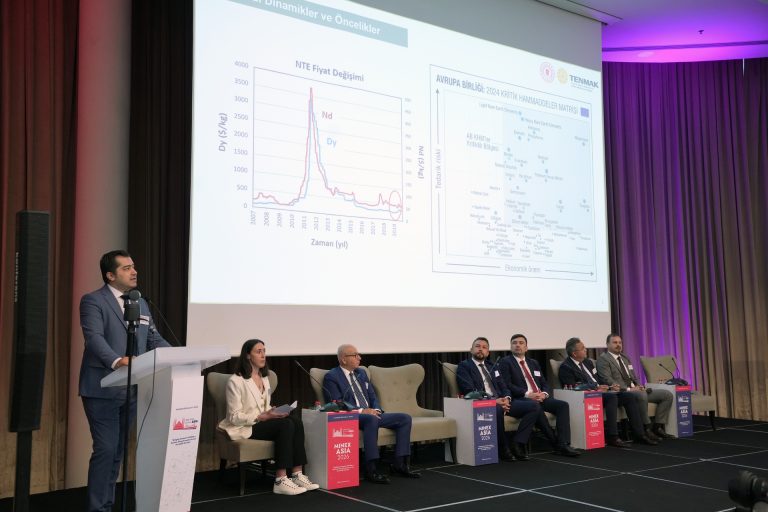
    Turkey is moving to transform its Beylikova rare earth project from pilot operations into full industrial-scale production with a planned $600 million investment across three facilities, as Ankara positions itself to enter the global top five rare earth producers and capture value beyond raw material extraction.

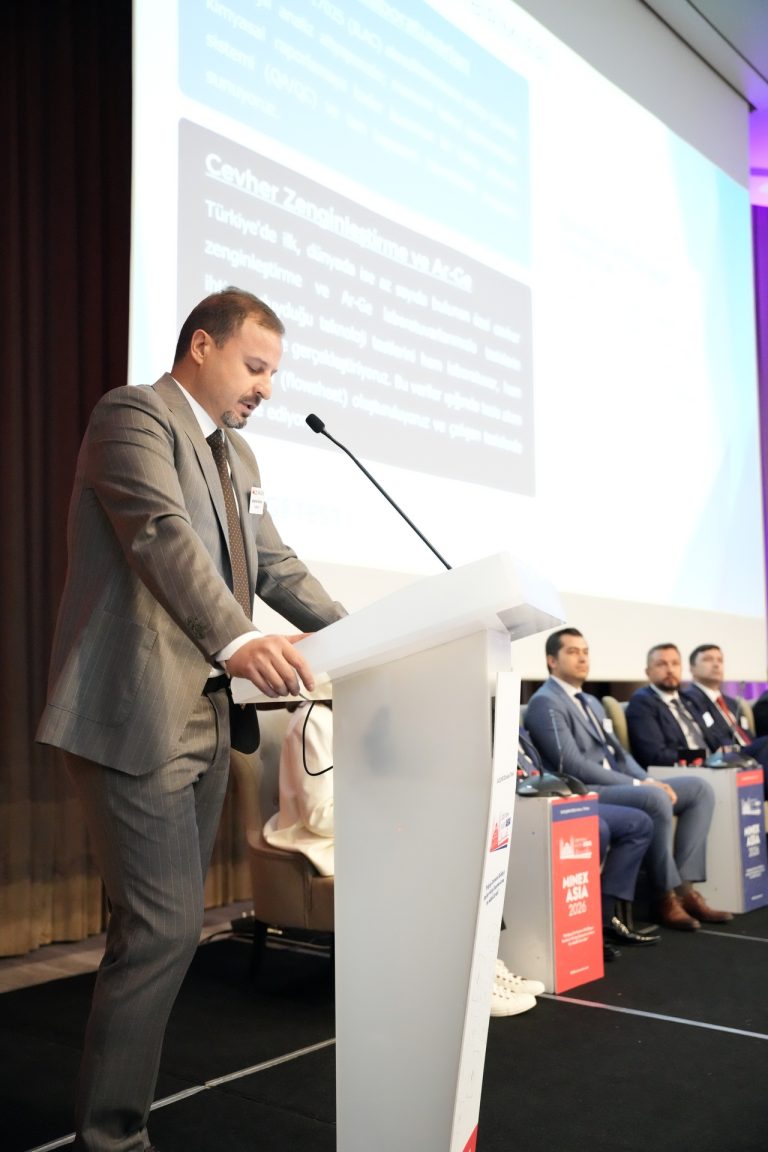
    Energy and Natural Resources Minister Alparslan Bayraktar announced the investment commitment while highlighting the scale of the Beylikova deposit in Eskişehir Province, which the Energy Ministry describes as holding 694 million tonnes of rare earth elements — the world’s second-largest reserve after China’s Bayan Obo deposit at 800 million tonnes. “Beylikova is a project the whole world is watching. We aim to rank among the top five globally in rare earth elements,” Bayraktar said.

    The three planned facilities are expected to create close to 1,500 jobs in Eskişehir, a city the minister described as already a central hub for mining and industry and one that hosts globally significant boron reserves. The new investments, he said, could push Eskişehir into a leading position in Turkey’s broader industrial landscape, with mining acting as a driver of wider economic activity.

    Bayraktar signalled a clear strategic direction beyond extraction, emphasising that Turkey’s approach to its rare earth endowment must generate value at every stage of the supply chain. “We should not limit ourselves to raw materials. We need to transform them into intermediate and final products,” he said — a position consistent with the broader shift among mineral-rich nations to capture processing and manufacturing value rather than exporting raw ore.

    Environmental standards and worker safety were also cited as central priorities for the project, with the minister stressing that mining activities must align with environmental requirements rather than operate at their expense — a consideration that will be important for attracting Western industrial partners and offtake agreements.

  • Portugal Grants Savannah Resources Second Land Easement at Barroso Lithium Site as Village Resistance Intensifies

    Portugal Grants Savannah Resources Second Land Easement at Barroso Lithium Site as Village Resistance Intensifies

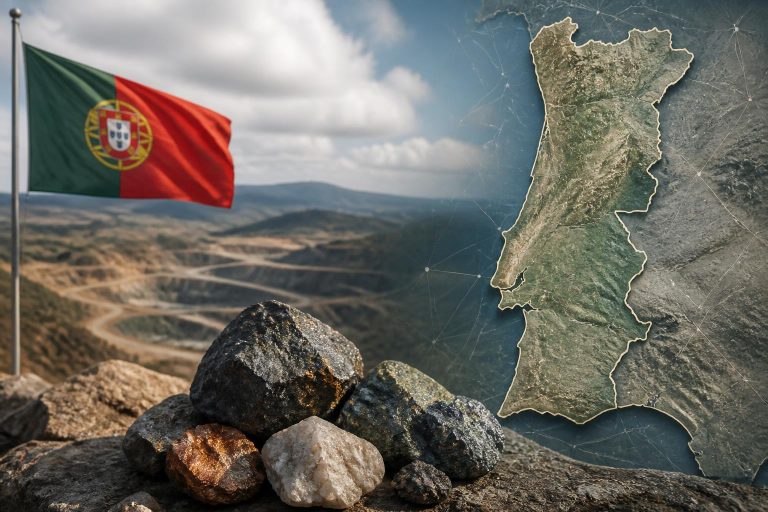
    The Portuguese government has granted Savannah Resources a second administrative easement over 24 plots of private and communal land in the Covas do Barroso area of northern Portugal, allowing the British-based mining company to proceed with geotechnical survey work at its contested Barroso lithium project — a decision that has deepened the conflict between the state and local communities defending what is designated a World Agricultural Heritage site.

    The easement, published in the state gazette Diário da República, was declared by the secretary of state for energy and grants Savannah access to the land for a period of one year. The company said the authorisation will allow it to complete geotechnical work to optimise its understanding of the foundations on which processing infrastructure and other facilities for the project’s next phases will be built. CEO Emanuel Proença described it as “another step in the development of the Barroso lithium project” and “a perfectly natural process in the development of any industrial project,” adding that the company would contact all affected landowners to arrange compensation.

    For the Union in Defence of Covas do Barroso, the decision represents another blow in a long campaign against a project they argue threatens their territory, their livelihoods and their legal rights. The group noted that the project involves four open-pit mines, daily water consumption of approximately one million litres, the use of explosives and a 140-metre-high toxic tailings dam. It also recalled that the Portuguese Public Prosecutor’s Office issued an opinion suggesting that the project’s Environmental Impact Statement should be annulled due to legal violations in the public participation process — a view the government has not acted upon. The state’s earlier decision to grant €110 million in public funding to the project drew particular criticism from the group, which described it as a perversion of the public interest in favour of a private company operating on contested land.

    The first administrative easement, granted in 2024, was temporarily halted by a court injunction obtained by villagers, who reported forced entries onto unauthorised areas and the presence of private security guards in the village during early survey work. Whether the community will mount a similar legal challenge to the new easement has not yet been confirmed.

    The project has received a favourable environmental impact declaration from Portugal’s state environment agency APA, subject to a number of conditions, giving it formal regulatory approval despite sustained local opposition. Savannah, which holds confirmed resources at Barroso of over 39 million metric tonnes — the largest lithium deposit in Europe — is targeting a final investment decision by the end of the year with construction planned for 2027 and first production in 2028.

  • US and EU Procurement Rules Are Shifting Rare Earth Buying Decisions Away From China, Lynas CEO Says

    US and EU Procurement Rules Are Shifting Rare Earth Buying Decisions Away From China, Lynas CEO Says

    New government regulations in the United States and European Union are beginning to change purchasing behaviour in the rare earth supply chain, pushing buyers toward non-Chinese suppliers as compliance requirements make sourcing from China increasingly difficult for companies selling into regulated markets, the chief executive of Lynas Rare Earths has said.

    Speaking at an event in Canberra, Lynas CEO Amanda Lacaze said the US is introducing procurement regulations next year that include restrictions on the acquisition of certain magnets, tantalum and tungsten, while the EU is bringing in sourcing restrictions under its critical raw materials framework. “In both cases, we are observing changed purchasing decisions so that consumers can comply with the regulations,” she said.

    The shift comes after years in which convincing international customers to pay more for non-Chinese rare earths proved difficult, despite China’s dominance as the world’s largest and lowest-cost producer of the metals and magnets used across automotive, defence and technology industries. Beijing’s decision to restrict exports of seven rare earth elements last year in response to US tariffs exposed global manufacturers to supply risk and accelerated government-level action to develop alternative supply chains.

    Washington has pledged to support higher prices for domestic and allied rare earth producers to stimulate non-Chinese supply, but regulatory mandates are proving a more immediate catalyst for changed procurement decisions than price signals alone. Lacaze called for governments beyond the US and Japan to go further, advocating for floor prices to be set as a tool to make non-Chinese rare earth production commercially viable at scale. Australia is revising its strategic reserve policies and its resources minister confirmed in March that the reserve will include a floor price element.

    Perth-headquartered Lynas, which operates a processing facility in Malaysia, is the world’s largest rare earth producer outside China and stands to benefit directly from the regulatory-driven shift in buying patterns.

  • Lumina Metals Opens Copper Concentrate Supply Talks With KGHM After Raising C$406 Million in Toronto IPO

    Lumina Metals Opens Copper Concentrate Supply Talks With KGHM After Raising C$406 Million in Toronto IPO

    Newly listed Canadian miner Lumina Metals has signed a letter of intent with Polish mining giant KGHM to explore a future copper concentrate supply agreement from its Nowa Sól project in Poland, in a development that could link one of the world’s largest undeveloped copper deposits directly to Europe’s most significant copper processing infrastructure.

    The letter of intent, announced on Tuesday, initiates discussions on technical and commercial terms for the supply of copper concentrates from Nowa Sól to KGHM, whose existing copper-silver mine operations in Poland’s Northern copper belt are located in close proximity to the project and host one of Europe’s key copper processing facilities. KGHM is Poland’s only producer of copper and silver and ranked eighth globally in copper output last year.

    Nowa Sól covers 120 square kilometres of the Northern copper belt and hosts a measured and indicated resource of 604 million tonnes grading 1.24% copper and 38 grams per tonne silver — figures that place it among the world’s most significant undeveloped copper projects and one of the largest undeveloped silver deposits globally. Lumina has completed more than 51,000 metres of drilling at the project since its initial discovery in 2014.

    The announcement follows Lumina’s recent C$406.2 million ($297 million) initial public offering on the Toronto Stock Exchange, one of the larger recent copper-focused IPOs in the Canadian market. The company also plans to list on the Warsaw Stock Exchange. Shares were trading at approximately C$11.50 by midday Tuesday, around C$1 below the IPO price, giving the company a market capitalisation of approximately C$1.2 billion.

    Lumina CEO Jordan Pandoff described the KGHM letter of intent as “an important step in reinforcing the Polish metal mining industry” and in positioning Nowa Sól as a cornerstone of copper and silver supply within both Poland and the European Union.

  • Montenegro’s Rudnik Uglja Swings to €6.9 Million Loss as Eight-Month Power Plant Closure Halves Coal Deliveries

    Montenegro’s Rudnik Uglja Swings to €6.9 Million Loss as Eight-Month Power Plant Closure Halves Coal Deliveries

    Montenegro’s state-owned coal mining company Rudnik Uglja recorded a net loss of €6.9 million in 2025, reversing a €15 million net profit the previous year, after the extended closure of the country’s sole thermal power plant slashed demand for its output by more than half.

    TE Pljevlja, which is Rudnik Uglja’s principal customer and the only coal-fired power station in Montenegro, was taken offline between April and December 2025 for a major ecological overhaul costing approximately €70 million. The shutdown caused Rudnik Uglja’s deliveries to the plant to fall to 561,000 tonnes, a reduction of 849,000 tonnes compared to 2024, and sent net sales revenue plummeting to €32 million from €65 million the prior year.

    Total coal mined in 2025 reached 733,000 tonnes — 27% below the company’s production plan and 55% lower than 2024 output. After supplying TE Pljevlja, the remaining volume was sold to other buyers in Montenegro and the wider region. Operating expenses held broadly flat at €29.7 million against €29.6 million in 2024, while staff costs fell to €24.4 million from €26.3 million. The company swung to an operating loss of €7.5 million from an €18 million operating profit in 2024.

    Both Rudnik Uglja and TE Pljevlja are owned by state power utility Elektroprivreda Crne Gore. The thermal plant returned to trial operations in December 2025 and is expected to resume normal output by mid-2026, which should restore coal demand to more typical levels in the current financial year.

  • Norway Joins US-Led Pax Silica Coalition Bringing Sovereign Wealth Fund Capital and Critical Mineral Reserves to Allied Supply Chain Push

    Norway Joins US-Led Pax Silica Coalition Bringing Sovereign Wealth Fund Capital and Critical Mineral Reserves to Allied Supply Chain Push

    Norway is set to formally join Pax Silica, the US-led initiative designed to secure critical mineral supply chains and reduce Western dependence on China across artificial intelligence, clean energy and advanced technology sectors, with the signing scheduled for Wednesday.

    The Norwegian government confirmed the move following a report by Semafor that Washington planned to add the Nordic country this week as part of a broader effort to counter China’s dominance in key materials and infrastructure. Launched in December, Pax Silica is a central pillar of the Trump administration’s allied coordination strategy, encompassing critical minerals access, supply chain resilience and technology value chain integration.

    Norway’s accession brings two assets of particular strategic interest. The country is home to the world’s largest sovereign wealth fund — the Government Pension Fund Global — and holds significant critical mineral reserves, including the Fen rare earth deposit recently confirmed as Europe’s largest. “Norway is home to the world’s largest sovereign wealth fund, and the depth of that institutional capital combined with critical mineral reserves are important,” said Jacob Helberg, the US State Department’s undersecretary for economic affairs.

    Norwegian Trade and Industry Minister Cecilie Myrseth framed the decision in terms of economic opportunity as much as geopolitical alignment. “This initiative can give Norwegian companies better access to advanced technological value chains,” she said, pointing to the potential for deeper integration with allied economies.

    Norway joins a coalition that already includes the UK, Japan, South Korea, Singapore, Israel, Australia, the UAE, India, the Netherlands, Qatar, the Philippines and Sweden, which signed on in March. The expanding membership reflects growing Western urgency to build coordinated alternatives to Chinese dominance across mineral supply chains that underpin semiconductor manufacturing, battery production and clean energy infrastructure.

  • France Calls Emergency G7 Meeting on Critical Minerals as Paris Launches Plan to Rebuild Domestic Rare Earth Supply Chain

    France Calls Emergency G7 Meeting on Critical Minerals as Paris Launches Plan to Rebuild Domestic Rare Earth Supply Chain

    France has convened an online meeting of G7 finance and industry ministers for Thursday to coordinate Western strategy on breaking China’s dominance of critical materials supply chains, as Paris simultaneously unveiled an ambitious national plan to rebuild its own rare earth and permanent magnets industry from the ground up.

    Finance Minister Roland Lescure announced the meeting while speaking in Lacq, a town in southwestern France being developed as the country’s centre for rare earth processing. The ministerial session is intended to prepare common ground ahead of the G7 leaders’ summit in the French spa town of Evian in mid-June, where critical minerals are expected to feature prominently on the agenda.

    Lescure framed China’s dominance of the rare earth market as the result of deliberate strategic investment and aggressive pricing that drove potential competitors out of business over decades. He drew a direct parallel with the energy crisis of the 1970s, arguing that the moment calls for a comparable institutional response. “One of the projects we have in mind within the G7 is to ensure — much as the International Energy Agency was created in the 1970s when OPEC held a production monopoly — that we develop alternatives through international cooperation,” he said.

    France’s domestic strategy targets the full rare earth value chain, from securing overseas mineral supplies through to refining, alloy production and magnet manufacturing on French soil. The plan is explicitly tied to reducing dependence on China for materials critical to electric vehicles, wind turbines, electronics and defence — a dependency that European governments have identified as a strategic vulnerability following China’s progressive tightening of rare earth and critical mineral export controls.

    By 2030, France aims to produce rare earth oxides covering 100% of European demand for heavy rare earths and approximately a quarter of demand for light rare earths, as well as alloys meeting around 10% of European needs. To support the investment required, the government plans to loosen access to state guarantees for strategic projects, extend and simplify tax credits for green industrial investment through to 2028, and channel additional funding through an existing long-term investment programme and a dedicated metals fund. The government is also planning to approach international commodity traders about securing critical mineral supply, potentially backed by a French state project finance guarantee.