Region: Europe

  • Ukraine Could Develop Critical Minerals Four Times Faster Than European Average as EU Export Credit Agencies Move to Finance Projects

    Ukraine Could Develop Critical Minerals Four Times Faster Than European Average as EU Export Credit Agencies Move to Finance Projects

    Ukraine has the potential to integrate into European critical raw material supply chains far faster than a typical mining project timeline would suggest, with the country’s vast inherited geological data base and existing industrial assets positioning it as a near-term contributor to the EU’s minerals strategy, according to senior business and government officials.

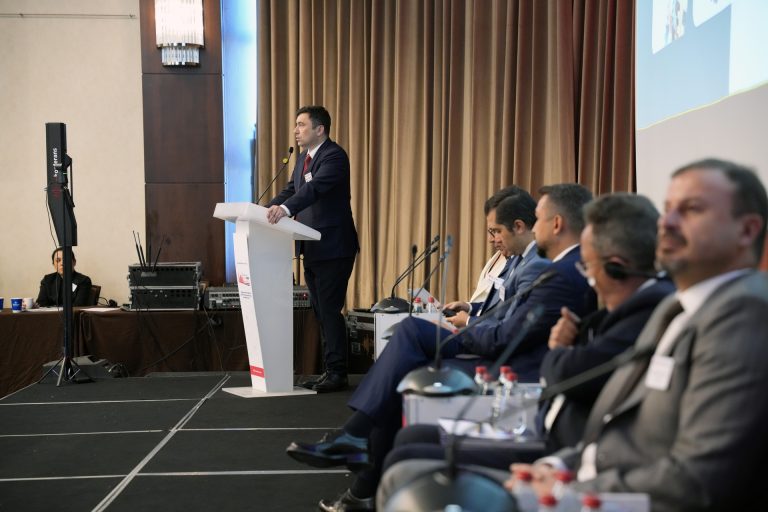
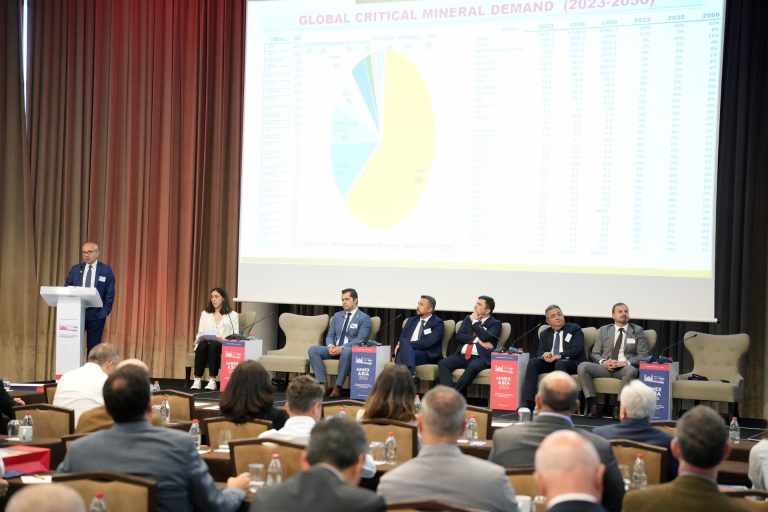
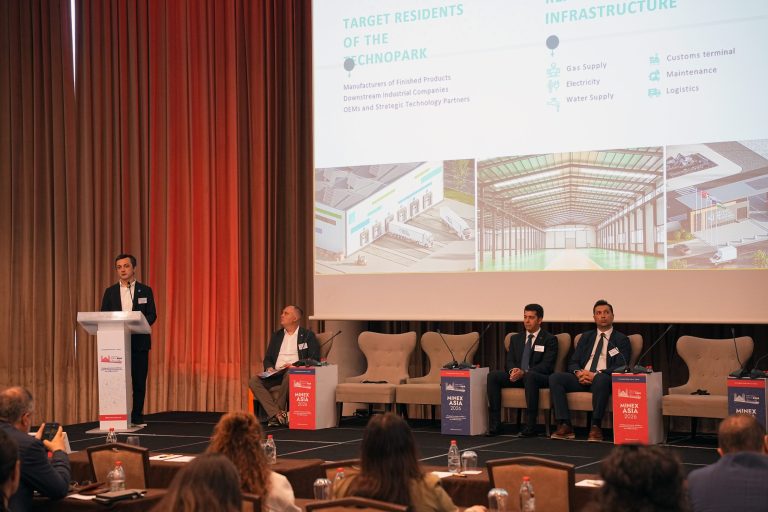
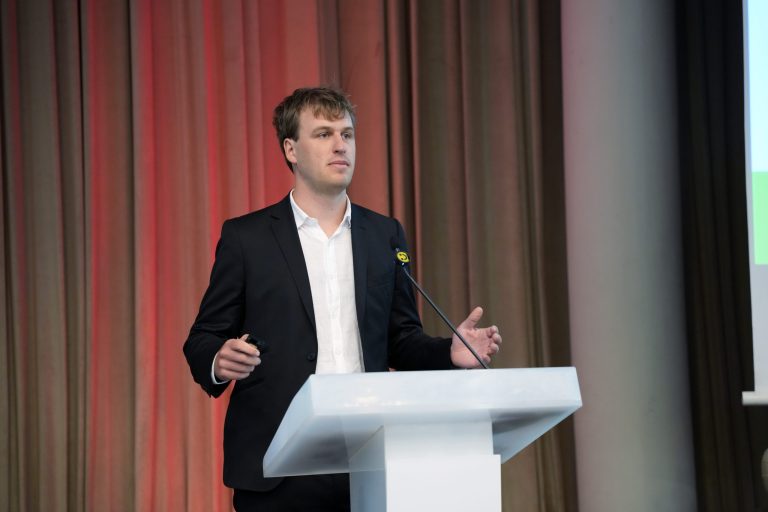
    Speaking at a recent forum, Serhiy Voitsekhovsky, board member of BGV Group Management, argued that while launching a mining project from scratch globally takes an average of 17 years, Ukraine could achieve the same in roughly four — a fourfold acceleration driven primarily by the country’s extensive Soviet-era geological records, which are now being actively digitised and updated. BGV Group has invested more than €150 million of its own capital to demonstrate that Ukraine holds not only lithium and graphite but also rubidium, tantalum and rare earth elements — materials the European technology sector identifies as critically needed.

    On the government side, Deputy Minister of Economy Ihor Bezkaravayny confirmed that Ukraine is preparing large state-owned assets for privatisation, including facilities that produce titanium sponge and aluminium plants. The objective, he said, is not simply to sell the facilities but to integrate them into high-technology production chains aligned with European industrial needs.

    The financing architecture is also taking shape. European Commission representative Anna Yarosh-Fris confirmed that the EU is already connecting the export credit agencies of Poland, Finland and France to finance Ukrainian critical minerals projects, with the explicit goal of turning Ukrainian subsoil into a shared asset of the EU’s internal market.

  • TETHYS and Hartree Announce Life‑of‑Mine Offtake Agreement for the Cataltepe Polymetallic Project in Türkiye

    TETHYS and Hartree Announce Life‑of‑Mine Offtake Agreement for the Cataltepe Polymetallic Project in Türkiye

    TETHYS, a Turkish-incorporated critical minerals and strategic infrastructure platform with projects across Eurasia, and Hartree Metals LLC, a subsidiary of the global commodities firm Hartree Partners LP — a leading independent commodities trading and asset management company — have entered into a life-of-mine offtake and commercial prepayment arrangement to support concentrate exports from the Cataltepe polymetallic mining project in north-western Türkiye.

    The agreement establishes a long-term commercial partnership between the two companies, anchored on the Cataltepe operation. Production from the mine is expected to be processed at the Kalkım flotation facility, generating zinc, lead, and copper concentrates for export to international smelting markets.

    Under the arrangement, Hartree Metals has provided a commercial advance payment to support the restart of operations and ongoing production activities, and will purchase and export 100% of the zinc, lead, and copper concentrates produced for the life of the operation. Production at Cataltepe is expected to commence shortly, with monthly shipments increasing progressively as operations ramp up.

    The transaction demonstrates a shared commercial understanding of the project and a mutual commitment to establishing reliable concentrate supply chains in Türkiye. For TETHYS, the agreement represents the commercial activation of its flagship Turkish operation and a significant milestone in its broader strategy to develop a multi-country portfolio of critical mineral assets across Eurasia. For Hartree Metals, it signifies a deepening of its commercial engagement with Türkiye’s expanding mining sector.

    Prof. Dr Leyla Keser, Chairperson of TETHYS Gateway Trading LLC, said: “The Cataltepe offtake agreement is a landmark transaction for TETHYS and a strong endorsement of the project’s commercial potential. We are delighted to be partnering with Hartree Metals as our long-term trading partner and look forward to building on this relationship as TETHYS continues to develop its portfolio of mineral assets across the region.”

  • The Mineral Security Trap: Why Europe’s Green Ambitions Are a Geopolitical Minefield

    The Mineral Security Trap: Why Europe’s Green Ambitions Are a Geopolitical Minefield

    In the early 1990s, while the West was celebrating the “End of History” and the triumph of globalized trade, Deng Xiaoping issued a quiet prophecy: “The Middle East has oil; China has rare earths.”

    For three decades, that statement was treated as an industrial footnote. Today, it has become the defining thesis of a new, colder era of geopolitics. In the latest episode of the Raw Matters podcast, hosts Peter Tom Jones and Julia Poliscanova sat down with Albéric Mongrenier, Executive Director of the European Initiative for Energy Security (EIES), to peel back the layers of Europe’s strategic “naivety.”

    The verdict? Europe’s transition to clean energy isn’t just an environmental project—it is a massive transfer of strategic dependency that could, if left unmanaged, leave the continent’s power grids and military hardware under the remote control of Beijing.


    The Cyber Trojan Horse in the Power Grid

    The conversation begins with a startling reality check regarding the hardware of the energy transition. We often talk about “critical minerals” as raw commodities—lithium, cobalt, copper. But Mongrenier points to a more immediate, digital threat: the inverter.

    Every solar panel, wind turbine, and EV charger requires an inverter to convert DC power to AC. Today, approximately 80% of new solar installations in Europe use Chinese inverters, with a massive share provided by a single company: Huawei.

    “These devices are connected to the internet,” Mongrenier warns. “They are entry doors for cyberattacks.” This creates two distinct levels of vulnerability:

    1. Intelligence Harvesting: By controlling the inverters, external actors can map Europe’s energy consumption and grid behavior with more granularity than European governments themselves.

    2. The “Kill Switch”: Mongrenier references reports from the US and UK regarding hidden “kill switches” discovered in Chinese-made components. In a conflict scenario, the theoretical ability to remotely disable Europe’s energy system—shutting down wind farms and solar arrays at the click of a button—is no longer science fiction.


    Dual-Use: The F-35 and the Wind Turbine

    One of the most persistent myths of the “Green Deal” is that critical minerals are purely “clean tech” materials. In reality, the minerals powering the energy transition are the exact same materials required for modern warfare.

    “NATO came up with its own list of 12 defense-critical minerals late in 2024,” Mongrenier notes. The overlap is nearly total:

    • Rare Earths: Essential for the permanent magnets in EV motors, but also for the guidance systems of missiles and the engines of F-35 fighter jets.

    • Graphite: Used in battery anodes, but also vital for the hulls of submarines.

    • Titanium & Cobalt: The bread and butter of both high-performance turbines and military superalloys.

    This dual-use nature has created a “Mineral Security Trap.” If Europe cannot secure its own supply of these minerals, it loses more than just its ability to hit climate targets—it loses the industrial base required to defend itself.


    A Tale of Two Strategies: The US Stick vs. The EU Paper

    The podcast highlights a widening gap between how Washington and Brussels are reacting to the Chinese monopoly.

    The American “All-of-Government” Blitz

    Under both the Biden and now the Trump administrations, the US has moved with aggressive speed. The US has set a hard deadline: January 2027. By then, defense contractors must purge Chinese rare earths, titanium, and tantalum from their supply chains.

    “The US uses a big stick,” says Mongrenier. They aren’t just asking for change; they are mandating it while simultaneously throwing tens of billions of dollars in subsidies and equity stakes at domestic projects like MP Materials.

    The European “Silo” Problem

    In contrast, Europe’s response remains “timid.” Poliscanova points out that Europe is still hampered by siloed decision-making. While the US treats mineral security as a singular mission across all departments, the EU is split between various Directorates-General (DGs) that often fail to communicate.

    Furthermore, Europe remains obsessed with the “business case.” “Strategic infrastructure does not always have a business case,” Poliscanova argues. “Sometimes you just invest because it’s a critical asset. We need to forget about the short-term profit and think about resilience.”


    The Axis of Minerals: Russia, Iran, and China

    The discussion takes a darker turn when addressing the current conflict in the Middle East. Mongrenier points out that the “axis” of Russia, Iran, and China is not a loose association—it is a functional industrial alliance.

    Take the drones currently saturating battlefields in Ukraine and the Middle East. Whether they are Iranian Shahed drones or Russian variants, their supply chains lead back to China. “90% of these drones are battery-powered,” Mongrenier says. “If we build a ‘European Drone Wall’ for our own defense, but the batteries and minerals come from China, have we actually improved our security?”


    The Path Forward: Ending the Naivety

    As the episode concludes, the hosts and guest outline a roadmap for a more resilient Europe:

    1. Aggregating Demand: Europe must connect the car industry and the defense sector to send a massive, unified “demand signal” to miners and refiners outside of China.

    2. The “Carrot and the Stick”: Europe needs to provide the financial “carrots” (subsidies and public procurement) while wielding the “stick” (vetting components for cyber risks and mandating non-Chinese supply chains for critical defense hardware).

    3. Industrial Sovereignty: 2026 and 2027 are viewed as the “midterm” years for European leadership to finally treat energy and mineral security as the same issue.

    The message is clear: Europe’s “naivety” has been a luxury of a more stable world. In 2026, as missiles fly and megawatts become the new currency of power, that luxury has officially run out. To save its climate, Europe must first secure its minerals—and to secure its minerals, it must finally learn to play the game of “Realpolitik.”

  • Germany and France Reject US Metals Tariff Proposal as EU-US Trade Deal Ratification Hits Fresh Turbulence

    Germany and France Reject US Metals Tariff Proposal as EU-US Trade Deal Ratification Hits Fresh Turbulence

    The European Union’s largest economies have rejected a US attempt to resolve a long-running dispute over metals tariffs, injecting fresh uncertainty into the ratification of a transatlantic trade deal that has already faced repeated delays since it was first agreed last July.

    Germany and France voiced frustration in a closed meeting of EU envoys after the US recently changed how it calculates tariffs on hundreds of products containing steel and aluminium — a modification Washington presented as an olive branch to address European concerns. But after EU officials and industry groups crunched the numbers, the adjustment proved to fall well short of expectations. France and Germany noted that the tweak actually worsens the tariff situation for roughly half of the affected products, while VDMA, a major German industrial association, calculated that the average tariff rate for affected companies had risen from 21% to 26%.

    The European Commission said it is considering possible responses, though it has not yet specified what form these might take. EU Trade Commissioner Maroš Šefčovič raised the metals tariff issue during a visit to Washington last week but failed to achieve a breakthrough. Both sides have agreed to continue technical discussions, and the Commission told EU envoys that more fully implementing some of the bloc’s existing trade deal commitments could help unlock concessions from the US side.

    The metals dispute traces back to August last year, when Washington widened a 50% tariff on steel and aluminium to cover hundreds of additional products containing these metals — a move that drew accusations from Brussels that the US was already violating the spirit of the July agreement. Under that initial deal, the EU agreed to eliminate tariffs on US industrial goods in exchange for a 15% ceiling on most EU exports, a lopsided arrangement the bloc accepted to keep President Donald Trump engaged on Ukraine and avoid a broader trade rupture.

    The path to ratification has since been repeatedly disrupted. EU lawmakers paused the process twice — first after Trump threatened to take Greenland, and again after the US Supreme Court invalidated Washington’s global tariff regime. More recently both sides had expressed a renewed desire to conclude ratification, with EU member states and lawmakers simultaneously negotiating amendments including an expiration clause and stronger safeguards for European industries — provisions the Commission has warned could derail the accord entirely.

  • EU Trade Chief Vows to Fight “Tooth and Nail” for European Jobs as China Threatens Retaliation Over Industrial Policy

    EU Trade Chief Vows to Fight “Tooth and Nail” for European Jobs as China Threatens Retaliation Over Industrial Policy

    The European Union will not retreat from its industrial sovereignty agenda despite Chinese threats of retaliation, EU Trade Commissioner Maroš Šefčovič has declared, issuing one of his most combative statements yet on the deteriorating state of EU-China trade relations.

    Speaking exclusively to Euronews, Šefčovič said the bloc would “always” defend the interests of its companies and workers. “We will fight tooth and nail for every European job, for every European company, for every open sector, if we see they are treated unfairly,” he said, responding to Beijing’s threat of countermeasures over the EU’s Industrial Acceleration Act and its Cybersecurity Act — two pieces of legislation China has accused of discriminating against its companies.

    Relations between Brussels and Beijing have deteriorated sharply over the past year. China has tightened export controls on rare earths vital to Europe’s clean technology and defence industries and restricted semiconductor chips essential to the automotive sector, intensifying pressure on already strained supply chains. In response, the EU has pressed ahead with legislation tightening market access for foreign companies and potentially restricting Chinese telecoms firms’ presence across the bloc — prompting Beijing to warn that the EU should not underestimate China’s “firm resolve” to safeguard its interests.

    Šefčovič rejected characterisations of the situation as a looming trade war but was unequivocal that Brussels would not operate under pressure. “We never threaten our partners, and we certainly don’t do it through the media,” he said. “What we need is strategic patience and a great deal of courage.” He noted that a trade conflict is easy to start but difficult to exit — a warning he appeared to direct as much at Beijing as at domestic audiences.

    At the heart of the EU’s grievances is a trade deficit with China that reached €359.3 billion in 2025 — a level Šefčovič described as “simply unsustainable” and one showing no signs of improvement despite repeated EU calls for rebalancing. Brussels is also growing increasingly concerned that Chinese exports being shut out of the US market by higher tariffs are being redirected toward Europe, compounding existing overcapacity concerns.

    Šefčovič said he had invited China’s foreign minister to Brussels for a comprehensive assessment of the current state of relations, stressing that what he wants is “constructive engagement” rather than escalation. He defended the EU’s industrial policy ambitions by pointing to equivalent frameworks elsewhere: “There are very strong industrial policies in China. You have the same in the US, in Canada, in Japan and in Korea. So nobody should be surprised if the European Union responds in kind.”

  • China Threatens Countermeasures Against EU Industrial Acceleration Act, Warning of WTO Violations and Investment Discrimination

    China Threatens Countermeasures Against EU Industrial Acceleration Act, Warning of WTO Violations and Investment Discrimination

    China has launched a formal diplomatic offensive against the European Union’s Industrial Acceleration Act, warning that the bloc’s strategy to boost domestic manufacturing could violate World Trade Organisation rules and constitute institutional discrimination against foreign investors — and signalling that retaliatory countermeasures may follow if dialogue fails.

    China’s Ministry of Commerce delivered formal feedback to the European Commission on Friday and went public with its criticism on Monday, with a spokesperson arguing that the Act imposes numerous restrictive requirements on foreign investment. At the heart of Beijing’s objection is the EU’s use of preferential “EU origin” tags in public procurement and public support policies — conditions the Chinese government says amount to investment barriers and discriminatory treatment of non-European companies.

    The spokesperson said China is willing to engage in dialogue with the EU to mitigate the policy’s impact, but made clear that if those discussions fail to produce results, Beijing is prepared to take countermeasures to “firmly safeguard” its business interests. The European Commission’s response was measured. Spokesperson Olof Gill said the bloc’s proposals are “carefully calibrated to achieve certain economic wider goals for our citizens” and that the Commission remains open to engagement with global partners.

    The Industrial Acceleration Act, launched by the European Commission in March, targets three strategic sectors: clean technologies, car manufacturers and energy-intensive industries including aluminium, steel and cement. It includes domestic content thresholds of 70% EU-content for electric vehicles, 25% for aluminium and 25% for cement. The measures are designed to direct public procurement and state support toward European producers, reducing industrial dependencies and strengthening economic sovereignty.

    European Commissioner for Industry Stéphane Séjourné framed the initiative as a direct response to a mounting employment crisis. More than 200,000 European jobs have been lost in energy-intensive industries and the automotive sector since 2024, with projections pointing to 600,000 further losses in car-making alone this decade. The proposal must still be approved by the European Parliament and the European Council before it can enter into force.

  • European 2030 Critical Raw Materials targets at risk from ‘implementation bottlenecks’

    European 2030 Critical Raw Materials targets at risk from ‘implementation bottlenecks’

    A new policy brief warns that Europe’s ambitious 2030 targets for critical raw materials are under threat, not from a lack of resources, but from a failure to scale industrial operations quickly enough. With less than five years to go, experts are calling for urgent action to de-risk investment and harmonise regulations across the continent.


    The delivery gap

    A collaborative report from REESOURCE and ten other Horizon Europe projects has highlighted that the EU’s transition to green and digital technologies is currently hampered by significant implementation barriers. Despite the benchmarks set by the Critical Raw Materials Act (CRMA)—which mandates 10% domestic extraction, 40% processing, and 25% recycling by 2030—the window for delivery is rapidly closing.

    The brief identifies that the primary risk to these goals is not geological scarcity, but rather “delayed scale-up, fragmented governance, and investment uncertainty”.

    Key barriers to industrial scale-up

    Stakeholders from across the value chain, including mining companies, research organisations, and SMEs, have identified several critical bottlenecks:

    • The “Valley of Death”: Limited access to finance for pilot and first-of-a-kind (FOAK) plants remains the most significant hurdle. Market volatility and price uncertainty frequently stall projects between the research phase and commercial deployment.

    • Regulatory Red Tape: Fragmented waste classifications and inconsistent cross-border transport rules for raw materials continue to undermine the efficiency of recycling flows.

    • Permitting Delays: While the CRMA introduces “fast-track” timelines, the actual administrative capacity and interpretation varies wildly across Member States, damaging investor confidence.

    • Social Acceptance: The report suggests that failing to engage local communities early can lead to delays that “outweigh financial or regulatory barriers combined,” particularly in primary extraction projects.

    Recommendations for action

    To course-correct, the policy brief recommends moving toward milestone-based funding pathways and introducing mandatory traceability requirements—such as Digital Product Passports—for devices containing rare-earth magnets. Furthermore, it stresses that primary extraction and recycling must be developed in parallel to ensure a resilient European supply chain.

    As the 2030 deadline approaches, the focus must shift from legislative design to the “operational delivery” of industrial facilities.

  • Bindi Metals to Launch Maiden Drilling at Serbia’s Ravni Gold Project in May Targeting High-Grade Surface Mineralisation

    Bindi Metals to Launch Maiden Drilling at Serbia’s Ravni Gold Project in May Targeting High-Grade Surface Mineralisation

    Australian mining company Bindi Metals will commence its first drilling programme at the Ravni high-grade gold project in Serbia’s southwestern Raska mining district in May, after securing land access across priority drilling locations, the company confirmed in an ASX filing on Wednesday.

    The maiden diamond drilling programme has been designed to test multiple high-priority targets across the Drenjak and Rujak prospects as well as several scout drilling locations. At Drenjak, the programme will focus on high-grade surface mineralisation, while Rujak will be tested for broad mineralised zones. Serbian contractor Reflex Drilling has been engaged to carry out the work.

    Ravni covers 30 square kilometres of tenure within the Western Tethyan Magmatic Belt — a prolific geological corridor that hosts numerous significant gold, copper and base metal deposits, including the Rogozna project in Serbia and the Vares deposit in Bosnia and Herzegovina. Bindi Metals began exploration at Ravni in November following a binding agreement with Belgrade-based Red Creek to acquire up to an 80% interest in the project.

    Beyond Ravni, Bindi Metals holds two further Serbian assets acquired from Apollo Minerals in 2024 — the Lisa antimony-gold project and the Mutnica antimony-copper project — giving the company a multi-commodity exploration portfolio across one of Europe’s most active mining jurisdictions.

  • Vulcan Energy Breaks Ground Near Frankfurt as Europe Doubles Down on Domestic Lithium Production Amid Iran Energy Shock

    Vulcan Energy Breaks Ground Near Frankfurt as Europe Doubles Down on Domestic Lithium Production Amid Iran Energy Shock

    Vulcan Energy Resources has begun construction on its Lionheart lithium processing facility outside Frankfurt, marking a significant milestone for a project that has become one of the most strategically significant critical minerals investments in Europe as the continent scrambles to reduce dependence on Chinese supply chains and cope with a second major energy shock in four years.

    The first stage of Lionheart, backed by Gina Rinehart and due for completion in 2028, will produce 24,000 tonnes per year of lithium hydroxide monohydrate — sufficient to supply batteries for around 500,000 electric vehicles annually. The project’s process is more chemical than conventional mining: hot, briny water is pumped from underground reservoirs in Landau, approximately two hours from Frankfurt, transported to the processing centre and subjected to electrolysis to extract lithium. The geothermal heat from the same water provides an additional energy stream that offsets much of the production cost and emissions.

    It is that energy advantage that Vulcan chief executive Cris Moreno describes as Lionheart’s competitive edge. “When you look at most lithium-like supply chains, with the biggest cost of production, the one single factor is energy,” Moreno said. “That energy in that brine effectively gives us all the energy we need to develop the entire process, so we’re not buying energy” — allowing the company to compete on cost against Chinese producers despite operating in one of the world’s most expensive labour markets.

    The project has attracted a striking roster of institutional and strategic backers, reflecting its importance to European supply chain policy. The German government has invested €150 million through its Raw Materials Fund administered by KfW, which has also taken a €50 million equity stake in Arafura Rare Earths, another Australian critical minerals company. The European Investment Bank has emerged as Lionheart’s largest lender, committing €250 million. Stellantis, the world’s fifth-largest automaker, holds a stake in the project. KfW’s head of equity investments Jan Klasen noted the development bank has shifted its critical minerals approach from debt financing to direct equity participation, describing critical minerals as “a scarce resource” that warranted the government deploying its most powerful tools.

    The war in Iran — which has inflicted a second major energy shock on European consumers in little more than four years after Russia’s invasion of Ukraine — has only intensified the urgency. The EU-Australia free trade agreement, recently concluded, removes all tariffs on Australian mineral exports to the EU and prohibits dual pricing structures. Brussels has also unveiled its RESourceEU plan targeting €3 billion in mobilised investment over twelve months for projects prioritising materials for magnets, batteries and defence.

    Analysts and policymakers are careful to note, however, that domestic production alone cannot solve Europe’s supply challenge. “Even if Europe develops more of its own mining, refining, processing and recycling, it will almost certainly continue to source a substantial share of critical materials from abroad,” said Petya Barzilska of the European Initiative for Energy Security, who argued that Europe had not necessarily been slower than other regions but had simply built its economic model around efficiency rather than resilience — a trade-off that now requires urgent correction.

  • Mkango Resources Opens Rare Earth Magnet Recycling Plant in Germany as Europe Pushes to Build Domestic Supply Chain

    Mkango Resources Opens Rare Earth Magnet Recycling Plant in Germany as Europe Pushes to Build Domestic Supply Chain

    Mkango Resources has officially opened a rare earth magnet recycling facility in Pforzheim, Germany, operated by its subsidiary HyProMag GmbH, marking a concrete step toward building European domestic capacity in a supply chain currently dominated by China.

    The plant uses Hydrogen Processing of Magnet Scrap technology — developed at the University of Birmingham — to recycle neodymium-iron-boron magnets, the permanent magnets used in electric vehicle motors and wind turbines. The facility carries backing from the German Federal Ministry for Economic Affairs and Energy and featured in the recently signed UK-Germany agreement on critical raw materials, underlining its relevance to both national industrial policy and broader allied supply chain strategy.

    Initial capacity stands at 100 tonnes per year, with a medium-term target of 350 tonnes and a fully permitted ceiling of 750 tonnes annually. The phased ramp-up allows Mkango to grow output without requiring heavy upfront capital deployment, while commissioning is already underway with early processing runs of the core unit completed.

    The plant’s strategic significance exceeds its current output. Europe has been working to reduce dependence on imported rare earths — particularly from China, which dominates both primary production and processing — and magnet recycling offers a lower-carbon and lower-cost alternative to primary mining as a route to domestic supply. Neodymium-iron-boron magnets are among the most critical materials in the energy transition, and recovering them from end-of-life products addresses both supply security and circular economy objectives simultaneously.