Region: Europe

  • Turkey Poised to Play Bigger Role in Critical Minerals Diversification as OECD Warns Export Restrictions at Historic Highs

    Turkey Poised to Play Bigger Role in Critical Minerals Diversification as OECD Warns Export Restrictions at Historic Highs

    Turkey is emerging as a significant potential contributor to global critical minerals supply chain diversification, backed by its resource endowment — including the world’s second-largest rare earth element reserve — and its strategic geographic position connecting Asia, Africa and Europe, a senior OECD official has said.

    Marion Jansen, director at the OECD Directorate for Trade and Agriculture, made the assessment on the sidelines of the OECD Critical Minerals Forum in Istanbul. “Türkiye is already an important player in critical minerals,” she told Anadolu Agency, pointing to the country’s strength as a major global supplier of borates and its significant rare earth reserves, discovered in the central province of Eskişehir in 2022. “This is one of the countries where more investment could take place,” she said. Turkey’s location also gives it a natural advantage as a logistics and transit hub. “Türkiye is situated between Asia, Africa and Europe. This is a fantastic trading hub.”

    As a participant in the OECD’s export credit arrangement, Turkey also has a voice in coordinated international financing efforts for critical minerals projects — a mechanism Jansen described as increasingly important as the world works to broaden the supplier base for minerals essential to the energy transition, digitalisation and defence industries.

    Jansen used the forum to deliver a pointed warning about the structural conditions undermining the global critical minerals market. In some markets, a single country accounts for up to 90% of global supply at either the extraction or processing stage. “This is not good,” she said, noting that excessive concentration distorts markets and prevents normal price formation, while high entry barriers limit the emergence of new participants.

    On export restrictions, the OECD data she cited painted a concerning picture. The use of export restrictions on critical materials has increased nearly fivefold between 2009 and 2024 and remains at historically elevated levels, with the most severe measures — including outright export prohibitions — being deployed with growing frequency. “It becomes nearly acceptable to use it and that’s not good news for the multilateral trading system at all,” she said.

    Investment in the sector faces its own structural challenges, Jansen noted. Mining and processing projects require long-term capital commitments in markets where price volatility is a real risk precisely because competition is limited. “If market conditions are not competitive, the risk that prices will be volatile is real,” she said, adding that addressing these investment barriers will be essential to unlocking the supply diversification the global economy needs.

  • Erdoğan State Visit to Astana Marks New Chapter in Kazakhstan-Turkey Strategic Partnership as Bilateral Trade Surges 45%

    Erdoğan State Visit to Astana Marks New Chapter in Kazakhstan-Turkey Strategic Partnership as Bilateral Trade Surges 45%

    Turkish President Recep Tayyip Erdoğan is paying a state visit to Astana on 13 to 14 May at the invitation of Kazakhstani President Kassym-Jomart Tokayev, with the sixth meeting of the High-Level Strategic Cooperation Council between the two countries scheduled alongside broader bilateral talks. The visit will be followed on 15 May by an Informal Summit of the Organisation of Turkic States in Turkistan.

    The diplomatic encounter arrives at a moment of sharp economic momentum. Bilateral trade between Kazakhstan and Turkey reached $1.13 billion in the first two months of 2026 alone, up 44.9% year-on-year from $777.6 million in the same period of 2025. Kazakhstan’s exports to Turkey surged 66.1% to $916.4 million, driven overwhelmingly by copper and oil, which together account for approximately 90% of export value. Copper and copper cathode supplies more than doubled to $515.7 million, while crude oil exports rose 31.7% to $314.5 million. The trade surplus in Kazakhstan’s favour more than doubled to $705.6 million.

    Beyond the dominant commodities, notable growth was recorded in several other categories: unwrought aluminium rose 80-fold, unwrought zinc nearly 184-fold, and more technologically advanced exports including electric motors, pipeline fittings and automatic control instruments also expanded significantly. Turkey’s exports to Kazakhstan, while declining overall by 6.7%, showed growth in pharmaceuticals, prepared food products, electric generating sets and specialised industrial equipment — indicating a gradual shift toward finished goods and industrial supply.

    The broader relationship has been three decades in the making. Turkey was the first country to recognise Kazakhstan’s independence on 16 December 1991, and bilateral relations have since evolved through three distinct phases — from cultural and political foundation-building in the 1990s, through the formalisation of a strategic partnership framework from 2009, to the current phase emphasising transport and logistics, energy, defence industry cooperation, digital technology and education. More than 5,000 companies with Turkish capital operate in Kazakhstan, Turkish investment over 20 years has totalled nearly $6 billion, and Kazakhstani investment in Turkey has exceeded $2.5 billion. The two countries aim to raise bilateral trade turnover to $10 billion.

    A central pillar of the current partnership is the Middle Corridor — the trans-Caspian transport route connecting Central Asia, the South Caucasus, Turkey and Europe. World Bank estimates suggest cargo volumes along the corridor could triple by 2030 while transit times are halved, making logistics infrastructure one of the fastest-growing and most strategically significant dimensions of the bilateral relationship. In 2025 alone, the two sides signed 20 interstate and intergovernmental agreements covering energy, transport and logistics.

    Analysts note that achieving the $10 billion trade target will require export diversification beyond copper and oil, development of processing industries and removal of logistical bottlenecks — challenges that both governments acknowledge as central to the partnership’s next phase.

  • Ionic Rare Earths Completes Western World’s First End-to-End Recycled Rare Earth Supply Chain for EV Motor Magnets

    Ionic Rare Earths Completes Western World’s First End-to-End Recycled Rare Earth Supply Chain for EV Motor Magnets

    Ionic Rare Earths has demonstrated what it describes as the Western world’s first complete end-to-end recycled rare earth supply chain for electric vehicle motor magnets, successfully converting Belfast-recycled rare earth oxides into high-specification magnets that passed durability testing at Ford’s UK research and development facility.

    The project, led by the Australian company and supported by the UK government’s CLIMATES initiative, brought together Less Common Metals, GKN and Ford UK in a collaboration designed to test whether recycled rare earth material could meet the exacting quality standards required for EV motor production. The process ran from Ionic’s recycling operations in Belfast — where neodymium, dysprosium and terbium oxides are produced at purities above 99.5% from end-of-life magnets and secondary magnet supply chain materials — through to alloy production by LCM, magnet manufacturing by GKN to Ford’s specifications, and final rotor testing at Ford’s Dunton facility. The recycled material rotor passed the full durability test cycle with results equivalent to rotors produced using conventional production magnets.

    Ionic managing director Tim Harrison described the achievement as the culmination of a landmark technology development. “Ionic Technologies was the first producer of recycled, individually separated magnet REOs in the Western world, and this now proves that its long-loop recycling technology can supply Western supply chains for the most demanding applications,” he said.

    The company received UK government backing in late 2023 to build a commercial rare earth magnet recycling facility in Belfast, which will feed materials to LCM for alloy production, with the resulting magnets intended for Ford’s UK electric vehicle manufacturing operations.

    The demonstration carries policy significance at a moment when the UK is seeking to reduce dependence on imported critical minerals. Under the Critical Minerals Strategy announced in November 2025, the country is targeting domestic production of 10% of its mineral needs and recycling supply of 20% by 2035 — compared with current domestic production accounting for just 6% of critical minerals requirements. The CLIMATES initiative supported 36 circular rare earth projects, with the Ionic-led automotive supply chain designated a flagship.

  • Europe’s Fear of Missing Out on Critical Minerals Is Crystallising Around a Forgotten Slovak Antimony Mine — and a Funding Gap No One Has Filled

    Europe’s Fear of Missing Out on Critical Minerals Is Crystallising Around a Forgotten Slovak Antimony Mine — and a Funding Gap No One Has Filled

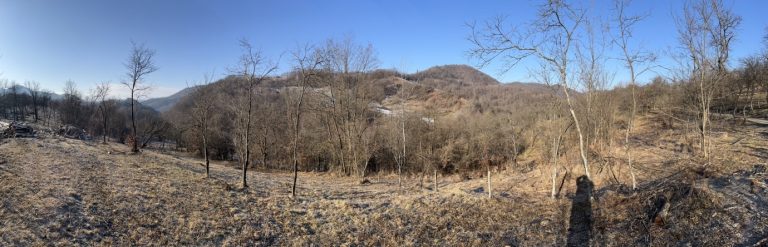
    Deep in the wooded Little Carpathian hills near Bratislava, a Soviet-era mine shaft bores into a hillside above the Slovakian wine town of Pezinok. The Trojarova antimony deposit, discovered by Soviet engineers in the 1980s and abandoned when the Iron Curtain fell, has become an unlikely symbol of Europe’s failure to match its critical minerals ambitions with the money and institutional resolve to act on them.

    Military Metals Corp, the small Canadian company that acquired Trojarova almost two years ago, is pitching the project as a chance for Europe to secure domestic supply of a metal used in munitions, night vision goggles, infrared sensors, fire retardants and nuclear energy. If reactivated, the site could supply as much as a third of the continent’s annual antimony demand of approximately 6,000 tonnes and be operational within two to three years. But the company, with a market capitalisation of less than $30 million, needs partners — and Europe has not yet provided them. No offtake agreement has been secured from EU buyers.

    Antimony sits at the intersection of several geopolitical fault lines. China controls approximately 80% of global processing capacity and, along with Russia and Tajikistan, dominates primary supply. Beijing imposed sweeping export controls on critical minerals and rare earths last year, and the US has since aggressively pursued partnerships and project financing worldwide. Europe has lagged. “Antimony is a textbook example of a small-volume mineral with outsized strategic impact,” said Sabrina Schulz of the European Initiative for Energy Security. “Europe is almost entirely import-dependent, and supply is highly concentrated.”

    The gap between European ambition and action is not lost on officials inside the bloc. The European Critical Raw Materials Act of 2023 set targets for extracting at least 10% and processing 40% of annual key mineral consumption — benchmarks that galvanised some action on battery metals but have not been extended to defence-critical materials such as antimony, gallium and germanium. Brussels officials lack both the mandate and the budget to pursue the kind of direct project financing the US has deployed. Germany’s own €1 billion raw materials fund has supported only two projects and is criticised for creating more qualification hurdles than it removes. Between the economy ministry, the chancellery and the foreign ministry in Berlin, there is still no agreed definition of what a de-risking strategy in critical minerals actually entails, according to people familiar with the internal discussions.

    Frank Hartmann, the German foreign ministry official responsible for Asia, was direct at a March event in Berlin: “What we have to do is long-term strategy, take money and funds into our hands to invest in these critical mineral funds for the next 10 years. Otherwise, we never escape this dependency trap.”

    The contrast with American action is stark. One US company has already approached Military Metals about Trojarova. Last month, the US government’s investment arm agreed a $5 million deal to restart a dormant antimony mine in North Macedonia. As US President Donald Trump heads into summit talks with Xi Jinping in Beijing this week, the Trojarova situation illustrates precisely what European officials fear — that any deal struck between Washington and Beijing could bypass Europe entirely.

    Military Metals CEO Scott Eldridge has outlined a vision that goes beyond the mine itself — with plans to produce ingots directly for defence clients and potential refining partnerships in Germany and Sweden that could anchor a complete European supply chain. But execution requires partners that have not materialised. Thomas Hüser, the company’s chairman and a former Glencore executive, put the situation plainly: “What we are still lacking is not ambition, but execution. Europe’s raw materials strategy remains fragmented, slow, and often disconnected from industrial reality.”

    The EU and US last month reached a coordination accord on critical minerals supply chain policies, which Military Metals hopes could eventually lead to joint investment and offtake partnerships for Trojarova. Whether that translates into concrete action — or remains another framework document in a drawer — may determine whether Europe’s most strategically important forgotten mine stays forgotten.

  • 80 Mile Secures Permits and $30 Million Earn-In Deal to Begin First-Ever Drilling at Greenland Nickel-Copper Project in July

    80 Mile Secures Permits and $30 Million Earn-In Deal to Begin First-Ever Drilling at Greenland Nickel-Copper Project in July

    AIM-listed explorer 80 Mile has received all exploration permits and signed a definitive agreement with USFM to commence drilling at its Disko nickel-copper-cobalt-platinum group elements project in West Greenland, with a 5,000-metre initial drill programme scheduled to begin in the first week of July.

    Under the agreement, USFM will fund an initial $30 million to earn up to a 51% interest in the Disko project. The opening drill campaign carries an approved and fully funded budget of $7.5 million provided by USFM. SRK Exploration has been engaged as geological manager, and Forage Fusion Drilling will supply two diamond drill rigs for the campaign — marking the first systematic drilling ever undertaken at the project.

    The Disko-Nuussuaq project in West Greenland has been identified as having potential to host mineralisation comparable to the Norilsk-Talnakh nickel-copper sulphide system in northern Russia, one of the world’s most significant base metals deposits. 80 Mile chief operating officer Olga Solovieva said the agreement secured the company a free-carried position for 49% of Disko after its partners spend $30 million, describing it as a major step forward for the company’s Greenlandic mineral assets.

    80 Mile, which holds exploration projects across Greenland, Finland and Italy, said it has a first-mover advantage in Greenland having secured what it describes as two of the highest-potential commodity projects known in the country.

  • Rio Tinto-Backed Arctial Aluminium Smelter in Finland Targets 2029 First Metal as Final Investment Decision Set for 2027

    Rio Tinto-Backed Arctial Aluminium Smelter in Finland Targets 2029 First Metal as Final Investment Decision Set for 2027

    The Arctial aluminium smelter in northern Finland, backed by Rio Tinto, is targeting first hot metal production in the second half of 2029, contingent on a final investment decision being taken in 2027, the project’s chief commercial officer has said.

    Maxime Vandersmissen outlined the timeline while speaking at the CRU World Aluminium Conference in London on Tuesday. The project is designed to produce 610,000 metric tonnes of aluminium per year, which would make it one of the largest new smelter developments in Europe in decades.

    The Arctial project has attracted attention as Europe seeks to reduce its dependence on aluminium imports and rebuild domestic primary production capacity, which has contracted significantly over recent years due to high energy costs. Finland’s abundant renewable energy resources and competitive power pricing have positioned the country as one of the few viable locations on the continent for new large-scale smelting capacity.

  • Poland Eyes Kazakhstan Energy Transition Partnership as Green Technology Companies Seek Foothold in Central Asian Market

    Poland Eyes Kazakhstan Energy Transition Partnership as Green Technology Companies Seek Foothold in Central Asian Market

    Poland sees significant and growing potential for energy sector cooperation with Kazakhstan, with a particular focus on green technologies, renewable energy and environmental infrastructure, according to the head of the Polish Investment and Trade Agency’s foreign trade office in Astana.

    Julia Horodecka told Trend that the Poland-Kazakhstan Business Forum held in Astana on 9 April 2026 drew a large Polish business delegation that included winners of the Ministry of Climate and Environment’s GreenEvo Green Technology Accelerator programme — companies selected for their innovation in sustainable technologies. “This confirms the growing interest in cooperation in this area,” she said.

    Horodecka identified energy efficiency, energy storage and the modernisation of energy infrastructure as the areas attracting the strongest interest from Polish companies, alongside renewable energy projects in wind and solar power. She also highlighted green technology solutions in waste management and water management as rapidly expanding sectors that are becoming an increasingly important part of Kazakhstan’s environmental and energy transition agenda.

    The engagement forms part of a broader deepening of Polish-Kazakhstani economic ties. Poland and the United States signed a critical raw materials memorandum earlier this month, and Poland has been among the European countries most actively building bilateral frameworks with Central Asian nations as the region’s strategic importance in global supply chains and the energy transition grows.

  • Criminal Charges Filed Against Canadian Miner Dundee Precious Metals as Lead Contamination Hits Over 300 Residents Near Bosnia’s Vares Mine

    Criminal Charges Filed Against Canadian Miner Dundee Precious Metals as Lead Contamination Hits Over 300 Residents Near Bosnia’s Vares Mine

    Four Bosnian environmental organisations have filed criminal charges against Canadian mining company Dundee Precious Metals following the discovery of elevated lead levels in the blood of more than 300 residents living near the Vares silver, lead and barite mine in central Bosnia — a development that has thrown the future of a community that had only recently begun to recover from decades of economic decline into serious doubt.

    The charges were filed on Wednesday with the Zenica-Doboj cantonal prosecutors’ office. Environmental group Opstanak (Survival) Vares was among those bringing the case. “We think that the situation is ripe to declare an emergency situation,” the group’s president Miroslav Pejcinovic told Reuters. “Somebody needs to take responsibility.” Charges were also filed against cantonal and regional government ministers accused of failing to act adequately to protect residents.

    The Vares mine opened in 2024 under the ownership of UK-based Adriatic Metals, which was subsequently acquired by Toronto-listed Dundee Precious Metals in September. The mine’s opening had initially brought genuine revival to the small mountain town — new roads, new houses, filled cafes and a growing population of workers and new residents. Blood testing, which DPM agreed to finance in December following an offer by the previous owner, initially covered 44 people living near the processing plant and waste depot, finding elevated lead levels in 17 of them. Subsequent testing by health institutes in Zenica and Sarajevo extended the picture substantially: more than 300 people, including some living further from the mine, were found to have lead in their blood.

    Of 238 blood tests conducted by the Zenica-based Institute for Health and Food Safety, 23% exceeded a danger threshold of 2.8 micrograms per decilitre and 13% surpassed 5 micrograms per decilitre. The Vares health centre said in March that results did not indicate acute lead poisoning but suggested long-term low-intensity exposure to environmental factors. Elevated lead levels can damage the nervous system and brain and cause learning difficulties in children, and doctors note that any level carries risk.

    A complicating factor acknowledged by local officials is that the area has a long history of mining activity, making it difficult to determine whether lead exposure stems from the current operation or from legacy contamination. DPM has joined a working group of town officials and physicians and initiated environmental testing of land, water, agricultural produce and dust around the processing plant and waste depot. The company said it took health and environmental matters seriously and believed issues should be “assessed on the basis of expert analysis, verified data and through the appropriate institutional procedures, without prejudging responsibility.”

    Among those affected is the Ahmedovic family, who live near the processing plant and have invested in cattle and crops through the town’s economic difficulties. After the family — including two children — tested positive for lead and the metal was detected in their cropland, they halted the planting of wheat, vegetables and fruit and are now considering leaving. “Life with lead is not easy,” the mother, Enisa Ahmedovic, said.

    Bosnia’s Federation Prime Minister Nermin Niksic said a government expert group was being formed. “The peoples’ health cannot be endangered because of someone’s negligence, or someone’s investment or someone’s interest,” he said.

  • Cinovec Lithium Project Clears Key EIA Milestone as Czech Ministry Publishes Assessment and Cross-Border Process With Germany Begins

    Cinovec Lithium Project Clears Key EIA Milestone as Czech Ministry Publishes Assessment and Cross-Border Process With Germany Begins

    European Metals Holdings has announced meaningful progress in the environmental permitting of its Cinovec lithium project in the Czech Republic, with the Ministry of Environment completing its review and publishing the full Environmental Impact Assessment — clearing the path for a public hearing to be scheduled in the coming weeks.

    The EIA was submitted on 31 December 2025 and the ministry’s review process is now complete, marking a critical step on the path to final EIA approval. The public consultation phase, which will follow the hearing, is a mandatory prerequisite for the company to access grants from the EU Just Transition Fund and to advance toward a final investment decision.

    European Metals also disclosed that a cross-border EIA process has been initiated for the mining component of the project, reflecting the fact that the Cinovec deposit straddles the Czech-German border. The cross-border assessment will focus specifically on impacts on cross-border hydrology and mine scheduling as they affect German interests. A fully-detailed cross-border hydrological model covering both the Cinovec and neighbouring Zinnwald projects has been prepared jointly by ERM International Group and the Danish Hydraulic Institute. Relevant sections of the Czech EIA have been translated into German and transmitted to the Saxon State Council, with Geomet — the project’s Czech operating subsidiary — having already held a number of meetings with the council to facilitate the process.

    Executive Chairman Keith Coughlan described the ministry’s publication of the EIA as “a critical path item with regards the obtaining of the final EIA approval and progressing the Cinovec Project.”

    Cinovec hosts a measured and indicated mineral resource of 193.5 million tonnes and a proven and probable reserve of 128.1 million tonnes, positioning it as one of Europe’s most significant lithium assets. A final investment decision is expected by the end of 2026, with construction planned for 2027 and first production targeted for 2028.

  • Strickland Metals Faces Drilling Delay at Serbia’s Rogozna Gold Project as Ministry Approvals Stall and Community Protests Intensify

    Strickland Metals Faces Drilling Delay at Serbia’s Rogozna Gold Project as Ministry Approvals Stall and Community Protests Intensify

    Australian miner Strickland Metals has disclosed an unexpected delay to the launch of its exploration drilling programme at the Rogozna gold project in southern Serbia, after the country’s mining ministry has yet to approve expanded drilling work plans submitted more than five months ago.

    Strickland said in an ASX filing on Monday that it is awaiting ministry approval for the expansion of exploration drilling at the main Rogozna licence, which contains the existing Gradina, Shanac, Copper Canyon and Medenovac deposits. The company submitted the relevant approval documents in December 2024, noting that prior approvals have generally been obtained within three months of submission. The ministry had not responded to a request for comment at time of publication.

    The 8.6 million ounce gold equivalent Rogozna project spans approximately 184 square kilometres across four exploration licences. Strickland has said the project could potentially become one of the largest undeveloped gold deposits in the world and is targeting completion of a pre-feasibility study by mid-2027. While awaiting the main licence approval, the company said it has sufficient capacity under existing approved work programmes to proceed with drilling at the Obradov Potok and Jezerska Reka prospects, with preparatory works already underway.

    The permitting delay coincides with growing community opposition to the project. Local media reported protests in Novi Pazar, the city closest to Rogozna, and in recent weeks residents of nearby villages, students and environmental activists have been blocking forest roads leading to the site in an attempt to prevent further exploration activities, which they fear could lead to the opening of a mine with adverse environmental consequences.

    Strickland completed its acquisition of the project through Betoota Holdings and its Serbian subsidiary Zlatna Reka Resources in July 2024. Chinese mining giant Zijin holds a 5.55% stake in Strickland.