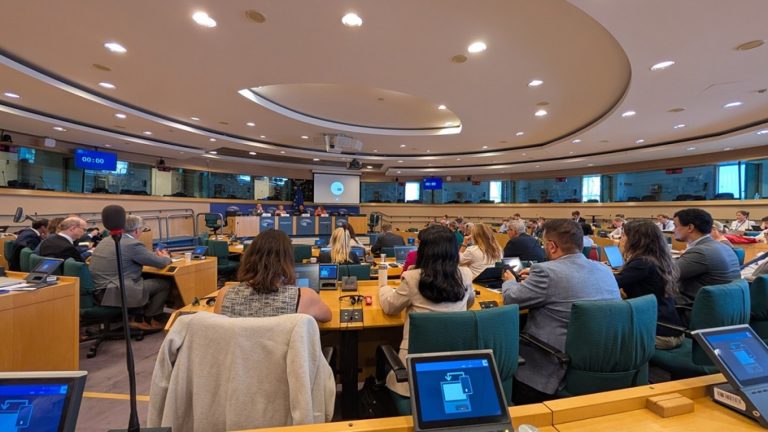
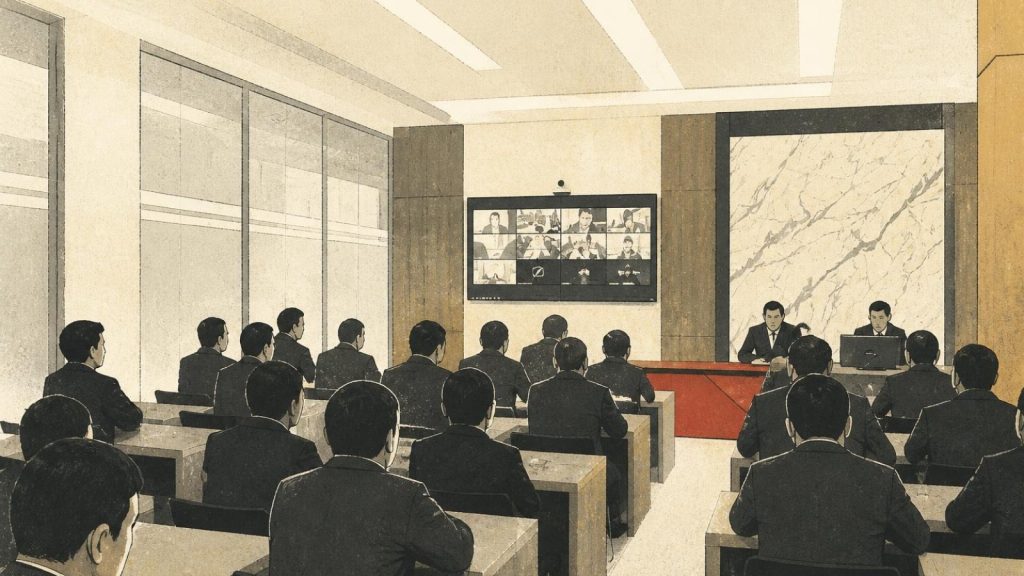
When the heads of Uzbekistan’s biggest mining and metals groups gathered in Tashkent this week, the official account of the meeting ran to a few paragraphs and contained not a single figure. The expanded board of the Ministry of Mining Industry and Geology, chaired by Minister Bobir Islamov and attended by a representative of the Cabinet of Ministers, reviewed what it called the sector’s results for the first nine months of 2026. Reports came from Navoi Mining and Metallurgical Company, Almalyk Mining and Metallurgical Complex, Navoiuran, Uzmetkombinat and the state geology bodies, among others. The outcome was a set of unspecified measures to address “priority tasks”, strengthen “executive discipline” and tighten oversight of digitalisation.
For a sector that supplies much of the country’s export earnings, the silence is conspicuous. The government has spent the year advertising ambition. In March President Shavkat Mirziyoyev set goals for 2030 of 175 tonnes of gold, 500 tonnes of silver, 15,000 tonnes of uranium and 500,000 tonnes of copper. For this year alone the sector was meant to attract $2.2bn across 90 projects and to produce 120 tonnes of gold, 172,500 tonnes of copper and 8,000 tonnes of uranium. Three-quarters of the way through the year, the obvious question is whether any of this is on track. The ministry did not say.
Copper is the test
The strain is most likely to show in copper. Output in 2025 was reported at about 148,500 tonnes, so the 2026 goal implies growth of roughly 16 per cent in a single year. Almalyk launched a third concentration plant in March and is building towards a far larger metallurgical complex, but heavy projects of this kind rarely run to schedule. Officials speaking of “executive discipline” often have missed deadlines in mind. Which projects have slipped, and by how much, is the information investors would most like to have.
The data themselves are also a problem. The president put gold output last year at 118.4 tonnes. The government’s investment portal cites 130 tonnes. The gap may reflect different definitions, with one series counting only primary mine output and the other adding by-product or other sources, but no explanation has been offered. Without a single agreed baseline, any claim of progress towards the 2030 targets is hard to test.
Gold and the state’s finances
The financial half of the review matters beyond the ministry. Gold is Uzbekistan’s leading export, and the state has leaned on it heavily as prices rose. In August S&P Global warned that falling bullion prices could cut state revenues by nearly $1bn, and local media reported that gold exports resumed in May after a pause of about six months. Earlier this year the finance ministry was reported to pool gold revenues into a unified treasury account, with spending that cannot be traced to specific uses. The board was told about economic and financial results, yet no revenue, profit or price assumption was made public.
That reticence sits uneasily with the government’s stated aim of attracting Western capital. In August Uzbekistan was reported to be one of three Central Asian states failing US fiscal transparency standards. Investors weighing the country as a source of critical minerals will want to know whether disclosure of revenues, licence holders and beneficial ownership is improving. Officials say 65 private enterprises now operate in the sector and that $10bn of foreign money has arrived in nine years. They have not said which licensing rounds come next, nor what private operators say about permitting and access to power and rail.
The listing question
Two of the groups at the meeting have been linked for years with partial privatisation. Plans for an initial public offering of NMMC, reportedly with a dual listing in London and Tashkent, have been floated since 2019, and the government hired Rothschild last year to advise on selling state assets through listings. Almalyk and Uzmetkombinat were also once pencilled in for flotations. No timetable emerged from the board. A lower gold price and uncertainty over governance would both complicate a valuation, and a quiet delay may be easier for the authorities than a public one.
Uranium raises a different set of questions. Navoiuran reports into the same ministry, the nuclear energy law was amended in April to centralise regulation, and the first two small reactors have been costed at about $1bn. Officials claim reserves have risen from 97,000 to 140,000 tonnes. How much of a 15,000-tonne target is meant for export and how much for home use remains unstated, as does the state of talks with foreign buyers.
What the omissions suggest
The tone of the communiqué is managerial rather than triumphant. A board that talks of “challenges” and discipline after nine months of a year with demanding goals is probably managing slippage. The presence of a Cabinet representative hints that the review feeds into wider decisions on next year’s budget and investment. The emphasis on digitalisation, the only theme singled out for tighter oversight, is also ambiguous. It could signal worry about cost overruns on technology contracts, about the quality of production data or about the security of industrial systems. It could equally point to a plan to give investors better reporting. The ministry has not said which.
The next real tests will be the full-year output figures, any licensing rounds for 2027 and a decision on the NMMC listing. Until then, Uzbekistan’s mining story remains one of large ambitions, scant disclosure and an increasingly attentive audience.
Sources: Kun.uz, Daryo, gov.uz, invest.gov.uz and Yahoo Finance reporting on 2026 targets, 2025 output, NMMC privatisation plans and gold-price risks. Several figures come from news headlines and should be checked against the underlying articles before publication.