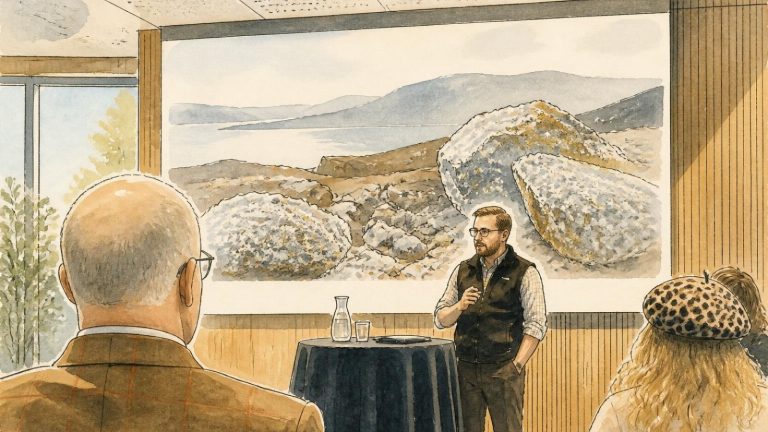
In an insightful interview, Tom, the newly re-elected Co-Chair of the MateriNex Common Interest Group on Strategic and Critical Raw Materials, outlines his vision for the future of sustainable raw materials in Europe. He emphasises the urgent need for action over dialogue, advocating for a shift from mere discussions to tangible outcomes such as permits, plants, partnerships, and production. Tom argues that Europe must not outsource critical stages of the value chain if it seeks strategic autonomy.
Tom envisions MateriNex as a collaborative platform where industry leaders, researchers, and policymakers can work together, breaking down silos to foster integrated projects. He highlights Flanders’ potential, citing its strong research capabilities, a robust chemical sector, and initiatives like Flanders Metals Valley as key ingredients for success. The establishment of Critical Raw Materials Hubs is a priority, aiming to create coherent industrial ecosystems that connect processing, refining, and recycling activities.
Reflecting on his career, Tom stresses the importance of managing trade-offs in the pursuit of sustainability. He argues that the narrative of choosing between industry and the environment is misleading. Instead, he believes that critical metals are essential for cleantech and the energy transition, and that Europe must take responsibility for the entire value chain, from extraction to consumption.
Tom identifies fragmentation as Europe’s greatest weakness, despite its wealth of scientific talent and industrial innovation. He calls for a concerted effort to connect mining, refining, manufacturing, and recycling into integrated value chains, asserting that no single entity can tackle the challenges of critical materials alone. The future lies in collaborative ecosystems rather than isolated organisations.
He also addresses the misconception that recycling alone can meet the demands of the energy transition. While recycling is vital, it cannot replace the need for responsible mining, particularly for materials like lithium and cobalt, which are essential for technologies such as electric vehicles and wind turbines. Tom warns against complacency, urging Europe to engage in difficult conversations about sourcing materials under high environmental and social standards.
In conclusion, Tom reflects on his experiences with the RAW MATTERS podcast, noting that discussions with various stakeholders have deepened his understanding of the complexities surrounding critical raw materials. He underscores the urgency for Europe to act decisively, likening the situation to a bus that is leaving without them if they do not engage proactively in global partnerships. The time for hesitation has passed, and the focus must now be on collaboration and action to secure a sustainable future for the mining and materials industry in Europe.