Western capital will stay away from Kyrgyzstan and Tajikistan until their governments publish data and simplify licensing and tax, a London conference concluded
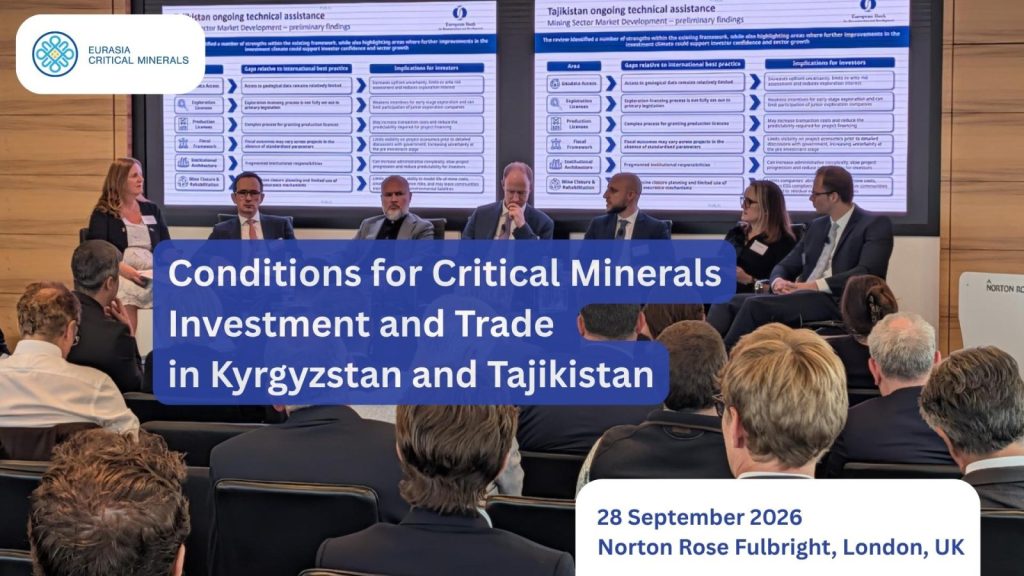
Kyrgyzstan and Tajikistan will struggle to attract Western investment in critical minerals until they publish geological data and simplify licensing and fiscal rules. That was the central conclusion of “Conditions for Critical Minerals Investment and Trade in Kyrgyzstan and Tajikistan”, organised by the Eurasia Critical Minerals Organisation and hosted by Norton Rose Fulbright in London on 29 September. Speakers agreed that restricted access to information is the main obstacle. Legal, financial and political risks are real, but were treated as largely secondary.
A framework problem
Luca Bonamico of the European Bank for Reconstruction and Development (EBRD) presented preliminary findings from its technical assistance programme in Tajikistan. The weaknesses reinforce one another. Geological data is largely confidential, which deepens uncertainty and hampers risk assessment before capital is committed. Exploration licensing is not fully set out in primary legislation, blunting incentives for junior explorers. Production licences rest on project-specific agreements with no standard templates, raising transaction costs. With no uniform royalty or mining tax regime, project economics are hard to judge in advance. Responsibility is divided among several institutions, and mine closure and financial guarantees are not built into licensing, creating environmental and ESG exposure.
Mr Bonamico pointed to Kazakhstan and Uzbekistan as proof that reform pays. Both have written standardised royalty rates into law, and he said greater transparency has lifted investor interest and the EBRD’s own lending. He urged one-stop-shop approvals and open geological databases, citing Chile and Western Australia as models.
The strategic stakes
Andrei Lukianov of Boston Consulting Group described a UK-backed study that narrowed a pipeline of about 700 projects across the region. Investment cases were developed for five to seven projects in Kyrgyzstan, centred on rare earths, beryllium and antimony. The trade data show how much room there is for rebalancing: only a sliver of the region’s critical minerals exports goes to the UK, while more than half goes to China.
Western investors, Mr Lukianov argued, weigh asset quality, transparent reporting and local partners. Chinese and Russian investors are often state-backed and can therefore stomach more risk. Western investors, mostly without such support, are far more sensitive to unpredictability. That asymmetry is the strongest case for governments in the region to offer clarity: they cannot compete on state finance alone.
Risk in practice
Patrick Lord of Risk Advisory said investors should establish who they are dealing with, how those parties reached their position and how business is expected to be done. Nominee shareholders can mask political connections, he warned, and non-standard licensing deals invite corruption. He called Kyrgyzstan’s licensing regime volatile, while noting that both countries pose challenges. Poor record-keeping and limited media freedom make independent verification essential.
Chris Down of Norton Rose Fulbright argued that contracts can offset part of the risk. Investors should seek stabilisation clauses and choose the country of incorporation with care, since it determines which bilateral investment treaties apply. He recommended arbitration seated outside the host state. Enforcing an award against a state is possible, he said, but depends on where it holds assets and is difficult in practice.
Sarah Hayton of the Extractive Industries Transparency Initiative (EITI) said Kyrgyzstan has made progress on licence data through an open portal, but beneficial ownership data remains incomplete and is not regularly updated. Tajikistan has moved more slowly, though a planned online portal could help.
Sentiment on the move
Jonathan Reard, chief executive of Altai Resources, offered a contrast from eastern Kazakhstan, where his company secured a licence in two to three months and recently closed a financing round, helped by a legal reform this month. Sentiment towards Kyrgyzstan and Tajikistan remains cautious after the Kumtor dispute, he said, but is shifting as capital arrives, citing a recent completion involving a Glencore-backed project. He added that in one area his company can obtain geological data only after signing a licence agreement, which raises the cost of entry for juniors.
The Kumtor question
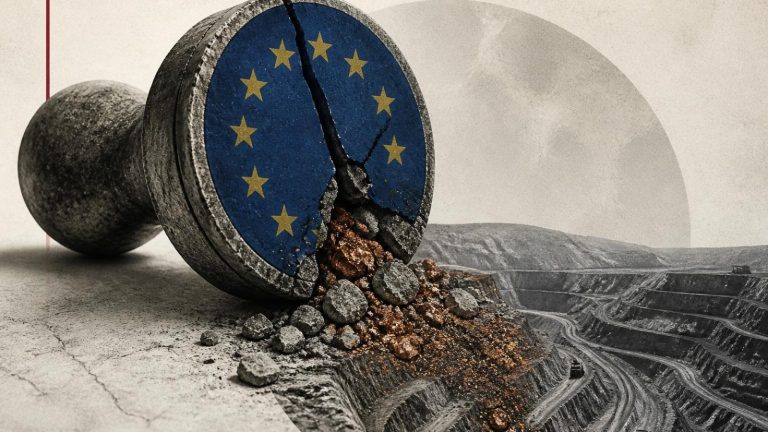
The sharpest challenge to that caution came from the floor. Kyrgyzstan’s newly appointed ambassador to the UK, H.E. Mr Omar Sultanov, rejected the description of Kumtor as a nationalisation. It was, he said, a 2022 settlement that ended the disputes without admission of liability. He noted that Kyrgyzstan’s S&P outlook is stable and Moody’s positive, and that a Eurobond issued in London last May was upsized from a $500m target to $700m, which he took as evidence of investor appetite. He added that a minerals cooperation document was signed with the natural resources minister last Friday, building on a memorandum between the two governments signed in London last December.
The exchange exposed the gap between official and investor perceptions. Whatever the legal characterisation, Kumtor still shapes how investors price risk in the region, and the ambassador’s intervention suggests Bishkek knows it.